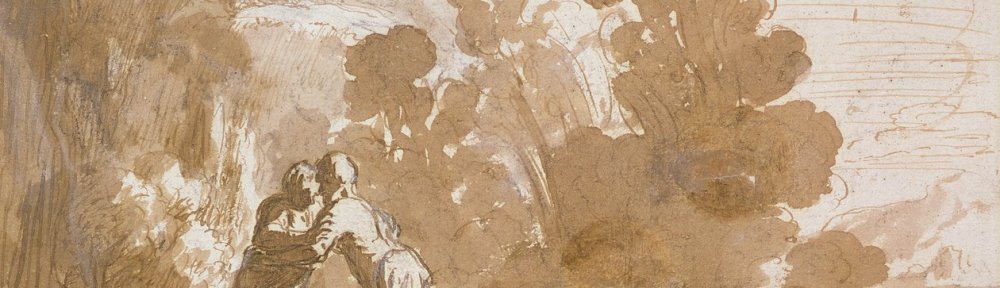
“That same night he arose, and taking his two wives, his two maidservants, and his eleven sons, he crossed the ford of the Jabbok. After taking them across the stream, he sent across all his possessions. Jacob was left alone. And a figure wrestled with him until the break of dawn. When he saw that he had not prevailed against him, he wrenched Jacob’s hip at its socket, so that the socket of his hip was strained as he wrestled with him. Then he said, “Let me go, for dawn is breaking.” But he answered, “I will not let you go, unless you bless me.” Said the other, “What is your name?” He replied, “Jacob.” Said he, “Your name shall no longer be Jacob, but Israel, for you have striven with beings divine and human, and have prevailed.” Jacob asked, “Pray tell me your name.” But he said, “You must not ask my name!” And he took leave of him there. So Jacob named the place Peniel, meaning, “I have seen a divine being face to face, yet my life has been preserved.” The sun rose upon him as he passed Penuel, limping on his hip. That is why the children of Israel to this day do not eat the nerve sinew that is on the socket of the thigh, since Jacob’s hip socket was wrenched at the thigh muscle.” (Genesis 32:23-33)
וַיָּקׇם בַּלַּיְלָה הוּא וַיִּקַּח אֶת־שְׁתֵּי נָשָׁיו וְאֶת־שְׁתֵּי שִׁפְחֹתָיו וְאֶת־אַחַד עָשָׂר יְלָדָיו וַיַּעֲבֹר אֵת מַעֲבַר יַבֹּק׃
וַיִּקָּחֵם וַיַּעֲבִרֵם אֶת־הַנָּחַל וַיַּעֲבֵר אֶת־אֲשֶׁר־לוֹ׃
וַיִּוָּתֵר יַעֲקֹב לְבַדּוֹ וַיֵּאָבֵק אִישׁ עִמּוֹ עַד עֲלוֹת הַשָּׁחַר׃
וַיַּרְא כִּי לֹא יָכֹל לוֹ וַיִּגַּע בְּכַף־יְרֵכוֹ וַתֵּקַע כַּף־יֶרֶךְ יַעֲקֹב בְּהֵאָבְקוֹ עִמּוֹ׃
וַיֹּאמֶר שַׁלְּחֵנִי כִּי עָלָה הַשָּׁחַר וַיֹּאמֶר לֹא אֲשַׁלֵּחֲךָ כִּי אִם־בֵּרַכְתָּנִי׃
וַיֹּאמֶר אֵלָיו מַה־שְּׁמֶךָ וַיֹּאמֶר יַעֲקֹב׃
וַיֹּאמֶר לֹא יַעֲקֹב יֵאָמֵר עוֹד שִׁמְךָ כִּי אִם־יִשְׂרָאֵל כִּי־שָׂרִיתָ עִם־אֱלֹהִים וְעִם־אֲנָשִׁים וַתּוּכָל׃
וַיִּשְׁאַל יַעֲקֹב וַיֹּאמֶר הַגִּידָה־נָּא שְׁמֶךָ וַיֹּאמֶר לָמָּה זֶּה תִּשְׁאַל לִשְׁמִי וַיְבָרֶךְ אֹתוֹ שָׁם׃
וַיִּקְרָא יַעֲקֹב שֵׁם הַמָּקוֹם פְּנִיאֵל כִּי־רָאִיתִי אֱלֹהִים פָּנִים אֶל־פָּנִים וַתִּנָּצֵל נַפְשִׁי׃
וַיִּזְרַח־לוֹ הַשֶּׁמֶשׁ כַּאֲשֶׁר עָבַר אֶת־פְּנוּאֵל וְהוּא צֹלֵעַ עַל־יְרֵכוֹ׃
עַל־כֵּן לֹא־יֹאכְלוּ בְנֵי־יִשְׂרָאֵל אֶת־גִּיד הַנָּשֶׁה אֲשֶׁר עַל־כַּף הַיָּרֵךְ עַד הַיּוֹם הַזֶּה כִּי נָגַע בְּכַף־יֶרֶךְ יַעֲקֹב בְּגִיד הַנָּשֶׁה׃
When Jacob runs away from Esau towards Haran, he spends the night out in the open, and has a dream of a ladder, the top of which reaches to the heavens, with angels ascending and descending it. He wakes and recognises that in his dream he has encountered God, received the promise of divine protection and of many descendants, and he names the place Beit El – the house of God, vowing that if “I return safe to my father’s house—the ETERNAL shall be my God.” (Genesis 28)
Now he is returning, not only safe but wealthy, with two wives, two concubines, many children and cattle, and he has another late night encounter with what he understands to be a divine being – so much that he names the place “Peniel” – the face of God.
But far from having a dream, this time Jacob has a very real, very physical encounter. An encounter that leaves him both damaged and blessed, and with a change of name from Jacob to Israel, to underline the change within him. He names the place Peniel, the face of God. Between Beit El and Peniel, Jacob is radically changed.
The damage to Jacob causes him to limp, and is the source for the very first prohibition given to the Jewish people. Sefer HaChinuch lists only three mitzvot in the whole of the book of Genesis – the mitzvah of procreation, of brit milah, and to not eat the gid hanasheh in memory of the encounter at the Ford of Jabok.
It is not easy to understand what happened that night. Who Jacob struggled with, why he was alone by the river at night, what he was blessed with and why he left the encounter permanently marked physically and with a change of name that – unusually – does not replace his original name, which continues to be used.
And it is not easy to understand what is the gid hanasheh, nor what appears to be an interpolation into the text, explaining that Jews will never eat this part of an animal, as if, for a moment, we are far away in time from the events being narrated.
Torah doesn’t really say what the gid hanasheh is – and it is tradition that decides that what it refers to is the sciatic nerve, a nerve which runs from the spine through buttocks and thighs and into the foot. This nerve provides the sensory and motor functions to enable actions like walking, running, climbing, lifting weights, and standing. Damage to it – what we now call sciatica – is extremely painful and debilitating. Sciatica itself is one of the earliest documented pain in medical history, appearing in the Ebers Papyrus (c1500BCE) of ancient Egypt, and attributed there to malevolent spiritual forces or imbalances in the body’s vital essence.
The prohibition on consuming the sciatic nerve is clearly an early and well known one. The Mishnah contains very detailed instructions about this nerve/sinew. Mishnah Chullin Chapter 7 explains that is not to be eaten either in Israel or outside it, that the prohibition stood during the times the Temple stood and the times before and after it, that both non sacred animals slaughtered for food, and consecrated animals slaughtered for korbanot (offerings) had to have the part removed before eating/offering. But why Jacob was damaged in this part of the body, and why this prohibition is in the text – this remains opaque.
A look at the words of the site of the damage may be helpful. The word Gid means a sinew according to the BDB dictionary, but it is Nasheh – a verb from a root “to forget”, or “to be forgotten” that gives us pause.
Jacob is permanently damaged in a place of forgotten-ness. And we are permanently enjoined to remember this damage, how and where it was caused, and to enact our remembering when we eat meat.
There could be a very physical explanation for the encounter. The sciatic nerve is essential for movement going forwards – so maybe the angel (if angel it be) is symbolically stopping Jacob from forward travel with ease, instead forcing him to feel every step, to understand the pain caused by his journey back to his homeland, to never forget the stories both of exile and of return. If this is Esau’s guardian angel, as some traditions teach, than how much more so should Jacob understand that his return after having deceived his father in order to receive the blessing Esau should have had as the first born, would cause pain to Esau. At least one commentator suggests that the blessing that Jacob asks for from the angel is to replace the blessing acquired by deception from his father Isaac. In other words, he is no longer the recipient of a blessing by deceit, but the recipient of a blessing by dint of understanding the pain his actions caused, and now therefore the legitimate recipient of a blessing he had stolen before. Hence the name change –he becomes Ish Sarar El – the one who struggles with God and prevails, or maybe Ish Yashar El – the one whom God has straightened out, no longer Ya’acov, the curved heel who is not straightforward, but Israel, the man whose encounter with God has changed him into an upright person. There is an irony here, given that sciatica is often a condition that causes the person to bend as they walk!
There could be a more existential explanation, especially given the nature of the name change and the “blessing” that Jacob receives. The limping, and the determination never to eat the sciatic nerve will be a reminder that Jacob and his descendants will always struggle with God, that pain is part of the process of becoming, or that we will carry our damage with us, yet continue our struggle with God, limping into the future, damaged yet determined.
Or a metaphorical explanation – the area that the angel touches and damages is close to the genitalia, signalling damage to some future descendants, yet not ending the covenant promise. Only Benjamin is born after the encounter at Jabok – and it is entirely possible that Rachel was pregnant with him before the encounter, which would mean that Jacob had no more children after the events that damaged his groin.
Or there could be an ascetic explanation – that people ruled by their genitalia make problematic choices, we need to follow our hearts and minds rather than our animal instincts. Jacob now is damaged in the area of his genitalia, and limps in pain. He must refocus into how he will enter the land of Canaan and settle there after such a long time away.
Bible commands us to remember many times and in many ways. The imperative “zachor” is found in bible over two hundred times. We are told to remember the exodus from Egypt, and the plagues that God brought to free us from slavery. To remember the Sabbath Day so as to sanctify it. To remember what God did for us in the wilderness. To look at tzitzit so as to remember all the commands of God. To remember that we were slaves and to remember that we were outsiders. To remember that everything we have is not the result only of our work but stems ultimately from God. To remember Amalek so as to blot out his name. And God remembers too, God remembers Noah, Sarah…. And much of our liturgy is framed in asking God to remember us and our ancestral covenant as we call on the zechut avot, the merits of our ancestors, to provide the case for our own selves.
We have ritualised remembrance in many ways – observing the Shabbat, the Pesach Seder from slavery to freedom, the shofar at Rosh Hashanah which also calls us back to Sinai, the succot (booths) in the wilderness where we act out our dependence on spiritual things rather than physical ones, brit milah, reading from the sefer torah regularly and in community… Some say that it is in the writing of a text that our remembrance has persevered, that unlike many other ancient peoples who did not record their story and re-read it, we have not vanished into history.
And here in parashat Vayishlach we have ritualised the refusal to forget Jacob’s encounter with God which turns him from Jacob to Israel – from the deceiver to the one whom God makes straight, and the pain of that encounter is concretised in the pain of the sciatic nerve, the nerve that keeps us both upright and moving. We remove it before eating from an animal, we are made to understand that when Jacob became Israel he paid a physical price for a spiritual reward.
It is a reminder that to live a life of encounter with God is neither comfortable nor cosy. Instead we are reminded that each step brings with it an awareness of God’s requirements of us.
God is heard walking in the Garden of Eden – מִתְהַלֵּךְ בַּגָּן by the two human beings hiding there ashamed of their nakedness (Gen 3:8). Enoch walked with God before he died (Gen 5:24). His great grandson Noah, a righteous man, blameless in his age, walked with God (Gen 6:9).When Abraham is 99 years old God says to him
“וַיְהִי אַבְרָם בֶּן־תִּשְׁעִים שָׁנָה וְתֵשַׁע שָׁנִים וַיֵּרָא יְהֹוָה אֶל־אַבְרָם וַיֹּאמֶר אֵלָיו אֲנִי־אֵל שַׁדַּי הִתְהַלֵּךְ לְפָנַי וֶהְיֵה תָמִים׃
When Abram was ninety-nine years old, GOD appeared to Abram and said to him, “I am El Shaddai. Walk before me, and be blameless.
And most resonantly we have the prophet Micah telling us :“You have been told, O mortal, what is good, And what GOD requires of you: Only to do justice And to love goodness, And to walk humbly with your God” (Micah 6:8)
Franz Rosensweig comments on the phrase וְהַצְנֵעַ לֶכֶת עִם־אֱלֹהֶיךָ – and specifically on the pronoun “with”, that if we walk with God, then God will walk with us – something alluded to all that time ago in the Garden of Eden.
As Jacob leaves the Ford of Jabok that morning after his encounter with God, with his name changed to include the name of God and with the blessing he asked for, he is no longer alone, as he was before the encounter. He may be limping, but he walks with God. As we remember this encounter, we too are reminded, in the words of Micah, to do justice, to love goodness, and to walk humbly with our God.

