The birth of Reform Judaism – two hundred years and a barmitzvah…

Reform Judaism has its roots in the eighteenth century Enlightenment.  Around the time of the French Revolution the Jewish world opened up to the outside, European Jews were recognized for the first time as citizens of the countries in which they lived, and with the requirement to live in ghettos gone, the people could finally settle where they pleased, dress how they liked and follow the occupations that they wanted. Suddenly the freedom to think rather than to accept unquestioningly what one was told became a powerful force for change. As Gunther Plaut wrote “the Western Jew left his ghetto and tried to find his place in the larger society…could one continue to be a Jew and still enjoy the benefits of the great revolutions?..one would have to study Western culture, language and history, [learn about] the world one hoped to enter… Some chose this moment to  escape altogether and for a time it appeared as if the flight might assume epidemic proportions. The need to find modern forms for the ancient faith was a significant stimulus for the rise of Reform”(The Rise of Reform Judaism).

Where Reform Judaism focused to address this new thinking and need for modern relevance was on the message of the Hebrew Prophets. While traditional Judaism oriented itself to Halacha, the Reformers were directed by the prophetic tradition, its ideals and its values resonating with their belief that the world could and must be shaped by people’s ideas and their actions.  Leopold Zunz championed the modern study of Jewish history to see what could be learned from it to develop modern understanding.  Abraham Geiger also used history to show that Jewish life had always been one of continual change, with old practices abandoned and new ones introduced, all in order to keep Judaism alive and relevant. He suggested that observance and synagogue worship might be changed to appeal to modern people.

In 1810, in Seesen, Israel Jacobson, who had already created a school built on the Enlightenment values of egalitarianism and pluralism, built a synagogue where the services were accompanied by organ music, where men and women studied and worshipped together, where the liturgy stressed the congregational unity and was not only in Hebrew, and ethics were taught and discussed. The first service in the Seesen Temple was on 17th July. While we may not recognise – or like – some of the Seesen innovations, Reform Judaism has continued to evolve and grow, seeing itself as part of the millennial Jewish journey, with Torah as our foundation document, and we are dedicated to continuing to learn and study our sources. Reform Judaism has continued to see that serving God is something done not only through prayer or ritual behaviour, but also through ethical action to make the world a better place. It has continued to understand that the individual has choices, and that while many different people have many different truths, absolute Truth belongs only to God. Any answers we may have are  fragmentary, provisional, and can act only as pointers towards the bigger Truth. We have a dialogue between tradition and modernity, supported by a number of guiding principles that include valuing personal choice and authenticity, egalitarianism, inclusivity, engaging deeply with Jewish texts and traditions.  It isn’t easy to be a Reform Jew, and we are not practising Judaism lite – instead we are engaging in the age old practice of trying to understand God’s voice in our world, of bringing about a better world by our own efforts and so bringing God’s presence into our world. Each of us has a responsibility, an ethical imperative to act, to make our choices well. We cannot rely on just doing as was done before, instead we have to think, enrich our tradition with modern learning, engage actively with modern life and thought as well as root ourselves in our source texts and traditions. As a religious philosophy Reform Judaism contains all the uncertainty of any living and evolving thinking. We are constantly living the tension between our  eternal truths and values while at the same time holding an open and positive attitudes to new insights and experiences. More than two hundred years after Israel Jacobson began his experimental service in Seesen we can be proud of our history and our dynamism, both of which continue to affect our evolving relationship with our world. And it is our task to be part of the development. As Rabbi Tarphon said in the first century CE – a time of great reforming of Judaism after the destruction of the second Temple in Jerusalem – “It is not our duty to complete the work, but neither are we free to desist from doing it” (Mishnah Pirkei Avot).

What is Reform Judaism? An ongoing conversation…..

paper written for a rabbinic conference on reforming religion

One of the questions we ask ourselves and repeatedly try to answer, albeit not with great success or satisfaction is:   – what is Reform Judaism? Rabbi Morris Joseph in his sermon at WLS asks the very same question at the turn of the 20th Century, saying “It may not be superfluous to point out that Reform does mean something. Not all of us, I am afraid, are very clear as to this point…Reform means a great deal more than the organ and no second day festival…Reform stands for a great, a sacred principle, of which these things are but symbols…it is an affirmation of a desire, an intention, to cling faster than ever to all that is true and beautiful in Judaism. ..Reform has, first and chiefly, to convert those who have ranged themselves under its banner to nobler ideals of living. This is the great truth which nearly all of us miss. Reform is not a movement merely; it is a religion, a life. …it is not merely the expression of a creed, negative or positive, but a pledge binding those who identify themselves with it to the highest ideal of conduct, to a higher ideal even than that which contents the non-Reformer.. “One might say that the emergence of Reform Judaism in the late 18th Century was a not a religious development at all, but a European lay initiative, arising from the effects of the Enlightenment. It began by ‘modern Jews’ challenging prevailing traditional religious beliefs and designing a form of Judaism that would enable Jews to be accepted both as individuals and as a group into European society.  [Moses Mendelssohn (1729-86), father of the Jewish enlightenment (Haskalah), more than any other forged a way of holding the two worlds together in a way that Spinoza(1632-77) had not been able or willing to do a century earlier ]

Rabbis only got involved much later in the mid 19th century, and by using academic study (Wissenschaft des Judentums) tried to formulate ideological and theological positions and to support the emerging Reform innovations.  It seems to me that that pattern has continued in European Reform Judaism – the continuing communal challenge to traditional ideas, the continuing desire to be part of the mainstream modern world, coupled with the rabbinic task of creating the bridges which allow for modernity to impact on Judaism without causing it to lose its particular flavour and perspective. 

As rabbis, ours has become the task of formulating the ideology and of co-creating the overarching principles that contain and maintain our Reform Jewish values. We take for ourselves the shaping and determining of the boundaries that retain our particular identity, while allowing for the diverse expressions of these principles that will emerge in different communities at different times.

There is a prevalent myth behind many of the challenges to the legitimacy of Reform Judaism that somewhere there must be an objectively authenticated Judaism, (orthodoxy). 

But any survey of the history of Judaism will instantly reveal that each generation responds to the needs of its time, adapting to their contemporary political, geographical and historical exigencies.  While it may take great pains to profess otherwise, classical Rabbinic Judaism is one long process of change, reformation and adaptation – even now.  The rabbinic dictum that Revelation took place only once and for all time, in the form of an Oral Law given simultaneously with the Written Torah at Sinai, and which is to be mined from the text only by the initiated who possess a set of carefully hewn hermeneutical principles, was a device that gave Jews, for many generations, the permission to read the text both exegetically and eisogetically, and thus to keep it alive and relevant.  It was a brilliant device, but somewhere along the line a distortion has appeared so that the notion of one given Revelation which is unfolded by the knowledgeable and trained elite seems to have become frozen, and with it congealed the ongoing and dynamic process of Jewish response to the world.  Scholars began to argue over minutiae rather than focus on the Reality the minutiae were designed to remind them of.   The purpose of lively debate became to prove right or wrong, rather than to increase the richness of the understanding.  And suddenly authenticity became something everyone sought uniquely for themselves, while denying it to others.                     

Progressive Judaism emerged as a reaction to this congealing of responsive Judaism.  Its innovative and brilliant insight was that of progressive revelation. Instead of there having been one total disclosure at the theophany which we are still unpeeling, it reframed the rabbinic teaching to produce the same effect with a different instrument. Progressive Judaism taught about Progressive Revelation – as each new person reads the text, there is a possibility of new understanding of the divine purpose.

Unlike classical rabbinic Judaism, this new thing was not considered to have been discovered or uncovered, as having an independent existence.  Instead we are clear that it is  the interaction between reader and text that brings it into being.  By bringing our own experience, our own values into our reading of the text, we bring forth a particular reading which did not pre-exist.  We emulate our Creator in this continuing act of creation. By language we cause new things to exist – we call forth new worlds and populate them.In the preamble to the Statement of Principles adopted in 1999 by the Pittsburgh Convention of the CCAR, is the comment “Throughout our history we Jews have remained firmly rooted in Jewish tradition, even as we have learned much from our encounters with other cultures. 

The great contribution of Reform Judaism is that it has enabled the Jewish people to introduce innovation while preserving tradition, to embrace diversity while asserting commonality, to affirm beliefs without rejecting those who doubt, and to bring faith to sacred texts without sacrificing critical scholarship”We like to use the language of tradition with modernity, continuity with change – we present ourselves as an evolving expression of the Judaism of the ages, so that in the language of Pirkei Avot, Moses may have received (kibel) Torah at Sinai (whatever that means); handed it on (m’sarah) to Joshua, Joshua to the elders, the elders to the prophets, and the prophets passed it on to the men of the great assembly – and we see ourselves in that chain of tradition, receiving something all the way from Sinai, taking charge of it in our own times.

The website for the Reform Movement tells us “It is a religious philosophy rooted in nearly four millennia of Jewish tradition, whilst actively engaged with modern life and thought. This means both an uncompromising assertion of eternal truths and values and an open, positive attitude to new insights and changing circumstances. It is a living evolving faith that Jews of today and tomorrow can live by”. The front page of the annual report for the Reform Movement makes much of the words “Renewing, Revitalising, Rethinking, Representing – Reform”.  The prefix re- meaning “again, back” is only added to verb bases  The Movement website presents five core principles: “welcoming and inclusive; rooted in Jewish tradition; committed to personal choice; men and women have an equal place; Jewish values inspiring social change and repair of the world”  Reform Judaism calls itself ‘Living Judaism’.  We see ourselves being in the continuous present – we were not the subject of a Reformation, once and for all, but are always in the process of reforming our theological understanding and its practical expression.  And we keep re-forming ourselves. Thus it is important that we have as healthy an interest in the process of how reforming takes place as we have in the content of our Judaism. So we have to ask ourselves – on what basis are we challenging the present and changing the status quo?  What are the ways in which we do this? Who is the ‘we’ who is deciding? How is reform happening?

The phrase ‘Living Judaism’ brings us to some interesting places. We recognise Judaism as a living system.  And let’s have some definitions here: Living systems are open self-organizing systems (meaning a set of interacting or interdependent entities forming an integrated whole) that have the special characteristics of life, in that they are self sustaining and interact with their environment. They are by nature chaotic. As Meg Wheatley says  “If you start looking at the processes by which living systems grow and thrive, one of those is a periodic plunge into the darker forces of chaos. Chaos seems to be a critical part of the process by which living systems constantly re-create themselves in their environment.” ….Living systems, when confronted with change, have the capacity to fall apart so that they can reorganize themselves to be better adapted to their current environment. She goes on to say “We always knew that things fell apart, we didn’t know that organisms have the capacity to reorganize, to self-organize. We didn’t know this until the Noble-Prize-winning work of Ilya Prigogine in the late 1970’s.  But you can’t self-organize, you can’t transform, you can’t get to bold new answers unless you are willing to move into that place of confusion and not-knowing which I call chaos.” (Meg Wheatley)

I would like to introduce to you some learning not from the traditional sources, but from the modern world of biology and complexity:

The first is the notion of a self organising system: Self-organization is the process where a structure or pattern appears in a system without a central authority or external element imposing it. This globally coherent pattern appears from the local interaction of the elements that makes up the system, thus the organization is achieved in a way that is parallel (all the elements act at the same time) and distributed (no element is a coordinator). In a self organising system the collective following of a few simple principles can lead to extraordinarily complex, diverse and unpredictable outcomes. 

One example is the way that birds flock in the sky. It can be predicated on just three simple rules:

Always Fly in the same direction as the birds around you

Keep up with the others     

Follow your local centre of gravity (i.e. if there are more birds to your left, move left. If right, move right)

The second is the idea of punctuated equilibrium: This is a theory that comes from evolutionary biology, which suggests that evolution is not a slowly progressive and continuously ongoing event, but that instead species will experience little evolutionary change for most of their history, existing in a form of stasis. When evolution does occur,  it is not smooth, but it is localised in rare, rapid events of change. Instead of a slow, continuous movement, evolution tends to be characterized by long periods of virtual standstill (“equilibrium”), “punctuated” by episodes of very fast development of new forms. Punctuated equilibria is a model for discontinuous tempos of change. According to those who study such things, “Self organised living systems are a conjunction of a stable organisation with chaotic fluctuations.” (Philosophy Transactactions A Math Phys Eng Sci. 2003 Jun 15;361(1807):1125-39.  Auffray C, Imbeaud S, Roux-Rouquié M, Hood L.)

Doesn’t it just define Judaism through the ages, and Reform Judaism in our world – A conjunction of a stable organisation with chaotic fluctuations. And these chaotic fluctuations that punctuate our history are the drivers of very fast development and change.I’m sure we can all think of the events – Abram living with his family in Ur Casdim until God says “Lech lecha”. Exodus from Egypt. Sinai. Entering the land; Destruction of first and then second temple, Exile and Return; loss of Northern Kingdom….coming closer to home the development of oral law, of synagogue communities, rabbis taking over from priests in the religious leadership, Karaites; Mishneh Torah, Shulchan Aruch, Expulsion from Spain and Portugal, Moses Mendelssohn and the Haskalah, large scale Aliyah from Russian empire; Salanter and the mussar movement; Hasidim and the lubavitcher dynasty; Israel Jacobson and the Seesen school experiment to name just a few.

The question I have now is – if we truly are a living self organising system, then we are not so much driven by our ideology or our tradition as we are a people whose structure develops without a central authority or external element imposing it. Instead what we become develops from the local interaction of the elements that makes up the system, – that is the people within Judaism. With enough impetus and enough individuals wanting it – or doing it -we become who we are in a way that is parallel (all the elements act at the same time) and distributed (no element is a coordinator). 

An example – Pesachim 66a – Hillel could not remember how to carry the knife for the pesach sacrifice on Shabbat. His response was “But,” he added, “things will work out, because even if Jews are not prophets themselves, they are the sons of prophets.” The next day, Shabbat Erev Pesach, these semi-prophetic Jews arrived at the Temple with their animals for the Pesach sacrifice. From the wool of the lamb protruded a knife, and between the horns of the goat a knife was to be found. Upon seeing this Hillel proclaimed: “Now I recall the law I learned from Shemaya and Avtalyon. This is the procedure which they taught me!So how do we hold on to the continuity / tradition we assert is integral to the change /modernity we bring.

Second question – If we do truly function along the lines of punctuated equilibrium, then what are the next things to punctuate our equilibrium? What will bring about the rapid development after our periods of stasis? Should we be looking out for them and encouraging them?

Third question – complex systems emerge from the utilisation of a few very simple rules. Morris Joseph knew what the rules were in Reform Judaism even if, according to his sermon, his congregation on the whole didn’t.  Firstly that it was “religious, and that its religious life must be expressed in public worship”. Reform Jews may be “less bound ritually and ceremonially, but are therefore more bound religiously and morally”Secondly that” in order to live, Religion has to adapt itself to the shifting ideas of successive ages”Thirdly, that while progressive Religion is a great idea, progressive goodness is a far greater one. Reform has, first and chiefly, to convert those who have ranged themselves under its banner to nobler ideals of living. Reform is a religion and a life”

What is Reform Judaism? An ongoing conversation…

How do we know that we are Reform Jews?                                                                                

 I’d like to begin with what for me are two ‘given’ assumptions:                                                        

One is that Reform Judaism is religious Judaism.                                                                                         

The second that Reform Judaism is multi-dimensional. 

So:-

Reform Judaism is Communal as well as Individual.                                                                              

Reform Judaism is Universal as well as Particularistic.                                                                      

Reform Judaism is Traditional as well as radically Transformational.                                                 

Reform Judaism is Political as well as Spiritual. 

Reform Judaism has essential core meanings which we create and share, and at the same time there is no central system of control – modern Reform Judaism emerges from the relationships between the meanings we agree and share. This multi-dimensional view gives us both a direction in which to grow, and also a boundary.  We cannot make our decisions based only on one morality or ethic but always have to find a balance for the moment.  We always have to search for the meaning, rather than mechanistically to follow one fixed ideology.  In Reform Judaism every generation must challenge, must connect and re-connect perpetually.  Every generation must recreate tradition for itself.

Chukkat – Sermon for Lev Chadash 2023

Sermon  – Chukkat Lev Chadash 2023

וּמִשָּׁ֖ם בְּאֵ֑רָה הִ֣וא הַבְּאֵ֗ר אֲשֶׁ֨ר אָמַ֤ר ה’ לְמֹשֶׁ֔ה אֱסֹף֙ אֶת־הָעָ֔ם וְאֶתְּנָ֥ה לָהֶ֖ם מָֽיִם׃ {ס}

 אָ֚ז יָשִׁ֣יר יִשְׂרָאֵ֔ל אֶת־הַשִּׁירָ֖ה הַזֹּ֑את עֲלִ֥י בְאֵ֖ר עֱנוּ־לָֽהּ׃ בְּאֵ֞ר חֲפָר֣וּהָ שָׂרִ֗ים כָּר֙וּהָ֙ נְדִיבֵ֣י הָעָ֔ם בִּמְחֹקֵ֖ק בְּמִשְׁעֲנֹתָ֑ם

And from there to Be’er, which is the well where the Eternal said to Moses, “Assemble the people that I may give them water.” Then Israel sang this song: Spring up, O well—sing to it—  The well which the chieftains dug, Which the nobles of the people started, With maces, with their own staffs.

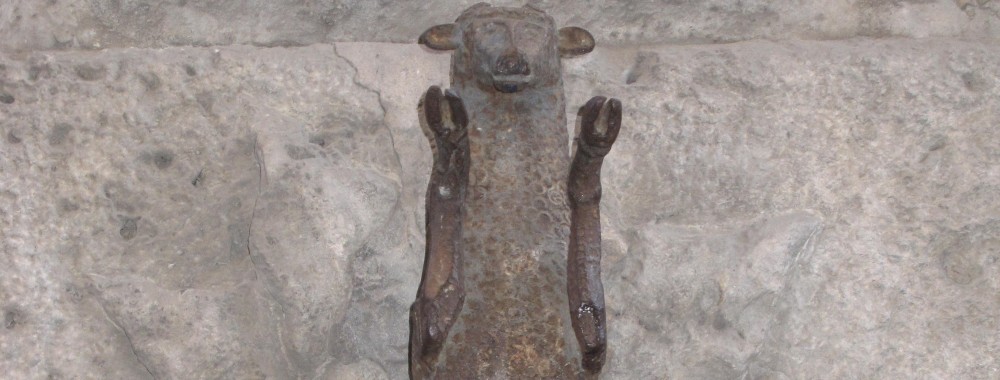
Here in Parashat Chukkat, forty years after leaving the slavery of Egypt, we are preparing for the transition of leadership from the generation who led the people of Israel on their long sojourn in the desert and beginning to look towards the reality of being a people living in their own land.   The deaths of Moses’ siblings and fellow leaders – Miriam and Aaron – are recorded. After the mourning rites are concluded, and Elazar the son of Aaron takes his place as High Priest, The  people once more “ spoke against God, and against Moses: ‘Why have you brought us up out of Egypt to die in the wilderness? for there is no bread, and there is no water; and our soul loathes this light bread.’”  God’s response was to send fiery serpents which bit the people and caused a terrible plague, and the people recognised they had sinned against God and begged  Moses to  pray for the plague to stop. There follows a very strange episode where God tells Moses to create the image of a serpent from brass, set it on a pole, and that anyone who looks at it will be cured – the image still used as an international symbol for healing, having come into the pagan world through the Greeks as the “Rod of Asclepius.” (Asclepius, the Greek god of healing, is mentioned by Homer in the Iliad (circa eighth century bce) who may well have encountered it being worshipped by the Israelite and Philistine tribes living by the sea, who had promoted it into a religious cult which the King Hezekiah destroyed along with other idolatrous practises that had crept into Israel in the more than seven hundred years since the re-entry of the people with Joshua.

But lets leave aside this curious story in favour of another intriguing snippet of biblical text – the brief verses which are known as “the song of the well” I quoted at the beginning.

At the beginning of the exodus, Moses, Miriam and the people sang a song having crossed the Sea of Reeds and evaded the Egyptian pursuers – Shirat Hayam, the song of the sea. Later, in the book of Deuteronomy we will be treated to the final testimony of Moses to the people, written in the form of a song – Ha’azinu.    But here we are almost at the end of the journey and close to the borders of the land the people will shortly enter and settle, and here we have reference to another song. A song that is not the song of Moses, but the song of Israel.

In the Talmud we read that (Ta’anit 9a):  “Rabbi Yosei, son of Rabbi Yehuda, says: Three good sustainers rose up for the Jewish people during the exodus from Egypt, and they are: Moses, Aaron and Miriam. And three good gifts were given from Heaven through their agency, and these are they: The well of water, the pillar of cloud, and the manna. He elaborates: The well was given to the Jewish people in the merit of Miriam; the pillar of cloud was in the merit of Aaron; and the manna in the merit of Moses. When Miriam died the well disappeared, as it is stated: “And Miriam died there” (Numbers 20:1), and it says immediately in the next verse: “And there was no water for the congregation” (Numbers 20:2). But the well returned in the merit of both Moses and Aaron.”

Now both Miriam and Aaron are dead, and there is a question about who and what will sustain the Jewish people in the future. And this is the moment of change, the pivot from strong and almost parental leadership to something quite different – communal activity and responsibility.

Look at the introduction of this song: –   אָ֚ז יָשִׁ֣יר יִשְׂרָאֵ֔ל אֶת־הַשִּׁירָ֖ה הַזֹּ֑את

“Then the children of Israel sang this song”

The midrash (Yalkut Shimoni on Torah 764:26) notices the unique nature of this verse. “Rabbi Avin the Levite said: When Israel stood up to chant the song at the sea, Moses did not let them chant it by themselves, but like a teacher who recites a portion in Scripture with a student when s/he is young, so did Moses recite it with Israel: “then sang Moses and the children of Israel,” like a student who repeats after the teacher. But after forty years [in the wilderness], Israel matured and on their own proceeded to chant the Song of the Well, as is said, “then sang Israel” (Num. 21:17).

In other words, at the beginning of the 40 year sojourn in the desert, the people were childlike, in need of guidance and leadership, unable to take the agency for their own lives and their own choices. But now as we come to the end of the Book of Numbers, the people have matured, and are not only able but also willing to take responsibility for their lives.

The Book of Numbers – Bemidbar – has a clear narrative arc and trajectory that is quite different from the books that precede it. It begins with a census, (hence its more usual name of Numbers or its rabbinic name of Pekudim, of counting) but while the census is made in order to plan for military operations, it has very specific language –  

שאו את־ראש כל־עדת בני־ישראל למשפחתם לבית אבתם במספר שמות

“raise the head of everyone of the congregation of the children of Israel according to the families of their ancestral houses, count according to their names….

Each person is counted “bemispar Shemot” – named as they are counted. Each person is an individual and is known by name. The census is conducted not by Moses and Aaron directly but by tribal representatives, one from each tribe, each one a leader within the tribe.

So from the very first verses of the book, the leadership is being extended out into the tribes.  When the tabernacle is dedicated it is the chiefs of the tribes who bring the sacrifices, leading the midrash to infer that Aaron was distressed that he was not part of the ritual (Tanchuma Beha’alotecha 5 on Num. 8:2)and that his role was no longer central and unique but available to individuals.

Throughout the book there are stories of the primacy of individual agency rather than the supine following of a charismatic leader. There are of course stories of this going wrong – Eldad and Medad prophesying strangely in the camp for example, or Korach determined to say that everyone of the people of Israel is a leader and therefore Moses and Aaron have taken on too much leadership and should withdraw – but the point remains, the people are learning to take responsibility, to think and to act for themselves. They may continue to have leaders and clearly this is important – but the leadership is constrained in a particular way, not any more the charismatic demanders of followers, but people who have responsibility for the people they are chosen to lead. The trajectory will of course continue – through to the demand for a monarchy and the choice of handsome Saul who failed to enact God’s will for the people, and of course we sometimes continue to choose inept or self-aggrandising leaders and we continue to pay the price. The populist “strong men” chosen by many nations and peoples – not only our own – are inevitably infantilisers and limiters of the freedoms and choices of people who choose them.

But back to the song of the well, this short recorded text hinting at a much longer poem. We are almost at the borders of the land of Israel, the long wait is about to be over, the next phase is on the horizon. And the people sing their song without permission or mention of any leader. We are reminded – quite deliberately so – that the relationship of the people with God is not contingent on its leadership. There is no mediator between the two parties. God is supporting the people and the people know this. They are ready to take this relationship further on their own terms and for themselves, no matter how charismatic or forceful the leadership may be. There are some things a leader is necessary for, and others that are – and that have to be – the choices of adult human beings.

The people sing to the well, they call forth the life giving water for themselves. They remind themselves that this well has been created by the history of their own people, the hard work of their ancestors. This well belongs to them, not as a miracle, but as the product of the relationship they have forged over time, and for themselves with God.

Now when they are poised to take the land they have yearned for for so long, they are ready and able to do so. Unlike the beginning of their journey when they saw themselves as weak and vulnerable and unable to take their destiny in their own hands, now they are fully able to take the next steps.

They have learned that the well can be dug by themselves. That the resources they need are available if they search them out and claim them. That the living waters that Miriam had provided for them miraculously are in fact living waters that they themselves can create.

The book of Numbers is sometimes understood to have originally been the final book of Moses – the story stops with Joshua taking on the mantle of leadership and the people poised to take the final steps of the journey.

In order to do this they need to have confidence not only in God and their mission, but also – crucially-  in themselves and their own agency and responsibility. The song of the well tells us that they have transformed themselves over the generation in the desert and they are ready.

The future awaits…

Sermone – Chukkat Lev Chadash 2023

וּמִשָּׁ֖ם בְּאֵ֑רָה הִ֣וא הַבְּאֵ֗ר אֲשֶׁ֨ר אָמַ֤ר ה’ לְמֹשֶׁ֔ה אֱסֹף֙ אֶת-הָעָ֔ם וְאֶתְּנָ֥ה לָהֶ֖ם מָֽיִם׃ {ס}

 אָ֚ז יָשִׁ֣יר יִשְׂרָאֵ֔ל אֶת-הַשִּׁירָ֖ה הַזֹּ֑את עֲלִ֥י בְאֵ֖ר עֱנוּ-לָֽהּ׃ בְּאֵ֞ר חֲפָר֣וּהָ שָׂרִ֗ים כָּר֙וּהָ֙ נְדִיבֵ֣י הָעָ֔ם בִּמְחֹקֵ֖ק בְּמִשְׁעֲנֹתָ֑ם

E da lì a Be’er, che è il pozzo dove l’Eterno disse a Mosè: “Raduna il popolo perché io dia loro dell’acqua”. Allora Israele intonò questo canto: Sorgete, o pozzo – cantate ad esso – il pozzo che i capi hanno scavato, che i nobili del popolo hanno avviato, con le mazze, con i loro bastoni”.

Qui, in Parashat Chukkat, quarant’anni dopo aver lasciato la schiavitù dell’Egitto, ci prepariamo al passaggio di consegne dalla generazione che ha guidato il popolo d’Israele nel lungo soggiorno nel deserto e iniziamo a guardare alla realtà di essere un popolo che vive nella propria terra.   Vengono registrate le morti dei fratelli di Mosè e dei loro compagni di guida, Miriam e Aronne. Dopo che i riti di lutto sono stati conclusi e Elazar, figlio di Aronne, ha preso il suo posto come Sommo Sacerdote, il popolo ancora una volta “parlò contro Dio e contro Mosè: “Perché ci hai fatto uscire dall’Egitto per farci morire nel deserto? Perché non c’è pane e non c’è acqua; e la nostra anima detesta questo pane leggero””.  La risposta di Dio fu l’invio di serpenti di fuoco che mordevano il popolo e causavano una terribile piaga; il popolo riconobbe di aver peccato contro Dio e pregò Mosè di pregare affinché la piaga cessasse. Segue un episodio molto strano in cui Dio dice a Mosè di creare l’immagine di un serpente di ottone, di metterla su un’asta e che chiunque la guardi sarà guarito – l’immagine è ancora usata come simbolo internazionale di guarigione, essendo entrata nel mondo pagano attraverso i greci come “verga di Asclepio”. (Asclepio, il dio greco della guarigione, è citato da Omero nell’Iliade (circa ottavo secolo a.C.), che potrebbe averla incontrata adorata dalle tribù israelite e filistee che vivevano in riva al mare, che l’avevano promossa in un culto religioso che il re Ezechia distrusse insieme ad altre pratiche idolatriche che si erano insinuate in Israele negli oltre settecento anni trascorsi dal rientro del popolo con Giosuè.

Ma lasciamo da parte questa curiosa storia a favore di un altro intrigante frammento di testo biblico: i brevi versetti noti come “il canto del pozzo” che ho citato all’inizio.

All’inizio dell’esodo, Mosè, Miriam e il popolo intonarono un canto dopo aver attraversato il Mare dei Giunchi e aver eluso gli inseguitori egiziani: Shirat Hayam, il canto del mare. Più tardi, nel libro del Deuteronomio, ci sarà la testimonianza finale di Mosè al popolo, scritta sotto forma di canto – Ha’azinu.    Ma qui siamo quasi alla fine del viaggio e vicini ai confini della terra in cui il popolo entrerà e si stabilirà tra poco, e qui abbiamo un riferimento a un altro canto. Un canto che non è il canto di Mosè, ma il canto di Israele.

Nel Talmud leggiamo che (Ta’anit 9a):  “Rabbi Yosei, figlio di Rabbi Yehuda, dice: Tre buoni sostenitori sorsero per il popolo ebraico durante l’esodo dall’Egitto, e sono: Mosè, Aronne e Miriam. E tre buoni doni furono dati dal Cielo attraverso la loro agenzia, e questi sono: Il pozzo d’acqua, la colonna di nuvola e la manna. E approfondisce: Il pozzo fu dato al popolo ebraico per merito di Miriam; la colonna di nuvola per merito di Aronne e la manna per merito di Mosè. Quando Miriam morì, il pozzo scomparve, come si legge: “E Miriam vi morì” (Numeri 20:1), e subito dopo si legge: “E non c’era acqua per la comunità” (Numeri 20:2). Ma il pozzo tornò per merito di Mosè e di Aronne”.

Ora sia Miriam che Aronne sono morti e ci si chiede chi e cosa sosterrà il popolo ebraico in futuro. Questo è il momento del cambiamento, il passaggio da una leadership forte e quasi parentale a qualcosa di molto diverso: l’attività e la responsabilità comunitaria.

Guardate l’introduzione di questa canzone: – אָ֚ז יָשִׁ֣יר יִשְׂרָאֵ֔ל אֶת-הַשִּׁירָ֖ה הַזֹּ֑את

“Allora i figli di Israele intonarono questo canto”.

Il midrash (Yalkut Shimoni su Torah 764:26) nota la natura unica di questo versetto. “Rabbi Avin il levita disse: Quando Israele si alzò per cantare il canto sul mare, Mosè non lo lasciò cantare da solo, ma come un insegnante che recita una parte della Scrittura con un allievo quando è giovane, così Mosè lo recitò con Israele”: “allora cantarono Mosè e i figli d’Israele”, come un allievo che ripete dopo l’insegnante. Ma dopo quarant’anni [nel deserto], Israele maturò e procedette da solo a cantare il Canto del Pozzo, come si dice: “allora cantò Israele” (Num. 21:17).

In altre parole, all’inizio dei 40 anni di permanenza nel deserto, il popolo era infantile, bisognoso di una guida e di un comando, incapace di assumersi la responsabilità della propria vita e delle proprie scelte. Ma ora, alla fine del Libro dei Numeri, il popolo è maturato e non solo è in grado, ma anche disposto ad assumersi la responsabilità della propria vita.

Il Libro dei Numeri – Bemidbar – ha un chiaro arco narrativo e una traiettoria molto diversa dai libri che lo precedono. Inizia con un censimento (da cui il nome più usuale di Numeri o il nome rabbinico di Pekudim, di conteggio), ma mentre il censimento è fatto per pianificare le operazioni militari, ha un linguaggio molto specifico – . 

שאו את-ראש כל-עדת בני-ישראל למשפחתם לבית אבתם במספר שמות

“alza la testa di tutti i membri della comunità dei figli d’Israele secondo le famiglie delle loro case d’origine, conta secondo i loro nomi….

Ogni persona viene contata “bemispar Shemot”, cioè viene chiamata per nome mentre viene contata. Ogni persona è un individuo ed è conosciuta per nome. Il censimento non è condotto direttamente da Mosè e Aronne, ma dai rappresentanti delle tribù, uno per ogni tribù, ognuno dei quali è un leader all’interno della tribù.

Quindi, fin dai primi versetti del libro, la leadership viene estesa alle tribù.  Quando il tabernacolo viene dedicato, sono i capi delle tribù a portare i sacrifici, il che porta il midrash a dedurre che Aronne era angosciato dal fatto di non far parte del rituale (Tanchuma Beha’alotecha 5 su Num. 8,2) e che il suo ruolo non era più centrale e unico ma a disposizione dei singoli.

In tutto il libro ci sono storie che mostrano il primato dell’iniziativa individuale piuttosto che il seguire supinamente un leader carismatico. Naturalmente ci sono storie in cui ciò va storto – Eldad e Medad che profetizzano in modo strano nell’accampamento, per esempio, o Korach deciso a dire che ogni membro del popolo d’Israele è un leader e quindi Mosè e Aronne hanno assunto troppa leadership e dovrebbero ritirarsi – ma il punto rimane, il popolo sta imparando ad assumersi la responsabilità, a pensare e ad agire per se stesso. Potranno continuare ad avere dei leader, e chiaramente questo è importante, ma la leadership è limitata in un modo particolare: non più carismatici che chiedono seguaci, ma persone che hanno la responsabilità del popolo che sono state scelte per guidare. La traiettoria continuerà, naturalmente, fino alla richiesta di una monarchia e alla scelta del bel Saul, che non riuscì a mettere in atto la volontà di Dio per il popolo, e naturalmente continuiamo a scegliere leader inetti o autocelebrativi e continuiamo a pagarne il prezzo. Gli “uomini forti” populisti scelti da molte nazioni e popoli – non solo il nostro – sono inevitabilmente infantilizzatori e limitatori delle libertà e delle scelte delle persone che li scelgono.

Ma torniamo al canto del pozzo, questo breve testo registrato che allude a una poesia molto più lunga. Siamo quasi ai confini della terra d’Israele, la lunga attesa sta per finire, la fase successiva è all’orizzonte. E il popolo intona il suo canto senza il permesso o la menzione di un leader. Ci viene ricordato – volutamente – che il rapporto del popolo con Dio non dipende dalla sua guida. Non c’è nessun mediatore tra le due parti. Dio sostiene il popolo e il popolo lo sa. È pronto a portare avanti questa relazione alle proprie condizioni e per se stesso, a prescindere da quanto carismatica o forte possa essere la leadership. Ci sono cose per cui un leader è necessario, e altre che sono – e devono essere – scelte di esseri umani adulti.

Il popolo canta al pozzo, invoca per sé l’acqua che dà la vita. Ricordano a se stessi che questo pozzo è stato creato dalla storia del loro popolo, dal duro lavoro dei loro antenati. Questo pozzo appartiene a loro, non come un miracolo, ma come il prodotto del rapporto che hanno instaurato nel tempo e per se stessi con Dio.

Ora, quando sono pronti a conquistare la terra che hanno desiderato per tanto tempo, sono pronti e in grado di farlo. A differenza dell’inizio del loro viaggio, quando si vedevano deboli e vulnerabili e incapaci di prendere in mano il proprio destino, ora sono pienamente in grado di compiere i passi successivi.

Hanno imparato che il pozzo può essere scavato da soli. Che le risorse di cui hanno bisogno sono disponibili se le cercano e le reclamano. Che le acque vive che Miriam aveva miracolosamente fornito loro sono in realtà acque vive che essi stessi possono creare.

Il libro dei Numeri è talvolta inteso come il libro finale di Mosè: la storia si ferma con Giosuè che assume il mantello della guida e il popolo pronto a compiere gli ultimi passi del viaggio.

Per farlo, deve avere fiducia non solo in Dio e nella sua missione, ma anche – cosa fondamentale – in se stesso e nella propria agenzia e responsabilità. Il canto del pozzo ci dice che si sono trasformati nel corso della generazione nel deserto e sono pronti.

Il futuro li attende…