Ki Tissa

an earlier post from 2013 given another airing

sylviarothschild's avatarrabbisylviarothschild

“And it came to pass, when Moses came down from Mount Sinai with the two tables of the testimony in his hand, that Moses knew not that the skin of his face sent forth beams while God talked with him. And when Aaron and all the children of Israel saw Moses, behold, the skin of his face sent forth beams; and they were afraid to come near him. (Exodus 34:29-30)

When Moses was in the presence of God that time on the mountain, something happened to him that was, quite literally transformative. Beams of light radiated from the skin of his face as he descended the mountain. The word used for the beam of light – “karan”- is connected to a word we are more familiar with – “Keren”, meaning a horn. The Vulgate, the Latin translation of the bible followed Jerome, one of the Church Fathers, who had misunderstood…

View original post 416 more words

Miketz: the strange case of the disappearing women

sylviarothschild's avatarrabbisylviarothschild

Dr Ruchama Weiss points out that sidra Miketz is the first in Torah that is devoid of any stories of women : – she identifies it as the point at which bible begins to actively exclude women from the focus of the narrative. Over the fourteen years that the sidra spans in three and a half chapters of the book of Genesis, women are indeed conspicuous by their absence. The matriarchs have died, the only daughter of Jacob that we know of, the unfortunate Dina, has disappeared following her experiences with Shechem, no other daughters or indeed wives of the sons of Jacob are recorded here. They must have existed, but the biblical author does not see fit to document their presence.

There is in fact one woman who briefly makes an appearance – Asenath, the daughter of Potiphera a priest of On. Our introduction to her is laconic and…

View original post 1,229 more words

Judith- a heroine for chanukah

We sing of the bravery of Judah Maccabee at Chanukah, but in tradition we have a heroine too – Judith – whose genealogy is given to 15 generations, presumably to dissociate her from the Canaanite wife of Esau who bears the same name. She is a heroine par excellence. She is independent of mind and action, a woman who believes in God but who also knows that God acts through human hands. She is prepared to be those hands, blood stained as they will be. She is a woman whose story deserves to be told, her actions save her people and she is unafraid of anyone: – the male elders in her city are challenged by her for their pusillanimous response to their situation; the enemy general’s plan is thwarted by her bold moves.  She is  brave, beautiful, intelligent, modest and practical. She is her own woman. Artists love her story and her powerful exploit can be seen through their eyes in painting and in sculpture. Only her own people – in particular the early rabbinic tradition – choose to downplay her, whether because of her modesty or her murdering or her independent spirit, only they know.

There are many variations of her story but she does not appear in rabbinic literature nor is her book in the biblical canon, but is relegated to the apocrypha. She disappears from the Jewish worldview for a thousand years, resurfacing in the eleventh century when the custom of reading a Hebrew text of her book on Shabbat Chanukah took hold, possibly because there are resonances of the Hasmonean revolt. The enemy Assyrian king is named Nebuchadnezzar and his general Holofernes – surely they are related to Antiochus Epiphanes and to his general Nicanor who is also beheaded and his head hung on the walls of Jerusalem by Judah Maccabee. The theme of an emperor who was determined to impose his worship on the subjected peoples is repeated here, along with the fear in Jerusalem that the Temple would be altered and the worship of God made to cease.

But the courage and ingenuity of Judith is at a different level to that of the protagonists of the Maccabean revolt. She is everything we might expect of a modern heroine. Judith has her own book; the earliest extant text is written in Greek and found in the Septuagint, the earliest Hebrew versions are medieval, although it was probably written in the late second Temple period.

Judith only appears in the book in the eighth chapter. Widowed suddenly three and a half years before the story starts, she lives the cloistered life of a virtuous woman, shut up with her maids in the upper part of her house, fasting except for Shabbat and new moons and festivals, a woman known to fear God. She is both wealthy and beautiful, a woman whose reputation for her godliness meant that no one had a bad word to say of her.

Holofernes is besieging the town of Betulia, and the townspeople, believing that God has abandoned them, petition their leaders to surrender to him, “For it is better, that being captives we should live and bless the Eternal, than that we should die, and be a reproach to all flesh, after we have seen our wives and our infants die before our eyes. We call to witness this day heaven and earth, and the God of our ancestors…to deliver now the city into the hand of the army of Holofernes that our end may be short by the edge of the sword, which is made longer by the drought of thirst.”

Uzziah, one of the rulers of the town, responds by playing for time:  “Be of good courage, my brethren, and let us wait these five days for mercy from the Eternal” But Judith is having none of this setting a target for God to respond and instead suggests humility and prayer. She cites the greats of Jewish history – Abraham, Isaac, Jacob and Moses, who suffered their trials and remained faithful to God. The city leadership agree with her words, and ask her, “a holy woman who fears God” to pray for them.

Judith tells them she will leave the city that night, they are not to know what she intends to do, but they must pray for her that her plan will succeed, and they must pray to God for their safety too. Uzziah agrees, telling her “Go in peace, and the Eternal be with you to take revenge of our enemies.”

It is an extraordinary exchange. Judith, beautiful wealthy and deeply religious, not only contradicts both the will of the people to surrender and the response of the elders to wait five days, but takes on the responsibility for ending the siege, and this intention is both acknowledged and agreed by the leadership. This is no little princess to be protected, but a woman of valour with her own agency and her own approach and strategy.

Wearing mourning clothing Judith prays in her home, and her prayer is unexpected – she asks God for the strength to be like her ancestor Shimon who had taken vengeance against the people of Shechem on behalf of his sister Dina. She asks God to hear her prayer, the prayer o a widow, and she understands God to know everything, past present and future.  She asks God to strenghtn her in her fight against the enemy, in particular she asks God to help her to lie in order to destroy the enemy, and she hopes that “This will be a glorious monument for your name, when he shall fall by the hand of a woman.” She ends with a reference to the covenant, “Remember, O Eternal, your covenant, and put words in my mouth, and strengthen the resolution in my heart, that your house may continue in holiness,  And all nations may acknowledge that you are God, and there is no other besides you”.

Then she washes and anoints herself, makes herself utterly beautiful and bedecks herself with jewellery – we are reminded of Esther in the harem – and then God even adds to her beauty so that no man could resist her. Taking wine and oil, figs and corn, she and her maid leave the city that night, watched by Uzziah and the elders.

Encountering the watchman of the Assyrians Judith says that she is surrendering to him and that she can show him how to take the city without loss of a single one of his men. Everyone notices her beauty, no one can resist her and soon she is inside the tent of Holofernes and he is intent on seducing her.

For four days she eats her own food rather than that of Holofernes, and keeps herself as a pure Jewish woman. On the fifth day, he was maddened with his desire and she agrees to drink wine with him – he drinks more than he ever has before and passes out. In one of the Hebrew versions of the story she has brought salty cheese with her in order to increase his thirst.  Once he is insensible on his bed she prays silently in tears, only her lips moving, asking God for the strength to do what she must do to save her people. She took Holofernes own sword and beheaded him with two blows, wrapping the headless body in the material from the canopy over the bed and giving the head to her maidservant to carry with her. The two women left the camp as if to go pray, something they had evidently done each night, but this time they returned to their own city and demanded to be let in, saying God was with them, that God’s power had been exercised. They showed the men of the city the head of Holofernes, and she went on to say she had been protected by an angel the whole time, that she had been protected from the lewd intentions of Holofernes.

Judith was praised and lauded by the city leaders, blessed and extolled as a servant of God whose name would never be forgotten. Her plan that the death of the general would send his army into fear and disarray came to pass and they ran away, hotly pursued by the townspeople. A great victory was claimed over the Assyrians, their camp was despoiled “And Joachim the high priest came from Jerusalem to Betulia with all the elders to see Judith.  And when she came out to him, they all blessed her with one voice, saying: You are the glory of Jerusalem, you are the joy of Israel, you are the honour of our people”

The book ends with the song of Judith, and with an endnote telling us that in her lifetime and for years afterwards Israel dwelt in security, that her name and acts were known throughout the land, that she gave her maid her freedom, and that she died aged 105 years old and was buried next to her husband. Her chastity is emphasised repeatedly, her humility and her love of God. Intriguingly the last verse tells us “the day of the festivity of this victory is received by the Hebrews in the number of holy days, and is religiously observed by the Jews from that time until this day.”

The story of Judith echoes so many other stories of women who change the course of history in biblical and extra biblical texts. From Sarah onwards we see the resonances – the use of beauty so dangerous their men might be damaged because of it. We hear the power of Deborah and Miriam in her songs, the deception of Rebecca in her deception of Holofernes, the silent prayer of Hannah resonates through the second prayer of Judith and of course Esther, the beautiful woman whose closeness to the king saved the Jewish people, and whose actions are to be celebrated for all time. Judith takes her place in the roll call of honour of women whose actions pivot the history of the Israelite people, a roll call that grows longer as we look more closely at our texts.  The stories and the voices of these women call to us to be remembered and to shape us and our understanding of our history. This Chanukah, find a version of the story of Judith to read, and give voice to her once again.

International Holocaust Remembrance Day

Written a few years ago, but still so powerful in my memory. For all those who died, whose goodness and laughter and potential died with them.

sylviarothschild's avatarrabbisylviarothschild

Two years ago I visited the Rumbula Forest, near Riga in Latvia, where nearly 28 thousand Jews were killed in just two days in November and December 1941, and where a heartbreaking memorial to them is hidden among the trees. Some of my own family, the brothers and sisters of my great-grandfather and their children are buried in the mass graves marked out on the forest floor. Only three people survived the murder that took place here.

The visit was poignant and it was also infuriating. One reason it had taken so long to build anything here as a memorial is that the inscription on the memorial had become an issue when some Riga officials wanted language that would have obscured Latvian complicity. Eventually an agreed inscription meant the memorial could go ahead

HERE, ON NOVEMBER 30 AND DECEMBER 8 OF 1941 THE NAZIS AND THEIR LATVIAN COLLABORATORS SHOT TO…

View original post 1,960 more words

Holocaust Memorial Day – Helene Rothschild

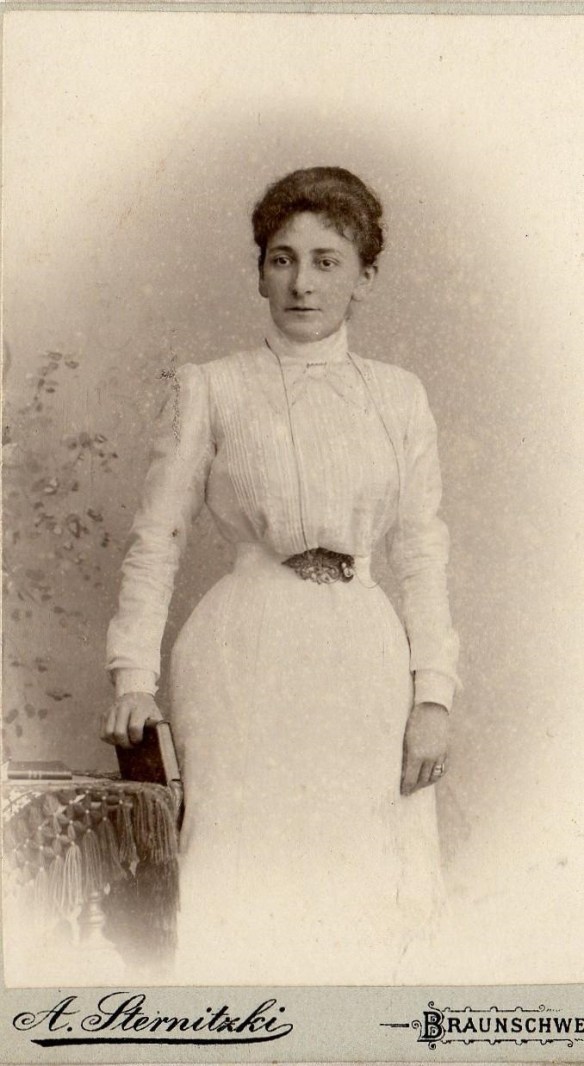
My great aunt Helene Rothschild was born on the 6 May 1862 in Ottenstein, the daughter of Siegmund Rothschild. She never married. She stayed in the village and ran the grocery business among her other activities. Family lore recalls that she kept charge of the sefer torah from the synagogue built by the family, and that it was one of the possessions she tried to protect till the end – but while my grandmother saw much of her furniture and linens and silver and art work after the war in the houses of her erstwhile neighbours, the scroll disappeared.  We have one beautiful tablecloth of hers that one neighbour gave to my grandmother.

She had expected to die where she had been born and lived, where her family owned the Jewish cemetery and her father and mother were buried.  Indeed family lore speaks of the grave she had organised for herself there, brick lined, as she didn’t like the cold.

But on 27th July 1942 she was taken first to Hanover -Ahlem along with her carer (she was 80 years old), and from there deported to Theresienstadt.

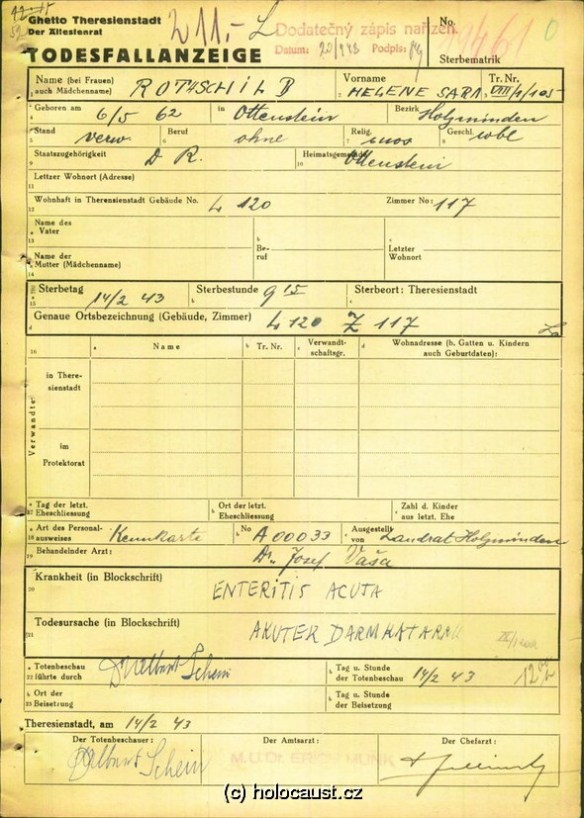
Amazingly she survived until 14th February 1943, where in House L 120 she died of dysentery.

Here is her photograph as a young woman.

HRothschild Helene from Ottenstein

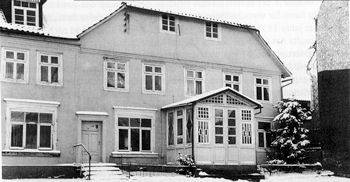
Here is a photo of her home, and the shop was in the downstairs area to the left of the door.  The photo was taken in the 1970’s when my father went back to see what he could find of family traces.  The house is now entirely gone with no trace that she lived there.

ottenstein house of helene rothschild 8 breiterstrasse

and here, amazingly, is her death certificate, all carefully written out as if her death had been a normal thing


helene rothschild death certificate terezin


There is no grave, brick-lined or otherwise, but she is not forgotten. My father said that after she died he dreamed of her, and she reminded him of her photograph in the family album, and he knew she did not want to be forgotten.


She is not forgotten. And her story will not be forgotten

May her soul be bound up in the ropes of life.


A beautiful Muslim Prayer for Peace

MinabLogoWeb

This prayer deserves to be read and shared as widely as possible. And with a few appropriate edits of the language, we may all add our voices in prayer

The Mosques and Imams National Advisory Board call on our members and their affiliates across the United Kingdom to adopt the “Prayer for the Nation” as part of their services and sermons, on Friday 20th November 2015.
One of the first and most fundamental ways Muslims show feelings of commonality and brotherhood is through prayer.

Imam Shahid Raza OBE, Chairman, Mosques and Imams National Advisory Board said:
“The prayer is thought to be an opportunity for British Muslims to express a national identity in their own way. The prayers ask God to keep Britain a harmonious nation that protects the marginalized, upholds strong moral values and to promote loyalty among our diverse communities.”
“My colleague and I have given our full support to establish the “Prayer for the Nation”, and through our network of 1500+ faith leaders across the UK, we will be launching the Prayer at our sermons on Friday 20th November, but not exclusively our attention will also be at those who may not regular visit the Mosque, we will share on our Facebook, Twitter and WhatsApp Accounts, we will get our young people to share on Instagram and SnapChat.”
“The prayer is not exclusive to faith leaders. We encourage it to be recited at our homes, madrassahs, community events, social gatherings and in our hearts and minds. We hope this will help nurture future generations of believers and contribute positively to the wider British society.”

Mustafa Field MBE, the Director of the Faiths Forum for London, said:
“The prayer could perhaps cultivate and give a voice to sentiments of amity and fraternity with British society at large.”
“The notion of citizenship revolve not only around moral values and legal obligations, but also around cultural narratives about identity and loyalty.”
“The concept of Britishness is fluid, but is based on our consensus around our shared values, and as a spiritual identity that favours cultural inclusiveness as an antidote to narrow nationalism.”
“The “Prayer for the Nation” is a contribution to the strengthening the sense of citizenship the holds our nation together.”


Prayer For The Nation

Oh Allah, our lord, unite our nation around the principles of justice, peace, love and faith.

Put peace and love in our hearts for the diversity that makes our country so beautiful

Oh Lord, most Strong, Give us the strength to protect and care for our neighbours.

Oh Lord, we pray for our nation, the United Kingdom. to remain loving, compassionate, remove prejudice from our hearts, and enable us to love our brothers and sisters of all faiths and none

Make our hearts and minds aware of our heritage, fulfilling duties and responsibilities as a citizen of our country!

Allah, Most Merciful, allow us to show kindness to those most vulnerable in society.

Protect us from evil, inspire and guide us in defending those open to abuse.

Lord, Most Generous allow us to give in charitable activity, and to help those most in need.

Lord give our Government vision and wisdom, as they take decisions affecting peace in our world.

Allah, our Sustainer, allow us to care for our environment and sustain this world for future generations.

Lord, Most merciful, Most Generous, please give us the patience to continue to learn from one another and work towards a more peaceful and kind world.

Make true in our nation the ideas of freedom and justice and brotherhood for all those who live for them.

Make our hearts generous so that we may treat others as we wish to be treated ourselves. Help us to share that which we have with others, for your sake. Strengthen us, love us and be kind to us all.

For media enquiries email mustafa@faithsforum4london.org or call 07946 515 987

2015 quiz now ready – do have a go!

this is my sister’s quiz, highly recommended fun and in a good cause

joycesquiz's avatarjoycesquiz

The quiz this year is based on eponyms – things which are named after someone.

eponyms final clues

Great fun, with cash prizes and a prize draw as well as hours of fun.  You can donate at just giving via

click here to go to just giving

or via paypal

click to go to paypal

View original post