Bereishit: two questions to two generations – where are we now?

The Torah begins with two separate stories of creation. The first one is a very structured and ordered story, with each stage (or day) developing order out of the tohu vavohu, the chaos of the beginning. God creates by speaking words which then bring forth the thing – light and dark, and day and night. The heavens and the earth, each surrounded by their own watery boundaries. Sea and dry land.  Grass, herb yielding seed and fruit trees. Sun moon and stars. Water living creatures and those that fly in the air. Cattle and land walking creatures. Human beings. And Finally – Shabbat. God declares the goodness of each category in this physical world being created, and with the creation of humankind God sees that everything created is very good. And God blesses the Sabbath day.    The second story is a different narrative, and can be read as either complementary to the first adding details, or else as an entirely different tradition. In this story, human beings are created first rather than last, and man is created before woman, instead of them being created together. We are told the story of the Garden of Eden, with its trees of knowledge of good and evil, and of eternal life. The human beings eat from the first tree and are expelled from the garden lest they eat of the second. Their relationship is clearly not ideal, yet they produce children. Cain and Abel each offer a sacrifice to God, but while the sacrifice of Abel is accepted, the sacrifice of Cain is not. Cain, rejected by God, kills Abel his brother.                                                                                                                                The generations continue. Agriculture and technology become part of their worlds. But by the time of Noah ten generations after Adam, the world is a terrible place and God  has had enough of this creation. God is ready to destroy it…

Dvar Torah

Vayikra Adonai Elohim el ha’adam vayomer lo “ayekah?”  And the Eternal God called to the human beings (hiding in the garden) “where are you?” And the human said: ‘I heard Your voice in the garden, and I was afraid, because I was naked; and I hid myself.’ (3:9-10)

Vayomer Adonai el Kayin, Ei Hevel achicha? Vayomer ‘lo yadati. Hashomer achi Anochi?’ And God said to Cain, where is Abel your brother? And he said “I don’t know. Am I my brother’s keeper?” (4:9)

Two questions that God puts to two generations in the beginning narratives of Genesis.  In the first the people respond in fear, having understood just how vulnerable they are. In the second Cain tries to brazen out the fact he has murdered his brother, hoping somehow to get away with it. The first is a sin against God, the second a sin against another human being. We are learning in these stories the limits of behaviour. But we learn something else that is quite startling. What becomes clear in God’s response to Adam and Eve is that while they have disappointed God by taking the fruit of the tree of knowledge of good and evil, worse is that they do not take responsibility for their actions – the man blames the woman and the woman blames the serpent. They want, they desire, and they will lie in order to try to fulfil that craving. When they are sent from the garden the woman is told (3:16) that her desire will rule over her (yimshol). Humankind will always be trying to master their own selfishness and wants, it will be an ongoing struggle. But Cain, he seems to struggle rather more than his parents, he responds out of disappointment and rejection when God does not accept his offering, but does accept that of his brother Abel – God says to him ‘Why are you angry? and why is your countenance fallen? If you do well, shall it not be lifted up? and if you do not well, sin couches at the door; and to you is its desire, but you may rule over it.’ Ve’ata timshol bo (4:7). Cain is given the possibility of triumphing over his selfishness – albeit he only takes it up after the awful event, when he repents and says that his punishment is more than he can bear.

The rabbis notice the difference in the taking on of responsibility. According to the midrash (Genesis Rabbah 22:13) Cain later meets Adam who asks him about the punishment he received, and Cain tells him “I repented and am reconciled”. At that point Adam began to weep and to keen, saying “so great is the power of repentance, and I did not know”.

The power of God’s words to Cain is proved – while we will always struggle with behaving well, while the willingness to behave selfishly and thoughtlessly is always close by and ready to come to the fore, we can indeed take responsibility for our behaviour and choose NOT to behave in a damaging and egotistical way. We can think of others, we can choose to forgo what we want for the benefit of our community or wider society, we can decide not to take, not to hurt, not to ignore.

So soon after the yamim noraim the lesson is driven home in torah. Repentance is always the path back to God, who waits for us patiently, hoping to be found. And Torah reminds us of our human frailty – that we might rather lie than take responsibility for our actions, that we may prefer to brazen out what we know to be unacceptable behaviour, or deny our accountability or liability – human beings will always try to find a way to get what we want or what we think we deserve. But it is the taking of responsibility, the true acceptance of what we do and the genuine desire to become better people that will help us to win the struggle so that we too will be able to overrule our baser natures and become a little more like the divine.

After the Days of Awe, the echoes of teshuvah continue to be heard

We have spent the last month in a frenzy of Jewish Festivals, from Rosh HaShanah on through the Ten Days of Teshuvah through to Yom Kippur, the full week of Sukkot and finally ended with the revelry of relief that is Simchat Torah.

In a sense we barely draw breath as we navigate our way through what one colleague terms “the autumn manoeuvres”, and while we reel from one festival to the next the tropes of repentance and return, the familiar tunes in minor keys, the moments of introspection, the food and the fasting, the sensation overload that is Sukkot, and finally the celebratory extravaganza as we complete the cycle of Torah readings and begin again.

So here we are at the new beginning, the post yamim noraim moments when we face living in the new year and the challenge of putting our resolutions into practise. And suddenly there is no obvious structure leading us through the process of Teshuvah – we are on our own, left to find a way to live our lives aspiring to be better people, hoping to become the best people we can

The first time a driving instructor suggested I signal, look in my mirror, remove the handbrake and move into the flow of traffic, I remember the surge of adrenalin fuelled panic as I realised I was in charge of more than a ton of moving metal. There seemed to be a huge stretch between learning about it in theory and actually driving a real car among real people. I am sure that each of us can remember a moment of realisation that life was expecting something from us, and there could be no going back. Be it the first moment in a new job when someone mistook us for a seasoned professional, or the first time we understood that a new baby was totally reliant on us, or even the first time we read Torah or agreed to sit on a synagogue committee – suddenly the world is different, and we rise to the expectation rather than admit that we don’t really know.

Well Teshuvah is rather like that – God expects something from us, we expect something from ourselves, we have thought and reflected and vowed to change our behaviour in the quiet of a synagogue service or in a moment of honest self awareness and now we have to step up and live our lives according to that aspiration.

The period of festivals just past take the title of Yamim Noraim – Days of Awe; and Awe is an emotion we tend not to be so comfortable with these days. A mixture of reverence and fear, of overwhelming amazement and intense connection, the whole idea of awe is one we tend to edge away from. Yet according to the neuropsychologist Paul Pearsall, Awe should be recognised as the eleventh emotion, added to the list of ten that researchers already use to describe states of being.

In his book “Awe” he describes the emotion as “The valuable, irresistible fascination, the highest elation and sometimes most profound sadness that leaves us in a state of puzzled apprehension, perplexing dread, yet appreciative wonder and hope regarding the vast mysteries of life”.   Later on he talks about Awe being the emotion that “causes us to feel more completely alive than we ever thought possible”.

This is the feeling we need to take with us into the new year ahead. Not as intensely as maybe we experienced it throughout the Days of Awe, but as an awareness, the resonance of an echo, as we continue in our lives. When God speaks to Job after the thunder and whirlwind, what he hears is “a voice of slender silence” (often translated poetically but less truly as “a still, small voice”. When the voice of God comes to prophets and even to some rabbis in the Talmud they hear a “bat kol” – the daughter of a voice, again a poetic reference to the echo of a sound when it has already passed. This is the closest we can get to God in our ordinary and everyday worlds, the closest we can experience beyond our own world, and as the prophets and others found, it was enough to enable them to keep going.

So as we leave the intense, profound, formal and ceremonial Days of Awe, let’s try to hold on to the echo of the awe, the appreciative wonder, the mystery, the understanding that there is more in the world than we will ever comprehend, and that this does not need to make us feel fear or that we are hostages to some random universe. The lessons of the past month tell us that while we may reel from one event to another, journey in an instant from profound sadness to great joy (and back), sometimes feel out of control or else out of energy, we move onwards in our live, we have opportunities to change in so many ways, possibilities to grow and learn, and this is good.

Shanah Tovah – may your year be new and filled with possibilities

A prayer for the new year and for every day: “Teach us to assess and to appreciate every day of our lives”

In Psalm 90 there is a verse “Limnot yameinu, ken hoda, v’navi l’vav chochmah” – “teach us to assess our days so that we may bring to the heart some wisdom” As the High Holy Days draw to a close and the ideas for change we had then may begin to lose some impetus, this verse is a powerful reminder of what we can do in order to make more of our lives.

The psalmist is reminding us to assess each day, to really appreciate and to treasure every one of them, and make them count.

Many of us are so busy just getting through each day, so many different events and activities to juggle, that we forget just how much of a gift each new day really is. Others of us try to fill the acres of time that stretch ahead of us as we get up, wondering how best to get through the day. Almost all of us rarely find the time to treasure our days, or to make them count. Looking back at the end of a week that has been frantic with activity we can rarely feel satisfied that we used the time well.

The morning prayer that traditional Jews say upon waking, before even getting out of bed, is a prayer of thankfulness. “Modeh Ani lefanecha, melech chai v’kayam, she’he’chezarta bi nishmati b’chemlah, Rabbah Emunatecha.­­­­­

“I Gratefully Thank You, living and eternal Sovereign, for You have returned my soul within me with compassion –great is your faith”

While Jewish prayer does not on the whole expect us to explicitly state any belief in God, it does have a dominant mode of gratitude and of thanksgiving. The traditional prayer gives us the words to appreciate our lives, to be grateful for what we already have rather than to always be the petitioner for what we do not have but would like. That is not to say that our prayer does not include us appealing to God for things, but that this pleading is circumscribed and is far less frequent than the prayers of thanksgiving and gratitude. And on Shabbat the petitionary prayers disappear entirely, giving God (and ourselves) the day off from listening to our demands.

In the prayer Modeh Ani, we begin the day by being aware of our good fortune and appreciating it – we are alive, it is a time for fresh possibilities, anything can happen in this new day. And we end the prayer not by declaring our faith in God, but by asserting God’s faith in us. We make a statement of extraordinary power. Whether we believe in God is almost immaterial, for God believes in us.

Just as we rarely think about the air which we breathe, yet we breathe nevertheless; just as fish presumably are unaware of the water in which they swim, Jewish prayer assumes the faith of God in us is a given, the environment in which we operate. All we are reminded to do is to appreciate each day, to be grateful for what we do have, and to use our time wisely in order to become our best selves, to build our best world.

Psalm 90, a psalm about the eternity of God and the fragility and mortality of humankind, asks God to help us to do the one thing we can really do to make our lives meaningful – teach us to treasure each day, to make every day we live in this world count for something. As we go into the new year of 5775, with days that may be filled with activity or that may stretch emptily out ahead of us, let this be our motto – to think about and to treasure each day, and to do something each day to give that day meaning and to make it count.

101

The Ten Days of Return: Calling out to God determined to be heard

The Psalmist asks “Eternal God, what are human beings that you should care for them, mortal creatures that you should notice them?”

The question is carefully posed. We recognise that we are indeed fragile presences on the earth, our lives barely impacting in time or space, yet we confidently assert that God notices us and cares about us. We wear celebratory white during this season of penitence because we know that God will forgive us if we sincerely repent.

Our tradition provides us with a strong sense of ourselves. We are at one and the same time both “dust and ashes” and “the beloved children of the Sovereign”. We are mortal and yet we are bound up in immortality. We are fully individual and also we are a small part of a whole creation. It takes a particular view of the world to be able to hold both all the opinions at the same time, yet the Jewish mind is asked to somehow encompass them all, just as our liturgy speaks of God in a variety of ways all at the same time. And it is this dynamic tension that traditionally nurtures our distinctive identity and sense of self.

Yet how easily could we agree with the Psalmist today? Are we able to put a direct question to God? And even if we are comfortable with that relationship, would we dare to remind God that a precondition of the conversation is that God must pay attention to us and care for us? For many of us the easy familiarity of the covenantal relationship is lost and we struggle to find a bridge to that place. This is what the month of Ellul is for, and the Ten Days of Return. It is the work of the High Holy Days.

We may no longer be sure of God; we may wonder about the purpose of prayer. And yet part of us doesn’t want to let it all go; we want to return to that clarity that gives meaning to our lives. The Psalmist had many doubts and fears, but he knew his worth in relation to God. It is time for us to reclaim that knowledge, to search ourselves and to begin to really know ourselves. This understanding is the foundation of the bridge we build into the future, the bridge we build back to the knowledge of God.

מָה-אֱנוֹשׁ כִּי-תִזְכְּרֶנּוּ;    וּבֶן-אָדָם, כִּי תִפְקְדֶנּוּ.

Thoughts for Rosh Hashanah and the coming year: believing in the aspiration to goodness.

I was asked to write my thoughts in a booklet to be sent to the Movement for Reform Judaism’s constituent congregations on “What inspires you, how you will change and what you will change in the coming year?”  and I share my contribution here.

Rabbi Joseph, Morris2

Rabbi Morris Joseph is by way of a hero of mine. A man who had journeyed in his life from service as rabbi of orthodox communities, to the West London Synagogue, his published writings belie the fact that he was essentially a man of the 19th century and have much to say to us in the 21st. In his sermon on “Reform and Reformers” he challenges his listeners to think about why they are in a Reform community at all. Dealing with those who joined for the laxity of “Judaism lite” or who enjoyed the aspect of revolt against established authority he admits the difference between the ideal theology and its less than ideal practitioners. He says “If the religious tone of our congregation is unsatisfactory, it is simply because so large a number of our members do not realize the responsibilities which their membership imposes upon them. They either attach no meaning to Reform, or they attach a wrong meaning to it.”. He goes on to remind us that the relaxation of some laws is done to free us for the meaning behind the law: “..because we are less bound, ritually and ceremonially, than other Jews. We are more free in one sense ; shall we accept that freedom without giving something in return, or, worse still, make it a pretext for stealing a wider and far less desirable freedom ? Why has the yoke of the Ceremonial Law been lightened for us ? Surely in order to place us under the yoke of a higher law, to set our energies free for the truly religious life. If we do not believe this, then we degrade Reform to the level of mere convenience and selfishness. We make it a force acting not on the side of Religion, but against it.”

Morris Joseph believed in the progressive nature of Judaism. He thought that in order to
live, Judaism had to adapt itself to the shifting ideas of successive ages. But that did not mean that he did not also believe in the eternal nature of the Jewish message, and he preached wonderful sermons that set out a theology of high ideals and the importance of trying to live up to them. Ultimately, his measure of a person as not their theology, but the way they lived their lives. The point of Reform Judaism was to free our energies not to focus on the finest ritual details but to become the best, most honourable person we could become. His hope was that all who joined his synagogue would do so under “a strong and solemn sense of ethical and religious responsibility”.

Growing up in the Bradford Synagogue, one of the earliest Reform Communities in the country after West London and Manchester, the influence of Morris Joseph could still be felt. His call not for Judaism lite but for an ethical Judaism connected to its history and covenant with God still echoed within that beautiful building. The Jewish world has altered unimaginably since his death in 1930, and the wartime influx of German Jews to Britain changed and energised Reform synagogues in this country. The establishment of the State of Israel has also impacted on what it means to be Jewish. Yet his words continue to inspire me – his belief in the goodness of humanity, in the striving to be a better person expressed as our religious obligation, in his love of prayer and liturgy and his writing of new prayers for his community.

So what will be my change in the coming year? After more than eleven years successfully pioneering a job sharing model with Rabbi Sybil Sheridan, her retirement means it is time for me also to move on. At the time of writing I do not know what this will mean, but I shall be accompanied as always by the words and the teaching of Morris Joseph who believed in religion, in humanity, in community, in the Jewish people and in the aspiration to goodness.

What about myself will I change? I will once again search my heart and mind in order to identify how I can work this year towards becoming my best self, even though I know that this endeavour will never be fully achieved – and I will neither give up nor despair because I know this. And I will aspire to his ideal of becoming one of “those who have helped to form anew the moral life of Israel and to vitalize it afresh as a world-wide force.”

Nitzavim Vayelech: Standing Up – for each other and for our common humanity.

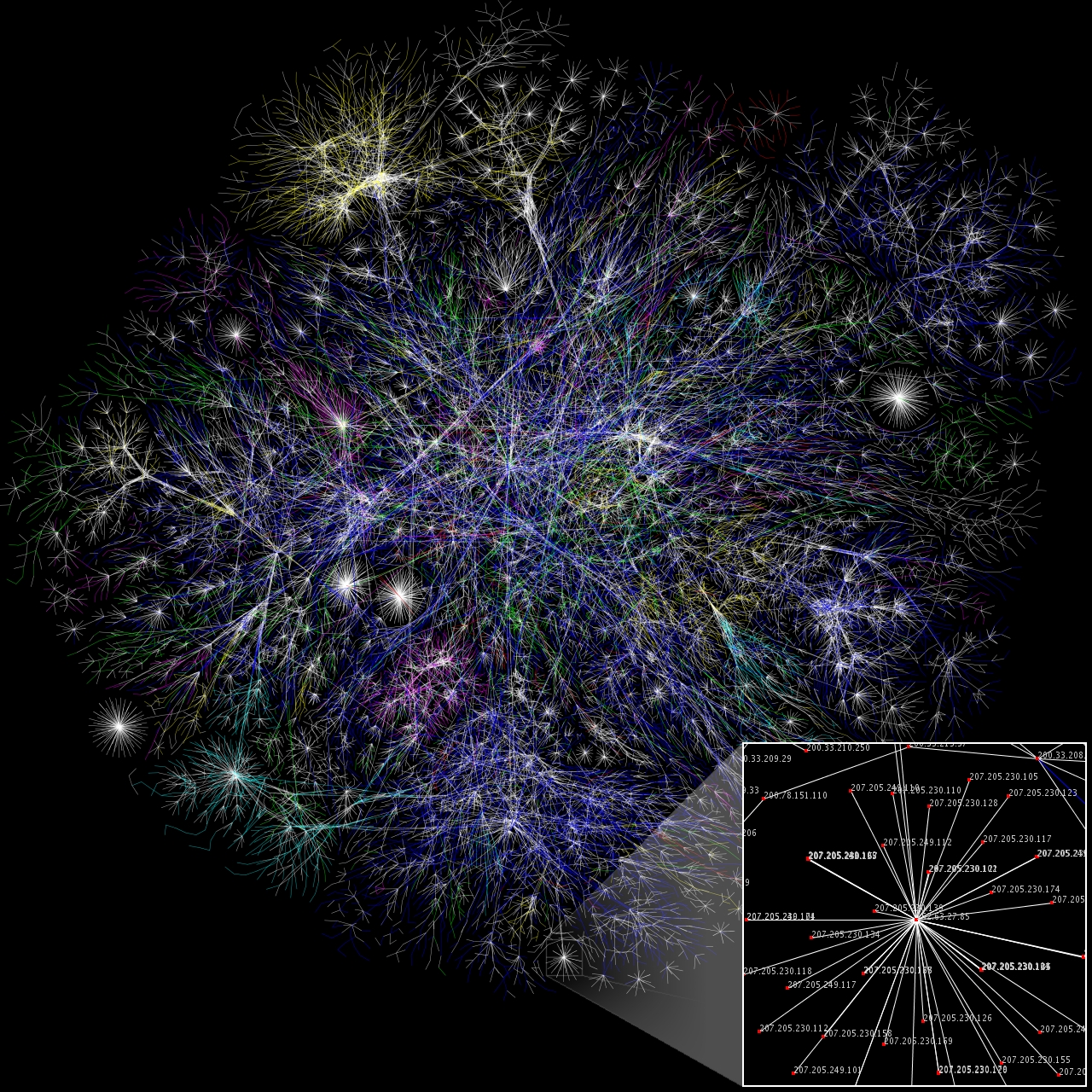
Internet_map_1024

In Nitzavim Moses warns that “The secret things belong to the Eternal our God; but those things which are revealed belong to us and to our children forever, that we may do all the words of this Torah.”  (Deuteronomy 29:28). It sounds perfectly reasonable as a sentence until one starts to look a little closer – what are the secret or hidden things being referred to here? What are the revealed? And why the need to state the distinction? It is an obscure verse and open to much conjecture.

Rashi understands this verse as one where Moses reassures the people who are standing and accepting the covenant for all time and all Jews – even those not yet born. They must be afraid that they will be held responsible for things about which they knew nothing, as part of some Jewish collective responsibility – indeed we are told in Talmud (Shevuot 39a) that” Kol Yisrael areivim zeh la zeh – all Israel are responsible, one for the other.” So in Rashi’s eyes Moses is explaining that any sins that were openly committed and that we might have been able to prevent or mitigate – these we remain responsible for. But actions done in secret, about which we can have no knowledge – these are left for God to deal with; and he goes on to explain that God will indeed punish sins that are not publicly known about, if they are not acknowledged or mitigated.

One of the great themes of the end of the book of Deuteronomy is ‘arvut’ – the mutual responsibility between Jews. As the leadership of Moses is coming to an end, he clearly foresees a splintering of the group, maybe the challenge of a number of different leadership candidates, and he does his best to prevent this by stressing the communal nature of our relationships with each other. So here we are reminded: we are part of a single people bound by a single covenant. We cannot afford to ignore what each other is doing, or to challenge what we see to be against the values of our tradition, or to excuse something as fringe or marginal or not impacting upon us.

There is a something else that adds to the oddity and opacity of this verse – in the scroll the words ‘for us and our children’ with dots over each letter. The reason for this scribal notification is not known, but it drags our attention to the verse asking for us to pay even more intense attention to it.

We read in the Talmud: Why are there dots over ‘for us and our children’ and the ayin of ‘ad’? To teach that they were not punished for the hidden things until the Jews had crossed the Jordan – the words of Rabbi Judah. Rabbi Nehemiah said to him: Is one ever punished for the hidden things? Doesn’t it say: to eternity? Rather, just as one is not punished for the hidden things, so they were not punished for the revealed things until the Jews had crossed the Jordan. (Sanhedrin 43b)

The Talmud seems to imply that the collective responsibility only comes into being once the Jews had arrived in the land, that the peoplehood only becomes absolute at the point they have a land. This idea has evolved as the Jewish people fulfilled the Abrahamic promise by being dispersed all over the world, and as the land became metaphor more than reality for so much of Jewish history to grow into a sense of collective arvut – of responsibility for more than our Jewish community but for the different communities of which we are part, and certainly our identities have become more complex and overlain with different relationships. We grow into our communities when we have shared purpose, shared values, shared space. But the dots over the phrase “for us and our children” direct us to look deeper and closer, and again Rashi comes to our aid. Rashi, (commenting on Psalm 87:6) suggests that “the hidden things are not sins, but people” – that while many Jews have left Judaism either through historical circumstance or through assimilation, and their children may never even know of their Jewish history and backgrounds, Rashi understands that their Jewish roots are never forgotten by God.

Now this may make some people uncomfortable. In Nitzavim we were entered into a covenant without either assent or consent – by our descending from Jewish parentage we are part of this covenant whether we like it or not. Jewishness is something that is given to us whether we wanted it or not. Similarly, the understanding of a verse around this covenant is that we can never escape it – even if we no longer are aware of being part of the Jewish people, by virtue of heritage all who descend from that time will find themselves brought back into it. One thing that it does do however is to bring into focus that we cannot really know anyone’s yichus, and that we should trust God’s judgement over our own. It also means that we cannot be narrow in our understanding of who is in our community, with whom we share responsibility – the obligation to care for others extends beyond the confines of family or known community, out to the whole human world – the arvut is rightly broadened out to include all the groups among whom we live.

This verse about the hidden and the revealed reminds us that we cannot know everything about the world. It reminds us that we have responsibility for what we do or should know about – and it also reminds us that one of the things we know is that we cannot know for sure where the boundaries of our community lie, only that they extend into the human race.

Danny Siegel wrote a wonderful poem which speaks to us in the same way, a poem I love to read and use to remind myself of the extensiveness of arvut:

“If you always assume/ that the person sitting next to you/ is the messiah/ just waiting for some simple human kindness/ You will soon come to weigh your words/ and watch your hands/ and attend to your responsibilities./ And/ if he so chooses/ not to reveal himself in your time/ It will not matter. (Danny Siegel, ‘A Rebbe’s Proverb (from the Yiddish)’)

Image taken from Wikipedia internet map http://upload.wikimedia.org/wikipedia/commons/d/d2/Internet_map_1024.jpg

Ki Tavo: Listening in silence and paying attention – belonging to God requires the habit of thoughtful choice

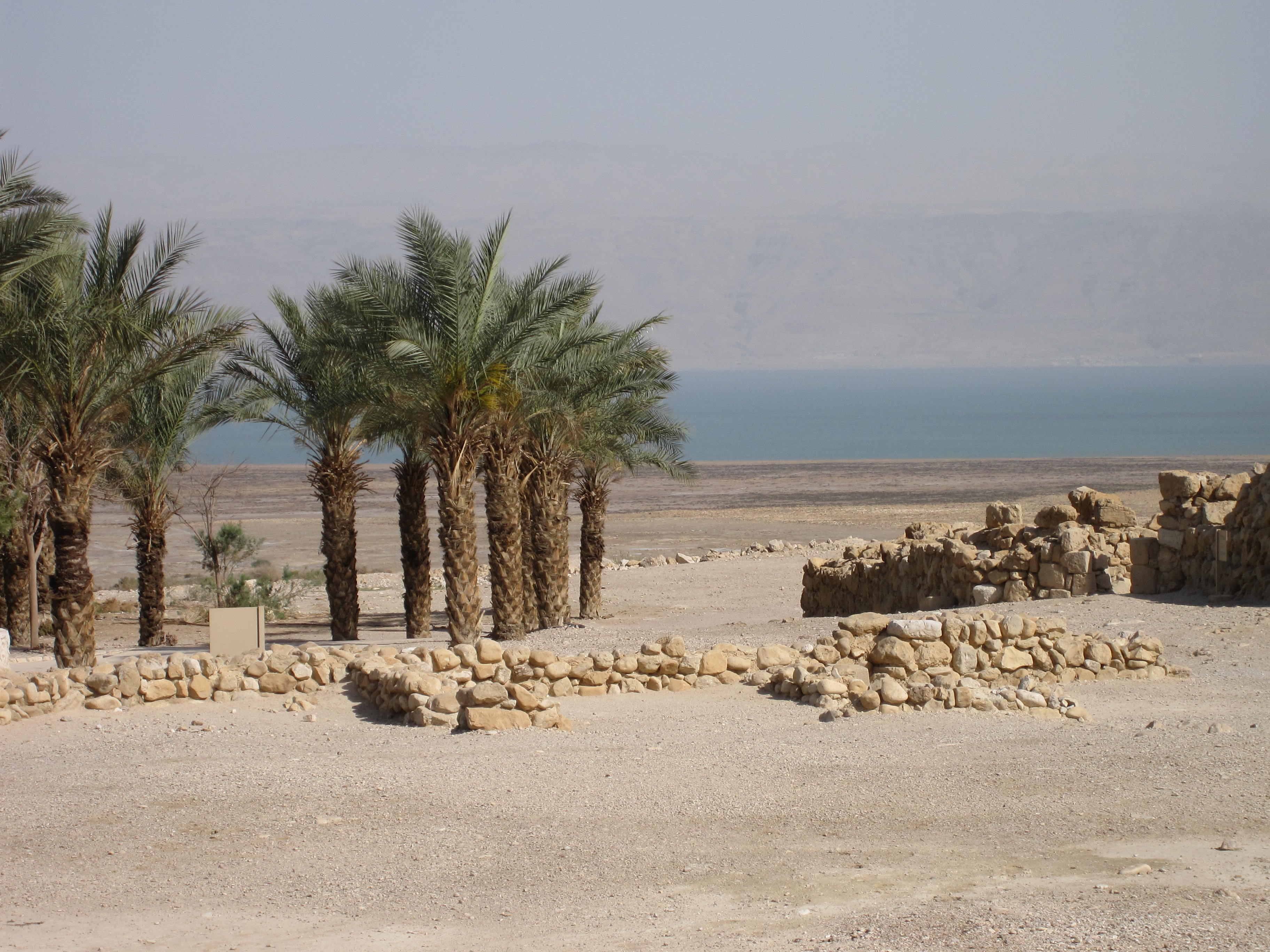
qumran


“Moses and the Levites spoke to all Israel, saying: Silence! Hear, O Israel! Today you have become the people of the Eternal your God:  Heed the Eternal your God and observe God’s commandments and laws, which I command you this day.” (27:9)

 Two phrases leap out at us when we read this verse. Firstly we recognise the words “Shema Yisrael” yet the imperative just before “Silence!” is new to us. And secondly we see that on this day, as the Israelites are poised to enter the land of Israel, they have become a people belonging to God.

 Why this demand for absolutely dedicated listening to what Moses has to say? And why only now are the Israelites described as being a people belonging to God – surely that happened long ago with Abraham, or certainly at Sinai when the covenant was agreed?

 Moses is determined to make clear that only now, here, on the banks of the Jordan, after the forty years of traveling in the wilderness,  about to enter the land and fulfil the promise made at Sinai, they would become the people he aspired for them to be – a kingdom of priests and a holy nation. Only now, here, in that liminal space when all things can still be possible, do they become a people – and more than that, a people who belong to  God.  But there are rules for this belonging – in the next chapter we are told “God will make you a holy people who belong to God, as was sworn to you IF you will keep the commandments of the Eternal your God and walk in God’s ways” (28:9)  and “The Eternal has chosen you this day to be for God a treasured people, as God promised you, and you must keep all of God’s commandments” (29:18).

 The Sefer HaChinuch tells us that this commandment is not like others which are specific and focussed, but is a more personal mitzvah about walking in God’s ways- imitating the divine compassion. To walk in God’s ways is to orient your life in such a way as to always try to make the thoughtful choice, to make a habit of good behaviour. To fulfil this mitzvah requires of us constant attention to ourselves – are we being the best person we could be? Are we acting as we would like a compassionate being to act?

 As we are in Ellul, the days before the Yamim Noraim, this is the question we should be asking of ourselves – are we walking in God’s ways?  Are we keeping the commandments so as to become sanctified by them?

However we see the work of walking in God’s ways and fulfilling God’s commandments, these questions come to challenge us – how are we living our lives? For if we are not walking in God’s ways then a great deal of difficulty follows, as detailed in this sidra. We may or may not remain cohesive, a people with shared traditions and values. And ultimately we may not keep the land on which our peoplehood is predicated.

 Sidra Ki Tavo is uncompromising in this respect. Being God’s holy people and belonging to God and to the Land is predicated on our own behaviour. No wonder Moses asked for silence to impart this information – it is a reminder for us to take nothing for granted. Not even our identity, certainly not our God.

Ki Tetzei: You Shall Not Remain Indifferent – The Extra Dimension in Jewish Law

            Parashat Ki Tetzei contains seventy two commandments, (some say 74: either way the largest number in any Torah portion). They deal with such diverse subjects as the treatment of captives, defiant children, lost animals, birds’ nests, roof railings, divorce, rights of aliens, loans, vows, and protection of works; parental guilt, charity for the poor, regulations for inheritance and fair weights and measures. Many attempts have been made to categorize such laws, but the words of Torah which conclude the duty to return lost property or to keep it safe until it can be restored to its owner – the words lo tuchal le’hitalem – you shall not remain indifferent (or you shall not hide or act as if you cannot see) seem to me to sum up the ethical principle which underpins these disparate laws most powerfully.

            Way back in the book of Genesis, when Cain says to God “am I my brother’s keeper?” the response from God is “What have you done, your brother’s blood calls out to Me from the ground” – in other words it is made clear to Cain that ‘Yes, we are responsible for each other; we must not remain indifferent to the situation of others, nor hide from their pain, nor avoid seeing their distress. More than that, we have to try to see ahead, to work out the possibilities that our actions or omissions may cause others. We are obliged to consider the effects of what we do upon other people.

‘Lo tuchal le’hitalem – you shall not remain indifferent’ It is a powerful dictum, a motto for every day life. It could have been formulated for our middle class existence, when people talk of compassion fatigue, of undeserving refugees; when we create rational and reasonable explanations for our unwillingness to care about the discomfort in the world we see around us.   Lo tuchal le’hitalem – you shall not remain indifferent – it is an in-your-face moral and ethical requirement, taking us further into our humanity, reminding us that however practical Judaism is, however much a religion of doing, the doing is based on our shared humanity, our striving to reach a fuller and richer knowledge of our Source.

            Nachmanides makes it clear that the mitzvah of returning lost property supersedes any inconvenience to the finder. He reminds us that the mitzvah applies to friends, strangers, and even to enemies. He says “Assist others. Remember the bond of humanity between you, and forget the hatred”. Benno Jacob builds on his commentary, and suggests that the act of helping an enemy by helping his lost animal is itself a means of arriving at reconciliation. But it is Pinchas Peli who crystallizes the heart of Judaism taught in this huge collection of disparate laws – “From the moment one notices an animal gone astray, or an object lost by someone, one must not hide oneself. Whether he is busy with something else, or whether he chooses to get involved, a person is in fact involved, and duty bound to bring the object to his home, keeping it there safely until it can be returned to its owner. While some legal systems require returning or handing over found property to the authorities, none enjoins the finder from ignoring the lost object in the first place.

            Judaism is an infinitely complex way of being. There is no single Hebrew expression to approximate the word ‘religious’ – the use of idioms such as dati (legally observant) or charedi (quaking in the presence of the lord) are recent innovations, and they are not only inadequate and parochial, they distort the essence of Judaism. Judaism is not only about what one does and doesn’t do. It is more than what rituals you keep, or what time you separate. It isn’t lived only in the spiritual plane nor exclusively in the material world, but is rooted in the ethical and the moral. A legal code which tells us to behave properly towards others, to look after lost property even of your enemy, to make strenuous efforts to return that property – this we all understand and appreciate. But that extra expectation, – you shall not pretend not to see or to notice this property – you shall not hide yourself or be indifferent to your surroundings, however inconvenient it might be for you to notice them and therefore to have to respond to them – that is a quintessentially Jewish requirement, a teaching which fully recognises age old human rationalizations or ways of glossing over what we’d rather not deal with.    

            At this time of year, in the month of Ellul, we examine our lives and the things we have done or left undone, affecting people around us as well as affecting ourselves. It is a time when we need to be honest, to stop hiding behind all the good reasons why we didn’t have time to do what we should have done, to stop sliding our eyes away from the pain we have participated in.

Lo tuchal lehitalem- you shall not hide yourself, you shall not be indifferent.   We are not permitted to look the other way, to continue with our lives as routinely as before. Hiding the truth from ourselves and not acting to help others is a direct prohibition. Indifference to our world is intolerable, unethical and it breaches our morality. As we continue the run up to Rosh Hashanah, the annual Heshbon ha Nefesh – accounting of our soul, we need to strip away the pretence, come out of hiding and look clearly and dispassionately at our world and our place in it.

Losing our indifference might be the best thing we do all year.

 wiesel indifference

Shofetim: reaching perfection must include the whole of our selves

Tucked away in today’s sidra, in a narrative about idolatrous worship listing the abominations practised by the surrounding peoples, is a verse that stands out for its shortness and its power:
תָּמִים תִּהְיֶה, עִם יְהוָה אֱלֹהֶיךָ.
You shall be whole-hearted with the Eternal your God. (Deut18:13)
The word translated here as “whole hearted” is “Tamim” perfect, whole, steadfast – but the word means so, so much more. It is used differently throughout bible to describe a set of characteristics of quite diverse people and things. Noah is described as an ish tamim hayah be-dorotav” – someone who was ‘tam’ in his generation. Jacob is described as of “ish tam yoshev ohalim” – a simple man (tam) who dwelled in tents.
The Torah itself is characterized by this quality of Temimut. The psalmist tells us “Torat Adonai temimah meshivat nefesh” ‘The teaching of the Eternal is temimah, renewing the soul” (Psalm 19:8). Even the presence of God in the world is described with this word: as Bible tells us of God, ‘The Rock, Whose deeds are perfect (tamim)’ (Deut. 32:4).
And of course there is that famous imperative when God first encounters and calls to Abraham, He says to him: (Genesis 17:1)
וַיֹּאמֶר אֵלָיו אֲנִי-אֵל שַׁדַּי–הִתְהַלֵּךְ לְפָנַי, וֶהְיֵה תָמִים
“I am El Shaddai, walk before me and be Tamim” –
While the word is used repeatedly in bible, of different characters and different times, what is most remarkable is that with all that varied usage, the Torah itself doesn’t ever define or explain what temimut actually is. From context we can see that there is something within it about wholeness, integrity, rightness, a steadfast loyalty to God, blamelessness, uprightness – the synonyms could go on. And yet – when God tells Abraham to walk before God and be Tamim, it seems to be more than a sum of all these good attributes, or even a state of being. It is to somehow walk in the awareness of the presence of God, to see the world mediated through that experience of the divine. It seems to be more richly layered than simple whole-heartedness, describing something about the whole person, the good bits with the bad, the bits we like and the bits we are embarrassed about. We serve God with the full comprehensiveness and extensiveness of our lives.

Ekev: blessing God after meals for the good land God has given us. Or “don’t forget where your food comes from”

We learn in sidra Ekev of the importance of giving thanks to God after a meal – “V’achalta v’savata u’vayrachta et Adonai Elohecha al Ha’aretz ha’tovah asher natan lach. When you have eaten and are satisfied, bless the Eternal your God for the good land which God has given you.” (Deut 8:7-10)
The Birkat Hamazon has a number of blessings according to the Talmud (Berachot 48b)–
Birkat Hazan – to praise God who sustains the world;
Birkat Ha’aretz, to thank God for everything, focusing on the Land of Israel;
Boneh Yerushalayim – the petition to protect and rebuild Jerusalem,
And finally HaTov ve’haMeitiv, general praise and thanks for God.
These, and the zimun, the general invitation when three or more eat together, are taken from the verse like this:
When you have eaten your fill, you shall bless – Birkat haZimun;
The Eternal your God – Birkat Hazan;
For the…land – Birkat Ha’aretz;
…the good (land)… – Boneh Yerushalayim;
That God has given you – HaTov ve’haMeitiv.
While there is some dispute about the zimun and the final tov ve’haMeitiv, there is general agreement that to fulfil the obligation we must make the three blessings, of God, and of the land, and of Jerusalem, and that these are biblical commandments. (Jerusalem Talmud: Berachot)
Yet earlier on that same page in the Gemara textchallot-jan-2012.jpg, we are told that Moses composed the Birkat hazan , that when the Manna fell, Joshua composed Birkat Ha’aretz when the people entered the Land of Israel, David and Solomon composed Boneh Yerushalayim at different stages of the building of the city, and the Rabbis at Yavneh composed HaTov ve’haMeitiv in response to the burial of the martyrs of Beitar!

Wherever they do come from the Birkat Hamazon, the blessings recited after food, is a different animal than most other blessings we do, which tend to be one-liners and which are focussed on the particular action involved and which, crucially, we do BEFORE the act. (The only one we do afterwards apart from Birkat Hamazon is the blessing after lighting the Shabbat candles, and then only so as not to say a blessing in vain, as we may bless and then not have time before Shabbat comes in to kindle the flame). Yet here in relation to food we bless BEFORE, with haMotzi, and then we go in in Birkat Hamazon to ask for blessing for the land, for Jerusalem, for God as protector as well as simply thank God for the food.
So why the extra Berachot, and why the need to extend the sense of our being blessed not only to the meal we have enjoyed but to the land of Israel, to Jerusalem, to our relationship with God? Nachmanides suggests that the long Birkat Hamazon is needed as an antidote to pride and arrogance. In the context of the biblical passage from where it comes, Moses warns the people against forgetting who is behind our food, who gives us our wealth – God. Moses warns that we must not just take our food from the land as if it is a right, but to remember the relationship we have with the land, that it is itself a symbol of our relationship of obligation to God.