Ki Tavo: Moses’ words echo today – what of us will echo in the future?

Ki Tavo includes the famously difficult passage known as the tochecha, the red lines of society’s expectations laid down mainly in the form of the cursing of the one who disobeys, but there is a great deal more in this speech which is part of the series given by an increasingly anxious Moses as he approaches his death. The whole thrust of the book of Deuteronomy is given life by Moses’ desperate wish to help the Israelite people continue on their journey with God after he is no longer around to help them. So here we have the ritual of sacrificing the first harvested fruits of the land to God carefully spelled out – the fruits should be put in a basket, taken to a specific place of worship, given to the priest of the time – and one of the earliest bits of liturgical speech is also given here – the people must say to the priest “I profess this day to the Eternal­­­­­­­­­ your God that I am come unto the land which the Eternal swore to our ancestors to give us”. The priest will take the basket and place it at the altar, and then the speech is to continue: “A wondering Aramean was my father, and he went down into Egypt, and sojourned there, few in number; and he became there a nation, great mighty and populous. And the Egyptians dealt badly with us and afflicted us and laid upon us hard bondages. And we cried to the Eternal the God of our ancestors, and God heard our voice and saw our affliction and our toil and our oppression. And the Eternal God brought us out from Egypt with a mighty hand, and with an outstretched arm, and with great terribleness and with signs and with wonders, and God brought us into this place and has given us the land, a land flowing with milk and honey. And I have brought the first of the fruit of the land which you O God have given me”.

The whole script is prescribed – and after it what shall happen – you will then worship God, you will rejoice in all the good that God has given to you, and so on.

The text is familiar to even the most distanced of Jews – it is the basis for the text of the Haggadah that we read at Pesach. Word for word Moses’ script is recited when we remember the Exodus from Egypt at the Seder each year. The actual figure of Moses may never have been allowed into the Haggadah in case people should begin to believe that it was his leadership rather than God’s that took us on our journey into peoplehood and covenant, but that becomes irrelevant when we realise that something far more important has been imported untouched by the editorial process of the book – the direct prayer of Moses is embedded in the text as if in amber. The rabbinic statement that a scholar does not ever die fully if his teachings are remembered – phrased evocatively as “his lips move in the grave when his words are recounted” – means that Moses’ teaching really has been passed down the generations and his humanity and presence really do remain among us.

As we move towards the Yamim Noraim we are prompted to remember those who taught us our religious and ethical values, and it is a custom in this period to visit the graves of those family members and teachers who have died. We are going to be facing our own ‘day of judgement’ to spend at least one day looking at our lives from the perspective of our own death as we abstain from food and drink and the normal everyday activities we do every other day of the year. We weigh up our actions in the past year and maybe further; consider who we have been, what lessons can be inferred from how we have lived our lives. So the question we have to ask of ourselves now is – how have we done? How are our actions an expression of our values? Will we have been a strong link in a chain or an irrelevant and vestigial structure appended to the community without much adding to it?

Every year our liturgical calendar gives us time to consider whether our lives are going in a direction we can be proud of, whether our lived lives are an valuable addition to the world we care about or not. So will the text of our lives be read in the generations to come or as we pass into eternity will we also be forgotten, no stories remembered with warmth and love, no wisdom or behaviour of ours held close to those still in the world? Our legacy does not have to be high profile or high achieving. But how we lived our lives should matter.
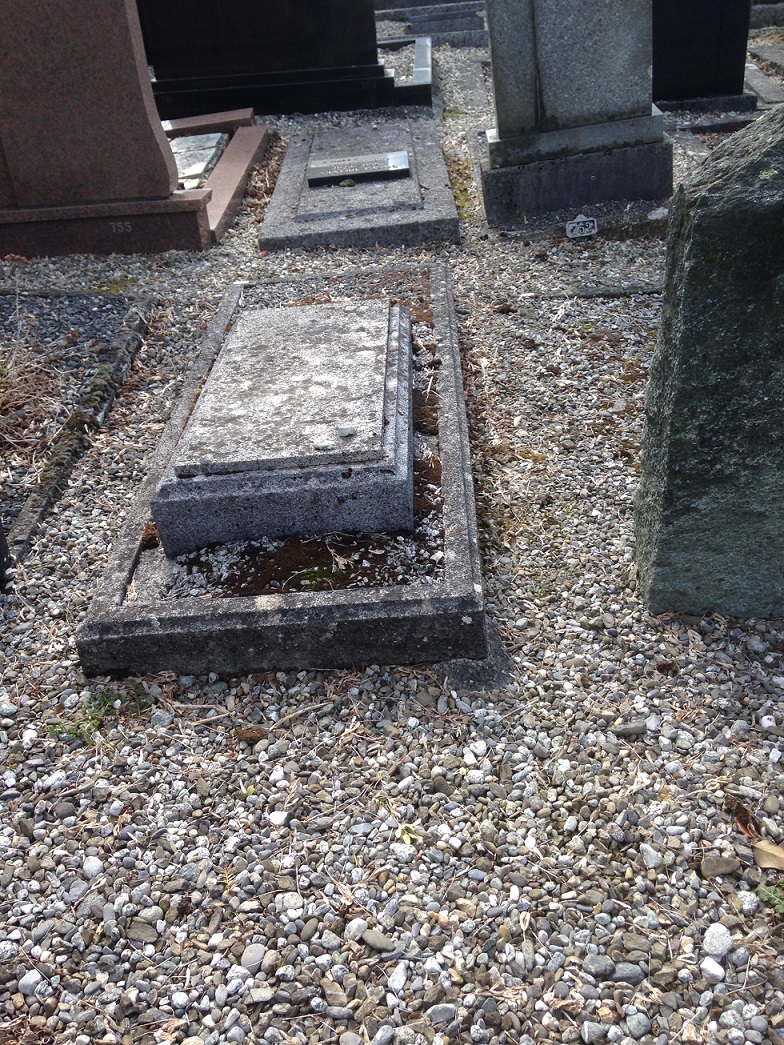
vati grave

illustration is the grave of Walter Rothschild in Jewish Cemetery Lausanne

From Rosh Chodesh Ellul, the pace picks up – time to brush up our souls

Yomtov never seems to arrive on time. Early or late, it catches us by surprise. And yet – the date never changes and the calendar has a number of events to remind us. The month of Elul comes as a powerful prompt to wake up and, if not smell the coffee, then at least taste the teshuvah.   Elul is the month before Rosh Hashanah, the month of preparation and repair. It is said to be the month when God is most accessible to us, hinted in the acronym forming its name “Ani le’dodi v’dodi li” I am my beloveds and my beloved is mine” – a reference to the intimacy we can create at this time. The shofar is blown in morning services, waking us from our complacency and dream-like existence. Selichot, the poems of pardon, feature in the liturgy towards the end of the month.  The haftarot of comfort are in full swing. So why are we often so surprised at the timing of the festivals? What more can persuade us to get going on our repentance, apologise for our misdemeanours and try to make good the damage in our lives and relationships? How do we guard against being caught out when the Days of Awe begin in Tishri? As a child my parents bought my new winter outfit in time for Rosh Hashanah.  Preparing to ready oneself to stand in front of God called for a new garment. As a kittel-wearing adult this particular ritual is less important to me, but the idea behind it stands.  We want to be renewed, for our souls to look less shabby, and that takes a positive act to make happen.  Elul stretches in front of us – time to make those phone calls, write those letters, give back the things we took from others, repair our corner of the world. It may be that we are so busy with our teshuvah and reparations that Yomtov sneaks up on us anyway, but with the work in progress it won’t be such a surprise.

Thoughts for Rosh Hashanah and the coming year: believing in the aspiration to goodness.

I was asked to write my thoughts in a booklet to be sent to the Movement for Reform Judaism’s constituent congregations on “What inspires you, how you will change and what you will change in the coming year?”  and I share my contribution here.

Rabbi Joseph, Morris2

Rabbi Morris Joseph is by way of a hero of mine. A man who had journeyed in his life from service as rabbi of orthodox communities, to the West London Synagogue, his published writings belie the fact that he was essentially a man of the 19th century and have much to say to us in the 21st. In his sermon on “Reform and Reformers” he challenges his listeners to think about why they are in a Reform community at all. Dealing with those who joined for the laxity of “Judaism lite” or who enjoyed the aspect of revolt against established authority he admits the difference between the ideal theology and its less than ideal practitioners. He says “If the religious tone of our congregation is unsatisfactory, it is simply because so large a number of our members do not realize the responsibilities which their membership imposes upon them. They either attach no meaning to Reform, or they attach a wrong meaning to it.”. He goes on to remind us that the relaxation of some laws is done to free us for the meaning behind the law: “..because we are less bound, ritually and ceremonially, than other Jews. We are more free in one sense ; shall we accept that freedom without giving something in return, or, worse still, make it a pretext for stealing a wider and far less desirable freedom ? Why has the yoke of the Ceremonial Law been lightened for us ? Surely in order to place us under the yoke of a higher law, to set our energies free for the truly religious life. If we do not believe this, then we degrade Reform to the level of mere convenience and selfishness. We make it a force acting not on the side of Religion, but against it.”

Morris Joseph believed in the progressive nature of Judaism. He thought that in order to
live, Judaism had to adapt itself to the shifting ideas of successive ages. But that did not mean that he did not also believe in the eternal nature of the Jewish message, and he preached wonderful sermons that set out a theology of high ideals and the importance of trying to live up to them. Ultimately, his measure of a person as not their theology, but the way they lived their lives. The point of Reform Judaism was to free our energies not to focus on the finest ritual details but to become the best, most honourable person we could become. His hope was that all who joined his synagogue would do so under “a strong and solemn sense of ethical and religious responsibility”.

Growing up in the Bradford Synagogue, one of the earliest Reform Communities in the country after West London and Manchester, the influence of Morris Joseph could still be felt. His call not for Judaism lite but for an ethical Judaism connected to its history and covenant with God still echoed within that beautiful building. The Jewish world has altered unimaginably since his death in 1930, and the wartime influx of German Jews to Britain changed and energised Reform synagogues in this country. The establishment of the State of Israel has also impacted on what it means to be Jewish. Yet his words continue to inspire me – his belief in the goodness of humanity, in the striving to be a better person expressed as our religious obligation, in his love of prayer and liturgy and his writing of new prayers for his community.

So what will be my change in the coming year? After more than eleven years successfully pioneering a job sharing model with Rabbi Sybil Sheridan, her retirement means it is time for me also to move on. At the time of writing I do not know what this will mean, but I shall be accompanied as always by the words and the teaching of Morris Joseph who believed in religion, in humanity, in community, in the Jewish people and in the aspiration to goodness.

What about myself will I change? I will once again search my heart and mind in order to identify how I can work this year towards becoming my best self, even though I know that this endeavour will never be fully achieved – and I will neither give up nor despair because I know this. And I will aspire to his ideal of becoming one of “those who have helped to form anew the moral life of Israel and to vitalize it afresh as a world-wide force.”

Nitzavim – standing together, united in our diversity

Parshah Nitzavim is always read on the Sabbath immediately before Rosh Hashanah. In part that is fortuitous – a wrinkle of the calendrical cycle.  

In part though there is a deeper connection, because it reminds us that all the people will indeed be standing together in the presence of God during the Yamim Noraim; and in part, I think the reason is because the importance of this speech of Moses – it is one that is critical for the people – Do not forget where you come from, what you are called to do, what you will have to give an account of. And do not forget that you are one people.

The unity of the Jewish people, standing together, all voices being heard from the richest to the poorest, the oldest to the youngest – choose any spectrum you like – ALL the Jewish people are, says Moses, “Nitzavim, Culchem” – standing present, all of us. We are all part of the whole; each of us has a role to play and a gift to give. Tradition teaches that everyone who will ever become a Jew also stood at Sinai – we too were there, accepting the covenant and agreeing to its obligations.

So the unity of the Jewish people is paramount, in prayer during the Yamim Noraim all of us should be there. However sinful we may feel ourselves (or others) to be, our liturgy calls us all together to pray in one community.  And the unity of the Jewish people is paramount in memory and mission – in how we fulfil what we are called to do. Tragically it seems to me that this unity is unravelling in so many ways. Many Jews feel less and less bound to the community, less willing to give the time or the thought that is needed to help them and the community thrive. And many Jews feel out of sorts with the community – be it defined as the establishment, the synagogue, the State of Israel, the traditions, the rituals, the beliefs or behaviours of other Jews.

I think we all have reservations about what it means to be one people. We all wonder why, in hard pressed times, we are expected to give so much of ourselves. We look at other sectors of the community and shake our heads. I for one find the hareidisation of Judaism horrifying, others of course will find the feminising of Judaism equally odd.  In Israel there is a growing gulf between the dati’im (observant of all the legalities) and the hilonim (secular Jews whose identity is Israeli)  The issue is, how to we still live with each other – how do we find the common ground of the covenant made at Sinai and stand, all of us together?  How to we make a bridge or a series of connections that allow us to stay one people without all having to bend to one common denominator, but instead allow our diversity to be one of the values we cherish? Nitzvavim reminds us we are all there – from the leaders of the community to the most menial, men, women and children. Diversity is built into our unity. Now we need to work at building unity from our diversity.

Balak of Moab who did not know what he did not know

Israel faces a crisis – and yet does not seem to know it. Balak, King of Moab, is alarmed at the prospect of Israel crossing his land, has seen what they have done to others as they have journeyed towards his land. The Canaanites were entirely destroyed at Hormah (Num 21:3),  then it was the turn of Sichon the King of the Amorites (21;25-26)  who would not let them pass through his land and was defeated and destroyed, and finally Og the King of Bashan (21:35) who also went out to battle against them was utterly ruined. So Balak chose to get some supernatural help, and approached Balaam, a well known prophet the power of whose blessings and curses were legendary.

The sidra focuses entirely on the negotiations between Balaam and Balak, and the consequences of this discussion. What is happening in the Israelite camp is irrelevant – bible is telling us what is happening “offstage” so to speak, a side story that is however hugely important to the Jewish people even today.

Famously, to begin prayer, we take from this sidra the final words of Balaam, which he speaks almost without conscious intent. Balaam is hired to curse the people of Israel, though he knows that he cannot do this, for God has made clear that the Israelites are special and that the normal rules of blessing and cursing them will not apply. At the end of a long process of attempted curses in order to satisfy the wishes of his paymaster Balak, Balaam blurts out the phrase “Mah tovu ohalecha Ya’akov, Mishkenotecha Yisrael” – “how good are your tents Jacob, your dwelling places Israel” and this statement is taken by us as a blessing, and used as the phrase with which we begin our services – a tradition that was already established by the time the 9th century Babylonian Rav Amram compiled his first siddur and instructed us “”When entering a synagogue say: ‘Mah tovu ohalecha. . . V’ani, b’rov chas’d’cha; I, through your abundant love, enter your house; I bow down reverently at Your holy temple.”

Our liturgy begins deliberately by turning the curse of an enemy into a blessing for us to express our delight in entering a synagogue, confident that God will accept our prayer. The Talmud understands the tents and dwelling places as being the synagogues and houses of study of the Jewish people (Sanhedrin 105b). The Midrash on the other hand, quoted by Rashi (ad loc) (also Baba Batra 60a), sees the phrase as a paean of praise to modesty and privacy: “When Balaam saw that the tents of the Israelites were set up so that the entrance of one did not face the entrance of another, he praised them with the “Ma Tovu”.

Both traditions are teaching that it is the thoughtful behaviour of the Jews, either their respect for each other’s private space and personal modesty, or else the connection to God through prayer and study, that brings about the change in Balaam’s words, transforming attempted curse to fluent blessing. And that may indeed be a good lesson to draw from the story, but I think it is important to see respect for the other not as an end in itself, but as an important way of being.

To take this further: In this sidra the Israelites had no idea that Balak was so nervous of them. They were not intending to destroy Moab (Deut 2:8-9) who were distant relatives, being descended from Lot the nephew of Abraham. So while Balak was terrified of this horde of people who seemed to be destroying the peoples in their path – and was presumably ignorant of the requests for safe passage that were sent by the Israelites but that were not accepted and instead met with hostility and warriors – the people themselves knew nothing of their effect on the other peoples of the land. They see themselves only as innocents, wishing to travel through, to take nothing but what they would genuinely trade or buy from the inhabitants.

So the ignorance of Balak is matched – even dwarfed – by the ignorance of the Israelites, both of the effect they were having on others, and the reputation they were creating for themselves. Their ignorance extended to the machinations of the Moabite King and the professional prophet he hired, and also to the work that God put in to protect the Israelite people travelling through the desert. In the words of Donald Rumsfeld, they did not know what they did not know.

While Rumsfeld, then US defence secretary, was (unfairly) awarded the Plain English Campaign’s trophy for most obfuscating remark in December 2003 for the words: “Reports that say that something hasn’t happened are always interesting to me, because as we know, there are known knowns; there are things we know we know. We also know there are known unknowns; that is to say we know there are some things we do not know. But there are also unknown unknowns – the ones we don’t know we don’t know”. (Rumsfeld on February 12, 2002 at a press briefing at the White House on WMD)  The story of Balak is illuminated for me by his words. The Israelites knew the things they knew – though they did not always respond in the way that that knowledge would lead one to expect. They knew that God was looking out for them and providing for them, but they still rebelled; They also knew some things that they did not know – how to get into the land, when that would be, if they would succeed.  But they simply didn’t know how they were being perceived by the peoples whose land they needed to cross to get to Israel, they didn’t know how their reputation grew to be so fearsome that Balak was desperate for extra help, and they didn’t know that God was quietly active in the background in order to protect them.

What God is doing in this narrative remains, to the Israelites, an “unknown unknown”. Rabbi John Rayner would say that God does not intervene in the world, but that God is active in the world –meaning that God’s will is manifested in the actions of people: the choices by Balak and Balaam in this text, as well as the behaviour of the Israelites, being prime examples. Our daily actions, how we conduct ourselves and how that leads other people perceive us matters; indeed it is the one thing that can transform our world, that is able to transform curses to blessings. We cannot know the totality of the effects our choices have, but I would like to think that modern Jews and Israelites are more aware and perceptive than their ancient forbears about the effects on, and the analyses of, the peoples and lands around them of their actions. It cannot be enough to care for the wellbeing only of other Jews. It cannot be enough to spend our time in study and prayer. Such caring, such study must lead to good and ethical action, to being part of the action of God in the world.

The choices we make in our behaviour matters. How other people see us, even if we are currently unaware of them, or do not notice them, or find ways to sideline them – matters. If we see something as self defence but others see it as aggression – it matters. Even if their construction of events is something we would not recognise, their understanding must be understood and taken seriously and addressed. The bible is clear that God does not intervene in history – the story of the talking donkey shows how the bible views such intervention – but it is equally clear that the choices people make, whether they fully understand the situation or are in apparent ignorance of it, have real effects in the world. It is up to us, as it was to Balaam, to make the choices God would wish us to make, or we may find that the situation is taken out of our hands and we will lose the chance to make good choices and bring the will of God into our world. How then will curses be turned into blessings?

previously published on lbc.ac.uk