Ki Tavo: Moses’ words echo today – what of us will echo in the future?

Ki Tavo includes the famously difficult passage known as the tochecha, the red lines of society’s expectations laid down mainly in the form of the cursing of the one who disobeys, but there is a great deal more in this speech which is part of the series given by an increasingly anxious Moses as he approaches his death. The whole thrust of the book of Deuteronomy is given life by Moses’ desperate wish to help the Israelite people continue on their journey with God after he is no longer around to help them. So here we have the ritual of sacrificing the first harvested fruits of the land to God carefully spelled out – the fruits should be put in a basket, taken to a specific place of worship, given to the priest of the time – and one of the earliest bits of liturgical speech is also given here – the people must say to the priest “I profess this day to the Eternal­­­­­­­­­ your God that I am come unto the land which the Eternal swore to our ancestors to give us”. The priest will take the basket and place it at the altar, and then the speech is to continue: “A wondering Aramean was my father, and he went down into Egypt, and sojourned there, few in number; and he became there a nation, great mighty and populous. And the Egyptians dealt badly with us and afflicted us and laid upon us hard bondages. And we cried to the Eternal the God of our ancestors, and God heard our voice and saw our affliction and our toil and our oppression. And the Eternal God brought us out from Egypt with a mighty hand, and with an outstretched arm, and with great terribleness and with signs and with wonders, and God brought us into this place and has given us the land, a land flowing with milk and honey. And I have brought the first of the fruit of the land which you O God have given me”.

The whole script is prescribed – and after it what shall happen – you will then worship God, you will rejoice in all the good that God has given to you, and so on.

The text is familiar to even the most distanced of Jews – it is the basis for the text of the Haggadah that we read at Pesach. Word for word Moses’ script is recited when we remember the Exodus from Egypt at the Seder each year. The actual figure of Moses may never have been allowed into the Haggadah in case people should begin to believe that it was his leadership rather than God’s that took us on our journey into peoplehood and covenant, but that becomes irrelevant when we realise that something far more important has been imported untouched by the editorial process of the book – the direct prayer of Moses is embedded in the text as if in amber. The rabbinic statement that a scholar does not ever die fully if his teachings are remembered – phrased evocatively as “his lips move in the grave when his words are recounted” – means that Moses’ teaching really has been passed down the generations and his humanity and presence really do remain among us.

As we move towards the Yamim Noraim we are prompted to remember those who taught us our religious and ethical values, and it is a custom in this period to visit the graves of those family members and teachers who have died. We are going to be facing our own ‘day of judgement’ to spend at least one day looking at our lives from the perspective of our own death as we abstain from food and drink and the normal everyday activities we do every other day of the year. We weigh up our actions in the past year and maybe further; consider who we have been, what lessons can be inferred from how we have lived our lives. So the question we have to ask of ourselves now is – how have we done? How are our actions an expression of our values? Will we have been a strong link in a chain or an irrelevant and vestigial structure appended to the community without much adding to it?

Every year our liturgical calendar gives us time to consider whether our lives are going in a direction we can be proud of, whether our lived lives are an valuable addition to the world we care about or not. So will the text of our lives be read in the generations to come or as we pass into eternity will we also be forgotten, no stories remembered with warmth and love, no wisdom or behaviour of ours held close to those still in the world? Our legacy does not have to be high profile or high achieving. But how we lived our lives should matter.
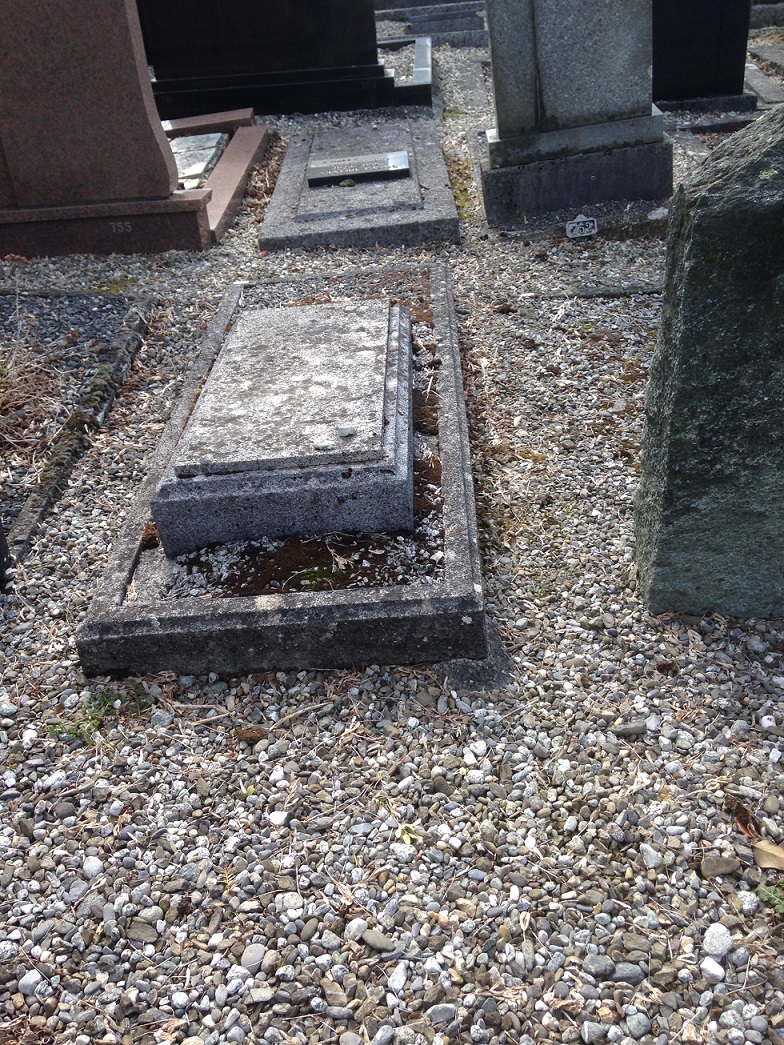
vati grave

illustration is the grave of Walter Rothschild in Jewish Cemetery Lausanne

Bereishit: two questions to two generations – where are we now?

The Torah begins with two separate stories of creation. The first one is a very structured and ordered story, with each stage (or day) developing order out of the tohu vavohu, the chaos of the beginning. God creates by speaking words which then bring forth the thing – light and dark, and day and night. The heavens and the earth, each surrounded by their own watery boundaries. Sea and dry land.  Grass, herb yielding seed and fruit trees. Sun moon and stars. Water living creatures and those that fly in the air. Cattle and land walking creatures. Human beings. And Finally – Shabbat. God declares the goodness of each category in this physical world being created, and with the creation of humankind God sees that everything created is very good. And God blesses the Sabbath day.    The second story is a different narrative, and can be read as either complementary to the first adding details, or else as an entirely different tradition. In this story, human beings are created first rather than last, and man is created before woman, instead of them being created together. We are told the story of the Garden of Eden, with its trees of knowledge of good and evil, and of eternal life. The human beings eat from the first tree and are expelled from the garden lest they eat of the second. Their relationship is clearly not ideal, yet they produce children. Cain and Abel each offer a sacrifice to God, but while the sacrifice of Abel is accepted, the sacrifice of Cain is not. Cain, rejected by God, kills Abel his brother.                                                                                                                                The generations continue. Agriculture and technology become part of their worlds. But by the time of Noah ten generations after Adam, the world is a terrible place and God  has had enough of this creation. God is ready to destroy it…

Dvar Torah

Vayikra Adonai Elohim el ha’adam vayomer lo “ayekah?”  And the Eternal God called to the human beings (hiding in the garden) “where are you?” And the human said: ‘I heard Your voice in the garden, and I was afraid, because I was naked; and I hid myself.’ (3:9-10)

Vayomer Adonai el Kayin, Ei Hevel achicha? Vayomer ‘lo yadati. Hashomer achi Anochi?’ And God said to Cain, where is Abel your brother? And he said “I don’t know. Am I my brother’s keeper?” (4:9)

Two questions that God puts to two generations in the beginning narratives of Genesis.  In the first the people respond in fear, having understood just how vulnerable they are. In the second Cain tries to brazen out the fact he has murdered his brother, hoping somehow to get away with it. The first is a sin against God, the second a sin against another human being. We are learning in these stories the limits of behaviour. But we learn something else that is quite startling. What becomes clear in God’s response to Adam and Eve is that while they have disappointed God by taking the fruit of the tree of knowledge of good and evil, worse is that they do not take responsibility for their actions – the man blames the woman and the woman blames the serpent. They want, they desire, and they will lie in order to try to fulfil that craving. When they are sent from the garden the woman is told (3:16) that her desire will rule over her (yimshol). Humankind will always be trying to master their own selfishness and wants, it will be an ongoing struggle. But Cain, he seems to struggle rather more than his parents, he responds out of disappointment and rejection when God does not accept his offering, but does accept that of his brother Abel – God says to him ‘Why are you angry? and why is your countenance fallen? If you do well, shall it not be lifted up? and if you do not well, sin couches at the door; and to you is its desire, but you may rule over it.’ Ve’ata timshol bo (4:7). Cain is given the possibility of triumphing over his selfishness – albeit he only takes it up after the awful event, when he repents and says that his punishment is more than he can bear.

The rabbis notice the difference in the taking on of responsibility. According to the midrash (Genesis Rabbah 22:13) Cain later meets Adam who asks him about the punishment he received, and Cain tells him “I repented and am reconciled”. At that point Adam began to weep and to keen, saying “so great is the power of repentance, and I did not know”.

The power of God’s words to Cain is proved – while we will always struggle with behaving well, while the willingness to behave selfishly and thoughtlessly is always close by and ready to come to the fore, we can indeed take responsibility for our behaviour and choose NOT to behave in a damaging and egotistical way. We can think of others, we can choose to forgo what we want for the benefit of our community or wider society, we can decide not to take, not to hurt, not to ignore.

So soon after the yamim noraim the lesson is driven home in torah. Repentance is always the path back to God, who waits for us patiently, hoping to be found. And Torah reminds us of our human frailty – that we might rather lie than take responsibility for our actions, that we may prefer to brazen out what we know to be unacceptable behaviour, or deny our accountability or liability – human beings will always try to find a way to get what we want or what we think we deserve. But it is the taking of responsibility, the true acceptance of what we do and the genuine desire to become better people that will help us to win the struggle so that we too will be able to overrule our baser natures and become a little more like the divine.

After the Days of Awe, the echoes of teshuvah continue to be heard

We have spent the last month in a frenzy of Jewish Festivals, from Rosh HaShanah on through the Ten Days of Teshuvah through to Yom Kippur, the full week of Sukkot and finally ended with the revelry of relief that is Simchat Torah.

In a sense we barely draw breath as we navigate our way through what one colleague terms “the autumn manoeuvres”, and while we reel from one festival to the next the tropes of repentance and return, the familiar tunes in minor keys, the moments of introspection, the food and the fasting, the sensation overload that is Sukkot, and finally the celebratory extravaganza as we complete the cycle of Torah readings and begin again.

So here we are at the new beginning, the post yamim noraim moments when we face living in the new year and the challenge of putting our resolutions into practise. And suddenly there is no obvious structure leading us through the process of Teshuvah – we are on our own, left to find a way to live our lives aspiring to be better people, hoping to become the best people we can

The first time a driving instructor suggested I signal, look in my mirror, remove the handbrake and move into the flow of traffic, I remember the surge of adrenalin fuelled panic as I realised I was in charge of more than a ton of moving metal. There seemed to be a huge stretch between learning about it in theory and actually driving a real car among real people. I am sure that each of us can remember a moment of realisation that life was expecting something from us, and there could be no going back. Be it the first moment in a new job when someone mistook us for a seasoned professional, or the first time we understood that a new baby was totally reliant on us, or even the first time we read Torah or agreed to sit on a synagogue committee – suddenly the world is different, and we rise to the expectation rather than admit that we don’t really know.

Well Teshuvah is rather like that – God expects something from us, we expect something from ourselves, we have thought and reflected and vowed to change our behaviour in the quiet of a synagogue service or in a moment of honest self awareness and now we have to step up and live our lives according to that aspiration.

The period of festivals just past take the title of Yamim Noraim – Days of Awe; and Awe is an emotion we tend not to be so comfortable with these days. A mixture of reverence and fear, of overwhelming amazement and intense connection, the whole idea of awe is one we tend to edge away from. Yet according to the neuropsychologist Paul Pearsall, Awe should be recognised as the eleventh emotion, added to the list of ten that researchers already use to describe states of being.

In his book “Awe” he describes the emotion as “The valuable, irresistible fascination, the highest elation and sometimes most profound sadness that leaves us in a state of puzzled apprehension, perplexing dread, yet appreciative wonder and hope regarding the vast mysteries of life”.   Later on he talks about Awe being the emotion that “causes us to feel more completely alive than we ever thought possible”.

This is the feeling we need to take with us into the new year ahead. Not as intensely as maybe we experienced it throughout the Days of Awe, but as an awareness, the resonance of an echo, as we continue in our lives. When God speaks to Job after the thunder and whirlwind, what he hears is “a voice of slender silence” (often translated poetically but less truly as “a still, small voice”. When the voice of God comes to prophets and even to some rabbis in the Talmud they hear a “bat kol” – the daughter of a voice, again a poetic reference to the echo of a sound when it has already passed. This is the closest we can get to God in our ordinary and everyday worlds, the closest we can experience beyond our own world, and as the prophets and others found, it was enough to enable them to keep going.

So as we leave the intense, profound, formal and ceremonial Days of Awe, let’s try to hold on to the echo of the awe, the appreciative wonder, the mystery, the understanding that there is more in the world than we will ever comprehend, and that this does not need to make us feel fear or that we are hostages to some random universe. The lessons of the past month tell us that while we may reel from one event to another, journey in an instant from profound sadness to great joy (and back), sometimes feel out of control or else out of energy, we move onwards in our live, we have opportunities to change in so many ways, possibilities to grow and learn, and this is good.

Shanah Tovah – may your year be new and filled with possibilities

Nitzavim – standing together, united in our diversity

Parshah Nitzavim is always read on the Sabbath immediately before Rosh Hashanah. In part that is fortuitous – a wrinkle of the calendrical cycle.  

In part though there is a deeper connection, because it reminds us that all the people will indeed be standing together in the presence of God during the Yamim Noraim; and in part, I think the reason is because the importance of this speech of Moses – it is one that is critical for the people – Do not forget where you come from, what you are called to do, what you will have to give an account of. And do not forget that you are one people.

The unity of the Jewish people, standing together, all voices being heard from the richest to the poorest, the oldest to the youngest – choose any spectrum you like – ALL the Jewish people are, says Moses, “Nitzavim, Culchem” – standing present, all of us. We are all part of the whole; each of us has a role to play and a gift to give. Tradition teaches that everyone who will ever become a Jew also stood at Sinai – we too were there, accepting the covenant and agreeing to its obligations.

So the unity of the Jewish people is paramount, in prayer during the Yamim Noraim all of us should be there. However sinful we may feel ourselves (or others) to be, our liturgy calls us all together to pray in one community.  And the unity of the Jewish people is paramount in memory and mission – in how we fulfil what we are called to do. Tragically it seems to me that this unity is unravelling in so many ways. Many Jews feel less and less bound to the community, less willing to give the time or the thought that is needed to help them and the community thrive. And many Jews feel out of sorts with the community – be it defined as the establishment, the synagogue, the State of Israel, the traditions, the rituals, the beliefs or behaviours of other Jews.

I think we all have reservations about what it means to be one people. We all wonder why, in hard pressed times, we are expected to give so much of ourselves. We look at other sectors of the community and shake our heads. I for one find the hareidisation of Judaism horrifying, others of course will find the feminising of Judaism equally odd.  In Israel there is a growing gulf between the dati’im (observant of all the legalities) and the hilonim (secular Jews whose identity is Israeli)  The issue is, how to we still live with each other – how do we find the common ground of the covenant made at Sinai and stand, all of us together?  How to we make a bridge or a series of connections that allow us to stay one people without all having to bend to one common denominator, but instead allow our diversity to be one of the values we cherish? Nitzvavim reminds us we are all there – from the leaders of the community to the most menial, men, women and children. Diversity is built into our unity. Now we need to work at building unity from our diversity.

Glorious summer – time to think of my soul as life begins over again

Summertime is always a quiet time in the life of a synagogue.  The families with children are away on holiday, the classes and courses stop for the duration, the long evenings and good weather tempt people to venture further away from home, and an atmosphere of indolence and tranquillity reigns. Well, almost.  Because while there may be fewer people around and routine committee meetings and classes take a break, the summer is in fact a time of frenetic activity.  It is just that the activity is ‘behind the scenes’ that it can go unnoticed.

There are a variety of levels of summertime behaviours in the Jewish world.  There is of course all the hard work that goes into making sure that the Autumn festivals – what one colleague calls the “Autumn manoeuvres” go well.  The choir and musicians rehearse their set pieces till souls soar on hearing them.  The administration sends out numerous letters and tickets, the wardens plan mitzvot and page numbers, the security people organise rotas, parents organise children’s services and activities, crèches and rooms, the Chair considers charities and writes the Kol Nidrei appeal, the Rabbis plan sermons and readings…. A beehive would look like a slothful place in comparison to the work that goes on behind the scenes planning for these special days.  And whatever date the services fall upon, they still seem to take us by surprise – have we notified the schools that our children wont be in? Have we invited people to break the fast with us? Is our sukkah still in working order or was last year’s rickety effort the final time it could be constructed? The list seems to grow longer the harder we work….

But there is other work to be done in preparation for these awesome days, and the work needs to also be planned and executed in these lovely summer days – that is the work of the soul, the taking stock of our lives and our selves in the bright yet warm light of God’s overseeing judgement. 

Many years ago I took a December holiday in the Southern hemisphere. Sitting on a beach and watching the people frolicking in the water, my mind kept wandering to phrases from the Machzor for the Yamim Noraim – the high holy day prayer book. Whole chunks of liturgy inserted themselves into my head, the Avinu Malkenu which begs God not to let us go empty handed, the Vidui – confessional prayers. The rather ominous image of the Master of the House who was waiting….  It was all so incongruous and rather disturbing.  Here I was some three months after the introspective fest, had celebrated Sukkot and danced at Simchat Torah – yet the powerful awareness of the days of Awe was pulling at me again.  And suddenly it clicked – it wasn’t that I was spiritually out of synch. but that I was temporally so – the change in hemisphere brought about a lurch in the seasons, and my whole body was geared to summer time means preparation, introspection, consideration of my life.  It was then that I realised just how much we are attuned to the cycle of nature in order to be attuned to our festivals.  Spring time means crocus, daffodils and matza. Dark evenings mean chanukiot and doughnuts. Summer time is the time to begin the work so that when we arrive at Rosh Hashanah and Yom Kippur are already engaged in the process that those festivals will clarify and enable.  Rosh Hashanah and Yom Kippur often surprise us simply because we haven’t begun the work early enough.  Then suddenly it is time to stop and think, and there is too much to do, too little time.

F Scott Fitzgerald wrote in the Great Gatsby “And so with the sunshine and the great bursts of leaves growing on the trees, just as things grow in fast movies, I had that familiar conviction that life was beginning over again with the summer.”  

So this summer, while the weather is glorious and the temptation is to slow down and relax a little, do just that, but remember too that this is the signal to begin the preparation if you are to get the most out of the solemn period that constitutes the yamim noraim, the days of awe and repentance.