Shelach Lecha: What we see with our eyes and what we see with our hearts (or when we notice the grasshoppers)

Sidra Shelach Lecha is book-ended with the commandment to look. Early on in the sidra the scouts are urged to look from the hill country to see what kind of country Canaan is, and to bring back information about the land and its inhabitants; while at the end of the portion we find the commandment about tzitzit, the fringes we put upon our garments which will act as a reminder of all of God’s commandments whenever we look at them.

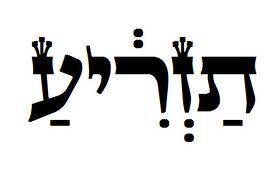
Both of these instructions contain another powerful verb too – one we are clearly meant to notice as it appears eleven times in the sidra – the root la-tur – which in modern Hebrew means to go sightseeing, but which is richer and more complex in its biblical usage. We translate it in the story of the spies as meaning “to scout the land”, but in the directions about tzitzit we can see that it means more than superficial looking, but is about noticing, involving the self through the act of observation. The power of this form of engagement is made more clear by the rest of the verse: “look at them and recall all the commandments of the Lord and observe them, so that you do not follow your heart (ve-lo taturu) and eyes in your lustful urge.”

We can read the first story in the light of the last – and so add a moral dimension to the activities of the spies and their instruction la-tur: – instead of being asked to simply go around the land, they are being required to throw themselves fully into the scouting, in order to find their true objective. They were to pay complete attention, to follow the awareness of their hearts and their eyes.

Hearts and eyes. They define for the rabbinic tradition two ways of being in the world. Tradition tells us that we may follow our eyes and therefore have our ideas influenced by what we see in the world – in other words how we experience it changes how we understand it – or else we follow the heart, and hold a moral compass inside ourselves, so that how we experience the world is influenced by what we believe to be true. Both may be valid, but a Midrash on this sidra teaches that a person perceives the world according to the understanding of their heart. In other words, a person’s interpretation of what their eyes see is not objective, but we construct our own realities independently of external certainty. “So that you do not follow your heart – does this indicate that the eyes follow the heart or that the heart follows the eyes? Are there not blind people who commit all the abominations in the world? Thus we learn from Scripture that the words “So that you do not follow your heart” indicate that the eyes follow the heart.”(Sifrei)

The argument that blind people also sin – and clearly one can say that their eyes did NOT lead them into transgression –buttresses the approach that a person follows their heart.

It is maybe not how we would adduce the proof today, but the outcome is eerily modern – We see only what we choose to see; We understand only what we have the equipment to understand; We notice only what is important to us. How we appreciate and behave in the world is constructed from our own internal resource rather than responding to some objective and measurable reality.

The problem for the spies was not anything really to do with what they had actually seen in their touring the land – the reports back from all twelve agreed that the land was wonderful, fertile, filled with good things but also that it was well defended by a number of different powerful tribes. The problem with the ten spies – and subsequently with the people of Israel – was what they felt about the information they had brought back. We might say it was a problem of perspective – which did they give more weight to when seeing the land: their faith in God who had brought them this far, or their fear for themselves and their future?

They were unlike Caleb and Joshua who clearly understood the dangers yet in their belief in God they spoke up: yachol nuchal – we are certainly able to do it”

The difference reflects not what they all saw, but their inner belief systems, what was in their heart. Caleb and Joshua saw the land for which they have been yearning ever since exile in Egypt. But the spies saw only a fortified land that takes precedence over people, a land rich and fertile and populated. Their perspective was not of the divine covenant but of the power of other people, and they felt diminished in the shadow of those people, so much so that they saw themselves as grasshoppers – fragile, transient, lowly – and worse, they imagined that the current inhabitants of the land would share that image of them.

How we feel inside ourselves, what values we hold, what beliefs we claim, shape our experience of the world. It dictates what we see and it what we simply don’t notice. And what we see around us in turn changes how we feel inside ourselves, impacts upon our values and belief system, alters who we become. If we are so fixed upon our constructed reality that we can no longer notice the outside world, then we will be unable to grow and to change. Our horizons will narrow to fit what we are prepared to acknowledge. All our lives must be spent challenging what we comfortably believe to be the case, we have to force ourselves to notice what we would rather not see, be prepared to take a view other than the one we created for ourselves earlier.

It is hard to do this, to use both hearts and eyes – mediate the easy view of the situation. This is the beauty of instruction to wear fringes on clothing – they are an external reminder of an internal belief system. When we see them we are to think of God’s commandments, directives which exist only in relation to our acceptance of them. Both eyes and heart have to work together, we cannot assume we know what it is all about.

Rabbinic tradition teaches that the mitzvah of tzitzit is equal to all the other mitzvot together, as we are told “look and recall all the commandments of the Eternal and observe them.” Yet the commandment only comes into force if we are wearing a four cornered garment. And this mitzvah can be observed in two different ways – either as tallit katan, an undergarment which only we will see and know of, or as the tallit which we wrap around ourselves, and which we present to the outside world. This resonates with our hearts and eyes – one reflects the internal system with which we see the world, the other acts as the external nudge which forces us to think about what is out there. Hearts and eyes. We need them both.
Bemidbar: Shaped by our daily choices we are in a dynamic state of becoming.

Politicians are fond of describing their wilderness years when, unwanted by the electorate or maybe by the new leadership of their party, they languish unlistened to and alienated on the borders of the important events until they can be brought back into the mainstream and be useful once more

This week we enter the wilderness years – the book we are beginning to read is called “Bemidbar” –“in the desert”, but the reality of the Hebrew midbar is not one of emptiness and alienation from life, quite the reverse.

 Bemidbar takes us to a place rich in meaning and profound in experience. Not a place of biding out time while the inadequate and unaspirational generation of Exodus dies out, allowing a new braver generation untainted by the experience of slavery, to emerge. But a place of construction and development, of encounter and learning, of creating a people with a shared understanding of themselves and their context, and a shared vision of who they will become. The midbar is a place of preparation, a gestational place where the forming and shaping and becoming takes place.

 To be a religious person is not an absolute finished state. To be a Jew is not a once and for all event. It is a daily set of choices about how to behave, what principles to prioritise. Just as every morning we choose to get up and to face the world and what it might bring, so we choose to express ourselves as Jews on a daily basis. Some days are better than others of course. Some days the choices are clear, other times they are a struggle. We proceed from choice to choice and the time in between is not empty time, it is the time we use to help us to proceed, to digest and process what is happening.

 Bemidbar – the wilderness years – are just that for the children of Israel. They are not able just to move from 430 years of slavery in Egypt to freedom and autonomy in the land of Israel. They need time to learn, to explore their new identity, to consider and think about and digest all the implications of building a Jewish society in its own land for the very first time.

Some are afraid and effectively paralysed, unable to make any choice at all. Some want to return to the safety of what they knew regardless of how bad it was for them. Others want a society they can control, their priorities acted upon. Some will follow for a reward of some kind. Most need time to get their heads around it.

Throughout the period in the desert, from the middle of Shemot (Exodus) to the end of Bamidbar (Numbers) we are not in empty time and space but in liminal time and space. We are between two stats of being; we are in the dynamic state of becoming. We all need such times, be they to contemplate how to cast our votes, or time to understand and respond to a life change – a new birth, a change in status be it marital or professional, a time to grieve a loss. There are any number of changes we deal with on a regular basis. We need the space between one reality and another, time to locate ourselves in the new reality and to say goodbye to the old one. Every day we make choices, to live, to do (or not) what we need to do. We don’t randomly drift through the world, whether we admit it or not we live choice filled lives.

 But to make such choices we need time, space, information, support, challenge, external and internal expectations.The bible reflects this in the midbar, in the desert, where there are all the above and more. Before we leap to decisions we may live to regret – be they political or personal, ethical professional or relational, we should inhabit the liminal space, take our time and reflect, and see ourselves not as alienated and removed but as engaged in the religious activity of the thought-full, mind-full awareness of how our lives are lived.

Behukkotai: redemption requires ongoing action.

The sidra Bechukkotai ends the book of Leviticus, and concludes with the verse “These are the commandments which the Eternal commanded Moses for the children of Israel in Mt Sinai”

A book which is primarily dealing with the ritual system overseen by the hereditary priesthood, a book whose rabbinic name is Sefer Cohanim (The Book of the Priests), is seen by itself as holding a much wider remit, putting into context the sacrificial cult of priest and altar, clarifying the notion that the relationship between God and Israel is available to each and every person, and is framed into the construct of covenant.

            At the beginning of the sidra we are told of the great blessing which will be given to the people if they observe the Torah, 11 verses detailing the blessings of economic stability, peace and prosperity, and finally God’s presence among the people. This is followed by the tochecha – the admonition and curse, with 30 verses which warn of the destruction of the land, the destruction of the nation and their exile, for the sin of violating the commandments.

This set of warnings, which here are told to Moses by God in the desert, are repeated in an even more concise and forceful manner by Moses just before his death forty years hence.

When you study these two versions of the warnings, and compare then with other biblical texts warning about destruction and exile, you find a curious and certainly deliberate absence. Usually the warnings which are found in bible end with the promise of Teshuvah – that God will restore us from our captivity as soon as we return to God. The certainty of ultimate redemption is spelled out for the reader. If we actively seek God then God will redeem us. But the rebuke in this sidra, like its parallel text in Deuteronomy, does not state that redemption will surely come. Instead , at the end of chapter 26 of Leviticus (arguably the original end of the whole Torah), after the warnings of destruction and exile, we are told   “I will remember My covenant with Jacob and also My covenant with Isaac, and also My covenant with Abraham will I remember,; and I will remember the land” and God goes on to say “When they are in the land of their enemies I will not reject them, neither will I abhor them, to destroy them utterly, and to break My covenant with them; for I am the Eternal their God. But I will for their sakes remember the covenant of their ancestors, whom I brought forth out of the land of Egypt in the sight of the nations that I might be their God, I am the Eternal”(26:42,44-5)

These verses, which resonate in this text, are ones which countless generations of Jews have held close. They are a huge comfort to many generations, yet they do not talk of redemption or of return to the Land. What they tell us is that God continues to remember the covenant – but they don’t tell us what that means. The covenant is remembered by God and so we are not lost however dark our days may be. The fact that the patriarchs are named in reverse order is used as the proof text for the tradition of Zechut Avot – the merits of our ancestors which we can call upon in difficult times. If our own merits do not help us than we enlist those of Jacob. If his don’t do the trick then we enlist the merits of Isaac and finally we can call on the merits of Abraham, who, as the first person to make a covenant with God will surely come to our aid.

            The tradition of Zechut Avot – that the merits of our ancestors will be added to our own at the time of judgement, and so will enable us to survive, is debated at length in the rabbinic literature and there are those who claim it continues to operate, and those who claim that the merit has been exhausted – our own sins by now far outweigh any ancestral good deeds. But all the commentators agree that whatever the status of Zechut Avot, the covenant made with our ancestors remains in force, it is the covenant which effectively ensures our continuing existence and our continuing meaning.

            Within the bible there are two types of covenant – there is the Noachide Covenant when God promises that the natural order will not change, a promise made by God which does not require any action or even response from people. Then there is the covenant as understood by Abraham and his descendants, the covenant that is described by God who does not forget. This is a covenant of mutuality – mutual obligation, mutual understanding, mutual responsibility. “I will be your God and you shall be My people” – there is an interdependence here, a way of defining and identifying through the other party in their relationship. This covenant is still in force even at the end of the tochecha – it remains in force because God remembers it. But there is no promise of redemption because redemption is not an automatic consequence of God remembering – we need the concept of mutuality – whether the covenant can be executed will depend not only on God remembering but on US remembering. For the people to find redemption they must act properly, responsibly, within the terms and conditions of the covenant.

            In the midrash we are told that:

“Three things were given to Israel conditionally – the Land of Israel, the Temple, and the Kingship of the House of David. And two things were given unconditionally – The Torah and the hereditary priesthood”

What is not mentioned is redemption – we have no automatic right to such a state of being, no magic formula of faith in God which will ensure that we are saved. Judaism teaches us, (and it bases its teaching from within the two passages of the tochecha), that we are in a position of covenant with God, that we have all the rights and obligations and responsibilities that such a relationship entails, and that the purpose of such contract is not that we individually save our souls through our belief, but that we work to save the world through our actions which themselves are rooted in the contract/covenant relationship we have accepted with God.

That contract can never be broken, whatever we do or don’t do, wherever we are, and however we view ourselves. Because God remembers the covenant, and God remembers the land. And God waits for us too to remember, and having remembered, to act.


Parashat Behar:different kinds of deception and the obligation to avoid them

In sidra Behar we find the source texts for the prohibitions against two different kinds of deception – ona’at mammon and ona’at devarim. The verb ona’ah literally means “to overreach”, and describes the act of wronging another by selling an article for more than its real worth, or conversely, by purchasing an article for less than its real worth.

              The proscription is based on the verse in this sidra (25:14) “when you sell anything to your neighbour, or buy anything from your neighbour, you shall not deceive one another”. Talmud (Baba Metzia 49b) specifies what level of price variation is valid and what is not. For the merchants among us, it is deemed permissible to make a fair profit (seen as charging less than one sixth above the accepted price), but it is not permissible to overcharge and deceive a customer.
              The ban on verbal deception arises from a statement three verses later where we read (25:17) “Do not deceive one another but fear your God, for I the Eternal am your God”. Since the previous verse explicitly mentions monetary deception, the rabbis decided that this verse must refer to another kind of fraud – that of verbal dishonesty. The Mishnah (Baba Metzia 4:10) tells us “Just as there is deception in buying and selling, so too there is deception in words”
              The example that is given is the raising of the expectations of the merchant that he has a sale when the person posing as a buyer has no intention of such a transaction, something I suspect we may all have been guilty of doing, when we look at an item on the High Street but then go on to buy it on the internet at a discounted rate. But of course verbal dishonesty is a great deal more than the behaviour of people around a transaction and I find it curious that the Talmudic tradition stayed so close to the mercantile metaphors.

               Verbal dishonesty is so ingrained a habit in our behaviours that we can often barely notice it, from the telling of “little white lies” through to being “economical with the actualite” in an effort to stave off embarrassment or worse. We have all learned to speak “diplomatically” or “tactically” or “strategically”. We can hide behind many a circumlocution in order not to say what should really be honestly and transparently available to the people with whom we “do business”.

I am not suggesting we all suddenly become aficionados of what is sometimes called “blunt speaking” – that is another way in which we can bludgeon the other into not taking on board the whole meaning. I am however suggesting that we look seriously at how we communicate with each other, at what we choose to communicate and to whom. To hear second or third hand about a matter that is important to you; to be the subject of gossip or speculation – even to be forced into issuing public denials; to be told that “people are saying about you…” rather than “I think…”; these are all forms of verbal dishonesty that do more than to raise expectations unfairly qua the Mishnah – they are forms of dishonesty that start to destroy the soul of the people deceived and of the people deceiving.

We are in the Omer period, a time of reflection and sombre thoughtfulness before Shavuot when we will celebrate the giving of Torah. Sidra Behar actually refers back in time to the words that Moses was given by God on Mount Sinai – in particular the Asseret haDibrot, the Ten Matters or Words sometimes called the Ten Commandments. Now would be a good time to examine ourselves and our behaviour in the light of the prohibition against ona’at Devarim – the use of words to deceive each other.    

Not Kohens nor Levites, but all the people are holy

It is shocking to read in sidra emor about the particular physical qualifications which must be met by the hereditary priesthood, in particular the restrictions which the bible describes in this week’s sidra. “No man among the offspring of Aaron the priest who has a defect shall be qualified to offer the Lords offerings by fire.” we are told, “he shall not enter behind the curtain or come near the altar, for he has a defect. He shall not profane these places sacred to Me, for I the Eternal have sanctified them”

The defects are described in the text – blindness, lameness, hunchback, cataracts – all of them physical and external, all of them beyond the control of the individual. Indeed we are told in later rabbinic commentary (on Bechorot 45a) that an internal defect does not disqualify one from priestly service, only external defects do this.

The priests were a group apart, their status protected and hedged around with strict regulations. They could not touch a dead body except that of an immediate blood relative. They could not shave their heads nor cut the sides of their beards. They could not marry a divorced woman- their wives had to be above any suspicion and come from families that also were seen to be pure. In return for their work in the Temple service they were given special privileges and obligations. To this day in Orthodox Judaism the person who considers themselves to be of a priestly family is called to the Torah reading first, is privileged to do the duchenan (the priestly blessing) on festival days, and will perform pidyon haben – the ritual of release of the firstborn son. Reform Judaism does not make such people more special than others in the community. We do not aspire to a third Temple so the role of priest/ Kohen, is defunct. The disbenefits for a Kohen are real, and can complicate their lives, which, given the reality that we have no real way of knowing who is actually a descendent of the Aaronide family can cause problems that do not need to be caused, and anyway Reform Judaism understands that religious leadership is no longer in the hands of the hereditary priesthood, but has passed into the hands of rabbis and scholars and is now embedded in Rabbinic Judaism.  

It is often a surprise to Jews from a traditional orthodox background to find that we do not accord any special privileges to the Cohens and the Levites in our services; that we have no difficulty with them attending funerals like other Jews; that we perform their marriages to proselytes. It is sometimes a shock to them that we have taken for ourselves the wonderful “priestly blessing” formula, and that we use it at the end of most of our services to invoke the blessing of God on the community on a daily or weekly basis. I have occasionally overheard complaints about what is seen as our lack of respect for the priesthood, yet I do believe that this particular reform was one of the most powerful and significant for us. Far from rejecting our history, I am certain that by making all Jews equal within our liturgical practise we are proclaiming that we are a kingdom of priests and a holy nation. Instead of defining holiness within the confines of the ritual of the Temple service, we are opening it out into the lives of all who are looking for it. By rejecting the notion of a priesthood whose holiness or lack of it is expressed in terms of physical defect or perfection, we are free to become a people whose holiness or lack of it is expressed in more inner terms, in our prayers, our hopes and intentions, our yearnings, as well as in the actions which result from our inner lives.

The priesthood described in the bible is a complex structure designed to contain purity and holiness as it was understood then, and shows, I believe, clear signs of having accepted concepts from outside societies as well as creating new forms and ways of being. The notion that physical perfection was required in anything which came near to the place of the sacrifices was taken on board in the biblical tradition, but that doesn’t mean it was divine, nor that it was right. Today one can argue that we know much more about physical disability and are less afraid of it, But more than having a different approach to disability, we have developed a different approach to holiness. Maimonides tells us that the sacrificial system was a necessary step to the more religiously sophisticated and satisfactory practise of prayer. His argument could be extended to communal holiness – we no longer need a special group of people to be holy on our behalf, the professional liturgists and holders of ritual power. We have graduated from such a need and now the special privileges and obligations are the property of the whole Jewish people. It means that we must all take on the work of attending to God’s service, rather than leave it to the people who were born to it, or who are the heirs presumptive. We all have the job of seeing to it that holiness is part of the practise and the being of the Jewish people, that it is expressed both internally and externally, that we truly work together to become a kingdom of priests and a holy nation. If we don’t do that now, then we will be, in the words of sidra Emor, “profaning Gods holy places”, for the holy places of God are always found within a community of people.

Following the golden rule – the rest is commentary

The Golden Rule, phrased in Leviticus as “Love your neighbour as yourself” appears in many forms and in many different religious literatures: Jesus is reported in the New Testament as saying that the two great rules of behaviour were “You shall love the Eternal your God with all your heart, your soul and your might”; and “you shall love your neighbour as yourself” On these two commandments hang all the Law and the Prophets” . – in other words the Shema (from Deuteronomy) and the Holiness Code given here in Leviticus together give us all we need to live a good life.

Perhaps the most powerful telling for me is the story found in Talmud, when we are told “It happened that a certain heathen came before Shammai and said to him, ‘Make me a proselyte, on condition that you teach me the whole Torah while I stand on one foot.’ But Shammai repulsed him with the builder’s cubit which was in his hand.  When he went before Hillel, Hillel said to him, ‘What is hateful to you, do not to your neighbour: that is the whole Torah, while the rest is the commentary thereof; go and learn it.’ (Shabbat 31a)

Hillel shows great patience and openness to what is clearly – from the context – someone determined to test both of those qualities. But his formulation of the golden rule is genius. Not to do things to other people that are hateful to you is vastly easier than the somewhat obscure commandment to love ones neighbour as one loves oneself. What if what you would like is not what they would like? What exactly is a neighbour? What if one doesn’t particularly love oneself?

The end of that story as told in the Talmud – that this principle of paying attention and not doing to others what you would not like done to yourself is the WHOLE TORAH – everything else is commentary , is also something we should keep hold of.

Judaism is a strange beast, neither solely race nor religion nor culture, nor faith but a collection of ideas we have held on to and transmitted with clarity down the generations. Ultimately how we behave towards others is the whole of Torah and everything else is there to make sure we do it the best way we can. So all the rituals and the laws and the fences around Torah are there to do one job only – to protect the teaching that bible tells us was given to us by God, of looking out for others the same way we would look out for ourselves; of not doing something to someone else that we would find distressing if done to us. No more and no less – it is indeed the one principle we should keep before us always, and everything else will fall into place.

Tazria – the woman’s seed and maternal responsibility when a son is born

In the first verse of the torah reading we have a strange word, one which is used to name the portion – the word ‘tazria’ means to seed, and so we have the statement that “A woman who seeds, and who gives birth to a male child, will be ritually unclean for seven days” Shortly afterwards we are told of a woman who gives birth to a female child, and will be ritually unclean for fourteen days – there is no extra clause here to do with seeding. It seems that torah has placed an extra phrase into the text of the birth of a male child – the phrase “Ki Tazria”, “who seeds” is not needed to give clarity to the meaning and is not repeated in the following, almost identical, paragraph.

 “A woman who seeds”. What can it mean? Bible is usually very masculine about zera – seed. It focuses on the role of men in conception and for purposes of descendants etc. And yet here we have this odd, causative form of the word deliberately attached to a woman who will give birth to a male child.   We are taken back to the only other time in bible that the text talks about the seed of woman- the third chapter of genesis which tells us that God tells the serpent: “And I will put enmity between you and the woman, and between your seed and her seed; they shall bruise your head, and you shall bruise their heel.’ (Genesis 3:15) It is almost as if the passage discussing the birth of a male child, and the ritual impurity it brings, is harking back to the moment when humanity took responsibility for itself, having disobeyed God’s commands within the Garden of Eden. Yet one cannot read a doctrine of original sin or of a congenitally impure soul in the text, for the phrase is not repeated at the birth of a female child, so what CAN we understand from this strange piece? 

 Possibly the use of this verb here to describe the maternal responsibility for conception is to remind us that the child is not solely the child of the father, but also of the mother – something that had to be emphasised given the gender of the child.  A female body giving birth to a male body could be seen to be somehow confusing of boundary, or of making the woman somehow also male – all of which in terms of the system of the ritual world would cause problems of clarity. 

 A child must be seen as the product of both parents and the responsibility of both.  The Talmud goes further, saying (tractate kiddushin 30b) “Our Rabbis taught: there are three partners in every person, the Holy One Blessed is God, the father and the mother. When a person honours their father and their mother, the Holy One Blessed is God says, “I view them as though I had dwelt among them and they had honoured Me.” And Rabbi Judah the Prince used to say- “It is well known to the One who spoke and the world came into existence (i.e. God) that a son honours his mother more than his father because she sways him with words” and because of this the fifth commandment places the father before the mother in order to balance the relationship!

 ImageWe don’t know why this extra phrase ‘ki tazria’ was put into the text for, though we can see that it is clearly important – and given the way the torah readings were divided, the phrase gave the name to the sidra.  We don’t know, but we can think about this powerful reminder that both mothers and fathers are progenitors of the children, and both are to take the responsibility of parenting properly, and the child must acknowledge the different people and families from which they descend. This weekend is ‘mother’s day’ – a day which may have evolved from the worship of divine mother figures in ancient Greece and Rome, a day which has been taken into the church calendar as mothering Sunday, and which has been taken into the secular calendar as an opportunity for selling yet more unwanted consumables to a population who feel slightly guilty about how well they have actually been honouring their mothers in the previous year. 

Whatever you choose to do this weekend, take a moment to think about the many influences – from both father and mother – on every child, and the lost opportunities to influence as well. And think too of the opportunities to honour God by honouring parents that we all pass by or gloss over. Whatever the bible intended us to understand about this strange text, we can certainly draw many powerful contemporary lessons for ourselves.

Shemini – The Eighth Day. How to make a new beginning and get on with life

The sidra continues the story begun last week, when Aaron and his sons were dedicated to the priesthood in a ceremony lasting seven days. And now, on the eighth day, it is time for them to begin their work, to offer sacrifices at the altar, to prepare the place and the people for the imminent arrival of the presence of God.

We begin with a verse that has always caught my attention. “Vay’hee bayom ha’shemini, kara Moshe l’Aharon u’le’vanav, ul’zik’nei Yisrael” And it came to pass on the eighth day that Moses called to Aaron and to his sons, and to the Elders of Israel… “ (Lev 9:1)

Why does it catch my attention? Firstly because the eighth day is such a particular description – we have had a full week of seven days of preparation and now here we are with a new beginning. The eighth day always makes me think of the seven days of Creation and then – this day, the first day of the life of the world fully made. It makes me think of the mitzvah of circumcision to be enacted on the eighth day – the day a male Jewish baby is brought into the Covenant. It symbolises to me the moment of starting out, the first steps of independence once the groundwork has been laid.

So it seems right and proper that the priests should be starting their sacrificial work on this day, when the world is somehow shiny and new and all things are possible.

And then the second ‘catch’ – why does Moses call not only Aaron and his sons, but also the Ziknei Yisrael, the Elders of Israel? This is apparently a priestly activity, the instructions specifically for them to do, and yet the Elders are also there.

The Ziknei Yisrael are present at a number of pivotal events in the bible. At the burning bush Moses is told to gather the Elders of Israel (Exodus 3:16), at Sinai (Exodus 19:7) again they are gathered and told what God had said to Moses, in the wilderness after one of the rebellions again God tells Moses to gather them to hear God’s words (Num. 11:16). The Ziknei Yisrael are often the witnesses and the support to Moses at times of change or vulnerability. While they do not speak and seem to have no active or proactive role in the text, their presence is vital to the stability and robustness of Moses’ leadership.

So here we are, a verse denoting new beginnings for the worship system, witnessed by the Elders who have been with Moses every step of the way, and within a short time we have the story of a tragedy. The new beginning has gone badly wrong; Nadav and Avihu, two of the sons of Aaron have died because they have not followed the ritual correctly, and Aaron is unable to speak, and explicitly told that he must not show his grief in a public manner.

And then the dedication ceremony continues, with Aaron and his remaining sons Itamar and Elazar fulfilling the ritual, though it is clear in the text that their hearts are not really in it. They are traumatised and unable to eat the portion marked for the priesthood. And yet, like consummate professionals, the work of the Tabernacle goes on.

I always read this section with a sense of great sadness – the death of two of his sons clearly marks Aaron and the remaining sons forever. It seems unfair that whatever Nadav and Avihu did, the consequences should have been so drastic. Moses comes over as unfeeling and demanding, focussed on the continuation of the process more than on the desperate distress of his family.

And the elders? Well they observe it all, solidly present, quietly linking the past to the future, the witnesses to the trauma of our people

The response of Moses which seems so unfeeling is maybe not as cold as it first appears. He tells Aaron and the surviving sons to continue with the important work they have to do, not to allow themselves to stop and to interrupt all that they have prepared for. They cannot indulge in paralysing grief, but must get on with life. And so they do. They are dejected and in anguish, but they get on with the work of their lives, and so the people of Israel pick up once more and continue in their journey. I am reminded of all those Holocaust Survivors who did not speak a great deal of what had happened to them and to those they loved, but who got on with rebuilding life, defining themselves not by what had happened then but by what they do now. Their response which seemed so odd when I was a child now seems sensible. They were not held back in their grief, they continued to build life. Maybe that is what the eighth day is really about. Whatever happened before there is always a new start, the history may prepare us and shape us, but it can never hold us back if we chose to see ourselves as beginning the next stage of our lives.


Parashat Tzav: the life blood and the nefesh

And you shall not eat any blood of fowl or beast in any of your dwelling places. Whoever eats any blood that soul will be cut off from his people” (Lev. 7:26-27).

The prohibition against eating blood is mentioned in several places in the Torah. God tells Noah Every moving thing that lives shall be for food for you; as the green herb have I given you all. Only flesh with the life thereof, which is the blood thereof, shall ye not eat.” (Gen 9:4).

In Leviticus 17 we read (10- 14) And whatever man there be of the house of Israel, or of the strangers that sojourn among them, that eat any manner of blood, I will set My face against that soul that eats blood, and will cut him off from among his people. For the life of the flesh is in the blood; and I have given it to you upon the altar to make atonement for your souls; for it is the blood that makes atonement by reason of the life. Therefore I said to the children of Israel: No soul of you shall eat blood, neither shall any stranger that sojourns among you eat blood.  And whatsoever man…..that takes in hunting any beast or fowl that may be eaten; he shall pour out its the blood , and cover it with dust. For as to the life of all flesh, the blood thereof is all one with the life thereof; therefore I said to the children of Israel: Ye shall eat the blood of no manner of flesh; for the life of all flesh is the blood thereof; whosoever eat it shall be cut off.

And again in Deuteronomy:  “Only be certain that you do not eat the blood, for the blood is the life and you shall not eat the life with the flesh. You shall not eat it …”. Deut. 12:23-24

What do we mean when we call the blood the life? In each case in these texts the word used is Nefesh; a word which is often translated as ‘soul’ or ‘spirit’ but this isn’t a good translation. According to Genesis the human being doesn’t have a nefesh, it is a nefesh – essentially our nefesh is connected to our physical body – it is related to our blood, to our breath, to our ability to eat or take into ourselves. And yet it is also separate from our body, the animating spirit which can be seen in the body and which leaves at death. The nefesh exists on the boundary between life and death, and this has real import on its place in both the ritual purity system, and in the mystical tradition.

By connecting the nefesh to the blood, as the biblical text does again and again, it reminds us that animals that are killed for worship in the sacrificial system, and subsequently animals killed for food, have value beyond what we are using them for. They have an animating spirit which comes from God; this spirit must be treated with respect so the blood is poured into the ground and covered with dust – the animal has a place in creation, its life has significance, the part that we are allowed to eat is what remains after the life force is drained away – the deadened, irrelevant part.

Judaism has a strong imperative to life. The mitzvot are for living by, not (except for three exceptions) to die for. The mitzvah of saving life (pikuach nefesh) overrides almost all the other mitzvot – even if there is only a possibility that life can be saved.  Life belongs to God and must be respected wherever it is found and in whatever situation we find ourselves in. And blood, along with breath, is the symbol of life. So when we avoid eating blood by koshering the meat we eat, we are making a powerful statement about the value of the life of the animal whose flesh we are eating. Like us it had nefesh, it had dimensions greater than its physical existence. And so while Torah begins with a vegetarian diet for the first human beings, after Noah an exception is made so that meat can be eaten in this less perfect world although still as part of the sacrificial system. And it seems that only when the people were settled in the land of Israel, when many would only go to Jerusalem three times a year for the pilgrim festivals, only then was eating meat as part of a non-sacrificial system permitted and only as a response to their lustful physical appetites which could not be controlled– as we read in Deuteronomy “When the Eternal your God shall enlarge your border, as God promised you, and you shall say: ‘I will eat flesh’, because your soul desires to eat flesh; you may eat flesh, after all the desire of your soul. If the place which the Eternal your God shall choose to put God’s name there be too far from you, then you shalt kill of your herd and of your flock, which the Eternal has given you, as I have commanded you, and you shall eat within your gates, after all the desire of your soul.” (Deut. 12:20-21)

We respect life wherever we find it; we care for it and nurture it, and when it comes to an end for whatever reason – we continue to respect it and to remember that the nefesh belongs to God.  Be it animal or human, life is life, absolute and valuable.


Encountering God is easy: approach with a willing heart and God will find us

A modern mind may look at the book of Leviticus and feel the distance. The world of ritual purity and impurity, of worship through sacrificial system etc is not one we instinctively understand and indeed are likely to find problematic. How can it be possible to come closer to God through such acts of ritual sacrifice?
Traditional Jewish practise dictates that young children are introduced to bible by studying Leviticus, based on the statement by Rav Assi who said that young children began their Torah studies with Leviticus and not with Genesis because young children are pure, and the sacrifices explained in Leviticus are pure, so the pure should study the pure. (Leviticus Rabbah 7:3.) I find it fascinating that our children begin not with the narratives that we find so often in books of bible stories for bedtime, not with the great dramas of exodus or Sinai, but with texts that do not pretend to have any historical interest, but are filled with rules and regulations about how to worship in the Sanctuary. The heart of Leviticus is that we have to learn how to encounter the God who dwells amongst us –remember that the Mishkan was built to remind people of the presence of God within and among them.
As we learn a series of rituals in order to approach God and come closer to an encounter with the divine, it becomes normative to think of God as a being who is in relationship with us. Leviticus teaches us that we can approach God, that God is open to our searching, indeed wants us to search. Leviticus also teaches that people do wrong things, both deliberately and unwittingly, and in either case forgiveness is not only possible it is waiting for us. What forgiveness requires is for us to know and acknowledge the wrong, and to do something about it in order to be absolved from the guilt.
Children, who have no difficulty believing in a divine being and who indeed often seem most at home in a world of searching for meaning, are indeed well able to begin to look at the texts in Leviticus that might be off putting for their more world weary parents. Children understand that bad behaviour has bad consequences, and that doing something to mitigate the behaviour will lead to better consequences. They believe that they will be forgiven no matter what they do, that they are loveable and acceptable even if their actions may not be.
So as we read the book of Leviticus, let’s remember it isn’t JUST a rule book for the priests, but a philosophy that says – approaching God is very easy, and if we do it thoughtfully, appropriately and mindfully then we will achieve what we want. The word used for sacrifice (korban) and for nearness share the same root k-r-v. Coming closer to God, having God come closer to us is what the ritual system is all about. We have replaced the structure with prayer and liturgy, but the underpinning understanding is the same. All we have to do is approach with a willing heart, and God will find us.