mattot massei – a modern take on the cities of refuge

first written 2009.

ImageStaring out of the window in the media-briefing centre in Sderot, looking at a huge and ugly concrete wall right outside, I read the word ‘miklat’ and for a moment I was surprised. I know the word from bible rather than ulpan, where the arei miklat, the cities of refuge, are created. As our bus had entered the town, we were given a briefing – in the event of a rocket coming over from Gaza, if you are still on the bus, get down into the passageway and hope. If not, then run like crazy for one of the bomb shelters that are dotted every few yards – the miklat.

Miklat is a word that is repeated ten times in the 34 verses we read today. A miklat is a place of safety, a place of escape, a sheltering place.  Reading today’s portion my mind immediately went back to the experience in Israel – where one didn’t feel very safe nor sheltered. Seeing the word then on the shelters all over the Sderot area, and seeing the words now in this sidra, the two experiences come together. The words for refuge, the designation of the cities of refuge “arei miklat”, of “miklato” (the refuge of the innocent manslayer) — are tied up in Modern Israeli experience as bomb shelter or air raid shelter, the hoped for asylums from the constant and unpredictable attacks on the people there.

In fact the tradition of signing the areas of refuge, something I found so remarkable and so distressing in the unexceptional and stolid nature of those constructions everywhere in Sderot, has long and honourable roots.  The Talmud records that: “Rabbi Eliezer ben Ya’acov said: The words miklat, miklat [refuge, refuge] were inscribed at crossroads, so that the [inadvertent] manslayer might see them and turn in the right direction.” (BT Makkot 10b)

The Cities of Refuge were towns in the Kingdom of Israel and Kingdom of Judah at which the perpetrators of manslaughter – done without malice or forethought – could claim the right of asylum; These manslayers were not enemies of those they had killed, nor had they intended to hurt them, but they had killed them by accident, and outside of these cities, blood vengeance against such perpetrators was allowed by law. The Torah names just six cities as being a city of refuge: Golan, Ramot-Gilad, and Bosor, on the east of the Jordan River, and Kedesh (on the Lebanese border), Shechem, and Hebron on the western side.

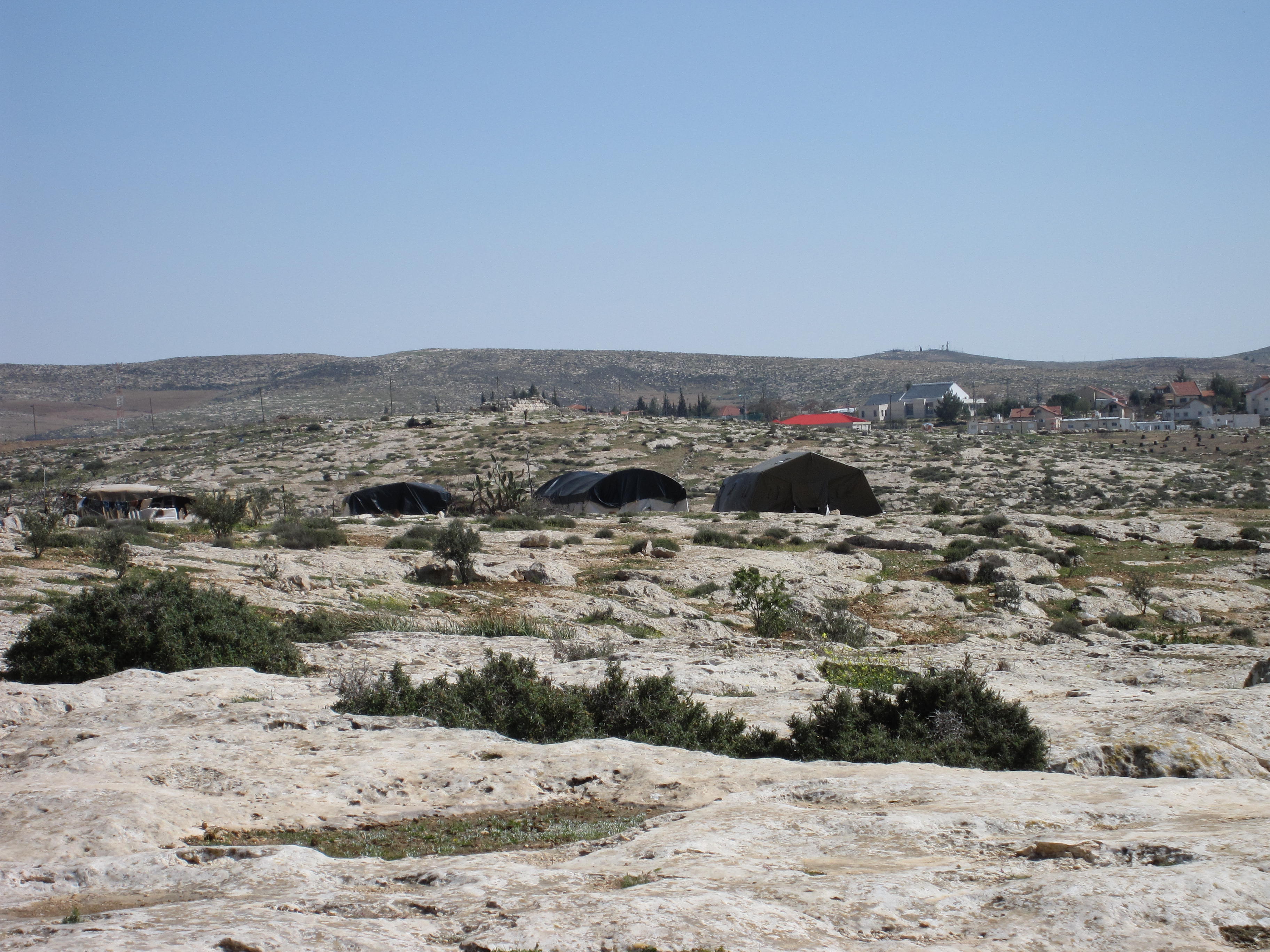
Just listing the names of the arei-miklat is a poignant experience. Almost all of these places are in disputed political geography today, and far from being places of calm or sanctuary.  While on sabbatical I spent some time in Israel – in particular a day in the south Hebron hills and in the city of Hebron itself. The tension and aggression in the area was palpable, and rather than have ‘miklat miklat’ signposted at crossroads, there were checkpoints and watchtowers, and in the city closed streets and terrible graffiti. It was the very opposite of a place of refuge.

What was the purpose of providing the Arei Miklat, the cities of refuge?

The author of Sefer Ha-Chinuch suggests three reasons for a manslayer to flee to a city of refuge (positive commandment 410):

The first is “So that he regret his deed, suffering the pain of exile, which is almost like the pain of death, for a person becomes separated from his loved ones and the land of his birth, and must live out his days among strangers.”

Secondly “there is an element of improving the world … for it saves him from the blood avenger killing him when he did not willfully do wrong, for his act was unwitting.”

And finally  “There is yet another benefit:  so that the relatives of the person who was killed not have to constantly see the killer in the place where the unfortunate act was committed, for all the ways of the Torah are for peace and tranquility.”

Pain and suffering reflect the emotional state of the manslayer, protecting him from the blood avenger shows concern for his safety and physical preservation, and distancing him from the relatives of the person killed brings about an improvement in society, keeping the family of the person killed from having to see the person who shed his blood, at least for a certain period of time.

Rabbi Judah Zoldan asks “Aside from these explanations, there are several other issues that should be considered: what other understanding and view of the value of life will the manslayer have when he leaves the city of refuge, upon the death of the high priest?  What does the manslayer do with his life for the period that he resides in the city of refuge?  Does he learn and internalize a different view of the value of life and of a person’s responsibilities for his actions?  What rehabilitative process does the manslayer experience there, and under whose guidance?

        From the time I spent in Sderot and in Hebron, these questions have been haunting me. I saw both Jewish Israelis and Palestinians living, not in cities of refuge, but in cities of pain, trapped geographically and spiritually in what can only be described as a living hell.  There are, it seems, few innocent manslayers here, but mostly people who are to some extent complicit in the events. Be they suicide bombers prepared to blow themselves up alongside people from the ‘other’ population, or settlers appropriating land for their ideology of triumphant nationalism; be they eighteen year old kids in the IDF not questioning their orders, or the rabbis who write up the terms of engagement against the other, everyone it seems is adding to the heat of events.  There is little reflection, slight repentance, no improving of the world. Rehabilitation and the development of a different view of the value of life is noted mainly for its absence.  And yet –

While I was in the Hebron hills I met a man called Ezra Nawi. He is a Jewish Israeli man, an Iraqi born in Basra, whose trade in life is plumber. He is also a human rights activist, and with persistent non-violent activity he helps the local population to stay on their lands. The day I met him, he was constructing some kind of solar powered electrical generator with what appeared to be some string, some metal, and other Heath Robinson materials, for a family of Arabs whose settlement was being continually disrupted, even though they had papers dating back to the Ottoman times to prove the land was theirs.  There is a video on You Tube of him protesting the treatment meted out to his friends, and what is the most sad for me is him calling out to the border police “I was also a soldier but I did not demolish houses….The only thing that will be left here is hatred, only hatred will be left here”, as an Arab woman screams out “May God never forgive you. May God destroy you”

        The original cities of refuge were designed to keep society safe, to palliate the effect of the blood relative having the power – and obligation – to avenge the death of an individual.  The manslayer who had not killed intentionally, who did not have an animus towards the one who died, was able to find a place of peace within the Levitical cities, and to stay there in safety reflecting upon the results of their actions.  It was designed to bring about peace, rather than allow a feud to build up between families. It was designed to remove the hatred from the situation, taking the hated one away from those who could not bear to see him, taking the thoughtless one to a place of thoughtfulness.

        There are many many peace activists in Israel, Jewish and Arab people who take refuge not in places but in their own integrity, who try to bring about a better world by seeing this one as it really is and imposing the values of the truly religious individual upon it – noticing and valuing the other, noticing when our side gets it wrong, witnessing the conflict peacefully. Alongside Ezra Nawi there is Rabbis for Human Rights, Physicians for Human Rights, Breaking the Silence – an organization of young Israeli soldiers who are confronting Israeli society with what is being done in their name; Ta’ayush, (2004)  (Arabic for “life in common”), a grassroots movement of Arabs and Jews working to break down the walls of racism and segregation by constructing a true Arab-Jewish partnership. They say of themselves “A future of equality, justice and peace begins today, between us, through concrete, daily actions of solidarity to end the Israeli occupation of the Palestinian territories and to achieve full civil equality for all Israeli citizens.”  There is MachsomWatch, in existence since 2001,  an organisation of peace activist Israeli women against the Israeli Occupation of the territories and the systematic repression of the Palestinian nation. They call for Palestinian freedom of movement within their own territory and for an end to the Occupation that destroys Palestinian society and inflicts grievous harm on Israeli society. 

The cities of refuge may be gone, transformed into cities of dispute. Nowadays the only places of miklat are bomb shelters reminding everyone of how much the hatred has grown, how rampant and chaotic the response to it. But there are at least anshei miklat – people who provide a kind of refuge when all around are causing pain and sorrow. Through them I hope that the lands of Israel and of Palestine will soon find true refuge from the terror that stalks them day and night, and that the refuge all of us seek will be found as a result of their actions.  They need our support and our active help. Please do find out more about them and offer them some miklat that we can provide – to know that they are not forgotten and not uncared for. To know that the image of God is not hiding in this world, but is out and about in the work of all of us who choose to do it.

Parashat Va’era

There is so much packed into this sidra – where to begin? Is it with the conundrum of the name of God as presented here? The new and different kind of relationship that God has with Moses in comparison with the Patriarchs? The insight into Moses’ speech difficulties? The hardening of the resolve of Pharaoh by God – and for what purpose? The sudden placing of the genealogy interrupting the narrative flow? The terrible plagues inflicted on the Egyptians? The most amazing (to me, the mother of a primary school child) that the plague of lice could not be repeated by the powerful magicians who could copy other plagues?

One line spoke to me more this year than any other – Moses repeats the words of God who tells the people “I am YHVH and I will bring you out from under the burdens of the Egyptians and I will deliver you from being slaves to them, and I will redeem you with an outstretched arm and with great judgments, and I will take you to Me for  a people and I will be your God, and you will know that I am the Eternal your God who brought you out from under the burdens of the Egyptians and I will bring you in to the land concerning which I lifted up My hand to give it to Abraham, to Isaac and to Jacob, and I will give it to you for a heritage, I am YHVH” and the people “did not listen to Moses because of impatience of spirit and [their] difficult work” (6:6-9)

Literally the words “kotzer ruach” mean shortness of breath or limited spirit and could mean, as Rashi understands it, that they were physically finding breathing hard, presumably because of the severity of the work they had to do. But I find Rabbi Samson Raphael Hirsch’s translation as “impatience” more satisfactory. They did not listen to what Moses was saying because they were operating in a different emotional environment, they were focussed only on the here and now, they could not see beyond the next task to be achieved.  Short termism was all they could manage. The Jews were slaves – and had been for some generations – in a land named Mitzraim, “the doubly narrow place”. They had  become habituated to their surroundings and their lives, they had learned how to survive, and that skill was all about having narrow horizons themselves. They could not possibly imagine a future, let alone a future in a different world where they would be quite different themselves. The generation of the exodus were emotionally and intellectually locked down, they suffered failure of imagination as well as failure of faith, their one imperative was to keep their heads down and keep doing what they had always done. They would allow themselves no awareness outside this behaviour. They just wanted to survive but it seems they no longer knew why it was important to survive or what they were surviving in order to become.

This view of “kotzer ruach” of narrowness of spirit and failure to dream of a better future is one that comes into sharp focus for me as I watch the run up to the Israeli elections. The many shifting coalitions as people jockey for votes, the offerings of quick fixes rather than thoughtful change, the lack of focus on life -critical issues in favour of trivial ones, the refusal to engage with the peace process, the social pressures facing so many of the people, the financial pressures that can surely not be sustained, it is depressing to sit here watching a country I love suffering from kotzer ruach, taking short breaths that allow it to continue from moment to moment, but having lost direction, belief, imagination, purpose. In 1897 Theodor Herzl famously wrote “im tirtzu, ein zo agada; ve’im lo tirtzu, agada hi ve’agada tisha’er’,: ‘If you will it, it is no dream; and if you do not will it, a dream it is and a dream it will stay”. Because he and others thought and planned and imagined and dreamed, a Jewish State was born, but it requires the thinking and planning and imagination and dreaming of its current leadership for it to continue to be what it was set up to be: “THE STATE OF ISRAEL will be open for Jewish immigration and for the Ingathering of the Exiles; it will foster the development of the country for the benefit of all its inhabitants; it will be based on freedom, justice and peace as envisaged by the prophets of Israel; it will ensure complete equality of social and political rights to all its inhabitants irrespective of religion, race or sex; it will guarantee freedom of religion, conscience, language, education and culture; it will safeguard the Holy Places of all religions; and it will be faithful to the principles of the Charter of the United Nations.” (Declaration of Independence 1948) (1)

Moses offered hope and deep meaning to the Children of Israel, who could not listen to  him or understand what he was offering and so missed a vital opportunity to not only survive but to thrive as a people of God. I hope and pray that we will not suffer such a failure of imagination and will again, and that those who are able to vote in the coming election will make their voices heard for good, so that the promise “I will take you to Me for a people, and I will be to you a God, and you will know that I am the Eternal your God” with all that that extraordinary relationship of covenant and obligation can mean, will happen in our day.


(1)  taken from http://www.mfa.gov.il/MFA/Peace+Process/Guide+to+the+Peace+Process/Declaration+of+Establishment+of+State+of+Israel.htm

Tenth of Tevet – the day of remembering those who died in the Shoah

Today is the tenth of Tevet, an historic day of mourning for the Jewish people for it is the date on which in 588 BCE Nebuchadnezzar responded to King Zedekiah’s rebellion and besieged the city of Jerusalem (2Kings 25:1-2), and bible also records that the word of God came to Ezekiel telling him “”O mortal, write for yourself the name of this day, this exact day; for this very day the king of Babylon has laid siege to Jerusalem”  (Ezekiel 24: 2).  Exile to Babylon became certain from this date, even though the city held out for some time, falling three years later when on 17th Tammuz the city walls were breached and three weeks after that on the 9th Av the Temple was destroyed. By the time of Zechariah (c520 BCE) the custom of fasting on this day was established.

While this fast was originally a response to the tragedy of the destruction of the Temple and the exile of the Jewish people from the Land of Israel for seventy years, it was never seen as only the commemoration of an historic response, but also a response to the suffering of the people. Because of this, and because of the Talmudic dictum that “Good things come to pass on an auspicious day, Bad things come to pass on an unlucky day” (Ta’anit 29a), the tenth of Tevet became seen as an appropriate day on which to commemorate all who died in the Shoah, particularly all those whose date of death was unknown. In 1949 the Israeli Chief Rabbinate declared that “the day on which the first churban (destruction) commenced should become a memorial day also for the last churban,” and two years later this became the official date for the yahrzeit of those who have no recorded date of death.

Yet the Government of Israel chose a different date to commemorate the events of the Shoah, “Yom Ha’Zikaron le Shoah ve la’Gevurah” The Day of Remembering the Shoah and Heroism was passed in Israeli law in 1953 and was originally chosen to be observed on the 14th Nisan, the anniversary of the Warsaw Ghetto Uprising – clearly the Gevurah, the Heroism, was to be a major component of the observing of this day, a deliberate and explicit way to counter the “lambs to the slaughter” accusations of the victimhood of the Jewish people.

There were a number of problems with this date – the month of Nisan is traditionally a month of joy, associated with redemption and Pesach, and to hold a day of mourning in it cut across customs and norms. Particularly, the 14th Nisan is just before Seder night and so the date was moved to the 27th Nisan, which means that it is now observed the week before Yom ha’Atzma’ut, Israeli Independence Day.

And this is where I become uncomfortable. I have always found the link of a week between Yom HaShoah to Yom Ha’Atzma’ut means that we link the two dates in an improper way. The yearning by the Jewish people for their own land once more is millennia old. The practical developments for this to happen began many years before the Shoah, with the work of the Zionist movement which grew out of growing anti-Semitism in post enlightenment Europe. While the events of the Shoah may or may not have had an effect on the speed the establishment of the State of Israel, it does not rest fundamentally upon it – the ties between the Jewish people and the Land of Israel are deeper, longer, and far more complex than it being a response out of the guilt of Europe to solve the “Jewish Question”.  The linkage between the Shoah and the State of Israel has also led to a corrupted narrative that the Jews of the Diaspora were by definition weak and helpless, negating the rich traditions of learning, art, science and being of the Jews who lived in Europe for so many generations.

To have this date on the tenth of Tevet rather than in Nisan would not only realign our observance to traditional timing, it would mean that we would remember all those who died in the Shoah the week after finishing celebrating Chanukah, a festival that grew out of militaristic triumph and that was reinterpreted by rabbinic tradition with the addition of a miracle to become a religious reminder that even in dark times God is with us. To remember our unknown dead, and all those who died at the hands of a great power bent on destroying us just one week after we celebrate the victory of those who fought a great power bent on destroying the particularity of the Jewish people would give us a better sense of perspective. We would be reminded that no battle is ever won for all time and we need to remain aware of the need to combat evil wherever we find it;, that however clever our military strategies we also need to be aware of the reason for our continued existence – that we are a people of God whose work is to increase holiness in the world, just as we increase the level of holiness through the days of Chanukah.  

The naming of Jacob and a midrash on Israel – Parashat Vayishlach

Twice in this sidra we are told about the name given to Jacob. The first time happens at the Ford of Yabok after he has wrestled all night before meeting his brother Esau again. At his demand as the dawn rises he requests a blessing and his name Jacob is changed to Israel, (Vayomer: lo Ya’akov yei’ameir od shimcha, ki im Yisrael, ki sarita im Elohim v’im anashim v’tuchal Your name shall be called no more Jacob, but Israel; for you have striven with God and with people, and have prevailed.’  (Genesis 32:28-29)

The second time is a few chapters later, when having met Esau he has reached Beit El, the place we are told was the scene of his original meeting with God when, having fled his family after cheating Esau of the birthright blessing he dreamed of a ladder from heaven to earth and made his deal with God should he come back safely to his own land. This time we are clear about who is doing the naming, but with less clarity about what the new name is supposed to mean:  “Vayomer Elohim lo, shimcha Ya’akov. Lo yikarei  shimcha od Ya’akov ki im Yisrael yihyeh sh’mecha, Vayikra et sh’mo Yisrael” And God appeared to Jacob again, when he came from Padan Aram, and blessed him. And God said to him, “Your name is Jacob, your name shall not be called any more Jacob, but Israel shall be your name. And God called his name Israel”

So the first time we have a reason for the name given to Jacob – albeit one that is a bit of a stretch for our imaginations – by a shadowy figure who may or may not really be there; And a few chapters later we have certainty that his name is given to him by God but no reason given for the name.

The names Jacob and Israel have been the focus of much discussion and debate over the generations – after all we call ourselves B’nei Ya’akov – the children not of Abraham or Isaac, but of Jacob; our pleople and land are named Israel and any other name would seem unthinkable.  We descend in a very intimate way from this naming; we take the identities as our own, we describe ourselves as a people who struggle with God and who survive.

Much of the debate centres around the interchangeability or not of the two names and what they indicate in each context. Everywhere else in bible when your name is changed it is changed forever and there is no going back to the old one. Your name signifies a central essence, it is you and you are it, be it description, aspiration or significant memory, names in bible describe what that person most essentially and existentially is. Yet here we have a patriarch whose name is changed by God in dramatic circumstances with the words “your name shall no longer be Jacob”, who continues to be called by his original name as well as the new name throughout the text until his death.

Let us look a little closer at the names. Ya’akov/Jacob means to be curved, like a heel (and the pun works in English as well as in Hebrew).  In truth, Jacob is a bit of a heel, someone perfectly able to treat his twin brother without real respect, pulling him back in order to gain advantage. Israel means – well what does it mean? Bible tells us it means one who has struggled with God, though etymologically it would make more sense to be from Yashar El – the one whom God straightens out.

Bible though has a different interest to that of etymologists and does not need to follow the rules of grammar in the way that we might expect it to. It wants to tell us something important. Jacob has struggled with God and with Humankind and has “tuchal” – variously understood as “prevailed”, “been able, continued. So the name is given – Yod, S/hin, Reish, Alef, Lamed.

Taking this word apart, in the full knowledge that Jacob has not only wrestled with God (Elohim) but also with Humankind (Anashim) we can see that the word begins with the word for human being – Ish, and ends with the name for God – El. And what is left in the middle is the letter Reish. The name can be understood as signifying something of the relationship between God and Humanity; the letter Reish is the bridge between the two, the place of the wrestling and struggling which is the pathway to God.

What is this connecting letter, the Reish? Well it comes almost at the end of the Hebrew alphabet, but its meaning is primarily to do with beginning – it is connected to the word Rosh meaning ‘head’ or Rishon -‘beginning’.  The word ‘Reish’ is also part of the very first word of Torah, Bereishit, famously translated as ‘in the beginning’ but actually part of a very ambiguous phrase – it could mean “with Reishit God created….”  or even “for the sake of Reishit God created” and the rabbinic traditional exegetical process then develops to understand “Reishit” as meaning “Wisdom”. And what is true Wisdom? Surely it is Torah. So Jacob becoming Israel could be seen as the realigning (from the curvature of the heel to the straightening of yashar) of the relationship between God and humanity through Reish, through new beginnings or through Torah.

Two events happen in between the two texts about the renaming of Jacob.

One is the meeting and reconciliation with his brother Esau, after which Jacob continues his journey to Canaan and Esau back to his own land.

The second event is the story of Dinah and the Prince of Shechem, where Jacob is passive and his sons unleash horrible violence upon the Shechemites when they are recovering from their circumcisions in order to be able to marry into the family of Jacob. Jacob is passive but he does speak and act at the end – He accuses Shimon and Levi of putting himself and his family into danger by their actions and he follows God’s imperative to go to Beit El and to fulfil his vow made there when he had woken from his dream of the ladder. Jacob takes all the idolatrous artefacts from his household and buries them in Shechem, and then he brings his newly cleansed household to Beit El ready to start his new life in the Land.  It is at this point that God names him once more.

In each of these stories there is one common thread – at first Jacob is passive and then reactive to the immediate circumstance, then he eventually  does act to try to do the right thing, and then he moves on.

The letter Reish is written as a curve, rather like a person with head bent over. It is often mistaken for the letter Dalet which is all sharp angles and straight lines. It has been noted that the Reish symbolises the one who searches out a number of directions, bending and swaying around, while the Dalet looks neither right nor left but moves onwards to its destination. If the Reish in Israel is the bridge between humanity and God, the process that takes the one to the other, then it makes a lot of sense that this letter is chosen, the one that bends and sways, the one that symbolises new beginnings and uncertainties, fresh starts and reservations. For that is what we always do, we feel our way through life uncertainly, responding as best we can with what we know, making mistakes. We make mistakes but then we make another new beginning. We use our heads and increase our wisdom as we experience our lives, and we hope that this life journey will eventually bring us closer to God.

Jacob becomes Israel but stays Jacob till his death. He does not prevail, instead he increases in his ability to live life even while making mistakes.  Scripture is right to see both his reality (Jacob) and his aspiration (Israel) alongside each other, for sometimes one is expressed and sometimes the other. We don’t find holiness in one moment or with one action – holiness is the sum of all our actions and the way we learn from them and change because of them.  Jews are certainly Israel in that we struggle with God and with people as did Jacob. But I would take issue with the understanding of “tuchal” as meaning we prevail in the struggle. Rather I would rather see that verb in its more primary meaning of being able. We struggle to bridge many gaps in life, we struggle to build a bridge between the heavens and the earth, between aspiration and reality, between people who find each other difficult – and the naming of Jacob reminds us that each failure, as well as each success, can bring us closer to forming that bridge, and making it secure.

Hear Our Voices

The wonderful Anat Hoffman was arrested  recently at the Kotel, for the crime of saying the Shema out loud there with a group of women who were in Israel celebrating the Hadassah centennial birthday. Even to write this sentence seems surreal – how much more so for the people who experienced this event and what followed. Anat was handcuffed and her legs shackled, she was strip searched, dragged along the floor, and finally left in a cell with a young woman accused of prostitution who herself was the target of lewd remarks from the staff.  She was not allowed to call her lawyer.  There was no bed in the cell where she was held overnight. Anat, who describes herself rightly as “a tough cookie” was frightened and miserable.

No charges were made and the next day a court released her on condition she did not go to the Kotel for 30 days.  Why was this allowed to happen? As Anat herself says “What is the purpose of arresting a woman, interrogating her, collecting video footage of her every move, questioning witnesses and spending hours writing reports, if at the end charges are never made? I believe the purpose of this harassment and treatment is to wear down the leaders of our women’s prayer group, to exhaust us into giving up our struggle for these rights.”

I consider myself to be one of the Women at the Wall and am part of their Chevra. I daven with them on the rare occasions I am in Israel on Rosh Hodesh – they actually only go to pray the  morning service once a month, early in the morning, and in accordance with constraints imposed upon them take their torah scroll around the corner to the Robinsons Arch area to read it. (Bizarrely the perceived holiness of the wall appears to the ultra orthodox ‘minders’ to be only where it meets the Kotel plaza.)  Like thousands of men and women around the world, I care about what happens to this relatively small group of women from across the religious community who choose to pray together at the site of the Temple in Jerusalem.  I care because they are looking after some of the most important values in my Judaism – of mutual respect, of sensitivity both to prayer and to the complex differences in prayer that are the signature of the Jewish world, that all people are able to pray in peace and community, that every voice is heard.

Why are women’s voices being suppressed in some ultra conservative Jewish communities, and why is the State of Israel complicit with this suppression when its founding principles state the exact opposite?

The phenomenon is known as “Kol isha erva”, which could be translated as “a woman’s voice is licentiousness” and even a cursory study of this concept shows an increasingly narrowing of interpretation over time until it becomes the exact opposite of the original biblical statement. In Song of Songs we read the verse O my dove, that art in the clefts of the rock, in the covert of the cliff, let me see thy countenance, let me hear thy voice; for sweet is thy voice, and thy countenance is comely.’ (2:14) “let me hear your voice “Ki kolech arev” for your voice is sweet”. Whoever wrote that beautiful book which is found in Tanach clearly believed that women’s voices should be heard and that they are sweet (arev). In the Talmud, in a discussion specifically about saying the Shema in the presence of a woman who may be sexually alluring, one rabbi uses this verse and puns upon it – a woman’s voice is no longer sweet (areiv) but nakedness (ervah) [Berachot 24a].  This particular pun does not seem to become codified into halachah at the time – it develops over time and in hardens only in the sixteenth century – the great codifier Joseph Caro makes this clear when he writes “but it is, in any event, good to be cautious before the fact not to see hair and hear the voice of a woman singing during the recitation of Shema.”[Beit Yosef, Orach Chaim 75]. This language makes clear that there is no general existing prohibition at the time of writing.

So a biblical verse used to describe the sweet voices of women singing is reinterpreted in the third century to suggest an intentional sexual provocation that might happen if a woman were to sing in the hearing of a man intent on praying Shema, and then by the sixteenth century the solution seems to have been not to get men to concentrate harder on their prayer but to quieten women’s voices – and this then hardens into the view that women’s voices should simply not be heard.

Let us be clear. Women pray in the bible. Their voices are heard. Rebecca goes to enquire of God when her pregnancy is hard. Hannah prays in the Temple itself – and ironically is accused of mocking prayer because she is speaking only in her heart and moving her lips soundlessly – The priest expects her to make a sound and is suspicious when she doesn’t. There is nothing pious or authentically Jewish about suppressing the voices of women at prayer. For every source that demands this kind of modesty from women, there are other sources that say quite the opposite. The responsa literature has always taken into account context, culture and norms when judgements are decided and this has historically happened even in the discussion about women’s voices. It seems that the reverse process is now happening – context, culture and norms are being created by the decision to criminalise women’s voices at prayer, and the history of women’s prayer is being buried by a modern kind of fundamentalism.

So if this prohibition is being used more and more in the modern world to shut women out from the public domain, we have to ask ourselves why – what is going on in some parts of the Jewish world that the men want to assert such a misogynistic power? What are some men so terrified of living alongside that it has come this week to the arrest and violent treatment of a middle aged woman for singing the Shema in prayer?. Why should the Kotel, remnant of the Temple and focal point for Jews across the world, become de facto the most orthodox of synagogues, rather than a place of prayer for all Jews? Why when Judaism has a strong tradition of recording all opinions rather than only the majority decision, should all voices that are not part of one world view in Judaism be silenced? And why when the declaration of Independence states that : “THE STATE OF ISRAEL will,, foster the development of the country for the benefit of all its inhabitants; it will be based on freedom, justice and peace as envisaged by the prophets of Israel; it will ensure complete equality of social and political rights to all its inhabitants irrespective of religion, race or sex; it will guarantee freedom of religion, conscience, language, education and culture; it will safeguard the Holy Places of all religions; and it will be faithful to the principles of the Charter of the United Nations.” are the police involved in arresting the women who are trying to pray, rather than the men who are throwing chairs at them from the other side of the mechitzah?

Women have been arrested with increasing frequency for praying at the Kotel just like women pray all over the world. Their voices and even their images are being denied, suppressed, removed from public discourse by a fanatic few who claim that theirs is the authentic Jewish response. It is not. And we cannot sit back and let it become by default the assumed voice of Jewish authentic tradition.  This must be challenged every time and everywhere  it happens. In the words of the prophet Isaiah “For Zion’s sake I will not keep silent, and for Jerusalem’s sake I will not keep my peace (62:1). Anat and the Women of the Wall will not. I will not. Will you?

Rabbi Sylvia Rothschild October 2012