We hear God differently through our diversity: the trick is to listen fully and to know that different voices tell of the same God

The sidra begins with the words “vayishma Yitro – and Jethro heard” – but we don’t know what exactly it was that Jethro heard and understood. The information about what had happened in Egypt, the splitting of the sea and the war against Amalek didn’t have much effect on others who knew of it, so why does only Jethro respond in this way? There must be something else in the text….Either Jethro heard something more than we are told, or else he heard in a way that moved him powerfully and changed him.

Jethro seemed to hear in a particular way, the kind of hearing that happens when someone is moved to re-examine feelings, and so change the direction of their life.   This is more than active listening; it requires openness to the other, readiness to be affected by what one hears.

Hearing is a theme in this sidra. For of course we also have the people hearing God speaking, as the foundational event of Judaism, the giving of Torah at Sinai, happens in the hearing of the people at the foot of the mountain.  But what does it mean to hear the voice of God? And how can we possibly know when we have heard it, let alone allow ourselves to be changed by it?

After three days of preparation, the people are gathered at the foot of the mountain, the summit of which seems to be hidden in a storm of lightening, fire and smoke, and there is thunder and what appears to be the sound of the shofar, though it is never clear who is blowing the shofar. The whole mountain is trembling violently and Moses begins to talk to God and God answers: “And when the voice – Kol – of the horn grew louder and louder, Moses spoke, and God answered him by a Kol -voice. It isn’t really clear what it is that people hear when God answers – the word Kol can mean a voice, a sound, even a thunderclap. The ambiguity is important, for each person could claim to have heard God, and yet each may have heard something quite different from others. Rabbi Art Green suggests that what Moses heard was the thunder, just as everyone else did, but that within it he was able to hear the voice of God, even though others could not. Moses’ special ability was that he could translate the voice of God into the words we have– the Asseret haDibrot, the Ten Commandments.

The Talmud (Berachot 45a) records an amazing discussion: “From where do we know that, in the ancient practice of reading the Torah, when an interpreter would translate the Hebrew words of the Torah reader into Aramaic, the interpreter was not allowed to raise his voice above the level of the reader? From the verse: “Moses spoke, and God answered him in a voice.” What does the text mean when it says “in a voice?” asks the Talmud “It means The voice of Moses,” which is understood by them as meaning that God’s voice was at the same volume as Moses’ voice. But it is possible to read this at face value- as Art Green does – So when the Talmud says “God spoke in the voice of Moses” we could understand that God actually did speak in the voice of Moses” That is, at the moment of revelation, the voice of God and the voice of Moses were identical, indistinguishable. The human and divine voice was apparently the same – and this is why Moses was able to discern within the thunder the voice of God – it was his own voice he could hear.

There is a great deal of rabbinic storytelling around the events at Sinai. One of the most important is that it wasn’t only the Israelites at the foot of the mountain who heard the voice of God. The Midrash teaches that the voice went out to all the seventy nations of the world, each in its own language (Shabbat 88b), and another Midrash tells us that every person heard the voice of God differently, each in their own head (Shemot Rabbah 5.9). These are two different Midrashim, with quite different understandings from the text of what was actually heard. And this is diversity of interpretation is important to us. The Talmud, recording the debates of generations of rabbis about what text means, and what God’s will might be, shows us that disagreement and creative understanding are all part of the process of trying to discern what might be the truth of God’s words to us. The only agreement in this diverse process is that there is indeed a truth, but it is not clear what that truth might necessarily be. In the words of Rabbi Arik Ascherman, executive director of Rabbis for Human Rights in Israel, “The Midrash can present on one page many contradictory interpretations of any given biblical verse. Certainly our sages realized that if one Midrash gives one version of events and a second Midrash gives a contradictory version, they can’t both be true at the level of what physically happened. However, they understood that each Midrash taught us something they saw as true about the world.  What does this teach us about truth and legitimate disagreement? Judaism does not teach that everything is relative. The message of the Parasha is that there is ultimate truth. However, we don’t always have a common understanding of what that truth is.

How do we negotiate this?  What are the ground rules and red lines when we all passionately believe we are right?  Civil debate becomes even more challenging when we are not merely talking about theoretical issues, but issues that impact upon our most deeply held moral values.” In other words, debate is all the more difficult for us when we are required to really hear the other side, to be prepared to give up some of the things that we hold dearly to ourselves, in order to serve the higher principle of making the world a better and more just place for all.

How do we hear the voice of God in our world? How can we trust what we think we hear? How do we choose between what we want to hear and what is authentically the voice? Firstly, like Jethro, we must listen completely, hear truly what is said and be open to it being something that might challenge what up till now we have held true and firm. And, like Moses, we must let the voice of God sound through our own voices, not that we may think we can speak for God but that we allow God to speak through us.

God is not us, and we are not God, but we must experience God with our own selves, our own experiences, our own way of understanding. And listening to the voice of God, true listening, should inform our choices and challenge our assumptions and some of our closely held attitudes. God is calling us to be something more than we are, to be more the people we should be. That is the voice we must listen to, and give others the right to hear the voice that they also hear – for the one thing our tradition is quite clear about is that each will hear the voice of God differently, but each of us is quite capable of hearing the voice of God.

Parashat Bo: speaking up against injustice is time critical, though many of us wait for too long

Pharaoh is remembered for his certainty that he is the supreme power, for the battle between him and God that he is drawn into, for God’s deliberately manipulating him so as to make sure he keep his resolve in the battle – the famous hardening of his heart.

But along with this absolute dictator, the early stages of the Book of Exodus gives us little hints of people not accepting his power unquestioningly, sometimes with some civil disobedience, sometimes with some actions or remarks that don’t take him on face to face but clearly demonstrate other viewpoints.

So we have the midwives, Shifrah and Puah, who choose to fear God over Pharaoh and who do not follow his orders to destroy the male Hebrew babies at birth. We have the female relative of Pharaoh who must certainly know that the baby she is rescuing and keeping alive is supposed to be killed as an enemy of the state. We have the ordinary Egyptians who are forced to dig around the Nile for fresh water after it has been turned into blood and Pharaoh has returned to his Palace- a picture the bible gives us that surely reflects some of the anger of the people, and finally in chapter 8 with the arrival of the fourth plague, that of the lice, we have the magicians who give voice to their frustration: And the magicians did so with their secret arts to bring forth lice, but they could not; and there were lice upon man, and upon beast.  Then the magicians said to Pharaoh: ‘This is the finger of God’; but Pharaoh’s heart was hardened, and he listened not to them; as the Eternal had spoken.” (8:14-15)

A little while later we get yet another insight into the people’s refusal to follow Pharaoh’s dictatorial stubbornness – the plague of hail is announced 24 hours earlier when Moses says “Behold, tomorrow about this time I will cause it to rain a very grievous hail, such as has not been in Egypt since the day it was founded even until now.  Now therefore send, hasten in your cattle and all that you have in the field; for every man and beast that shall be found in the field, and shall not be brought home, the hail shall come down upon them, and they shall die.’  He that feared the word of the Eternal among the servants of Pharaoh made his servants and his cattle flee into the houses; and he that regarded not the word of the Eternal left his servants and his cattle in the field.(Exodus 9:18-21). The same description that applied to the midwives – Yirat Adonai, the fear or reverence or awe of God – is now applied to the ordinary Egyptians, some of whom are clearly transferring their feelings from Pharaoh to God.

And now here, at the beginning of the sidra Bo, after seven terrible plagues, they are able to challenge Pharaoh directly. As Moses brings the warning of the eighth plague, the bible records that the servants of Pharaoh say to him   “How long shall this man be a snare unto us? let the men go, that they may serve the Eternal their God, do you not understand yet that Egypt is destroyed?” (Exodus 10:7)

At the very beginning of the story the disobedience is shown by the families who stand to lose a child to Pharaoh’s decree (in particular the family of Moses) and also by the brave women who are themselves described as Yirei Adonai – people who revere God. But when challenged of course they do not say so, instead they hide behind a stereotype of the foreign Hebrew women who, they say, are not like Egyptian women – with the implication that they are somehow less human than the Egyptian women. Only one person with no obvious motive is prepared to disobey the Pharaoh, and that is his unnamed female relative.

The magicians only mutter their disobedience when they are unable to replicate the plagues with their own enchantments. Almost as if to save themselves they attribute the more powerful magic to a more powerful magician. And the ordinary Egyptians who are described as Yirei Adonai become so only in order to protect their material goods. No one actually took on the Pharaoh until after the seventh plague, when Egypt is already, in their words, destroyed.  Finally there are courtiers and advisors who are willing to put their heads above the parapet and challenge Pharaoh. Finally the people who have been in a position of some kind of power are able to dare to use it. It is, sadly, too late though for many Egyptians and others who live in the land, and by now Pharaoh is unstoppable – the complete destruction of the place is assured. They have found the courage to speak up too late.

There is a lesson for us in this – a lesson that Pastor Martin Niemoller most famously gave expression to:

“First they came first for the Communists,
and I didn’t speak up because I wasn’t a Communist.
Then they came for the trade unionists,
and I didn’t speak up because I wasn’t a trade unionist.
Then they came for the Jews,
and I didn’t speak up because I wasn’t a Jew.
Then they came for me
and by that time there was no one left to speak up.”

Parashat Va’era: encountering God both as Ani and Adonai

As we begin to read Sidra Va’era one phrase jumps out – God says “אֲנִ֥י יְהוָֹֽה (Ani YHVH I am Adonai)” four times in the first seven verses, and we are also told in verse 3 “and I appeared to Abraham, to Isaac, and to Jacob, as El Shaddai, {God Almighty), but by My name  יְהוָֹֽהYHVH I made Me not known to them”.

Now we know of course that the name of YHVH was actually used repeatedly before this conversation with Moses, so it is clear that something else must be happening rather than the revelation of a name for God.

The four letter name given to Moses reveals something of the essence of God. An amalgam of the verb ‘To Be’ in past present and future form, it bespeaks continuous being, eternal existence.

It may also be a causative of being, the bringer forth of existence. In a sense it contains everything we can know of God, formulated as being that is outside of time. Here in Va’era it seems to me that God introduces God-self to Moses with the information that this is the same God who spoke with Abraham, Isaac and Jacob all those generations ago. This is the Being who continues to be; the link to our history and roots, the companion of our present as well as the one who will walk with our children’s children. Did Abraham Isaac and Jacob know this or were they somehow caught in the moment of their relationship, aware of the covenantal promise but not fully understanding that this same God would be with their descendants. The same God, but experienced differently in each generation; the God who brings forth and is brought forth in our interactions.

What can we really say of God? Not much. And yet here is God repeating with a sense of urgency and emphasis    “ אֲנִ֥י יְהוָֹֽה Ani Adonai”.

Judaism bases itself on this two word statement. Everything our religion expresses can be said to flow from it, how we see the world, how we see ourselves and our possibilities in it:

YHVH that God is, was and will be.

And Ani – that God has an aspect that we can relate to, God is “Ani: I am” and exists in relationship to our own Ani or our collective Anachnu.

So with יְהוָֹֽה YHVH, this four letter name of God, we can understand something about the nature of God and existence but this is a cerebral connection only and we cannot encounter God in the understanding. But when the wordאֲנִ֥י  Ani is added we can be in relationship with God, can experience directly the divine rather that have our religion mediated through language and thought. We meet god in both ways. And this I think is new with the meeting in Va’era. A richer understanding of divinity, a gateway opened to our relationship with an ineffable God.

אֲנִ֥י יְהוָֹֽה Ani Adonai. Everything for us flows from this short phrase. It reminds us that God sustains existence, our mortal lives and the variety of lives that connect with us over time and space. It reminds us that we can create a relationship with the immanent aspects of God but that that relationship whilst rich and sustaining will only ever be partial. It reminds us that God is bigger than we can understand and has relationships with all who choose to be in relationship themselves. It reminds us that we relate to God as much through our relationships with others as we do in an I-Thou bond.

Abraham, Isaac and Jacob had individual encounters with God, each had a blessing, each was given a sense of continuity that would live long past them. But when Moses encounters God, he encounters the one who says אֲנִ֥י יְהוָֹֽה – the Sustainer and Creator of existence who wants to work together with the people of Israel, for them to learn to sustain and bring forth existence too.

Nitzavim Vayelech: Standing Up – for each other and for our common humanity.

Internet_map_1024

In Nitzavim Moses warns that “The secret things belong to the Eternal our God; but those things which are revealed belong to us and to our children forever, that we may do all the words of this Torah.”  (Deuteronomy 29:28). It sounds perfectly reasonable as a sentence until one starts to look a little closer – what are the secret or hidden things being referred to here? What are the revealed? And why the need to state the distinction? It is an obscure verse and open to much conjecture.

Rashi understands this verse as one where Moses reassures the people who are standing and accepting the covenant for all time and all Jews – even those not yet born. They must be afraid that they will be held responsible for things about which they knew nothing, as part of some Jewish collective responsibility – indeed we are told in Talmud (Shevuot 39a) that” Kol Yisrael areivim zeh la zeh – all Israel are responsible, one for the other.” So in Rashi’s eyes Moses is explaining that any sins that were openly committed and that we might have been able to prevent or mitigate – these we remain responsible for. But actions done in secret, about which we can have no knowledge – these are left for God to deal with; and he goes on to explain that God will indeed punish sins that are not publicly known about, if they are not acknowledged or mitigated.

One of the great themes of the end of the book of Deuteronomy is ‘arvut’ – the mutual responsibility between Jews. As the leadership of Moses is coming to an end, he clearly foresees a splintering of the group, maybe the challenge of a number of different leadership candidates, and he does his best to prevent this by stressing the communal nature of our relationships with each other. So here we are reminded: we are part of a single people bound by a single covenant. We cannot afford to ignore what each other is doing, or to challenge what we see to be against the values of our tradition, or to excuse something as fringe or marginal or not impacting upon us.

There is a something else that adds to the oddity and opacity of this verse – in the scroll the words ‘for us and our children’ with dots over each letter. The reason for this scribal notification is not known, but it drags our attention to the verse asking for us to pay even more intense attention to it.

We read in the Talmud: Why are there dots over ‘for us and our children’ and the ayin of ‘ad’? To teach that they were not punished for the hidden things until the Jews had crossed the Jordan – the words of Rabbi Judah. Rabbi Nehemiah said to him: Is one ever punished for the hidden things? Doesn’t it say: to eternity? Rather, just as one is not punished for the hidden things, so they were not punished for the revealed things until the Jews had crossed the Jordan. (Sanhedrin 43b)

The Talmud seems to imply that the collective responsibility only comes into being once the Jews had arrived in the land, that the peoplehood only becomes absolute at the point they have a land. This idea has evolved as the Jewish people fulfilled the Abrahamic promise by being dispersed all over the world, and as the land became metaphor more than reality for so much of Jewish history to grow into a sense of collective arvut – of responsibility for more than our Jewish community but for the different communities of which we are part, and certainly our identities have become more complex and overlain with different relationships. We grow into our communities when we have shared purpose, shared values, shared space. But the dots over the phrase “for us and our children” direct us to look deeper and closer, and again Rashi comes to our aid. Rashi, (commenting on Psalm 87:6) suggests that “the hidden things are not sins, but people” – that while many Jews have left Judaism either through historical circumstance or through assimilation, and their children may never even know of their Jewish history and backgrounds, Rashi understands that their Jewish roots are never forgotten by God.

Now this may make some people uncomfortable. In Nitzavim we were entered into a covenant without either assent or consent – by our descending from Jewish parentage we are part of this covenant whether we like it or not. Jewishness is something that is given to us whether we wanted it or not. Similarly, the understanding of a verse around this covenant is that we can never escape it – even if we no longer are aware of being part of the Jewish people, by virtue of heritage all who descend from that time will find themselves brought back into it. One thing that it does do however is to bring into focus that we cannot really know anyone’s yichus, and that we should trust God’s judgement over our own. It also means that we cannot be narrow in our understanding of who is in our community, with whom we share responsibility – the obligation to care for others extends beyond the confines of family or known community, out to the whole human world – the arvut is rightly broadened out to include all the groups among whom we live.

This verse about the hidden and the revealed reminds us that we cannot know everything about the world. It reminds us that we have responsibility for what we do or should know about – and it also reminds us that one of the things we know is that we cannot know for sure where the boundaries of our community lie, only that they extend into the human race.

Danny Siegel wrote a wonderful poem which speaks to us in the same way, a poem I love to read and use to remind myself of the extensiveness of arvut:

“If you always assume/ that the person sitting next to you/ is the messiah/ just waiting for some simple human kindness/ You will soon come to weigh your words/ and watch your hands/ and attend to your responsibilities./ And/ if he so chooses/ not to reveal himself in your time/ It will not matter. (Danny Siegel, ‘A Rebbe’s Proverb (from the Yiddish)’)

Image taken from Wikipedia internet map http://upload.wikimedia.org/wikipedia/commons/d/d2/Internet_map_1024.jpg

Devarim: religious reform has a long and honourable history, even Moses did it.

deuteronomy scroll qumran2

The book of Deuteronomy is quite different in style, language and focus from the earlier books of Torah.  It is much more concerned with the practicalities of living in the land of Israel, and it focuses on opposing the idolatry of the surrounding cultures and peoples,  It has been posited that this is the book that was found in the Temple in the time of King Josiah, and which enabled him to create the major religious reforms in 622 BCE, reminding the people of the covenant they had with the one God, and emphasising the importance of a centralized Temple in Jerusalem, rather than the use of many local hilltop shrines.

 Rabbi Yehudah Shaviv calls this book “the book of second chances”. He writes :”If we seek some unique feature of this Sefer we shall discover that one of its characteristics – if not the crux of its whole message – is the concept of a “second chance”. In other words, even if one has failed and sinned, there is always an opening for repair and improvement, for change and renewal.” Thus, for Shaviv, the book of Deuteronomy is primarily a book about Teshuvah, about repentance and  about return to relationship with God, to do what God really wants us to doing.  The calendar of Readings is always arranged for this portion to be read on the Shabbat before Tisha b’Av, as if in reminder that even though cataclysm faces the Jewish people and their land, there will always be a way back to God.

I like the idea of there being a book of second chances. A mechanism to wipe away all the distracting accretions and false starts of living and get us back to the real purpose of our lives. Judaism has a whole series of such mechanisms – from the Teshuvah process that begins in a few weeks in Ellul and takes us to Yom Kippur, or the cyclical reading of Torah so we come back to the same texts every year and are able to understand them afresh. And one of the most powerful mechanisms is the way that Judaism continues to reinvent itself, so we are no longer like any of the various expressions of religion of the extended biblical period, nor that of Temple times; nor of the Mishnaic or later Talmudic period, nor Pale of Settlement. Judaism has always accepted the past but framed it into an understanding suitable for the present. Be it the Mishneh Torah of Maimonides (for which he was nearly put under a ban) or the Shulchan Aruch of Joseph Caro, Jews have clarified Judaism for their own times. This process begins right in the sidra of Devarim: in verse 5 of chapter one we are told “ho’eel Moshe bay’air et hatorah hazot – Moses began to clarify this Torah.

 The midrash (Tanchuma) says that it is “inconceivable that Moses would have allowed the Torah to remain unclear to the Israelites” and Rashi suggests that the phrase teaches that Moses translated the Torah into the seventy languages of the world in order to allow the Jewish people to always have access to it. Whatever was the intention of the text, what it gives us is a proof text that Torah is to be clarified and understood by the Jewish people in their own times. 

 This weekend (2010) we are celebrating the 200th Anniversary of the service in Seesen, Germany, which marks the beginning of Reform Judaism. It was a service deliberately created to be accessible to the Jewish community of the time, with some of the (shortened) service and the sermon in the vernacular. The Judaism of Israel Jacobson who created the Seesen Temple and this dedication service was greatly influenced by the ideas of the Enlightenment, with reason and rational scientific principles applied to both Jewish texts and their  interpretation  and understanding. The old system of believing ideas unconditionally and reading the commentators uncritically no longer worked in the face of academic freedom in other areas. Judaism could be held up to rational systems of thought and its riches presented in a modern way.

 Reform Judaism is one more punctuation in the journey of Judaism from biblical times until now. Just as in the midrash which tells the story of Moses sitting in the study house of Rabbi Akiva and finding his teaching unfamiliar and even incomprehensible, but he is reassured when Akiva speaks of the roots of his teaching in the chain of tradition that goes all the way back to Moses, so too does our understanding sometimes look distant from the context of the biblical or Talmudic world, yet it is rooted in the principles of Judaism – the principles of covenant relationship with God, our shared task with God to complete and perfect the world, in the relationship we have with the Land of Israel, and the close and binding relationship we have with Torah.

 Since Moses began to clarify Torah for the benefit of the people who would go into the land without him, the tradition of clarifying and making sense of Torah for each generation and its needs has continued. This too is part of our tradition, and we fail to follow it at our peril, creating Judaism  as a fixed and immutable thing to conserve a past that is no longer with us. In 200 years Reform Judaism has moved a long way, and it continues to change with each generation. We follow the model of Moses, never completing the journey but never letting go of what is important.

(First written 2010 on the 200th anniversary of Reform Judaism with the service in Seesen. Picture of the Deuteronomy Scroll found in Qumran)

הִנְנִ֨י נֹתֵ֥ן ל֛וֹ אֶת־בְּרִיתִ֖י שָׁלֽוֹם: Pinchas. The Zealot and the Covenant of Broken Peace

No biblical figure is so identified with zealotry as is Pinchas.  He steps out in the closing verses of last week’s sidra, so completely outraged by the sight of a prince of Israel and a Midianite woman cavorting together that he acts immediately, not waiting for Moses or for any process of law – he thrusts his spear into the couple as they lie together, and kills them both.

It is a horrible spectacle for us to read, but more horrible still is God’s response.  God says that for his actions Pinchas is to receive a special reward – “Pinchas is the only one who zealously took up My cause among the Israelites and turned my anger away from them so that I did not consume the children of Israel in my jealousy.  Therefore tell him that I have given him My covenant of peace” (Num. 25:11-12)

Pinchas’ action had ended an Israelite orgy of idolatry and promiscuity that was endangering the integrity of the people far more than any of the curses of the prophet Balak could have done.  But while the outcome was important, the method was terrible. And this rage which led him to act without any inhibition or process is not unique  in bible. Remember the young Moses who murdered the Egyptian taskmaster in a moment of rage?  Or Elijah who slaughtered the priests of Baal? 

These are events in our history which we cannot ignore, but neither can we celebrate. We have in our ancestry the reality of jealous rage and zealotry – and we can be ambivalent about this quality and how it is used.

            I have always been interested in the response to these acts of biblical jealousy and zealotry for God. 

Elijah, having killed hundreds of idolatrous priests and having demonstrated to his own satisfaction the falseness of their faith, finds that being zealous for God does not guarantee safety. Queen Jezebel is angered and Elijah had to run for his life to the wilderness.  There he encounters many strange phenomena, but ultimately he hears God not in the storms but in the voice of slender silence. 

Moses’ act of killing was a little different – a young man who had only recently taken on board his connection to an enslaved people he found their treatment unbearable, and when he found an Egyptian beating one of his own kin –( ish ivri may’echav )– he looked around, saw no one and (using the same verb as the Egyptian taskmaster had done) beat him and hid the body in the sands.  Only on the next day when he realised he had been seen, did he flee into the wilderness, there to meet God at the bush which burned but which was not consumed. 

And Pinchas, whose act of violence was completely unpremeditated and grew from his anger against those who were mingling with the Midianite women and taking up the Midianite gods was rewarded by God with a ‘brit shalom’, a covenant of peace and the covenant of the everlasting priesthood. 

Each of these men killed in anger – anger that God was not being given the proper respect, anger that God’s people were being abused.  None of the men seemed to repent of what they had done, although Elijah and Moses were certainly depressed and anxious after the event and in fear for their lives.  And God’s response seems too mild for our modern tastes. 

            Yet look at God’s responses a little more closely.  Elijah is rewarded not by a triumphalist God but by the recognition of God in the voice of slender silence – what the more poetic translation calls the ‘still small voice’. And that voice doesn’t praise him but challenges him – What are you doing here, Elijah?  After the high drama and the great energy expended at the sacrifices of the priests of Ba’al, Elijah has to come down from his high point and his conviction-fuelled orgy of violence and recognise in the cold light of day the reality of what he has done.  Only when he leaves behind the histrionics does God become known to him – in that gentle sound of slender silence, and with a question that must throw him back to examine the more profound realities about himself and his own journey.

Moses too is not rewarded with great honour and dramatic encounter – his fleeing from the inevitable punishment for his killing has something of the self-centred need for survival rather than his being able to defend a glorious act, and there is a tradition that Moses did not enter the promised land, not only because of what had happened at the waters of Meribah when he struck the rock rather than speaking to it, but because that action brought to mind the striking of the Egyptian – Moses hadn’t learned to control his temper and his actions even after forty years of wandering in the wilderness.

Moses’ first encounter with God too was so gentle as to be almost missable.  In the far edges of the wilderness alone with his father in law’s sheep this miserable young man saw a bush which burned but which wasn’t burned out.  It is a dramatic story we are all used to from childhood, but what is implicit in it –though not something we generally recognise, is that to notice such a phenomenon in the wilderness where bushes must have burned regularly, took a great deal of time – Moses must have stood and watched patiently and carefully before realising there was something different about this fire. There is gentleness and an awareness of something on the edges of our senses, the very antithesis of drama and spectacle, of the immediacy and energy of the zealot.

The reward for Pinchas is also not as it first seems.  God says of him “hineni notein lo et breetee, shalom”.  “Behold, I give him my covenant, peace”.  The Hebrew is not in the construct form, this is not a covenant of peace but a requirement for Pinchas to relate to God with peace, and his method for so doing is to be the priesthood.

The words are written in the torah scroll with an interesting addition – the vav in the word ‘shalom’ has a break in it.  The scribe is drawing our attention to the phrase – the violent man has not been given a covenant of peace but a covenant to be used towards peace – that peace is not yet complete or whole- hence the broken vav – it needs to be completed.

Pinchas is given the eternal priesthood. One of the main functions of the priesthood is to recite the blessing of peace over the people, the blessing with which we end every service but which in bible is recited by the priests who form a conduit for the blessing from God. 

Rabbi Shimon ben Halafta tells us “there is no vessel that holds a blessing save peace, as it says ‘the Eternal will bless the people with peace’”  in other words, the eternal priesthood given to Pinchas forces him to speak peace, to be a vessel of peace so as to be able to fulfil his function and recite the blessing.  In effect, by giving Pinchas “breetee, shalom” God is constraining him and limiting his violence, replacing it with the obligation to promote peace. It is for Pinchas and his descendants to complete the peace of God’s covenant, and they cannot do so if they allow their innate violence to speak.


Each of the three angry men – Moses, Pinchas, Elijah – are recognised as using their anger for the sake of God and the Jewish people, but at the same time each is gently shepherded into a more peaceful place.  And this methodology is continued into the texts of the rabbinic tradition. 

When one first reads the text it seems on the surface that Pinchas was rewarded for his act, but the weight of Jewish traditional reading – and writing – militates against this.  Clearly by Talmudic times the sages are clear that self-righteous zeal is dangerous and damaging and must never take root in our people or be allowed to influence our thinking.

Times change, but people do not – there are still many who would act like Pinchas if they could: every group and every people has them.  Their behaviours arise out of passionate belief and huge certainty in the rightness of those beliefs.  Rational argument will never prevail against them, but gentle patient and persistent focusing on the goal of peace, our never forgetting the need for peace, must temper our zealots.

Every tradition has its zealots and its texts of zealotry, but every tradition also has those who moderate and mitigate, who look for the longer game and the larger goal. Especially in the light of recent events in Israel, when the zealots of both sides acted unchecked and with terrible violence, it is important that we who look for peaceful resolution rise to the occasion and with patient and persistent focus rein in those who would act otherwise.shalom broken vav

Parashat Shemot: the difference between knowing the name of something and knowing it.

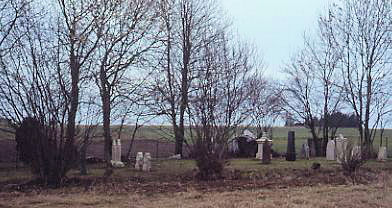
ottenstein cemetery

Picture of Jewish Cemetery, Ottenstein: Rothschild family cemetery


One of the signs of reaching middle age is an interest in family history, as the past begins to assume an importance it didn’t have before and we want to know more about from where we came in order to pass on a strong link to the next generations.
    The book of Exodus begins with a brief genealogy and also retells the foundational story of the family as the names of the sons of Israel who came to Egypt with Jacob are given to us once more, along with a reminder that this one man had 70 immediate descendants – 70 being a combination of two perfect numbers (7 and 10) and so showing a completeness to his life as a patriarch.
    But as quickly as the people of Israel increased and multiplied in Egypt, tragedy struck, a new king arose who saw them not as an asset to the community but as a threat, and so organised the legalised oppression of these people. Apparently determined not to be destroyed by this subjugation the Israelites continued to have many children and the pharaoh’s response was to take his cruelty down to the newborn children, by having every male child murdered at birth.  Yet the Hebrew midwives who were instructed to do this disobeyed, and playing upon the stereotype of the Israelite women being different from local women, told Pharaoh that they could not kill the newborn boys as they were born so quickly. And so the oppression was taken from the hands of the officials and given into the hands of the people – every boy born to the Hebrews should be thrown into the river.
      As a family history it is painful reading. Even though we know the ending, (for here we are about three millennia later still thriving), to know what our early family had to endure is excruciating. I reacently read  the memoirs of another family member, Ephraim Rothschild who lived in the Hannover area and who wrote his family history over the five years from his 85th to his 90th birthday in 1898. The stories of illness and early deaths, of capriciously unjust authorities, of marriages and children and movements to different villages to escape limitations on numbers of Jews, of legal restrictions and consequent struggles to find ways of making a good living and educating one’s children – it is an insight into a world that I can only say I am grateful not to have been born into. And yet as I read about graduates of the Jacobson school being taken into his employment, and his doubt about what would become of the descendants of those who professed Reform Judaism, there is something of the same feeling as reading the beginning of Shemot – our ancestors could not know what their descendants would become, they could only do what was right and possible in their time and their context in order to create the best chances for their family/people/religion to continue. And they could tell their story, which would include naming the names, reminding their descendants of the familial link and the story that went right back to Sinai.
     Ephraim Rothschild and the family from which he came lived generally in small towns away from the hub of political activity for 230 years, the connection to the area ending only when my grandfather left Hannover (via Baden Baden) for Dachau in November 1938 and my teenage father left Hannover for England. Not quite the 430 years of sojourning in Egypt, but a substantial time nevertheless, and a time when the family story continued to be told and passed onto the next generations. The memoir makes clear that his main interest was his family and the family business, and while he had some criticisms of the Judaism of his time, both the conservative forces of reaction and the too radical (for him) forces of Reform, he took it upon himself to endow and run a synagogue. But he also took it upon himself to learn the new political and economic ideas, teaching himself the essence of democratic politics and national economy, even writing to Bismarck and then to the Kaiser with his ideas and recommendations.  While never taking on the authorities too far, or taking a path of outright disobedience, he chose to play as full a part as he could in improving the lot of his fellow Jews and his fellow Germans.  Living in a relative backwater was no hindrance to his taking part in life. As in the opening of of the book of Shemot, Ephraim’s memoir tells the stories and names the names, and he seems content to do his best within the context and place he found himself, keeping family and religion going to the next generations. And with the stories we find out about some of the women of the family, and how hard they worked to keep everything going.

The title of the book of Shemot (names) is usually understood to refer to the names of the sons of Jacob who came down to Egypt with him, but there are other names to be found in this sidra and there are areas where the naming of names seem to be deliberately avoided. In particular within the story leading to the birth and naming of Moses which is found in this sidra only three names are made clear – the Hebrew midwives Shifrah and Puah are named and described twice as women who “revered God”, and their civil disobedience in aiding the labouring Hebrew women is recorded in bible, as well as their divine reward which is understood by Rashi to be that they became the founders of great dynasties themselves. Yet the father of Moses and the mother of Moses are described only as coming from the tribe of Levi, the Egyptian woman who rescued him is only described as ‘bat Paro’ – a daughter or female relative of Pharaoh, and the sister who oversees the rescue as ‘his sister’. Moses himself is finally named by the daughter of Pharaoh only ten verses later when he has been weaned by his mother and returned to her in the royal household.

This naming of the God-fearing midwives, yet the deliberate non-naming – almost to the point of clumsiness in the text – of all the others around Moses’ birth and rescue reads curiously in a sidra called “Names”. Is it trying to tell us that sometimes we must stand up and put our names to our acts of justice while at other times it is better to do so in anonymity?  Certainly that thought has resonances today in a world anonymity on the net.

      Or is it trying to say that sometimes it is the story that is important and the players are merely functionaries whose naming might distract us? Or maybe that it is our relationships with each other that truly matter and not just ourselves? Or that who we really are – the essence that is caught up in our name – can only be understood in the context of who we are connected to and what we do in our lives.

     The study of one’s family history can be fun and also it can be painful as the many stories of persecution and deprivation echo down the centuries along with the names, often the same names used repeatedly so that one can no longer tell who is being remembered in the naming.  But just to get caught up in who was who is not to in any way know about them. For that one needs the stories, the way the relationships developed, the sense of what they did and the context for why they did it. And we need also to recognise the difference between knowing the name of something, and knowing something. As Richard Feynman wrote “You can know the name of a bird in all the languages of the world, but when you’re finished, you’ll know absolutely nothing whatever about the bird… So let’s look at the bird and see what it’s doing — that’s what counts. I learned very early the difference between knowing the name of something and knowing something.”

Nitzavim – standing together, united in our diversity

Parshah Nitzavim is always read on the Sabbath immediately before Rosh Hashanah. In part that is fortuitous – a wrinkle of the calendrical cycle.  

In part though there is a deeper connection, because it reminds us that all the people will indeed be standing together in the presence of God during the Yamim Noraim; and in part, I think the reason is because the importance of this speech of Moses – it is one that is critical for the people – Do not forget where you come from, what you are called to do, what you will have to give an account of. And do not forget that you are one people.

The unity of the Jewish people, standing together, all voices being heard from the richest to the poorest, the oldest to the youngest – choose any spectrum you like – ALL the Jewish people are, says Moses, “Nitzavim, Culchem” – standing present, all of us. We are all part of the whole; each of us has a role to play and a gift to give. Tradition teaches that everyone who will ever become a Jew also stood at Sinai – we too were there, accepting the covenant and agreeing to its obligations.

So the unity of the Jewish people is paramount, in prayer during the Yamim Noraim all of us should be there. However sinful we may feel ourselves (or others) to be, our liturgy calls us all together to pray in one community.  And the unity of the Jewish people is paramount in memory and mission – in how we fulfil what we are called to do. Tragically it seems to me that this unity is unravelling in so many ways. Many Jews feel less and less bound to the community, less willing to give the time or the thought that is needed to help them and the community thrive. And many Jews feel out of sorts with the community – be it defined as the establishment, the synagogue, the State of Israel, the traditions, the rituals, the beliefs or behaviours of other Jews.

I think we all have reservations about what it means to be one people. We all wonder why, in hard pressed times, we are expected to give so much of ourselves. We look at other sectors of the community and shake our heads. I for one find the hareidisation of Judaism horrifying, others of course will find the feminising of Judaism equally odd.  In Israel there is a growing gulf between the dati’im (observant of all the legalities) and the hilonim (secular Jews whose identity is Israeli)  The issue is, how to we still live with each other – how do we find the common ground of the covenant made at Sinai and stand, all of us together?  How to we make a bridge or a series of connections that allow us to stay one people without all having to bend to one common denominator, but instead allow our diversity to be one of the values we cherish? Nitzvavim reminds us we are all there – from the leaders of the community to the most menial, men, women and children. Diversity is built into our unity. Now we need to work at building unity from our diversity.

From MiDBaR to DVRim – the life learning of Moses in Devarim

When Moses first encountered God at the burning bush he told God ‘lo Ish Devarim anochi’ – I am not a man of words (Ex 4:10).  Yet here we are towards the end of Moses’ life with a book that begins ‘eleh hadevarim asher dibber Moshe el kol Yisrael – these are the words which Moses spoke to all Israel.’ 

What has happened to turn this man who had no confidence in his ability to speak, into one of the greatest orators?  What processes did he pass through to become a man of words?

            The word Devarim comes from a root dalet, bet, resh – davar.  So, curiously, does the word which names the previous book – Bemidbar, in the desert.  There is a connection between the word we use for ‘words’ and the word we use for ‘wilderness’ – both emanate from the same Hebrew root ‘davar’, a root which implies substance and meaning.  Bemidbar is a book about growth and chaos – it is in the wilderness, the midbar, that the Israelites rebel, that they challenge Moses and even God’s authority.  It is in the wilderness that Moses negotiates and manipulates, that he demonstrates enormous fluctuations of confidence and despair, of temper and temperament.  Moses is a tortured soul, alone and frightened, filled with anger and with insecurity, with self doubt and with some arrogance.  And it is this mixture of fury and passion, of neurosis and obsession, which eventually cause him to lose everything he holds dear.  Moses’ words in the wilderness alternate between despair and compassion, between fixation and thoughtfulness, between a hope for the future and a concern for the meaning of that future.

            By the time we come to the book of Devarim however, Moses has worked through much of his pain and has undergone a radical transformation. The Moses we see in Devarim understands that his days are numbered, and the self pity of the earlier years has given way to self awareness. As he coaches and cajoles and chastises his people, he realises that every moment and every word counts.  He has moved through the ordinary and everyday relationship of interaction and transaction and is more comfortable within his skin, and so more able to make the connections that enrich and affirm his life. In Devarim he teaches us about relationship with each other and with God that is far removed from the self based needs experienced so far.

            This week, as every year when reading Devarim, we are in the week commemorating the events of Tisha b’Av, the blackest and bleakest day of the calendar. We remember disaster and calamity in great measure, including the destruction of both Jerusalem Temples. Traditionally a day of mourning and fasting, the mourning of the Jewish world has been growing for three weeks, gaining in intensity since the 17th Tammuz and its fast. 

            The tradition of mourning attached to the calendar at this period, is one that we Reform Jews have ambivalence about, but there is still a lot we can learn from it.  The laws of mourning were instituted to help us get through the tragic and difficult experiences in our lives.  But they were also established so as to help us find the opportunity to re-examine our lives and create the time and the focus to enable us to transform everyday existence and see our lives in the perspective of relationship with God.  The mourning period is the equivalent of the Bemidbar, the wilderness and chaos through which we grow and transform ourselves from self-centredness to self-awareness.    

The period of Jewish mourning is a time when the mourner isolates themselves from society and from the clamour of the world.  It provides a time for introspection and evaluation.  By tradition much of the material and trivial pre-occupations – haircuts, new clothing, physical appearance etc are sloughed off during mourning, as are the anxieties about how we are doing in the world in terms of wealth or success, reputation or achievement.  Suddenly we are faced with an awareness of what really matters in life, and given the time to consider ourselves and our activities.  There is a tradition in some parts of the Jewish world to demonstrate our lack of interest in the external and material appearances of things by covering the mirrors, a tradition I have always found folkloristic and uncomfortable, but there is a genuine message within it – that to really experience ourselves at this time we don’t look outwards but inwards, don’t use the silver glass of a mirror but the instead look into the mirrors of our own souls.

            There is a real connection between Devarim and the mourning period that is Tisha b’Av.  We begin reading a book where Moses has taken the davar that is within the midbar and transformed it into Devarim – he has taken the chaos and anxiety and self doubt within the wilderness and transformed the self same substance into matters of weight and meaning and of importance.   Here just before the black fast of the ninth day of Av we are taking the mourning and the introspection and transforming ourselves and our lives through what we find.  It is no coincidence that next week we will begin on the haftarot of consolation which are prescribed for reading immediately after Tisha b’Av and which will lead us liturgically on to Rosh Hashanah, the time for self examination and the trigger once again for renewal and redemption.  Just as Moses was able to leave the midbar and form the Devarim, so we too should be able to travel through our own midbar, and to understand our own role in life and grow in the depth of our humanity.

            Some of us never quite leave the midbar, for it can trap us into staying there, never emerging into the Devarim, the ability to see our lives more clearly, to experience the connection with God and each other as it truly is.  Most of us fluctuate most of the time between the two realms of the everyday transaction and the life-changing connection.  We shift between the higher and lower domains of consciousness and connection, intermittently aware that there are no wasted words, that all davar can become Devarim.

            During this week the calendar commemorates a terrible series of catastrophes by creating a period of mourning.  Whatever our theology or our political orientation, it provides us with the space for reflection, for the sense of our being in the chaos and loneliness of wilderness, and gives  us a time to become conscious of ourselves, our lives, our pain.  It is an opportunity for us to begin the process of radically transforming ourselves as we begin the run-up to Rosh Hashanah.  It gives us the opportunity to make connections and to see words differently, so as to experience the holiness that is all around us.. 


chukkat

  הֵמָּה מֵי מְרִיבָה, אֲשֶׁר-רָבוּ בְנֵי-יִשְׂרָאֵל אֶת-יְהוָה; וַיִּקָּדֵש בָּם

These are the waters of Merivah, where the children of Israel strove against God, and he/it was sanctified in them / he was separated from them. (Num; 20:12–13)

 One of the most confusing passages in Torah happens here in parashat Chukkat – not the mysterious ritual of the red heifer which is the ‘hok’ par excellence of Torah, a law without obvious or rational basis to be done simply out of obedience to God’s laws -but the events at the rock, where instead of ordering the rock to yield its water, Moses struck it twice instead (as he was told and did in the first such narrative in Exodus 17:6).

Here in chapter 20, God had instructed Moses and Aaron to take a rod, assemble the community, and order the rock to give its water. But instead Moses had struck the rock twice, had described the Israelites as rebels, and had done the whole thing himself, without including Aaron.  Tradition tells us that Moses’ many failings are demonstrated here. Anger, Impatience, Self-centeredness, Lack of faith in God, … and that this is the reason that God tells both Moses and Aaron that they will not enter the promised land, because Moses had lost control, had not trusted in God, and Aaron had not stopped him. God said to Moses and Aaron, “Because you did not trust Me enough to affirm My sanctity in the sight of the Israelite people, therefore you shall not lead this congregation into the land that I have given them.” Those are the Waters of Merivah, the Israelites quarrelled with God—“

But I wonder. That verse seems to be pointing at something a little different.

  הֵמָּה מֵי מְרִיבָה, אֲשֶׁר-רָבוּ בְנֵי-יִשְׂרָאֵל אֶת-יְהוָה; וַיִּקָּדֵש בָּם

and then we have this strange phrase “va’y’kadesh bam” translated usually as some variation of “through which God affirmed sanctity.”

It is this notion of the sanctification of God in this passage that I find deeply troubling. From the moment when God blessed and va’y’kadesh the Shabbat day (Genesis 2:3), the verb va’y’kadesh has an infrequent but powerful presence in bible.

            It is used at the foot of Mt Sinai when Moses tells the people to prepare for the giving of the commandments in three days’ time, telling them to wash themselves, to stay away from women.          It is used when Aaron and his sons are taken through the rituals of becoming priests and particularly high priest. It is used again at the ritual opening of the Tabernacle readying it for sacrifices.   All of these uses are not so much about making something holy, but about separation and dividing, making something ready for particular usage. The only time we hear about the sanctification of God is in the verse before ours:

יב  וַיֹּאמֶר יְהוָה, אֶל-מֹשֶׁה וְאֶל-אַהֲרֹן, יַעַן לֹא-הֶאֱמַנְתֶּם בִּי, לְהַקְדִּישֵׁנִי לְעֵינֵי בְּנֵי יִשְׂרָאֵל–לָכֵן, לֹא תָבִיאוּ אֶת-הַקָּהָל הַזֶּה, אֶל-הָאָרֶץ, אֲשֶׁר-נָתַתִּי לָהֶם.   12 And God said to Moses and Aaron: ‘Because you believed not in Me, to sanctify Me in the eyes of the children of Israel, therefore you shall not bring this assembly into the land which I have given them.’

Then follows the verse we know, but it doesn’t seem to be the continuing words of God, it is not spoken in the first person, and it seems to be an interpolation in the speech:

  הֵמָּה מֵי מְרִיבָה, אֲשֶׁר-רָבוּ בְנֵי-יִשְׂרָאֵל אֶת-יְהוָה; וַיִּקָּדֵשׁ בָּם

These are the waters of Merivah, where the children of Israel quarrelled with God, va’y’kadesh bam .

I would like to suggest that we are no longer talking about punishment of Moses or even of the people with this verse, and we are also not in the realm of the sanctification (or not) of God. Instead, we should look at this verb va’y’kadesh and recognise that it is reflecting the geography of the surroundings of the people of Israel, they are in the wilderness of Zin, in the area of Kadesh. In other words they are in an isolated and separated place, not yet part of a community, not connected to anywhere else.

The root k.d.sh comes to mean ‘holy’ by virtue of its more fundamental meaning – that of being separate, distinct and different. It makes sense in all the other usages of this word as a verb va’y’kadesh, as God separates the Sabbath day and makes it distinct, Moses separates out the people and warns them to be different from usual, the High Priest (and the priesthood generally) are separated from the rest of the populace. The tabernacle is also made a distinct and special place when it is given the status of kedusha by Moses once it is completely built. So why would we not translate our verse as “These are the waters of Merivah, where the children of Israel strove against God, and were separated/ isolated/ made different because of it.”

            This is the generation that didn’t have to leave Egypt. This is not the generation who were at Sinai. This is the generation who were born into the wilderness, born after the spies had led the people into a spiral of anxiety and depression by reporting that the Promised Land, while wonderful and fertile, was filled with giants who made themselves look pathetic in their own eyes. This is the generation who as yet know neither themselves nor God.

So maybe what is happening is that after punishing Moses and Aaron for their not teaching about belief and faith to the children of Israel and so being told that they will not be the ones who lead them into the promised land, the attention turns to the relationship between God and the children of Israel – this generation who were not yet taught to sanctify God and to have faith – and because of the striving against God, then something different has happened to them.

            There are times when we look for purpose in our lives and times when we simply jog along with them. Times when we need to believe and times when it doesn’t seem so important. Times when we can believe and times when it seems impossible

This is the very first time the new generation, the ones for whom miracles were the everyday occurrences of manna and water, of needs being met without much effort and battles being won without much loss, had to face something different. Miriam has already died, there is a shortage of water, Aaron and Moses were both getting older and there must have been a general understanding of the mortality of the leadership who had been there from the beginning, who spoke to God, who knew (or appeared to know) the purpose of the wandering.

This generation had to see something special; they had to see words bring about change. It was time for them to take on some of the obligation to God that up till now had been taken on for them. Moses and Aaron may or may not have failed in the way the carried out God’s instructions, in many ways it doesn’t matter, what matters is that an awareness was brought about that this new generation were not yet ready  to take on the task of their elders. It was time for something to hasten their readiness. And so I read these verses not as sanctifying God so much as preparing and altering the people in readiness to take over the work. That by their striving against God they were creating a relationship which would change them. “Va’y’kadesh bam” is not God being sanctified by the waters of Merivah, a concept which eludes me to be honest, but the people being made ready to be holy by their actions at that time.

All of us need to grow and to alter, to take on the burden of the work that others have done before us, be it for the community or within the family; promotion at work or a change of career – we grow up and we grow. It is not something we have a choice about, and that too is made clear in this sidra. But what is also made clear is that however much we don’t want to take on the work, however much we strive against it, we cannot escape it – the very act of striving against it changes us…. So we might as well take it on with good grace.