mattot massei – a modern take on the cities of refuge

first written 2009.

ImageStaring out of the window in the media-briefing centre in Sderot, looking at a huge and ugly concrete wall right outside, I read the word ‘miklat’ and for a moment I was surprised. I know the word from bible rather than ulpan, where the arei miklat, the cities of refuge, are created. As our bus had entered the town, we were given a briefing – in the event of a rocket coming over from Gaza, if you are still on the bus, get down into the passageway and hope. If not, then run like crazy for one of the bomb shelters that are dotted every few yards – the miklat.

Miklat is a word that is repeated ten times in the 34 verses we read today. A miklat is a place of safety, a place of escape, a sheltering place.  Reading today’s portion my mind immediately went back to the experience in Israel – where one didn’t feel very safe nor sheltered. Seeing the word then on the shelters all over the Sderot area, and seeing the words now in this sidra, the two experiences come together. The words for refuge, the designation of the cities of refuge “arei miklat”, of “miklato” (the refuge of the innocent manslayer) — are tied up in Modern Israeli experience as bomb shelter or air raid shelter, the hoped for asylums from the constant and unpredictable attacks on the people there.

In fact the tradition of signing the areas of refuge, something I found so remarkable and so distressing in the unexceptional and stolid nature of those constructions everywhere in Sderot, has long and honourable roots.  The Talmud records that: “Rabbi Eliezer ben Ya’acov said: The words miklat, miklat [refuge, refuge] were inscribed at crossroads, so that the [inadvertent] manslayer might see them and turn in the right direction.” (BT Makkot 10b)

The Cities of Refuge were towns in the Kingdom of Israel and Kingdom of Judah at which the perpetrators of manslaughter – done without malice or forethought – could claim the right of asylum; These manslayers were not enemies of those they had killed, nor had they intended to hurt them, but they had killed them by accident, and outside of these cities, blood vengeance against such perpetrators was allowed by law. The Torah names just six cities as being a city of refuge: Golan, Ramot-Gilad, and Bosor, on the east of the Jordan River, and Kedesh (on the Lebanese border), Shechem, and Hebron on the western side.

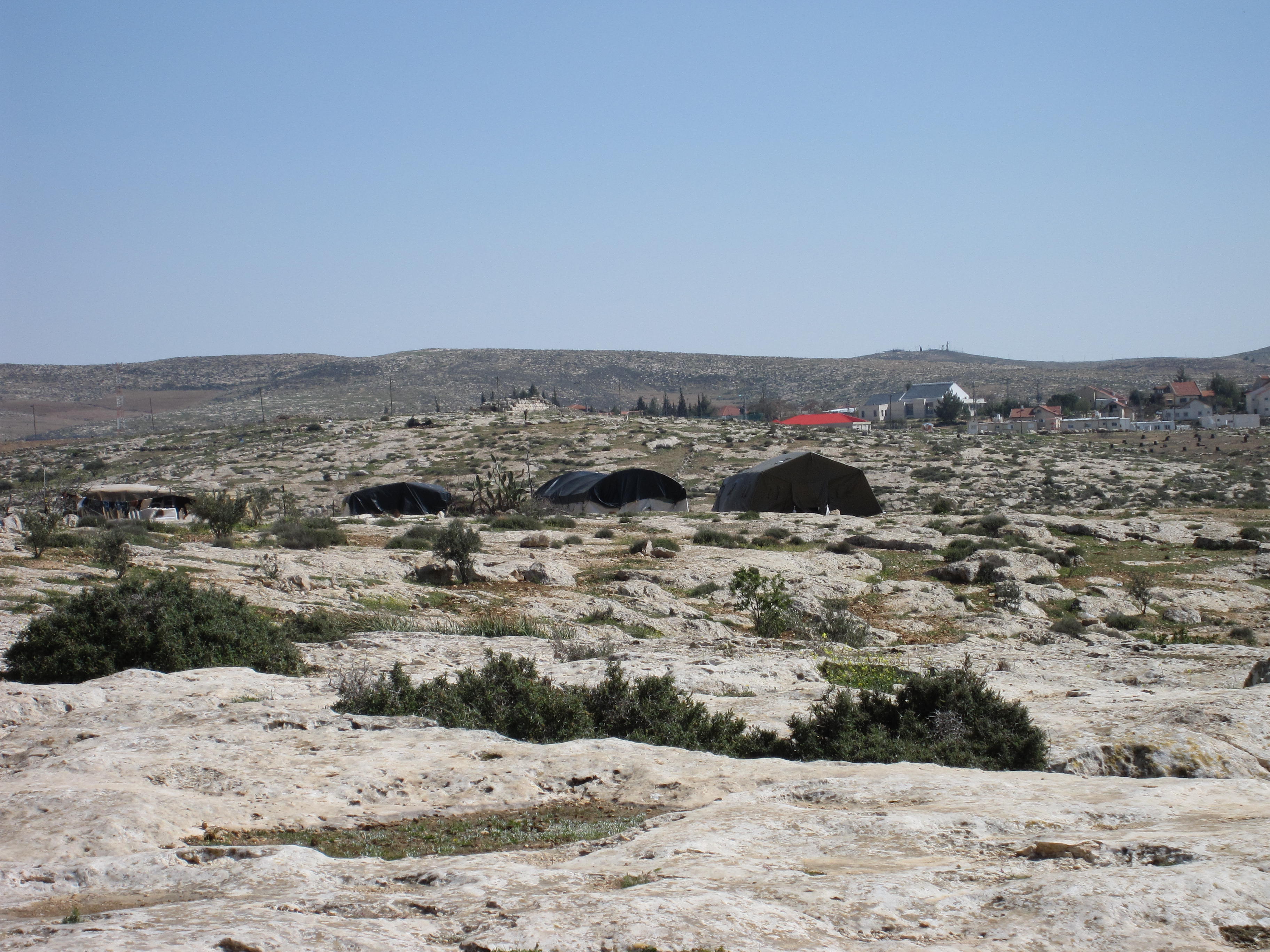
Just listing the names of the arei-miklat is a poignant experience. Almost all of these places are in disputed political geography today, and far from being places of calm or sanctuary.  While on sabbatical I spent some time in Israel – in particular a day in the south Hebron hills and in the city of Hebron itself. The tension and aggression in the area was palpable, and rather than have ‘miklat miklat’ signposted at crossroads, there were checkpoints and watchtowers, and in the city closed streets and terrible graffiti. It was the very opposite of a place of refuge.

What was the purpose of providing the Arei Miklat, the cities of refuge?

The author of Sefer Ha-Chinuch suggests three reasons for a manslayer to flee to a city of refuge (positive commandment 410):

The first is “So that he regret his deed, suffering the pain of exile, which is almost like the pain of death, for a person becomes separated from his loved ones and the land of his birth, and must live out his days among strangers.”

Secondly “there is an element of improving the world … for it saves him from the blood avenger killing him when he did not willfully do wrong, for his act was unwitting.”

And finally  “There is yet another benefit:  so that the relatives of the person who was killed not have to constantly see the killer in the place where the unfortunate act was committed, for all the ways of the Torah are for peace and tranquility.”

Pain and suffering reflect the emotional state of the manslayer, protecting him from the blood avenger shows concern for his safety and physical preservation, and distancing him from the relatives of the person killed brings about an improvement in society, keeping the family of the person killed from having to see the person who shed his blood, at least for a certain period of time.

Rabbi Judah Zoldan asks “Aside from these explanations, there are several other issues that should be considered: what other understanding and view of the value of life will the manslayer have when he leaves the city of refuge, upon the death of the high priest?  What does the manslayer do with his life for the period that he resides in the city of refuge?  Does he learn and internalize a different view of the value of life and of a person’s responsibilities for his actions?  What rehabilitative process does the manslayer experience there, and under whose guidance?

        From the time I spent in Sderot and in Hebron, these questions have been haunting me. I saw both Jewish Israelis and Palestinians living, not in cities of refuge, but in cities of pain, trapped geographically and spiritually in what can only be described as a living hell.  There are, it seems, few innocent manslayers here, but mostly people who are to some extent complicit in the events. Be they suicide bombers prepared to blow themselves up alongside people from the ‘other’ population, or settlers appropriating land for their ideology of triumphant nationalism; be they eighteen year old kids in the IDF not questioning their orders, or the rabbis who write up the terms of engagement against the other, everyone it seems is adding to the heat of events.  There is little reflection, slight repentance, no improving of the world. Rehabilitation and the development of a different view of the value of life is noted mainly for its absence.  And yet –

While I was in the Hebron hills I met a man called Ezra Nawi. He is a Jewish Israeli man, an Iraqi born in Basra, whose trade in life is plumber. He is also a human rights activist, and with persistent non-violent activity he helps the local population to stay on their lands. The day I met him, he was constructing some kind of solar powered electrical generator with what appeared to be some string, some metal, and other Heath Robinson materials, for a family of Arabs whose settlement was being continually disrupted, even though they had papers dating back to the Ottoman times to prove the land was theirs.  There is a video on You Tube of him protesting the treatment meted out to his friends, and what is the most sad for me is him calling out to the border police “I was also a soldier but I did not demolish houses….The only thing that will be left here is hatred, only hatred will be left here”, as an Arab woman screams out “May God never forgive you. May God destroy you”

        The original cities of refuge were designed to keep society safe, to palliate the effect of the blood relative having the power – and obligation – to avenge the death of an individual.  The manslayer who had not killed intentionally, who did not have an animus towards the one who died, was able to find a place of peace within the Levitical cities, and to stay there in safety reflecting upon the results of their actions.  It was designed to bring about peace, rather than allow a feud to build up between families. It was designed to remove the hatred from the situation, taking the hated one away from those who could not bear to see him, taking the thoughtless one to a place of thoughtfulness.

        There are many many peace activists in Israel, Jewish and Arab people who take refuge not in places but in their own integrity, who try to bring about a better world by seeing this one as it really is and imposing the values of the truly religious individual upon it – noticing and valuing the other, noticing when our side gets it wrong, witnessing the conflict peacefully. Alongside Ezra Nawi there is Rabbis for Human Rights, Physicians for Human Rights, Breaking the Silence – an organization of young Israeli soldiers who are confronting Israeli society with what is being done in their name; Ta’ayush, (2004)  (Arabic for “life in common”), a grassroots movement of Arabs and Jews working to break down the walls of racism and segregation by constructing a true Arab-Jewish partnership. They say of themselves “A future of equality, justice and peace begins today, between us, through concrete, daily actions of solidarity to end the Israeli occupation of the Palestinian territories and to achieve full civil equality for all Israeli citizens.”  There is MachsomWatch, in existence since 2001,  an organisation of peace activist Israeli women against the Israeli Occupation of the territories and the systematic repression of the Palestinian nation. They call for Palestinian freedom of movement within their own territory and for an end to the Occupation that destroys Palestinian society and inflicts grievous harm on Israeli society. 

The cities of refuge may be gone, transformed into cities of dispute. Nowadays the only places of miklat are bomb shelters reminding everyone of how much the hatred has grown, how rampant and chaotic the response to it. But there are at least anshei miklat – people who provide a kind of refuge when all around are causing pain and sorrow. Through them I hope that the lands of Israel and of Palestine will soon find true refuge from the terror that stalks them day and night, and that the refuge all of us seek will be found as a result of their actions.  They need our support and our active help. Please do find out more about them and offer them some miklat that we can provide – to know that they are not forgotten and not uncared for. To know that the image of God is not hiding in this world, but is out and about in the work of all of us who choose to do it.

Parashat Pinchas: the Daughters of Zelophehad

Image

There is a maxim I learned at the Leo Baeck college whose truth has sadly been borne out many times in my career as a rabbi  – “where there is a will, there is a “broyges” (a Yiddish word meaning anger/ dispute)

Inheritance can be one of the most fraught areas of family relationships.  Even the best regulated and most even tempered families can discover the pain of frustrated expectation, begin to equate inheritance with love, fall out with each other and end relationships of decades standing once a death has occurred. 

The daughters of Zelophehad were the first people in the biblical narrative to query the inevitability of inheritance, though not the first to be upset about what they did or did not receive. 

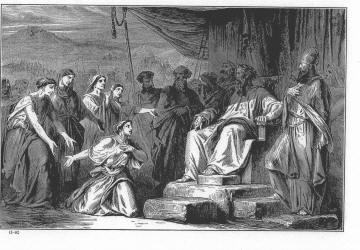
These five women feel the injustice of their father’s lack of legacy strongly, they want his name to continue into the future, and it matters to them that the physical legacy he left was to be diverted to people who were not his direct descendants, simply because of gender.  They band together and approach Moses with their case, and Moses is perplexed – what should he do in the face of this determined group of improbable heirs?  As we know, he approached God with his problem and is told that the daughters of Zelophehad speak well, they should indeed inherit their father’s estate, and his name should be allowed to be remembered. 

So they inherit, but soon, as we learn in Deuteronomy and later in the book of Joshua, limits are afterwards put upon the inheritance of daughters, the old need for land to stay within the tribe takes precedence, and the case law established by these five brave women is constrained, though not repealed.

          Inheritance is a strange phenomenon. I think of Abraham, the Ur-ancestor, who tells God that there is no point making a covenant with him because he is childless and his estate will all go to a member of his household, Eliezer of Damascus.  This text made so much more sense to me once I too became a parent – somehow life focuses more when there is a child to pass on to.  And it doesn’t really matter in what area the transmission takes place – tradition, values, wealth, family stories, family name – simply knowing that someone will take it into the next generation makes a difference. 

Yet of course there are many ways of ensuring an inheritance besides that of having a child.  Alexander Pope spoke of his books embodying his legacy. Teachers know that the impact they make on students can reverberate into the next generations, and the Talmud tells us that when a student recalls a teaching in the name of their teacher, it is as if that teacher’s lips move in the grave.  (BT Yevamot 97a)

Anyone who makes a relationship of trust with another knows that the legacy of that relationship will continue until the end of the life of the partner – and maybe even for longer.  What we do, and how we behave with other people, has a lifetime far longer than we expect or think about, the impact of our actions resonates for far longer than we can imagine.

          Inheritance is a strange phenomenon.  It is one of the defining things to give meaning to our lives and at the same time can rupture our connection with the future and the past if not properly organised.  It is something we would do well to consider deeply, to make serious plans about, and to consider the impact and the consequences of what it is we bequeath to the world as a result of our life.

          We are used to the idea of making wills – documents which record what we want to happen to our possessions after our death.  Many of us have made a will and have found that contrary to superstition the making of a will has not somehow brought about our untimely demise. 

But there is more to think about than who gets the jewellery and who gets the house and car. Inheritance is far bigger than possessions – it is, as the daughters of Zelophehad so rightly recognised, what we bequeath about with how we lived our lives and how what we learned or made sense of is transported into the world where we no longer will be. 

There is in Judaism the tradition of making a regular and updated ethical will. The idea is simple yet so important – besides worrying about who gets what of our material possessions, we spend the time thinking about what values we want to transmit, what lessons we have learned that we want our chosen beneficiaries to understand, what was really of importance in our life that we want not to be lost along with the trivia.  It is a valuable exercise, to create an ethical will, in which we put down in black and white what really has mattered to us, be it simple good behaviour or the imperative to tzedakah; be it the need for the discipline of a prayer life, or the permission to doubt God as much as one likes, as long as you still engage in the doubt. 

There is a powerful tradition of writing the personal ethical will as part of the preparation for the High Holy Days – in other words to begin to do so at this time of year, as we take stock of our lived life and try to make judgements about it, and create a framework for the future in order to live a life more in harmony with what is important to us. 

It gives us the space to think about ourselves. Not simply as amassers of material goods, nor as people who just get on with life without much thought for any deeper purpose than to live well enough and be successful and good enough – but as human beings who consider that our lives must have meaning and that that meaning is something to be nourished and cherished and transmitted into the future. 

I heartily recommend that you consider what it is you want your legacy to be. I recommend that you not only make a will, but that you tell your children what that will contains, so that you minimise the broyges after your departure from the scene. 

I also recommend that you consider what you want your spiritual legacy to be – not something unattainable or perfect and not something that you yourself don’t actually manage to do – but that you distil your values, your belief system, your sense of who you are and why you exist, and write on a plain sheet of A4 some of the truths you have learned which have sustained you on your journey through life, and which you would like to project through your nearest and dearest into the future.

What will your legacy be?

Will it be one of infighting for your possessions, of indifference to your existence on this world?

 Of minor irritations or major frustrations? 

Will your legacy be framed in such a way that people will recognise your contribution to the world, or will it simply be a dividing up of the goods?

I have always been so impressed with Zelophehad and with his daughters.  What he owned is irrelevant to me, that his name continued is one of indifference, but the fact that he and his wife bred 5 such superb daughters, who had confidence and tact, who held together to fight for what they felt to be right – that is a legacy to be proud of, an inheritance for which he – and his wife – deserve to be remembered.


Balak of Moab who did not know what he did not know

Israel faces a crisis – and yet does not seem to know it. Balak, King of Moab, is alarmed at the prospect of Israel crossing his land, has seen what they have done to others as they have journeyed towards his land. The Canaanites were entirely destroyed at Hormah (Num 21:3),  then it was the turn of Sichon the King of the Amorites (21;25-26)  who would not let them pass through his land and was defeated and destroyed, and finally Og the King of Bashan (21:35) who also went out to battle against them was utterly ruined. So Balak chose to get some supernatural help, and approached Balaam, a well known prophet the power of whose blessings and curses were legendary.

The sidra focuses entirely on the negotiations between Balaam and Balak, and the consequences of this discussion. What is happening in the Israelite camp is irrelevant – bible is telling us what is happening “offstage” so to speak, a side story that is however hugely important to the Jewish people even today.

Famously, to begin prayer, we take from this sidra the final words of Balaam, which he speaks almost without conscious intent. Balaam is hired to curse the people of Israel, though he knows that he cannot do this, for God has made clear that the Israelites are special and that the normal rules of blessing and cursing them will not apply. At the end of a long process of attempted curses in order to satisfy the wishes of his paymaster Balak, Balaam blurts out the phrase “Mah tovu ohalecha Ya’akov, Mishkenotecha Yisrael” – “how good are your tents Jacob, your dwelling places Israel” and this statement is taken by us as a blessing, and used as the phrase with which we begin our services – a tradition that was already established by the time the 9th century Babylonian Rav Amram compiled his first siddur and instructed us “”When entering a synagogue say: ‘Mah tovu ohalecha. . . V’ani, b’rov chas’d’cha; I, through your abundant love, enter your house; I bow down reverently at Your holy temple.”

Our liturgy begins deliberately by turning the curse of an enemy into a blessing for us to express our delight in entering a synagogue, confident that God will accept our prayer. The Talmud understands the tents and dwelling places as being the synagogues and houses of study of the Jewish people (Sanhedrin 105b). The Midrash on the other hand, quoted by Rashi (ad loc) (also Baba Batra 60a), sees the phrase as a paean of praise to modesty and privacy: “When Balaam saw that the tents of the Israelites were set up so that the entrance of one did not face the entrance of another, he praised them with the “Ma Tovu”.

Both traditions are teaching that it is the thoughtful behaviour of the Jews, either their respect for each other’s private space and personal modesty, or else the connection to God through prayer and study, that brings about the change in Balaam’s words, transforming attempted curse to fluent blessing. And that may indeed be a good lesson to draw from the story, but I think it is important to see respect for the other not as an end in itself, but as an important way of being.

To take this further: In this sidra the Israelites had no idea that Balak was so nervous of them. They were not intending to destroy Moab (Deut 2:8-9) who were distant relatives, being descended from Lot the nephew of Abraham. So while Balak was terrified of this horde of people who seemed to be destroying the peoples in their path – and was presumably ignorant of the requests for safe passage that were sent by the Israelites but that were not accepted and instead met with hostility and warriors – the people themselves knew nothing of their effect on the other peoples of the land. They see themselves only as innocents, wishing to travel through, to take nothing but what they would genuinely trade or buy from the inhabitants.

So the ignorance of Balak is matched – even dwarfed – by the ignorance of the Israelites, both of the effect they were having on others, and the reputation they were creating for themselves. Their ignorance extended to the machinations of the Moabite King and the professional prophet he hired, and also to the work that God put in to protect the Israelite people travelling through the desert. In the words of Donald Rumsfeld, they did not know what they did not know.

While Rumsfeld, then US defence secretary, was (unfairly) awarded the Plain English Campaign’s trophy for most obfuscating remark in December 2003 for the words: “Reports that say that something hasn’t happened are always interesting to me, because as we know, there are known knowns; there are things we know we know. We also know there are known unknowns; that is to say we know there are some things we do not know. But there are also unknown unknowns – the ones we don’t know we don’t know”. (Rumsfeld on February 12, 2002 at a press briefing at the White House on WMD)  The story of Balak is illuminated for me by his words. The Israelites knew the things they knew – though they did not always respond in the way that that knowledge would lead one to expect. They knew that God was looking out for them and providing for them, but they still rebelled; They also knew some things that they did not know – how to get into the land, when that would be, if they would succeed.  But they simply didn’t know how they were being perceived by the peoples whose land they needed to cross to get to Israel, they didn’t know how their reputation grew to be so fearsome that Balak was desperate for extra help, and they didn’t know that God was quietly active in the background in order to protect them.

What God is doing in this narrative remains, to the Israelites, an “unknown unknown”. Rabbi John Rayner would say that God does not intervene in the world, but that God is active in the world –meaning that God’s will is manifested in the actions of people: the choices by Balak and Balaam in this text, as well as the behaviour of the Israelites, being prime examples. Our daily actions, how we conduct ourselves and how that leads other people perceive us matters; indeed it is the one thing that can transform our world, that is able to transform curses to blessings. We cannot know the totality of the effects our choices have, but I would like to think that modern Jews and Israelites are more aware and perceptive than their ancient forbears about the effects on, and the analyses of, the peoples and lands around them of their actions. It cannot be enough to care for the wellbeing only of other Jews. It cannot be enough to spend our time in study and prayer. Such caring, such study must lead to good and ethical action, to being part of the action of God in the world.

The choices we make in our behaviour matters. How other people see us, even if we are currently unaware of them, or do not notice them, or find ways to sideline them – matters. If we see something as self defence but others see it as aggression – it matters. Even if their construction of events is something we would not recognise, their understanding must be understood and taken seriously and addressed. The bible is clear that God does not intervene in history – the story of the talking donkey shows how the bible views such intervention – but it is equally clear that the choices people make, whether they fully understand the situation or are in apparent ignorance of it, have real effects in the world. It is up to us, as it was to Balaam, to make the choices God would wish us to make, or we may find that the situation is taken out of our hands and we will lose the chance to make good choices and bring the will of God into our world. How then will curses be turned into blessings?

previously published on lbc.ac.uk

chukkat

  הֵמָּה מֵי מְרִיבָה, אֲשֶׁר-רָבוּ בְנֵי-יִשְׂרָאֵל אֶת-יְהוָה; וַיִּקָּדֵש בָּם

These are the waters of Merivah, where the children of Israel strove against God, and he/it was sanctified in them / he was separated from them. (Num; 20:12–13)

 One of the most confusing passages in Torah happens here in parashat Chukkat – not the mysterious ritual of the red heifer which is the ‘hok’ par excellence of Torah, a law without obvious or rational basis to be done simply out of obedience to God’s laws -but the events at the rock, where instead of ordering the rock to yield its water, Moses struck it twice instead (as he was told and did in the first such narrative in Exodus 17:6).

Here in chapter 20, God had instructed Moses and Aaron to take a rod, assemble the community, and order the rock to give its water. But instead Moses had struck the rock twice, had described the Israelites as rebels, and had done the whole thing himself, without including Aaron.  Tradition tells us that Moses’ many failings are demonstrated here. Anger, Impatience, Self-centeredness, Lack of faith in God, … and that this is the reason that God tells both Moses and Aaron that they will not enter the promised land, because Moses had lost control, had not trusted in God, and Aaron had not stopped him. God said to Moses and Aaron, “Because you did not trust Me enough to affirm My sanctity in the sight of the Israelite people, therefore you shall not lead this congregation into the land that I have given them.” Those are the Waters of Merivah, the Israelites quarrelled with God—“

But I wonder. That verse seems to be pointing at something a little different.

  הֵמָּה מֵי מְרִיבָה, אֲשֶׁר-רָבוּ בְנֵי-יִשְׂרָאֵל אֶת-יְהוָה; וַיִּקָּדֵש בָּם

and then we have this strange phrase “va’y’kadesh bam” translated usually as some variation of “through which God affirmed sanctity.”

It is this notion of the sanctification of God in this passage that I find deeply troubling. From the moment when God blessed and va’y’kadesh the Shabbat day (Genesis 2:3), the verb va’y’kadesh has an infrequent but powerful presence in bible.

            It is used at the foot of Mt Sinai when Moses tells the people to prepare for the giving of the commandments in three days’ time, telling them to wash themselves, to stay away from women.          It is used when Aaron and his sons are taken through the rituals of becoming priests and particularly high priest. It is used again at the ritual opening of the Tabernacle readying it for sacrifices.   All of these uses are not so much about making something holy, but about separation and dividing, making something ready for particular usage. The only time we hear about the sanctification of God is in the verse before ours:

יב  וַיֹּאמֶר יְהוָה, אֶל-מֹשֶׁה וְאֶל-אַהֲרֹן, יַעַן לֹא-הֶאֱמַנְתֶּם בִּי, לְהַקְדִּישֵׁנִי לְעֵינֵי בְּנֵי יִשְׂרָאֵל–לָכֵן, לֹא תָבִיאוּ אֶת-הַקָּהָל הַזֶּה, אֶל-הָאָרֶץ, אֲשֶׁר-נָתַתִּי לָהֶם.   12 And God said to Moses and Aaron: ‘Because you believed not in Me, to sanctify Me in the eyes of the children of Israel, therefore you shall not bring this assembly into the land which I have given them.’

Then follows the verse we know, but it doesn’t seem to be the continuing words of God, it is not spoken in the first person, and it seems to be an interpolation in the speech:

  הֵמָּה מֵי מְרִיבָה, אֲשֶׁר-רָבוּ בְנֵי-יִשְׂרָאֵל אֶת-יְהוָה; וַיִּקָּדֵשׁ בָּם

These are the waters of Merivah, where the children of Israel quarrelled with God, va’y’kadesh bam .

I would like to suggest that we are no longer talking about punishment of Moses or even of the people with this verse, and we are also not in the realm of the sanctification (or not) of God. Instead, we should look at this verb va’y’kadesh and recognise that it is reflecting the geography of the surroundings of the people of Israel, they are in the wilderness of Zin, in the area of Kadesh. In other words they are in an isolated and separated place, not yet part of a community, not connected to anywhere else.

The root k.d.sh comes to mean ‘holy’ by virtue of its more fundamental meaning – that of being separate, distinct and different. It makes sense in all the other usages of this word as a verb va’y’kadesh, as God separates the Sabbath day and makes it distinct, Moses separates out the people and warns them to be different from usual, the High Priest (and the priesthood generally) are separated from the rest of the populace. The tabernacle is also made a distinct and special place when it is given the status of kedusha by Moses once it is completely built. So why would we not translate our verse as “These are the waters of Merivah, where the children of Israel strove against God, and were separated/ isolated/ made different because of it.”

            This is the generation that didn’t have to leave Egypt. This is not the generation who were at Sinai. This is the generation who were born into the wilderness, born after the spies had led the people into a spiral of anxiety and depression by reporting that the Promised Land, while wonderful and fertile, was filled with giants who made themselves look pathetic in their own eyes. This is the generation who as yet know neither themselves nor God.

So maybe what is happening is that after punishing Moses and Aaron for their not teaching about belief and faith to the children of Israel and so being told that they will not be the ones who lead them into the promised land, the attention turns to the relationship between God and the children of Israel – this generation who were not yet taught to sanctify God and to have faith – and because of the striving against God, then something different has happened to them.

            There are times when we look for purpose in our lives and times when we simply jog along with them. Times when we need to believe and times when it doesn’t seem so important. Times when we can believe and times when it seems impossible

This is the very first time the new generation, the ones for whom miracles were the everyday occurrences of manna and water, of needs being met without much effort and battles being won without much loss, had to face something different. Miriam has already died, there is a shortage of water, Aaron and Moses were both getting older and there must have been a general understanding of the mortality of the leadership who had been there from the beginning, who spoke to God, who knew (or appeared to know) the purpose of the wandering.

This generation had to see something special; they had to see words bring about change. It was time for them to take on some of the obligation to God that up till now had been taken on for them. Moses and Aaron may or may not have failed in the way the carried out God’s instructions, in many ways it doesn’t matter, what matters is that an awareness was brought about that this new generation were not yet ready  to take on the task of their elders. It was time for something to hasten their readiness. And so I read these verses not as sanctifying God so much as preparing and altering the people in readiness to take over the work. That by their striving against God they were creating a relationship which would change them. “Va’y’kadesh bam” is not God being sanctified by the waters of Merivah, a concept which eludes me to be honest, but the people being made ready to be holy by their actions at that time.

All of us need to grow and to alter, to take on the burden of the work that others have done before us, be it for the community or within the family; promotion at work or a change of career – we grow up and we grow. It is not something we have a choice about, and that too is made clear in this sidra. But what is also made clear is that however much we don’t want to take on the work, however much we strive against it, we cannot escape it – the very act of striving against it changes us…. So we might as well take it on with good grace.

Korach: Collective Responsibility

כל ישראל ערבים זה בזה

“And they [Moses and Aaron] fell on their faces and said, “God, Master of the Spirits of all flesh, shall one man sin and you cast your wrath upon the entire congregation?”   (Numbers 16:21)

The issue of Collective Punishment remains with us as a modern problem and it is no surprise that rabbinic tradition builds arguments to try to dissect and clarify the issues. Call up the question on a search engine and the chances are you will find emotive responses citing the biblical verses of the children paying for the sins of the father – for example Deut. 5:9 “You shall not bow down to nor worship other gods; for I, the Eternal your God, am a jealous God, punishing the children for the sin of the fathers to the third and fourth generation of those who hate me..”. or maybe citing the fate of the cities of Sodom and Gomorrah – though of course a closer look at such texts shows that they do not in fact suggest collective punishment, and one can equally find biblical texts such as Deuteronomy 24:16: “Fathers shall not be put to death for their children, nor children put to death for their fathers; each is to die for his own sin.” Or Jeremiah 31:29-31 “In those days people will no longer say, ‘The fathers have eaten sour grapes, and the children’s teeth are set on edge.’ Instead, everyone will die for his own sin; whoever eats sour grapes–his own teeth will be set on edge” or Ezekiel 18:20: “The soul who sins is the one who will die. The son will not share the guilt of the father, nor will the father share the guilt of the son. The righteousness of the righteous person will be credited to them, and the wickedness of the wicked will be charged against them. 

The story of Sodom and Gomorrah is in fact a story AGAINST collective punishment – indeed Moses bargains God down from destroying them and destroying the righteous with the wicked, and only when it becomes clear that there are no righteous people at all, beyond Lot and his family (who are warned to leave before the destruction) is the fate of these cities sealed.

 There is no driver towards collective punishment in Judaism – rather the reverse is true in our texts as God is challenged on a number of occasions when it looks like divine punishment will include the innocent alongside the perpetrators – including the verse in our portion. There is no impetus  towards collective punishment but some rabbis – including Maimonides, make the case for collective responsibility, something that becomes enshrined in Jewish Law in the phrase “Col Yisrael arevim zeh ba’zeh” (B.Talmud Shevuot 39a) – All Jews are accountable each for the other. In other words, we have a responsibility to each other, and an obligation to make sure that we all behave properly in the world. If not, then we are guilty of passively colluding with behaviour that is immoral, that we leave unchallenged behaviour we know to be wrong. This is, in many ways, the origin of the periodic “Not in my name” protests to Government – we do not want to be passive, nor to have people believe that we accede to what is done by our elected leaders.

The Code of Hammurabi (c1700 BCE) was the first to bring in to a legal framework the requirement that the punishment should fit the crime, and the bible takes much of that moral world view – including the famous phrase of lex talionis “an eye for an eye and a tooth for a tooth” – treated as meaning there should be proportionate punishment rather than a collective retribution. The Talmud puts it rather more fully in tractate Shabbat 54b “Whoever can prevent his household from committing a sin but does not, is responsible [lit seized] for the sins of his household; if he can prevent the people of his city, he is responsible [lit seized] for the sins of his city; if the whole world, he is responsible [lit seized] for the sins of the whole world.”

 The rabbis who taught this are saying that we have a responsibility to each other, and that this responsibility is on a number of levels of propinquity and possibility. Failing to prevent a wrongdoing is not on the same level as actually committing the act oneself. Not stopping someone with whom we have a relationship is not the same as not stopping someone who is unknown to us and at a distance from us. The word “seized” which I have translated as “responsible” does not imply being something to be tried in a court of law, but is more about having a moral relationship to the action, something between ourselves and God rather than between ourselves and humankind.

 We share a Collective Responsibility – among family bonds or amongst the Jewish people, among fellow citizens under shared government, or as human beings who have stewardship of the world.  Jewish teaching is clear that we are not isolated from each other: To use the words of John Donne “All mankind is of one author, and is one volume; when one man dies, one chapter is not torn out of the book, but translated into a better language; and every chapter must be so translated…As therefore the bell that rings to a sermon, calls not upon the preacher only, but upon the congregation to come: so this bell calls us all:….No man is an island, entire of itself…any man’s death diminishes me, because I am involved in mankind; and therefore never send to know for whom the bell tolls; it tolls for thee.”

 The text of this parashah rings clearly as a bell for us: “And they fell on their faces and said, God, Master of the Spirits of all flesh, shall one man sin and you cast your wrath upon the entire congregation?” 16:21. Collective punishment is not acceptable in any circumstance, but collective responsibility is something for us all to take note of, and to do.


Shelach Lecha

And Moses said to God…”Therefore, I pray, let my God’s forbearance be great, as You have declared, saying, ‘Adonai! slow to anger and abounding in kindness; forgiving iniquity and transgression; yet not remitting all punishment, but visiting the iniquity of parents upon children, upon the third and fourth generations. Pardon I beg of you the sin of this people according to the greatness of your lovingkindness, just as you forgave this people from Egypt until now”. And God said, “Salachti kidvarecha – I have forgiven as you have spoken” (Numbers 14)

          Moses has sent out twelve spies to bring back intelligence about the land of Canaan, prior, one assumes, to the children of Isarel going into battle to take it. After they return from scouting out the land, ten of them deliver a disheartening report on the seeming impossibility of the task, “The country that we traversed and scouted is one that devours its settlers” (Numbers 13:32).  Only Caleb and Joshua present the minority report, that they should go up at once and possess the land, that they are well able to overcome the inhabitants.

God is angry and hurt, and threatens to destroy and disown the people, and begin a new covenant with Moses. But Moses successfully argues with God to continue the covenant with the Israelites, reminding God of the shared history, and in particular of the nature of God’s own attributes of kindness and forgiveness. And when he has done this, God responds to him –  “salachti kidvarecha”  “I have pardoned as you have asked.”

It is a phrase we should know well, for it has entered our liturgy for the high holy days, beginning with the selichot services, reminding us to work towards forgiveness and to approach God asking for help to do so, that God forgives if genuinely asked for forgiveness.

The book of Exodus recounts that when Moses was at Sinai, he asked to be able to see God, and God told him he could not see God and live, he could only see “after God”, so he was placed in the cleft in a rock and God passed by him, and the attributes of God are announced – thirteen in all – and God tells Moses that he should recount these attributes in times of distress. In this experience, Moses learns  that God is “compassionate and gracious, slow to anger, abounding in kindness and faithfulness, extending kindness to the thousandth generation, forgiving iniquity, transgression, and sin; yet God does not remit all punishment, but visits the iniquity of parents upon children and children’s children, upon the third and fourth generations” (Exodus 34:6-7).

But here in Shelach Lecha, where Moses reminds a disappointed and angry God of the events at Sinai, he recounts the attributes as instructed, yet he does it rather differently. This time the text is edited and the attributes reordered.   God’s attributes become “slow to anger and abounding in kindness; forgiving iniquity and transgression; yet not remitting all punishment, but visiting the iniquity of parents upon children, upon the third and fourth generations” (Numbers 14:18). In this recounting of the list, Moses leaves out seven of God’s attributes, including compassion, graciousness, and forgiveness of sin.  It is counter-intuitive. The people have demonstrated their lack of faith in a future, their lack of faith in God – one would think invoking God’s compassion and grace would be the first thing for him to do. Yet it works. God forgives the people as Moses has said. But what did Moses say to effect this forgiveness?

            Taking the re-ordering of the text so that the very first thing Moses reminds God about here is the characteristic to be “slow to anger”, some commentators such as Rambam suggest that the forgiveness “according to his words” is precisely this – God views the lack of faith the people are demonstrating as an even greater sin than the building of the golden calf (the last time God was so angry that God suggested to Moses that the two of them should start a new covenant together). So to begin with,  and before forgiveness can begin to form, Moses must remind God not to be so angry and only then can he ask for kindness and forgiveness. So when God adds the word “kidvarecha” (according to your word), God is saying – I have pardoned in accordance with your plea for my anger to be slowed down and held back – not a complete erasure of the event, more a deep breath and time to consider.

Abraham ibn Ezra explains it in a similar way, saying that the word salachti does not mean that the sins are wiped out, but rather that God holds back the divine frustration, in order to make a complete Teshuvah (repentance/return to God) possible.

So Moses’ plea has the effect of buying time for the people, and limiting the extent of the anger of God at the lack of faith shown by them. Only the current generation will die in the wilderness as a result of their despair and their refusal to trust God enough to go up into Canaan, but the people of Israel as an entity would stay alive and would reach the land. The Jewish tradition of hope and trust would continue with the children, the generation of despair would die out without leaving a heritage of despair.

There is another way to look at this phrase “salachti kidvarecha”, focussing not so much on God’s response as on Moses. Moses appeals for a delay in the anger, but the word “salachti” is the past tense of the verb to pardon, showing that God had already pardoned the people even before Moses had spoken. So why add the word “kidvarecha”?  Because God was waiting for Moses to speak up for the people, waiting for the challenge and the demand that God do the right thing even if the people did not. In a sense this is a powerful reminder to us not to give up whatever the circumstances – Moses’ challenge to God shows how strong his faith is that it feeds his determination not to despair on behalf of his people, but to fight for them and their future.

A powerful lesson – the people reported having seen themselves as being worthless, small, like grasshoppers in the eyes of others. Such a perception led them to downgrade their self worth, to give up. But Moses does no such thing – he sees himself as strong even in the face of the anger of God, and, reminding God of their shared experiences, of the agreement at Sinai, of the promises God has already made, Moses speaks up. He even uses the chutzpadik argument that in the eyes of other people the worth of the Israelite divinity will be downgraded if it abandons its people in the wilderness rather than take them on to freedom in the promised land – a sort of elliptical resonance to what the people went through seeing themselves in the eyes of others, a test that they failed… From Moses’ sense of self he is able to challenge God and rework the future.

             It is a way of relating to God that I think we sometimes forget. And we are so often ourselves prey to a lowering self esteem, or anxious about how others might see us, or worried about how well we might perform at something that we spend our time as grasshoppers in our own eyes, and we no longer look around ourselves into the bigger context and see how close and concerned God really is.  


Beha’alot’cha

There are some torah readings that just seem to be made for vegetarians, and Beha’alotecha is one of them.  The graphic image of the Israelites feeding upon the quail, stuffing the meat into themselves until it “came out of their nostrils” and then dying “with the meat still stuck between their teeth” is almost too repugnant to bear.  It speaks to us of overweening greed, of the desire for fleshly pleasure fulfilled to the extent of costing the life of the one who indulges too far.  It is both gross and pathetic, seedy and overwhelming. 

The people, often rather unattractive in their behaviour in the wilderness with their complaining and rebelling, their argumentative and sullen responses to Moses’ words to them, are here at their most revolting.  Their failure once again to understand what God is doing for them, their inability to comprehend ideas about freedom, communal responsibility, behavioural limits – leads them to what must be the most explicitly nauseating end in the whole of biblical narrative.

          Early on in the Exodus the newly freed slaves, terrified of what they had done in leaving the security of Egyptian society and worried about simple survival in a hostile wilderness, complained to Moses – “you saved us from slavery and brought us here to this desert to kill us all with starvation and famine?”.

God understood the narrow horizons of the people, the shrivelled imaginations and the visceral fear of a people who had forgotten how to be independent, how to have pride in themselves and the self-confidence necessary to go out and make a life. So that time God showered the Israelite refugees with quail and with the miraculous manna, the food which was said to have tasted like coriander or honey or rich cream – the food that tradition said tasted like whatever you wanted it to taste of. 

          But now, here in the book of Numbers after all the experiences of care and support by God here in the wilderness, this time the situation is different. “Who will give us meat to eat? We remember the fish we ate for free in Egypt, the cucumbers, the melons the leeks and onions and garlic. But now our soul is dried away, there is nothing at all except this manna to look at” (Num 11)

There are a number of problems in this complaint.  Are the people complaining that the diet isn’t varied enough? That manna – even tasting of different things, was still indisputably manna – and a bit boring for that? Are they desperate for something a little more solid? – they specify meat, food that tended to be eaten only on special occasions – and usually connected to the sacrificial system, when meat would be a by product of the worship of God?

Is it specifically Egypt they crave, with the system that may have been slavery but at least it was something they knew and could therefore cope with? Were they saying they didn’t want to break out into a more independent way of being?  Or is it the idea that the food in Egypt was so plentiful and all present that they could take it for free – without responsibility to its production, without obligation to others? 

The manna of course was also available to them for free, but somehow that didn’t count – there was no thought given to the deity who was providing their sustenance, no connection made in their heads between the availability of the miraculous manna and the Creator of the world who was making this every day miracle.

          Whatever the reason – and I imagine it was a combination of reasons, this time both God and Moses found the people’s complaining and self-absorption infuriating and intolerable. This time God gave them just what they said they wanted – in spades – and they died from it.

          When we first came across manna in the early part of the Exodus, we are told that God gave them it in order to test them. But what the test was is left to our imagination.  Rashi tells us the test is of obedience, that God wanted to see if the people would collect the manna in the way that God had commanded – just enough for each day, not keeping it overnight. Not going out to collect it on Shabbat but relying on what was collected before the Shabbat.  Each of these tests of course were failed – the people clearly did not trust that the manna would be there the next morning, that it could not be kept overnight in good condition, that the Shabbat would be somehow special in that no manna would be found but the manna retained would continue to be edible.  The people failed because they were frightened and because they were unimaginative – they had been in slavery too long and all they could construct was the practical concrete concepts around physical survival. 

          When Moses knew he was dying and would not continue with the people into the land he had been taking them to, he wrote a number of speeches explaining to them both the story and the meaning of their history, full of warnings and reminders. Of manna he said “Remember the path along which the eternal your God led you those forty years in the desert. God sent hardships to test you, to see what is in your heart, whether you would keep God’s commandments or not. God made life difficult for you, letting you go hungry and then feeding you manna. And manna was that which neither you nor your ancestors had ever before experienced. This was to teach you that it is not by bread alone that the human being lives, but by all that comes out of God’s mouth” (Deut 8:2-3). 

So Moses understood what the test was – it was not literally about the food, but it was about the people’s willingness to listen and to follow Gods commandments, to accept the limitations about what could and could not be done, and the food was simply the structure around which it would be seen whether or not the people were able to accept the restrictions that following God might place upon them.

 Image

Naso: the strange ordeal of bitter water

Moses informs the people that when a husband is jealous and suspects his wife of unfaithfulness, but there is no witness to prove his accusation, she is to be brought before the sanctuary priest.  He will uncover her head and ask her to place her hands upon the altar of the meal offering.  He is then to prepare a mixture of water, earth, and ashes from the meal offering, then say to her: ‘if no man has had intercourse with you, and you have not been unfaithful to your husband, be immune from this water of bitterness. If you have been unfaithful, then may God curse you with sagging thighs and belly”  and she must say ‘amen’. After the priest writes the curse and washes the ink into the water, the woman will drink the waters of bitterness and if she is guilty then her body will change as described. If it does not, then she is declared innocent.

            What do we make of such a piece of Torah?  Leaving aside the inherent sexism of a ritual reserved for women suspected of adultery, and not for their husbands, we are still faced with what appears to be less a piece of legislation for societal stability, than the practice of sympathetic magic.

            The real issue here is not the woman’s adultery, but the husband’s jealousy and suspicion, and because there are no witnesses or evidence, and yet this suspicion cannot be allowed to fester, the situation is cleared by deferring to divine judgment through the ritual of ordeal. 

            The ritual of ordeal is well known to us in various forms. The ducking of witches in this country is a good example – if she floated she was guilty and if she drowned she was innocent.  The Babylonian Code of Hammurabi (@1750BCE) states that a wife who is suspected by her husband of infidelity is to prove her innocence by throwing herself into a rapidly flowing river – if she survives she is deemed innocent, if not then she was guilty.  Then there was the ancient ordeal by fire, where the accused’s tongue would be touched with red hot iron tongs, and guilt would be proved by the presence of a burn.  Trial by ordeal always placed great odds against the proof of innocence.  Yet the ordeal of the Sotah is something else – dirty inky water may not be pleasant to drink, but was not likely to actually cause her harm . 

            So what is the ordeal really about?  There are those who say that it was never meant to be an actual physical test, but a devastating experience during which the guilty woman would be unable to hide her guilt, and would give herself away in some way.  This must be the origin of the infamous statement by Rabbi Eliezer in the Talmud (Sotah 20a)  that the man who taught  his daughter torah was teaching her lechery (tiflut) – that in other words if she knew that the water of bitterness was simply dust, ink and water, she would know that there would be no reason to give herself away. 

Another possibility is that the insignificance of the actual physical ordeal is intended in order to practically guarantee that the woman could prove her innocence.  In other words the real purpose of the ritual would not be to convict adulterous women who were able to hide their wrongdoing, but to create a way for women to clear themselves of any such suspicion.  “Suspicion of adultery in a close knit community would be almost impossible to dispel and could easily lead to ostracism and perhaps violent revenge.  The ordeal of the bitter water allows a fairly simple safe way for a woman to clear her name with divine approval, sanctioned by the priest and the Temple ritual. If this is the case we have a kind of inverted institution here: the trial by ordeal is transformed from a formidable test weighted toward guilt to an easy one, strongly biased in favour of demonstrating innocence.  The ordeal is changed from a measure threatening women to a mechanism for their protection.” (Rachel Adler quoting Jacob Milgrom).

            Whatever the ordeal of the Sotah meant, it is clear that by Talmudic times the rabbis had no historical memory of the ordeal being practiced.   It is even possible that by the time it was recorded in the book of Numbers, it was already archaic.   But it is interesting to note how the disappearance of the trial of the Sotah was explained n Mishnah and Gemara – “when the adulterers increased in number, the bitter waters ceased. And Rabbi Yochanan ben Zakkai discontinued the practice….. 

When the adulterers increased in numbers: our rabbis taught “and the husband shall be guiltless” At a time when the husband is guiltless the waters test his wife, if the husband is not guiltless the waters do not test his wife… (Sotah 47a-b)

The efficacy of the ordeal of the bitter water depended on the accusing husband’s innocence. Very early on it seems, the law decided that one could not assume that the accusing husband had no guilt in the matter, and so the ordeal of the Sotah was dropped from the live legislation.  So too was the sentence of capital punishment to deal with the guilty, as the deterrent power was transferred to the consequences in the community for the adulteress.

            So what do we make of the passage – ambiguous and obscure as it is? And what do we make of its disappearance into history?   It is hedged about with conditions: – for example the husband must have warned the wife in the presence of two witnesses about meeting secretly with a man. There must be two witnesses who testify that she secretly spent time with the named man; the case cannot be held in a local court but only by the Supreme Court (Sanhedrin) in Jerusalem – the ordeal of the Sotah seems to be a way to protect women from the injustice and the fury of jealous husbands.  But what a way to go about it!  Why not legislate against men who will not bother to control their fantasies or who allow them to spill over into real life?  The list of these is endless – for example forcing the separation of men and women in synagogues (or at the Western Wall); silencing the voices of women; curtailing the freedom of women to move around in the public domain or showing the images of women in advertisements or newspapers.. 

This Jewish law may have been designed to protect women from weak or resentful husbands, but the way to do it is not to put the constraints on the women whose very existence is said to drive men to uncontrolled frenzy.  The way to do it is to teach men and women that such a frenzy is unacceptable.  It is time to give up all the well meaning circuitous judgments may help the individuals but will never change society.  The law of the Sotah is one such, where the reason it fell into disuse is more useful to us than the reason why it was first instituted.     


Bemidbar: the richness of the wilderness

This week we begin to read the fourth book of the five books of Moses, the one whose title in English is known as ‘Numbers’ because of the censuses which take place within it, but which in Hebrew is ‘Bemidbar – in the wilderness’.

It is in the wilderness that most of the story told in the scroll is set. It is in the wilderness that most of the people meet God. It is in the wilderness that Revelation takes place – in ownerless and structureless land.  The midrash tells us that wilderness is a necessary condition for every revelation: “Whoever would wish to acquire Torah must make themself ownerless like the wilderness”(Bemidbar Rabbah).  In other words it is important to be able to cast off the set ways of thinking, to free oneself from the patterns and rat runs of our usual thought processes, and open ourselves up to the new world, new directions and also maybe even to an apparent lack of direction.

The midbar, the wilderness of ownerless land, is the space that exists in both place and time in which we too can search for revelation. Unlike the more frequent use of the image as being dry, arid and hostile to life, the midbar is a place full of potential, where anything can and does happen. Far from being deadening and moribund, it is a challenging place, complex and spacious, with freedom to explore in any direction. Midbar is a place of preparation and encounter, the niggle on the tip of our tongue and the nagging sense of connection we can’t always quite identify that hands on the edge of our consciousness. It is the meeting point with the unknown, the place of encounter with the divine.

            We all live within a web of socially conditioned thinking and perceiving.  We learn to see the world just like everyone else sees the world, to understand what is going on around us according to a limiting set of rules and agreed vocabulary.  It is a rare human being who is able to rise above the received wisdom of the surrounding community, and to shift the perspective, to see the world with fresh and untutored eyes. But the wilderness provides the space and the impetus to enable us to see the world differently.  It subverts the settled society and reminds us again and again that we have merely made one choice from among an infinite number of choices, that we have been influenced by the surroundings in which we live, the other people and cultures and philosophies we encounter, yet it is always possible to strip away those influences, and find the core of our human existence, the spark that animates our humanity. One just has to go into the space, to create the midbar, the place of freedom and possibilities. 

It sounds simple, to strip away all the outside influences which have formed our thought and our behaviour. It sounds simple, and of course it isn’t.

But it is possible. 

The mechanisms we use in the Jewish tradition are found within the revelation given in the desert – the mechanisms of mitzvot and of prayer.  We create a structure of behaviour – the mitzvot are purely a way of behaving (almost without thinking about it), in an ethical and socially enabling way.  The fact that tradition sees them as coming directly from God, the commander or Metzaveh, gives them a weight of authority and validity, but of course one doesn’t have to believe in God to do the mitzvot – rather the mitzvot may have the effect of leading to a belief in God.  Meanwhile one behaves appropriately.

Prayer on the other hand is a way of reaching out to God as an individual, and to do it one has to try to create the space, the wilderness, in which one is ownerless.  Influenceless, standing alone before God has the effect of de-socialising us. When we pray we are releasing our consciousness of our own behaviour, not thinking about other people or how we are relating to them, or of ourselves and how we look in the eyes of those around us. 

            In prayer we break the norms of social behaviour.  We step outside the civilising influences of our society, We use language in a different way, we may speak in complete silence, or sing or move about or listen to someone or something else.  We may move our lips with no sound, or shout out loud – there are no rules, that is the main rule of prayer.  Only a sincere striving, a creating of space which we can then occupy without anyone else but God.  It doesn’t really matter how we create the space, as long as we do.

The midrash teaches “whoever would wish to acquire Torah must first make themselves ownerless like the wilderness”  It doesn’t mean that we must remove ourselves from all the civilizing influences upon us, or from our responsibilities to each other, but that we should be aware of them and be able to release ourselves from what controls us and stifles us so we can encounter and become, rather than close ourselves down and starve our being and bImageecoming.

Parashat Behar Behukotai “And I remember the Land”

Image


The Hebrew bible is essentially the story of how a group of diverse individuals came to be formed as a People through a covenant relationship with God, the Creator of all things, and how that relationship was supposed to help them to be a righteous People who lived out their ethics on a small land to which they gave their name – Israel.

We are used to reading the texts and narratives, deriving from them a system of laws and of ways to behave in order to create our society and ourselves. We are used to the stories that form a narrative history, albeit one that is often read more as metaphor or myth than as literal record of events.  We are comforted by the story of the relationship with God that, even though interspersed with episodes of extraordinary pain and even a feeling of temporary estrangement, is shown to be constant and caring and ever present.  

The people Israel really came to existence at Sinai, when they agreed to the covenant relationship with God, with all of its rules and obligations. As God said when they were encamped at Sinai before the formal giving of Torah  “ Now, if you will really listen to My voice, and keep My covenant, then you shall be My own treasure from among all peoples; for all the earth is Mine” (Exodus 19:5). Though of course much earlier when speaking to Moses in Egypt, God reminds him of the earlier promise of Covenant relationship and Land given to Abraham, to Isaac and to Jacob,  that “I appeared to Abraham, to Isaac, and to Jacob, as God Almighty, but by My name YHWH I did not make Myself known to them.  And I established My covenant with them, to give them the Land of Canaan, the Land of their sojourning, where they lived…..So say to the children of Israel: I am the Eternal, and I will bring you out from under the burdens of the Egyptians, and I will deliver you from their bondage;…  and I will take you to Me for a people, and I will be to you a God; and you shall know that I am the Eternal your God, …  And I will bring you in to the Land, concerning which I lifted up My hand to give it to Abraham, to Isaac, and to Jacob; and I will give it you for a heritage: I am the Eternal” (Exodus 6:3-8)

What becomes clear as we read these texts of the formation of a people was that the Land which God gives to them is a critical element of the covenant, it is a partner in the relationship, and it is not simply an object which is given as reward or gift. The Land in the biblical narrative has a personality and a power. It is not a passive backdrop to be lived upon and worked for its produce– it is an active force in the relationship, a player in the narrative and character in the events. Like the people it belongs to God. It is only ever on loan to the Jewish nation, and that loan comes with strings attached.

Here at the end of the book of Leviticus we return to the Sinaitic meeting to emphasise once again the importance of the Land in the Covenant agreement. In Sidra Behar the text presents the laws regarding the sabbatical and the jubilee years. For six years the people are to sow their fields and prune their vineyards, but in the seventh year, the Land must be allowed to lay fallow. In other words, it must be given a rest – a Sabbath for the Land.
Every fiftieth year is a jubilee year which will not only to have all the rules of a sabbatical year but also is the time that all the Israelites who had sold themselves into servitude during the previous forty-nine years would be freed. Property (especially land) is also to be returned to the original owner-families. Thus the clock is reset and the original distribution of land among the tribes of Israel is to be preserved forever.

Then Parashat Bechukotai reminds us that if the people follow God’s laws then they will be protected, but if not then God will punish them – specifically the Land will not produce, the people will live in fear of their enemies who will remove them from the Land, and they will not return to it until they had atoned for their sins, included in which is their refusal to have let the Land have rest:  “Then shall the Land be paid her sabbaths, as long as it lies desolate, and you are in your enemies’ land; even then shall the Land rest, and repay her sabbaths. As long as it lies desolate it shall have rest; even the rest which it had not in your sabbaths, when you dwelt upon it. (Lev. 26:34-35)

So if the covenant is broken and the people forget their responsibilities to each other and to God, then the Land will lie desolate without its people, the people desolate in the land of their enemies, but ultimately, says God  “ I will remember My covenant with Jacob, and also My covenant with Isaac, and also My covenant with Abraham will I remember; and I will remember the Land” (Lev 26.42) and God goes on to say: “I will not reject them, neither abhor them to destroy them utterly and to break My covenant with them; for I am the Eternal their God, and I will for their sakes remember the covenant of their ancestors whom I brought out of the land of Egypt in the sight of the nations that I might be their God, I am the Eternal (Lev 26:44,45)

The Covenant is ultimately unbreakable, however strained it may become. The Land remains connected to the people and to the Covenant, but it will not be abused. It too has its own relationship with God. It too is cared for and remembered by God, and it will not allow itself to become the setting for unrighteous behaviour.  It is not a prize for its inhabitants to use as they will, rather it is the test bed for the mitzvot that form the detail of the Covenant to be carried out – the commandment of compassion for the stranger, of thoughtful use of resources, of caring for all the poor and needy who are living amongst us, of the awareness that ultimately we do not own the Land but are allowed to lease it, so we should remember and give thanks to God who is giving us the food we need.  The Land is content to be in a mutually respectful and symbiotic relationship with us, a sibling relationship with us,  but we should never take it for granted. To impose ourselves on the Land and those who live on it, to oblige them to bend to our will, to arrogantly arrogate to ourselves the power to dictate to the Land and those who live on it, be they human, animal or plant life – this the Land will not accept, we will forfeit the benefits of the covenant and we will ultimately forfeit the Land if we do not quickly return to the ways of righteous behaviour.

Again and again Torah reminds us that our behaviour has consequences, and the ultimate consequence is displacement from our Land. Again and again the prophets rail against behaviours that place us and the Land in danger. Again and again a harsh experience results, a lesson must be learned, behaviour must change.

And yet the sidra gives us a clear instruction and it gives us hope: “If you walk in My statutes and keep My commandments and do them, then I will give you rains in their season, and the Land shall yield her produce and the trees of the field will yield their fruit. …and you shall eat your bread until you have enough and you shall dwell safely in your Land. And I will give peace in the Land, and you shall lie down and no one shall make you afraid… (Lev 26:3-6)

Peace in the Land comes at a price – the price of how we behave in the Land and to the Land. To treat her well, and to treat all those who live on her well, will bring about the “shalom ba’aretz” we all crave and which comes, ultimately, from God. Not to do so – well the warning is explicit in the sidra with the tochecha listed here. The Land will not provide any place to hide.