Sermon for Rosh Hashanah at the Pinkas Synagogue in Prague

My father was the son of Walter, the son of Alice, the daughter of Leah, the daughter of Rosalie, the daughter of Abraham, the son of Gitel, the daughter of Isaac, the son of Jacob, the son of Meir the son of Shmuel, the son of Yehoshua, the son of Rabbi Pinchas Halevy Horowitz, for whom this synagogue is named and grandson of Aharon Meshulam Horowitz it’s founder: my eleventh great grandfather.

So in a strange sort of way, I feel this Rosh Hashanah that I am coming home.

pinkus synagogue pinkus synagogue4

This family link got me to thinking about the roots and connections, and about the nature of Jewish history which in bible is framed within the structure of ‘toledot’ – generations. Judaism has traditionally passed on its defining ideas and ways of being within the family home and within the extended family we call community. The teaching goes from one generation to the next, the identity formed by watching and doing as much as by any formal learning.

( That said, from earliest times the idea of Judaism being a family tradition alone doesn’t really have traction. Abraham and Sarah famously “made souls” in Haran before leaving on God’s instructions ‘Lech Lecha’ – go, leave your ancestral land and go to the land I will show you” (Genesis 12:5). These souls are understood to be people they had converted to their faith; in other words, birth is only one doorway into Judaism, and the formation of Jews happens in a wider context than family alone.)

So I was thinking about the genealogical line between me and Pinchas Halevy Horowitz, the 13 generations between us, eight of whom were rabbinic families whose history I know only sketchily, and I wondered about what this relationship might mean, how his life fed ultimately into mine. I wondered too about how Judaism had developed in the almost 400 years since his death, what had changed, what had endured. For the truth about Judaism and about families is that they are not monolithic, they do not stay the same and their natural state is of flux and of change.

So if my ur-ancestor Pinchas was sitting here today in the synagogue that bears his name, what would be familiar to him? What would be radically changed? And what would be the golden thread, the Shalshelet haKabbalah, that ties his community to us, the latest in the toledot line?

There is a famous story in the Talmud (Menachot 29b) “Rabbi Yehudah said, “Rav said, “When Moses ascended to the heavens, he found the Holy One, sitting and attaching crowns to the letters. He said to God “Sovereign of the Universe! What are you doing? God said to him, “There is one man who will exist after many generations, and Akiva the son of Yosef is his name, he will in the future expound on every crown and crown piles and piles of laws.” Moses said “Sovereign of the Universe! Show him to me.” He said to him, “Turn around.” He went and sat behind the students in Rabbi Akiva’s Beit Midrash, and he did not know what they were talking [about]. He became upset but when he heard the students ask “Our teacher, from where do you learn this?” And heard Akiva answer “It is a law [that was taught] to Moses at Sinai” he calmed down.

This very early Talmudic story sets the rabbinic principle that Judaism evolves, and that what was understood or necessary in one generation was not written in stone. Just as Moses would not understand the teachings of Akiva, so would Pinchas Halevy Horowitz not recognise much of the Judaism of the 21st century.  Yet there is a great deal he would recognise. The great themes of this service have remained the same since the Rosh Hashanah liturgy was instituted and the mussaf service in particular is explicit about the leitmotifs of the festival – Malchuyot, Zichronot and Shofarot – the Coronation of God, the time for both we and God to Remember each other, and the blowing of the Shofar. Essentially, the service we have today stays true to the ancient themes of Rosh Hashanah.

Rosh Hashanah has a number of different names: it is Yom Teruah, the day of blowing of the shofar; Yom haZikaron, the day for remembrance; Yom haDin, the day for judgement; and less well known it is also Yom haKesseh, the day of concealment. The first three are clear to us, we hear the shofar calling us to attention, and speak of standing before God (and also in our own eyes) in order to judge ourselves. We think back over our lives and our actions in order to be able to put things right where possible. But what is the concealment of which our liturgy speaks when we recite “Tiku ba’chodesh shofar, ba’kesseh l’yom chageinu. Ki chok l’yisrael hu, Mishpat lelohei Yaakov. (Psalm 81:4-5) Sound the shofar at the new moon, at the [Kesseh] concealed time for our feast day. For this is a statute for Israel, an ordinance of the God of Jacob.”

It would make sense in the poetic structure for Kesseh to be the parallel of Chodesh and mean the new moon, and so the psalmist would be speaking of blowing the shofar when the moon is so new it could barely be seen, Rosh Hashanah is the only festival to be celebrated at the beginning of a month rather than at the full moon or later. But Kesseh is an unusual word to use and so it draws our attention. And suddenly the work of this season becomes clearer, though ironically the clarity we gain shows that the work of the Yamim Noraim is to both make transparent and then to obscure some of our past behaviour.

The core meaning of the word Kesseh is to cover or to conceal; the meaning of Kapparah is also to cover over, to hide or even obliterate. We are in the season of concealment – but who is doing the hiding, what is being concealed, where does it go and to what purpose?

One of my favourite teachings of how Jews do teshuvah, the work of this penitential period is that we do not expect to wash clean all our past actions as if they never existed, and start again as if we were newly born souls. Instead we have time to reflect on our past, to face all the things we did that we wish we had not, and all the things we did not do that we wish we had done, and to own up to them, to accept our own actions. We admit to ourselves under the watchful gaze of God, and we repent – an active behaviour in Jewish law that requires us to try to make good the damage we have done, to ask for forgiveness from those we have hurt, to resolve to change how we will act in the future when faced with the choices again. And then, when we have done all we can to repair our past, we are able to let go of it – not to deny it or to disown it, but to cover it (kapparah) to conceal from view (Kesseh) all the things of which we are ashamed and of which we have repented. We know that if we do this, God too will forgive us, the page will turn on our heavenly record so that a clean sheet shows going forward, although the previous pages of the book remains written, just hidden from view and not holding us back in hopelessness. We are shaped by our past but our future is not distorted because of it.

Reading recently about transitional justice I came across an interview with Vaclav Havel and was struck by the similarities in his views. Speaking of dealing with the political past and its effects, he said “It is important to find the right balance, the right approach, one that would be humane and civilized but would not try to escape from the past. We have to try to face our own past, to name it, to draw conclusions from it, and to bring it before the bar of justice. Yet we must do this honestly and with caution, generosity and imagination. There should be a place for forgiveness wherever there is confession of guilt and repentance.” Transitional Justice: Country Studies v.2: How Emerging Democracies Reckon with Former Regimes: Country Studies…Dec 1996 by Neil J. Kritz

Jewish tradition holds that the work of this season – teshuvah – requires us to bring to mind the harsh realities of our failings, to go through a process that ends with us no longer held back by the pain or the shame or the fear of what we have done, and to move forward in our lives. We leave behind, concealed from view but not forgotten or denied, the actions and inaction that stained our souls, that had imprisoned us. This is what we are doing here today, it is what the Jews of this community were doing when this synagogue was built. While some of the language may have altered and some of the prayers been edited, Rabbi Pinchas Halevy Horowitz would recognise what we are doing were he to join us today. As would those whose names are inscribed on the walls, and all the Jews of the generations between the two. We are joined to them by the liturgy of this day, by the shared understanding of the meaning and work of this season, by the timelessness of the tradition that speaks of repentance and return to God, of forgiveness and of moving on, of not denying the past but not being held captive to its power.

The Jews who came before us are held with us in a chain of tradition, their wisdom and experience passed on through the generations and through the communities which welcome people into Judaism We in modernity will one day pass into history, leaving behind a name, some family stories, some wisdom and some love, maybe some descendants, and hopefully a physical memorial of some kind. On that memorial will no doubt be the acronym also found on the walls of this synagogue over the names of those Prague Jews taken and murdered in the camps  ת’נ’צ’ב’ה  It is taken from a verse in Samuel via the memorial prayer and which speaks of the soul being bound up in the bundle of life, an image rather like an unending piece of fabric or carpet, in which the souls of those who came before are part of the weave, necessary to anchor and to hold the structure which will go on being woven as new souls come into the mix. In this image, the lives of those who came before are an integral part of the fabric of our lives, as our lives will help shape the world of those to come. And this knowledge brings both a sense of rootedness and of responsibility to those who came before and to those who will come after.

For the fabric to be strong, the lives must be connected, and even when one thread physically ends, its existence provides the anchor for the later ones. For that anchor to be solid, there must be regular teshuvah, the reflection and balance, the bringing to mind and naming of what went wrong in order to face it, to learn and understand, to apply compassionate and proper justice, and to bring about a conclusion, an end to the pain or bitterness or anger in order to let go, to cover over and to move on with the weave. Whether that image is about each of our individual lives, or scaled up to the life of a family or of the Jewish people as a whole, the lesson and the work remains the same. We reflect and remember, we admit and repent, we try to repair, we do our best to make good, and then we let go and go out into life ready to write on a new page of our Book of Life.

Our Rosh Hashanah Liturgy quotes not only the psalmist but also Isaiah (65:16-17) who describes God as saying “So that the one who blesses in the earth shall bless by the God of truth; and the one that swears in the earth shall swear by the God of truth; because the former troubles are forgotten, and because they are hid from Mine eyes. For now I create new heavens and a new earth, and the past need not be remembered, nor ever brought to mind. Be glad and rejoice in what I can create.”

The work of remembering, of making transparent, of repenting and repairing and of letting go in order to go move on is holy work. The Kesseh or Kapparah of this season mirrors the divine work of creation. This season is the season of penitence in which we wear white; Yom Kippur a joyful fast rather than a time of misery and gloom. The sound of the shofar reminds us of the work we do alongside God, the concealment and covering of a reasonably resolved past nudges us forward to do the work God expects from us. We are tied into the past and we honour from where we came. We are tied into the future, and in order to help bring about the best one we can, we are here together. As links in the shalshelet haKabbalah, the chain of tradition, the golden thread that brings us close to all who prayed the Rosh Hashanah liturgy, it is our turn to Remember, to Repair, to Repent, and to Return. May all who came before us bless us, and may we in turn be a blessing to those who journey with us and those who come after.
Ki Tavo: Moses’ words echo today – what of us will echo in the future?

Ki Tavo includes the famously difficult passage known as the tochecha, the red lines of society’s expectations laid down mainly in the form of the cursing of the one who disobeys, but there is a great deal more in this speech which is part of the series given by an increasingly anxious Moses as he approaches his death. The whole thrust of the book of Deuteronomy is given life by Moses’ desperate wish to help the Israelite people continue on their journey with God after he is no longer around to help them. So here we have the ritual of sacrificing the first harvested fruits of the land to God carefully spelled out – the fruits should be put in a basket, taken to a specific place of worship, given to the priest of the time – and one of the earliest bits of liturgical speech is also given here – the people must say to the priest “I profess this day to the Eternal­­­­­­­­­ your God that I am come unto the land which the Eternal swore to our ancestors to give us”. The priest will take the basket and place it at the altar, and then the speech is to continue: “A wondering Aramean was my father, and he went down into Egypt, and sojourned there, few in number; and he became there a nation, great mighty and populous. And the Egyptians dealt badly with us and afflicted us and laid upon us hard bondages. And we cried to the Eternal the God of our ancestors, and God heard our voice and saw our affliction and our toil and our oppression. And the Eternal God brought us out from Egypt with a mighty hand, and with an outstretched arm, and with great terribleness and with signs and with wonders, and God brought us into this place and has given us the land, a land flowing with milk and honey. And I have brought the first of the fruit of the land which you O God have given me”.

The whole script is prescribed – and after it what shall happen – you will then worship God, you will rejoice in all the good that God has given to you, and so on.

The text is familiar to even the most distanced of Jews – it is the basis for the text of the Haggadah that we read at Pesach. Word for word Moses’ script is recited when we remember the Exodus from Egypt at the Seder each year. The actual figure of Moses may never have been allowed into the Haggadah in case people should begin to believe that it was his leadership rather than God’s that took us on our journey into peoplehood and covenant, but that becomes irrelevant when we realise that something far more important has been imported untouched by the editorial process of the book – the direct prayer of Moses is embedded in the text as if in amber. The rabbinic statement that a scholar does not ever die fully if his teachings are remembered – phrased evocatively as “his lips move in the grave when his words are recounted” – means that Moses’ teaching really has been passed down the generations and his humanity and presence really do remain among us.

As we move towards the Yamim Noraim we are prompted to remember those who taught us our religious and ethical values, and it is a custom in this period to visit the graves of those family members and teachers who have died. We are going to be facing our own ‘day of judgement’ to spend at least one day looking at our lives from the perspective of our own death as we abstain from food and drink and the normal everyday activities we do every other day of the year. We weigh up our actions in the past year and maybe further; consider who we have been, what lessons can be inferred from how we have lived our lives. So the question we have to ask of ourselves now is – how have we done? How are our actions an expression of our values? Will we have been a strong link in a chain or an irrelevant and vestigial structure appended to the community without much adding to it?

Every year our liturgical calendar gives us time to consider whether our lives are going in a direction we can be proud of, whether our lived lives are an valuable addition to the world we care about or not. So will the text of our lives be read in the generations to come or as we pass into eternity will we also be forgotten, no stories remembered with warmth and love, no wisdom or behaviour of ours held close to those still in the world? Our legacy does not have to be high profile or high achieving. But how we lived our lives should matter.

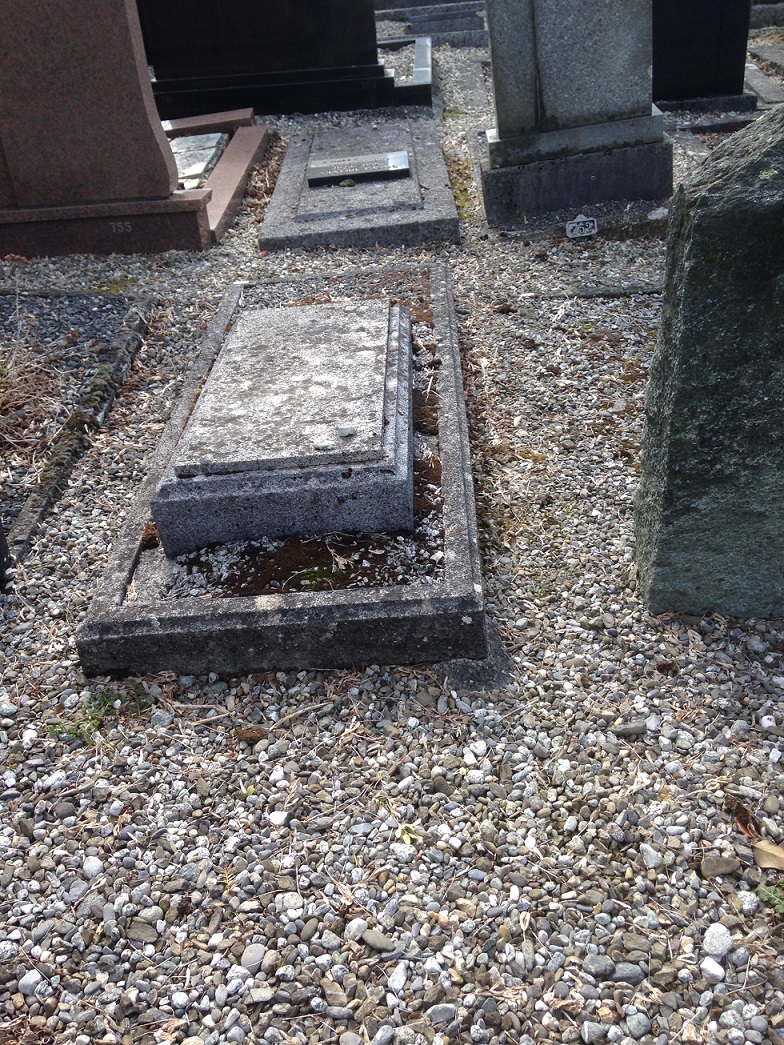
vati grave

illustration is the grave of Walter Rothschild in Jewish Cemetery Lausanne

From Rosh Chodesh Ellul, the pace picks up – time to brush up our souls

Yomtov never seems to arrive on time. Early or late, it catches us by surprise. And yet – the date never changes and the calendar has a number of events to remind us. The month of Elul comes as a powerful prompt to wake up and, if not smell the coffee, then at least taste the teshuvah.   Elul is the month before Rosh Hashanah, the month of preparation and repair. It is said to be the month when God is most accessible to us, hinted in the acronym forming its name “Ani le’dodi v’dodi li” I am my beloveds and my beloved is mine” – a reference to the intimacy we can create at this time. The shofar is blown in morning services, waking us from our complacency and dream-like existence. Selichot, the poems of pardon, feature in the liturgy towards the end of the month.  The haftarot of comfort are in full swing. So why are we often so surprised at the timing of the festivals? What more can persuade us to get going on our repentance, apologise for our misdemeanours and try to make good the damage in our lives and relationships? How do we guard against being caught out when the Days of Awe begin in Tishri? As a child my parents bought my new winter outfit in time for Rosh Hashanah.  Preparing to ready oneself to stand in front of God called for a new garment. As a kittel-wearing adult this particular ritual is less important to me, but the idea behind it stands.  We want to be renewed, for our souls to look less shabby, and that takes a positive act to make happen.  Elul stretches in front of us – time to make those phone calls, write those letters, give back the things we took from others, repair our corner of the world. It may be that we are so busy with our teshuvah and reparations that Yomtov sneaks up on us anyway, but with the work in progress it won’t be such a surprise.

After the Days of Awe, the echoes of teshuvah continue to be heard

We have spent the last month in a frenzy of Jewish Festivals, from Rosh HaShanah on through the Ten Days of Teshuvah through to Yom Kippur, the full week of Sukkot and finally ended with the revelry of relief that is Simchat Torah.

In a sense we barely draw breath as we navigate our way through what one colleague terms “the autumn manoeuvres”, and while we reel from one festival to the next the tropes of repentance and return, the familiar tunes in minor keys, the moments of introspection, the food and the fasting, the sensation overload that is Sukkot, and finally the celebratory extravaganza as we complete the cycle of Torah readings and begin again.

So here we are at the new beginning, the post yamim noraim moments when we face living in the new year and the challenge of putting our resolutions into practise. And suddenly there is no obvious structure leading us through the process of Teshuvah – we are on our own, left to find a way to live our lives aspiring to be better people, hoping to become the best people we can

The first time a driving instructor suggested I signal, look in my mirror, remove the handbrake and move into the flow of traffic, I remember the surge of adrenalin fuelled panic as I realised I was in charge of more than a ton of moving metal. There seemed to be a huge stretch between learning about it in theory and actually driving a real car among real people. I am sure that each of us can remember a moment of realisation that life was expecting something from us, and there could be no going back. Be it the first moment in a new job when someone mistook us for a seasoned professional, or the first time we understood that a new baby was totally reliant on us, or even the first time we read Torah or agreed to sit on a synagogue committee – suddenly the world is different, and we rise to the expectation rather than admit that we don’t really know.

Well Teshuvah is rather like that – God expects something from us, we expect something from ourselves, we have thought and reflected and vowed to change our behaviour in the quiet of a synagogue service or in a moment of honest self awareness and now we have to step up and live our lives according to that aspiration.

The period of festivals just past take the title of Yamim Noraim – Days of Awe; and Awe is an emotion we tend not to be so comfortable with these days. A mixture of reverence and fear, of overwhelming amazement and intense connection, the whole idea of awe is one we tend to edge away from. Yet according to the neuropsychologist Paul Pearsall, Awe should be recognised as the eleventh emotion, added to the list of ten that researchers already use to describe states of being.

In his book “Awe” he describes the emotion as “The valuable, irresistible fascination, the highest elation and sometimes most profound sadness that leaves us in a state of puzzled apprehension, perplexing dread, yet appreciative wonder and hope regarding the vast mysteries of life”.   Later on he talks about Awe being the emotion that “causes us to feel more completely alive than we ever thought possible”.

This is the feeling we need to take with us into the new year ahead. Not as intensely as maybe we experienced it throughout the Days of Awe, but as an awareness, the resonance of an echo, as we continue in our lives. When God speaks to Job after the thunder and whirlwind, what he hears is “a voice of slender silence” (often translated poetically but less truly as “a still, small voice”. When the voice of God comes to prophets and even to some rabbis in the Talmud they hear a “bat kol” – the daughter of a voice, again a poetic reference to the echo of a sound when it has already passed. This is the closest we can get to God in our ordinary and everyday worlds, the closest we can experience beyond our own world, and as the prophets and others found, it was enough to enable them to keep going.

So as we leave the intense, profound, formal and ceremonial Days of Awe, let’s try to hold on to the echo of the awe, the appreciative wonder, the mystery, the understanding that there is more in the world than we will ever comprehend, and that this does not need to make us feel fear or that we are hostages to some random universe. The lessons of the past month tell us that while we may reel from one event to another, journey in an instant from profound sadness to great joy (and back), sometimes feel out of control or else out of energy, we move onwards in our live, we have opportunities to change in so many ways, possibilities to grow and learn, and this is good.

Shanah Tovah – may your year be new and filled with possibilities

A prayer for the new year and for every day: “Teach us to assess and to appreciate every day of our lives”

In Psalm 90 there is a verse “Limnot yameinu, ken hoda, v’navi l’vav chochmah” – “teach us to assess our days so that we may bring to the heart some wisdom” As the High Holy Days draw to a close and the ideas for change we had then may begin to lose some impetus, this verse is a powerful reminder of what we can do in order to make more of our lives.

The psalmist is reminding us to assess each day, to really appreciate and to treasure every one of them, and make them count.

Many of us are so busy just getting through each day, so many different events and activities to juggle, that we forget just how much of a gift each new day really is. Others of us try to fill the acres of time that stretch ahead of us as we get up, wondering how best to get through the day. Almost all of us rarely find the time to treasure our days, or to make them count. Looking back at the end of a week that has been frantic with activity we can rarely feel satisfied that we used the time well.

The morning prayer that traditional Jews say upon waking, before even getting out of bed, is a prayer of thankfulness. “Modeh Ani lefanecha, melech chai v’kayam, she’he’chezarta bi nishmati b’chemlah, Rabbah Emunatecha.­­­­­

“I Gratefully Thank You, living and eternal Sovereign, for You have returned my soul within me with compassion –great is your faith”

While Jewish prayer does not on the whole expect us to explicitly state any belief in God, it does have a dominant mode of gratitude and of thanksgiving. The traditional prayer gives us the words to appreciate our lives, to be grateful for what we already have rather than to always be the petitioner for what we do not have but would like. That is not to say that our prayer does not include us appealing to God for things, but that this pleading is circumscribed and is far less frequent than the prayers of thanksgiving and gratitude. And on Shabbat the petitionary prayers disappear entirely, giving God (and ourselves) the day off from listening to our demands.

In the prayer Modeh Ani, we begin the day by being aware of our good fortune and appreciating it – we are alive, it is a time for fresh possibilities, anything can happen in this new day. And we end the prayer not by declaring our faith in God, but by asserting God’s faith in us. We make a statement of extraordinary power. Whether we believe in God is almost immaterial, for God believes in us.

Just as we rarely think about the air which we breathe, yet we breathe nevertheless; just as fish presumably are unaware of the water in which they swim, Jewish prayer assumes the faith of God in us is a given, the environment in which we operate. All we are reminded to do is to appreciate each day, to be grateful for what we do have, and to use our time wisely in order to become our best selves, to build our best world.

Psalm 90, a psalm about the eternity of God and the fragility and mortality of humankind, asks God to help us to do the one thing we can really do to make our lives meaningful – teach us to treasure each day, to make every day we live in this world count for something. As we go into the new year of 5775, with days that may be filled with activity or that may stretch emptily out ahead of us, let this be our motto – to think about and to treasure each day, and to do something each day to give that day meaning and to make it count.

101

The Ten Days of Return: Calling out to God determined to be heard

The Psalmist asks “Eternal God, what are human beings that you should care for them, mortal creatures that you should notice them?”

The question is carefully posed. We recognise that we are indeed fragile presences on the earth, our lives barely impacting in time or space, yet we confidently assert that God notices us and cares about us. We wear celebratory white during this season of penitence because we know that God will forgive us if we sincerely repent.

Our tradition provides us with a strong sense of ourselves. We are at one and the same time both “dust and ashes” and “the beloved children of the Sovereign”. We are mortal and yet we are bound up in immortality. We are fully individual and also we are a small part of a whole creation. It takes a particular view of the world to be able to hold both all the opinions at the same time, yet the Jewish mind is asked to somehow encompass them all, just as our liturgy speaks of God in a variety of ways all at the same time. And it is this dynamic tension that traditionally nurtures our distinctive identity and sense of self.

Yet how easily could we agree with the Psalmist today? Are we able to put a direct question to God? And even if we are comfortable with that relationship, would we dare to remind God that a precondition of the conversation is that God must pay attention to us and care for us? For many of us the easy familiarity of the covenantal relationship is lost and we struggle to find a bridge to that place. This is what the month of Ellul is for, and the Ten Days of Return. It is the work of the High Holy Days.

We may no longer be sure of God; we may wonder about the purpose of prayer. And yet part of us doesn’t want to let it all go; we want to return to that clarity that gives meaning to our lives. The Psalmist had many doubts and fears, but he knew his worth in relation to God. It is time for us to reclaim that knowledge, to search ourselves and to begin to really know ourselves. This understanding is the foundation of the bridge we build into the future, the bridge we build back to the knowledge of God.

מָה-אֱנוֹשׁ כִּי-תִזְכְּרֶנּוּ;    וּבֶן-אָדָם, כִּי תִפְקְדֶנּוּ.

Thoughts for Rosh Hashanah and the coming year: believing in the aspiration to goodness.

I was asked to write my thoughts in a booklet to be sent to the Movement for Reform Judaism’s constituent congregations on “What inspires you, how you will change and what you will change in the coming year?”  and I share my contribution here.

Rabbi Joseph, Morris2

Rabbi Morris Joseph is by way of a hero of mine. A man who had journeyed in his life from service as rabbi of orthodox communities, to the West London Synagogue, his published writings belie the fact that he was essentially a man of the 19th century and have much to say to us in the 21st. In his sermon on “Reform and Reformers” he challenges his listeners to think about why they are in a Reform community at all. Dealing with those who joined for the laxity of “Judaism lite” or who enjoyed the aspect of revolt against established authority he admits the difference between the ideal theology and its less than ideal practitioners. He says “If the religious tone of our congregation is unsatisfactory, it is simply because so large a number of our members do not realize the responsibilities which their membership imposes upon them. They either attach no meaning to Reform, or they attach a wrong meaning to it.”. He goes on to remind us that the relaxation of some laws is done to free us for the meaning behind the law: “..because we are less bound, ritually and ceremonially, than other Jews. We are more free in one sense ; shall we accept that freedom without giving something in return, or, worse still, make it a pretext for stealing a wider and far less desirable freedom ? Why has the yoke of the Ceremonial Law been lightened for us ? Surely in order to place us under the yoke of a higher law, to set our energies free for the truly religious life. If we do not believe this, then we degrade Reform to the level of mere convenience and selfishness. We make it a force acting not on the side of Religion, but against it.”

Morris Joseph believed in the progressive nature of Judaism. He thought that in order to
live, Judaism had to adapt itself to the shifting ideas of successive ages. But that did not mean that he did not also believe in the eternal nature of the Jewish message, and he preached wonderful sermons that set out a theology of high ideals and the importance of trying to live up to them. Ultimately, his measure of a person as not their theology, but the way they lived their lives. The point of Reform Judaism was to free our energies not to focus on the finest ritual details but to become the best, most honourable person we could become. His hope was that all who joined his synagogue would do so under “a strong and solemn sense of ethical and religious responsibility”.

Growing up in the Bradford Synagogue, one of the earliest Reform Communities in the country after West London and Manchester, the influence of Morris Joseph could still be felt. His call not for Judaism lite but for an ethical Judaism connected to its history and covenant with God still echoed within that beautiful building. The Jewish world has altered unimaginably since his death in 1930, and the wartime influx of German Jews to Britain changed and energised Reform synagogues in this country. The establishment of the State of Israel has also impacted on what it means to be Jewish. Yet his words continue to inspire me – his belief in the goodness of humanity, in the striving to be a better person expressed as our religious obligation, in his love of prayer and liturgy and his writing of new prayers for his community.

So what will be my change in the coming year? After more than eleven years successfully pioneering a job sharing model with Rabbi Sybil Sheridan, her retirement means it is time for me also to move on. At the time of writing I do not know what this will mean, but I shall be accompanied as always by the words and the teaching of Morris Joseph who believed in religion, in humanity, in community, in the Jewish people and in the aspiration to goodness.

What about myself will I change? I will once again search my heart and mind in order to identify how I can work this year towards becoming my best self, even though I know that this endeavour will never be fully achieved – and I will neither give up nor despair because I know this. And I will aspire to his ideal of becoming one of “those who have helped to form anew the moral life of Israel and to vitalize it afresh as a world-wide force.”

Ki Tavo: Listening in silence and paying attention – belonging to God requires the habit of thoughtful choice

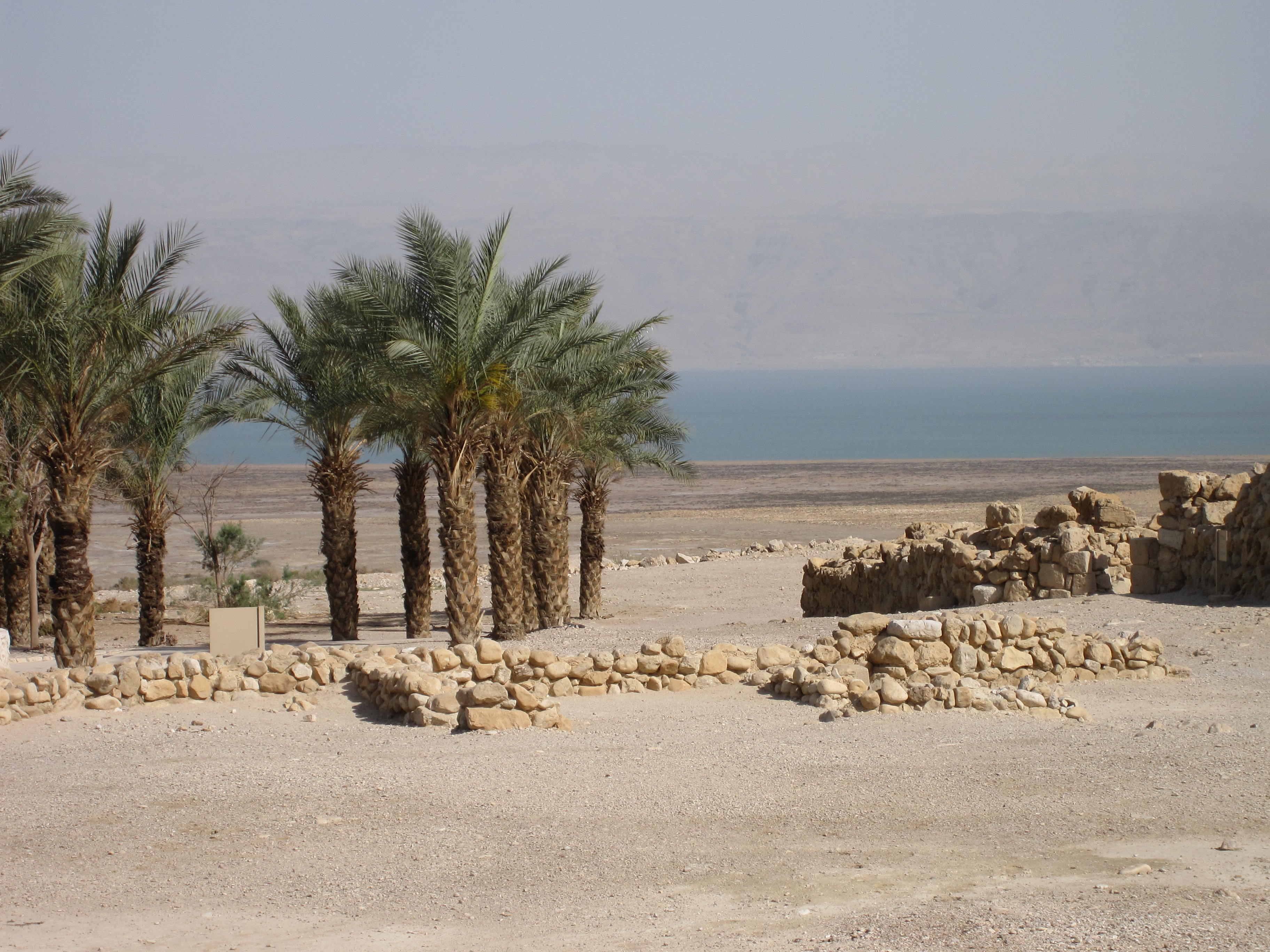
qumran


“Moses and the Levites spoke to all Israel, saying: Silence! Hear, O Israel! Today you have become the people of the Eternal your God:  Heed the Eternal your God and observe God’s commandments and laws, which I command you this day.” (27:9)

 Two phrases leap out at us when we read this verse. Firstly we recognise the words “Shema Yisrael” yet the imperative just before “Silence!” is new to us. And secondly we see that on this day, as the Israelites are poised to enter the land of Israel, they have become a people belonging to God.

 Why this demand for absolutely dedicated listening to what Moses has to say? And why only now are the Israelites described as being a people belonging to God – surely that happened long ago with Abraham, or certainly at Sinai when the covenant was agreed?

 Moses is determined to make clear that only now, here, on the banks of the Jordan, after the forty years of traveling in the wilderness,  about to enter the land and fulfil the promise made at Sinai, they would become the people he aspired for them to be – a kingdom of priests and a holy nation. Only now, here, in that liminal space when all things can still be possible, do they become a people – and more than that, a people who belong to  God.  But there are rules for this belonging – in the next chapter we are told “God will make you a holy people who belong to God, as was sworn to you IF you will keep the commandments of the Eternal your God and walk in God’s ways” (28:9)  and “The Eternal has chosen you this day to be for God a treasured people, as God promised you, and you must keep all of God’s commandments” (29:18).

 The Sefer HaChinuch tells us that this commandment is not like others which are specific and focussed, but is a more personal mitzvah about walking in God’s ways- imitating the divine compassion. To walk in God’s ways is to orient your life in such a way as to always try to make the thoughtful choice, to make a habit of good behaviour. To fulfil this mitzvah requires of us constant attention to ourselves – are we being the best person we could be? Are we acting as we would like a compassionate being to act?

 As we are in Ellul, the days before the Yamim Noraim, this is the question we should be asking of ourselves – are we walking in God’s ways?  Are we keeping the commandments so as to become sanctified by them?

However we see the work of walking in God’s ways and fulfilling God’s commandments, these questions come to challenge us – how are we living our lives? For if we are not walking in God’s ways then a great deal of difficulty follows, as detailed in this sidra. We may or may not remain cohesive, a people with shared traditions and values. And ultimately we may not keep the land on which our peoplehood is predicated.

 Sidra Ki Tavo is uncompromising in this respect. Being God’s holy people and belonging to God and to the Land is predicated on our own behaviour. No wonder Moses asked for silence to impart this information – it is a reminder for us to take nothing for granted. Not even our identity, certainly not our God.

Chol HaMoed Succot leading into Simchat Torah

Chol HaMoed is literally the “mundane of the festival” – the intermediate days of the festivals which are bookended by more ritually observant days, and we see this twice a year with the festivals of Pesach and of Sukkot in the spring and the autumn.

It is a strange phrase, and halachically it is an odd time – some work is restricted but not all. The boundaries are blurred between special festival time and ordinary working day. Does one do a particular ritual or not? If so, does one say the blessing or not? Needless to say, hours of rabbinic time have been spent over the generations in deciding just how much of the time is Chol – ordinary, and how much of it is Moed – festive.

And Succot has an extra dimension. Biblically there are seven days of Succot ending with Hoshanah Rabbah, when there are 7 hakkafot (circuits of the synagogue) with the lulav and etrog, and when the final judgment written on Rosh Hashanah and sealed on Yom Kippur is delivered – yet we have an eighth day, Shemini Atzeret, literally the” eighth of ending” which in the diaspora has also claimed a second day.  No one quite knows what Shemini Atzeret is for – though it may have been the day of cleaning the Temple, which, given the tradition that seventy bulls were sacrificed on Succot to atone for the seventy nations of the world, might certainly need some cleaning.

The Rabbis of the Talmud are themselves somewhat puzzled about what Shemini Atzeret is, and declare Shemini Atzeret to be a holiday in its own right, not just the final day of Succot.  Reform Judaism has added Simchat Torah, an entirely different festival following a different cycle, to the date. Orthodox Jews celebrate Simchat Torah on the second day of Shemini Atzeret. This concatenation of different celebrations does mean one thing though – while the intermediate days of Succot may be an unclear time of both secular and holy mixed together, the final days are a blur of festivity and enjoyment. Not for nothing is this festival period called “zeman simchateinu”, the time of our rejoicing. For a week there is the pleasure of sitting in one’s Succah, not obligated to work at the daily grind, and entertaining guests – ushpizin. And then follows the exuberance of Simchat Torah, the achievement of having read the whole scroll and the anticipation of starting again kicks in, and we dance and sing and drink and eat sweet things and let go of all the sombre introspective tropes that have been shadowing us since the beginning of Elul, or some would say since Tisha b’Av.

Simchat Torah is a time for partying. We have been so solemn, so thoughtful, so penitent. Now we turn back into Life – and we dance, sing, laugh, run, bound back into life, with all inhibitions left behind.

Famously Samuel Pepys witnessed Simchat Torah in Bevis Marks Synagogue in 1663 and this is what he wrote in his diary:

“Thence home and after dinner my wife and I, by Mr Rawlinson’s conduct, to the Jewish Synagogue: where the men and boys in their vayles, and the women behind a lattice out of sight; and some things stand up, which I believe is their Law, in a press to which all coming in do bow; and at the putting on their vayles do say something, to which others that hear him do cry Amen, and the party do kiss his vayle. Their service all in a singing way, and in Hebrew.

And anon their Laws that they take out of the press are carried by several men, four or five several burthens in all, and they do relieve one another; and whether it is that everyone desires to have the carrying of it, I cannot tell, thus they carried it round about the room while such a service is singing. And in the end they had a prayer for the King, which they pronounced his name in Portugall; but the prayer, like the rest, in Hebrew.  But, Lord! to see the disorder, laughing, sporting, and no attention, but confusion in all their service, more like brutes than people knowing the true God, would make a man forswear ever seeing them more and indeed I never did see so much, or could have imagined there had been any religion in the whole world so absurdly performed as this. Away thence with my mind strongly disturbed with them, by coach and set down my wife in Westminster Hall, and I to White Hall…”

Pepys was horrified at what he saw, and had no understanding of it. He had no context in which to view it and a certain set of beliefs about what constituted worship. I would love for every synagogue to have a Simchat Torah like the one he saw – the joy, the comfort with the sifrei Torah, the comfort in offering worship through the body as well as the mind, the pleasure in knowing that a new year is started, and one that offers us all the opportunities we might need once more.

Judaism is unusual in that we move on from our Atonement once we have come together as a community and taken seriously the command to return to God and let go of our habits and inclinations that stop us living the lives we should. We move on always into Life. And if we need more Atonement – well, we can always return to God, do Teshuvah at any time, but at a fixed point in our yearly cycle we make sure we do it. I think that is the beauty of this strange concept of Chol HaMoed – there is always time for the world in our festivals, and there is always time for our religious commitments in our daily lives. While much of Judaism is about keeping boundaries, we also allow the crossover places, the liminal space which allows us always to return, always to make holy that which is ordinary, and keep holiness as an ordinary imperative in our lives.

Repentance is not a substitute for Responsibility

The official ideology of Yom Kippur is found in the words of Resh Lakish, a third century talmudic sage, and can be found in the Babylonian Talmud, Yoma 86b–“Great is repentance, for the deliberate sins of one who repents become as inadvertent ones.”

In effect the argument is that Teshuvah, the action of repenting, causes the person to allow their real self to emerge, and as they move into a new direction they show that true self. The person therefore who sinned deliberately can be understood to have been not really themselves, and so, when they become their real self, those sins are clearly inadvertent – and inadvertent sin cannot be punished or judged in the same way as deliberately flouting the rules of behaviour.

It is a theology of new beginnings and a clean slate, teaching us that renewal is always possible; counteracting the guilt and despair we may be feeling about the bad choices we have made with the belief that good intentions for the future must redeem us and make up for the past.

It is certainly an attractive proposal, but the reality is that we can’t rely on Teshuvah to remake the world exactly as it was or should be. Teshuvah may be a potent force but it is not an all-powerful one. Even if it can change our deliberate sins into the more manageable and less terrifying category of inadvertent ones, it cannot erase the effectsof those sins. If we were to truly face reality we would have to say that repentance is not, and never can be a substitute for responsibility. And more than that, we would have to acknowledge that some things cannot be rectified, however mortified and ashamed we may be to have committed them. What is done cannot always be undone, and the mark it leaves on our lives (and those of other people) will not be erased.

The word Kippur is related to the verb “to cover over”. When we try to make Teshuvah and to uncover our real and ideal self as we turn towards a good way of being in the world, we also cover over the mistakes we made and the bad actions we did. They do not go away, but we take away their power to hold us back, through our shame or our fear. I do like the notion of Teshuvah providing us with a new start, of the freshness of starting again unencumbered by a past that has the power to haunt us, but I shudder a little at the notion of a rebirth. For we are not in any way born again through our actions over the Yamim Noraim, we continue to live and continue to remember and continue to be the person who has real responsibility for our lives, but at the same time we cover over and leave behind the place that is stopping us from going forward into our new and more true way of being. Repentance is not a substitute for responsibility – repentance gives us the means to become much more responsible for who we are, and the power to use that responsibility to change not only ourselves but also the world around us.

Repentance is not a substitute for Responsibility:

How can we take responsibility for our world?