Parashat Behar:different kinds of deception and the obligation to avoid them

In sidra Behar we find the source texts for the prohibitions against two different kinds of deception – ona’at mammon and ona’at devarim. The verb ona’ah literally means “to overreach”, and describes the act of wronging another by selling an article for more than its real worth, or conversely, by purchasing an article for less than its real worth.

              The proscription is based on the verse in this sidra (25:14) “when you sell anything to your neighbour, or buy anything from your neighbour, you shall not deceive one another”. Talmud (Baba Metzia 49b) specifies what level of price variation is valid and what is not. For the merchants among us, it is deemed permissible to make a fair profit (seen as charging less than one sixth above the accepted price), but it is not permissible to overcharge and deceive a customer.
              The ban on verbal deception arises from a statement three verses later where we read (25:17) “Do not deceive one another but fear your God, for I the Eternal am your God”. Since the previous verse explicitly mentions monetary deception, the rabbis decided that this verse must refer to another kind of fraud – that of verbal dishonesty. The Mishnah (Baba Metzia 4:10) tells us “Just as there is deception in buying and selling, so too there is deception in words”
              The example that is given is the raising of the expectations of the merchant that he has a sale when the person posing as a buyer has no intention of such a transaction, something I suspect we may all have been guilty of doing, when we look at an item on the High Street but then go on to buy it on the internet at a discounted rate. But of course verbal dishonesty is a great deal more than the behaviour of people around a transaction and I find it curious that the Talmudic tradition stayed so close to the mercantile metaphors.

               Verbal dishonesty is so ingrained a habit in our behaviours that we can often barely notice it, from the telling of “little white lies” through to being “economical with the actualite” in an effort to stave off embarrassment or worse. We have all learned to speak “diplomatically” or “tactically” or “strategically”. We can hide behind many a circumlocution in order not to say what should really be honestly and transparently available to the people with whom we “do business”.

I am not suggesting we all suddenly become aficionados of what is sometimes called “blunt speaking” – that is another way in which we can bludgeon the other into not taking on board the whole meaning. I am however suggesting that we look seriously at how we communicate with each other, at what we choose to communicate and to whom. To hear second or third hand about a matter that is important to you; to be the subject of gossip or speculation – even to be forced into issuing public denials; to be told that “people are saying about you…” rather than “I think…”; these are all forms of verbal dishonesty that do more than to raise expectations unfairly qua the Mishnah – they are forms of dishonesty that start to destroy the soul of the people deceived and of the people deceiving.

We are in the Omer period, a time of reflection and sombre thoughtfulness before Shavuot when we will celebrate the giving of Torah. Sidra Behar actually refers back in time to the words that Moses was given by God on Mount Sinai – in particular the Asseret haDibrot, the Ten Matters or Words sometimes called the Ten Commandments. Now would be a good time to examine ourselves and our behaviour in the light of the prohibition against ona’at Devarim – the use of words to deceive each other.    

Following the golden rule – the rest is commentary

The Golden Rule, phrased in Leviticus as “Love your neighbour as yourself” appears in many forms and in many different religious literatures: Jesus is reported in the New Testament as saying that the two great rules of behaviour were “You shall love the Eternal your God with all your heart, your soul and your might”; and “you shall love your neighbour as yourself” On these two commandments hang all the Law and the Prophets” . – in other words the Shema (from Deuteronomy) and the Holiness Code given here in Leviticus together give us all we need to live a good life.

Perhaps the most powerful telling for me is the story found in Talmud, when we are told “It happened that a certain heathen came before Shammai and said to him, ‘Make me a proselyte, on condition that you teach me the whole Torah while I stand on one foot.’ But Shammai repulsed him with the builder’s cubit which was in his hand.  When he went before Hillel, Hillel said to him, ‘What is hateful to you, do not to your neighbour: that is the whole Torah, while the rest is the commentary thereof; go and learn it.’ (Shabbat 31a)

Hillel shows great patience and openness to what is clearly – from the context – someone determined to test both of those qualities. But his formulation of the golden rule is genius. Not to do things to other people that are hateful to you is vastly easier than the somewhat obscure commandment to love ones neighbour as one loves oneself. What if what you would like is not what they would like? What exactly is a neighbour? What if one doesn’t particularly love oneself?

The end of that story as told in the Talmud – that this principle of paying attention and not doing to others what you would not like done to yourself is the WHOLE TORAH – everything else is commentary , is also something we should keep hold of.

Judaism is a strange beast, neither solely race nor religion nor culture, nor faith but a collection of ideas we have held on to and transmitted with clarity down the generations. Ultimately how we behave towards others is the whole of Torah and everything else is there to make sure we do it the best way we can. So all the rituals and the laws and the fences around Torah are there to do one job only – to protect the teaching that bible tells us was given to us by God, of looking out for others the same way we would look out for ourselves; of not doing something to someone else that we would find distressing if done to us. No more and no less – it is indeed the one principle we should keep before us always, and everything else will fall into place.

Musings – what other foods might we put onto a seder plate?

It is becoming common now to have an alternative seder plate with foods to remind us about the importance of the festival themes. So there is an orange to represent the alienated and isolated Jews, be they women, gay, transgender… There is the olive to remind us of the need for peace in the world, and specifically the need to make peace between the Israeli and Palestinian inhabitants of the Land. There is the fairtraid cocoa bean and also the tomato, to remind us of the modern slavery endured by others in order that we have such products cheaply… There is the cup of water filled for Miriam the prophetess who is credited with providing water in the desert.

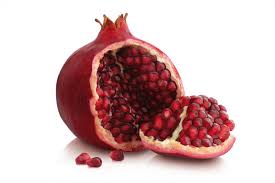
Image I was asked last year what else I might choose to put on a seder plate, and here is my response:

I would choose a pomegranate to be on my Seder plate as a reminder of the many different strands of my Judaism and the fact that I am free to have a complex layered understanding of tradition. The pomegranate is one of the seven species the bible tells us about growing in the land of Israel, (the shivat haminim), fruits which are traditionally eaten on Sukkot, a full half year from Pesach, a reminder of the connection to the Land to which I remain spiritually attached. It was said to be one of the fruits brought back by the spies to demonstrate the fertility of the land – a tempting luscious fruit that can only be eaten sensually, as Song of Songs reminds us.

Tradition tells us that a pomegranate has 613 seeds – equivalent to the mitzvot, and I particularly like the chutzpah of such a statement and that fact that we remember it while knowing that it is not remotely true. I like that the mitzvot are likened to the jewelled seeds, and the implication of richness and nourishment within them, while remembering the hard pip within each seed that can be both irritation and pleasure, and that can stay with one long after the juicy flesh has been taken. And I like the way that pomegranates are so useful in so many ways – as health food, as astringent, as spice and decoration, as traditional remedy for any number of ailments right through the body, as drink and paste and marinade. It prompts me to think of the multi-faceted ways Judaism is expressed, from the traditional covenantal relationship and discipline of mitzvot, to the loose warmth of ‘kitchen Judaism’ as people respond to the remembered smells of the different festival foods though the year.

Bible tells us that Aaron wore a special garment as high priest, and it was decorated with alternate bells and pomegranates on the hem, so that when he moved the sounds of these objects clashing would be heard and people would know he would be safe – indeed the bible is starkly clear – “so that he will not die”. This brings me from the sacrificial system of Biblical Judaism right into the modern world of Jewish community – people will pay attention to how others are, particularly those who are vulnerable. They will notice if they haven’t seen or heard them, and do something so that their lives are sustained and preserved. The pomegranate is the standard bearer for communication in community.

Another tradition tells us that the forbidden fruit eaten by Eve in Eden was not the apple (a later pun on the Latin ‘malum’ to mean both bad and apple) but the pomegranate. If it is truly the fruit of the tree of knowledge of good and evil, it would be a potent reminder at Seder that we have choices in what we do, a freedom in our lives with consequent responsibilities. We cannot accuse others for our not having achieved what we know we should have, or take refuge in the modern day ‘slavery’ to routine. The pomegranate would challenge us –“know what is important, do what is right”.

A pomegranate is similar in shape to a grenade (indeed its name in both English and Hebrew reflects this) and so it would be a salutary reminder that even that which is beautiful and health giving could easily become dangerous and destructive in the wrong circumstances, another warning on the Seder table to remind us that our Judaism can either sustain us in living well or in living selfishly and without care or thought for the other among whom we live. Choose Life! says the bible, but both blessing and curse are set before us and it is our freedom to decide which way to go.

And finally – the best way to eat a pomegranate is to cut it into two pieces, turn each upside down in one hand and hit it with a wooden spoon so that the seeds fall into a waiting container. A satisfying if difficult thing to do well, a metaphor for much of the Jewish world one might think. But the best bit comes last – once the Seder is over and a home must be found for the objects on the Seder plate, to eat a wonderful juicy fresh pomegranate must be the best end to the ritual I can think of!

From Purim to Pesach – the flavour of slavery as we prepare for the scent of freedoms

By tradition the days from Purim to Pesach have a character all their own – that of mental preparation and of physical hard work. For if tradition tells us that Rosh Chodesh Adar brings with it increasing joy, we know that it also sounds the starting pistol in the race to make everything ready for Pesach.

There are those who search through every book on their shelves, for crumbs fallen as the reader fed their body as well as their mind. There are those who begin at the top of the house and ruthlessly unearth every speck of leaven from the pockets of jackets hanging in wardrobes to the linings of handbags and suitcases put away after earlier outings.

There are some who ruthlessly scrub every surface be it inside or out, regardless of whether food could possibly come into contact or not, and there are those he maniacally turn out pot and pan drawers, cutlery containers and the shelves of artefacts kept unused just in case one might want a fish kettle/ pasta maker/ mousse mould.

From Purim to Pesach the traditionally minded Jewish householder experiences a little of the flavour of slavery our ancestors experienced in Egypt. The injunction for this story of redemption from slavery to become our own personal story is taken quite literally as servitude to the ideal of a sparkling clean leaven free home means sore back muscles, peeling fingernails and a pervasive smell of bleach on the fingers of the zealous leaven hunter.

There is, I know, a wonderful feeling of satisfaction when the work is done, the house a no-go zone for non pesachdik condiments, the shopping done, the Seder table set and the ritual foods ready along with the feast that follows. But alongside the satisfaction is the niggling sense that we need to remember that a clean house and communally enjoyed meal is not the purpose of the exercise. It is only the route towards considering the meaning of freedom.

We are to think ourselves beyond the physical and emotional labour necessary to prepare for it, in order to experience the meaning of the Seder in all its rich complexity. Having a nice meal with extended family, all work done for the moment, is not the point, however enjoyable it may be. We are having Pesach and the Seder meal in order to remember. The event is to memorialise through reliving and retelling a story that must belong to us. It is to remember our past and the formative narrative of our redemption by God. It is to make our memory something that does not simply narrate or contain the past, but something that causes us to be active in the present.

What are we doing when we memorialise, when we ‘remember’ the story of our people as if it is our own experience? We are ‘remembering’ in the sense of putting something together,‘re-membering’. We are putting together the experiences that formed us as a people and thinking about how they are still playing out in the world we live in today – both giving us our own identity as Jews and giving us understanding of all who share the experience of oppression and lack of freedoms. And from this understanding we begin to notice that we are not the only people who have a narrative of pain, we are not the only ones who are looking to be and to stay free.

The most repeated sentence in bible is “Remember you were a slave in Egypt”. Why so? It cannot be simply to remember painful times in order to dwell on them or be grateful that they are gone. It must be because action has to emerge from our remembering. Our remembering of what it was like to be oppressed and burdened has value only if we work to remove such oppression and trouble from the world we inhabit now.

These days we often understand this command to remember our own slavery as being the nudge that should give us empathy towards those who are suffering without freedoms – that we are somehow more likely to care for the downtrodden and the disenfranchised because of our own history and experience. But there is at least one medieval source which tells us almost the opposite – that once we have escaped our own pain it is easier to deny it, to treat others badly as we were once treated in order to  keep our distance from the experience. So the injunction to remember our slavery is repeated so often in our texts precisely because we are more, rather than less likely to ignore the pain of others. There are resonances in modern psychological thought – that we repeat the dysfunction of our childhood experiences in our own families, a vicious cycle that takes mindful and conscious effort to break out from.  If this is so, how much more so does the journey from Purim to Pesach and the climax of the haggadah narrative force us to remember our own suffering in order to help others whose suffering is happening right now.

            The festival of Purim allows us to explore the dark sides of our world and of ourselves. The festival of Pesach does the same. But it gives us something extra – the knowledge that if we work together we can change our world. At the exodus from Egypt not only the Jews escaped slavery – an erev rav  (mixed multitude of people) took the opportunity to escape too.  May our Pesach every year mean that other people reach freedom alongside us, that we are moved to make this happen, that we remember our own stories of oppression and work to ensure that for every person and every people there will be a time when they too will be able to recite their own story as historical narrative rather than present reality.  


Zachor: Amalek is our own human inclination to take from the world

“Remember what Amalek did to you by the way as you came forth out of Egypt; how he met you by the way, and smote the hindmost of you, all that were enfeebled in your rear, when you were faint and weary; and he did not fear God. Therefore it shall be, when the Eternal your God has given you rest from all your enemies round about, in the land which the Eternal your God gives you for an inheritance to possess it, that you shalt blot out the remembrance of Amalek from under heaven; you shall not forget.”
-Deuteronomy 25:17- 19

 On the Shabbat before Purim we read an extra portion from another scroll, and the Shabbat takes its name from this reading – Zachor! Remember!  Liturgically this is to remind us that Purim will be celebrated in the coming week, and a genealogical link is made in tradition between the villain of the Purim story, Haman the Agagite and the people known in bible as Amalekites.

 The Amalekites, like Haman, are understood in Jewish tradition to be those people who hate without reason or cause; Bible records them as descendants of Esau, though it is hard to understand either their location or their individuality. Both “Amalek” and “Amalekites” seem to be used to describe a people who are outside the mainstream, people who are on the fringes and who threaten the core. The words come to symbolise meaningless, purposeless evil – an opposite of all that faith in God might bring, and of course in our passage we are told that Amalek did what they did because “they did not fear God”. Because of this, they attacked the vulnerable and weakest of the Israelite society, itself a raggle taggle of ex slaves with little strength to keep going. This was not a group who threatened Amalekite society – the Israelites were attacked simply because it was unlikely they would be able to defend themselves.

 Over the years “Amalek” has come to be a symbol of the other, or the enemy. Our tradition has seen all anti-semitic activity as the manifestation of Amalek, and some have gone further – to see any person or people who challenge Judaism or Israel as descendants of Amalek. The terrible killings perpetrated by Baruch Goldstein in 1994 where 29 Palestinians were murdered in Hevron and many more injured, came out of extreme and misplaced belief that they were the enemy and therefore they must be Amalek. But Amalek is much more complicated than a way we might use to designate those we think of as “Other”.

 Amalek is more profoundly found not outside ourselves, but inside us, at our own core.  The gematria for Amalek is the same as that for ‘safek’ – doubt, a way of saying that the anti-divine that Amalek represents is something within us, something that we might manifest if we allow ourselves to do so.  While the etymology of the word Amalek is uncertain, it may come from two words – Am Lakak, the people who lick up – the people who selfishly take from all around without any sense of boundary or of compassion for others. Amalek is the trait that takes, that uses up, that does not consider either the other or the context or the future – it is the greed and selfishness we are all prone to as young children, something we have to learn to rein in and control if we are to live with others and create relationships and do good in this world.

Rabbi Samson Raphael Hirsch, (1808 – 1888) and said to be the founder of Modern Orthodoxy, saw the battle between Israel and Amalek in this way. For him the war is between different sets of values – and Israel should strive to be in the category of morality and life affirming activity. In his commentary on Amalek he wrote “We are warned, remember what Amalek did to you, and see to it that we ourselves should not become an Amalek within ourselves. …not to commit deeds of wrong and violence within our personal lives…. Do not forget” this [obligation to wipe out Amalek] – in case there comes a time when you will want to be like Amalek, and like him to deny your [moral] obligation and not to know God, but will only seek opportunities…to exploit your power to harm others.”  

Amalek is not only “the enemy” or “the other” or a symbol of external evil against which we must always be on guard. Amalek is our own human inclination to take from the world, and in taking to stop others from having what they need – overriding their vulnerability simply because we can. Our world is full of such behaviours and we have a responsibility to bring them to mind in order to address them. Be it the anxieties over the fate of the vulnerable in our health and social care systems, or the abilities of large organisations to fix opaque and impossible price structures that penalise the unwary or the ignorant or the cash or time-poor; be it the fate of people at the hands of corrupt leaderships or the use of the labour of children or wage slaves to keep prices down, Amalek walks among us and within us. Before we can blot out such behaviour we must become aware and outraged. Remember what Amalek did… you shalt blot out the remembrance of Amalek from under heaven; you shall not forget.”

Parashat Tzav: the life blood and the nefesh

And you shall not eat any blood of fowl or beast in any of your dwelling places. Whoever eats any blood that soul will be cut off from his people” (Lev. 7:26-27).

The prohibition against eating blood is mentioned in several places in the Torah. God tells Noah Every moving thing that lives shall be for food for you; as the green herb have I given you all. Only flesh with the life thereof, which is the blood thereof, shall ye not eat.” (Gen 9:4).

In Leviticus 17 we read (10- 14) And whatever man there be of the house of Israel, or of the strangers that sojourn among them, that eat any manner of blood, I will set My face against that soul that eats blood, and will cut him off from among his people. For the life of the flesh is in the blood; and I have given it to you upon the altar to make atonement for your souls; for it is the blood that makes atonement by reason of the life. Therefore I said to the children of Israel: No soul of you shall eat blood, neither shall any stranger that sojourns among you eat blood.  And whatsoever man…..that takes in hunting any beast or fowl that may be eaten; he shall pour out its the blood , and cover it with dust. For as to the life of all flesh, the blood thereof is all one with the life thereof; therefore I said to the children of Israel: Ye shall eat the blood of no manner of flesh; for the life of all flesh is the blood thereof; whosoever eat it shall be cut off.

And again in Deuteronomy:  “Only be certain that you do not eat the blood, for the blood is the life and you shall not eat the life with the flesh. You shall not eat it …”. Deut. 12:23-24

What do we mean when we call the blood the life? In each case in these texts the word used is Nefesh; a word which is often translated as ‘soul’ or ‘spirit’ but this isn’t a good translation. According to Genesis the human being doesn’t have a nefesh, it is a nefesh – essentially our nefesh is connected to our physical body – it is related to our blood, to our breath, to our ability to eat or take into ourselves. And yet it is also separate from our body, the animating spirit which can be seen in the body and which leaves at death. The nefesh exists on the boundary between life and death, and this has real import on its place in both the ritual purity system, and in the mystical tradition.

By connecting the nefesh to the blood, as the biblical text does again and again, it reminds us that animals that are killed for worship in the sacrificial system, and subsequently animals killed for food, have value beyond what we are using them for. They have an animating spirit which comes from God; this spirit must be treated with respect so the blood is poured into the ground and covered with dust – the animal has a place in creation, its life has significance, the part that we are allowed to eat is what remains after the life force is drained away – the deadened, irrelevant part.

Judaism has a strong imperative to life. The mitzvot are for living by, not (except for three exceptions) to die for. The mitzvah of saving life (pikuach nefesh) overrides almost all the other mitzvot – even if there is only a possibility that life can be saved.  Life belongs to God and must be respected wherever it is found and in whatever situation we find ourselves in. And blood, along with breath, is the symbol of life. So when we avoid eating blood by koshering the meat we eat, we are making a powerful statement about the value of the life of the animal whose flesh we are eating. Like us it had nefesh, it had dimensions greater than its physical existence. And so while Torah begins with a vegetarian diet for the first human beings, after Noah an exception is made so that meat can be eaten in this less perfect world although still as part of the sacrificial system. And it seems that only when the people were settled in the land of Israel, when many would only go to Jerusalem three times a year for the pilgrim festivals, only then was eating meat as part of a non-sacrificial system permitted and only as a response to their lustful physical appetites which could not be controlled– as we read in Deuteronomy “When the Eternal your God shall enlarge your border, as God promised you, and you shall say: ‘I will eat flesh’, because your soul desires to eat flesh; you may eat flesh, after all the desire of your soul. If the place which the Eternal your God shall choose to put God’s name there be too far from you, then you shalt kill of your herd and of your flock, which the Eternal has given you, as I have commanded you, and you shall eat within your gates, after all the desire of your soul.” (Deut. 12:20-21)

We respect life wherever we find it; we care for it and nurture it, and when it comes to an end for whatever reason – we continue to respect it and to remember that the nefesh belongs to God.  Be it animal or human, life is life, absolute and valuable.


With increasing joy, we explore our dark side: Purim thoughts

purim shadowPurim is possibly the hardest Jewish festival to explain, to Jews and non Jews alike. A festival whose roots are not in Torah, whose story is found in the only biblical book not to mention God, Megillat Esther is also notable for its lack of references to the Land of Israel, or to Temple rite, or any recognisably Jewish expression. Instead we know this festival for noise making, drinking to excess, the celebration of violence, and some distinctly “unreligious” behaviour and clothing.
Set in Persia in the third year of the King Ahasuerus (said to be Xerxes, King of Persia in the 5th Century BCE), a Jewish man named Mordechai allows his niece Esther to go forward in the beauty contest to be queen after Vashti has been expelled for insubordination. Esther duly becomes that mythical creature, a Jewish princess, but does not reveal her Jewish identity to anyone until plans for genocide against the Jews are unveiled by Haman, the King’s senior minister, and Esther finds herself in a position of potential influence of the King. Esther persuades the King that Haman must be removed from power but tragically the decree, once made, cannot be retracted and so the only remedy is to command the Jews to defend themselves against the attacking Persians. So on the date chosen by casting lots (Purim), the thirteenth day of the month of Adar, five hundred attackers are killed in Shushan, the capital city and seventy five thousand are killed in the rest of the empire. No material possessions are taken – this was simply an act of self defence. The next day, (14th Adar) was designated a day of celebration of the survival, and Esther sends a letter throughout the Empire commanding an annual commemoration of the event.
There is no evidence of Esther or of this particular event outside of the megillah, but the genre of the story of course is one we know well – that Jews living on sufferance in a land that is not their own find that they become disliked or scapegoated or simply political pawns in someone else’s power game. It could be because they are successful in the land and become the victims of jealousy, or else that they are not successful and seen as parasites. Whatever the pretext, the historical Jewish experience has been of differing levels of insecurity and an apprehensive reliance on the goodwill of a host community; usually the apprehension has had a good basis as in difficult times the Jewish community have traditionally been vulnerable. This festival then does not mark an agricultural milestone nor a theological event, but it does speak to the lived experience of a people in Diaspora.
The Havdalah service with which we mark at the end of the Sabbath on a Saturday night is a bittersweet event – we are leaving behind the solace of the Shabbat, and entering a working week once more, with its concomitant expectation that we are facing all the problems of the outside world once more. The service begins with a number of verses taken primarily from the book of Psalms and from the prophet Isaiah, which refer to the protection of God and the hope for divine salvation. One verse stands out for me in this collection of verses that hope for relief from a worrying world – that from the book of Esther “La’yehudim ha’yetah orah ve’simcha ve’sasson viykar The Jews had light, happiness, joy and honour”. (Esther 8:16) which is followed by a heartfelt addition – the response: “Cayn tihyeh lanu – May it be the same for us”. The use of this verse here in the service marking the end of shabbat and the start of the working week, and the response which is added to it liturgically, speaks to me of the clear and frequent anxiety of the Jewish community who, having taken time out from the world to create the Shabbat experience of security, peacefulness and warmth within their homes now know that this time out of time is over for the week and they have to get through another six days in a hostile world before having the possibility of experiencing this peace again.
Purim is unusual because it is a fantasy which we act out for one day each year and for this small amount of time all the usual rules are relaxed. Drinking is encouraged, there is a carnival atmosphere as people wear fancy dress and may even abandon the prohibition of cross dressing (OH 696:8). We joyously and noisily blot out the name of Haman as the Megillah is being read aloud in the synagogue. We celebrate the reversal of our usual story – for once we are the victors not the victims. For once we get to stand up and fight back. In the short space of this festival we act out a revenge fantasy against all those who blindly want to destroy or humiliate us.
But this is not without a degree of conflicted anxiety. While the need to imagine winning against one’s enemies for at least one day a year was clearly understood, at the same time the effect of this fantasy being enacted in a public show was not ignored. Right back Talmudic times (Megillah 7a) we read that Rav Shmuel bar Yehudah taught that Esther had to plead for her story to be told. This is something quite unique in tradition where remembering is the essence of our activity.
“Rav Shmuel Bar Yehudah said: “Esther sent a message to the Sages: “Place me in Jewish memory for all generations!” But the sages replied “Your story would incite the nations against us.”. However Esther replied: [It’s too late for that.] My story is already recorded in the chronicles of Medean and Persian kings.”
– In other words, while the celebration of the story of Purim might damage interfaith relationships, and even potentially contribute a pretext for a pogrom, it could not be hidden away and therefore might as well be told.
There remain a large number of apologetics in our tradition to mitigate the effect of the festival – for example one comment on Esther 9:5 “And the Jews smote all their enemies with the stroke of the sword, slaughtering and exterminating; and they did to their enemies as they wished.” Is that the words “vaya’asu besone’eihem kiretzonam” — “they did to their enemies as they wished” is understood to mean that the Jews acted the way their enemies had wished to do to them – in other words this is simply a reversal of the active and passive objects of the verbs, not a new activity.
In the early life of Reform Judaism there was a question whether Purim should continue to be marked – it seemed to the fastidious European reformers to be distasteful, noisy, cruel, uncivilized – all the things we had moved on from, or so we thought. But any idea of removing it from our calendar has long gone – it has become clear that Purim is a necessary festival, allowing us to explore our darker side in safety and with clear and certain boundaries for a very short time each year. Even though we are now not a people who are entirely dependent on a host community but have a land of our own, the story of Purim retains its importance and its meaning for us and we have to express our pain and frustration at having been the scapegoat in so many places over so many generations. The question now is of course, how we engage with our dark side outside of Purim, how the pain which some say our history has bred into our DNA can be dealt with so that it is not suppressed but is acknowledged while not being allowed to colour our judgements today. This is a priority for our generation and those who follow us. As we rightly celebrate our survival through centuries of persecution, and our ability and right to fight for that survival keeping our values and responsibilities intact we should remember the importance of keeping perspective and limits that the festival also highlights, and remember too that our identity is based on the how we behave all the days of the year.

Parashat Vayakhel: we create and live in holy time

The opening three verses of Vayakhel deals with the observance of Shabbat: “And Moses gathered together all the congregation of the Israelites and said to them: these are the things which God has commanded that you do. Six days shall you labour, and the seventh day shall be holy, a Sabbath unto the Eternal; whoever does work on it shall die. You shall not kindle fire in all your habitations on the Shabbat day.  Rashi reminds us that the verse order, where the law of Shabbat precedes the laws about the building of the Mishkan, teaches that even the building of the Sanctuary is less important than observing Shabbat.  The Sabbath, the day for remembering God’s creation, for resting from work, is so important that even the holy work of building this place must stop for it.

 Rabbi Abraham Joshua Heschel speaks of Shabbat as being ‘a palace in time’. He sees the entwining of the biblical texts on Shabbat and the Mishkan, and understands that sacralising time is far more important than sanctifying space. The pattern of six days of work which are followed by the Shabbat when all labour should be avoided, is a deliberate resonance with the Creation of the world in Genesis. Shabbat is the culmination of the Creation, a weekly prompt to us of our purpose in the world.  Heschel reminds us that “The meaning of the Sabbath is to celebrate time rather than space. Six days a week we live under the tyranny of things of space; on the Sabbath we try to become attuned to holiness in time. It is a day on which we are called upon to share in what is eternal in time, to turn from the results of creation to the mystery of creation, from the world of creation to the creation of the world.”

The sanctification of time rather than place is the real innovation in the worship of the incorporeal and transcendent God. Along with its lack of physical dimension, time is universal, it belongs to everyone. Unlike buildings or land, no one can claim that the day belongs to them alone, no one can claim ownership of time. And the sanctification of time does something else. As Heschel wrote Judaism is a religion of time aiming at the sanctification of time... There are no two hours alike. Every hour is unique and the only one given at the moment, exclusive and endlessly precious.

Each of us is able to control how we use our own time, each of us has the same resource measured in minutes, hours, days, weeks, seasons. If we choose to pay attention to how we use our time in this world, if we deliberately use our time to work for the purpose of making our world a more sacred place, then we will have understood the message in Vayakhel.  

Heschel reminds us that the verb ‘kadesh’ meaning to sanctify or to separate out for a distinct purpose is first used at the end of the story of Creation, when God “blessed the seventh day and made it holy”, a statement we recite at kiddush. There is no other reference to anything else in creation being made holy. Not the world, not people, not any special place. At the beginning of our history holiness was to be found in time. We became a holy people much much later, at the theophany at Sinai. And places only became holy with the building of the Mishkan, the sanctuary whose completion we read about this week.

 Every hour we have is unique, filled with possibility, endlessly precious, and potentially holy. Once we have sacred buildings it is easy to forget that actually we live in sacred time. But we do; and ultimately each of us uses our own time, making choices about how we spend it, how we allow its use to impact upon us.

 Time is more sacred than space. And all of us live in  time that is limited yet infinitely possible.  As we come towards the end of the book of Exodus, leave behind the stories that begin in slavery and move into the wealth of possibilities that is the desert experience, the constraints of place need no longer oppress us – we inhabit holy time.

Women in Public Space – a proud Jewish tradition in danger of being forgotten

tznius1tznius2

Where has it come from, this strident male voice insisting that women are so dangerous that they must neither be seen nor heard? When did woman, created equally and simultaneously alongside man in the first creation story  (Genesis 1:27) lose that position in the eyes of some commentators so that they not only feel the need to hide women away from the public eye and mute our voices, but go on to claim that this is God’s will as indicated in bible? And then, for good measure, decree that women cannot study these texts for reasons of modesty?

The position of women in Judaism is under assault and despite what some may say, this is essentially a modern phenomenon. Biblical women are strong personalities, active players in the narrative. Sarah, like Abraham, “makes souls” (Genesis 12:5). God tells Abraham “in all that Sarah says to you, listen to her voice (obey her); for through Isaac shall your descendants be called. (gen 21:12) making Sarah as important a transmitter of covenant as Abraham. The other matriarchs are equally powerful players in the narrative, as are many other women in bible. The Talmud tells of the seven prophetesses in bible (BT Megillah 14a) including Deborah, the only person in the book of Judges to actually be seen making judgements for the Children of Israel  who came to her for rulings  (Judges 4:5). Women scholars can be found in our tradition down the years: Talmud records the comments if first century Ima Shalom,  In the 2nd Century Beruriah, daughter of Rabbi Hananiah ben Teradyon was such a scholar that Talmud tells us “she learned three hundred laws from three hundred teachers in one day” (BT. Pesachim 62b).  Rashi’s daughters learned Talmud.

We have archaeological evidence that there were women leaders in the ancient synagogues from the second century on, that they were active participants in ancient Jewish society long before the rabbinic period. Women have affected tradition through the generations, be it taking on mikveh for themselves or creating their own prayers and techines. Even the way we pray the amidah is based on Hannah’s prayer (BT Berachot 31). So why now as the rest of the world is waking to the benefits of women in public space of is one part of the Jewish world going in the other direction? And how can traditional Jews recite Eshet Chayil (Proverbs 31:10-31) which celebrates the  domestic and commercial skills of a good woman, and at the same time declare that the mere presence of a woman in the public sphere will cause licentious thoughts and so must be prevented at all costs?

The segregation of women in prayer and study is a case in point. Mechitza is sometimes cited today as the gold standard of orthodoxy – yet less than a generation ago many orthodox synagogues did not require such a barrier between the sexes. Its origin is neither biblical nor from Temple period – indeed it most likely entered Jewish practise in medieval times from the practises of the people among whom the Jewish people were living. According to Talmud there was only one day in the year when men and women were separated, on the exceedingly festive Simchat Beit Ha’Sho’eva.  (Sukkah 5:1) Fascinatingly, according to the Talmud, on this day in order to prevent too much rowdy behaviour, there was a rabbinic enactment (takkanah) to separate the men and women, and after some trial an error putting the men outside the courtyard and the women inside, then vice versa, the solution was hit upon – to build a gallery above the courtyard and to place the women safely above the fray. Fancy that- a rabbinic enactment changing the plans of the Temple! Imagine the daring to create an architectural reformation that goes against the original divine blueprint.

The Talmudic Rabbis are well aware of this huge dissonance and dislocation in the tradition in order to respond to the people and attempted to support it with a verse from Zechariah, and as all those who study or write response know, supporting verses from the prophetic books are not enough to create Halacha, and most certainly they are not of the category of biblical law. The sleight of hand would be amusingly audacious if it has not meant within the last generation or so that it has disappeared behind the “because I say so” school of responsa, and emerged as a biblical imperative that must not be questioned.

 The area of the Second Temple known as the Ezrat Nashim was not an area designated especially for women as is popularly imagined, but the first courtyard as one entered the Temple precinct and it is clear that both men and women mingled within it. There is no evidence – either textual or physical, that men and women were separated during public worship until the middle ages when we find the statement in the tenth century Tana D’vei Eliyahu that “a man should not stand among women and pray, because he is likely to be distracted by them” – a statement that seems to imply that men are indeed praying alongside women.  

So why in the last few years has one part of the orthodox world chose to focus on taking women out of public space? Why have the laws of tzniut (modesty) become not a spiritual aid, but a stick with which to beat girls and women, to force them to suppress much of their own selves as an act of piety. Posters abound in the frum world, such as the ones shown on this blog, warning women that if they do not wear suitably modest clothing the messiah will not come, they may cause ill health to others and even to themselves, the world is dependent on their covering up and ensuring that no one might notice them at all as women.  There are attempts to silence the voices of women in public, to prevent women singing even at secular events such as Israel Independence Day or Holocaust Memorial Day, although confusingly the responsa about what and where women may sing are so many and varied that what one rabbi may see as the worst possible time and place is noted by another as the only permissible way for women to sing….  And now women’s prayer minyanim are under attack, something that has happened throughout the ages in the Jewish world as attested by the many prayer books left behind, women praying together, studying and reading Torah together, are suddenly in the firing line for some rabbis determined to have a ruling calling them inauthentic, and outside the orthodox fold.

As a woman rabbi trained and working in a progressive stream of Judaism, this concerns me deeply. While I know enough to know how to challenge some of the so called traditions and see them in their context, and can read and critique the responsa which are steering this flight into a mind-set one cannot even really call medieval, I also know that there is a growing determination to control women as never before, and this worries me. Where is it coming from this strident male voice that is insisting that women are dangerous, that sexuality is impure, that authenticity can be found in a mind set so far from biblical and most rabbinic sources as to be from a different world. What is happening in some parts of the Jewish world that it is consuming not only the rights to self expression of women, but also the dynamism and scholarship and thoughtfulness of so many years in order to make a one size fits all costume to clothe and smooth away and hide from view the diversity, the openness and the audacity of our rabbinic ancestors.

Mishpatim: Respecting life, do not add insult to injury

Three times Torah tells us not to boil a kid in its mother’s milk. (Exodus 23:13, 34:26 and Deuteronomy 14:21)
Why is Torah so interested and concerned about this practise that it repeats the prohibition so insistently?
The probable reason is that this act must have been one that was practised by the surrounding peoples for religious/idolatrous reasons and it must also have been seen as quite attractive to the Israelite people – otherwise why would Torah mention it?
Talmudic rabbis give no reasons for the prohibition. It is the later commentators from the medieval period who turn their attention to a rationale. Maimonides(died 1204) suggests that it was an idolatrous practise but he gives no supporting text for his statement. Sforno (d 1550) also thought that the law referred to an idolatrous practise in which young goats were cooked in their mother’s milk as a kind of fertility rite and indeed an Ugaritic text translated in the 1930’s seems to talk of an agricultural fertility ritual of doing just this, followed by spreading the mixture on the fields.
But whether or not this was a practise of the surrounding peoples performed in order to bring about fertility or to appease their gods, the prohibition of “basar be’chalav” (meat in milk) is profoundly embedded in Jewish dietary practise, and the three references are used as the basis for three separate laws:
The prohibition against cooking a mixture of milk and meat
The prohibition against eating a cooked mixture of milk and meat and
The prohibition against deriving any benefit from a cooked mixture of milk and meat. (BT Chullin 115a)
However regardless of the origin of this prohibition, and also of the way that the Jewish legal tradition has taken it, there is another, ethical dimension to the statement.
Sforno argued that as well as this being a practise of idolatry, the using of the milk of an animal to cook its child is inhumane, and he compared it to the principle of shilu’ach ha’keyn – the injunction to send away the mother bird from a nest before taking the eggs, so that she does not get distressed in seeing it. Ibn Ezra also understood the injunction ethically, to mean that one should not to kill a mother and its offspring at the same time, as this would show an inexcusable lack of sensitivity to life.
But the ethical message was, I think, best put by Rabbi Hugo Gryn z’l who echoes Philo of Alexandria by suggesting that the passage was in reality an imperative not to add insult to injury – that is, not to use the thing meant to nurture a child as the agent of its destruction. This isn’t about mixing milk with meat, but about cooking with mother’s milk – about bringing together life and death in some terrible symbolic fusion.
Judaism has a profound respect for life – even that of a herd animal. Hence our system of shechita (kosher slaughter) so that a life taken for food is taken reflectively and respectfully. This respect for life is also demonstrated in the value we must place on every human being, no matter what their social status or their state of health and ability to contribute to the community.
Life is a gift, to be enjoyed and valued, respected at all times. Whatever happens in our lived experience, we should take care not to add insult to injury but to treat everyone with the same respect and sensitivity.