Pekudei: Creating sacred space and creating community requires holding each other accountable

Aside


The description of the building of the Tabernacle continues and with great detail we learn about the physical mishkan, about the materials that went into creating it, about the cost to the community who freely gave of their wealth and skill, about how the process of creating it became a community project and one which created community as much as the building itself.  Here in Pekudei we have the equivalent of a modern AGM – the accounts are presented in detail so that everyone can see what went on, and no one could hide behind status or mystique. The sidra actually begins “These are the records (Pekudei) of the Tabernacle of the Pact, which were drawn up at Moses’ bidding”

            The building of the Tabernacle was a direct result of the building of the golden calf.  After Aaron had given in to the request to build a god figure that the people could see, once Moses had disappeared into the top of the mountain and didn’t seem to be coming back, God had reluctantly realised that the people needed more than blind trust, more than simple faith – they needed something to hold on to.  So, having attempted to build a god-figure that they could see, God moved them on to constructing a building for the God they could not see – and than of course gave the added twist that this building would not in fact be the dwelling place of God – if they built it said God, then God would dwell among THEM.

            The people were very busy building the mishkan. Though God had provided the blueprint, and had engaged the architect and builders so to speak in Bezalel and Ohaliav, the fact remained that there was a lot more to do, and we are told repeatedly in biblical narrative and in the midrash that ALL the people were involved – both in terms of giving to the mishkan and in terms of supervising or of being accountable to.

            The purpose of building the structure is a little ambiguous – clearly it was needed for the people to have some tangible and existing sign that God was among them, but the greater agenda seems to have been that not only did the people need a sense of the proximity of God, they needed too to feel the support of their companions.  The building of the mishkan was in reality the way to build the community – its values, its processes, its vision.  It also gave the people a much needed task – subsisting in the desert waiting to go into battle in some nebulous future cannot have been easy for them, and must have sapped morale and caused them to question the meaning of their existence.  It is as if God responded to the anxiety of the people when they thought that Moses had gone and they were leaderless by giving them a commission to undertake – in effect God decided to keep the people busy, as they would then not get into the sort of trouble they did around the Golden Calf. Being busy meant they would also stop complaining – a habit they seemed to have polished into an art form already.  So God gave them a task and they formed themselves into a committee and threw themselves into the job.  When the mishkan was completed, and they were busy giving their accounts in sidra Pekudei, one commentator tells us that God said “Woe is Me, for now they will turn their attention away from creativity and working together, and once more lean towards destruction and separation.!

            The writer of that insight certainly understood how the Jewish community can behave – pulling together in times of crisis or shared values, bickering and pulling apart at other times.

                       So, if the purpose of the building was really to create a way of behaving together, so as to build the people into a community, the end of the project must have been a critical time for the Israelites.  I think that that is hinted at in the way the narrative develops, for the other major theme of Pekudei is the robes of the priesthood, and the mechanisms for developing that whole priestly structure, and this of course will lead us into the themes that will be preoccupying us over the next weeks of Torah readings – Vayikra, the book of Leviticus, is largely about the inner workings of the cohanim, the priestly leadership who will have responsibility for the worship of the people.

            But  before we move on to the priesthood, let’s stay for a while with the twin theme of building and of community, what is known in the trade as minyan and binyan. 

We have always been a travelling people.  We have built buildings and then left them behind. What is of prime importance to our people isn’t the place we live or worship in, but what we do in it, not the material structure but the structure of our community. That said, the space in which we come together as a community – our Beit Knesset, the house of meeting which also acts traditionally as Beit Midrash – house of study, and Beit Tefillah – house of prayer, is hugely important for us.  It is the space in which we become a kehilla, the area where we function as part of the Jewish community.  So while rabbinic priority is always on minyan – community, rather than binyan – building, and while we attach more importance to a group of people creating a cemetery and a school before they create a synagogue – and indeed why we teach that any clean and respectable room can function as a prayer hall – it doesn’t have be dedicated or specially consecrated to make it ‘holy’ – we do care very much for our religious buildings.  There is a reason for this, and it can be traced to the building of the mishkan – we learn that how we create and treat sacred space is reflected in how we create and treat each other as people with whom we have a profound bond of covenant.

While the mishkan was the dwelling place of God, it is no accident I think that modern Hebrew has taken the root word shachen and turned it into the word for the local community. In English we live in suburbs – places less than the more important city around which we are arranged, but in Hebrew we live in sh’chen’ut – in a neighbourhood, a place of community.

There is a connection between our sacred space and our community –  a connection so deep and intense that we can create one by creating the other.  Sometimes we see this in the bonds we have with old synagogue buildings – it seems to me that every week there is a letter in the Jewish press about an old – sometimes even abandoned – synagogue needing to be saved for the community.  Sometimes we see the connection in the processes – just as community was built as mishkan was built, so we generate our community and deepen it by involving ourselves in the continuing development of our shared building. 

            This is an ongoing movement for us.  Our building becomes emblematic of our inner belief system, it both shapes us and must be shaped by us.  Sometimes that is difficult and we can get bogged down in detail – the sort of detail that Pekudei is also full of – how much money, how many hooks or nails, who paid for what, where the money went, who said it should…. That detail is important because it shows that all decisions made for the community must be transparent and open to all, it shows that no-one is above accounting for their actions, it shows too that leadership – in this case of the craftsmen Bezalel and Ohaliav – must be given to people who are capable and who understand more than just the details – Bezalel is described as having chochma, bina and da’at – not as being a chabad hasid, but as having wisdom, understanding and knowledge, in other words the widest possible sensitivity to information and how it is used.  He must have been good at the details, but he was good too at the overall vision of what was to be created. And importantly, he helped the community come together in order to create both binyan and minyan.


Parashat Vayakhel: we create and live in holy time

The opening three verses of Vayakhel deals with the observance of Shabbat: “And Moses gathered together all the congregation of the Israelites and said to them: these are the things which God has commanded that you do. Six days shall you labour, and the seventh day shall be holy, a Sabbath unto the Eternal; whoever does work on it shall die. You shall not kindle fire in all your habitations on the Shabbat day.  Rashi reminds us that the verse order, where the law of Shabbat precedes the laws about the building of the Mishkan, teaches that even the building of the Sanctuary is less important than observing Shabbat.  The Sabbath, the day for remembering God’s creation, for resting from work, is so important that even the holy work of building this place must stop for it.

 Rabbi Abraham Joshua Heschel speaks of Shabbat as being ‘a palace in time’. He sees the entwining of the biblical texts on Shabbat and the Mishkan, and understands that sacralising time is far more important than sanctifying space. The pattern of six days of work which are followed by the Shabbat when all labour should be avoided, is a deliberate resonance with the Creation of the world in Genesis. Shabbat is the culmination of the Creation, a weekly prompt to us of our purpose in the world.  Heschel reminds us that “The meaning of the Sabbath is to celebrate time rather than space. Six days a week we live under the tyranny of things of space; on the Sabbath we try to become attuned to holiness in time. It is a day on which we are called upon to share in what is eternal in time, to turn from the results of creation to the mystery of creation, from the world of creation to the creation of the world.”

The sanctification of time rather than place is the real innovation in the worship of the incorporeal and transcendent God. Along with its lack of physical dimension, time is universal, it belongs to everyone. Unlike buildings or land, no one can claim that the day belongs to them alone, no one can claim ownership of time. And the sanctification of time does something else. As Heschel wrote Judaism is a religion of time aiming at the sanctification of time... There are no two hours alike. Every hour is unique and the only one given at the moment, exclusive and endlessly precious.

Each of us is able to control how we use our own time, each of us has the same resource measured in minutes, hours, days, weeks, seasons. If we choose to pay attention to how we use our time in this world, if we deliberately use our time to work for the purpose of making our world a more sacred place, then we will have understood the message in Vayakhel.  

Heschel reminds us that the verb ‘kadesh’ meaning to sanctify or to separate out for a distinct purpose is first used at the end of the story of Creation, when God “blessed the seventh day and made it holy”, a statement we recite at kiddush. There is no other reference to anything else in creation being made holy. Not the world, not people, not any special place. At the beginning of our history holiness was to be found in time. We became a holy people much much later, at the theophany at Sinai. And places only became holy with the building of the Mishkan, the sanctuary whose completion we read about this week.

 Every hour we have is unique, filled with possibility, endlessly precious, and potentially holy. Once we have sacred buildings it is easy to forget that actually we live in sacred time. But we do; and ultimately each of us uses our own time, making choices about how we spend it, how we allow its use to impact upon us.

 Time is more sacred than space. And all of us live in  time that is limited yet infinitely possible.  As we come towards the end of the book of Exodus, leave behind the stories that begin in slavery and move into the wealth of possibilities that is the desert experience, the constraints of place need no longer oppress us – we inhabit holy time.

Parashat Tetzaveh: Do clothes really make us who we are?

In this sidra, Moses is told toBring near to you Aaron your brother, and his sons with him, from among the children of Israel, that they may minister to Me in the priest’s office, Aaron, Nadav and Avihu, Eleazer and Itamar, Aaron’s sons.  And you shall make holy garments for Aaron your brother, for splendour and for beauty.  And you shall speak to all that are wise-hearted, whom I have filled with the spirit of wisdom, that they make Aaron’s garments to sanctify him, that he may minister to Me in the priest’s office.  And these are the garments which they shall make: a breastplate, and an ephod, and a robe, and a tunic of chequer work, a mitre, and a girdle; and they shall make holy garments for Aaron your brother, and his sons, that he may minister to Me in the priest’s office.”(Exodus 28:2ff)

What is the connection between the sacred garments and the work of the priest? Why should the sacred garments be for splendour and beauty? And why should they be made by people who are especially wise?

Rav Kook reminds us that clothing has more than a utilitarian function, to protect us from the weather and to encase our fragile skin in more hardy materials. While animals have fur and feathers for such purposes, we humans are different, we are more vulnerable and have to create an outer layer for defence.  But that is not our only difference – in creating clothes we can also affect how we feel about ourselves and others, clothes can influence our attitudes and our feelings, alter our state of mind, signal something important to ourselves and to others. Essentially clothes can be powerful drivers of our sense of self. It may be simple such as the wearing of a uniform or professional outfit which gives us confidence and standing, it may be bridal wear or mourning outfits signifying change of status or emotional state. Rav Kook sees this function of clothing as having great theological and  ethical value. “It stresses those qualities that separate us from the animals and their simple physical needs. It enables us to attain a heightened sense of holiness and dignity. By covering our heads, wearing modest dress, and fulfilling the mitzvot of tefillin and tzitzit, we deepen our awareness of God’s presence.” (Ein Eyah vol. II, p. 354)

When God sends Adam and Eve out from the Garden of Eden to the exposed world outside, the first thing God did was to make them clothes – garments made of skin to replace the ones they had made themselves of fig leaves to cover their newly realised nakedness (gen 3). It is an act of protection and of love, and similarly to when God marks Cain in order to safeguard him as he wanders the world, it is also a reminder of an awareness of God, that we are more than we appear to be, that we have a spiritual hinterland,  a layer of security beyond the material.

Jewish tradition speaks of Hiddur Mitzvah – a concept derived from the verse in Exodus at the Song of the Sea  (15:2) “This is my God and I will glorify him”. The Midrash tells us that since it is not really possible to add glory to God, this must really mean that we glorify God by the way we perform the mitzvot – and from this develops the art of beautiful ritual artefacts – sifrei torah covers, tallitot, Shabbat candlesticks, Seder plates etc.  So clearly the notion of Aaron and his sons wearing splendid and beautiful clothes for the priestly function could be seen as part of this idea. And yet, it seems to me that more is being spoken of in the special clothes for priestly work.  Aaron’s clothing sanctifies him. It is not just the wearing of respectfully clean and tidy clothing that is happening here, the clothes literally change the person in some way.

The Talmud makes this idea of clothing changing our perceptions even more explicit “. Said R. Abbahu in R. Johanan’s name, and some derive ultimately [the teaching] from R. Eleazar the son of R.Simeon:  “Because Scripture says “And you shall gird them with girdles, Aaron and his sons, and bind head-tires on them; and they shall have the priesthood by a perpetual statute: When wearing their [appointed] garments, they are invested with their priesthood; when not wearing their garments, they are not invested with their priesthood. (Zevachim 17b).

So the Talmudic rabbis understood that the garments invest them with the priesthood – and removing their priestly clothing will separate them from the priesthood – it is a startling assertion if true, but I think something else is really meant here.  The priestly garments did not make the priesthood, nor did they remove it but they helped Aaron and the priests to feel like they were priests, they integrated the internal reality with the external appearance, and for something so important as ministering before God this was of critical importance.

I once heard of a condition called “Bishop’s syndrome” – I have no idea if it is really there in the medical textbooks, but essentially it describes the sense of disbelief when someone climbs high in the clerical hierarchy and fears that somehow they are not deserving of this status or title. It is characterised by the anxious thought that “one day they will find out I am not a proper bishop”. I guess it could be called “head teacher’s syndrome” or you could insert any role which requires competence and responsibility.   To wear the ‘uniform’ can help ‘create’ the persona, both for the person wearing it and for the person who sees it, and we see this most powerfully today in the medical white coat, or the hi-vis jackets.

I experience this phenomenon when I wrap myself in tallit. Not only am I delineating time for prayer and focus on meaning, I am delineating space around myself, and signalling to myself and to others that I am becoming my more prayerful self.  The fact that I am wearing the uniform of the mitzvot, that I am enwrapped and made rapt in the warmth of prayer, allowing myself to immerse in the sea of prayer and conversation with God helps me in both the preparation and the act.  The beauty of my tallit, the knowledge that it was made with love and mindfulness, all help to make this a special time.  

I also experience this phenomenon when sitting in shul and seeing all the people around me wearing tallit, people who walk in to the room as ordinary Jews somehow become the people of Israel, flocking together, shawls draped over shoulders, creating a sea of prayer – and the opposite occurs when they take off their tallitot and return to the world of the ordinary.

Aaron and his sons are to wear special garments in order to minister before God. The clothes help them cross the boundary from the ordinary to the extraordinary. They help the people to see them not as frail human beings but as priests of God. The fact that the clothes are beautiful, that they are made with mindfulness all help to foster the sense of transformation.

We see clothes today as signifiers often of role or of status – but rarely do we think of them as the agents of change. And rarely do we recognise the power of clothing to direct our thinking, so when we are impressed by someone in expensive or designer wear we may forget that the person inside is not the clothing. The person inside is special, is a child of God, is unique and has gifts and talents, feelings and thoughts –the clothing is an outer layer designed for protection and action. The body is the clothing of the soul – and our tradition reminds us that when the clothing of our material self wears out and is respectfully disposed of, the soul will continue with God.

Parashat Terumah: In the making of Sacred Space, we create Sacred community

When Jacob left his home and journeyed to Haran he spent the night on the road. There he had a dream of a ladder between heaven and earth, and of God standing above him. When he woke, he said to himself:  Ma Norah HaMakom ha’zeh. Eyn zeh ki im beit Elohim, v’zeh sha’ar hashamayim.   ‘How full of awe is this place! this is none other than the house of God, and this is the gate of heaven.’ Gen 28:17

Sacred space is something that we all resonate with. And in parashat Terumah we have the beginnings of the first deliberately created sacred space.

When Jacob recognised the awesomeness of the place where he had so blithely slept, he simply set up a pillar and offered a sacrifice of oil to the God he had just encountered. He moved on to Haran the next day, keeping with him the memory and the promise God had given him. He had no need to do more than mark the space for future use, but we need more – either because we have never had an encounter with the divine, or because we know that memory fades and we need a more concrete reminder of what God can be for us – we need to inhabit sacred space.

In parashat Terumah God tells Moses to build a sacred space – a mikdash, a place that is in some way kadosh – separate, distinct and special, that embodies an idea and directs us towards it.

From earliest times the commentators have pointed out that what the mikdash does NOT do is to embody God, or in any way be a place where God actually lives. The phrase that God uses “Assu li mikdash v’shachanti BETOCHAM” – let them make for me a mikdash, a sacred and separate space, and I will dwell AMONG THEM is key.Image

The mikdash is the first building to be created for the awareness of God, it will be in the midst of the camp and will be a portable building that moves with the community, but it will be in the making of it – assu – that God dwells among us. Moses is told where and how to build the mikdash.  There are chapters and chapters of detail as to how to build it, with what materials, what colours shapes and sizes, how much everything weighs and costs, where it is to be placed. But all of that is secondary – God’s presence isn’t in the building, but in the people working to create it. The presence of God is something that occurs only when people are actually doing something to bring it about.


The synagogue I grew up in, the Bradford Synagogue was the third Reform synagogue in this country and is the second oldest building (Manchester having lost its original synagogue in Park Place). The quotation at the top of the extraordinarily decorated exterior comes from a young Jacob who had just encountered God in a very ordinary place, “Ma Norah HaMakom hazeh. Eyn zeh ki im beit Elohim, v’zeh sha’ar hashamayim.   ‘How full of awe is this place! this is none other than the house of God, and this is the gate of heaven” was one that seemed to fit the grandeur of the Moorish Architecture of this beautiful building which was built in 1880 as the Bradford Synagogue for British and Foreign Jews. It was and is an amazing building, with vaulted ceilings and a free standing domed ark with grille-work to the front standing within a huge niche which is painted a midnight blue, and golden stars shine behind it, so that as a child it was easy to imagine being in a different and exotic world. Added to that the rich scarlet of the bimah coverings and the Persian carpets covering the raised area by the ark meant that truly it was (and is) a place filled with awe.. It was an awesome place and a place where heaven and earth met because of the community which met within it, which educated its children and celebrated the festivals and fasts of Jewish time. It was a community always small enough for every single person to matter, for everyone to have to be involved if it would survive.Image

That Synagogue is proof that it isn’t really the building that creates a sense of God, however gorgeous and ornate it might be – it is the people who come to work within it, the ordinary people who in daily life might work in retail or wholesale, be dentists or doctors, teachers or journalists.  Each of them, with willing heart, brought what they had to create a community. The whole key is in that verb – assu. We have to be doing, to making, to be forming and creating the whole time, not resting on our laurels in beautiful places, not turning places into museums of sacred space. Jacob had the right idea when having acknowledged the power of the encounter with the words “Ma Norah HaMakom hazeh. Eyn zeh ki im beit Elohim, v’zeh sha’ar hashamayim.   ‘How full of awe is this place! this is none other than the house of God, and this is the gate of heaven.‘ –  he then he marked the place and moved on.

Sacred space is only sacred if we keep adding to its kedushah by being ourselves people who are kedoshim – people who follow the sacred principles and try to be more like God in our behaviour.


Mishpatim: Respecting life, do not add insult to injury

Three times Torah tells us not to boil a kid in its mother’s milk. (Exodus 23:13, 34:26 and Deuteronomy 14:21)
Why is Torah so interested and concerned about this practise that it repeats the prohibition so insistently?
The probable reason is that this act must have been one that was practised by the surrounding peoples for religious/idolatrous reasons and it must also have been seen as quite attractive to the Israelite people – otherwise why would Torah mention it?
Talmudic rabbis give no reasons for the prohibition. It is the later commentators from the medieval period who turn their attention to a rationale. Maimonides(died 1204) suggests that it was an idolatrous practise but he gives no supporting text for his statement. Sforno (d 1550) also thought that the law referred to an idolatrous practise in which young goats were cooked in their mother’s milk as a kind of fertility rite and indeed an Ugaritic text translated in the 1930’s seems to talk of an agricultural fertility ritual of doing just this, followed by spreading the mixture on the fields.
But whether or not this was a practise of the surrounding peoples performed in order to bring about fertility or to appease their gods, the prohibition of “basar be’chalav” (meat in milk) is profoundly embedded in Jewish dietary practise, and the three references are used as the basis for three separate laws:
The prohibition against cooking a mixture of milk and meat
The prohibition against eating a cooked mixture of milk and meat and
The prohibition against deriving any benefit from a cooked mixture of milk and meat. (BT Chullin 115a)
However regardless of the origin of this prohibition, and also of the way that the Jewish legal tradition has taken it, there is another, ethical dimension to the statement.
Sforno argued that as well as this being a practise of idolatry, the using of the milk of an animal to cook its child is inhumane, and he compared it to the principle of shilu’ach ha’keyn – the injunction to send away the mother bird from a nest before taking the eggs, so that she does not get distressed in seeing it. Ibn Ezra also understood the injunction ethically, to mean that one should not to kill a mother and its offspring at the same time, as this would show an inexcusable lack of sensitivity to life.
But the ethical message was, I think, best put by Rabbi Hugo Gryn z’l who echoes Philo of Alexandria by suggesting that the passage was in reality an imperative not to add insult to injury – that is, not to use the thing meant to nurture a child as the agent of its destruction. This isn’t about mixing milk with meat, but about cooking with mother’s milk – about bringing together life and death in some terrible symbolic fusion.
Judaism has a profound respect for life – even that of a herd animal. Hence our system of shechita (kosher slaughter) so that a life taken for food is taken reflectively and respectfully. This respect for life is also demonstrated in the value we must place on every human being, no matter what their social status or their state of health and ability to contribute to the community.
Life is a gift, to be enjoyed and valued, respected at all times. Whatever happens in our lived experience, we should take care not to add insult to injury but to treat everyone with the same respect and sensitivity.

Parashat Yitro : The process of Revelation, the giving and the accepting.

Famously in bible the Jews are given Torah at Sinai, and while the exact experience of what happens and in what order is hard to follow in the text, three times the words of God are put before the Jewish people and three times they respond to Moses:  

The first report comes in Exodus 19:7-8 where we are told “And Moses came and called for the elders of the people, and set before them all these words which the Eternal had commanded them. And all the people answered together and said “all that the Eternal has spoken we will do. And Moses reported the words of the people to God.” 

It is not clear if “all the people” described here are really all the people, or their representatives, but the response is clear – “everything God has said, we will do: na’asseh”.

But later, after the giving of the Ten Commandments and the beginning of their explication in the chapters that follow, we are told this:  “And to Moses God said Come up to the Eternal, you and Aaron, Nadav and Avihu and seventy of the elders of Israel;  and worship at a distance. And Moses alone shall come near to God, but they shall not come near, nor shall the people go up with him. And Moses came and told the people all the words of the Eternal, and all the rules, and all the people answered with one voice and said “All the words which the Eternal has spoken, we will do : na’asseh” (Exodus 24:1-4)

And a few verses later we are told “And [Moses] took the book of the covenant and read in the hearing of the people, and they said “All that the Eternal has spoken we will do and we will hear: na’asseh venishma”

This repetition of the transmission of the covenant described in different ways leads us to some interesting places. The phrase “na’asseh venishma” is curious for a number of reasons, not least the meaning of the word nishma here, and of course the word order.  The root shema (shin mem ayin) primarily means to hear, to listen, to pay attention, and goes on to have a meaning of to understand, even to consent to, to agree, to obey…. 

Usually translated as “we will do it and we will understand”, the word order echoes a modern understanding of learning – ie that learning or understanding emerges from action, rather than the other way around.  In the words of Pablo Picasso, “I am always doing that which I cannot do, in order that I may learn how to do it”. From this strange word order comes the Jewish tradition of action first – that we don’t have to spend time studying or learning before doing the mitzvot, we don’t have to wait to act until we have a fully researched position, but our actions lead to our understanding of the world, and deepen our thinking.  This is much the same way that prayer works. By the act and process of regular prayer, of reciting or meditating upon ancient words, we find ourselves on occasion in the presence of God. In my experience it rarely happens the other way about, that, finding ourselves aware of the Divine, we utter our prayer. The routine of prayer, the regularity and even the almost mantra like poetry of the words and the rote action lead us to another level of awareness sometimes. It acts upon us and seeps into us and changes us.

Na’asseh venishma –it is usually understood to mean that we act before we might have fully worked out all the consequences. It is traditionally understood to mean that we are a religion of doing rather more than one of believing. That our understanding of, and relationship with, God emerges from our right behaviour in the world. I must admit this makes sense to me, resonates with my own experience of mitzvot and of prayer.  

But there is something else. Three times the revelation is presented before the people it seems, and twice only the response “na’asseh” is given. The first time, before the Ten Commandments are spoken, the revelation seems to be given specifically via the elders. It is accepted as a commitment – na’asseh, we will do it.

The second time the revelation is presented is after the Ten Commandments are spoken, but again we are reminded of the leadership’s attendance, Aaron, Nadav and Avihu, and the seventy elders are nearby, even though only Moses is in the presence of God.  Again the response is na’aseh, we will do it.

But the third time it is different –this time the relationship between God and people is not mediated through a leadership, but Moses reads the Book of the Covenant to all the people, and then they reply with this curious phrase “na’asseh venishma”. What is being added to the agreement to act? Is it truly knowledge and understanding? Is it compliance and obedience? Or is it the openness to committing at a deeper level? Not the intellectual expertise that grows from repeated doing, but the relationship that is created from an ongoing commitment to simply be there, attentive, part of the other person’s world.  Once the people are engaged directly, it seems to me that they not only agree to the Covenant being presented to them, they additionally agree to the relationship that will emerge from this Covenant being enacted, that the Covenant in effect will become part of them.

We live in a world where we pride ourselves on being rational, thought-through, evidence based. We don’t act without forethought, without awareness of consequences. We would rather overthink than reach out impulsively. We are cautious, careful, watchful. And yet at Sinai we see something different – the willingness to take on trust, the preparedness to take the next step without knowing what it might entail, the openness to whatever will grow and emerge that is out of our ability to control. It is the paradigm for any loving relationship, the model for any creative endeavour. It bespeaks hope and it bespeaks a kind of confidence that whatever comes our way we will be able to negotiate through it. That to me is the miracle of Sinai. Not the shaking mountain or the smoke and shofar, but the way that God and Moses learn to stop using a hierarchy and engage directly with the people, and the way the people respond by throwing their lot in with God and Moses. Clearly both sides take a risk and step into the unknown.

It is said that the opposite of faith is not doubt, but certainty and here there is no certainty. There is only the openness that what will be will be a journey worth embarking upon. A journey and an openness to possibility that marks us even now – for as the Midrash tells us, we all stand at Sinai.

Parashat Bo: Darkness and Light

The final three plagues that occur in this week’s sidra, appear on first reading to be difficult to categorise until we see a thread that connects them – that of darkness itself. The swarm of locusts cut out any light from the sun, forming a thick cloud of living destruction. The bible tells us “they cover the eye of the land so that no one can see it”. The three days of darkness of the ninth plague meant that the Egyptians could not see each other or to move around at all – “they could not get up from where they were”. And the last terrible plague, that of the killing of all the first-born, took place at midnight.

What is the nature of darkness that links these events?

The ninth plague of darkness lasted for three days, imprisoning the Egyptians in their homes and completely isolated from each other. The Egyptians had refused to allow the Israelites three days of freedom to journey into the wilderness to worship God (Exodus 5:3) were now being given a sort of measure for measure punishment. The darkness is so thick as to be tangible, a suffocating total absence of possibility; no connection, no sense of self or other, can be experienced within it.

Darkness seems to be a metaphor for slavery, for whatever is the opposite of freedom to be. It is the metaphor for isolation, for fear and complete helplessness. The first thing that God does at the Creation is to bring about Light, separating it from the primordial swirling atmosphere. Without light nothing else would be possible.

The Midrash, commenting on the first verse of psalm 22, which reads: “To the chief musician: upon the rising of the morning star, a psalm of David: My God, My God, why have you forsaken me? [Why are You] so far from saving me, from the words of my roar?”
tells us that it is darkest immediately before the dawn:

“At night, though it be night, one has the light of the moon, the stars, the planets. Then when is it really dark? Just before dawn! After the moon sets and the stars set and the planets vanish, there is no darkness deeper than the hour before dawn. And in that hour the Holy One answers the world and all that are in it: out of the darkness God brings forth the dawn and gives light to the world.” (Midrash Tehillim)

It goes on to play with the words ‘shachar’ meaning ‘dawn’, and ‘shachor’ meaning ‘blackness’. The worst state to be in, spiritually and emotionally, is in the place of deepest darkness, yet it is also the place from which God responds to us, and from which we can begin again.

All of us have times when we feel the lack of freedom to be, when we are isolated from others or anxious or hopeless or depressed. We all understand the words of the psalm, when we feel forsaken and drowned out by the roaring in our minds. This is never a good feeling nor one we want to stay in for any length of time, but it is part of the human experience and something we can use on our journey to understand ourselves and our lives.

It took the darkness – the three different kinds of it – to bring Pharaoh to an understanding of the power of God. It takes the darkness in our own lives to really help us understand how good so much of our lives actually is.

Rabbi Milton Steinberg, in his essay  “To Hold With Open Arms” wrote:
“After a long illness I was permitted for the first time to step out of doors. And as I crossed the threshold, sunlight greeted me. This is my experience; all there is to it. And yet, so long as I live, I shall never forget that moment…The sky overhead was very blue, very clear, and very, very high. A faint wind blew from off the western plains, cool and yet somehow tinged with warmth – like a dry, chilled wine. And everywhere in the firmament above me, in the great vault between earth and sky, on the pavements, the building- the golden glow of sunlight.
It touched me too, with friendship, with warmth, with blessing. And as I basked in its glory, there ran through my mind those wonder words of the prophet about the sun which some day shall rise with healing on its wings.
In that instant I looked about me to see whether anyone else showed on his face the joy, almost the beatitude I felt. But no, there they walked – men and women and children in the glory of a golden flood, and so far as I could detect, there was none to give it heed,. And then I remembered how often I, too had been indifferent to sunlight, how often, preoccupied with petty and sometimes mean concerns, I had disregarded it, and I said to myself, how precious is the sunlight, but alas how careless of it are we. How precious- how careless. This has been the refrain sounding in me ever since.”

Darkness and light. We need each of them to understand the other. And with an awareness of both, we are able to reach out towards a deeper understanding of our place in the world.

Parashat Va’era: how do we recognise the appearance of God?

Ever since God made human beings “b’tzelem Elohim” in the image of God, way back when the world was young, the appearance of God has been problematic to say the least.  That old man in the sky, with long white beard and kindly expression began I know not when, but somehow generations of small children expect God to look like that, and I remember the pictures of a long haired, blue eyed Jesus that decorated Junior schools up and down the country in my own youth.  The Blake ‘Creation of Adam’ shows a white and western male God created in the image of the white and western male.

            God made human beings ‘b’tzelem Elohim’, in the divine image. We often seem to attempt to return the compliment by making God b’tzelem Adam – in the human image.

            Think of God, and what image do you conjure up?  Whatever it is, it is going to be a construct of human imagination, so Jewish tradition is adamant that there should be no such thing as a representation of God.  Neither incarnate nor in art; we persist in refusing to even attempt to define God.  Our God is outside of space and time, of the physical rules governing the universe.  Our God exists – that is enough.

            So what appeared to Moses at Horeb when he saw the bush that burned but was not consumed?  What appeared to Abraham, to Isaac and to Jacob?  How do we understand or even recognise the appearance of God?

            In biblical stories there are Melachim (angels or messengers) and there are Anashim – people.  There are dreams and visions and voices in the night.  Moses sees the theophany in a flame of fire rising out of the midst of a bush. 

            How do we recognise the appearance of God, especially when we are so sure of the existence of God as being outside of all the rules of time and space which would necessarily create appearance?  How do we know when we have encountered the divine, when we meet in dialogue or catch a sudden glimpse of the absolute?  And conversely, how do we prevent ourselves from being like Pharaoh, unable to see the presence of God even when everything in our world is demonstrating it?

            And how do we ensure that the God we encounter is not one made in our own image, as we try to fulfil our need and end our searching?

            There is an upsurge in the searching for spirituality, a need to be more sure of things as the world becomes a more dizzyingly active place, a need to find a safe place in the maelstrom of the early years of a new millennium.  But as we search for the deeper and essential truths to anchor us, we often look too hard to find them, become too narrow in our scope.  The appearance of God passes us by unnoticed. 

When Moses saw God at the bush, it would have taken him quite some time to have watched enough to realise that a miraculous event was taking place – how long does it take to watch a fire before you realise that it is not consuming its fuel?  Yet often when we search for God, we don’t give ourselves the time to really see what is around us.  Eight times the root for the word to see (ra’ah) is used in the six verses where God first appears to Moses, culminating in God’s declaration “Ra’oh ra’eetee” – I have surely seen. (v7)  By the time God appears to Moses as this sidra opens, the relationship is established, God speaks to Moses and tells him of his appearance to Abraham, Isaac and Jacob quite nonchalantly.  Yet there is something new – in this new relationship (as in all individual relationships with God) there is a particular truth to be revealed – in this case the tetragrammaton, the four lettered name of God. Having surely seen God, Moses has acquired a special knowledge about God – the essential name is made known to him.

            And here lies a clue as to how we recognise the divinity when we meet.  God is beyond our imagination, beyond our ability to construct or to constrain.  In meeting God then we catch just a glimpse of that beyondness, the particular truth that we as individuals could understand will be revealed.  More than a glimpse, and we see the gross detail that reveals the experience to be a product of our own selves.  Less than a glimpse and we can never be sure that the experience was real.  The knowledge of something that we know we could never have thought of on our own is best of all, for the infinite God can be recognised specially by each of us.  As Rabbi Levi wrote (Pesikta d’Rav Kahana) “God appears like a mirror in which many faces can be reflected. A thousand people look at it, it looks at each of them” 

We meet God when we are open to such a meeting, and when we stop trying to fill the space where we think God should be.  And when that space fills with something new and recognizably beyond our own imagining, that is when we glimpse the divine.   

            It is surely time to learn to recognise God in the world around us by learning to look and really see what is around us, rather than by searching for our predetermined expectation of the divine.  And it is time to stop pretending that we have any answers, that we can create god as we can create any artefact or idea.  Much better to open ourselves to the experience, to allow our encounter to emerge as it will.  To do that we have to accept that there are no answers that will satisfy entirely, no reasons that will explain thoroughly, no plan that will make perfect sense.  Each of us, living breathing and sensing human beings, will encounter differently, will learn something new and particular about the creator, will meet God as we are able to do so.

Parashat Shemot: the difference between knowing the name of something and knowing it.

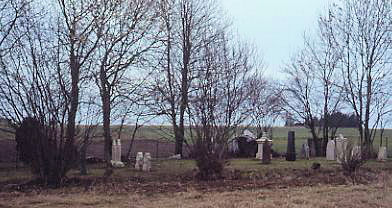
ottenstein cemetery

Picture of Jewish Cemetery, Ottenstein: Rothschild family cemetery


One of the signs of reaching middle age is an interest in family history, as the past begins to assume an importance it didn’t have before and we want to know more about from where we came in order to pass on a strong link to the next generations.
    The book of Exodus begins with a brief genealogy and also retells the foundational story of the family as the names of the sons of Israel who came to Egypt with Jacob are given to us once more, along with a reminder that this one man had 70 immediate descendants – 70 being a combination of two perfect numbers (7 and 10) and so showing a completeness to his life as a patriarch.
    But as quickly as the people of Israel increased and multiplied in Egypt, tragedy struck, a new king arose who saw them not as an asset to the community but as a threat, and so organised the legalised oppression of these people. Apparently determined not to be destroyed by this subjugation the Israelites continued to have many children and the pharaoh’s response was to take his cruelty down to the newborn children, by having every male child murdered at birth.  Yet the Hebrew midwives who were instructed to do this disobeyed, and playing upon the stereotype of the Israelite women being different from local women, told Pharaoh that they could not kill the newborn boys as they were born so quickly. And so the oppression was taken from the hands of the officials and given into the hands of the people – every boy born to the Hebrews should be thrown into the river.
      As a family history it is painful reading. Even though we know the ending, (for here we are about three millennia later still thriving), to know what our early family had to endure is excruciating. I reacently read  the memoirs of another family member, Ephraim Rothschild who lived in the Hannover area and who wrote his family history over the five years from his 85th to his 90th birthday in 1898. The stories of illness and early deaths, of capriciously unjust authorities, of marriages and children and movements to different villages to escape limitations on numbers of Jews, of legal restrictions and consequent struggles to find ways of making a good living and educating one’s children – it is an insight into a world that I can only say I am grateful not to have been born into. And yet as I read about graduates of the Jacobson school being taken into his employment, and his doubt about what would become of the descendants of those who professed Reform Judaism, there is something of the same feeling as reading the beginning of Shemot – our ancestors could not know what their descendants would become, they could only do what was right and possible in their time and their context in order to create the best chances for their family/people/religion to continue. And they could tell their story, which would include naming the names, reminding their descendants of the familial link and the story that went right back to Sinai.
     Ephraim Rothschild and the family from which he came lived generally in small towns away from the hub of political activity for 230 years, the connection to the area ending only when my grandfather left Hannover (via Baden Baden) for Dachau in November 1938 and my teenage father left Hannover for England. Not quite the 430 years of sojourning in Egypt, but a substantial time nevertheless, and a time when the family story continued to be told and passed onto the next generations. The memoir makes clear that his main interest was his family and the family business, and while he had some criticisms of the Judaism of his time, both the conservative forces of reaction and the too radical (for him) forces of Reform, he took it upon himself to endow and run a synagogue. But he also took it upon himself to learn the new political and economic ideas, teaching himself the essence of democratic politics and national economy, even writing to Bismarck and then to the Kaiser with his ideas and recommendations.  While never taking on the authorities too far, or taking a path of outright disobedience, he chose to play as full a part as he could in improving the lot of his fellow Jews and his fellow Germans.  Living in a relative backwater was no hindrance to his taking part in life. As in the opening of of the book of Shemot, Ephraim’s memoir tells the stories and names the names, and he seems content to do his best within the context and place he found himself, keeping family and religion going to the next generations. And with the stories we find out about some of the women of the family, and how hard they worked to keep everything going.

The title of the book of Shemot (names) is usually understood to refer to the names of the sons of Jacob who came down to Egypt with him, but there are other names to be found in this sidra and there are areas where the naming of names seem to be deliberately avoided. In particular within the story leading to the birth and naming of Moses which is found in this sidra only three names are made clear – the Hebrew midwives Shifrah and Puah are named and described twice as women who “revered God”, and their civil disobedience in aiding the labouring Hebrew women is recorded in bible, as well as their divine reward which is understood by Rashi to be that they became the founders of great dynasties themselves. Yet the father of Moses and the mother of Moses are described only as coming from the tribe of Levi, the Egyptian woman who rescued him is only described as ‘bat Paro’ – a daughter or female relative of Pharaoh, and the sister who oversees the rescue as ‘his sister’. Moses himself is finally named by the daughter of Pharaoh only ten verses later when he has been weaned by his mother and returned to her in the royal household.

This naming of the God-fearing midwives, yet the deliberate non-naming – almost to the point of clumsiness in the text – of all the others around Moses’ birth and rescue reads curiously in a sidra called “Names”. Is it trying to tell us that sometimes we must stand up and put our names to our acts of justice while at other times it is better to do so in anonymity?  Certainly that thought has resonances today in a world anonymity on the net.

      Or is it trying to say that sometimes it is the story that is important and the players are merely functionaries whose naming might distract us? Or maybe that it is our relationships with each other that truly matter and not just ourselves? Or that who we really are – the essence that is caught up in our name – can only be understood in the context of who we are connected to and what we do in our lives.

     The study of one’s family history can be fun and also it can be painful as the many stories of persecution and deprivation echo down the centuries along with the names, often the same names used repeatedly so that one can no longer tell who is being remembered in the naming.  But just to get caught up in who was who is not to in any way know about them. For that one needs the stories, the way the relationships developed, the sense of what they did and the context for why they did it. And we need also to recognise the difference between knowing the name of something, and knowing something. As Richard Feynman wrote “You can know the name of a bird in all the languages of the world, but when you’re finished, you’ll know absolutely nothing whatever about the bird… So let’s look at the bird and see what it’s doing — that’s what counts. I learned very early the difference between knowing the name of something and knowing something.”