
Chukkat – Sermon for Lev Chadash 2023

Sermon  – Chukkat Lev Chadash 2023

וּמִשָּׁ֖ם בְּאֵ֑רָה הִ֣וא הַבְּאֵ֗ר אֲשֶׁ֨ר אָמַ֤ר ה’ לְמֹשֶׁ֔ה אֱסֹף֙ אֶת־הָעָ֔ם וְאֶתְּנָ֥ה לָהֶ֖ם מָֽיִם׃ {ס}

 אָ֚ז יָשִׁ֣יר יִשְׂרָאֵ֔ל אֶת־הַשִּׁירָ֖ה הַזֹּ֑את עֲלִ֥י בְאֵ֖ר עֱנוּ־לָֽהּ׃ בְּאֵ֞ר חֲפָר֣וּהָ שָׂרִ֗ים כָּר֙וּהָ֙ נְדִיבֵ֣י הָעָ֔ם בִּמְחֹקֵ֖ק בְּמִשְׁעֲנֹתָ֑ם

And from there to Be’er, which is the well where the Eternal said to Moses, “Assemble the people that I may give them water.” Then Israel sang this song: Spring up, O well—sing to it—  The well which the chieftains dug, Which the nobles of the people started, With maces, with their own staffs.

Here in Parashat Chukkat, forty years after leaving the slavery of Egypt, we are preparing for the transition of leadership from the generation who led the people of Israel on their long sojourn in the desert and beginning to look towards the reality of being a people living in their own land.   The deaths of Moses’ siblings and fellow leaders – Miriam and Aaron – are recorded. After the mourning rites are concluded, and Elazar the son of Aaron takes his place as High Priest, The  people once more “ spoke against God, and against Moses: ‘Why have you brought us up out of Egypt to die in the wilderness? for there is no bread, and there is no water; and our soul loathes this light bread.’”  God’s response was to send fiery serpents which bit the people and caused a terrible plague, and the people recognised they had sinned against God and begged  Moses to  pray for the plague to stop. There follows a very strange episode where God tells Moses to create the image of a serpent from brass, set it on a pole, and that anyone who looks at it will be cured – the image still used as an international symbol for healing, having come into the pagan world through the Greeks as the “Rod of Asclepius.” (Asclepius, the Greek god of healing, is mentioned by Homer in the Iliad (circa eighth century bce) who may well have encountered it being worshipped by the Israelite and Philistine tribes living by the sea, who had promoted it into a religious cult which the King Hezekiah destroyed along with other idolatrous practises that had crept into Israel in the more than seven hundred years since the re-entry of the people with Joshua.

But lets leave aside this curious story in favour of another intriguing snippet of biblical text – the brief verses which are known as “the song of the well” I quoted at the beginning.

At the beginning of the exodus, Moses, Miriam and the people sang a song having crossed the Sea of Reeds and evaded the Egyptian pursuers – Shirat Hayam, the song of the sea. Later, in the book of Deuteronomy we will be treated to the final testimony of Moses to the people, written in the form of a song – Ha’azinu.    But here we are almost at the end of the journey and close to the borders of the land the people will shortly enter and settle, and here we have reference to another song. A song that is not the song of Moses, but the song of Israel.

In the Talmud we read that (Ta’anit 9a):  “Rabbi Yosei, son of Rabbi Yehuda, says: Three good sustainers rose up for the Jewish people during the exodus from Egypt, and they are: Moses, Aaron and Miriam. And three good gifts were given from Heaven through their agency, and these are they: The well of water, the pillar of cloud, and the manna. He elaborates: The well was given to the Jewish people in the merit of Miriam; the pillar of cloud was in the merit of Aaron; and the manna in the merit of Moses. When Miriam died the well disappeared, as it is stated: “And Miriam died there” (Numbers 20:1), and it says immediately in the next verse: “And there was no water for the congregation” (Numbers 20:2). But the well returned in the merit of both Moses and Aaron.”

Now both Miriam and Aaron are dead, and there is a question about who and what will sustain the Jewish people in the future. And this is the moment of change, the pivot from strong and almost parental leadership to something quite different – communal activity and responsibility.

Look at the introduction of this song: –   אָ֚ז יָשִׁ֣יר יִשְׂרָאֵ֔ל אֶת־הַשִּׁירָ֖ה הַזֹּ֑את

“Then the children of Israel sang this song”

The midrash (Yalkut Shimoni on Torah 764:26) notices the unique nature of this verse. “Rabbi Avin the Levite said: When Israel stood up to chant the song at the sea, Moses did not let them chant it by themselves, but like a teacher who recites a portion in Scripture with a student when s/he is young, so did Moses recite it with Israel: “then sang Moses and the children of Israel,” like a student who repeats after the teacher. But after forty years [in the wilderness], Israel matured and on their own proceeded to chant the Song of the Well, as is said, “then sang Israel” (Num. 21:17).

In other words, at the beginning of the 40 year sojourn in the desert, the people were childlike, in need of guidance and leadership, unable to take the agency for their own lives and their own choices. But now as we come to the end of the Book of Numbers, the people have matured, and are not only able but also willing to take responsibility for their lives.

The Book of Numbers – Bemidbar – has a clear narrative arc and trajectory that is quite different from the books that precede it. It begins with a census, (hence its more usual name of Numbers or its rabbinic name of Pekudim, of counting) but while the census is made in order to plan for military operations, it has very specific language –  

שאו את־ראש כל־עדת בני־ישראל למשפחתם לבית אבתם במספר שמות

“raise the head of everyone of the congregation of the children of Israel according to the families of their ancestral houses, count according to their names….

Each person is counted “bemispar Shemot” – named as they are counted. Each person is an individual and is known by name. The census is conducted not by Moses and Aaron directly but by tribal representatives, one from each tribe, each one a leader within the tribe.

So from the very first verses of the book, the leadership is being extended out into the tribes.  When the tabernacle is dedicated it is the chiefs of the tribes who bring the sacrifices, leading the midrash to infer that Aaron was distressed that he was not part of the ritual (Tanchuma Beha’alotecha 5 on Num. 8:2)and that his role was no longer central and unique but available to individuals.

Throughout the book there are stories of the primacy of individual agency rather than the supine following of a charismatic leader. There are of course stories of this going wrong – Eldad and Medad prophesying strangely in the camp for example, or Korach determined to say that everyone of the people of Israel is a leader and therefore Moses and Aaron have taken on too much leadership and should withdraw – but the point remains, the people are learning to take responsibility, to think and to act for themselves. They may continue to have leaders and clearly this is important – but the leadership is constrained in a particular way, not any more the charismatic demanders of followers, but people who have responsibility for the people they are chosen to lead. The trajectory will of course continue – through to the demand for a monarchy and the choice of handsome Saul who failed to enact God’s will for the people, and of course we sometimes continue to choose inept or self-aggrandising leaders and we continue to pay the price. The populist “strong men” chosen by many nations and peoples – not only our own – are inevitably infantilisers and limiters of the freedoms and choices of people who choose them.

But back to the song of the well, this short recorded text hinting at a much longer poem. We are almost at the borders of the land of Israel, the long wait is about to be over, the next phase is on the horizon. And the people sing their song without permission or mention of any leader. We are reminded – quite deliberately so – that the relationship of the people with God is not contingent on its leadership. There is no mediator between the two parties. God is supporting the people and the people know this. They are ready to take this relationship further on their own terms and for themselves, no matter how charismatic or forceful the leadership may be. There are some things a leader is necessary for, and others that are – and that have to be – the choices of adult human beings.

The people sing to the well, they call forth the life giving water for themselves. They remind themselves that this well has been created by the history of their own people, the hard work of their ancestors. This well belongs to them, not as a miracle, but as the product of the relationship they have forged over time, and for themselves with God.

Now when they are poised to take the land they have yearned for for so long, they are ready and able to do so. Unlike the beginning of their journey when they saw themselves as weak and vulnerable and unable to take their destiny in their own hands, now they are fully able to take the next steps.

They have learned that the well can be dug by themselves. That the resources they need are available if they search them out and claim them. That the living waters that Miriam had provided for them miraculously are in fact living waters that they themselves can create.

The book of Numbers is sometimes understood to have originally been the final book of Moses – the story stops with Joshua taking on the mantle of leadership and the people poised to take the final steps of the journey.

In order to do this they need to have confidence not only in God and their mission, but also – crucially-  in themselves and their own agency and responsibility. The song of the well tells us that they have transformed themselves over the generation in the desert and they are ready.

The future awaits…

Sermone – Chukkat Lev Chadash 2023

וּמִשָּׁ֖ם בְּאֵ֑רָה הִ֣וא הַבְּאֵ֗ר אֲשֶׁ֨ר אָמַ֤ר ה’ לְמֹשֶׁ֔ה אֱסֹף֙ אֶת-הָעָ֔ם וְאֶתְּנָ֥ה לָהֶ֖ם מָֽיִם׃ {ס}

 אָ֚ז יָשִׁ֣יר יִשְׂרָאֵ֔ל אֶת-הַשִּׁירָ֖ה הַזֹּ֑את עֲלִ֥י בְאֵ֖ר עֱנוּ-לָֽהּ׃ בְּאֵ֞ר חֲפָר֣וּהָ שָׂרִ֗ים כָּר֙וּהָ֙ נְדִיבֵ֣י הָעָ֔ם בִּמְחֹקֵ֖ק בְּמִשְׁעֲנֹתָ֑ם

E da lì a Be’er, che è il pozzo dove l’Eterno disse a Mosè: “Raduna il popolo perché io dia loro dell’acqua”. Allora Israele intonò questo canto: Sorgete, o pozzo – cantate ad esso – il pozzo che i capi hanno scavato, che i nobili del popolo hanno avviato, con le mazze, con i loro bastoni”.

Qui, in Parashat Chukkat, quarant’anni dopo aver lasciato la schiavitù dell’Egitto, ci prepariamo al passaggio di consegne dalla generazione che ha guidato il popolo d’Israele nel lungo soggiorno nel deserto e iniziamo a guardare alla realtà di essere un popolo che vive nella propria terra.   Vengono registrate le morti dei fratelli di Mosè e dei loro compagni di guida, Miriam e Aronne. Dopo che i riti di lutto sono stati conclusi e Elazar, figlio di Aronne, ha preso il suo posto come Sommo Sacerdote, il popolo ancora una volta “parlò contro Dio e contro Mosè: “Perché ci hai fatto uscire dall’Egitto per farci morire nel deserto? Perché non c’è pane e non c’è acqua; e la nostra anima detesta questo pane leggero””.  La risposta di Dio fu l’invio di serpenti di fuoco che mordevano il popolo e causavano una terribile piaga; il popolo riconobbe di aver peccato contro Dio e pregò Mosè di pregare affinché la piaga cessasse. Segue un episodio molto strano in cui Dio dice a Mosè di creare l’immagine di un serpente di ottone, di metterla su un’asta e che chiunque la guardi sarà guarito – l’immagine è ancora usata come simbolo internazionale di guarigione, essendo entrata nel mondo pagano attraverso i greci come “verga di Asclepio”. (Asclepio, il dio greco della guarigione, è citato da Omero nell’Iliade (circa ottavo secolo a.C.), che potrebbe averla incontrata adorata dalle tribù israelite e filistee che vivevano in riva al mare, che l’avevano promossa in un culto religioso che il re Ezechia distrusse insieme ad altre pratiche idolatriche che si erano insinuate in Israele negli oltre settecento anni trascorsi dal rientro del popolo con Giosuè.

Ma lasciamo da parte questa curiosa storia a favore di un altro intrigante frammento di testo biblico: i brevi versetti noti come “il canto del pozzo” che ho citato all’inizio.

All’inizio dell’esodo, Mosè, Miriam e il popolo intonarono un canto dopo aver attraversato il Mare dei Giunchi e aver eluso gli inseguitori egiziani: Shirat Hayam, il canto del mare. Più tardi, nel libro del Deuteronomio, ci sarà la testimonianza finale di Mosè al popolo, scritta sotto forma di canto – Ha’azinu.    Ma qui siamo quasi alla fine del viaggio e vicini ai confini della terra in cui il popolo entrerà e si stabilirà tra poco, e qui abbiamo un riferimento a un altro canto. Un canto che non è il canto di Mosè, ma il canto di Israele.

Nel Talmud leggiamo che (Ta’anit 9a):  “Rabbi Yosei, figlio di Rabbi Yehuda, dice: Tre buoni sostenitori sorsero per il popolo ebraico durante l’esodo dall’Egitto, e sono: Mosè, Aronne e Miriam. E tre buoni doni furono dati dal Cielo attraverso la loro agenzia, e questi sono: Il pozzo d’acqua, la colonna di nuvola e la manna. E approfondisce: Il pozzo fu dato al popolo ebraico per merito di Miriam; la colonna di nuvola per merito di Aronne e la manna per merito di Mosè. Quando Miriam morì, il pozzo scomparve, come si legge: “E Miriam vi morì” (Numeri 20:1), e subito dopo si legge: “E non c’era acqua per la comunità” (Numeri 20:2). Ma il pozzo tornò per merito di Mosè e di Aronne”.

Ora sia Miriam che Aronne sono morti e ci si chiede chi e cosa sosterrà il popolo ebraico in futuro. Questo è il momento del cambiamento, il passaggio da una leadership forte e quasi parentale a qualcosa di molto diverso: l’attività e la responsabilità comunitaria.

Guardate l’introduzione di questa canzone: – אָ֚ז יָשִׁ֣יר יִשְׂרָאֵ֔ל אֶת-הַשִּׁירָ֖ה הַזֹּ֑את

“Allora i figli di Israele intonarono questo canto”.

Il midrash (Yalkut Shimoni su Torah 764:26) nota la natura unica di questo versetto. “Rabbi Avin il levita disse: Quando Israele si alzò per cantare il canto sul mare, Mosè non lo lasciò cantare da solo, ma come un insegnante che recita una parte della Scrittura con un allievo quando è giovane, così Mosè lo recitò con Israele”: “allora cantarono Mosè e i figli d’Israele”, come un allievo che ripete dopo l’insegnante. Ma dopo quarant’anni [nel deserto], Israele maturò e procedette da solo a cantare il Canto del Pozzo, come si dice: “allora cantò Israele” (Num. 21:17).

In altre parole, all’inizio dei 40 anni di permanenza nel deserto, il popolo era infantile, bisognoso di una guida e di un comando, incapace di assumersi la responsabilità della propria vita e delle proprie scelte. Ma ora, alla fine del Libro dei Numeri, il popolo è maturato e non solo è in grado, ma anche disposto ad assumersi la responsabilità della propria vita.

Il Libro dei Numeri – Bemidbar – ha un chiaro arco narrativo e una traiettoria molto diversa dai libri che lo precedono. Inizia con un censimento (da cui il nome più usuale di Numeri o il nome rabbinico di Pekudim, di conteggio), ma mentre il censimento è fatto per pianificare le operazioni militari, ha un linguaggio molto specifico – . 

שאו את-ראש כל-עדת בני-ישראל למשפחתם לבית אבתם במספר שמות

“alza la testa di tutti i membri della comunità dei figli d’Israele secondo le famiglie delle loro case d’origine, conta secondo i loro nomi….

Ogni persona viene contata “bemispar Shemot”, cioè viene chiamata per nome mentre viene contata. Ogni persona è un individuo ed è conosciuta per nome. Il censimento non è condotto direttamente da Mosè e Aronne, ma dai rappresentanti delle tribù, uno per ogni tribù, ognuno dei quali è un leader all’interno della tribù.

Quindi, fin dai primi versetti del libro, la leadership viene estesa alle tribù.  Quando il tabernacolo viene dedicato, sono i capi delle tribù a portare i sacrifici, il che porta il midrash a dedurre che Aronne era angosciato dal fatto di non far parte del rituale (Tanchuma Beha’alotecha 5 su Num. 8,2) e che il suo ruolo non era più centrale e unico ma a disposizione dei singoli.

In tutto il libro ci sono storie che mostrano il primato dell’iniziativa individuale piuttosto che il seguire supinamente un leader carismatico. Naturalmente ci sono storie in cui ciò va storto – Eldad e Medad che profetizzano in modo strano nell’accampamento, per esempio, o Korach deciso a dire che ogni membro del popolo d’Israele è un leader e quindi Mosè e Aronne hanno assunto troppa leadership e dovrebbero ritirarsi – ma il punto rimane, il popolo sta imparando ad assumersi la responsabilità, a pensare e ad agire per se stesso. Potranno continuare ad avere dei leader, e chiaramente questo è importante, ma la leadership è limitata in un modo particolare: non più carismatici che chiedono seguaci, ma persone che hanno la responsabilità del popolo che sono state scelte per guidare. La traiettoria continuerà, naturalmente, fino alla richiesta di una monarchia e alla scelta del bel Saul, che non riuscì a mettere in atto la volontà di Dio per il popolo, e naturalmente continuiamo a scegliere leader inetti o autocelebrativi e continuiamo a pagarne il prezzo. Gli “uomini forti” populisti scelti da molte nazioni e popoli – non solo il nostro – sono inevitabilmente infantilizzatori e limitatori delle libertà e delle scelte delle persone che li scelgono.

Ma torniamo al canto del pozzo, questo breve testo registrato che allude a una poesia molto più lunga. Siamo quasi ai confini della terra d’Israele, la lunga attesa sta per finire, la fase successiva è all’orizzonte. E il popolo intona il suo canto senza il permesso o la menzione di un leader. Ci viene ricordato – volutamente – che il rapporto del popolo con Dio non dipende dalla sua guida. Non c’è nessun mediatore tra le due parti. Dio sostiene il popolo e il popolo lo sa. È pronto a portare avanti questa relazione alle proprie condizioni e per se stesso, a prescindere da quanto carismatica o forte possa essere la leadership. Ci sono cose per cui un leader è necessario, e altre che sono – e devono essere – scelte di esseri umani adulti.

Il popolo canta al pozzo, invoca per sé l’acqua che dà la vita. Ricordano a se stessi che questo pozzo è stato creato dalla storia del loro popolo, dal duro lavoro dei loro antenati. Questo pozzo appartiene a loro, non come un miracolo, ma come il prodotto del rapporto che hanno instaurato nel tempo e per se stessi con Dio.

Ora, quando sono pronti a conquistare la terra che hanno desiderato per tanto tempo, sono pronti e in grado di farlo. A differenza dell’inizio del loro viaggio, quando si vedevano deboli e vulnerabili e incapaci di prendere in mano il proprio destino, ora sono pienamente in grado di compiere i passi successivi.

Hanno imparato che il pozzo può essere scavato da soli. Che le risorse di cui hanno bisogno sono disponibili se le cercano e le reclamano. Che le acque vive che Miriam aveva miracolosamente fornito loro sono in realtà acque vive che essi stessi possono creare.

Il libro dei Numeri è talvolta inteso come il libro finale di Mosè: la storia si ferma con Giosuè che assume il mantello della guida e il popolo pronto a compiere gli ultimi passi del viaggio.

Per farlo, deve avere fiducia non solo in Dio e nella sua missione, ma anche – cosa fondamentale – in se stesso e nella propria agenzia e responsabilità. Il canto del pozzo ci dice che si sono trasformati nel corso della generazione nel deserto e sono pronti.

Il futuro li attende…
6th Elul :We don’t abstain from helping others if we want to call ourselves religious

6th Elul

“If someone comes to you for assistance and you say to them, ‘God will help you,’ you become a disloyal servant of God. You have to understand that God has sent you to aid the needy and not to refer them back to God.”  (the Lelover Rebbe)

There is an old joke of the person who refused to follow the warnings of a coming flood and persisted in stating that as a person of faith, they knew that God would not let them come to harm. The rains came and the person stayed in their house, moved onto an upper floor and prayed. Suddenly a boat came floating past the window – “quick –get in” said the person in the boat, but the faithful person replied “I will pray and God will save me”. The rain continued, the boat came again, and again the person refused to get in, citing God’s protection of the righteous.

The next morning found the flood even higher, the person had climbed onto the roof of the house, and watched as the rain continued. Suddenly the boat reappeared. “Quick, get in, we won’t be able to come back after this it is too dangerous”. Once more their offer was refused. The flood waters covered the house and shortly afterwards the soul of the faithful person stood before God. Furious, they demanded to know why they had drowned when they had been demonstrating their faith in the goodness and salvation of God. And the Divine Voice replied “who do you think sent the boat?”

In this world we may or may not have a strong faith in God, but we do have a responsibility to each other and to ourselves. And that responsibility extends way past any category of who deserves and who does not, who is like us or how we would like to be, and who is very different.

For those of us who see ourselves as people of faith, it is not enough –not nearly enough- to expect that faith to save us or save anyone else. It is a requirement of our faith that we use it to increase our activity in the world for good, that we recognise that we have our own agency, and we must use it.

It is not enough to say “the Government has a plan” or “there are organisations for these situations or these people” or “other people are helping”. It is not enough to tut and frown and say “what a shame but it is not our responsibility” When people need help, it is our human obligation to give that help. For the Lelover it was an obligation based on being a loyal servant of God. Jewish texts repeat this message in a myriad ways. But however one frames it, the bottom line in Judaism is that we don’t abstain from helping others, we must not abstain – this is our primary work in the world.


Shifra & Puah, midwives of our history. Parashat Shemot names some strong women without whom Moses would not have survived.

After a dearth of women in the last sidra, the beginning of the book of Exodus simply teems with them.  Many are unnamed and described only in their relationship to men : We meet the daughter of the tribe of Levi who marries a man of Levi at the beginning of Chapter 2. In the dangerous world of a Pharaoh determined to suppress the Israelite population by killing every male child not only has a baby but hides him for three months, before making a vessel of bulrushes and placing the child in it to be caught in the reeds at the river’s edge.

We meet the sister of this child who watches to see what will happen.  She observes  the daughter of Pharaoh who comes with her maids to bathe in the river. Seeing the little vessel  she sends one maid to fetch it and on finding  the baby expresses compassion for him. The sister comes from her hiding place and suggests to the Pharaoh’s daughter that she can find a wet-nurse.  On gaining approval for this suggestion the sister calls the child’s mother who agrees to nurse the child in exchange for money from the Pharaoh’s daughter.

The baby is the centre of the story here, but there are three women who contrive to save his life, two of whom we will later learn are Yocheved his mother and Miriam his sister. The daughter of Pharaoh remains anonymous.

Once the baby is grown, he is brought back to the daughter of Pharaoh who names him Moses, because, bible reports, “ I drew him out of the water”.  While we may know that the blood relatives of the baby are present, at this moment there is a formal adoption of the child into the Egyptian fold.

The next thing we know is that Moses, having killed an Egyptian taskmaster  for hurting an Israelite man, is fleeing for his life from the anger of Pharaoh, and now we meet seven more unidentified women – the seven daughters of Reuel, priest of Midian.

One of these women will shortly be named as she is given to Moses for a wife – Zipporah. And Zipporah gives birth to a boy, Gershom, named for Moses’ alienation: ‘I have been a stranger in a strange land.‘ It seems that Moses does not circumcise his son or bring him into the brit/covenant of Abraham, either because this is unknown to him or because his alienation extends to his relationship with the Israelites. When, after his meeting with God in the wilderness, he returns to Egypt to confront Pharaoh and demand the release of the Hebrews, his life is once again in danger, it is Zipporah who saves him. In an obscure passage “God met him and sought to kill him. Then Zipporah took a flint and cut off the foreskin of her son and cast it as his feet, and she said ‘surely you are a bridegroom of blood to me”. So God let him alone, and she said “A bridegroom of blood in regard to circumcision”

Two more figures make up the set of women in this passage who surround and support Moses – the midwives Shifra and Puah.

Shifra and Puah are midwives in Egypt. They are therefore at the cutting-edge of the Royal decree to ensure that all the Hebrew baby boys are murdered at birth.  The survival of the Israelite people is dependent on their actions. Shifra and Puah disobey the Royal decree, because , the text tells us, they feared/revered God. When called to account by Pharaoh this is not what they tell him, instead they say the Hebrew women are like animals (חָיוֹת) and before the midwives can get to them they have already delivered their babies. The narrator then tells us that  “God dealt well with the midwives; and the people multiplied, and waxed very mighty. And it came to pass, because the midwives feared God, that God made households  בָּתִּים for them” – a reference to both material goods and to children.

The story (and the chapter) ends with Pharoah’s decree repeated, but this time he broadens his audience from the midwives to the whole people: And Pharaoh charged all his people, saying: ‘Every son that is born you shall cast into the river, and every daughter you shall save alive” (1:22).  While he does not challenge the midwives’ version of the story he extends the diktat to all of the people.

So who are these women who pivot our history so decisively and so bravely?

While the Masoretic tradition assumes that they are themselves Hebrew women, this is by no means clear.  Their names are understood as more likely to be Semitic than Egyptian. Shifra (from the root שפר) means something along the lines of beauty/clarity but the root also gives us the noun “shofar” the horn that is blown to call to attention. The name Puah is likely also to mean to shine/beauty but neither of these names is easy to translate or to mine meaning from – or even identity – from.

The Talmud tells us “Rav and Shmuel [interpreted the verse העבריות למילדות ] One said: a woman and her daughter, and one said: a woman and her mother in-law. He who said a woman and a daughter: they were Yocheved and Miriam. He who said a women and her mother in law: they were  Yocheved and Elisheva.” (BT Sotah 11b)

From this interpretation emerged all the midrashim and commentary (and Masoretic vocalisation) that Shifra and Puah were both Hebrew women and of the family of Moses.

But the interpretation conflicts both with what the text tells us and with the emotional ‘sense’ of the piece. Would Pharaoh really ask Hebrew women to murder the baby boys of their fellow women?  Surely this is a task he would entrust to women from another ethnic identity? And when the midwives explain to Pharaoh why they are not fulfilling his order, they talk about the Hebrew women as being unlike Egyptian women, saying they are ‘as animals’. There is no sense that either they or Pharaoh are doing anything other than seeing the Hebrew women as ‘other’ than, and less than them – the Egyptians.

And what about the information that God dealt well with the midwives and rewarded them [with households]? From everything else we know about Miriam and Yocheved, they were not rewarded materially, nor did they become the heads of households. The correlation simply does not ring true.

So why does the tradition speak of Shifra and Puah as being not only not Egyptian women who revered God, but also tries to identify them with the Hebrew women who protected Moses’ life?

From a modern perspective we need to ask  why the tradition chooses to narrow down how the text is read so that named and autonomous Egyptian women become Hebrew women whose introduction to us is only in relation to the men. And also we need to question the erasure of the real identity of Shifra and Puah as Egyptian women who revere God and who choose to serve God and rebel against the Pharaoh from their own belief systems and through their own agency.

The text of the Hebrew bible – at least the consonants of the Hebrew bible, was agreed upon by the second century CE. But the vowels of that text – which could dramatically alter meaning – were not agreed upon at that time. It took the work of the ba’alei ha’mesorah, groups of scholarly scribes working from about the 7th to the 10th century CE to finally standardise the grammar of the text – its vowels, the breaks (verses and paragraphs), the accenting/cantillation marks.

This is important because the identity of the women as either Hebrew or Egyptian relies on the vocalisation of the letters of the two words        למילדות.   העבריות    Depending on the vowels we can either read the words as “to the Hebrew midwives” or as “to the midwives of the Hebrew women” (grammatical point – whether there is a patach under the lamed and a dagesh in the mem or a chirik under the lamed and no dagesh)

There are other texts which operate on the vocalisation of the text as “midwives of the Hebrew women” – ie that understand Shifra and Puah to be Egyptian. The Septuagint, for example, the translation of the Hebrew bible into Greek which was completed in the 3rd Century understands the text this way. Josephus in his “Antiquities” (1st Century) describes the women as Egyptian midwives who served the Hebrew women. Some other biblical commentators also understand the text to mean that the women were Egyptian (eg Abarbanel, Judah heHasid). Most interestingly there are fragments of texts which specifically name Shifra and Puah as Egyptian “righteous women who converted to Judaism” (Yalkut Shimoni does so (@13th Century), and there is a fragment from the Cairo genizah (@10th Century) which also lists Shifra and Puah as righteous gentile women who helped the Israelite people and who revered God.

Since the Masoretes vocalised the text to make the midwives Hebrew women, and Rashi follows the tradition from BT  Sotah we find ourselves corralled to seeing them not as brave Egyptian women who followed their consciences and put their faith in God, but as Hebrew women doing exactly what we would expect them to do, and indeed see them as the sister and mother of Moses whose function was entirely about protecting him as an infant.

Shifra and Puah, two brave women who stood up against the powers in their country, who saw human beings where the Pharaoh saw a population of migrants threatening his country, who revered God and acted both morally and with compassion, remind us that we are not alone as Jews. Through them and through others like them we see that God is not just ‘ours’, but is a universal God with whom we Jews have a particular relationship (as other have a particular, and different relationship). Shifra and Puah, whose names describe beauty, are also women who radiate morality and who call us to arms, to fight for what is right.

So why was the agency of two righteous gentile women erased in this way? Because they were foreign? Because they were women? Because they were necessary to Moses’ survival and pivotal in the narrative arc? Because they took risks and made their own decisions against the power of the Pharaoh?

Is the erasure of their identities and their active choices that changed our history forever  down to conspiracy or to accident?  I leave the reader to decide.

Tamar: taking her destiny in her own hands she will enable the messiah. Parashat Vayeshev

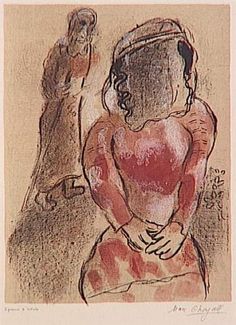
judah-and-tamar-chagallInserted into the Joseph narratives that take up much of the last half of the book of Genesis, is a chapter about Judah and about his family. It is also a chapter about the actions of a woman who is determined to right a wrong and how she achieves this goal. Situated as it is so discordantly in the Joseph narrative it is easy to turn the page, to ignore the text as we continue to read about Joseph’s troubles and his subsequent elevation. Because it deals with sexual acts, and with apparent impropriety, it is studied much less than it should be. The lens of the narrator is narrow, detail is sparse, but it is a text worth a great deal of attention, for it reminds us that in bible the women were actors in the story and not observers, they were out in the public space, their behaviour often created pivots in the chronicle. The story of Judah and Tamar shouts out “notice me” – the sons of Jacob are yet again challenged by a woman and this time they cannot cheat her or hide from her or marginalise her. Tamar is a risk taker while all the time behaving within the law. She is a model for modern Jewish women, her story reminds us our destiny is in our own hands.

Judah leaves his brothers and marries a Canaanite woman, the unnamed daughter of Shua, and has three sons: Er, Onan and Shelah.  Without comment from the narrator, time passes and he takes a wife for his first born son -Tamar. What do we know about her? Her antecedents are shrouded in mystery though we may assume that she was also a Canaanite woman. There is one tradition that suggests that she is the daughter of Malchitzedek, King of Shalem and Priest to the Most High God, and certainly she behaves in a way that bespeaks confidence and determination to get her rights fulfilled.

Tamar is married to Er, who was “wicked in the sight of God, and God killed him” (38:8). She was then married to his younger brother Onan, specifically (and anachronistically) for him to perform the act of yevamah, to provide a child who would legally be the child of the dead and childless Er.

But Onan knew that the child would not be formally his, as so when he went to her he deliberately spilled his semen on the ground rather than create a child who would inherit the portion of his dead brother, and the bible tells us “Vayera b’eynei Adonai asher assah vayamet gam oto: The thing that he did was evil in the sight of God, and he killed him too” (v10)

What did Er do that was so wicked he deserved to die? Bible doesn’t tell us. While there is a strand of tradition that suggests that the boys die as punishment for the wickedness of their father, so that he should feel the pain of the death of a child as he had caused his father to feel that grief when he did not protect Joseph, the general consensus of tradition is that the sin must have been Er’s and must have been similar to that of his brother. Hence one Midrash suggests that he did not want Tamar to spoil her beauty by becoming pregnant and therefore his relations with her were designed to prevent pregnancy. This I think tells us much more about the commentators than it does about the text, but the reality is that he does not provide a child for his wife before his sudden death.

Onan’s wickedness however is clear, and it is not the sin that bears his name. It is not the spilling of the seed that was the real problem in God’s eyes, it was the fact that he did not want to give his dead brother a stake in the future, a child who would inherit both the name and the material benefit that would have belonged to Er. He denied his dead brother an heir and he denied his wife the protection that having the child would give her.

What we are told and what we are not told in this text is fascinating. The bible is keen to make sure we know that Judah has left his brothers, that he has built a deep friendship with Hirah an Addullamite (va’yet). It tells us of his Canaanite wife bat Shua and his children with her. It tells us that the action takes place in Chezib – and here is the clue to the whole sorry tale, for the name Chezib comes from the root-verb כזב (kazab), meaning to lie, to disappoint, to fail. As an idiom the word is also used to describe a brook or stream that has dried up – a river that disappoints, rather than one that will provide water. Judah has three sons, and yet the likelihood of his having descendants after them diminishes as the disappointment and the lies build up.

The bible signals that the story is about deceptions and disappointment, and Judah as the fourth son of Jacob and Leah is born into deception and disappointment, even while he will ultimately become the ancestor par excellence, the tribe from whom we will descend.

After the deaths of the two older sons, Judah tells Tamar to “stay a widow in the house of your father until Shelah my son grows up” Assuming the practise of yevamah, this appears to be a reasonable request, though why Tamar is kept in her father’s house rather than that of her in-laws bears further examination. But it seems that he is trying to keep her at a distance, for bible continues that same verse with the words “Lest he also die like his brothers”.

The superstition that a woman who loses more than one husband is somehow responsible is dangerous and a killer of men who come close to her has deep roots. It is a classic example of blaming the victim. Widows were economically and socially vulnerable, classed in bible along with orphans and strangers in the land/refugees. There are many exhortations to protect the widows in biblical texts, but in this story in the first book of Genesis, before Torah had been given and before its challenge to established norms, the superstition drives Judah, and sadly his behaviour means that the idea of the “black widow” has permeated into our awareness too.

Widowed now himself, Judah goes to see his great friend Hirah in Timnah. We do not know how much time has passed but Tamar is able to observe for herself that Shelah has grown up and that he has not been given to her as a husband in order to both provide a child in his brother’s names. Tamar is trapped in a situation that does not allow her to marry within the family of Judah nor to marry anyone else. She must feel desperate.

Judah doesn’t tell Tamar that he is travelling near to where she is. He has left her exiled in her father’s home living as a widow and he seems to have no communication with her, nor any interest in her continued well-being.  Someone unnamed tells her that Judah will be travelling through and Tamar takes her chance.

She removes the widow’s weeds she is wearing and covering herself with her veil she sits “petach Einayim” – which could mean “at the entrance to Einayim” but which also means “at the opening of the eyes”. This is a pivot in the story. There has been up till now lies and deception, the suppressing of the reason that God found Er wicked, the betrayal by Onan of his brother’s rights to the future.   Tamar has been hidden from sight in the household of her father, there is no communication between the two households, she is out of sight and out of mind. But here she is, sitting by the roadway Judah will travel, determined to be noticed, to open Judah’s eyes to the injustice done to her.  Her action is eye opening.

Judah certainly sees her. He notices her. At least, he notices there is a woman there and he makes the assumption that she is a prostitute. And the reason for this? Because her face is covered.  Think about this. He reaches his conclusion that this is a woman available for hire for sexual relief because her face is covered. In today’s world a veiled face is supposed to designate modesty, protecting the beauty of the woman from the crassness of the world – yet here in bible the clear assumption is that the veiled face designates woman only as object. She stops being a person. She doesn’t exist as living breathing yearning thinking woman. She is a prostitute, available for the pleasure of men who pay. There is at least some honesty in this approach – the reality of the woman is unimportant in the world of the biblical text, who she is is irrelevant to the man who buys her. In today’s world of extreme tzniut used to oppress women in some communities, the deception is back. Telling women that their covered state and hiddenness from the public space is a way of increasing their holiness, protecting their modesty etc is a lie to hide the fact that their very self is being controlled by others, to keep them as possessions and as subjects rather than as active and authentic people with their own agency.

Judah is polite, he speaks to her with courtesy, not knowing who she is at all. The same verb is used as with his relationship with Hirah – vayet eleha – he turns to her. This could be the beginning of a real connection, but it is not because he does not see someone with whom connection can be made. He sees only the possibility of a sexual moment and this is what he asks for. So she begins the negotiation “what would you give me in payment for sex?” He offers her a future payment, a young kid from the flock, and she counters with the request for a pledge that she can keep until such time as the payment is made. It seems that Judah is unused to this type of negotiation. He asks her what such a pledge should be and she requests three deeply personal and unique items that will be recognisable and indisputably his.  Having given them to her, they have intercourse and Tamar conceives at last.

The interlude over, she leaves and removing the veil she puts on her widows weeds once again. Judah keeps his promise, sending the animal as promised with Hirah his friend, and expecting the return of his pledge, but she is gone, and when Hirah asks around where the prostitute who had been sitting there was, the response is that there had been no prostitute. This he relays to Judah, who doesn’t seem to be at all perturbed by the woman’s disappearance with his personal possessions, and seems rather to hope that by ignoring what has happened he will escape any shame. But how can he just leave his pledge, his signet, cords and staff, as if nothing has happened?  These days we might call it identity theft, we would desperately search for our missing items and try our best to make good the loss. Judah’s response “tikach la, pen nihyeh lavuz” is more than laconic, it is negligent and it is fearful of any shame attaching to him and his friend. Why?

Three months later the news reaches Judah that Tamar is pregnant, and the assumption is that she has prostituted herself. No communication has happened between the two as yet and when she is brought to Judah in order to be punished by burning, she still does not immediately identify the father by name. Instead there is a sort of choreography – she is brought to the household of Judah from her father’s house. She does not appear to meet Judah, instead she sends the pledged items he had given her and says “Clarify please whose are these tokens? The signet the cords and the staff?” It is of course a rhetorical question but it is a dangerous one. For a man who had been trying to avoid shame, Judah could have taken and sequestered the items. She would have been burned to death along with her unborn children. But instead he acknowledged them and speaks of the justice and rightness of Tamar’s act – she had simply been trying to fulfil the requirement for a child for his two dead sons, and in doing that to protect her own vulnerable situation too.

Like Rebecca, Tamar has twins. Like her too the birth is eventful – the first child puts out a hand and then withdraws it but not before a scarlet thread has been tied around it, the second child is then born, and the elder one is fully born second. Their names are given, but not it seems by Tamar. The elder child is named Zerach which means brightness or shining. The younger is Perez – meaning to burst forth, to breach. There are many echoes of Rebecca here, the colour red, the description of the older child in terms of his appearance and the younger in terms of his actions.  There is a clear subtext that these children were designed to be born, they are necessary in terms of the biblical narrative. They would not have been born had Judah followed his plan to keep Tamar in purdah to protect his one surviving son from what he saw was her danger – a superstition roundly exploded in the story, for Judah is not endangered by his encounter with Tamar.

The story is tidied up – both dead brothers have a child to take their place in history. Tamar does not need to marry again, her status is established. Judah has come to realise that his behaviour was not as righteous as that of his Canaanite daughter in law and has acknowledged this.  But the questions arising from the story only multiply. Why this story at all? Why put it here in the Joseph narratives? Why did the children need to be born?

One question is partially answered in the genealogical line given in the book of Ruth, the Moabite woman who also took her status as childless widow into her own hands and had a child by a family member of her dead husband in order both to honour his future and to protect her own vulnerable status. We will learn from this genealogy that King David will descend from the line of Perez – that both Tamar the Canaanite woman and Ruth the Moabite woman will pivot history in order to bring about the birth of the messianic line.   But why does King David and why will his messianic descendant need to be born of such deceptive sexual encounters orchestrated by the women? This is a question yet to be satisfactorily answered.

Why is it in the Joseph narrative? With the themes of clothing to hide identity, of deception and betrayal, of promises made and not kept and of the painful loss of children, with mis-communication and with the lack of communication, with fear and shame and hopelessness and exile –  there is much to connect these narratives.  But Tamar herself is not echoed in the Joseph stories, except maybe in parody when the wife of his master desires him and lies that he tried to sleep with her. Tamar stands alone in these narratives, a woman who is married twice to unworthy and wicked men yet who retains her own integrity and keeps her eye on the future. Blamed as a husband killer when we know from bible that God kills the men because of their wickedness, exiled to her father’s house and marginalised from the narrative, she uses her marginal status and plays out the scene whereby she becomes not-woman, a body, a prostitute for hire at the roadside, and moves her descendants into the centre of the narrative.

One of my favourite lines of any film comes in “My big fat Greek Wedding”. It tells the story of a woman of Greek descent trying to find herself and her place in society outside her father’s home and the struggles she endures as she grows. Her father makes a decree about her future and she is despondent. Her mother tells her that indeed she must obey, the father is the head of the house. In their culture, his word is law. But the mother goes on to say, the father is the head but the mother is the neck, and the head points whatever way the neck dictates.  It speaks to me of biblical narrative, when the men make the decisions and hold the power, but with great regularity the women subvert that decision making, and from Sarah, Rebecca, Rachel and Leah onwards they gently manipulate in order to produce the desired outcome. The list of these women in bible is long, yet often they escape our attention as they escape the attention of the men with whom they live. Tamar is a rare exception – by getting herself noticed she will disrupt the course of the narrative and change history.

Bereishit: Leaving Eden as equals with creative work to do

One of the most difficult verses in bible comes early in the text and seems to set the scene for those who want to prove that God loves the patriarchy and that the divine ideal is that women are to be subservient to the rule of men. I have lost count of the times that men have told me that women were cursed by God because of the culpable actions of Eve in the Garden of Eden, or the times when women have told me that there is nothing we can do to remedy the role our biology has cast for us. Calling attention to the earlier creation story in which male and female are created together in the image of God as one Adam/human being doesn’t seem to have the same power as the story called by Christianity “The Fall”. Indeed this verse seems almost magically forgettable as being the original scene setter of the creation of human beings – so I thought it was time to have a look again at the text that so conveniently can be read as “the sin of a thoughtless woman has led to her and her husband being rejected by God and evicted from paradise into a miserable existence.”

Reading Genesis 3:16, after God has asked the man who had told him that he was naked, and asked directly if he had eaten of the tree that God had commanded him not to eat, the man said “the woman whom you gave to me, she gave me of the tree and I ate”. God turns to the woman and asks “what is this that you did?” and she says “the serpent beguiled me and I ate”. God doesn’t ask anything of the serpent, but instead tells it “Cursed are you among all the cattle and all the beasts of the field. Upon your belly you will go and you will eat dust all the days of your life. And I will put animosity between you and the woman and between your seed and her seed, they shall bruise your head and you shall bruise their heel”

Let us just note here some interesting moments. The serpent is described as being among the cattle and the beasts of the field – not a class we would normally associate with scaled reptiles, but definitely something we would associate with an agrarian world view.  And let’s note too that the antipathy is between

          בֵין זַרְעֲךָ וּבֵין

      זַרְעָהּ


your seed and her seed – the human descendants are described as the seed of the woman rather than of the man, obliquely but definitely introducing the idea of female childbirth in the future.

With this in mind, let’s look at the next verses.  God turns his attention to the woman, saying:

אֶל־הָֽאִשָּׁ֣ה אָמַ֗ר הַרְבָּ֤ה אַרְבֶּה֙

עִצְּבוֹנֵ֣ךְ וְהֵֽרֹנֵ֔ךְ בְּעֶ֖צֶב תֵּֽלְדִ֣י בָנִ֑ים וְאֶל־אִישֵׁךְ֙ תְּשׁ֣וּקָתֵ֔ךְ וְה֖וּא יִמְשָׁל־בָּֽךְ:   ס

Now this verse is most painful for us feminists. It is most often translated as “To the woman he said, I will greatly increase your pain and your travail. In pain you will bring forth children, your desire shall be to your husband and he shall rule over you”

But that is not the only way to translate it, and the clue is in the context of this passage. To begin, let’s look at the first half of this verse, in particular the word whose root it “etzev” ayin, tzaddi, beit and its noun form used here : itz’von. It is used only three times – twice here in relation once to Eve and once to Adam, and later about Noach.

The root has two major meanings – one is to to hurt/ to work hard and the second is to form/to fashion. The nouns are itz’von and he’ron, which look like a parallel is being used. Given that the second noun means pregnancy/forming a baby, then itz’von should also mean forming a baby/ pregnancy – in which case the phrase means “I will greatly increase your creating a baby and your pregnancy, and with hard work (labour) you will give birth to children.

Note that God does NOT curse the woman. Instead God informs her that she will be taking over the hard work of creation, it will be her seed as a result of the encounter with the serpent, so it will be her role to bring forth human beings in the future. God is done – having created everything else in the garden with the ability and seed to reproduce, now it is time for human beings to do so for themselves.

Let’s look too at the use of itz’von in relation to the man. And note too, that God does NOT curse him either.

וּלְאָדָ֣ם אָמַ֗ר כִּ֣י שָׁמַ֘עְתָּ֘ לְק֣וֹל אִשְׁתֶּ֒ךָ֒ וַתֹּ֨אכַל֙ מִן־הָעֵ֔ץ אֲשֶׁ֤ר צִוִּיתִ֨יךָ֙

לֵאמֹ֔ר לֹ֥א תֹאכַ֖ל מִמֶּ֑נּוּ אֲרוּרָ֤ה הָֽאֲדָמָה֙ בַּֽעֲבוּרֶ֔ךָ בְּעִצָּבוֹן֙ תֹּֽאכֲלֶ֔נָּה כֹּ֖ל יְמֵ֥י

חַיֶּֽיךָ

“To the man God said, because you heard the voice of your wife, and you ate from the tree which I commanded you saying ‘you shall not eat of it’, then cursed is the land on account of you, with itzavon/ (hard work/forming and creatively fashioning),  you will eat from it all the days of your life.” (3:17)

Both man and woman are now told that the hard work of creating is down to them. The serpent and the land are cursed, they are no longer going to be as they were first intended to be, the serpent loses its place in the agricultural world, the land too loses its place as a garden where growth is luxurious and abundant and does not require the hard work that any gardener or farmer will tell you is necessary today to create a crop of food or flowers.

What is the curse on the land? It is that it will bring forth weeds, thorns and thistles, the unintended and unwanted growth that any farmer or gardener will tell you comes as soon as you stop working the ground, hoeing out the weeds, protecting the young seedlings.

A curse is something that goes wrong, that is not intended in the original plan, that deviates from the ideal.  So it is particularly interesting that the human beings are not themselves cursed, their situation is not deviating from the plan. It begins to look like leaving Eden was always the plan, that creating was always going to be delegated, otherwise why put those tempting trees there?

The section ends with God telling the man that in the sweat of his face he will eat bread, until he returns to the ground he came from, and the man calling his wife Eve, because she has become the mother of all living. Both these again are references to the itz’von of each of them – she becomes creative in the area of growing children, he in the area of growing food. And God’s statement that follows “Behold, the human has become like one of us”, is then qualified in terms of knowing good and evil, but it also describes the attributes of creativity that each now have, attributes which until this point have been the dominion of the divine.

Now let’s look at the second half of the verse where the woman’s future is described. “Your passion will be to your man, and he will mashal  you (וְה֖וּא יִמְשָׁל־בָּֽךְ:  v’hu yimshol bach)”

M’sh’l is one of two words for ruling over – the more usual being m’l’ch. It too has a second meaning – to be a comparison, from which we get the idea of proverbs/parables which show us a truth by virtue of a difference. The first time we have the word is in the creation of the two great lights which will m.sh.l the day and the night in Genesis 1:16-18. Are they ruling over the day and the night or are they providing a point of comparison? Is the man ruling over the woman or does he have a comparable function of creativity? Her passion is for him, a necessary partner for the creation of children. His comparable creativity is to work the land, to bring forth food alongside the thorns and thistles that grow there.  He is not described as her master/ba’al but as her ish/man, the equal partner of her status as isha.

Can one read these verses in this way, of the passing on of the ability to create through the seriously hard work of the two protagonists?

The next (and final) time we meet the word itz’von is at the birth of Noach, ten generations after Adam and the pivot to the next stage of the story, indeed the rebirth of creation after the earth is so corrupted that God chose to destroy it by flood.

We hear that Lamech, the father of Noach says

וַיִּקְרָ֧א אֶת־שְׁמ֛וֹ נֹ֖חַ לֵאמֹ֑ר זֶ֠֞ה יְנַֽחֲמֵ֤נוּ מִֽמַּֽעֲשֵׂ֨נוּ֙ וּמֵֽעִצְּב֣וֹן יָדֵ֔ינוּ

מִן־הָ֣אֲדָמָ֔ה אֲשֶׁ֥ר אֵֽרֲרָ֖הּ יְהוָֹֽה

“And he called his name Noach (rest) saying, this one will comfort us from our work and the itz’von/ creativity/  work of our hands, (which arises) from the land which God cursed” (Gen 5:29)

It is a deliberate reminder of the story of Adam and Eve and their given roles to bring forth new life (both human and plant) with as much creativity and manipulation of the environment as they needed. It is a reminder that God changed the role of the land through the curse, which gave humanity the challenge to provide themselves with food as creatively as they could. It is a signal that another creation is about to happen, Noach will be part of that change, though quite how that was to work out was not clear to his father Lamech. He was hoping for N.CH. for rest. He was hoping for the accompanying and phonically similar comfort. But this isn’t what God was going to do, as anyone who had read the earlier chapter would know. Creativity, forming new people and working the land is not a restful or a comfortable experience. It is backbreaking work physically, it is emotionally draining and challenging. Anyone who has worked so much as a window box will know how things grow that you don’t expect, how plants carefully fostered will not necessarily flower, or even if they do may not be the one you anticipated. Anyone who has nurtured a child will find that they are no blank slate, that they have their own views and their own desires. The children of Adam and Eve provide the first fratricide in bible – surely not something their parents wanted.

So – if we read this difficult passage in the light of the first creation story in the first chapter, where it is abundantly clear that God created humanity with diverse gender, equally, at the same time, and in the image of God, and we choose not to look through the lens of the patriarchy, then we can see that neither man nor woman are cursed, that instead they are blessed with itz’von the ability to form, to fashion, to manipulate and create in their environment in the same way that God had done. We see that the hard work of bringing forth the future is both challenge and blessing. We see that there are always problems – the thistles and the thorns among the grain, the children who learn very quickly to assert their own personalities and say no – and that it is our role to negotiate these problems and grow a good crop/teach good values to the next generation. We have taken the power to form and to fashion our world, for good or for ill. And after the new creation and the covenant with Noach God is leaving us to do it for ourselves. I am pretty sure that that did not include one gender dominating the other, or one people ruling over another.  We left Eden in order to create a world where we had ability and agency. As we start the torah reading cycle once more, it is down to us to use our creativity and our agency and work hard to make our world the best place we can.

The Ascent of Women, the Assent of all of us: or how we are all part of progress

When a woman vows a vow to God…being in her father’s house, in her youth, and her father hears her vow….and holds his peace, then all her vows shall stand…. But if her father disallows her in the day that he hears, none of her vows… shall stand; and God will forgive her, because her father disallowed her.

And if she be married to a husband, while her vows are upon her…  and her husband hear it, whatsoever day it be that he hears it, and hold his peace at her; then her vows shall stand.. . But if her husband disallow her in the day that he hears it, then he shall make void her vow which is upon her, and the clear utterance of her lips, wherewith she has bound her soul; and God will forgive her.

The vow of a widow, or of her that is divorced, even everything wherewith she has bound her soul, shall stand against her.

….These are the statutes, which God commanded Moses, between a man and his wife, between a father and his daughter, being in her youth, in her father’s house”

On first encounter this makes dispiriting reading for any feminist.  The patriarchy is being powerfully accentuated. A woman in relationship with a man – be it father or husband – may make vows just as men may do, but her ability to do so is constrained by the man in her life. He can annul them if he wishes to do so.

After reading only a few chapters earlier of the case of the daughters of Zelophehad who won the right for women to inherit property from their father (a right which will also be limited in this sidra) it is a splash of cold water to see how bible seems to accept the status of women as lesser than that of their men.

But a closer reading gives some cause for hope. Bible is a text that responds to its context, it brings the assumptions and the classifications of the ancient world but often with a twist that undermines the certainties of the world it springs from.

We are given three cases here of women’s vows.. the young daughter, the wife and the widowed/divorced woman.  Two of them are economically dependent on the man in whose house they live, one is in charge of her own economic fortune through the payment of her Ketubah. The vow, which may well have required future payment, could be problematic for the woman if there was no money to fulfil it. It seems that in these cases the husband would be able to annul it in order to protect the finances of the household that were his business to safeguard.  So while it is still frustrating to note that women who were in the roles of daughter or wife did not have a real say over the discretionary spend of the household, we can look at these cases again and see two encouraging signs. First, that the woman has the right to vow – this is not in dispute. A form of religious expression (however problematic) is open to her from youth onwards. And secondly we see an interesting development. The man has the right to annul her vow, but ONLY if he does so within the day of the vow being made. Otherwise he not only has to allow it, he has to support its execution. The language strengthens so it is not just to allow it to stand but he must establish it – heikim otam.

It doesn’t look like much, but this is indeed a revolution in the status of women. A man doesn’t control a woman’s vow in perpetuity – there is a very limited window where he can protest and annul, in order to defend the family finances. After that he must help her to fulfil her vow.

Talmud picks up this revolution and develops it. They take seriously the idea that the daughter at home is young (bin’urecha) and limit the time she is under her father’s power for this up till the age of puberty – around twelve years old. After that, she may vow her own vows.  A husband is not able to annul vows a woman made before her marriage and after the age of puberty, and indeed the Talmudic sages limit even the vows she makes after marriage to those which impinge on him or which afflict her.

There is a further principle that is introduced here that will become important in the later development of Halachah.   The phrase      וְשָׁמַ֤ע  וְהֶֽחֱרִ֣שׁ לָ֔הּ

And he heard [the vow] and he was silent /held his peace  is taken as the proof text that in cases like this  silence is assent.   One who could protest but does not do so is deemed to have assented.

Now sometimes this principle is taken out of context – for it is important that the person who is deemed to have assented through their silence both knew the implications of what was happening and also could properly protest.  The silence of people who are frightened or vulnerable or feel themselves to be powerless is NOT assent. Just because someone does not whistleblow in their employment or does not fight back when physically or sexually attacked, assent to what is happening cannot be inferred.

But it does mean that we, who maybe watch the news and see unfairness happen in the world, see refugees attacked or maligned, see pensioners robbed by the owners of their fund, see Governments create policy that will widen the gap between those who have and those who have not – we must not assent. We have to protest and continue to protest.

And there is no limited window for such protest – if we see injustice we have to stand up and say so, demand compensation and change.

Bible shows us that the way the world works isn’t for all time. It takes the status of women’s vows and it changes how they can happen from the usual customs. Talmud takes the journey further, promoting more fairness, more agency to the people who were once without agency.

It is up to us to take the next steps into more fairness, more justice. Our silence must never be construed as assent, and to make sure that it isn’t it is time for our voices to be heard.