From Bar Hedya to Charlie Hebdo: the power to shape the world is in our hands

In the Talmud in tractate Berachot (56a) we learn of Bar Hedya, the interpreter of dreams, who would give a favourable interpretation to the one who paid him, and an unfavourable interpretation to the one who did not pay. The third century amoraim Abaye and Rava went to see him, each claiming to have had the same dream, and Abaye paid him whereas Rava did not. The Talmud records a collection of his interpretations to each man, where Abaye is told of all the wonderful things that his dreams portend, and Raba is told only terrible outcomes. Subsequently Rava revisited him with new dreams, and still was given terrible news of his future, some of which the Talmud records as happening. Then finally Rava went to him and gave him money for the interpretation and suddenly his future looked rosy – he would be miraculously saved from danger, he would take over Abaye’s role as teacher par excellence (which again we know happened). One day Bar Hedya was travelling with Rava in a boat, when he said to himself “why should I accompany a man whose dream I have interpreted to mean he will be miraculously saved from danger [and therefore I will drown] and so he quickly got off the boat, letting his book fall as he did so. Rava found the book and looked into it to find the words “All dreams follow the mouth”. Rava exclaimed “you wretch – it all depended on you, and you gave me all this pain”….

The narrative reads with almost comedic intent, although real tragedy ensues. It seems to be an empirical experiment by two scholars as the power of dreams and their interpretation – are they really prophetic foretellers of the future or do they have no power over us in the waking world? And is the dream itself the power or the interpretation and understanding of the dream?

I was reminded of this passage as I read article after blog post, social media comment after theological discourse in the last days, trying to make sense of the terrible murders at Charlie Hebdo.

I believe in religion. I believe in the power of religion to do good in the world. I believe it is one of our most important tools to visualise and to create a better world. I understand religion to be designed to take some of the most frightening and frightful options away from human choices. When Moses quotes God as saying “Li nakam ve’shilem” (Vengeance is Mine, and recompense) (Deut 32:35) this is not describing a hateful angry and punitive God, but is taking away the obligation of vengeance against one’s tormentor from the person and ascribing it to God. Religion transforms our mortal powerlessness and allows us to let go of our frustrations with what we cannot change, in order to address ourselves to our lives with the power and abilities we have. We leave to God the things we cannot face or cannot deal with, and we move on.

All religions do this essential thing, albeit in differing ways. They function to give us the head and heart space in order that we are able to forward the aspirations expressed in every religion – the treating of all others with respect, the working for a better world, for peaceful living together, for growing our own souls….

Every religion has its foundational myths and texts, and every foundational text shares and restates the basic premise that every human being is of absolute value, and how we get on with each other is of absolute importance, and that there is a bigger arena than we can see or even imagine from within our own contexts.

Every religion has within its foundational texts and myths texts of horror which seem to sacralise violence against individuals or nations; every religion also has within its foundational texts and myths texts of hope and assurance, which mandate loving care of the other, and the search for peaceful living together, valuing each other’s humanity.

And so to the blogs and articles and social media comments which everywhere protest that murderous things done in the name of religion or people of faith or in defence of God are distortions of that true religion, the result of false teaching, and the reassuring quotations from Hebrew Bible or Quran or New Testament are applied to the arguments. Because, as Bar Hedya knew, everything is open to interpretation, and it is the interpretation which gives the power to the text/dream rather than the text/dream simply standing on its own. Every religion can defend itself with its texts of hope and love for the other, can gloss its texts of terror as being of a particular period or not meaning what it seems to mean. The Jewish teaching of every word or verse having a ‘pardes’ of possible interpretations and exegisis: (the pshat- plain meaning of the word/s; the remez – allusion or hints of deeper symbolic meaning; the drash – enquiring or comparative meanings; and the sod – the esoteric and mystical meaning) surfaces the importance of understanding a text in as rich and complex a way as we can, for this is what will ultimately create the meaning of that text for us within our own contexts.

So when I read of the apologetics for whatever a particular religion has done now/ someone has done in the name of a particular religion, part of me is so grateful for these urtexts of shared values and aspirations towards love and justice for all, and part of me is furious and wants to scream out to the writers – well that may be in your sacred book, but why are people not interpreting this original intention of religion for the sake of justice and humanity and valuing others above all? Why are people instead interpreting their religious texts for the purpose of murder and hatred and violence and repression of otherness? Why are people oppressing others or murdering them in the name of their God?

We cannot rely on the texts of hope in our sacred literature and ignore what Bar Hedya knew – that how we choose to interpret the basic text matters even more than the text itself because it gives us the power to ignore what our religion is for and to weaponise our traditions to use against others. Everything has to be in the interpretation, and the reality is that the interpretation we allow to prevail at any given time isn’t the most “true”, it is the one most amenable to the power of the time. We choose to allow interpretations that let us hate the other, or ignore their plight, or suppress or even oppress them. We choose to allow the interpretations that mean that people murder others in the name of their religion. We choose the interpretations that give us a sense of power over others. Our urtexts may be screaming out that these interpretations are not what were intended, but until we hear the voices of modern scholars of every religion both admitting to our own texts of terror and neutralising them, until we hear the voices of religious people refusing to accept teachings of hatred of the other, we will be stuck with the teachers of hatred, the radicalisers of those who feel powerless, the focusers of chaotic feelings of aimlessness and anomie where no good future can be envisaged let alone aspired to.

It is time to admit that the interpretation of our texts have a real power, and to give those who interpret them the necessary tools to understand that it is in their hands to bring forth the future into existence.

Ki Tetzei: You Shall Not Remain Indifferent – The Extra Dimension in Jewish Law

            Parashat Ki Tetzei contains seventy two commandments, (some say 74: either way the largest number in any Torah portion). They deal with such diverse subjects as the treatment of captives, defiant children, lost animals, birds’ nests, roof railings, divorce, rights of aliens, loans, vows, and protection of works; parental guilt, charity for the poor, regulations for inheritance and fair weights and measures. Many attempts have been made to categorize such laws, but the words of Torah which conclude the duty to return lost property or to keep it safe until it can be restored to its owner – the words lo tuchal le’hitalem – you shall not remain indifferent (or you shall not hide or act as if you cannot see) seem to me to sum up the ethical principle which underpins these disparate laws most powerfully.

            Way back in the book of Genesis, when Cain says to God “am I my brother’s keeper?” the response from God is “What have you done, your brother’s blood calls out to Me from the ground” – in other words it is made clear to Cain that ‘Yes, we are responsible for each other; we must not remain indifferent to the situation of others, nor hide from their pain, nor avoid seeing their distress. More than that, we have to try to see ahead, to work out the possibilities that our actions or omissions may cause others. We are obliged to consider the effects of what we do upon other people.

‘Lo tuchal le’hitalem – you shall not remain indifferent’ It is a powerful dictum, a motto for every day life. It could have been formulated for our middle class existence, when people talk of compassion fatigue, of undeserving refugees; when we create rational and reasonable explanations for our unwillingness to care about the discomfort in the world we see around us.   Lo tuchal le’hitalem – you shall not remain indifferent – it is an in-your-face moral and ethical requirement, taking us further into our humanity, reminding us that however practical Judaism is, however much a religion of doing, the doing is based on our shared humanity, our striving to reach a fuller and richer knowledge of our Source.

            Nachmanides makes it clear that the mitzvah of returning lost property supersedes any inconvenience to the finder. He reminds us that the mitzvah applies to friends, strangers, and even to enemies. He says “Assist others. Remember the bond of humanity between you, and forget the hatred”. Benno Jacob builds on his commentary, and suggests that the act of helping an enemy by helping his lost animal is itself a means of arriving at reconciliation. But it is Pinchas Peli who crystallizes the heart of Judaism taught in this huge collection of disparate laws – “From the moment one notices an animal gone astray, or an object lost by someone, one must not hide oneself. Whether he is busy with something else, or whether he chooses to get involved, a person is in fact involved, and duty bound to bring the object to his home, keeping it there safely until it can be returned to its owner. While some legal systems require returning or handing over found property to the authorities, none enjoins the finder from ignoring the lost object in the first place.

            Judaism is an infinitely complex way of being. There is no single Hebrew expression to approximate the word ‘religious’ – the use of idioms such as dati (legally observant) or charedi (quaking in the presence of the lord) are recent innovations, and they are not only inadequate and parochial, they distort the essence of Judaism. Judaism is not only about what one does and doesn’t do. It is more than what rituals you keep, or what time you separate. It isn’t lived only in the spiritual plane nor exclusively in the material world, but is rooted in the ethical and the moral. A legal code which tells us to behave properly towards others, to look after lost property even of your enemy, to make strenuous efforts to return that property – this we all understand and appreciate. But that extra expectation, – you shall not pretend not to see or to notice this property – you shall not hide yourself or be indifferent to your surroundings, however inconvenient it might be for you to notice them and therefore to have to respond to them – that is a quintessentially Jewish requirement, a teaching which fully recognises age old human rationalizations or ways of glossing over what we’d rather not deal with.    

            At this time of year, in the month of Ellul, we examine our lives and the things we have done or left undone, affecting people around us as well as affecting ourselves. It is a time when we need to be honest, to stop hiding behind all the good reasons why we didn’t have time to do what we should have done, to stop sliding our eyes away from the pain we have participated in.

Lo tuchal lehitalem- you shall not hide yourself, you shall not be indifferent.   We are not permitted to look the other way, to continue with our lives as routinely as before. Hiding the truth from ourselves and not acting to help others is a direct prohibition. Indifference to our world is intolerable, unethical and it breaches our morality. As we continue the run up to Rosh Hashanah, the annual Heshbon ha Nefesh – accounting of our soul, we need to strip away the pretence, come out of hiding and look clearly and dispassionately at our world and our place in it.

Losing our indifference might be the best thing we do all year.

 wiesel indifference

shall your brethren go to war and you sit here? reflections on parashat mattot at my farewell service

“The tribes of Reuben and Gad approached Moses and the leadership saying ‘If we have found favour in your sight, let this land be given to your servants for a possession; do not bring us over the Jordan.’ And Moses said to the children of Gad and to the children of Reuben: ‘Shall your brethren go to the war, and shall you sit here?” 32:5,6

This question asked by Moses of the two cattle owning tribes is one that resonates so poignantly today. “Shall your brethren go to war, and shall you sit here?”

We have been watching anxiously as Israel has been slipping once more into war. And as we obsess over the news feeds and the reporting, the analysis and the social media links, we wonder about what is our role? how could we sit here while our fellow Jews are at war? And what is it that we should be doing?

In a skype conversation earlier this week with Rabbi Arik Ascherman of Rabbis for Human Rights in Israel, we asked him to talk us through the very serious issues facing Israel that his organisation is engaged with and the list was long and depressing– serious economic poverty among many Israelis both Jewish and Arab , the problems of the asylum seekers and of the Bedouin in the Negev, the children who are traumatised by the stress of normal everyday living, the crisis of the unemployed and underemployed…. The reality is that while Israel is facing war, all the same problems are still there in her society, many of her people are insecure and vulnerable not just to the rockets coming over from Gaza and from the North but simply their place in society is not protected. He spoke of the work that RHR (known in Hebrew as shomrei mishpat, guardians of justice) has done not only in taking many cases to court in order to gain protection for people, but also in working with the government to mitigate some of the more draconian laws. He spoke with pride of the work done by Idit Lev to develop a policy to help the most underprivileged and of how Government was even beginning to work at funding it – only to say that now we don’t know what money there might still be, it may all have gone in the artillery into Gaza. We sat and listened to the analysis of all that must be addressed in Israeli civic society, conscious that when Israel is at war it is so easy to put these issues into the ‘pending’ file as the rockets being fired from both sides take centre stage in our attention.

He also spoke of the Jewish texts on self-defence, of the rodef, the pursuer, and the principles and laws that dictate the rules of self-defence, and of how we find a way through the tangle of feelings and thoughts that I guess most of us have been enmeshed in recently. Jewish law lays out a general principle of self-defence based on a Biblical case of a thief invading a private home at night (Ex. 22:1-2),: We read in tractate Sanhedrin “The Torah decreed, ‘If [the rodef] comes to kill you, kill him first’” (Sanhedrin 72a). But the rabbis also limit this principle extensively, recognizing the enormous danger of providing a legal way to bypass the judicial process and essentially allow murder. So rabbinic law provides that force must only be used if it will prevent a particular victim from being killed; such force must not be premeditated but rather a spontaneous act when life is in immediate danger ; and no more than enough force is to be used – in other words if you can achieve your objective without having to kill the rodef, then if you do so this principle will not defend you – you will still be liable for murder. Rabbinic law also clarifies explicitly that any self-defence in this case must not harm any innocent third-party. The verse: “Neither shall you stand idly by the blood of your neighbour” (M. Sanhedrin 8:7) is used to teach us that everyone who is aware in a situation must attempt to save innocent people from life-threatening danger.

The law of the rodef, the pursuer, is complex and problematic, and because it is based in biblical precedent, while it is bound by many rabbinic constraints it continues to live as a principle, both for our benefit in some circumstances and for a problematic approach to our realpolitik in others. But there is another kind of rodef we find in Mishnah – the rodef shalom. In Pirkei Avot we find that Hillel says “Be a student of Aaron, a lover of peace, a pursuer of peace (rodef shalom), a lover of people who brings them closer to Torah.”

What does it mean to be both a lover of peace and a pursuer of peace? One response from Rabbi Shmuel de Ozedah (16th century Tzfat, Land of Israel) suggests that the phrase ‘lover of peace’ refers to oneself and one’s immediate world, while the ‘pursuer of peace’ refers to the one who brings peace about between people. He writes “one needs first to love peace for oneself, and since it is a good thing in our own eyes and we love it for ourself, we will be drawn to go and bring peace about between others”

The concept of the rodef moves in a process from its earliest incarnation of avenging the death of blood relative to permitting us to defend ourselves – even if necessary pre-emptively – against attack, and further it is the structure within which we can create a more peaceful world.

So how are we to be to be a rodef shalom, the figure that Hillel exhorts us to be? In a 4th Century text (Avot d’Rabbi Natan) we find this explication: “The phrase teaches us that a person should be a pursuer of peace among people, between each and every one. If a person sits in their own place and is silent, how can they pursue peace among people, between each and every one?! Rather, one should go out from one’s own place and go searching in the world and pursue peace among people.”

And so it seems that we come full circle. Moses speaking to the tribes of Reuben and Gad asks “‘Shall your brethren go to the war, and shall you sit here?” The author of Avot d’Rabbi Natan challenges us that to pursue peace we have to go out from our own place and go searching into the world in order to bring peace about. And Rabbi Shmuel de Ozedah says “we need first to love peace for ourself, and since it is a good thing in our own eyes and we love it for ourself, we will be drawn to go and bring peace about between others”.

Sitting here and knowing that people we love and care for are potentially in danger, that the Land of Israel is once more at war, that many innocent people on both sides are becoming collateral damage rhr2is a painful and uncomfortable place.

Sitting here and watching the news on our various pieces of technology, we feel powerless and frightened, angry and misunderstood – and we desperately want peace. Across the world, many of us fasted this week on 17th Tammuz along with Muslims fasting for Ramadan – and then broke fast as two peoples together – as a way of making a statement that we want to have peace. (The hashtag on twitter was #hungryfor peace). Across the world many of us have sent supportive messages to family and friends, have signed petitions and donated money to organisations busy in building up relationships across the boundaries even while these relationships are under strain. But what else can we do?

It became clear to me this week just how conflicted I felt in my wanting to continue helping the social justice campaigns in Israel at a time when Israel is at war. Could we criticise an unjust situation perpetuated by Israel while she is facing such a serious time? Conversation with colleagues and friends here showed I was not alone in my anxiety, and it was interesting how the same conversation with colleagues and friends in Israel was different. They recognised the unease we feel in hutz la’aretz, the desire not to add to the criticism or the pressure. But they also recognised that we cannot sit quietly just because our brethren have gone to war – the critical issues of social justice do not go away, and to mask them because of the matzav, the emergency situation – is to abdicate our responsibility to our brethren.

So: to be a rodef for peace we need first to love peace for our own nation – including all the different groups who live within it, and then to go out to gain peace between Israel and her neighbours. To be a rodef for peace we need to agitate for the rights of all who live within Israel, as well as to drive dialogue and mediation between Israel and her enemies. And in that mode I tell you about this week’s events in Al Arakib, a Bedouin village in the Negev where despite the freezing of the Begin Prawer plan legislation until the Supreme Court decides the ownership of the land, the State is bypassing the judicial process and once again bulldozing this village, while the inhabitants who live in its only remaining secure structure, the cemetery, are fasting for Ramadan.

Can we stand by even though Israel is at war on its borders and its cities are vulnerable to missiles even though protected by the iron dome? I think we cannot, and I ask for you all to not stand by but to be rodfei shalom, people who agitate for peace. In the words of Isaiah 57:19 Shalom Shalom lerachot ul’karov amar Adonai שָׁלוֹם שָׁלוֹם לָרָחוֹק וְלַקָּרוֹב, אָמַר יְהוָה- Peace, peace, to the one that is far off and to him that is near, says the Eternal.

When Moses asks the two tribes ‘Shall your brethren go to the war, and shall you sit here?’ it is a rhetorical question. He is asking a number of things of them, and laying down some expectations. One of them is that they support their fellow Israelites as they fight for their land. One of them is that they don’t just sit comfortably and take no responsibility for their own community, and one of them, one which speaks deeply to me, is that we are one people, one community, regardless of all the differences of practise and of opinion that are so vehemently expressed wherever you look in the Jewish world. The Talmud reminds us (Shevuot 39a) Kol yisrael arevim zeh bazeh – all of Israel are responsible for each other. It comes in the context of sinning, where if one Jew sees another about to sin, they have the obligation to step in and prevent them. We have real responsibility for each other, and according to Jewish law that communal responsibility is an obligation. Working for the health of community and the well-being of everyone within it is a primary obligation from which much else of value follows.

I chose to work as a community rabbi because I believe in Judaism and I believe in community. I chose to work in South London for so many years because I see in this area a reflection of what I grew up with – a community that can overcome its differences and work together for shared principles and values, that takes its place in the world and that recognises the interconnectedness of our lives. I wrote in Kehillah about this, about the role of community in our lives and the need to nurture it and build it. I would like to finish with the words I ended that article with:

A Jewish community is more than a place for prayer, though that is at its heart. It is a place for gathering, for shared purpose, for organising support for each other as we all face life’s trials. It is a place of safety and for challenge, for learning and for teaching, for deepening our understanding about ourselves and enacting our life’s purpose.

For me as a Jew, as well as as a Rabbi, the building and nurturing of a community has been a source of energy and a source of comfort. And I know that the work will go on here. The words of Rabbi Tarfon speak in my mind “Lo Alecha ha’Melacha Ligmor, VeLo Atah Ben Chorin LeHibatel Mimena” We are not expected to finish the work, but neither are we free to desist from engaging with it.

So I wish for you to “gei gesundeheit” to go well with the continuing journey. And “Chazak ve’ematz”, be strong and of good courage as you enter the next chapter of community life.


The Angel of Death and the Limits of Autonomy

angel_deathI sit as a rabbi at the bedsides of the dying. I see the many and varied ways that the dying person, their friends and family, carers and clinicians, cope – or do not cope, with what is happening. I see the fear of pain and the fear of loss. I see ‘good deaths’ and terrible deaths. My own anxiety resonates within me as I walk a few steps of the journey with each person. My most searing rabbinic memory is of an elderly man dying from unstoppable necrosis of the internal organs, curled like a foetus in his hospital bed and whimpering his pain to himself, already far from any awareness of anyone or anything. Such intractable pain witnessed years ago still terrifies me. The pain on the bed and the pain on the face of his soon to be widow, howling in animal agony as she witnessed her husband.

I have seen such deaths and I understand the desire for people not to have to suffer them. I share the desire wholeheartedly, but it does not lead me to believe that legislating in order to assist suicide is a good thing either for society or for the future of many individuals. I fear such legislation even more than I fear such a death for myself, for it will change the narrative and the norms by which human life is seen and valued, and I do not want my children’s children to live in a world where the value of human lives can be quantified, where an expectation may flourish that death is better than continued living, where choosing to die is normalised and accepted as an equal choice with choosing to live.

This, for me, is a case where something may indeed be right for an individual, but where it can never be right for a society. There are some areas of life that will forever have to remain ‘messy’ because to try to clarify them through scaling up to a societal norm what is understandable at the individual level does not work. Life may become such a burden that for an individual it is no longer worth living – but to take this idea to its logical conclusion for society would mean that we would be forced to quantify the value of every life, something so subjective it would be impossible for us to agree on.

Why does our religious tradition, not unaware of or unsympathetic to the problems of overwhelming physical and emotional pain, still refuse to make space within its law codes, its liturgy or its narratives to condone the taking of one’s own life, and why does it explicitly forbid the helping of someone to do so saying “There is no difference between a person who kills either a healthy person or one who is ill and dying, or even a gosses. In all of these cases, the murderer is put to death” (Maimonides, Mishneh Torah, Laws of Murder).

It does so I believe, not because it wants to put people into a position of suffering – indeed it recognises that there are times when the suffering is so great people will indeed act upon it – but because once one deviates from the societal agreement that all human life has absolute and infinite value the door is opened to the possibility of diminishing and relatavising its value. By permitting such an act in its legal codes, it will change the way human life is seen and understood and forever alter the view of the absolute and infinite value of human life. Tradition understands that what is tolerable for individuals to choose does not become tolerable for society to choose. Once it becomes acceptable to measure life in terms of its quality – either subjective or objectively understood, we have laid the groundwork for viewing the value of some life as relatively less than that of others, and opened the door for a diminishment and undervaluing of some human lives.

From this a number of deeply problematic scenarios follow. If quality of life becomes the benchmark by which choosing to die becomes an option, how would one consistently measure it? If by subjective decision making, how easy would it become to opt for death now rather than the more difficult and uncertain continued living? How would depression be measured or ruled out? Or a belief that to choose death will lighten the load either now or in the future, upon the living? Would fear of future pain or incapacity, which may or may not be certain, be allowed to trigger the decision for death, as the anxiety clouds the current quality of life? How and over what length of time would analysis of the capability of the requester be assessed, and against what criteria? Scholars agree that this is always a social rather than a scientifically based process, so no truly objective capability test can be formed. “Capacity assessment” may be the “Trojan Horse” of assisted dying legislation, in that it is meant to provide protection but instead provides cover for dangerous possibilities to enter normal societal discourse.        

As well as the problem of not being amenable to scaling up from the individual to society, the question of assisted dying is a classic dilemma involving two competing ‘goods’:- For people to be able to die without suffering or pain; And for society to protect the vulnerable and not relativise the value of human life. It is not something that is amenable to resolution through legislation, however thoughtfully drafted. In Talmudic terms it is a “Teyku” a situation where the moral arguments on each side balance each other, standing indefinitely in a state of insolubility. 319 times in the Babylonian Talmud the Rabbis are forced to say “Teyku – Let it stand”, when they come across a situation which is not resolvable. There are limits to the application of reason in resolving moral quandaries. In practise one lets the situation stand and each person has to act for themselves while limiting the violations to the other ‘goods’.

Clearly there are intellectual and philosophical arguments on both sides of the debate. Possibly more powerfully there are emotional arguments, such as that we would not allow an animal to suffer what some human beings may experience towards the end of life, or the stories of ‘deathbed’ reconciliation or resolution of entrenched feelings. We are all influenced by our own experiences of seeing someone we love die, or of seeing someone not die, which can indeed be worse. There can be no clear cut and objective line of argument that will lead us to an obvious and shared conclusion. We are talking here about life and death, about the primal emotions that are barely touched by language, so deep are they embedded within us. As Niels Bohr wrote, “There are trivial truths and there are great truths. The opposite of a trivial truth is plainly false. The opposite of a great truth is also true”

Let us look more closely at the two great truths that all people should be able to die well, and that human life is of infinite value. Both truths desire the dignity of the individual, both are driven from compassion. The difference lies in their view of the primacy of autonomy.

Autonomy offers absolute sovereignty over self, the power to decide; independence of mind and body is seductive and influential on our thinking. “Of course I want to make decisions about myself and my life, and of course I should take this power for myself” we think, “and I must have the right to do so in every circumstance”. And this is what leads us to the other side of the dilemma.

Independence is a political construct rather than a social one. In both the natural and the social world there is no true independence, there is only interdependence. We can have no complete autonomy, our choices have impact beyond our selves and are shaped by the society in which we live. Our autonomy is limited by our own bodies, by rules of law or convention, by our schools or places of work, our families our communities and our traditions. It is limited by the need for a greater ‘good’ –that which is best for our group

We live at a time when it has become an expectation that we can control all aspects of our lives. We have elevated this expectation to the status of right. And yet sometimes we do not have the control, sometimes we find ourselves lost in a place where random illness strikes or where the power is firmly in someone else’s hands, or where what we feel is right for ourselves is in tension with what we know to be right for our community or family. Sometimes we may desperately want something we cannot have. Sometimes we pray and the answer is that God says ‘no’.

                 Jewish tradition has a great deal to say to us about the process of dying and it is intriguingly complex. It struggles with what may be right for one person, yet toxic for society. Hence its response to suicide, whereby the hard line of the texts against the individual who takes their own life is mitigated to the point where the explicit disapproval can be almost entirely overcome in the practical response in the event of suicide.

 The ethical problems of balancing two ‘goods’ – how to treat with dignity and respect the person who takes their own life while at the same time neither approving nor promoting such behaviour in order to preserve the well being of the community is apparent from early texts, showing how conflicted our tradition has been always. While there are a good sprinkling of texts which are sympathetic to the people for whom life has become burdensome, there is absolutely no leeway for legislative support – the whole thrust of halachic literature is to reinforce the absolute sanctity of life, the giving and taking of which is in the hands of God alone. There is no explicit prohibition against suicide in Bible, but Talmud works hard to source such a proscription in Torah, using a number of different verses to do so. The most usual quoted is from the Noachide laws (Genesis 9:5) where God says “And surely your blood of your lives will I require”, but the ban against destruction from Deuteronomy “Do not destroy” (Deut 20:19) is also brought to bear, with the Gemara stating that if this applies to artefacts, then how much more so should it apply to one’s own body? (Baba Kamma 91b).

Yet while attempting to give strength to this proscription against suicide, the Gemara notes that “It must therefore be said that Tannaim differed on this point, for there is one view maintaining that a man may not injure himself and there is another maintaining that a man may injure himself”. (ibid)

It is interesting to me how important Tradition’s need for a teaching against suicide is, while at the same time there is demonstrable understanding that sometimes life just becomes too much for individuals, and ending it becomes an option to be considered seriously. So for example we have the story of the Hittite City of Luz where “even the Angel of Death has no permission to pass through it, but when the old men there become tired of life (lit. ‘Their mind becomes loathsome to them’) they go outside the wall and then die” (Sotah 46b), and the principle of “lev yodea marat nafsho” (the heart knows the bitterness of the soul) (Prov. 14:10) suggests that subjective feelings having weight in medical decision making is brought into the debate in Yoma 83a.

Despite the compassion towards the [would-be] suicide as individual being, the full weight of Jewish tradition teaches that life is sacred, it is given to us by God, the soul belongs to God and death comes at the will of God alone. Deuteronomy teaches “I cause death and I cause life” (32:39). Hannah prays “Adonai brings death and makes life” (1 Sam 2:6), Job tells us that God gave life and God took life, and God’s name is blessed (1:21), Kohelet tells us that there is “a time to give birth and a time to die” (3:1-2) and just as the process of birthing is out of our control, so too is that of dying. We are made in the image of God, and life is our most precious attribute, something of absolute value that should never be dismissed. The mitzvah of preserving life, Pikuach Nefesh, is so important that fulfilling it supersedes all but three of the mitzvot in Torah.

The Mishnah tells us “Without our consent we are born, and without our consent we live, and without our consent we die, and without our consent we will have to give a reckoning before …the blessed Holy One”. (Pirkei Avot 4:29). Jewish law concerning the dying (gosses) acts every time upon the assumption that life should be cared for, even though it is clear that it will shortly end. Every morning as soon as we awake, we are supposed to pray the words “Adonai, neshama she’natata bi tehorah..” God, you gave me a pure soul. You created it, you formed it, and you made it live within me. But one day you will take it from me to Eternal life”, a prayer that recognises the transience of both life and of death, and the control of God over them both.

Proponents of the right to be assisted in suicide rely on the idea of well framed legislation that would prevent a slippery slope where life would in future be seen as burdensome for reasons that we currently would find problematic. Mention of eugenics, of ending the life of a person with dementia, of pressurising vulnerable people whose care will cost a family or the State a substantial amount of money to choose to die, or of allowing people with mental fragility to choose death over life – all these can be prevented by good drafting of the Bill, they say. But it seems to me that is to place faith in a fragile and inadequately future-proofable instrument. However carefully drafted a Bill may be, there is no guarantee against violation or infringement, and meanwhile the mores of society will drift further away from the valuing of life qua life, into establishing and measuring and challenging the boundaries of what is an acceptable quality of a life, what a reasonable ground for choosing to die. And anyway Law is used to decide between right and wrong, never to be able to choose between two ‘goods’, it is neither designed to do this nor could it possibly be effective.

Once one crosses the Rubicon and accepts the right of the individual to have autonomy over choosing to live or die, the notion of being able to do so only in strictly bounded conditions is open for change. Indeed it is changing already with the owner of the Dignitas Clinic already suggesting that clinical depression is an acceptable reason for choosing death, and the Dutch Supreme Court ruling that “euthanasia or assisted suicide might be justifiable for a patient with severe psychic suffering due to a depressive illness and in the absence of a physical disorder or a terminal condition.” Supreme Court of the Netherlands. Arrest-Chabot, HR 21 June 1994, nr 96 972. Nederlands Juristen Blad 1994;26:893-5.

Once we allow the idea that autonomy over our lives to the point of choosing our deaths is an acceptable societal norm, that human life is not of infinite value and can in some cases be ended through a legally sanctioned process, then there is nothing to prevent a recalibrating of that value in future years. Once we are prepared to attribute a view of quality and to quantify this, then the subjective view of the clinically depressed at one moment in time may trigger an irrevocable decision. No amount of legislative safeguards will completely protect the vulnerable.

Studies have shown that people who want this legislation mainly want it for reassurance, to know that future extreme physical pain can be escaped, and proponents of this kind of legislation quote the relatively small number of people who go on to commit suicide with the help of their physician – about 50 percent of those who receive the prescriptions actually go on to ingest the drug. But this is not about numbers, and reassurance can be provided in other ways.

Consistent studies reveal that the real issues for patients are not so much the fear of physical pain, but the psychological and emotional distress that may accompany it. Patients surveyed usually speak of the fear of loss of autonomy and control, of living with hopelessness and depression. A Dutch research project in 2005 showed that depressed cancer patients were four times more likely to request euthanasia or physician assisted suicide. Another study in New York replicated this figure and adds “Among patients who were neither depressed nor hopeless, none had high desire for hastened death”.

The texts of our tradition understand the fear of extreme pain, of psychological pain, and of the burden that life can become. There is no strand of tradition or classical text that aggrandises pain or suggests that we seek suffering, there is no sanctity to be found in agony, and our sources permit the use of every medical means to avoid pain (Shulchan Aruch YD 241:13). They are compassionate and forgiving of any action which a person may do arising out of excessive pain. But they hold a line about incorporating into law or into society the idea that any such action is le’hatchila acceptable or predicated on a value system we can endorse. I think they understood that there is no place of safety once life stops being seen as infinitely valuable, that we might think we can legislate impregnable safeguards but that when we change the basis on which we see human life there is no way ultimately to protect the most vulnerable people in society.

We are faced in society with a pressure towards absolute autonomy, bolstered by a belief that we can really control all aspects of our lives, that there is no thing we cannot do and no decision we cannot make for ourselves. But the reality is that we live in community, and what may be desirable for an individual may not be desirable for the society within which that individual exists. There are problems both of scale and of tension between the ‘good’ of the individual and the ‘good’ of society. The reality is also that absolute control over our destinies is not in fact ours; sometimes we simply cannot have what we want.

Our spiritual tradition helps us with the areas of our lives in which we feel less able, not in order to make us more able necessarily, but to be able to live with what is not possible as much as with what is. The need for reassurance that there will be no pain towards the end of life is mainly in the hands of the medical profession, and I fear for the future of palliative care should more people opt to avoid it by leaving their lives before it becomes necessary. But it is also in the hands of us all – if we journey alongside the dying, offer warmth and care, see the humanity of the person and who they are; If we recognise the totality of the life they have lived, if we maintain their dignity and self worth, address their fears and sadnesses, then we offer a way to deal with the reality that we cannot exert control over every aspect of life. In the words of Rabbah in the Talmud responding to distress of Honi HaMa’agel “either companionship or death” (Ta’anit 3a)

 first published in “Assisted Dying – Rabbinic Responses” ed Romain 2014

Not Kohens nor Levites, but all the people are holy

It is shocking to read in sidra emor about the particular physical qualifications which must be met by the hereditary priesthood, in particular the restrictions which the bible describes in this week’s sidra. “No man among the offspring of Aaron the priest who has a defect shall be qualified to offer the Lords offerings by fire.” we are told, “he shall not enter behind the curtain or come near the altar, for he has a defect. He shall not profane these places sacred to Me, for I the Eternal have sanctified them”

The defects are described in the text – blindness, lameness, hunchback, cataracts – all of them physical and external, all of them beyond the control of the individual. Indeed we are told in later rabbinic commentary (on Bechorot 45a) that an internal defect does not disqualify one from priestly service, only external defects do this.

The priests were a group apart, their status protected and hedged around with strict regulations. They could not touch a dead body except that of an immediate blood relative. They could not shave their heads nor cut the sides of their beards. They could not marry a divorced woman- their wives had to be above any suspicion and come from families that also were seen to be pure. In return for their work in the Temple service they were given special privileges and obligations. To this day in Orthodox Judaism the person who considers themselves to be of a priestly family is called to the Torah reading first, is privileged to do the duchenan (the priestly blessing) on festival days, and will perform pidyon haben – the ritual of release of the firstborn son. Reform Judaism does not make such people more special than others in the community. We do not aspire to a third Temple so the role of priest/ Kohen, is defunct. The disbenefits for a Kohen are real, and can complicate their lives, which, given the reality that we have no real way of knowing who is actually a descendent of the Aaronide family can cause problems that do not need to be caused, and anyway Reform Judaism understands that religious leadership is no longer in the hands of the hereditary priesthood, but has passed into the hands of rabbis and scholars and is now embedded in Rabbinic Judaism.  

It is often a surprise to Jews from a traditional orthodox background to find that we do not accord any special privileges to the Cohens and the Levites in our services; that we have no difficulty with them attending funerals like other Jews; that we perform their marriages to proselytes. It is sometimes a shock to them that we have taken for ourselves the wonderful “priestly blessing” formula, and that we use it at the end of most of our services to invoke the blessing of God on the community on a daily or weekly basis. I have occasionally overheard complaints about what is seen as our lack of respect for the priesthood, yet I do believe that this particular reform was one of the most powerful and significant for us. Far from rejecting our history, I am certain that by making all Jews equal within our liturgical practise we are proclaiming that we are a kingdom of priests and a holy nation. Instead of defining holiness within the confines of the ritual of the Temple service, we are opening it out into the lives of all who are looking for it. By rejecting the notion of a priesthood whose holiness or lack of it is expressed in terms of physical defect or perfection, we are free to become a people whose holiness or lack of it is expressed in more inner terms, in our prayers, our hopes and intentions, our yearnings, as well as in the actions which result from our inner lives.

The priesthood described in the bible is a complex structure designed to contain purity and holiness as it was understood then, and shows, I believe, clear signs of having accepted concepts from outside societies as well as creating new forms and ways of being. The notion that physical perfection was required in anything which came near to the place of the sacrifices was taken on board in the biblical tradition, but that doesn’t mean it was divine, nor that it was right. Today one can argue that we know much more about physical disability and are less afraid of it, But more than having a different approach to disability, we have developed a different approach to holiness. Maimonides tells us that the sacrificial system was a necessary step to the more religiously sophisticated and satisfactory practise of prayer. His argument could be extended to communal holiness – we no longer need a special group of people to be holy on our behalf, the professional liturgists and holders of ritual power. We have graduated from such a need and now the special privileges and obligations are the property of the whole Jewish people. It means that we must all take on the work of attending to God’s service, rather than leave it to the people who were born to it, or who are the heirs presumptive. We all have the job of seeing to it that holiness is part of the practise and the being of the Jewish people, that it is expressed both internally and externally, that we truly work together to become a kingdom of priests and a holy nation. If we don’t do that now, then we will be, in the words of sidra Emor, “profaning Gods holy places”, for the holy places of God are always found within a community of people.

Women in Public Space – a proud Jewish tradition in danger of being forgotten

tznius1tznius2

Where has it come from, this strident male voice insisting that women are so dangerous that they must neither be seen nor heard? When did woman, created equally and simultaneously alongside man in the first creation story  (Genesis 1:27) lose that position in the eyes of some commentators so that they not only feel the need to hide women away from the public eye and mute our voices, but go on to claim that this is God’s will as indicated in bible? And then, for good measure, decree that women cannot study these texts for reasons of modesty?

The position of women in Judaism is under assault and despite what some may say, this is essentially a modern phenomenon. Biblical women are strong personalities, active players in the narrative. Sarah, like Abraham, “makes souls” (Genesis 12:5). God tells Abraham “in all that Sarah says to you, listen to her voice (obey her); for through Isaac shall your descendants be called. (gen 21:12) making Sarah as important a transmitter of covenant as Abraham. The other matriarchs are equally powerful players in the narrative, as are many other women in bible. The Talmud tells of the seven prophetesses in bible (BT Megillah 14a) including Deborah, the only person in the book of Judges to actually be seen making judgements for the Children of Israel  who came to her for rulings  (Judges 4:5). Women scholars can be found in our tradition down the years: Talmud records the comments if first century Ima Shalom,  In the 2nd Century Beruriah, daughter of Rabbi Hananiah ben Teradyon was such a scholar that Talmud tells us “she learned three hundred laws from three hundred teachers in one day” (BT. Pesachim 62b).  Rashi’s daughters learned Talmud.

We have archaeological evidence that there were women leaders in the ancient synagogues from the second century on, that they were active participants in ancient Jewish society long before the rabbinic period. Women have affected tradition through the generations, be it taking on mikveh for themselves or creating their own prayers and techines. Even the way we pray the amidah is based on Hannah’s prayer (BT Berachot 31). So why now as the rest of the world is waking to the benefits of women in public space of is one part of the Jewish world going in the other direction? And how can traditional Jews recite Eshet Chayil (Proverbs 31:10-31) which celebrates the  domestic and commercial skills of a good woman, and at the same time declare that the mere presence of a woman in the public sphere will cause licentious thoughts and so must be prevented at all costs?

The segregation of women in prayer and study is a case in point. Mechitza is sometimes cited today as the gold standard of orthodoxy – yet less than a generation ago many orthodox synagogues did not require such a barrier between the sexes. Its origin is neither biblical nor from Temple period – indeed it most likely entered Jewish practise in medieval times from the practises of the people among whom the Jewish people were living. According to Talmud there was only one day in the year when men and women were separated, on the exceedingly festive Simchat Beit Ha’Sho’eva.  (Sukkah 5:1) Fascinatingly, according to the Talmud, on this day in order to prevent too much rowdy behaviour, there was a rabbinic enactment (takkanah) to separate the men and women, and after some trial an error putting the men outside the courtyard and the women inside, then vice versa, the solution was hit upon – to build a gallery above the courtyard and to place the women safely above the fray. Fancy that- a rabbinic enactment changing the plans of the Temple! Imagine the daring to create an architectural reformation that goes against the original divine blueprint.

The Talmudic Rabbis are well aware of this huge dissonance and dislocation in the tradition in order to respond to the people and attempted to support it with a verse from Zechariah, and as all those who study or write response know, supporting verses from the prophetic books are not enough to create Halacha, and most certainly they are not of the category of biblical law. The sleight of hand would be amusingly audacious if it has not meant within the last generation or so that it has disappeared behind the “because I say so” school of responsa, and emerged as a biblical imperative that must not be questioned.

 The area of the Second Temple known as the Ezrat Nashim was not an area designated especially for women as is popularly imagined, but the first courtyard as one entered the Temple precinct and it is clear that both men and women mingled within it. There is no evidence – either textual or physical, that men and women were separated during public worship until the middle ages when we find the statement in the tenth century Tana D’vei Eliyahu that “a man should not stand among women and pray, because he is likely to be distracted by them” – a statement that seems to imply that men are indeed praying alongside women.  

So why in the last few years has one part of the orthodox world chose to focus on taking women out of public space? Why have the laws of tzniut (modesty) become not a spiritual aid, but a stick with which to beat girls and women, to force them to suppress much of their own selves as an act of piety. Posters abound in the frum world, such as the ones shown on this blog, warning women that if they do not wear suitably modest clothing the messiah will not come, they may cause ill health to others and even to themselves, the world is dependent on their covering up and ensuring that no one might notice them at all as women.  There are attempts to silence the voices of women in public, to prevent women singing even at secular events such as Israel Independence Day or Holocaust Memorial Day, although confusingly the responsa about what and where women may sing are so many and varied that what one rabbi may see as the worst possible time and place is noted by another as the only permissible way for women to sing….  And now women’s prayer minyanim are under attack, something that has happened throughout the ages in the Jewish world as attested by the many prayer books left behind, women praying together, studying and reading Torah together, are suddenly in the firing line for some rabbis determined to have a ruling calling them inauthentic, and outside the orthodox fold.

As a woman rabbi trained and working in a progressive stream of Judaism, this concerns me deeply. While I know enough to know how to challenge some of the so called traditions and see them in their context, and can read and critique the responsa which are steering this flight into a mind-set one cannot even really call medieval, I also know that there is a growing determination to control women as never before, and this worries me. Where is it coming from this strident male voice that is insisting that women are dangerous, that sexuality is impure, that authenticity can be found in a mind set so far from biblical and most rabbinic sources as to be from a different world. What is happening in some parts of the Jewish world that it is consuming not only the rights to self expression of women, but also the dynamism and scholarship and thoughtfulness of so many years in order to make a one size fits all costume to clothe and smooth away and hide from view the diversity, the openness and the audacity of our rabbinic ancestors.

Vayishlach: Politics before People always leads to disaster

This sidra is choc a bloc with story after story waiting to be told, and one of the most painful is that of the rape of Jacob’s daughter Dina, and the retaliation taken on the rapist, Shechem, and his whole city. 

Horrific as the story is presented to us, and with so much detail, there is a great deal that is omitted. We hear nothing of the feelings of Dina herself, see nothing through her eyes, and also there is nothing told of the horror or pain of her father whose only daughter has been abducted and raped.  The only feelings reported are those of Shechem who falls in love with the girl he has violated, and possibly the outraged feeling of her furious brothers.

Shechem and his father came to discuss marriage between the rapist and the victim, proposing in effect an alliance between the tribe of Israel and the tribe of Shechem. Strangely, Jacob is not involved in the discussion; instead it is his sons who respond to the request, and they make only one demand – that if Shechem is to marry their sister, then the men of Shechem must undergo circumcision, as Dina could not marry an uncircumcised male because this would be a disgrace to THEM! Rashi tells us that wherever this verb (Chet, Reish Peh) is used, it is an insult. So the men are negotiating the fate of Dinah only in relation to the honour or dishonour they feel, and with no concern whatsoever for the woman at the centre of the negotiation. 

One could argue that this ritual of circumcision actually converted the men of Shechem, bringing them into the covenant between Israel and God – they would undergo milah – and so they would become, as the Shechemites clearly believed, one people. While the word ‘brit’ is conspicuous by its absence, the mass circumcision was clearly supposed to align the two peoples in more ways than the physical. And becoming part of the people of Israel in those days did not seem to entail much more than the ritual of milah.

 The enabling of the prince of Shechem in order to marry the daughter of the House of Jacob was clearly supposed to create an alliance of equals from which it is not hard to understand that the two peoples would integrate fully. So the Shechemites agreed to the condition that every male be circumcised, and three days later, when they were all still in great pain from the procedure, Shimon and Levi, two of Jacob’s sons, entered the city, killed all of its male inhabitants, and took the women and children as captives.

Jacob’s response when he found out about this is only about the practical impact it will have  – he and his household are in danger from the other tribes around in the land. Surely they will gather together to destroy him and all his people. He is troubled, but not (as we are) by the morality of what has happened. He didn’t seem to be concerned about the personal damage done to his only daughter or about what would happen to her in the future, and now he is only worried about the immediate consequences of the actions of his sons. Increasingly we see that the focus of this story is jarringly political at the expense of anything remotely personal.

The Torah in this narrative is hugely disturbing.

Where is the voice of the victims? First Dina and then the people of Shechem are silenced as the political agenda is pursued.

Where is the voice of morality? Can the response of the sons of Jacob really be seen as justification when they ask “should one deal with our sister as with a harlot?” And why is Jacob himself silent when they plan to attack a people who have made themselves vulnerable in a belief that they are trustworthy?

Where is the voice of the God of all peoples who allows the act of circumcision to become the vehicle for murder?

The meta-Torah is perfectly clear from this narrative: When we think about politics and about political gain at the expense of thinking about real living breathing people then we make the wrong decisions, we allow violence to become justifiable, we think that retribution is acceptable. When we forget the reality of others, their needs and their lives, we narrow our focus deplorably, we think only of our own situation and not that of others.

The voice of Dina calls to us from this piece. I am sure I can hear her calling out “First I was treated without respect by Shechem and then without respect by my brothers, and finally  I was silenced by the choices of the Torah narrative. And this happened because you were focussing on your own enhancement, your own security, and your own needs.”

The voices of the men of Shechem call out to us too. “We did what you said we needed to do to make a peaceful alliance through marriage, and our action was callously used against us, our lives taken from us, our women and children taken captive, our wealth appropriated”.

 What can we learn from this sorry tale spun around Dina, daughter of Leah and Jacob?  It is this. If we put politics before people, the outcome will always be violence and pain, and the gain will be as nothing compared the anger we store up against us.

In the light of the Begin-Prawer bill currently before the Knesset, it is time for us to remember the story of Dina and to remember that nothing has changed in humanity since this story was first told. Putting politics before people will result in hostility and anger, violence and pain.

Please see http://rhr.org.il/eng/2013/05/position-paper-the-time-has-come-to-truly-and-fairly-resolve-the-negev-bedouins-rights/  for more information on this.

Image

Taf Nun Tzaddi Beit Hey : May the soul of our dear one be bound up in the bundle of life. Thoughts for Kristallnacht 2013

DSCN4849

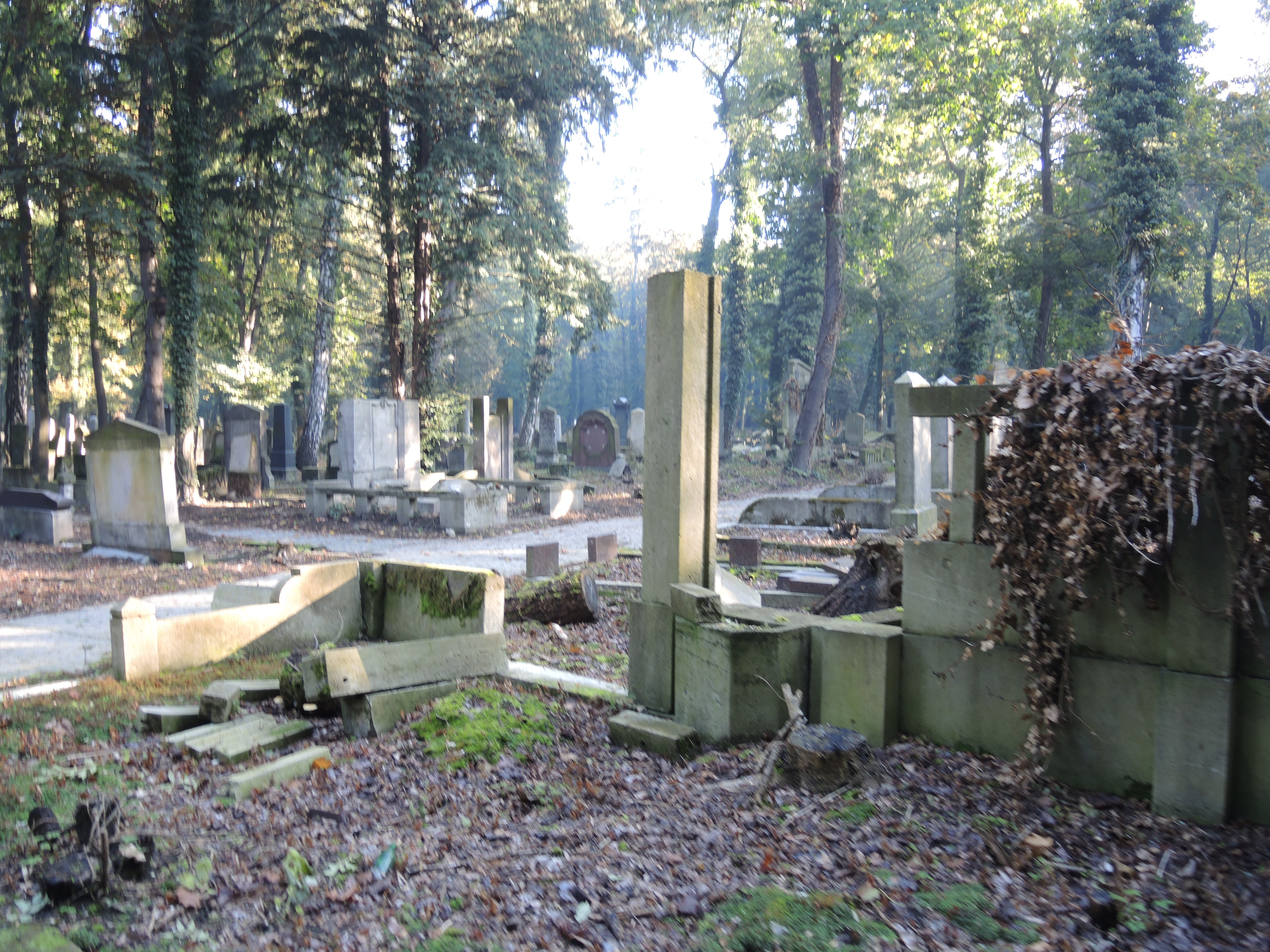
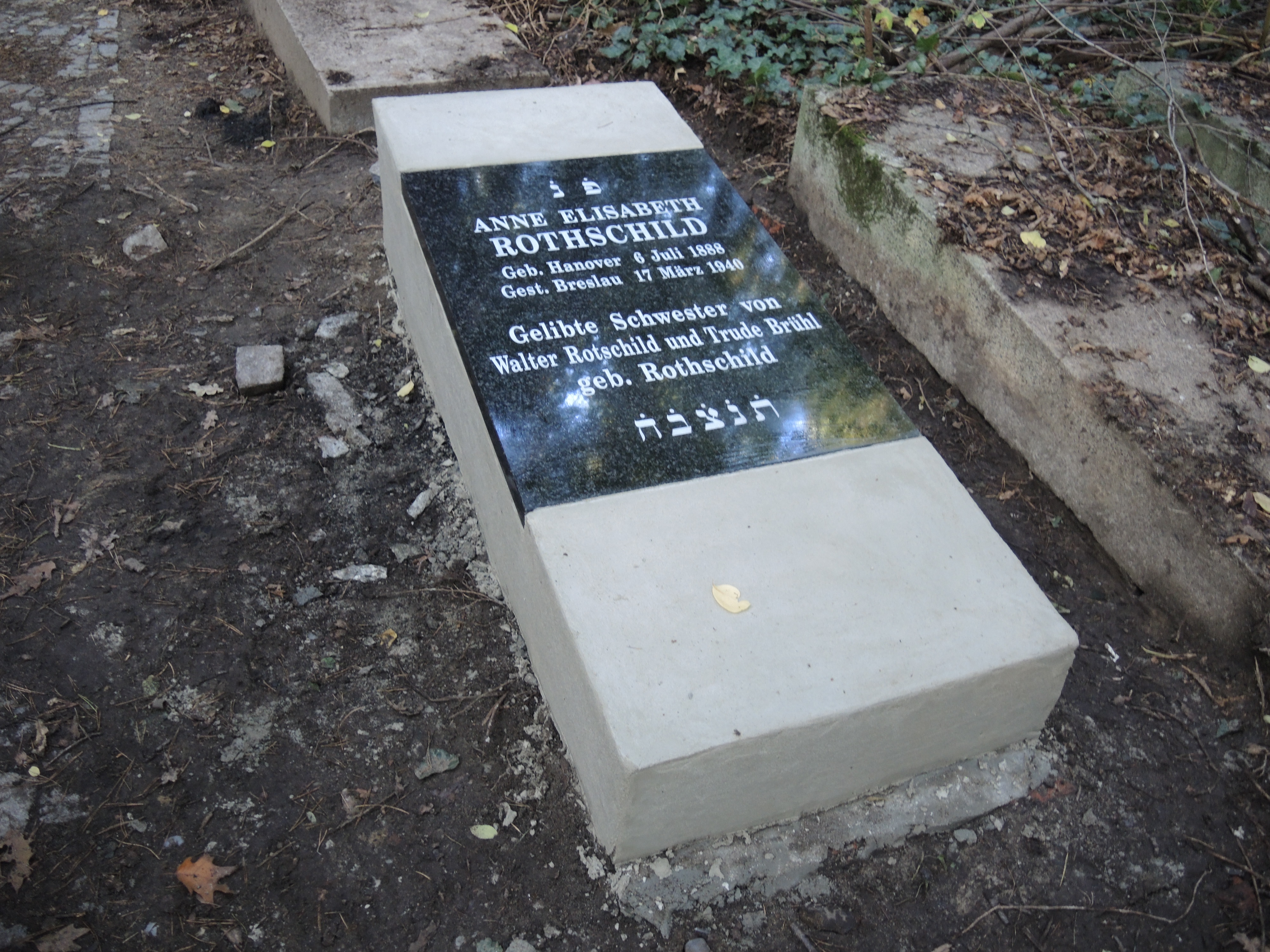
ImageIn an enormous, overgrown, forested cemetery in Breslau, lies the grave of a woman who died in that town in the Jewish Hospital in 1940. She had come, as far as we can ascertain, to be near her sister whose husband had roots there. Her parents were dead, her brother moved to another part of the country to be near a different border, all three siblings dislocated from their family and home and all three would die far from the comfort and security they were born to.

Lily’s sister and brother in law fled separately to freedom a few weeks before she herself died in March 1940.  The Jews were deported from Breslau in September 1941 and by 1943 only partners of mixed marriages and some children remained of a community that had numbered 20 thousand in 1933, Almost all those deported perished in the Shoah that began 75 years ago this week, with the infamous Kristallnacht pogroms of November 1938.

Trude, the sister of Lily, escaped to safety in the USA, knowing that her sister was too weak and ill to live much longer, certainly too ill to journey. I can only imagine the last days they were together, the agony of leaving behind a dying sister while knowing that to stay would only mean that both of them would die; and the pain of the woman left in a city she did not know, with relative strangers who nursed her to the end, and who buried her with dignity, marking the plinth of her grave so that one day someone might come back to honour her properly. The grave is at the end of an older line, on a pathway, presumably the easiest place to dig in the bitter winter time for a struggling community. And recently we, her great nephew and neices found it, commissioned a memorial stone, and dedicated it on a cool autumn morning.

The stone reminds the world that here lies Anne Elisabeth Rothschild, Lily’s real name. It gives the dates and places of her birth and death, and the names of her brother and sister. And there follows the acronym found on many Jewish graves:        “ taf nun. tsadi, beit, heh.” (for tehi nishmato/a tzruro/a bitzrur ha’chaim – may their soul be bound in the bundle of life)

The acronym has found its way onto Jewish memorial stones almost  it seems to me as a response to the Christian Requiescat In Pace (Rest in Peace) taken from the liturgy of the Catholic Requiem Mass.

The acronym we have comes to our funeral liturgy through the memorial prayer “El Malei Rachamim”, a prayer which was composed in the Ashkenazi Jewish Rite following the time of the Crusades This prayer was written for the many martyrs who died simply because they were Jews, and is referred to specifically as being recited for the souls of those who were murdered in the Chmielnicki revolts of the 17th Century. We read it as a memorial prayer, asking for the souls of the dead to be bound into the bundle of life, an image I find particularly comforting as I imagine each soul to be one of the threads of a tapestry that is still being woven. Each thread remains important, even if it has come to an end – it keeps in place the others around it, adds to the pattern, anchors the ones to come…. It has always seemed to me a richer and more positive image than that of peaceful resting, while containing within it that desire for eternal calm and serenity alongside a sense of history and continuation.

So when looking at its source I came across the full verse in the book of Samuel, I was rather taken aback when I found Abigail saying to King David

And though someone  rise up to pursue you, and to seek your soul, yet the soul of my lord shall be bound in the bundle of life with the Eternal your God; And the souls of your enemies shall God sling out, as from the hollow of a sling.” (1 Sam 25:29)

Such a violent image in the second half of that verse, it takes the idea of being bound up with God in a continuing tapestry of life, of having a stake in the future while rooting the past securely and turns it on its head – now the souls of the ones who seek to destroy others are slung out as from a slingshot, to fall onto barren ground and to perish alone and without hope.

Violent and bleak, and yet I can understand why the authors of that prayer took the verse for their liturgy. I can see that while only using the first half with its warm, comforting and life affirming imagery they would have known that their listeners would also recognised the unsaid words. The people who had callously murdered other human beings simply for their being Jews would also not be forgotten by God, their recompense would not have been the certainty of being part of an ongoing tradition and community as was the lot of the victims, but a dislocated lonely and abandoned future.

As I stood with my brother and sister at the grave of my great aunt Lily, looking at the acronym that I have seen so many times in my rabbinic life, it came into focus in a different way, in the way that it must have first been written.

We mourn our dead, we mourn for the way so many lives were cut short, were filled with pain and anxiety, with separation from loved ones and disparagement and fear. But we honour them and we live lives in which the threads of their existence continue to have meaning and purpose, bringing them with us into the future.  And we remember those who brought about such horrors, and who continue to disturb and disrupt the peace and goodness of the world. And we know that somehow, somewhere, God does not forget.


Parashat Pinchas: the Daughters of Zelophehad

Image

There is a maxim I learned at the Leo Baeck college whose truth has sadly been borne out many times in my career as a rabbi  – “where there is a will, there is a “broyges” (a Yiddish word meaning anger/ dispute)

Inheritance can be one of the most fraught areas of family relationships.  Even the best regulated and most even tempered families can discover the pain of frustrated expectation, begin to equate inheritance with love, fall out with each other and end relationships of decades standing once a death has occurred. 

The daughters of Zelophehad were the first people in the biblical narrative to query the inevitability of inheritance, though not the first to be upset about what they did or did not receive. 

These five women feel the injustice of their father’s lack of legacy strongly, they want his name to continue into the future, and it matters to them that the physical legacy he left was to be diverted to people who were not his direct descendants, simply because of gender.  They band together and approach Moses with their case, and Moses is perplexed – what should he do in the face of this determined group of improbable heirs?  As we know, he approached God with his problem and is told that the daughters of Zelophehad speak well, they should indeed inherit their father’s estate, and his name should be allowed to be remembered. 

So they inherit, but soon, as we learn in Deuteronomy and later in the book of Joshua, limits are afterwards put upon the inheritance of daughters, the old need for land to stay within the tribe takes precedence, and the case law established by these five brave women is constrained, though not repealed.

          Inheritance is a strange phenomenon. I think of Abraham, the Ur-ancestor, who tells God that there is no point making a covenant with him because he is childless and his estate will all go to a member of his household, Eliezer of Damascus.  This text made so much more sense to me once I too became a parent – somehow life focuses more when there is a child to pass on to.  And it doesn’t really matter in what area the transmission takes place – tradition, values, wealth, family stories, family name – simply knowing that someone will take it into the next generation makes a difference. 

Yet of course there are many ways of ensuring an inheritance besides that of having a child.  Alexander Pope spoke of his books embodying his legacy. Teachers know that the impact they make on students can reverberate into the next generations, and the Talmud tells us that when a student recalls a teaching in the name of their teacher, it is as if that teacher’s lips move in the grave.  (BT Yevamot 97a)

Anyone who makes a relationship of trust with another knows that the legacy of that relationship will continue until the end of the life of the partner – and maybe even for longer.  What we do, and how we behave with other people, has a lifetime far longer than we expect or think about, the impact of our actions resonates for far longer than we can imagine.

          Inheritance is a strange phenomenon.  It is one of the defining things to give meaning to our lives and at the same time can rupture our connection with the future and the past if not properly organised.  It is something we would do well to consider deeply, to make serious plans about, and to consider the impact and the consequences of what it is we bequeath to the world as a result of our life.

          We are used to the idea of making wills – documents which record what we want to happen to our possessions after our death.  Many of us have made a will and have found that contrary to superstition the making of a will has not somehow brought about our untimely demise. 

But there is more to think about than who gets the jewellery and who gets the house and car. Inheritance is far bigger than possessions – it is, as the daughters of Zelophehad so rightly recognised, what we bequeath about with how we lived our lives and how what we learned or made sense of is transported into the world where we no longer will be. 

There is in Judaism the tradition of making a regular and updated ethical will. The idea is simple yet so important – besides worrying about who gets what of our material possessions, we spend the time thinking about what values we want to transmit, what lessons we have learned that we want our chosen beneficiaries to understand, what was really of importance in our life that we want not to be lost along with the trivia.  It is a valuable exercise, to create an ethical will, in which we put down in black and white what really has mattered to us, be it simple good behaviour or the imperative to tzedakah; be it the need for the discipline of a prayer life, or the permission to doubt God as much as one likes, as long as you still engage in the doubt. 

There is a powerful tradition of writing the personal ethical will as part of the preparation for the High Holy Days – in other words to begin to do so at this time of year, as we take stock of our lived life and try to make judgements about it, and create a framework for the future in order to live a life more in harmony with what is important to us. 

It gives us the space to think about ourselves. Not simply as amassers of material goods, nor as people who just get on with life without much thought for any deeper purpose than to live well enough and be successful and good enough – but as human beings who consider that our lives must have meaning and that that meaning is something to be nourished and cherished and transmitted into the future. 

I heartily recommend that you consider what it is you want your legacy to be. I recommend that you not only make a will, but that you tell your children what that will contains, so that you minimise the broyges after your departure from the scene. 

I also recommend that you consider what you want your spiritual legacy to be – not something unattainable or perfect and not something that you yourself don’t actually manage to do – but that you distil your values, your belief system, your sense of who you are and why you exist, and write on a plain sheet of A4 some of the truths you have learned which have sustained you on your journey through life, and which you would like to project through your nearest and dearest into the future.

What will your legacy be?

Will it be one of infighting for your possessions, of indifference to your existence on this world?

 Of minor irritations or major frustrations? 

Will your legacy be framed in such a way that people will recognise your contribution to the world, or will it simply be a dividing up of the goods?

I have always been so impressed with Zelophehad and with his daughters.  What he owned is irrelevant to me, that his name continued is one of indifference, but the fact that he and his wife bred 5 such superb daughters, who had confidence and tact, who held together to fight for what they felt to be right – that is a legacy to be proud of, an inheritance for which he – and his wife – deserve to be remembered.


The world is a very narrow bridge, and the important thing is not to be afraid

Pedestrian_Suspension_Bridge_near_the_Inn_at_Narrow_Passage


I have just returned from a solidarity visit with a local Islamic boys’ boarding school set in a peaceful, leafy and suburban area, which had suffered a hate crime. Last week someone had entered the school grounds late in the night, and had set a fire by the classroom block. It was only the good fortune that a boy was up and revising for examinations in the area,  that the fire service were alerted quickly as was the dormitory wing of the school where most of the pupils were sleeping. It could have been a much more horrible fire had it not been caught early.

Along with the local Vicar and a member of the Borough Council I visited the school in order to be with them, to show them that they are not alone and that the local community is supportive and warm. We wanted to be there in order to demonstrate that the perpetrators of this hostile act were not representative of the local community, that the world in which they were living was horrified by what had happened, and that they had many friends who would stand with them.

The Councillor, the Vicar and I joined the boys and teachers in the school hall. Each of us spoke and then the floor was opened for questions. One boy stood and asked how we would bring racial harmony into the world. From the panel we spoke of building bridges, of creating relationships between people as individuals and between peoples with different identities. Joint football matches between the youth of Church, Synagogue and School were suggested. Again and again we talked of finding ways of meeting the other with open hearts and minds, so that we would recognise how like us they are, we would divest ourselves of some of our prejudice and fear.

We talked of the bridge building we could actually engage in together in small and possible ways. We talked of choosing to leave the safety of our known community and risk meeting people who didn’t think like we are used to people thinking. We talked of the fear of others and their fear of us. Heartbreaking stories were shared of racist comments by passersby of the sports field, and at the local supermarket when doing the weekly shop.  In an apparently unfriendly world, it is easier and better to stay with the friendly and known.

I told them the story of my teacher, Rabbi Hugo Gryn who, late in life, visiting the place of his birth and looking back on his youth in Berehovo, before the holocaust demolished his world and most of his family, wrote “On my visit [to Berehovo] I could not help but think that although Jews there were involved in the community over such a long time and although… they really had full legal equality – Jews owned land and worked in businesses and professions – the fact is that while the Jews and non-Jews depended on each other for many of the essentials in life, and we lived in the same society, we were not really part of the same community. There was hardly any visiting, sharing or gossiping. I realise now that of Berehovo’s three big and beautiful churches, I had never been inside any of them, and the chances are that none of the Christians ever set foot in any of our synagogues….” (from “Chasing Shadows” by Hugo Gryn p257).  For Hugo, the building of bridges between communities became his life’s work, and this was drummed into all of his students as a vital part of rabbinic work.

As we talked, I began to hear the in my head the words of Hasidic teacher Rebbe Nachman “Kol ha’olam kulo gesher tzar me’od, veha’ikar lo lefached klal – All the world is a narrow bridge, and the important thing is not to be afraid”.

For years when I thought of this bridge as an image, it was as if our whole world, our whole life, is like a narrow unstable bridge swinging over a yawning chasm. That our life is lived on a tightrope, and we walk upon it through the years and are never entirely sure or secure, we are just trusting that the bridge will ultimately take us to where we should be going, as long as we are brave enough to continue.

But today the image that came to mind was quite different. The bridge of Rebbe Nachman was not over a void of years or lives, a bridge whose length measures our lives in time – instead it came into focus as the bridge we make between people and between peoples each time we meet, one that we have to make and remake in every generation, at each encounter with the other. It requires trust for us to reach out our feet and step towards each other, for we are never certain where such a fragile path might take us and whether we may fall at the first obstacle we encounter, or the second, or the third. Will the other want to reach out to us? Will they be open to our tentative moving towards them? Will they fear us and brush us aside?

As Rebbe Nachman wrote, the important thing is not to be afraid at all – or at least not to let our fear stop us creating and walking along that bridge.


Image from Wikimedia Commons, File:Pedestrian Suspension Bridge near the Inn at Narrow Passage.jpg