Vayetzei: Jacob throws his hat into the ring and sets the scene for some mad hattery

Many years ago I heard that the mitzvah of Jewish men covering their heads came from this sidra Vayetzei. “But where in Vayetzei does the text speak of headcoverings?” I asked. The response was both humorous and instructive. I was told “It begins “Vayetzei Yaakov” “And Jacob went out”. And surely he would not go out without wearing a hat”

Now it might cause a groan, but it also shows up a few different ways of treating text in Jewish tradition. Firstly the need to find a biblical source to underpin a cherished practise – in this case head covering for which there is no such explicit source. Secondly the willingness to read back into the text in order to root an established view. Thirdly the willingness to use whatever it takes to make a point,

In bible, the only people mandated to wear a head covering were the priests when they were ministering in the Temple – the high priest wore a mitznefet, a kind of mitre, and the ordinary priests a migba’at, which is often translated as a turban. By Talmudic times it was clearly an option for men to cover their heads, though women were less free not to do so (“Men sometimes cover their heads and sometimes not; but women’s hair is always covered, and children are always bareheaded.” Nedarim 30b). Children were also not always bare headed – there is a story in Tractate Shabbat about R. Nachman b Isaac whose mother was told by astrologers, Your son will be a thief. [So] she did not let him [be] bareheaded, saying to him, ‘Cover your head so that the fear of heaven may be upon you, and pray [for mercy]’.

The story is about Israel not being governed by astrological forces; instead we make our own choices, and so R Nachman’s mother made him cover his head to remind him of the authority that is located in the heavens (ie wearing a kippah would remind him always of God and so he would not behave badly), but there is a twist in the tale. Because she had not made explicit the reason for his wearing kippah, it had no effect on his behaviour. “One day he was sitting and studying under a palm tree; temptation overcame him, he climbed up and bit off a cluster [of dates] with his teeth” (Shabbat 156b)

Head covering today has become de rigueur for religious Jews. While there is not only no biblical source, there is not even a consensus from the medieval commentators and codifiers as to when and where it is appropriate or necessary to wear kippah, and yet – Jacob went out, and he must have been wearing a hat.

The headcovering in modern times is a signal to others of Jewish status, and a badge that declares the political and denominational attachments of the wearer. The language of head coverings is almost as complex and nuanced as the old fashioned language of flowers. Do you wear a kippah nearer the front or nearer the back of the head? Is it suede or crocheted, satin or velvet or cotton? Is it large or small? Decorated or plain? Black or with colours? Do you use obvious hairpins or Velcro? Do you wear a hat over your kippah? A baseball cap? A streimel? People will know from these small differences if you are a Zionist, a yeshiva bochur, traditional religious, frum, progressive, chareidi….. They will be able to tell whether you are from old school traditions, or follow a more modern line. Your kippah will pigeon hole you in the Jewish world quicker than your accent will betray your class in the UK.

And then of course there is the modern phenomenon of people wearing their allegiances not so much in the coded way of material/size/colour/placement – we now have the rise of the kippah decorated in the colours of the football team of your choice, with their crest and logo, with the name of the team worked around the edge. This version of wearing the heart on the sleeve leads to some pretty robust conversations between young men as they scorn the team whose colours and brand is worn with pride by their friend.

The covering of the head, so unnecessary in biblical times except for the active priesthood, but taken up by some in Talmudic times as an act of piety and in order to remind the wearer of the presence of God, to inculcate a sense of ‘yirat shamayim/ awe of heaven’ has become not so much a prop for spiritual awareness as a prop to advertise to others something less than spiritual. Be it adherence to a particularly introverted and orthodox sect or to show a particularly secular passion for team sports, it now functions as a flag of identity.

There used to be an advert in the UK in the 1930’s which famously stated “if you want to get ahead, get a hat” It was written by Charles Sydney Catlin, who had apparently showed this statement mocked up as a poster in a job interview. He didn’t get the job, but somehow his slogan found its way into the world of headgear advertising, and he used the story as a reminder of the importance of safeguarding one’s work.

The story resonates with the story of headcoverings in Judaism. Just as the really important reason for wearing kippah is as a reminder to the self of context in the world, that there is a Divine presence who sees everything and notices everything – yet it has become a way of signalling one’s identity to others, and the awe of heaven is often far from the consciousness of the regular kippah wearer, so the cleverness of the slogan and its focus on appropriate head gear in order to ‘fit in’ has overlaid the history of the man whose work was taken from him without credit.

We see the surface, we forget the deeper meanings and truths that the surface is pointing to. We signal to others about our affiliations and forget to signal to ourselves the one important affiliation – to fulfil the covenantal relationship with the ever living God.


kippot serugot

Toledot: lessons on the control of resources and why we should resist the power

 046-welfare-state

Within the powerful narrative of sibling rivalry and family betrayal of parashat Toledot there runs another, equally powerful and important theme – the control of resources of food and water and how the manipulation of this control distorts everything around it.

Two stories of deception and duplicity frame this sidra, both pivot on the manipulation of food and drink. In Genesis 25:27-34 we have the story of Esau coming in hungry from his venison hunting, and selling his birthright blessing to Jacob for the red lentil stew that Jacob has cooked and whose savoury smell tempted Esau whose appetite was so sharp he felt he would die if he did not eat it. In Genesis 27 we have the story of the blind and ailing Isaac asking Esau to go and hunt him a last meal of venison, after which he would give him the blessing of the firstborn before he died. The same motifs and words come up again and again: blessing; death; venison; In one story food is withheld until the blessing sworn over, in the other the blessing is withheld until the food is eaten. The stories play with each, resonate and mirror each other, but each of them uses food and the control of resource to put one party at a disadvantage to the other.

In the middle of these two stories of blessing and feasting, of manipulation and betrayal comes quite a different narrative. In Chapter 26 we have a story that begins with famine, specifically a new famine that is not the one faced by Abraham and Sarah, and Isaac and Rebecca go to the Philistine Abimelech king of Gerar to find food. God tells Isaac not to leave for Egypt as his parents had done in the previous famine, but to stay on the land and the blessing first given to Abraham would be his. Isaac stays in Gerar, but in a parallel to the story of his parents he tells everyone that Rebecca is his sister rather than his wife, as he clearly fears for his life should the truth be known. Abimelech notices the relationship between Isaac and Rebecca and chastises Isaac – someone could easily have taken Rebecca for a wife and the community would have been punished, and Abimelech places his protection on the couple. The result was that Isaac sowed the land and immediately reaped “me’ah she’arim” a hundredfold return on his work, and God blessed him and all his work. He became richer and richer, with huge flocks and herds, a great household, and this drew the envy of the surrounding Philistines.

I must confess that I find this extraordinary – why should he reap so much for his work? Surely enough would have been enough, and it would surely have been inevitable that such astonishing wealth would attract the unwelcome interest of those who had less than he, but let us pass on for now…

There follows a rather sad narrative of Isaac and the herdsmen of Gerar fighting for the wells that had belonged to Abraham and should therefore now belong to his son. Bible rather laconically tells us that “All the wells which his father’s servants had dug in the days of Abraham his father, the Philistines had stopped them, and filled them with earth”. It is not clear if this was an earlier event to prevent others taking the water after Abraham had left, or if this was a reprisal motivated by jealousy of Isaac’s wealth, or even if this was an attempt to erase any historical roots that Isaac would have had to the area. The wells don’t seem to have been taken over, strange in a world where water is so precious, but filled in – at least until re-dug by Isaac’s men when the fight over the water between the herdsmen became serious. Finally Isaac moved far enough away – first to Rehovot (meaning wide or spacious) and then to Beersheba (meaning 7 wells) – and an uneasy truce prevailed, cemented by Abimelech making a treaty with him having seen that God was with him – a curious treaty hedged with diplomatic ambiguity, asking that Isaac not hurt the people of Gerar, “as we have not touched you and as we have done you nothing but good, and have sent you away in peace…..” (v29)

In this curious narrative, resonant of the earlier stories of Abraham and Sarah, showing Isaac as both a hungry frightened migrant and as a wealthy possessor of animals and land, and finally as a synthesis of these – wealthy but insecure on the land and moved on further and further into the desert, we have the crux of the story. Control of necessary resources is everything. It doesn’t matter how much you possess if you don’t possess the basics of food, water and space to live on. You can be manipulated and dealt out of your rights by the person or group who has control over these, and who can take everything else of value from you. For all that Isaac reaped a hundredfold from his first planting, his wealth meant nothing as long as he was not secure for his immediate needs. Ultimately we are all in thrall to our basic needs. Bible already recognises what Abraham Maslow later put into his theory of the hierarchy of needs – that to live our lives fully we must first meet certain criteria: his first two sets are “Biological and Physiological needs – air, food, drink, shelter, warmth, sex, sleep.” And when these are met, then “Safety needs – protection from elements, security, order, law, stability, freedom from fear.” Only then are we in a place where we can grow well.

Why does bible frame the narrative of the Philistine King Abimelech and Isaac between the two stories of family manipulation and betrayal which both use food and immediate desire/need to control events?

One can only guess at the mind of the editor of the text. But in my mind I see that controlling others through controlling the access to resources they need is a human behaviour done to both those we are in close relationship with and those with whom we do not have such relationship. It is an atavistic strategy hard-wired into us, presumably for survival, but it is not a laudable strategy, and it seems to me that the structure of the biblical narrative is trying to remind us of this. The alienation of Jacob and Esau is painfully intensified through this behaviour. The pain between Isaac and Rebecca, and each of the participants in the deceptions reverberates through the text, as does the frustration and impotence of Isaac trying to claim his father’s wells and being chased off his land with violent encounters. There is nothing good to come out of this story except by negative example. We who control resources may wish to use them to control the behaviour of others, but we should think hard and long about giving in to this strategy. For history teaches that empires come and empires go, that there is a turning and a spinning of the world, and that what is in our grasp now may not be in our grasp in the future. How would we want those who control the resources to behave to us? As the famous first century rabbi Hillel framed the golden rule ‘That which is hateful to you do not do to your neighbour. This is the whole of the Torah, The rest is commentary. Go forth and study.’ (BT. Shabbat 31a)

alice2

both cartoons by the wonderful Jacky Fleming

Chayei Sarah: confronting the reality of death, make preparations, do the work

death pic

Confronting the reality of death is always hard, and for Abraham this is no exception. The text that begins with the phrase “the life of Sarah was one hundred and twenty and seven years, these were the years of the life of Sarah, and Sarah died…” is the introduction to a protracted negotiation for her burial place.

In the twenty verses of the narrative, only three touch on Abraham’s emotional state “Abraham came to mourn for Sarah, and to weep for her. And Abraham rose up from before his dead, and spoke unto the children of Heth, saying: I am a stranger and a sojourner with you: give me a possession of a burying-place with you, that I may bury my dead out of my sight.’ In the story as first presented we see that he seems to quickly move from mourning and weeping to making the practical arrangements so that the body of his wife can be buried and removed from before him.

Sarah’s is the first documented burial in bible – up until now the narrative has dispassionately informed us of the death of individuals without much more detail. Yet clearly this burial he is arranging is not an unknown rite. The children of Heth recognise his need and open the negotiations with the offer that he may take his choice from their sepulchres, telling him that no one would withhold their own plot from him should he want to use it. So clearly there was already a well- established proactive structure in place of prepared graves by the time Sarah died, not surprising given the need to quickly dispose of the bodies of the dead. Yet our foundational family did not seem to have made this provision. Was it because as an immigrant family they had not got a sense of ‘owning’ the land they had come to? Or because they had not quite struck roots in the land of Canaan and were still travelling? It is odd that Sarah died in Hebron when Abraham was clearly in Be’er sheva. Were they living separately? The midrash tells of Sarah’s death being caused by her horror that her husband would be prepared to sacrifice their son so had she left Abraham in order to strike out alone? Was any previous plan to have a grave left behind in the tangle of confusion that this relationship trauma had caused, and Sarah’s new place of abode forced Abraham into making new arrangements?

It does seem odd that they had not made plans for their deaths. They were a long way from the graves of their ancestors, (and indeed Terach the father of Abraham had also died in Haran away from his homeland of Ur Chasdim) so they would have had to innovate in their new lives in the new country. Were they hoping for some guidance in the moment? Were they wondering if they would be staying in the land or moving onwards again? What was behind the need for Abraham to have to negotiate for a family plot while in the grief of immediate bereavement? If as a Jewish community we have learned one thing, we have learned of the importance of community support in times of death and bereavement. The chevra kadisha (holy fellowship) which is appointed by every Jewish community to care for the dead, goes back at least to the time of Rabbi Hamnuna (3rd Century CE). The Talmud (Mo’ed Katan 27b) tells us This also said Rav Judah as reporting Rav: When a person dies in town, all the townspeople are forbidden from doing work. R. Hamnuna once came to Daru-matha, he heard the sound of the funerary-bugle [and] seeing some people carrying on their work, he said: Let the people be under the shammetha [ban]! Is there not a person dead in town? They told him that there was an Association (chevra kadisha) in the town. If so, said he to them, it is allowed you [to work].”

It provides a fascinating insight into the way the whole community was responsible for taking these practical arrangements from the mourners, and for arranging the dignified care and disposal of the body of the dead. This mitzvah took over from the need to work for everyone in town. There was a notifying sound when someone had died so that everyone would know of the death, and clearly in some places that R.Hamnuna knew, this sound was the prompt to everyone to down tools and go to help. Yet in Daru-matha they were even more organised, having deputed the responsibility to a group of skilled volunteers, much as we do to this day.

This leaves time for the mourner to use more than the 15 percent of time that Abraham was able to give in the narrative, to their grief. They can focus entirely on their loss, on the person they loved, on evaluating and processing and making sense of what has happened. And here Abraham has something very powerful to teach us.

We are told וַיָּבֹא֙ אַבְרָהָ֔ם לִסְפֹּ֥ד לְשָׂרָ֖ה וְלִבְכֹּתָֽהּ:

Abraham came ‘lispod´ for Sarah and livkotah’

Lispod is the word we use for giving the hesped – for speaking of the dead and telling the story of their life, from where they had come and how the journey had been, assessing and evaluating the real life that was lived, rather than eulogising or praising the person- at least not paying fulsome tribute unrealistically or without the fuller context of the way they lived their life. ‘Hesped’ means to cause to cry – in other words to really understand who we have lost and so to really feel the cost and pain of the death. Only after Abraham has done this, comprehended the full meaning of the life of Sarah, and thus the full extent of his loss, does he cry/mourn.

Sometimes when people die we like only to say good things about them – even unrealistic and unbelievable good things, instead of focussing on who they were, on why they had the damage or the pain or the anger they carried, on how they did or did not deal with the hurts and disappointments every life brings. There is a tendency to quote another midrashic gloss taken from the names of three sidrot in the book of Leviticus – “Acharei Mot Kedoshim Emor – After death speak holiness”. And this is a good maxim, but it is not the way of true mourning if we think the holiness /kedoshim means to tell ‘white lies’ or gloss over the reality of the complexity of every lived life.

To truly speak holiness of the dead is to recognise them in their full humanity. To see the flaws as well as the wonders, the spectrum of attributes they held and the way they allowed themselves to be. We need to see the fights they fought, the pain they felt, the love they gave, the achievements they realised, the relationships they worked on, the memories they embodied, the losses and the gains. Whatever the story behind the separation of Sarah and Abraham at her death and the lack of dignified burial space planned for earlier, Abraham teaches us something very powerful. See the person who died, give them their full rights as full human beings who lived fully human lives, and only then cry for yourself and for the loss of them. Confront the reality of them and their deaths, and go on to live your life in the light of that understanding.hevra kadisha(images from Czech republic: Hevra Kadisha building in Prague)

Lech Lecha – leave the idolatry, an instruction we need to hear again and again

What happened before God told Avram “Lech Lecha: Leave, go out from your country and your family and from the house of your ancestors into the land I will show you….”. The text before has given us the genealogy so that we know that Terach was the father of Avram, Nahor and Haran. That Haran had died young in Ur Kasdim, leaving a son, Lot, and two daughters, Milcah and Iscah. That Avram and Nahor had married: Avram married Sarai and Nahor had married Milcah his niece. Sarai was childless, (Milcah we know from later in the book had eight sons (Gen 22))

Terach took Avram his son, and Lot his grandson, and Sarai his daughter-in-law; and they left Ur Kasdim, to go into the land of Canaan; they came to a place rather confusingly called Haran, and they stayed there, and Terach died there.

Why had Terach left Ur Kasdim? Why did he not take all of his family with him? We cannot know, and the question sits tantalisingly as we read the genealogy that details the ten generations after Noah who himself is the tenth generation from Adam. Had God spoken to Terach and told him to leave? Was there some family issue? Maybe this is why we are told of Sarai’s infertility here, a condition which is all the more painful when we later find that her sister in law was producing son after son? Maybe after the death of one of his three sons he just had to leave and start again, taking the surviving grandchild with him, away from the place his father had died in so as to give him a better start. Maybe something happened and he had to leave the area with his less rooted and established descendants. But what? And whatever it was, why did Nahor and Milcah stay?

The book of Joshua gives us the peg on which the midrash can hang a back story: “Joshua said to all the people, thus says the Eternal, the God of Israel. Your ancestors dwelled in old times beyond the River, even Terach the father of Abraham and the father of Nahor, and they served other gods. And I took your father Abraham from beyond the river, and led him throughout all the land of Canaan, and multiplied his seed and gave him Isaac”. (Joshua 24:2).

So the catalyst for Terach leaving with Avram, Sarai and Lot may have been something to with idolatry:- either that it was an established family practise that God needed to get them away from (presupposing that God had chosen Terach and Avram for the covenant) or that the family did something that challenged the idolatrous practise in Ur Kasdim, and so needed to leave to save their lives.

Hence we have the stories (found in Genesis Rabbah 38.13), of a young Abraham, having destroyed the idols in his father’s shop, telling his father that a woman had wanted to make an offering to the idols, but that the idols had argued over which one should eat first, and one idol had taken a stick and smashed the others. Terach’s response that they are only statues with no understanding elicits Abraham’s stinging rebuke to his father – “why are you worshiping them then”?

It is a powerful story, and often mistakenly found in books of bible stories as if of the same status, but it is really an indicator of the rabbinic dislike of idolatry rather than a likely explanation for why this branch of the family left their land and travelled south (in stages) towards Canaan.

Much of Judaism, from bible onwards, can be read as a polemic against idolatry and for the one-ness of the divinity. There is a constant suspicion of foreign influencers who will bring in the foreign practises of ‘avodah zarah’ (strange worship). What is very clear is that the battle was a continuing one, from which we can see that while worshiping YHVH/Adonai was something that the Israelites were well able to do, worshiping ONLY YHVH/Adonai was much harder. The prevalence of the rightness of having a multiplicity of gods for a multiplicity of purposes was deeply rooted in the psyche of the ancient world, and the Israelites were no exception. And this has remained true today. While we may look at the statues of Greek or Roman gods in the museums of the world and feel no resonance with them, we are not so different from the people who worshiped them sincerely. We too fall into the habit of not being true to the One God, we idolise all sorts of people or ways of being, or objects. We idolise ‘celebrities’ be they in the popular entertainment industry or writers/artists/scientists. We idolise the marketplace, or money and the people who own it. We idolise the products of the fashion industry, fantasise about unlikely and unrealistic situations, really believe that if we were thinner or prettier or more powerful in some way our life would be transformed. Sometimes we make a fetish of political positions, be they left wing or right wing, and we idolise religious leaders too – and that is possibly the most dangerous of all.

I have watched with mounting horror as a Jewish idolisation of Judaism – or at least of a particular interpretation of Judaism – has grown exponentially in my lifetime. It has become something not to help us to survive and to grow and to create security and goodness in the world, but a way of living to be fetishized and followed in cumulative minutiae. Somehow the texts and traditions have become distorted by increasingly narrow and strict interpretations that have managed to cloak themselves in the language of authenticity and normative usage. Somehow there is an idolisation of certain rabbinic leaders, who are treated as more than human, given powers that no rabbinic tradition would authorise or approve, a fetishisation that does not even disappear when they di e- indeed the death is not recognised in some way, the rabbi elevated instead to a kind of Elijah figure or even a messianic figure. Somehow the chumrah (the extra stringency that the very pious took on for themselves) has become the norm in many Jewish communities. And yet the more usual (and I would say authentic) Jewish tradition fights against this tendency, with, for example, the words of R. Isaac recorded in the Jerusalem Talmud (Nedarim 9:1) “do you think that what the Torah prohibits is not sufficient for you, that you take upon yourselves additional prohibitions?” Or the Babylonian Talmud discussing the Nazirite (Nazir 19a) which says “if the one who deprived himself only of wine is called a sinner then how much more so someone who deprives himself of all things”.

The word “orthodox” was brought into Judaism as a response to the “Progressive” or Reform Judaism that developed as a result of the enlightenment. The idea that Judaism has an orthodoxy is essentially an idea from outside of Judaism. It has always been a tradition that recorded debates rather than the results of debates, ideas to steer rather than rulings to stifle. In the ‘orthodox world’ today there are a multiplicity of different interpretations, customs, teachings, activities, beliefs, which shelter under the title of ‘orthodox Judaism’ merely to differentiate itself from a different and more open multiplicity of different interpretations, customs, teachings activities and beliefs sheltering under the rather less powerful ‘non-orthodox’ label. Indeed so diverse has orthodox Judaism grown, that the umbrella term is no longer enough. Now we have ‘ultra orthodox’, ‘hassidic’, ‘observant’, ‘traditional’ ,’modern orthodox’…. Each of which sees itself as the true and sometimes the only heir to Judaism. And each of which is vying for authority and authenticity by multiplying rulings, prohibitions designed to keep adherents away from the modern world, and concentrating power in the hands of the leadership.

Now I am not saying that we progressive Jews don’t also fall prey to idolatry – we tend to idolise social justice and tikkun olam over prayer, ritual and a deep relationship with God. We tend to fetishize universalism at the cost of a particular Jewish identity and lifestyle. Our Jewishness tends towards the culture and cuisine of our people and less towards studying and adopting its texts and scholarship. We all have a problem with idolatry – in that way we are just like our ancestors from biblical times onwards. So we need to return to the beginning. Lech Lecha – go, leave behind the lazy habits and the comfortable assumptions and following what others do, and go back to finding what God wants from us. Don’t leave that journey for others to tell you about, don’t fall into the common culture of everyone else, worshiping what we know to be false. Break the idols we have become dependent upon and leave them behind.

Noah: a cautionary tale to take us out of our comfort zone

Everyone knows the story of Noah. He was a good man, God gave him instructions to build a boat and he obeyed. He collected all the right kinds of animals, did everything God said, and so allowed a remnant of the original Creation to survive. When the flood waters finally abated, and God sent the rainbow as a sign, Noah and his family and the animals returned to dry land and got on with the business of repopulating the earth….

Well, that is the story we tell our children. And rainbows are a really beautiful image to put on our walls or use to represent diversity and natural benevolence; and anyway, it is a fairy tale isn’t it?

I have a real fondness for parashat Noah, not least because it is my own batmitzvah sidra, but that said, I also have enormous problems with it. Nobody comes out very nicely in the story of Noah. We begin with a list detailing the ten generations from Adam to Noah, and are told that in that ten generations humanity has created violence and corruption and destruction and brutality and bloodshed, so much that the whole world is awash with it. And God, who only ten generations earlier saw that the world was good, even very good, is now sickened and appalled and furious. God wants to wash the whole thing away. God wants out of the creation business. But not completely, it seems. Because there is a bit of God that is open to the understanding that wanton destruction won’t get entirely the result that God wants – God wants creation to keep going, just not like it currently appears. God is prepared to save the world.

But unfortunately, neither God nor Noah seem to have the ability to do anything rather than the obvious. The earth really is a dreadful mess and clearly something must be done to help it return to its divine purpose. According to the Midrash this world is not the first that God created, but that many worlds were created and destroyed when they did not turn out as intended – it is almost as if having made so many attempts God got tired of having to start right at the beginning yet again. But God still hadn’t quite got the hang of what else could be done when faced with a problem of this scale. And Noah, well Noah was not a great man, he is described as being “ish tzadik v’tamim b’dorotav” a man who was righteous and whole hearted in his generation”. What is the purpose of that qualifying phrase – in his generation. We know that the generation was appalling – was Noah just a bit less appalling? Compared with the others, Noah was a Tzaddik?

Noah doesn’t speak. Not ever. He doesn’t ask any questions of God, he certainly doesn’t argue with God (unlike Abraham who will come ten generations later), he doesn’t go out to the populace to warn them, he doesn’t even talk to his wife and children about it. He just gets on with the commandment – he will save himself and his family and the animals according to God’s instructions.

We are told about Noah that he walked with God. It is as if there is no space between them, they are confluent and therefore unable to see another viewpoint. Even the inhabitants of the Garden of Eden had more about them than Noah. Maybe if he had asked his wife the story would have been different!

To compare Noah once again with Abraham, Abraham did not walk WITH God, he was told by God to ‘walk before me and be wholehearted” – in other words, by the time of Abraham, ten generations after Noah, God had understood the need for Creation to be separate, to grow away and develop into who they must be. It was a lesson first given at Eden, but it took both God and humanity some time to absorb and act upon it. That God must be God and that we must be fully us. We are different. We will not always see the same way, we will not experience the world in the same way, and God will see things that we do not, and will never be able to understand. In the same way, we will see things our way, follow our instincts or our desires even knowing that our choices are not God’s choices. people have free will to be able to do things they shouldn’t. That is the deal.

But we haven’t really got there yet, here in the second weekly reading of Torah, only ten generations away from Creation. Here in this text we meet a God who has much to learn about relating to Creation, and we meet a human being who has much to learn about their own possibilities in relating to God. We have a God who responds to violence with violence. A human who seems to find it perfectly acceptable not to challenge that, who seems to have no problem with wholesale destruction, of the punishment of the innocent with the guilty. Tradition ascribes to Noah the position of toddler in the relationship with God, meaning that he is powerless in the relationship, but that certainly isn’t my experience of toddlers! – Noah simply isn’t up to the job of challenging God and putting a robust argument for the defence of the world because he, like we, is flawed. And he hasn’t had a long tradition of ethical argument to fall back upon, he has no role models of note, he is living in a dangerous world and he is afraid. Noah never really overcomes that fear. Even after the floods are gone and he is back on the cleansed earth, his first act is to sacrifice some of the animals he has saved in order to appease the divine power and to give thanks for the survival of his own family – an act which clearly exasperates God. The only other thing we are told about him is that he plants a vineyard, makes wine, and spends his declining years as a drunk, presumably because he cannot face the horror of what has happened to the world, the pain of his loss and the knowledge of his own inadequacy. He has learned an agonizing and heart-rending lesson about himself and about God. And it will be his descendants who will take the learning forward, Noah himself cannot.

God, however, can and does learn. God immediately repents of the destruction of the flood, takes responsibility, promises not to bring about such devastation by water again. And God gets involved with people, learning to relate to them, learning to see them as separate individuals with their own authenticity and validity. After catastrophe comes something quite amazing – acceptance of each others flaws, readiness to learn and to be, divine and human consideration of each other. So when humans once again become arrogant and dangerous, determining to build a tower to rival heaven, preferring the symbols of technology and empire to the humanity of each other, then God once more steps in, but this time creates diversity and difference, rather than trying to force the world into one narrow way of being, at the expense of individual emergence.

By the end of sidra Noah, both people and God have found many ways to express themselves – not always constructively nor easily, but with a healthy multiplicity of being. And so the Torah readies us for endless possibility in the pathways to become who we really are – all of us in the world are betzelem elohim, made in the image of God.

Shabbat Bereishit: the yahrzeit of Rabbiner Regina Jonas

Fraulein Rabbinerin Regina Jonas, the first woman to be ordained Rabbi in modern times, was murdered in Auschwitz in 1944 and her name and story submerged until the fall of the Berlin Wall meant that some of her papers were retrieved and studied.

Jonas-Regina

Her story is a complex one. We know tantalisingly little about her; there are some basic facts about her birth and parentage. She grew up in a poor part of Berlin, and after the early death of her father when she was only eleven years old, she, her older brother and her mother became ever poorer. She lived amongst Jews from Eastern Europe, whose religious practise was orthodox (as was hers). In her teens she found the comfort of the synagogue, and never really left. The rabbi helped her to take her Jewish studies to a level where she could make a living teaching, and so she supported her widowed mother and herself as best she could, and she continued to study, and she dreamed of rabbinic ordination, writing her thesis on the subject “Can Women Serve as Rabbis?” and proving to her own satisfaction that according to Halachah the answer was ‘yes’

While her thesis was sound, academic scholarship was no match for centuries of misogyny and custom. Her teachers would not ordain her as a Rabbi. She was the victim of a collision of circumstances- her teachers did not want to cause a problem in the wider Jewish community by going outside of orthodox tradition and ordaining a woman. The conditions in Germany in 1933 were preoccupying the German Jewish world as they cast about looking for a rational response to an insane situation. More than that, she was an orthodox woman studying at a Liberal institution. She was widely perceived as being ‘strange’, a woman who did not care about her looks, an academic whose mind did not deal with frivolity, a radical and transgressive figure who yet wore the clothes of convention and tradition. She challenged many social and religious norms, demanding her right and coping with what was clearly some hostility towards her. She was said to be a good teacher, a good pastoral worker, yet even with the dwindling number of rabbis in Germany she could not find a community willing to take her. Her work took place in the old age homes and the hospitals – the traditionally gendered “caring” roles.

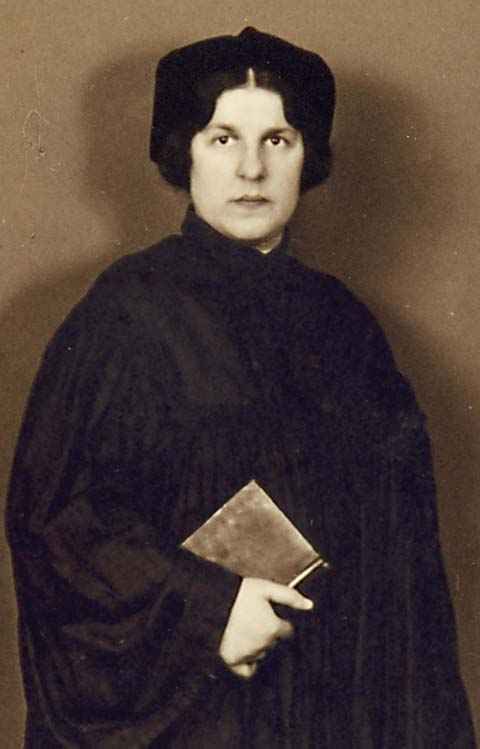
Regina Jonas comes across as an isolated and lonely figure, a trailblazer and pioneer who did not however achieve a following in her lifetime. Yet she did not give up. She worked wherever she could, and before deportation to Theresienstadt she ensured that her papers would be lodged in the archive from where some fifty years later they would emerge. She deposited photos of her in her rabbinical gown, her ordination certificate and some press cuttings. She held on to a hope that she would be remembered, not go nameless and forgotten into the future.

She worked in Theresienstadt for two years, teaching, giving a series of lectures, acting pastorally and rabbinically and working in the team of the famous psychoanalyst Viktor Frankel – her job was to meet the trainloads of shocked and frightened Jews transported to the ghetto and to try to comfort them. She worked hard and with great dedication for two years until she too was sent to Auschwitz where she was later murdered.

Her date of deportation was 12th October 1944. It was Shabbat Bereishit, the first Sabbath after Simchat Torah, when we finish the book of Deuteronomy with the death of Moses and the transition in leadership to Joshua and we immediately begin to read the book of Genesis with its universal story of the creation of the world.

On Shabbat Bereishit we learn that leaders die but leadership goes on. That ideas are stronger than individuals. That out of endings come new beginnings.

We don’t really know very much about Regina Jonas except what we can try to piece together from scant evidence and tiny remnants of memory. Having been officially forgotten from 1942 until the early 90’s she has re-emerged, as ambiguous and as perplexing as she seems to have been in life.

We progressive women rabbis have taken her for a standard. She has become “the first woman rabbi”. Her story reads as a cautionary tale for the rest of us – will we too disappear after working so hard to achieve, after caring so much, after labouring at the coal face of the community rabbinate?

Anger has been expressed at her ‘disappearance’ from the narrative when so many who knew her or knew of her never bothered to pass the information on to the next generation of women studying rabbinics who felt so lonely, so trailblazing, so exposed. There is the sense that if only we had known about her when studying ourselves, we would have been able to speak of her and so be comforted by her earlier initiatives. She would have stood between us and the void of women rabbis in history.

We have taken her for a standard, and now we have adopted Shabbat Bereishit for her yahrzeit, the probable date of her death. In Bereishit we read the two stories of creation – the first where women are created equal to men and at the same time as them; the second where woman is created from the side of the first man to become ezer k’negdo, a help and an opposition to him.   Regina Jonas’ life expresses so many ideas in this Torah reading, read both on Simchat Torah and the following Shabbat – it is almost as if it were bashert. The way she lived her life demands of us that we take seriously the questions she posed to the conventions and community of her time as we look at how those questions are asked and answered in our time and communities.    But maybe we should also be more honest and say that Regina Jonas is not the forerunner of women in the non-orthodox rabbinate – she is really the forerunner of women in the orthodox rabbinate. That now there are women with orthodox semicha is exciting, though there is still a long way to go for them to be much more accepted than Regina Jonas was when she finally received her semicha eighty years ago.

Eighty years – twice times 40, the signifier of “a long time”. Eighty years, the biblical length of a long life. And so much has happened since her ordination. The number 80 is signified by the letter Peh. It is an explosive sound. It means an opening or a mouth. The Torah is both written text (bich’tav) and oral (she’b’al peh). It give me some satisfaction that at 80 years since ordination there are women rabbis in every stream of Judaism. Regina Jonas’ mouth continues to open and to teach, and each of us embroiders what we hear.

Parashat Vayelech, Shabbat Shuvah and thoughts for the asseret y’mei teshuvah

The Mishnah tells us that “Everything is foreseen, nonetheless free will is given”. How can we come to terms with a God who knows what tragedies will happen, yet who does nothing to prevent it, and who will, in the words of this sidra, “Hide the divine countenance from us”, allowing us to be ready prey for our enemies?

And If God anticipates and even knows what the future might bring, of what significance is our own free will?

The problem arises again and again in bible, beginning in the book of Genesis with the eating of the fruit in the Garden of Eden, and mirrored here at the end of Deuteronomy with God’s disclosure to Moses about what will happen after his death.

The contradiction is addressed in traditional Judaism with the mishnah I began with, the idea that God’s omniscience includes a complete awareness of human nature and of how people will behave, yet God also allows us to make our own choices from the full spectrum of possible actions. And the mishnah takes the idea further by telling us that “Everything is in the hands of God, except the fear of God” – in other words, from the rabbis’ perspective, God has chosen to limit Godself in one important aspect so as to allow human beings to do that which makes us so special to God and makes us in God’s image – we are able to exercise choice.

The idea of limiting God – even of God choosing to limit Godself – is one which comes close to blasphemy, and yet that is the boundary with which we have to work, for it is the area in which we exist.

The mystical tradition tells us that when God decided to create the world, God first had to draw back, to create some space in which God was not, so that God could create a distinct entity that was not-God. Having created the world in this space-that-was-not-God, God then breathed something of Godself in the form of divine light, or holy sparks. These holy sparks are said to be the manifestation of God with which we work and struggle, the immanence of God in the place where God has chosen to limit Godself.

Our tradition tells us that God has chosen, for the sake of the existence of humanity, to limit God’s active presence in our world, and has given us the choice to either accept or to ignore God’s presence; to either attempt to meet God’s requirements or to turn our backs on God. God’s wish is clearly that we search for relationship, that we obey the mitzvot and in so doing partner God in completing the work of the creation of the world – but in no way will God push us into having to accept that position, nor will God intervene in history to change what we do, or to alter the consequences that will arise from how we choose to behave.

If we turn our back on God, if we choose to be alienated from God, then the consequence will be that God is hidden from us. God is limited by our human freedom to engage – or not to engage. As the writer of Deuteronomy wrote: ‘Lo bashamayim hi” – it is not in heaven that you need to say ‘who will go there for us…” And as the psalmist echoed “The heavens are the domain of God, but the earth has been given to human kind”. We have this world in which to exercise our choice, and our choice must be informed by having Torah, by being able, as Rabbi Dr Louis Jacobs once said, to think God’s thoughts after Him.

In this world of extremist teachings and of secular explanations it becomes easy to either blame God for terrible and tragic events, or else to find other places to lay blame – a government’s foreign policy maybe, the anonymised disaffection or alienation of a mass of people, capitalism. What seems to get lost is the actual and personal decisions made by individual people, the choices to act or not to act, the thoughtfulness and stage by stage process of decision making. Individual autonomy and responsibility gets submerged in the rhetoric of blame and anger, glib reasoning and political analysis tries to explain away real and personal choices.

“Everything is foreseen and yet free will is given. Everything is in the hands of heaven except the fear of heaven…” We have a God who has deliberately limited Godself in our world to allow us to express unhindered our essential humanity and our freedom to choose. Our tradition shows us again and again that God took a chance when God created human beings to be free – every narrative in bible demonstrates that God, like us, must therefore bear the consequence of our freely chosen actions. God’s knowledge of what could be and what will be remains – what Nachmanides calls ‘knowledge in potential’ – yet God’s action can only be done through human channels. The responsibility for how the world will be is ours alone, for the choices are ours alone – millions of individual and personal choices continually being made.

During these ten days of Teshuvah, of our returning to our root of Being, we have the opportunity to read and to reflect, to study, to think and to pray. We have the opportunity to put right what we can put right, to apologise for what we can no longer amend, to act choicefully to make our world a better place. We have the choice and we have the responsibility. We can begin to seek God’s presence, to confront God’s hidden face. As God said to Joshua at the beginning of his journey – hazak v’ematz… be strong and resolute, v’anochi ehyeh imach – for I will be with you.

Ki Tavo: Moses’ words echo today – what of us will echo in the future?

Ki Tavo includes the famously difficult passage known as the tochecha, the red lines of society’s expectations laid down mainly in the form of the cursing of the one who disobeys, but there is a great deal more in this speech which is part of the series given by an increasingly anxious Moses as he approaches his death. The whole thrust of the book of Deuteronomy is given life by Moses’ desperate wish to help the Israelite people continue on their journey with God after he is no longer around to help them. So here we have the ritual of sacrificing the first harvested fruits of the land to God carefully spelled out – the fruits should be put in a basket, taken to a specific place of worship, given to the priest of the time – and one of the earliest bits of liturgical speech is also given here – the people must say to the priest “I profess this day to the Eternal­­­­­­­­­ your God that I am come unto the land which the Eternal swore to our ancestors to give us”. The priest will take the basket and place it at the altar, and then the speech is to continue: “A wondering Aramean was my father, and he went down into Egypt, and sojourned there, few in number; and he became there a nation, great mighty and populous. And the Egyptians dealt badly with us and afflicted us and laid upon us hard bondages. And we cried to the Eternal the God of our ancestors, and God heard our voice and saw our affliction and our toil and our oppression. And the Eternal God brought us out from Egypt with a mighty hand, and with an outstretched arm, and with great terribleness and with signs and with wonders, and God brought us into this place and has given us the land, a land flowing with milk and honey. And I have brought the first of the fruit of the land which you O God have given me”.

The whole script is prescribed – and after it what shall happen – you will then worship God, you will rejoice in all the good that God has given to you, and so on.

The text is familiar to even the most distanced of Jews – it is the basis for the text of the Haggadah that we read at Pesach. Word for word Moses’ script is recited when we remember the Exodus from Egypt at the Seder each year. The actual figure of Moses may never have been allowed into the Haggadah in case people should begin to believe that it was his leadership rather than God’s that took us on our journey into peoplehood and covenant, but that becomes irrelevant when we realise that something far more important has been imported untouched by the editorial process of the book – the direct prayer of Moses is embedded in the text as if in amber. The rabbinic statement that a scholar does not ever die fully if his teachings are remembered – phrased evocatively as “his lips move in the grave when his words are recounted” – means that Moses’ teaching really has been passed down the generations and his humanity and presence really do remain among us.

As we move towards the Yamim Noraim we are prompted to remember those who taught us our religious and ethical values, and it is a custom in this period to visit the graves of those family members and teachers who have died. We are going to be facing our own ‘day of judgement’ to spend at least one day looking at our lives from the perspective of our own death as we abstain from food and drink and the normal everyday activities we do every other day of the year. We weigh up our actions in the past year and maybe further; consider who we have been, what lessons can be inferred from how we have lived our lives. So the question we have to ask of ourselves now is – how have we done? How are our actions an expression of our values? Will we have been a strong link in a chain or an irrelevant and vestigial structure appended to the community without much adding to it?

Every year our liturgical calendar gives us time to consider whether our lives are going in a direction we can be proud of, whether our lived lives are an valuable addition to the world we care about or not. So will the text of our lives be read in the generations to come or as we pass into eternity will we also be forgotten, no stories remembered with warmth and love, no wisdom or behaviour of ours held close to those still in the world? Our legacy does not have to be high profile or high achieving. But how we lived our lives should matter.

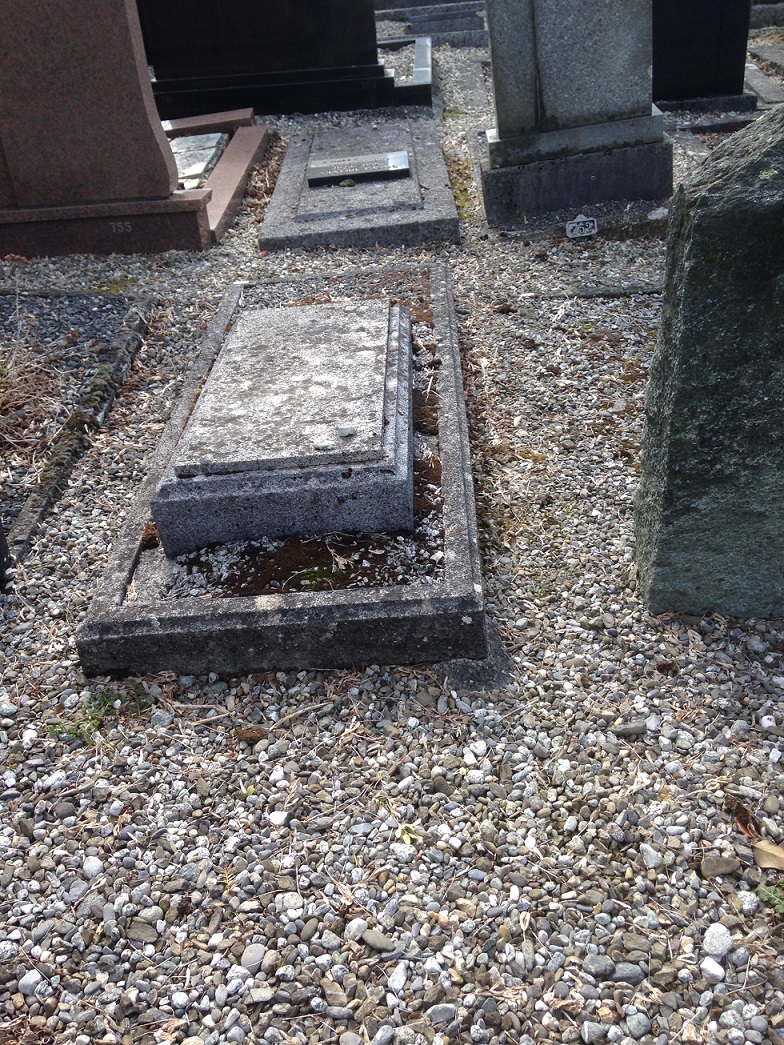
vati grave

illustration is the grave of Walter Rothschild in Jewish Cemetery Lausanne

Ki Tetzei: whether you believe in the Metzaveh or not, you are not free to walk away from proper behaviour to others

The sidra of Ki Tetzei contains, according to Maimonides, 72 of the fabled 613 commandments in the Torah – on first reading the effect is of an enormous list of apparently haphazard rules ranging from family relationships to the treatment of a judicially executed corpse. From care for animals to cultic prostitution; from financial probity to cloth made from a mixture of wool and linen.

Throughout history Jewish scholars have tried to explain the unified theory of mitzvot; rather like with the laws of physics there is the sense that somehow there is an elegant rationale that, once found, will enlighten us about the world and its meaning. The best try (in my view) is that of Rabbi Pinchas b Hama who wrote (Devarim Rabbah 6:3) that “Wherever you go and whatever you do, pious deeds will accompany you. When you build a new house, make a parapet for the roof. When you make a door write the commandments on the doorposts; when you put on new garments consider from what they are made; when you reap your harvest and forget a sheaf, leave it for the widow, orphaned and the stranger, the vulnerable in your society”

In other words, every aspect of our daily life can be made holy through following these mitzvot – the mundane can be raised to the exceptional, the quality of our lives infinitely changed in these tiny regular incremental actions.

Many years ago studying with Rabbi Hugo Gryn zl I learned about the Shema, the prayer recited morning and evening of each day, for many people the defining prayer of Judaism. It speaks in the first line of the unity of God, and of the relationship of God and Jews. But before it does it demands something else of us – Shema – listen! Pay attention! Hear what is really important!

The first command in the prayer is to love God completely – with heart, spirit and physical strength. Then we are told that God’s commandments should be with us always, spoken of repeatedly to our children, talked about when we sit in our home, when we are walking outside, when we lie down, when we get up. They are to be written upon our doorposts so that going in and out of our homes we see and are reminded of the requirements of God. And in the Shema too we are told “ukshartam l’ot al yadecha, v’hayu l’totafot beyn eynecha” you shall hold fast to them as a sign upon your hands and they will be (reminders) before your eyes. The line has been understood to be the source of the practise of placing tefillin – small leather boxes containing some prayers – on the head and hand during the weekday morning prayer as an aid to remembering, but Rabbi Gryn had a different view – he understood it to say “in everything your hand touches and everything your eye sees you must respond to the requirements of God.”

If we really fulfil the commandment of ‘Shema’, then no part of our life is exempt from the dictates of holiness. We cannot be pious in the synagogue but not at home or at work. We cannot care about the humanity of the people we like but not that of those we dislike or disagree with. We cannot do the technical bare minimum to fulfil our obligations to society and consider our job well done. As another part of this sidra says – lo tuchal le’hitalem– You are not able to/ must not remain indifferent.

In this sidra too is the commandment to wear tzitzit – the knotted threads on the edges of some garments, most usually seen today on the tallit, which are the physical reminders that we have regular and routine obligations as Jews. Our obligation to love God is played out in our world – how we relate to others, how we care for the vulnerable, how we manage risk, how we nurture good values. The traditional unified theory of mitzvot is based on an unquestioned acceptance of the Metzaveh – the One who commands – that is God. In today’s world that understanding does not work so well – there are many who find such faith impossible or even undesirable. And yet the value of the system of mitzvot remains powerful – Judaism has never asked what you believe, but demands that you behave according to its belief. Lack of faith in God is no excuse for lack of proper behaviour towards others.

Parashat Pinchas: What do we notice and what do we value?

Pinchas has always been a problem. We are told that this sidra begins where it does, in the middle of the narrative – to cause an interruption between the violent act and the divine response, in order the record the disapproval of the Babylonian rabbis who divided the sidrot.  A distance is created between the horror of what he did, and the reward that God seems to offer.  To read the story straight through would cause us many problems with God – how can such a terrible act be so calmly and gladly acceptable?

The Rabbis of the Talmud (San 82b) struggle with the story too. The act of Pinchas is repugnant. Rabbi Yochanan deals with the problem by giving all the responsibility to God :

Rabbi Yochanan taught that Pinchas was able to accomplish his act of zealotry only because God performed six miracles: [First, upon hearing Pinchas’s warning, Zimri should have withdrawn from Cozbi and ended his transgression, but he did not. Second, Zimri should have cried out for help from his fellow Simeonites, but he did not. Third, Pinchas was able to drive his spear exactly through the sexual organs of Zimri and Cozbi as they were engaged in the act. Fourth, Zimri and Cozbi did not slip off the spear, but remained fixed so that others could witness their transgression. Fifth, an angel came and lifted up the lintel so that Pinchas could exit holding the spear. And sixth, an angel came and sowed destruction among the people, distracting the Simeonites from killing Pinchas. (B Talmud Sanhedrin 82b.)]

Pinchas becomes simply the conduit of God’s will, and his act of individual violence is subsumed under the divine plan. But this isn’t the only rabbinic struggle with the text: on the same page of Talmud we read that after Pinchas killed Zimri and Cozbi, the Israelites began berating him for his presumption, as he himself was descended from a Midianite idolater, Jethro. ..To counter this attack, God detailed Pinchas’s descent from the peaceful Aaron the Priest. And then God told Moses to extend a greeting of peace to Pinchas, so as to calm the crowd. (B Talmud Sanhedrin 82b.)]

Here the Rabbis show the Israelites shifting the responsibility for Pinchas’ actions not onto God, but onto Pinchas’ own mixed ancestry, implying that Pinchas maybe wasn’t quite ‘one of us’, his actions not those of a mensch.

In these examples we see that the Rabbinic tradition felt both a revulsion for what Pinchas did, and a need to transform the event in some way; to try to reconcile our disgust at his act, with God’s approval of it. While God may have valued Pinchas’ actions enough to offer him the reward of the priesthood, our tradition remains uncomfortable. We find reasons for this reward – it was given because the plague stopped, it is because he saved the people, it is for anything but the actual act of violent murder without judicial process that it seems to be.

The story of the daughters of Zelophehad is easier to the modern mind – in fact often the modern mind finds it hard to see the problem in the first place. Zelophehad has died and left no son. So who will inherit from him, and what will be the status of his five daughters?  It isn’t an issue for Moses either, until the daughters come before him to remind him of their existence and to request that they inherit the estate. Moses is so surprised he has no answer – this is simply not part of his world view – and he goes to God for a response.  Luckily God proves to be a feminist and the women get to inherit in their own right.  Today we find this solution to be clearly right. Yet for the Rabbis of the Talmud again they needed to explicate the result – the claims of gender equality were not part of their world, not noticed and not valued.

So we are told, for example: Rabbi Joshua taught that Zelophehad’s daughters petitioned first the assembly, then the chieftains, then Eleazar, and finally Moses” B Talmud Baba Batra 119b) as if it was their following due process was somehow the deciding factor in the decision.  We are also told in a Baraita that Zelophehad’s daughters were wise, Torah students, and righteous.  That they demonstrated their wisdom by raising their case in a timely fashion, just as Moses was expounding the law of levirate marriage; and they argued for their inheritance by reference to that law. (Babylonian Talmud Baba Batra 119b.).

According to the midrash they saw the world very clearly, so that “When the daughters of Zelophehad heard that the land was being divided among the tribes but not among the women, they convened to discuss the matter. They said, “God’s mercy and compassion is not like the compassion of humankind. Humankind favours men over women. God is not like that. God’s compassion extends to men and women alike…” ( Yalkut Shimoni, Pinchas, 27; Sifri 27:1).

Both Pinchas and the daughters of Zelophehad caused real problems to the rabbis – they notice that Pinchas’ act of violence goes against all the values and rules of their world, yet it seems to be welcomed by God, so they struggled to signal their own disapproval, to reframe the act so that it is not possible for anyone else to repeat it, and to deal with the apparent delight of God. In this story they notice what is going on, and their job is to try to keep it together with the values and judgements they are hoping to transmit into the future.

The daughters of Zelophehad however are simply less visible or accessible to the rabbis, as they are clearly barely visible to Moses until they bring themselves forward. I would posit that because the idea of gender equality is not part of the ancient world view, they simply cannot conceive of it, even when it is presented to them with clarity and due process. They do not notice it and so they do not value it. One might add that in certain streams of the Jewish world that has not changed much! But that isn’t my point.

What I do want to say is this: What we do not notice for whatever reason, we do not value. And what we do not value for whatever reason, we do not notice. While something may be clearly apparent to someone else – think of Pinchas’ instinctive response to the actions of Cozbi and Zimri – if the tramlines of our mind don’t run on that route, we just won’t see it. And because Moses and the others didn’t see that they had to take action on the behaviour of the people rather than simply lecture them, they didn’t take any action and they didn’t value the action that was taken. It was left to God to show that Pinchas, while clearly hot-headed and over the top, was at least on the right lines. I have always felt that the reward of the covenant of eternal priesthood was at the very least an ironic reward – it would rein in the impulsive nature of a Pinchas into the very disciplined world of ritual purity and choreography and leave no space for him to behave that way again. God may have valued what Pinchas did, but he also noticed that such a zealous personality needed some serious boundaries – and so God provided them.

When Moses brings the request of the daughters of Zelophehad to God, the response is “The daughters of Zelophehad speak rightly…”  Rashi explains that God was saying : “[As the daughters of Zelophehad spoke it] so is this section of Torah written before Me on high.” This informs us that their eyes saw what the eye of Moses did not see.” (on Num 27:7)

Moses is the greatest prophet who ever lived, and yet the daughters of Zelophehad apparently saw something that he did not see. Each of us notices and values what is of meaning and importance to us, and each of us can teach the others in our world about the things that have meaning for us, so that we can all learn to value and to notice what may otherwise go unvalued and unnoticed. If we teach each other to see what we can see, we increase the richness of our understanding of our world, and so grow closer to its Creator.