
Parashat Yitro : The process of Revelation, the giving and the accepting.

Famously in bible the Jews are given Torah at Sinai, and while the exact experience of what happens and in what order is hard to follow in the text, three times the words of God are put before the Jewish people and three times they respond to Moses:  

The first report comes in Exodus 19:7-8 where we are told “And Moses came and called for the elders of the people, and set before them all these words which the Eternal had commanded them. And all the people answered together and said “all that the Eternal has spoken we will do. And Moses reported the words of the people to God.” 

It is not clear if “all the people” described here are really all the people, or their representatives, but the response is clear – “everything God has said, we will do: na’asseh”.

But later, after the giving of the Ten Commandments and the beginning of their explication in the chapters that follow, we are told this:  “And to Moses God said Come up to the Eternal, you and Aaron, Nadav and Avihu and seventy of the elders of Israel;  and worship at a distance. And Moses alone shall come near to God, but they shall not come near, nor shall the people go up with him. And Moses came and told the people all the words of the Eternal, and all the rules, and all the people answered with one voice and said “All the words which the Eternal has spoken, we will do : na’asseh” (Exodus 24:1-4)

And a few verses later we are told “And [Moses] took the book of the covenant and read in the hearing of the people, and they said “All that the Eternal has spoken we will do and we will hear: na’asseh venishma”

This repetition of the transmission of the covenant described in different ways leads us to some interesting places. The phrase “na’asseh venishma” is curious for a number of reasons, not least the meaning of the word nishma here, and of course the word order.  The root shema (shin mem ayin) primarily means to hear, to listen, to pay attention, and goes on to have a meaning of to understand, even to consent to, to agree, to obey…. 

Usually translated as “we will do it and we will understand”, the word order echoes a modern understanding of learning – ie that learning or understanding emerges from action, rather than the other way around.  In the words of Pablo Picasso, “I am always doing that which I cannot do, in order that I may learn how to do it”. From this strange word order comes the Jewish tradition of action first – that we don’t have to spend time studying or learning before doing the mitzvot, we don’t have to wait to act until we have a fully researched position, but our actions lead to our understanding of the world, and deepen our thinking.  This is much the same way that prayer works. By the act and process of regular prayer, of reciting or meditating upon ancient words, we find ourselves on occasion in the presence of God. In my experience it rarely happens the other way about, that, finding ourselves aware of the Divine, we utter our prayer. The routine of prayer, the regularity and even the almost mantra like poetry of the words and the rote action lead us to another level of awareness sometimes. It acts upon us and seeps into us and changes us.

Na’asseh venishma –it is usually understood to mean that we act before we might have fully worked out all the consequences. It is traditionally understood to mean that we are a religion of doing rather more than one of believing. That our understanding of, and relationship with, God emerges from our right behaviour in the world. I must admit this makes sense to me, resonates with my own experience of mitzvot and of prayer.  

But there is something else. Three times the revelation is presented before the people it seems, and twice only the response “na’asseh” is given. The first time, before the Ten Commandments are spoken, the revelation seems to be given specifically via the elders. It is accepted as a commitment – na’asseh, we will do it.

The second time the revelation is presented is after the Ten Commandments are spoken, but again we are reminded of the leadership’s attendance, Aaron, Nadav and Avihu, and the seventy elders are nearby, even though only Moses is in the presence of God.  Again the response is na’aseh, we will do it.

But the third time it is different –this time the relationship between God and people is not mediated through a leadership, but Moses reads the Book of the Covenant to all the people, and then they reply with this curious phrase “na’asseh venishma”. What is being added to the agreement to act? Is it truly knowledge and understanding? Is it compliance and obedience? Or is it the openness to committing at a deeper level? Not the intellectual expertise that grows from repeated doing, but the relationship that is created from an ongoing commitment to simply be there, attentive, part of the other person’s world.  Once the people are engaged directly, it seems to me that they not only agree to the Covenant being presented to them, they additionally agree to the relationship that will emerge from this Covenant being enacted, that the Covenant in effect will become part of them.

We live in a world where we pride ourselves on being rational, thought-through, evidence based. We don’t act without forethought, without awareness of consequences. We would rather overthink than reach out impulsively. We are cautious, careful, watchful. And yet at Sinai we see something different – the willingness to take on trust, the preparedness to take the next step without knowing what it might entail, the openness to whatever will grow and emerge that is out of our ability to control. It is the paradigm for any loving relationship, the model for any creative endeavour. It bespeaks hope and it bespeaks a kind of confidence that whatever comes our way we will be able to negotiate through it. That to me is the miracle of Sinai. Not the shaking mountain or the smoke and shofar, but the way that God and Moses learn to stop using a hierarchy and engage directly with the people, and the way the people respond by throwing their lot in with God and Moses. Clearly both sides take a risk and step into the unknown.

It is said that the opposite of faith is not doubt, but certainty and here there is no certainty. There is only the openness that what will be will be a journey worth embarking upon. A journey and an openness to possibility that marks us even now – for as the Midrash tells us, we all stand at Sinai.
Tu b’Shevat and a recipe for date and walnut loaf

In the first Mishnah of Rosh Hashanah we are told of four different New Years, and one of them is the New Year for trees, which falls on the 15th (ו “ט   Tet Vav) of month of Shevat. It sounds odd at first – why should trees have a new year? What do they do to celebrate it? Well sadly the trees do nothing to celebrate, this is a date set for tax purposes – we are commanded to offer certain tithes from our grains and fruit trees, firstly to give ‘Terumah’ an offering to God in thanksgiving which was originally brought to the Temple, then to offer three different offerings in different agricultural years – one share given to the Levites, one share to be eaten in Jerusalem, and one share to be given to the poor.  Also the age of a tree for the purposes of “orlah” (one is not allowed to eat the fruit from a tree in its first three years) was counted using Tu B’Shevat. The criteria as to which year a fruit fell into for tax purposes included which year it was formed in, and the critical date was the 15th of Shevat. Why this date? Because in Israel it was understood that the trees begin to grow on this date, coming out of their winter dormancy and beginning to form flowers and fruits.

While for a long time after the fall of the Temple the minor festival of Tu B’Shevat was effectively not much practised except in some liturgical amendments, it was not totally forgotten and there was an Ashkenazi custom to eat the different fruits and grains of Israel on the day “in honour of the significance of the day” and so grapes, figs, pomegranates, dates, olives, wheat and barley were all consumed especially on this day.  In 16th Century Sfat in Northern Israel the Kabbalists who had gathered there connected the trees and fruit of the land with their own mystical tradition which used the idea of a Tree of Life with roots in the divine space and its branches in our world. They developed the kabbalistic Seder we know today. And of course return to the land and a renewed connection with the agricultural cycle has given Tu B’Shevat a new impetus in Jewish life today. 

Trees have always been special in Jewish tradition, and fruit trees most of all. In bible the first thing that God does is to plant a garden within which are trees of all kinds and of course those two particularly special fruit trees – the Tree of the Knowledge of Good and Evil (the fruit of which was eaten by Adam and Eve) and the tree of Life (whose fruit was specifically protected from being eaten by the expulsion from the garden of Adam and Eve).  We are told that in order to imitate God, we too should plant our gardens and tend them well and planting trees in the Land of Israel is a mitzvah for us to this day. Rav Kook, the first Ashkenazi Chief Rabbi of British Mandate Palestine wrote that agriculture has the power to unify the Jewish people, and that our ideal Jewish society should be based on agriculture rather than on commerce. Commenting on Mishnah Bikkurim 3:3 which tells us that “All the professionals in Jerusalem would stand before them (the farmers) and inquire as to their welfare,” Rabbi Kook wrote: “….When the nation is morally depraved, when individuals’ eyes and heart are only upon money, these two types, those who engage in nature and those who engage in artifice become alienated from one another. The farmers, who dwell in villages close to nature, will be the object of disrespect on the part of the professionals who have learned how to live as a society divorced from nature.”  He worried that we would develop into a people who did not value the land and those who work it and who feed us all from it.

Fruit trees have a special place in our tradition – from the biblical injunction not to cut down fruit trees in times of war and siege to the extraordinary blessing to be said on seeing for the first time that year a fruit tree in bloom  “Blessed are You, Eternal our God, King of the universe, Who has ensured there is nothing lacking in the world, and Who created in it good creatures and good trees in order to benefit and give pleasure to people, we are reminded that our lives are dependent on trees and plants, that we are nourished and sustained by them and would quickly die if they failed. 

Tu B’Shevat comes to remind us to look again at how we value our trees and our land, and how we value those who work with the land in order to provide our food. It reminds us that we are all dependent on the natural world, that we must look after it and keep it in good order not only for our time but for the generations that follow. The midrash in Kohelet Rabbah tells us that God took the first human being around the Garden of Eden and said “See my works, how beautiful and praiseworthy they are, and everything that I created, I created for you. Be careful. Do not spoil or destroy my world, for if you do there will be nobody who will come after you to repair it”

Recipe: My mum’s Date and Walnut Bread

½ cup roughly chopped walnuts

½ lb chopped dates

1 egg

1 teaspoon bicarbonate of soda

¾ cup boiling water

½ cup sugar

1 ½ cups self raising flour

Large knob of butter


Put dates, bicarbonate and butter into a bowl and pour on the water

Add beaten egg, flour etc and mix together

Bake in a loaf tin for one hour, 180C

(first written for wimshul cooks on wordpress in 2012)


Parashat Bo: Darkness and Light

The final three plagues that occur in this week’s sidra, appear on first reading to be difficult to categorise until we see a thread that connects them – that of darkness itself. The swarm of locusts cut out any light from the sun, forming a thick cloud of living destruction. The bible tells us “they cover the eye of the land so that no one can see it”. The three days of darkness of the ninth plague meant that the Egyptians could not see each other or to move around at all – “they could not get up from where they were”. And the last terrible plague, that of the killing of all the first-born, took place at midnight.

What is the nature of darkness that links these events?

The ninth plague of darkness lasted for three days, imprisoning the Egyptians in their homes and completely isolated from each other. The Egyptians had refused to allow the Israelites three days of freedom to journey into the wilderness to worship God (Exodus 5:3) were now being given a sort of measure for measure punishment. The darkness is so thick as to be tangible, a suffocating total absence of possibility; no connection, no sense of self or other, can be experienced within it.

Darkness seems to be a metaphor for slavery, for whatever is the opposite of freedom to be. It is the metaphor for isolation, for fear and complete helplessness. The first thing that God does at the Creation is to bring about Light, separating it from the primordial swirling atmosphere. Without light nothing else would be possible.

The Midrash, commenting on the first verse of psalm 22, which reads: “To the chief musician: upon the rising of the morning star, a psalm of David: My God, My God, why have you forsaken me? [Why are You] so far from saving me, from the words of my roar?”
tells us that it is darkest immediately before the dawn:

“At night, though it be night, one has the light of the moon, the stars, the planets. Then when is it really dark? Just before dawn! After the moon sets and the stars set and the planets vanish, there is no darkness deeper than the hour before dawn. And in that hour the Holy One answers the world and all that are in it: out of the darkness God brings forth the dawn and gives light to the world.” (Midrash Tehillim)

It goes on to play with the words ‘shachar’ meaning ‘dawn’, and ‘shachor’ meaning ‘blackness’. The worst state to be in, spiritually and emotionally, is in the place of deepest darkness, yet it is also the place from which God responds to us, and from which we can begin again.

All of us have times when we feel the lack of freedom to be, when we are isolated from others or anxious or hopeless or depressed. We all understand the words of the psalm, when we feel forsaken and drowned out by the roaring in our minds. This is never a good feeling nor one we want to stay in for any length of time, but it is part of the human experience and something we can use on our journey to understand ourselves and our lives.

It took the darkness – the three different kinds of it – to bring Pharaoh to an understanding of the power of God. It takes the darkness in our own lives to really help us understand how good so much of our lives actually is.

Rabbi Milton Steinberg, in his essay  “To Hold With Open Arms” wrote:
“After a long illness I was permitted for the first time to step out of doors. And as I crossed the threshold, sunlight greeted me. This is my experience; all there is to it. And yet, so long as I live, I shall never forget that moment…The sky overhead was very blue, very clear, and very, very high. A faint wind blew from off the western plains, cool and yet somehow tinged with warmth – like a dry, chilled wine. And everywhere in the firmament above me, in the great vault between earth and sky, on the pavements, the building- the golden glow of sunlight.
It touched me too, with friendship, with warmth, with blessing. And as I basked in its glory, there ran through my mind those wonder words of the prophet about the sun which some day shall rise with healing on its wings.
In that instant I looked about me to see whether anyone else showed on his face the joy, almost the beatitude I felt. But no, there they walked – men and women and children in the glory of a golden flood, and so far as I could detect, there was none to give it heed,. And then I remembered how often I, too had been indifferent to sunlight, how often, preoccupied with petty and sometimes mean concerns, I had disregarded it, and I said to myself, how precious is the sunlight, but alas how careless of it are we. How precious- how careless. This has been the refrain sounding in me ever since.”

Darkness and light. We need each of them to understand the other. And with an awareness of both, we are able to reach out towards a deeper understanding of our place in the world.

Parashat Va’era: how do we recognise the appearance of God?

Ever since God made human beings “b’tzelem Elohim” in the image of God, way back when the world was young, the appearance of God has been problematic to say the least.  That old man in the sky, with long white beard and kindly expression began I know not when, but somehow generations of small children expect God to look like that, and I remember the pictures of a long haired, blue eyed Jesus that decorated Junior schools up and down the country in my own youth.  The Blake ‘Creation of Adam’ shows a white and western male God created in the image of the white and western male.

            God made human beings ‘b’tzelem Elohim’, in the divine image. We often seem to attempt to return the compliment by making God b’tzelem Adam – in the human image.

            Think of God, and what image do you conjure up?  Whatever it is, it is going to be a construct of human imagination, so Jewish tradition is adamant that there should be no such thing as a representation of God.  Neither incarnate nor in art; we persist in refusing to even attempt to define God.  Our God is outside of space and time, of the physical rules governing the universe.  Our God exists – that is enough.

            So what appeared to Moses at Horeb when he saw the bush that burned but was not consumed?  What appeared to Abraham, to Isaac and to Jacob?  How do we understand or even recognise the appearance of God?

            In biblical stories there are Melachim (angels or messengers) and there are Anashim – people.  There are dreams and visions and voices in the night.  Moses sees the theophany in a flame of fire rising out of the midst of a bush. 

            How do we recognise the appearance of God, especially when we are so sure of the existence of God as being outside of all the rules of time and space which would necessarily create appearance?  How do we know when we have encountered the divine, when we meet in dialogue or catch a sudden glimpse of the absolute?  And conversely, how do we prevent ourselves from being like Pharaoh, unable to see the presence of God even when everything in our world is demonstrating it?

            And how do we ensure that the God we encounter is not one made in our own image, as we try to fulfil our need and end our searching?

            There is an upsurge in the searching for spirituality, a need to be more sure of things as the world becomes a more dizzyingly active place, a need to find a safe place in the maelstrom of the early years of a new millennium.  But as we search for the deeper and essential truths to anchor us, we often look too hard to find them, become too narrow in our scope.  The appearance of God passes us by unnoticed. 

When Moses saw God at the bush, it would have taken him quite some time to have watched enough to realise that a miraculous event was taking place – how long does it take to watch a fire before you realise that it is not consuming its fuel?  Yet often when we search for God, we don’t give ourselves the time to really see what is around us.  Eight times the root for the word to see (ra’ah) is used in the six verses where God first appears to Moses, culminating in God’s declaration “Ra’oh ra’eetee” – I have surely seen. (v7)  By the time God appears to Moses as this sidra opens, the relationship is established, God speaks to Moses and tells him of his appearance to Abraham, Isaac and Jacob quite nonchalantly.  Yet there is something new – in this new relationship (as in all individual relationships with God) there is a particular truth to be revealed – in this case the tetragrammaton, the four lettered name of God. Having surely seen God, Moses has acquired a special knowledge about God – the essential name is made known to him.

            And here lies a clue as to how we recognise the divinity when we meet.  God is beyond our imagination, beyond our ability to construct or to constrain.  In meeting God then we catch just a glimpse of that beyondness, the particular truth that we as individuals could understand will be revealed.  More than a glimpse, and we see the gross detail that reveals the experience to be a product of our own selves.  Less than a glimpse and we can never be sure that the experience was real.  The knowledge of something that we know we could never have thought of on our own is best of all, for the infinite God can be recognised specially by each of us.  As Rabbi Levi wrote (Pesikta d’Rav Kahana) “God appears like a mirror in which many faces can be reflected. A thousand people look at it, it looks at each of them” 

We meet God when we are open to such a meeting, and when we stop trying to fill the space where we think God should be.  And when that space fills with something new and recognizably beyond our own imagining, that is when we glimpse the divine.   

            It is surely time to learn to recognise God in the world around us by learning to look and really see what is around us, rather than by searching for our predetermined expectation of the divine.  And it is time to stop pretending that we have any answers, that we can create god as we can create any artefact or idea.  Much better to open ourselves to the experience, to allow our encounter to emerge as it will.  To do that we have to accept that there are no answers that will satisfy entirely, no reasons that will explain thoroughly, no plan that will make perfect sense.  Each of us, living breathing and sensing human beings, will encounter differently, will learn something new and particular about the creator, will meet God as we are able to do so.

Parashat Shemot: the difference between knowing the name of something and knowing it.

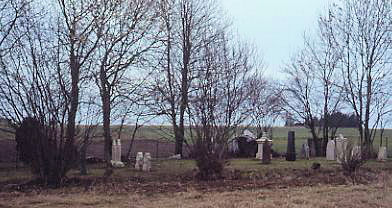
ottenstein cemetery

Picture of Jewish Cemetery, Ottenstein: Rothschild family cemetery


One of the signs of reaching middle age is an interest in family history, as the past begins to assume an importance it didn’t have before and we want to know more about from where we came in order to pass on a strong link to the next generations.
    The book of Exodus begins with a brief genealogy and also retells the foundational story of the family as the names of the sons of Israel who came to Egypt with Jacob are given to us once more, along with a reminder that this one man had 70 immediate descendants – 70 being a combination of two perfect numbers (7 and 10) and so showing a completeness to his life as a patriarch.
    But as quickly as the people of Israel increased and multiplied in Egypt, tragedy struck, a new king arose who saw them not as an asset to the community but as a threat, and so organised the legalised oppression of these people. Apparently determined not to be destroyed by this subjugation the Israelites continued to have many children and the pharaoh’s response was to take his cruelty down to the newborn children, by having every male child murdered at birth.  Yet the Hebrew midwives who were instructed to do this disobeyed, and playing upon the stereotype of the Israelite women being different from local women, told Pharaoh that they could not kill the newborn boys as they were born so quickly. And so the oppression was taken from the hands of the officials and given into the hands of the people – every boy born to the Hebrews should be thrown into the river.
      As a family history it is painful reading. Even though we know the ending, (for here we are about three millennia later still thriving), to know what our early family had to endure is excruciating. I reacently read  the memoirs of another family member, Ephraim Rothschild who lived in the Hannover area and who wrote his family history over the five years from his 85th to his 90th birthday in 1898. The stories of illness and early deaths, of capriciously unjust authorities, of marriages and children and movements to different villages to escape limitations on numbers of Jews, of legal restrictions and consequent struggles to find ways of making a good living and educating one’s children – it is an insight into a world that I can only say I am grateful not to have been born into. And yet as I read about graduates of the Jacobson school being taken into his employment, and his doubt about what would become of the descendants of those who professed Reform Judaism, there is something of the same feeling as reading the beginning of Shemot – our ancestors could not know what their descendants would become, they could only do what was right and possible in their time and their context in order to create the best chances for their family/people/religion to continue. And they could tell their story, which would include naming the names, reminding their descendants of the familial link and the story that went right back to Sinai.
     Ephraim Rothschild and the family from which he came lived generally in small towns away from the hub of political activity for 230 years, the connection to the area ending only when my grandfather left Hannover (via Baden Baden) for Dachau in November 1938 and my teenage father left Hannover for England. Not quite the 430 years of sojourning in Egypt, but a substantial time nevertheless, and a time when the family story continued to be told and passed onto the next generations. The memoir makes clear that his main interest was his family and the family business, and while he had some criticisms of the Judaism of his time, both the conservative forces of reaction and the too radical (for him) forces of Reform, he took it upon himself to endow and run a synagogue. But he also took it upon himself to learn the new political and economic ideas, teaching himself the essence of democratic politics and national economy, even writing to Bismarck and then to the Kaiser with his ideas and recommendations.  While never taking on the authorities too far, or taking a path of outright disobedience, he chose to play as full a part as he could in improving the lot of his fellow Jews and his fellow Germans.  Living in a relative backwater was no hindrance to his taking part in life. As in the opening of of the book of Shemot, Ephraim’s memoir tells the stories and names the names, and he seems content to do his best within the context and place he found himself, keeping family and religion going to the next generations. And with the stories we find out about some of the women of the family, and how hard they worked to keep everything going.

The title of the book of Shemot (names) is usually understood to refer to the names of the sons of Jacob who came down to Egypt with him, but there are other names to be found in this sidra and there are areas where the naming of names seem to be deliberately avoided. In particular within the story leading to the birth and naming of Moses which is found in this sidra only three names are made clear – the Hebrew midwives Shifrah and Puah are named and described twice as women who “revered God”, and their civil disobedience in aiding the labouring Hebrew women is recorded in bible, as well as their divine reward which is understood by Rashi to be that they became the founders of great dynasties themselves. Yet the father of Moses and the mother of Moses are described only as coming from the tribe of Levi, the Egyptian woman who rescued him is only described as ‘bat Paro’ – a daughter or female relative of Pharaoh, and the sister who oversees the rescue as ‘his sister’. Moses himself is finally named by the daughter of Pharaoh only ten verses later when he has been weaned by his mother and returned to her in the royal household.

This naming of the God-fearing midwives, yet the deliberate non-naming – almost to the point of clumsiness in the text – of all the others around Moses’ birth and rescue reads curiously in a sidra called “Names”. Is it trying to tell us that sometimes we must stand up and put our names to our acts of justice while at other times it is better to do so in anonymity?  Certainly that thought has resonances today in a world anonymity on the net.

      Or is it trying to say that sometimes it is the story that is important and the players are merely functionaries whose naming might distract us? Or maybe that it is our relationships with each other that truly matter and not just ourselves? Or that who we really are – the essence that is caught up in our name – can only be understood in the context of who we are connected to and what we do in our lives.

     The study of one’s family history can be fun and also it can be painful as the many stories of persecution and deprivation echo down the centuries along with the names, often the same names used repeatedly so that one can no longer tell who is being remembered in the naming.  But just to get caught up in who was who is not to in any way know about them. For that one needs the stories, the way the relationships developed, the sense of what they did and the context for why they did it. And we need also to recognise the difference between knowing the name of something, and knowing something. As Richard Feynman wrote “You can know the name of a bird in all the languages of the world, but when you’re finished, you’ll know absolutely nothing whatever about the bird… So let’s look at the bird and see what it’s doing — that’s what counts. I learned very early the difference between knowing the name of something and knowing something.”

Vayechi – How we live our lives, and how we live on through how we lived our lives

The book of Genesis comes to a close with this sidra, and many of the themes within it are addressed, if not resolved.  

The stories of sibling rivalry which began in the very first family with the tension between Cain and Abel and which continue down through the patriarchal enerations finally come to some sort of resolution, with Joseph choosing not to use his power over his brothers to hurt them, as even after all these years they fear he still might. His sons, Manasseh and Ephraim, also do not argue with each other, even when the younger is given special treatment by their grandfather Jacob. 

 The themes of blessing – in particular the special blessings from father to son, are also addressed: firstly in the blessing by Jacob of Joseph’s two children and the deliberate switching by the bless-er to give the younger one the more advantageous blessing. Somehow when there is no betrayal or rivalry between the bless-ees this is seen as a kind of concluding of the story of dysfunctional sibling relationship, though of course it does leave room for the jealousy to break out once more in the future. But while Joseph protests, his sons do not and sibling rivalry is not a particular theme of the later books of Torah.

 Blessings and the terrible burdens that can accompany them are also made explicit in the way that Jacob speaks to his sons on his deathbed– Reuben is as unstable as water, Shimon and Levi given to violence, Judah has the vigour and nobility of a lion, Zebulun would have a favourable territory with good coastline, Issachar is a large boned ass – physically strong and placid, Dan will be a judge but also a wily cunning foe, Gad would be constantly raided and raiding others, Asher will be happy and rich, Naftali would be both physically graceful and eloquent of speech, Joseph would be fruitful and honourable in the face of difficulties, someone who would surpass his victimhood, Benjamin would be a ravening wolf – warlike and terrifying.

 Can we say that these are blessings in any sense that we understand today? They seem to be comments on the characters of his children for them to learn from, or aspirations for them to live up to, rather than calling for the protection and support of God for them. 

 It also leads us to ask the question: is the expectation of our parents something that can or should shape our lives?

 Many of the blessings refer to the names given to the boys at birth – Dan, Asher, Gad, Naftali and Joseph all have names which imply characteristics or aspirations. Some of the blessings refer to actions we already know about – Reuben having betrayed his father with his concubine, Shimon and Levi whose violence to the Shechemites when their prince took Dinah has caused real heartache to Jacob that it seems he cannot let go even as he lay dying. Some of the blessings seem to refer to later events that he cannot have even dreamed of. The descriptions contained in these final words have a power and a hold long after their creator has left the scene.

 The deathbed scenes of Jacob and Joseph are narrated dispassionately in Torah. The point is made that both father and son are keen to be buried back in their ancestral home, not in Egypt where they are accorded so much honour. Both remember the promise that has been passed down their family, that God will remember them and will bring about their establishment upon the Land we know as Israel. They are pragmatic about their dying, passing on no material artefacts but certainly transmitting ethical imperatives to their descendants. Connection to the Land and honest evaluation of oneself along with proper thought about how one behaves in life, seem to be the two fundamental lessons they have to give their family. 

 Reading this final sidra in Genesis, named “Vayechi – And he lived” which primarily details the transmission of values after death, we are prompted to ask “What can we leave to our children that will resonate in their lives long after we ourselves are gone?” 

 One answer is the expectations we lay down for our children that they may internalise without our even knowing it – a sense of right and wrong, of honourable and ethical behaviour, of common purpose with our both our particular family and with the rest of humanity. We can teach them about God, about our history, about our connectedness to the other. We can teach them that one life is simply that – a life well lived will provide a strong link to both past and future, that there is a longer time scale than our own conscious existence. We can teach them that actions have consequences, that behaviour shapes character as much as character can shape behaviour. We can teach them that there is a great diversity in the world, and that everyone contributes something of value, be they passive or go getting, be they solid citizens or free spirits. 

 What is important is that we too begin to evaluate honestly our selves and the life we have lived so far, think seriously about what will be read into how we have lived, consider how we will be remembered after we are gone. 

 The end of a book of Torah is always a powerful reminder that endings are part of the cycle, and this particular sidra, with its emphasis on both life and death remind us to take a moment and consider. A lot of the most painful problems in the stories of the human relationships in this book are finally ironed out as people forgive, let go, learn, change. We are ready to face the next book which will take us into a different world, full of people who remember their history and people who have forgotten everything that came before. Winter is here, we are into the last month of the year and we are becoming aware of how the secular year is turning.  Many of us will try to achieve some kind of closure on unfinished problems before embarking on another new year.  But before we do that, there is just time to pause and to remember the stories of the early families in Genesis– Vayechi – how we live will impact on a future we can only imagine.

vayigash: the power of speech, the power of silence

            The longest speech in the book of Genesis belongs to Judah, pleading before an Egyptian potentate for the life of his youngest brother Benjamin, and indirectly also for the life of his father.

            The word ‘Vayigash’ is usually understood as ‘and he approached’, or possibly “he went up towards” something so daring in this context it could easily have cost him his life. To come close to a great leader in order to persuade him to change his mind – the whole of the book of Genesis seems to be building to this moment, and everything hangs on what Judah is about to do. 

            Tradition tells us that the verb can be taken three ways – that he went up to plead for mercy for Benjamin; that he went up prepared to battle Joseph for the release of Benjamin;  or that he approached God, praying for direction to be able to save the lives of his family.

            The speech itself is carefully constructed; no spur of the moment outburst this but essentially it reads as the argument of a defence lawyer at the height of his powers.

            The speech is beautifully layered and structured, full of images of the plight of Jacob, and we are told how it moved Joseph to the point where he simply had to stop what he was doing and reveal his true identity.  As a literary text it is perfect, as a strategic defence it performs brilliantly.  But somehow my attention is drawn to what is not in the text, to all the things left unsaid.

            Why for example doesn’t Judah criticize Joseph for the false accusation that he and his brothers were spies?  Why doesn’t he flatter this most powerful man into changing his mind?  Or even ‘call him’ on his promise that Joseph had originally said only that he wanted to see the youngest brother, but now he was making him a slave?  The Midrash even comments that Joseph was breaking his own Egyptian laws – that the law allowed one to punish the thief by taking away everything that he owned, but it did not allow one to go so far as to make that thief your slave – and yet Judah did not use this unlawful behaviour of Joseph’s to build up his defence against his brother.

            When the cycle of Joseph stories begins there is a surfeit of words.  Words are used to bring evil report, they are used in conspiracy to murder, they are used to describe dreams, they are found almost impossible to utter civilly by the older brothers to their arrogant sibling.  As you read the early stories you can’t help but be struck by the number of times ‘davar’ or ‘diber’ is used.  They are perfect examples of what  war time posters reminded the population – ‘careless words cost lives’. 

            Here as the stories are coming to an end, one is struck by the silences. The silence of Joseph who chooses not to reveal himself to his brothers. His earlier silence when he did not send word of his survival to his family in Canaan many years earlier.  The grief of Jacob which is described as his inability to speak any more.

            As the narrative builds up, it seems that we go from too many words to too few, until this speech of Judah, the longest single speech in our text, both formalizes the silence and releases the words.  Joseph is no longer able to contain the words within himself.

            Joseph’s major failing was his arrogant boasting.  He couldn’t help telling everyone about his dreams; he couldn’t help telling on his brothers to their father, he couldn’t help himself using words to build himself up while at the same time putting others down.  It was why his brothers hated him.  He may have been his father’s favourite, but while favouritism is never a recipe for happy families, it doesn’t have to create the kind of sibling hatred  this family developed. After all Benjamin took his place as favourite child. Benjamin became even more precious because his only blood brother had gone, presumed dead – and yet Benjamin was not the object of hatred, but was recognized as the one person able to comfort their father in his desperate grief.         

            Biblically, words are seen as the building blocks of creation – God created our world by the power of the spoken word and equally could destroy us with a word.  We ourselves know the power of speech, that words, once released, have a life all their own, can never be taken back or made unsaid.  Prayer, based on well chosen words, has taken the place of sacrifice in our ritual system.

            Less well known is the power of silence – that the absence of words can be more powerful than their presence, for in the silence, when we take away the distraction of words, we can experience and encounter a far deeper meaning.  While words can divert us from what is really important, or else can be used to defend us so that we don’t confront ourselves and our lives. 

            The silence in Judah’s speech teaches us something important. Judah does not flatter, nor does he criticize. He is past the point scoring so often associated with argument, totally focused on what is substantially important.  He doesn’t use verbal tricks but prefers to be silent rather than to condemn. His impassioned speech contains no falsehood or accusation.  He speaks only words which focus directly and clearly to his cause.

            The speech of Judah is a text book study in defence advocacy.  It is also a textbook study in good human relations.  He only says what should be said.  He doesn’t say anything hurtful.  At this time, when so many are thinking about making resolutions about their behaviour in the year to come, Judah’s model is a wonderful one to emulate. Speak what should be said; Keep silent on what should be kept silent.  


Mikketz: the end of the sibling hatred is in sight – maybe

When Joseph meets his brothers again everything is different. He is no longer an arrogant and specially adored child taken up with visions of his own importance much to the annoyance of his older brothers. Now he truly is an important man, second only to the Pharaoh. He is no longer the dreamer – now he is the interpreter of dreams. But one thing seems to remain the same – the relationship between him and his brothers is strained and unhappy.

He recognises his brothers as soon as they come to Egypt to buy food, but he doesn’t reveal himself to them. Instead he behaves in a cruel and unusual way, acting like a stranger to them, and speaking harshly to them, asking, “Where do you come from”.  He must know that they are anxious and unsettled in a strange land where they have come to buy food because of famine at home.  He must know too that their father has suffered greatly in his absence and will be suffering until the rest of his sons are home. He must have known that imprisoning Shimon would cause terrible pain to his family. And that demanding for Benjamin to come to Egypt – and then keeping him – would potentially destroy his father. He must have known, but the knowledge doesn’t seem to affect him.

Why does Joseph behave in this way? Has the passage of time and the huge respect for him in Egypt not changed him? Has he not matured and let go of some of his justifiable anger towards his brothers? Does he actually believe what he will later tell his brothers, that God has arranged for him to be in Egypt and thus ensure the survival of his family?  Is he deliberately humiliating and testing his brothers or is something else going on?

The Berdichever Rebbe Levi Yitzhak suggested that Joseph was actually acting in defence of his brother’s feelings – knowing that it would be a terrible humiliation for his brothers were they to learn that the man towards whom they were making obeisance and bowing with their faces to the ground was their young brother who had once dreamed that they would do precisely this.  Instead of revelling in their defeat and in the reversal of their positions, Joseph chose to keep quiet and appeared to be a stranger so as not to shame them.

While this is an ingenious way of keeping the character of Joseph unblemished and righteous, it is I think a stretch too far for us. But there must be some reason why Joseph keeps his silence, and then goes on to test his siblings, and test them again.  

Assuming that Levi Yitzhak was right, and Joseph was acting from compassion rather than vengeance, it may indeed be that he was protecting his brothers from knowing who was standing before them.  Before they could have any kind of true and credible reconciliation, the brothers would have to understand what they had done all those years ago to Joseph and to repent – even if they thought they could no longer ask forgiveness of him. Had they known that while they were in the presence of this powerful Egyptian, that they were actually standing in the presence of Joseph, any move towards Joseph, any plea for forgiveness would seem to be insincere and made out of fear or a need for the food he could supply. 

Before Joseph could let go of his own anger and pain, he needed to hear that his brothers were repentant of their behaviour towards him and that they understood that their current predicament was some recompense.  His strange behaviour towards them does not have to have been vengeance, but part of the process that could lead them all to forgiveness and reconciliation. Once he could see that the brothers truly atoned for their behaviour, then he too was able to take the next step towards conciliation with them. By seeming to be harsh he was in fact allowing for an opportunity for real understanding and credibility.

We can’t know what was really in his mind, why he had not contacted his family when he became powerful in Egypt, why he dealt with his brothers in the way he did; – but we can see that the process of reconciliation is not easy nor does it require us to ignore the real pain we feel when we have been wronged or when we ourselves have wronged others. 

Chanukah: A time to reconnect to our values

photoSome years ago I was telephoned by a local radio station, wanting to interview me about Christmas coming so early this year. Somewhat confused I asked “Coming early? But isn’t it a fixed date?” This in turn confused the researcher. After a while I became clear about what she meant – that the shops were already full of Xmas gifts and glitter, even though it was early October. She wanted to know what I thought about it. I had to tell her that as a Rabbi I hadn’t given it much thought, and maybe she ought to be speaking to a cleric whose own tradition was being devalued and commercialised by this particular phenomenon, rather than me. She thanked me kindly and rang off. But it set me thinking.
When we Jews say “the festivals are early this year” we mean that they have taken us by surprise, and we aren’t ready and prepared for them. But Christmas ‘coming early’ means almost the opposite – people OVER preparing for it – at least in one aspect of its celebration. And by this particular type of preparation, the meaning and the message behind the festival becomes obfuscated and ignored.
It is always necessary to prepare for festivals if they are to mean anything more than the superficial enjoyment we can create around them. But the preparation has to be appropriate and considered. “Christmas coming early” is another way of saying that the meaning of the festival has been overtaken and overlaid by the trappings. The preparation has somehow gone askew. The traditions which deliberately build up to the important date (Advent colours, candles and liturgy) are disempowered by the gilt and glitz in the shops.
Rosh Hashanah or Pesach ‘coming early’ really means that we have run out of time to prepare for them, and that happen because we’ve become disengaged from our Jewish calendar. “Jewish time” nudges us with the regular cycle of Shabbat observance, our liturgy includes prayers before the new moon which reminds us monthly just how the year is passing; We read special haftarot before some of the festivals, and others that link us to calendar and time – from before Tisha b’Av to Rosh Hashanah and so on.
There are so many reminders that our tradition has worked into our routines, but only if we keep those routines in our lives. We under-prepare for our festivals each time we could make Shabbat Kiddush but don’t, we under-prepare for our festivals each time we book holidays without consulting the Jewish calendar, we under-prepare for our festivals by not living within Jewish time, and by forgetting to mark each new day and new week with reference to our ancient markers.
One of the things the religious world could learn from the commercial world is that forward planning and continual working towards the goal is the only way that the festival is made to be successful. I’m pretty sure that the Easter Egg planning is finalised by now in most confectionary factories and probably some are already made!
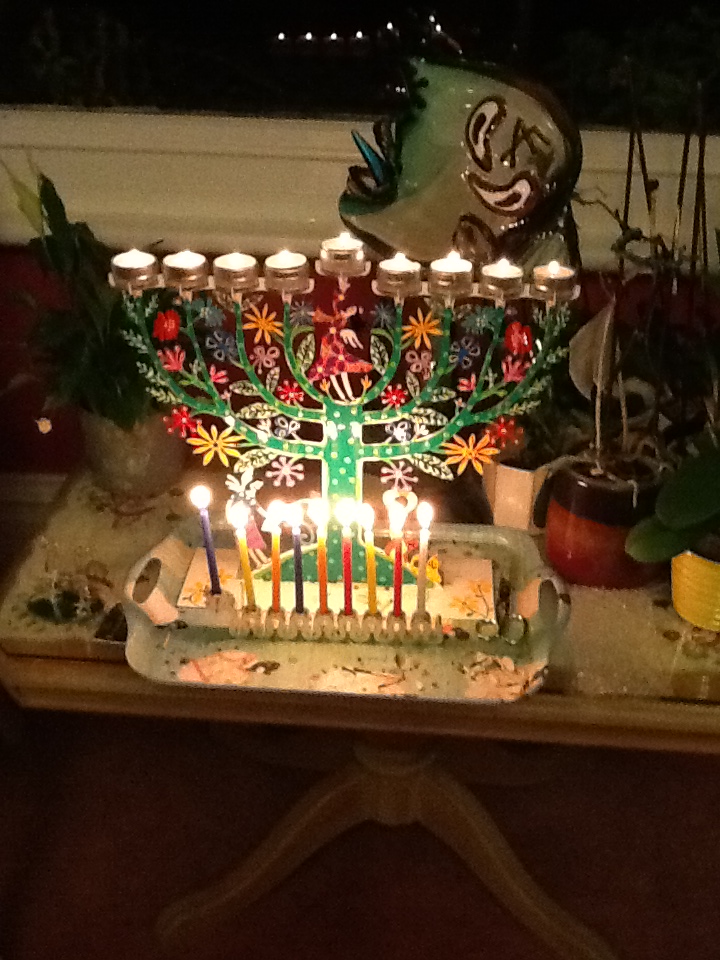
As the days draw in and the trees lose their leaves we may be thinking about latkes and doughnuts, the comfort food of Chanukah, and the bright lights of the menorah in our windows – but to really prepare for the festival we should be thinking of the meaning of having a festival dedicated to the rights of people to practise their religious beliefs and then move on into putting the values of those religious beliefs into action.

And as we celebrate Chanukah this year, our thoughts should also be travelling a little further down the line, thinking about Pesach, about Shavuot, about Rosh Hashanah and Yom Kippur; we should be thinking about how we plan to put our values into action at every festival, and during every ordinary day of the week. Who will you invite to your Seder this year? How will you be able to sit around the table and talk of freedom if you haven’t been considering it throughout the year, – and not only considering it but actively working to maintain important freedoms in our world.
Reconnecting with our calendar is the first step we take in order to reconnect with the meaning of our festivals, to not be taken by surprise each time a date comes round. Forward planning to make our festivals meaningful. As new diaries come into the shops and we write our important information into them ready for the new year, let’s put in the religious festivals, and some time set aside to prepare for them