Behukkotai:rebukes that remind us we must work together

Sidra Behukotai ends the book of Leviticus, and while frequently read in conjunction with sidra Behar, it differs from it substantially in the tone of the narrative. It opens by describing the blessings and rewards that the Israelites will receive if they uphold the covenant with God and follow the mitzvot that are the conditions of that covenant, and ends  with a brief series of teachings about tithing, the sanctification of voluntary gifts to the Temple, and about vows. But the centre of this short sidra is the passage known as the rebukes – tochecha – when Torah lists the tragedies that will befall us should we abandon God’s covenant and our obligation to do mitzvot.

One particular verse stands out for me as being emblematic of the tochecha: In Leviticus 26:23-24 we read:

“Ve’im b’eileh lo tivasru li, v’halachtem imi keri, v’halachti af ani imachem b’keri,v’hikeiti etchem gam ani sheva al chatoteichem.” (And if after these [punishments] you are not disciplined/corrected but [instead] will walk ‘keri’ with me, then I will walk, even I, with you in ‘keri’, and I will smite you, yes me, seven times for your sins”)

This word, which is found right at the heart of this narrative of rebuke, appears nowhere else in Torah in this grammatical form, yet in this text we find it repeated seven times within twenty sentences (vv 21,23,24,27,28,40,41) forcing us to notice and explore it. Our behaviour clearly b’keri has terrible consequences. And yet it is not clear what the writer means by it.

Many classical commentators follow Rashi and Maimonides and understand the root of the word to be k.r.h – meaning something that happens by casual chance or by accident (mikreh), though it may also be translated as being in opposition or contrary, or indeed it may come from the root k.r.r meaning to be cold.  But we also know that when used in bible, the apparent casual chance of the text is not ever quite what it seems to be on the surface, but instead is a coded phrase used to let us know that something of significance is about to happen.  So it is that Ruth meets Boaz the language of k.r.h is used to alert us to the significance of her choosing his field to glean in.   There is something curious about a phrase used to describe a chance that is not exactly chance, a casual encounter of enormous significance, but that is how the word keri is used, and to find it so definitely  emphasised in the text of the tochecha means we need to look closely at just what God means when God says “If you walk ‘keri’ with me, then most definitely I will walk ‘keri’ with you.

The three most common teachings about this are: the classical idea expressed by Rashi and Maimonides that there is a lack of interest or intention in walking God’s way – a sort of going through the motions without really caring or understanding or being principled in doing God’s will; The extension of this mechanistic approach of indifference which is developed by R.Samson Raphael Hirsch of modern orthodoxy, and which overlays on the classical understanding the idea that when we do God’s will b’keri it is essentially not simply a casual coincidence but a phenomenon that happens when our will and God’s will coincide so that while it feels we are doing God’s will with intention, in reality we are following our own self-interest and priding ourselves on acting with more righteousness than should be claimed; and thirdly the position of the founder of the ethical mussar movement R.Israel Salanter who layers in the idea of coldness to the behaviour to suggest that when we walk with God b’keri it is that we follow God’s commandments not only mechanistically but also without any warmth or passion for it – there is no possibility of our doing the mitzvot changing us or developing our relationship with the creator.

I like this idea that if we follow God’s commandments to the letter, but without any passion – without committing ourselves and our hopes and fears – that this is viewed by God as b’keri: casual indifferent and cold religion. It bespeaks irrelevance – the acting out of what is required but in no way coming from the commitment of the self.  It is act but not attitude. How do we bring God closer into the world if we do not ourselves make the effort to make the world a better place? How do we bring ourselves closer to God if we pay attention more to how things look than how things are?

The warning in the tochecha, of all the things that will go wrong if we act b’keri – is so powerful an imperative that we are told that not only will God mirror our indifference, God will go further and punish us seven fold – the designation of maximalist or absolute punishment, the other end of the spectrum from casual/chance/indifferent.  If anything is designed to catch our attention, it must be the severity of this response.

And after it all, the horror story painted so dramatically of famine and war and terror and starvation and expulsion and yearning and pain – there comes this: “Then will I remember My covenant with Jacob, and also My covenant with Isaac, and also My covenant with Abraham will I remember; and I will remember the land….And yet for all that, when they are in the land of their enemies, I will not reject them, neither will I abhor them, to destroy them utterly, and to break My covenant with them; for I am the Eternal their God. But I will for their sakes remember the covenant of their ancestors, whom I brought forth out of the land of Egypt in the sight of the nations, that I might be their God: I am the Eternal.”

God promises to remember – to actively recall the relationship of Covenant between God and the Jewish people which will never be broken no matter how badly behaved we might be. And God compounds this by naming the Avot, the three founding patriarchs of the Jewish people, and unusually lists them in reverse order, the only time this is found in bible.

This bringing in of the patriarchs leads to the concept of zechut avot, the merit of our ancestors, which we can call upon to weight our case before the heavenly court. The midrash (Vayikra Rabbah) explicates this, asking  “Why are the Avot listed backwards? To say: If the acts of Jacob are not worthy, then the acts of Isaac are worthy, and if the acts of Isaac are not worthy, then the acts of Abraham are worthy. The acts of each one is sufficiently worthy that the world can be saved for his sake.”

Rashi mitigates this a little, saying Why are they listed backwards? As if to say: Jacob, the youngest, is worthy of that; and if he is not worthy, behold, Isaac is with him, and if he is not worthy, behold, Abraham is with him and he is worthy.”

It is, I think, a little dig or reminder to the Jews of modernity – the greatest zechut/merit is that of Abraham, and as time goes on the merit is by its nature in decline. So we need to add the merit of our ancestors rather than assume any one is sufficient by itself. We, so much further away from biblical times are expected to have less merit than the founding patriarchs – so how much more do we need each other to fulfil our task. If we just do our tasks with indifference, or follow God’s will where it coincides with our self-interest, or do not attempt our holy task with all the passion and awareness we could bring to it, then we will fail. And to do our holy task well enough we must do it together, in community, with shared and common interest. We need not only the combined merit of our ancestors in tough times, we need the combined merit of our fellow human beings. Only in this way, by working together to make the world a better and holier place, by rebuking each other where necessary, by paying attention to what we do and its effect on others – only in this way will we create the blessing we yearn for.

Kedoshim: increasing kiddush hashem and diminishing hillul hashem.

It has long been the habit to refer to all the Jews who historically were killed for adhering to their faith in times of persecution as having died “al Kiddush Hashem” and this idea has also become attached to the six million Jews murdered in the Shoah – they have become kedoshim through their deaths and are  elevated to the status of martyrdom.  I understand the comfort that may be derived by those who mourn their murdered family and friends to see their status as that of kedoshim, but I have always found this slide of the terminology to be problematic. To me martyrdom should be a conscious choice. To me their murder is a Hillul Hashem, and no holiness can be found within it, only in the responses both at the time and afterwards to protest, to remember, to mourn, to live on.

I am uncomfortable also in the loss of the full name of Yom haShoah, which is actually “Yom Hashoah Ve-Hagevurah”— literally the “Day of (remembrance of) the Holocaust and the Heroism.” All choice has been removed from our remembering – both the lack of choice of those who were rounded up and unable to protest, and the powerful choices made by those who did protest, or who were partisans or who hid themselves or others from the evil around them.  By diminishing the heroism, by diminishing the choices people made from their own humanity and their ethical imperatives, it seems to be we lose out on Kiddush Hashem as people are able to bring it about. Instead we focus on the Hillul Hashem of those who mindlessly or not destroyed the hopes and lives of so many and we coat the victims in martyrdom as if to bring honour to their destinies.

Yom HaShoah was created to remember those we have defined as kedoshim either through martyrdom or through protecting God’s creation when others were trying to destroy it, and the date was chosen by the Government of Israel to remember them. It is no coincidence that the date chosen by the politicians was out of sync from the date that would have been chosen by rabbinic tradition, and instead of being placed on a traditional day of mourning such as tenth Tevet or Tisha b’Av it was placed a week before the celebration of the Israel Independence Day – Yom ha’Atzma’ut. This placing has led to a connection in the minds of many, that the outcome of the murder of the 6 million is the creation of the modern State of Israel.

For me this is deeply problematic. Not only does it submerge the many prior years of political Zionism that worked to create a Jewish state, but it builds the state on the martyrdom of the ‘kedoshim’, many of whom were not natural Zionists in life.  In so doing, it changes the nature of the contract with the land we have had since this Torah text was given – that we have the land of Israel because God has given it to us, and we have a responsibility to live on it in a way that promotes Kiddush Hashem. Sidra Kedoshim makes clear that our continued living on the land of Israel depends on our living lives of kedoshim, ethical lives where the vulnerable are protected, the land is cared for, and where a lived awareness of the focussed attention of God and the desire to behave as God would wish us to do should always be part of our daily routines. By making the idea of ‘kedoshim’ the historical foundation of the State rather than the aspiration of the contemporary society we reduce the imperative to behave in holiness. And that is dangerous, for if we are not acting to promote Kiddush Hashem we run the risk of sliding into its shadow, of Hillul Hashem. If we believe we have an entitlement not given to us by Torah but by the deaths of innocents then we can easily act from that sense of entitlement, and we forget the conditions given here in Leviticus that the land will not tolerate our bad behaviour.

The rabbis of the Talmud spoke of being kedoshim as living in such a way as to imitate the divine qualities of mercy and kindness.  They specifically ruled out imitating the parallel divine attribute of strict justice often seen as working in balance with divine mercy and which may impose conditions for the way the mercy might be applied. They are advocating undiscriminating kindness to others in order both to achieve kedoshim and to increase the presence of God in the world. I am reminded of Rabbi Abraham Joshua Heschel who wrote “when I was young I used to admire clever people, now I am older I admire kind people” and I hope that beyond admiration, we remember the vulnerable and the powerless and those who sought to help and protect them, and in remembering our own experience of helplessness and oppression we too strive to increase kindness in our world.


Shabbat Shekalim:counting ourselves and making ourselves count

In the month of Adar there are 4 extra Torah portions read after the weekly reading each shabbat which give their names to that shabbat. The first of these, read on the shabbat after Rosh Chodesh Adar (the new moon of the month of Adar) is Shekalim.

The extra piece speaks of the census which is taken in the wilderness, where the people are to donate a half shekel each as ‘kofer nafsho’ (a ransom for his soul) and kesef hakippurim (atonement money). This offering to God, which is to be the same amount for everyone counted, regardless of their financial worth, is to fund the service of the tent of meeting.

The half-shekel tax that pays for the maintenance of the worship system is to be paid by the first day of the month of Nisan and so the extra reading at the beginning of Adar functions as a reminder to the community that the payment is about to be due. It has always been a source of amusement to me that many modern synagogues hold their AGM’s (and therefore the beginning of the subscription year) at around this time, in order to nudge their members to think about their membership payments, although now we do not suggest that such payment would effect an atonement.

The way of not counting people but instead counting the coins of identical value goes deep in the Jewish psyche. David incurred the wrath of God and an ensuing plague when he counted the Israelites (2Sam24) and while the commentators suggest it was because the census was not authorised, there has remained a fear of counting individuals in case of danger. This may have had to do with the belief that numbering people implied diminishing them in some way, or that the biblical census was usually associated with upcoming military activity in which many of the people numbered would lose their lives. To this day there is a general Jewish fear of censuses, and when counting a minyan for prayer people will either use the loophole of a negative (as in ‘not one, not two, not three etc.) or a recite a verse with ten words (such as Psalm 28 v9 which has the added benefit of acting as a prayer, translating as “save Your people and bless your inheritance and tend them and carry them forever”).

Whatever the reason for it, this method of counting identically valued coins teaches some valuable lessons. It shows us that while each person may have his or her own individual financial worth, everyone has the same value before God. And it causes us to ask about the significance of each person bringing only a half shekel rather than a whole one.’ Many explanations are offered by commentators: – that the half shekel may represent the time of day when the sin of the golden calf was committed (midday). That it is the equivalent to the penalty for those who disobey the 10 commandments and so this payment can be seen as a kind of atonement. They are all ingenious explanations, but the one I prefer is of a different order – According to Rambam, the use of a half shekel rather than a whole one teaches us that no person is complete when alone – we can only attain full spiritual completeness when we are in relationship with others, when we are in a community of shared interest. And I would add to this view that not only can we not be not be complete when alone, but that our completion is a process rather than an existential state. So that just as the world is in a state of continuing completion we too are always in the position of completing ourselves. And just as the world needs our work and our active interest for is continuation, so do we need the active interest of and participation in the community of ideas and of other people.

As each of us gives of our time and wealth to the community we are also aware of our own needs and our own lacks, we are each looking to be fulfilled by the ‘other half’ that can be found in relationship with other people.

Shabbat Shekalim begins the run up to Pesach, the time of redemption and the beginning of peoplehood rather than the collection of individuals. It is a liturgical nudge, a reminder that we are not fulfilled by ourselves, that we are a work in progress. This year it is paired with parashat vayakhel, the Torah reading that begins with assembling the whole people. The message is clear – community is our natural state however individual and singular we know ourselves to be. No person is complete on their own, but we are all of equal value to God, however much or little we materially own. And every one of us has something to offer the community, every single one of us counts.

Ki Tetzei: whether you believe in the Metzaveh or not, you are not free to walk away from proper behaviour to others

The sidra of Ki Tetzei contains, according to Maimonides, 72 of the fabled 613 commandments in the Torah – on first reading the effect is of an enormous list of apparently haphazard rules ranging from family relationships to the treatment of a judicially executed corpse. From care for animals to cultic prostitution; from financial probity to cloth made from a mixture of wool and linen.

Throughout history Jewish scholars have tried to explain the unified theory of mitzvot; rather like with the laws of physics there is the sense that somehow there is an elegant rationale that, once found, will enlighten us about the world and its meaning. The best try (in my view) is that of Rabbi Pinchas b Hama who wrote (Devarim Rabbah 6:3) that “Wherever you go and whatever you do, pious deeds will accompany you. When you build a new house, make a parapet for the roof. When you make a door write the commandments on the doorposts; when you put on new garments consider from what they are made; when you reap your harvest and forget a sheaf, leave it for the widow, orphaned and the stranger, the vulnerable in your society”

In other words, every aspect of our daily life can be made holy through following these mitzvot – the mundane can be raised to the exceptional, the quality of our lives infinitely changed in these tiny regular incremental actions.

Many years ago studying with Rabbi Hugo Gryn zl I learned about the Shema, the prayer recited morning and evening of each day, for many people the defining prayer of Judaism. It speaks in the first line of the unity of God, and of the relationship of God and Jews. But before it does it demands something else of us – Shema – listen! Pay attention! Hear what is really important!

The first command in the prayer is to love God completely – with heart, spirit and physical strength. Then we are told that God’s commandments should be with us always, spoken of repeatedly to our children, talked about when we sit in our home, when we are walking outside, when we lie down, when we get up. They are to be written upon our doorposts so that going in and out of our homes we see and are reminded of the requirements of God. And in the Shema too we are told “ukshartam l’ot al yadecha, v’hayu l’totafot beyn eynecha” you shall hold fast to them as a sign upon your hands and they will be (reminders) before your eyes. The line has been understood to be the source of the practise of placing tefillin – small leather boxes containing some prayers – on the head and hand during the weekday morning prayer as an aid to remembering, but Rabbi Gryn had a different view – he understood it to say “in everything your hand touches and everything your eye sees you must respond to the requirements of God.”

If we really fulfil the commandment of ‘Shema’, then no part of our life is exempt from the dictates of holiness. We cannot be pious in the synagogue but not at home or at work. We cannot care about the humanity of the people we like but not that of those we dislike or disagree with. We cannot do the technical bare minimum to fulfil our obligations to society and consider our job well done. As another part of this sidra says – lo tuchal le’hitalem– You are not able to/ must not remain indifferent.

In this sidra too is the commandment to wear tzitzit – the knotted threads on the edges of some garments, most usually seen today on the tallit, which are the physical reminders that we have regular and routine obligations as Jews. Our obligation to love God is played out in our world – how we relate to others, how we care for the vulnerable, how we manage risk, how we nurture good values. The traditional unified theory of mitzvot is based on an unquestioned acceptance of the Metzaveh – the One who commands – that is God. In today’s world that understanding does not work so well – there are many who find such faith impossible or even undesirable. And yet the value of the system of mitzvot remains powerful – Judaism has never asked what you believe, but demands that you behave according to its belief. Lack of faith in God is no excuse for lack of proper behaviour towards others.

Acharei Mot – Kedoshim: Holiness is not a state to achieve, but a process to live by.

א וַיְדַבֵּ֥ר יְהוָֹ֖ה אֶל־מֹשֶׁ֥ה לֵּאמֹֽר: ב דַּבֵּ֞ר אֶל־כָּל־עֲדַ֧ת בְּנֵֽי־יִשְׂרָאֵ֛ל וְאָֽמַרְתָּ֥ אֲלֵהֶ֖ם קְדשִׁ֣ים תִּֽהְי֑וּ כִּ֣י קָד֔וֹשׁ אֲנִ֖י יְהוָֹ֥ה אֱלֹֽהֵיכֶֽם:

Sidra Kedoshim is very familiar to us, echoing as it does the Ten Commandments, and taking the soubriquet “the holiness code”. Reform Jews read it on Yom Kippur as a reminder of what the ethical life would look like. We are aware of its physical and spiritual place in the Torah – it lies at the very centre of the scroll, and in the centre of Kedoshim itself is the golden rule – “love your neighbour as yourself; I am the Eternal”.   This law was quoted by Hillel in the first century, albeit cast into the negative “What is hateful to you, do not do to your fellow”; Rabbi Akiva declared it to be the great principle of the Torah. And many Christians know it through its repetition by Jesus, who called it second only to the commandment to love God.

So when we look at the great commandment which acts as a chorus throughout this sidra –“You shall be Kadosh (Holy) as I the Eternal am Kadosh (Holy) – we tend to immediately think of the great dictum which, if followed, will bring about a better world for us all. Indeed, if we behave towards our neighbour with as much care as we behave towards fulfilling our own needs, we would automatically be living more saintly lives than we do now. But the sidra goes on, and the detail in the second half gives a slightly different flavour to the response ‘Be Kadosh as I the Eternal your God am Kadosh”

It goes on to talk about kilayim – not mixing different kinds or species, be they animal or agricultural. It talks about sha’atnez, not mixing wool and linen together in garments. The laws of Kilayim are elaborated in Talmud which expounds and clarifies the laws of this occasionally strange principle.

It goes on to talk about the prohibition of the fruit of new trees – for three years after a tree is planted its fruit may not be used at all, in the fourth year the fruit is used only for religious celebration, after that, it is permitted to use the fruit of the tree.

And then come a whole lots of individual prohibitions or warnings – don’t eat anything with the blood; don’t practise divination or soothsaying, don’t round of the side growth on your head or your beard, don’t mutilate your flesh or mark yourself in any way. Don’t make your daughter a prostitute. Keep the Sabbath and venerate the sanctuary. Don’t turn to ghosts or familiars. Show deference to the old. Don’t wrong the stranger. Don’t falsify weights or measures.

It is such an odd mix, such a strange set of things for the narrator of the biblical text to be perturbed about. Some of the injunctions are self-evidently good to do, others read to the modern eye as ritual behaviour with no obvious meaning and some superstition implicit within them. What are we to make of not rounding the hair of the head? Or of saving the fruit for 5 years before having the use of it?

The second half of sidra Kedoshim challenges our understanding of what it means to be holy. We are out of the spiritual world and solidly into a more practical one. Holiness becomes less a matter of intention and more a matter of action. Holiness becomes something we do in relation to other people as well as a private matter between ourselves and God.

I’ve always had a bit of a problem with holiness. Not simply that I found it hard to achieve in my life, but that put as a spiritual and saintly proposition, it made me feel a bit queasy. Maybe it is my solid and gritty northern upbringing, but the way some forms of piety and piousness are expressed don’t make me feel spiritually uplifted, rather they make me want to kick the individual offering their religiosity in such a way.

It has been a consistent feature of my religious life that the most holy people I encounter are also almost universally the earthiest. I recall a verse of a song by my teacher Rabbi Dr. Jonathan Magonet which affectionately described – some may say lampooned – all the people who had seriously affected his religious growth, called “come and join the cavalcade”. The verse that comes to mind goes something like   “it is not easy to watch the prophet speak. He dribbles on occasion and he’s far too fond of sweets”. I won’t reveal which revered teacher is being described, but I can assure you that, of all the great of his generation, he is certainly the one most able to transmit a sense of the immanent yet transcendent God in such a way that it is almost as if a map of the religious journey is in your hand.

I have a problem with holiness – it seems to have acquired in modern parlance a sort of righteousness, the sanctity and piety of which have suppressed any human odour; it seems not to belong to ordinary life, but to the extraordinary and spiritually chaste living of the favoured few. But that is truly not what Jewish holiness is about – for the Jewish mind the act of holiness is one that we do, and we are made holy by our actions – think of all those blessings which begin with the formula – Asher kid’shanu b’mitzvotav, – Who makes us kadosh (holy) by the obligations to do that God puts upon us.   Look at some of the injunctions in Kedoshim – they are about trying to avoid crossing the sort of boundaries which are in place to protect the vulnerable, or to provide some self discipline, or to prevent us falling into a world view of chaos and randomness that would sap the spiritual yearning from the most determined of us.

The bible has a truly blunt and honest view of human behaviour. It doesn’t expect people to be angels – indeed it is well aware that, while made in God’s image, human beings have potentially everything of God’s image within us – we have the potential to do great evil as well as great good.   We have the potential to do nothing for vast stretches of time and by our inactivity to let evil flourish. The bible sees that people, by nature, often behave selfishly, or thoughtlessly. We face the reality that the bible wouldn’t waste time legislating against things that people would never think of doing, or, having thought of them, do. So the lists of prohibitions gives us a fascinating insight into what some people at least, got up to, and we are able to recognise ourselves in the categories of behaviour if not in the particulars. How many of us take our agriculture and food chain for granted, not caring how a crop was grown, what conditions the labourers in the field worked under, what chemicals were used, what the effect on the environment might have been. How many of us care about how the crops were harvested and transported? Yet here in Leviticus there are indicators about what is important – that the crop should be planted thoughtfully, that the harvest is not ours alone, but in some way is also the creation of system we have no power over. And how many of us practise some form of superstitious magic to gain some control over our worlds – maybe not divination or soothsaying any more, but certainly ways in which we try to ascertain the future so as to be able to feel in control. We might not believe in horoscopes or astrological charts, but we derive some obscure comfort from them too often to be able to admit to them having no effect whatsoever. The abdicating of responsibility and the expectation that others will look after us – or not – is one that is ingrained in many of us, usually without the concomitant expectation that we must do our bit to take care of the more vulnerable aspects of the world.

The biblical kedushah is an amazing concept. It is a recognition of our frailty and our vulnerability, of our self centredness and our fear of the world. And it says – this is who we are, and we are going to build on and use these fault lines to strengthen ourselves. Rav Kook too talks a great deal about holiness, and his premise that the more damaged (the more knots we have in his terms), the more complex and convoluted our personalities, the more we have the potential to become something different and holy – as we work through our faults, so we become more experienced about the world, more compassionate about others, more honest about possibilities.

Holiness is not an unachievable goal, nor is it reserved for the good guys who never do anything really wrong. It is the inevitable result of our struggling with ourselves honestly, of our getting to know who we are and making real efforts to adapt that knowledge into the real world. There is nothing other-worldly about the Jewish concept of holiness, nothing necessarily spiritual or ethereal. Holiness is the outcome of our living in the world, of our focusing on the present and being aware of our behaviour and the impact it might have. It is the result of honest dealings and honest struggle. When Jacob met the angelic figure at the Ford of Jabok and struggling all night was permanently wounded in his groin, the supernatural figure blessed him and changed his name to Israel, saying he was one who had struggled with God and prevailed. Yet immediately the name Jacob is used again, as he tries to slide his family past his brother without effecting the reconciliation his brother so wanted. The name Jacob is used interchangeably with the name Israel for the rest of his life. Jacob isn’t any more holy for the experience, just wiser and more thoughtful and occasionally more tuned in to the right behaviour. I take comfort from that double use of name, because it tells me something that makes sense for me. Holiness is not a state to achieve; it is a choice to make every minute of the day, a process which we follow again and again, sometimes taking the holy way, sometimes not. It is in the struggle that we encounter God, that we become a little more what we could be.   We grow in holiness with every encounter, but we remain rooted in the world. And that is the way life should be.

Counting From Shavuot – There must be fifty ways to do a mitzvah; or how to meet God in the everyday after the thunderclap at Sinai

At the heart of Jewish tradition is the idea of covenant, the binding agreement between God and Israel, confirmed by our obligation to do mitzvot, commandments. This structure has never changed, and the covenant remains in force even when one side or the other appears to break its terms. What is open to interpretation though is the precise nature of these commandments, and, contrary to popular belief, the number of them. Simlai, a third century sage once sermonised that there were 613 commandments– an idea he got from adding up the numbers of the word Torah to make 611 and then adding the two direct commandments from God (“I am God” and “You shall have no other gods”).   While this story may have entered folklore as if it is real law, the truth is early biblical commentators disagreed. Abraham ibn Ezra wrote that this was not authentic rabbinic tradition: “Sages enumerate 613 mitzvot in many diverse ways but in truth there is no end to the number of mitzvot and if we were to count only the root principles the number of mitzvot would not reach 613” Nachmanides knew opinion was divided, while recognising the power of the sermon. It  turns out on closer inspection that the number of mitzvot in Bible being 613 is just Simlai’s opinion, following his own choices for explication of the mitzvot.

            So if we understand that the structure of mitzvot is neither so mechanistic nor so time bound as aggadah says, how do we fulfil the covenant? Over time a consensus grew about what are truly God’s requirements – the Ten Commandments say, or celebrating festivals. And other laws of ethical or ritual nature – supporting the poor, sanctifying the Sabbath, have also taken root. But the action of mitzvah must keep on changing and responding to our context – maybe ecological activity or giving blood could be seen as modern mitzvot.

So I have a challenge. Write for yourselves a list of 52 mitzvot you would like to do – from visiting a lonely elderly person to attending religious services, from volunteering to researching a social justice issue. And each week try to do just one of them. On Shavuot tradition tells us God marries Israel and the Torah is the wedding document, with all its derived mitzvot. So from this year to next, see if you can find, (to mangle the words of the song), “50 ways to meet your lover.”

ketubah cropped shavuot

Musings – what other foods might we put onto a seder plate?

It is becoming common now to have an alternative seder plate with foods to remind us about the importance of the festival themes. So there is an orange to represent the alienated and isolated Jews, be they women, gay, transgender… There is the olive to remind us of the need for peace in the world, and specifically the need to make peace between the Israeli and Palestinian inhabitants of the Land. There is the fairtraid cocoa bean and also the tomato, to remind us of the modern slavery endured by others in order that we have such products cheaply… There is the cup of water filled for Miriam the prophetess who is credited with providing water in the desert.

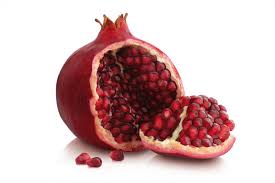
Image I was asked last year what else I might choose to put on a seder plate, and here is my response:

I would choose a pomegranate to be on my Seder plate as a reminder of the many different strands of my Judaism and the fact that I am free to have a complex layered understanding of tradition. The pomegranate is one of the seven species the bible tells us about growing in the land of Israel, (the shivat haminim), fruits which are traditionally eaten on Sukkot, a full half year from Pesach, a reminder of the connection to the Land to which I remain spiritually attached. It was said to be one of the fruits brought back by the spies to demonstrate the fertility of the land – a tempting luscious fruit that can only be eaten sensually, as Song of Songs reminds us.

Tradition tells us that a pomegranate has 613 seeds – equivalent to the mitzvot, and I particularly like the chutzpah of such a statement and that fact that we remember it while knowing that it is not remotely true. I like that the mitzvot are likened to the jewelled seeds, and the implication of richness and nourishment within them, while remembering the hard pip within each seed that can be both irritation and pleasure, and that can stay with one long after the juicy flesh has been taken. And I like the way that pomegranates are so useful in so many ways – as health food, as astringent, as spice and decoration, as traditional remedy for any number of ailments right through the body, as drink and paste and marinade. It prompts me to think of the multi-faceted ways Judaism is expressed, from the traditional covenantal relationship and discipline of mitzvot, to the loose warmth of ‘kitchen Judaism’ as people respond to the remembered smells of the different festival foods though the year.

Bible tells us that Aaron wore a special garment as high priest, and it was decorated with alternate bells and pomegranates on the hem, so that when he moved the sounds of these objects clashing would be heard and people would know he would be safe – indeed the bible is starkly clear – “so that he will not die”. This brings me from the sacrificial system of Biblical Judaism right into the modern world of Jewish community – people will pay attention to how others are, particularly those who are vulnerable. They will notice if they haven’t seen or heard them, and do something so that their lives are sustained and preserved. The pomegranate is the standard bearer for communication in community.

Another tradition tells us that the forbidden fruit eaten by Eve in Eden was not the apple (a later pun on the Latin ‘malum’ to mean both bad and apple) but the pomegranate. If it is truly the fruit of the tree of knowledge of good and evil, it would be a potent reminder at Seder that we have choices in what we do, a freedom in our lives with consequent responsibilities. We cannot accuse others for our not having achieved what we know we should have, or take refuge in the modern day ‘slavery’ to routine. The pomegranate would challenge us –“know what is important, do what is right”.

A pomegranate is similar in shape to a grenade (indeed its name in both English and Hebrew reflects this) and so it would be a salutary reminder that even that which is beautiful and health giving could easily become dangerous and destructive in the wrong circumstances, another warning on the Seder table to remind us that our Judaism can either sustain us in living well or in living selfishly and without care or thought for the other among whom we live. Choose Life! says the bible, but both blessing and curse are set before us and it is our freedom to decide which way to go.

And finally – the best way to eat a pomegranate is to cut it into two pieces, turn each upside down in one hand and hit it with a wooden spoon so that the seeds fall into a waiting container. A satisfying if difficult thing to do well, a metaphor for much of the Jewish world one might think. But the best bit comes last – once the Seder is over and a home must be found for the objects on the Seder plate, to eat a wonderful juicy fresh pomegranate must be the best end to the ritual I can think of!

Ki Tetzei – the battle against ourselves

Parashat Ki Tetzei contains 74 commandments, more mitzvot than in any other sidra in Torah.  Reading through the list, one first notices just how random and unrelated they appear to be, but on closer reading one sees patterns and trajectories, and notices how much daily living they give guidance about, drumming into us the values and the moral code of the Jewish peoples.

 The list of mitzvot covers a wide variety of topics, from the behaviour of soldiers in wartime, through to the complexities of family life; They expect good behaviour in our relationships with others, respect for property and animals, the safety of others; Abuses of power in sexual relationships are covered, also power over escaped slaves, proper behaviour if giving  loans or charging interest, timely payment of workers, the importance of keeping promises, and the passage concludes with the importance of remembering to blot out the name of one of Israel’s greatest enemies – Amalek.

This extraordinary sidra, packed with injunctions as to how to behave, begins with the words:  “Ki Tetzei lemilchama al oyvecha  – when (or if) you go out to war against your enemies..”  While it is certainly a command to the whole nation of Israel, the fact that the verb used is in the singular, allows commentators to frame the reading differently, and, taking note of the fact that this sidra is always read early in the month of Elul, suggest that the verse is referring to the continuous battle each of us as individuals engages in, fighting our own yetzer ha’ra – evil inclinations. Thus the verse becomes one of comfort almost – God will help us to take control of our own bad habits and selfish desires.

 How would we do that? Well that is where the rest of the list of mitzvot comes in.

 For example, the sidra begins with a soldier taking captive a beautiful woman, allowing her to mourn her past life and then potentially taking her as a wife. But soon it moves onto the problems between two wives of the same man, and the difficulties of fairness in a polygamous marriage, and very shortly after that the sidra discusses the problem of what to do with the stubborn and rebellious child.  Are these mitzvot really so random as they first appear?  Are they really only arranged in a sort of “family relationships” category?  Or are they connected at a deeper or sequential level? Is Torah using this arrangement of verses to create an understanding in us that everything we do can impact on what already is in our worlds, and on what may yet become of our lives? 

 So how do we engage in fighting our most selfish desires? A plain reading of the text would be that we do so simply by fulfilling the mitzvot as enumerated here, but something else is being transmitted as well – By understanding what the fulfilment of our immediate selfish inclinations may bring about in our own contexts we may learn to temper them and find some better control of the self. So not just behaviour is being demanded of us without our thought or engagement, but the reasoning for WHY such behaviour is necessary is being required of us too.

 Understanding why we do a particular behaviour has never been the key factor to cause us to change it – that is one of the limitations of many a modern therapy. We may know that smoking kills, but that will usually not change the behaviour of the smoker. And yet, behaving without understanding, just following the rules – can lead to us becoming automatons, doing whatever we are told to do by whoever we give such authority over us–  magazine writers, fashion leaders, work bosses, company rules,  even rabbis. 

 We may choose to follow rules and expectations or not, but each of us is responsible for the choices we make. And to begin to see our actions in a context that can seriously impact upon others is no bad thing as we follow our own inclinations in our lives.

 Add to that the second half of the verse – that God helps us to prevail over our enemy/inclinations and a lesson comes into sharp focus. We may think that what we do is only our own business, but we exist in a context and a setting that includes others and that includes the seeds of our own future selves. The choices we make have power and can bring about a great deal of difference for us and for those around us. We make them best when we consider that we are not alone either in the choices or in their results.

Ekev: walking on the heels of God

Ekev- The name of the sidra, is a conundrum. The root meaning of the word is the curve of the heel, and of course the resonance of the word is always Jacob – Ya’akov, so called because he was holding onto the heel of his twin brother Esau at birth.

Usually we translate the word here as ‘because’ or ‘if’.’ so we would simply read the verse that begins this sidra (Deuteronomy 7:12) as And it shall come to pass, because / if you listen to these ordinances, and keep, and do them, the Eternal your God shall keep with you the covenant and the mercy which God swore to your ancestors”, but we could also read it as “following on the heel of listening to these ordinances, your keeping and doing them means the Eternal your God shall keep….”  in other words there is an almost physical and intimate causal relationship, we can see the footprints of where we have walked with God.  There is a clear record of where we have wandered.

This way of reading the verse always makes me think of the footsteps we are said to have left on the surface of the moon, a continuing reminder of our existence and our desire to go further, learn more, dominate our environment. They stay there as a symbol both of our extraordinary ability and our extraordinary carelessness.

The famous medieval commentator Rashi makes an interesting point in his understanding of the word and its context. Unusually for such a grammarian he makes a sermonic point – while also seeing the word ‘ekev’ as connected to the heel of a foot he does not assume it to be about following on the heels of the action, but reads it as “if you will keep the statutes that you view as unimportant, the ones you would ordinarily walk over as if they are not there, then the Eternal your God will keep the covenant …”  

There is an ongoing theme in Torah: God commands us to behave in a whole lot of ways that we don’t find easy to do, caring for the poor, limiting our own greed and desires, remembering our fragility and mortality and the limits to our own ability, working together to create a just and compassionate community. We know ourselves to be commanded and we want to be like this, but we are always straying, always forgetting what is actually important and of lasting worth to give value to that which is transient and unimportant. And regularly our behaviour causes us to be estranged from God, symbolised here in the fact that the rain will no longer be a gift from heaven to the earth, that we will find ourselves on a dried up and unforgiving land, we will be forcibly reminded about what is truly meaningful.  

Rashi suggests that what is really important here is what seems at first glance to be unimportant, that it is all the small mitzvot that we must keep, the ordinary, the mundane, the unglamorous everyday acts of valuing others that we often manage to ignore. And I must say I like the idea that the saving of the world is dependent on the many small acts of kindness that we can do in a day if we choose to do so. But I am also aware of this word “Ekev” and of its associate “Yaakov “ and I remember that we are the particular children of Jacob/Ya’akov and of his better, straightened out self, Israel.

The footsteps we leave in our world as a result of the things we do and the places we venture remain for a long time, and their consequences may impact for generations. We are the Children of Jacob, whose limping gait after meeting the Angel on his way back home after living with Laban, left distinctive footprints;  And we try to be the children of Israel, straightened out at the Ford of Jabok through his wrestling with the Angel God, and whose walk was never the same.

We should be aware of where we walk, and with whom we are walking. We need to observe what we trample unthinkingly underfoot, notice the distinctive mark that our living here makes on the world. If we lived with such an awareness of the small and apparently unimportant acts that would change our world, and if we thought about the footprints we leave behind us, maybe we would be more thoughtful about how we walk through our world.


Parashat Tzav

What can we do when we feel anxious about what is happening around us, when we have no clear sense of why or how things may have come to this point, and we are faced with the limits of our own power to understand, or feel ourselves to be only partially in control of our existence?

This isn’t a novel or even an especially contemporary anxiety. The subjects of the bible narrative knew it well.

All religions dedicate themselves to working with the unknowable in some way, try to find ways – rituals and words – which will help their adherents to at least survive the vicissitudes of a potentially hostile universe, and at best to learn and grow and be able to operate with a degree of confidence as they go through life.  The great innovation of Judaism was the unification of the deity, the belief that the universe was neither random nor hostile, and that it and we were not at the mercy of some conflicting or haphazard forces, but that there is One God who cares for us, who listens to our fears and who responds to our frailty. 

With this one insight Judaism transformed the human experience.  We no longer see ourselves as flotsam and jetsam that floats in an uncaring universe, subject to random disruption and indiscriminate forces; or as the objects of the whims of higher beings, whose pain and whose lived experience make no difference in the scheme of things. Instead we know ourselves as the children of a caring Creator, whose very being we reflect as we live our lives. God may not necessarily give us what we want or even protect us from suffering, but God does give us a context in which we can live lives of value, tries to teach us and to nurture us, and is with us in the pain and in the happiness.  Because of the One God, we have meaning. And how we live our lives has significance.  And we matter.

The book of Leviticus is also known as Sefer Cohanim – the book of the priests. It is the manual, so to speak, of the group whose job it was to provide a link between the One God, unknowable and impenetrable, and the people who strive to be more godly, who follow the imperative to be holy without being quite sure what that might mean.

It is a book that we can find quite troubling, or at the very least barely relevant, as the description of the system of animal sacrifice carried out by an hereditary priesthood with arcane ritual and shadowy setting.  We can respond to it in a number of ways – as being of only historical interest, as describing a stage in a process in which we are much further down the religious line, as holding deep secrets of ethical and spiritual significance which we must study and meditate upon in order to glimpse the esoteric meaning beneath.

But however we choose to view the sacrificial system, the burning fat and incense, the sweet savour rising up into the heavens, the sprinkling of blood upon the altar – what we must accept is that this ritual, like many rituals, was designed to create something different in the world – it was a way of being able to take on the randomness of lived experience and create something far from arbitrary.  It was a recipe for creating a conscious and purposeful existence, for dealing with the existential angst of the human condition. It gives us a role and a world view in which we are not simply unknowing and impotent pawns in a bigger game – usually warfare – between two or more powerful figures, but people who matter, who are able to impact upon their environment, who by doing specific things are potentially able to change outcomes, who begin to bring forth our own realities.

            Maimonides, in the Mishneh Torah – a guide for every-Jew on Judaism, talked about some of the laws – the chukkim- as being unknowable.  He follows one strand of rabbinic tradition which tells us that some mitzvot exist whose reason is not known and for which no rational purpose can be constructed. We simply do them because God told us to. They might hold no meaning for us except that of submission to the will of God, even when – especially when – we don’t see any validation or underlying principle. 

But in the Guide for the Perplexed, a philosophical work that was not written for the ordinary Jew, he has a slightly different take on the subject.  Instead he sees such mitzvot as having an educational purpose quite different from one of blind obedience. The chukkim in this work are, so to speak, the gateways to the ethical and spiritual dimension – if we begin to understand them in their context then we will derive from them great lessons of principle and deep moral values.  Taking the sacrifices enumerated in the book of Leviticus, Maimonides uses the principle that it is impossible to ask people to take on too much at once, unfeasible to expect religious – or any – change to go from one extreme to the other. And so he explains that the ritual sacrifice of animals and of other produce was a tradition the people saw all around them, a deeply powerful ritual that, although pagan and idolatrous in origin, was able to connect the people to their spirituality. So Torah did not abolish the sacrificial system, it harnessed it for Divine Service, and it began to neuter it.  It did this, says Maimonides, by legislating a number of boundaries and limitations around the practise.  They could only be brought in one place, for example, only by the hereditary priests, only in ways that were specified in detail. The laws of purity also limited access to the Temple, and so limited people’s ability to participate in the sacrifice of animals.   This becomes yet more powerful when we realise that sacrifice is the only form of worship that Torah limits for us, and when we read the prophets who remind us continually that God does not want our sacrifices but our prayers and our good deeds. 

            If one reads Leviticus – and the notion of laws that seem to have no real purpose or use – in the way the Rambam reads them in the Guide, a number of ideas begin to emerge for us. 

One is that God is understood to be not only the Creator who provides for us a structure and a meaning that did not exist in the human world before, but that God is able to be compassionate towards us even when we are attached to behaviours that are not the most helpful. God will help us change in stages, as we are ready to take on the next step and not before.

Another idea to emerge is that God listens to us – even bends God’s will to what we are able to do and to give.  If God truly didn’t want sacrifices yet allowed us to practise them – albeit in a limited way – then we have some ability to change how God is towards us, or at least one might say that God is willing to adapt to and to accommodate our needs.

These are radical perceptions, and I find them helpful. They tell us that there is space, theologically defined and protected space, to feel insecurity and doubt. There is opportunity to try out ways of being until we find one that provides what we need to be able to say. We don’t have to be certain, we don’t have to know, we don’t have to face a hostile universe that doesn’t care about our state of mind, or about the very fact of our lives.  We can take our time to think, to cling to what we know, to explore innovative perceptions, to challenge and to be confronted in our long held perceptions.