Acharei Mot – Kedoshim: Holiness is not a state to achieve, but a process to live by.

א וַיְדַבֵּ֥ר יְהוָֹ֖ה אֶל־מֹשֶׁ֥ה לֵּאמֹֽר: ב דַּבֵּ֞ר אֶל־כָּל־עֲדַ֧ת בְּנֵֽי־יִשְׂרָאֵ֛ל וְאָֽמַרְתָּ֥ אֲלֵהֶ֖ם קְדשִׁ֣ים תִּֽהְי֑וּ כִּ֣י קָד֔וֹשׁ אֲנִ֖י יְהוָֹ֥ה אֱלֹֽהֵיכֶֽם:

Sidra Kedoshim is very familiar to us, echoing as it does the Ten Commandments, and taking the soubriquet “the holiness code”. Reform Jews read it on Yom Kippur as a reminder of what the ethical life would look like. We are aware of its physical and spiritual place in the Torah – it lies at the very centre of the scroll, and in the centre of Kedoshim itself is the golden rule – “love your neighbour as yourself; I am the Eternal”.   This law was quoted by Hillel in the first century, albeit cast into the negative “What is hateful to you, do not do to your fellow”; Rabbi Akiva declared it to be the great principle of the Torah. And many Christians know it through its repetition by Jesus, who called it second only to the commandment to love God.

So when we look at the great commandment which acts as a chorus throughout this sidra –“You shall be Kadosh (Holy) as I the Eternal am Kadosh (Holy) – we tend to immediately think of the great dictum which, if followed, will bring about a better world for us all. Indeed, if we behave towards our neighbour with as much care as we behave towards fulfilling our own needs, we would automatically be living more saintly lives than we do now. But the sidra goes on, and the detail in the second half gives a slightly different flavour to the response ‘Be Kadosh as I the Eternal your God am Kadosh”

It goes on to talk about kilayim – not mixing different kinds or species, be they animal or agricultural. It talks about sha’atnez, not mixing wool and linen together in garments. The laws of Kilayim are elaborated in Talmud which expounds and clarifies the laws of this occasionally strange principle.

It goes on to talk about the prohibition of the fruit of new trees – for three years after a tree is planted its fruit may not be used at all, in the fourth year the fruit is used only for religious celebration, after that, it is permitted to use the fruit of the tree.

And then come a whole lots of individual prohibitions or warnings – don’t eat anything with the blood; don’t practise divination or soothsaying, don’t round of the side growth on your head or your beard, don’t mutilate your flesh or mark yourself in any way. Don’t make your daughter a prostitute. Keep the Sabbath and venerate the sanctuary. Don’t turn to ghosts or familiars. Show deference to the old. Don’t wrong the stranger. Don’t falsify weights or measures.

It is such an odd mix, such a strange set of things for the narrator of the biblical text to be perturbed about. Some of the injunctions are self-evidently good to do, others read to the modern eye as ritual behaviour with no obvious meaning and some superstition implicit within them. What are we to make of not rounding the hair of the head? Or of saving the fruit for 5 years before having the use of it?

The second half of sidra Kedoshim challenges our understanding of what it means to be holy. We are out of the spiritual world and solidly into a more practical one. Holiness becomes less a matter of intention and more a matter of action. Holiness becomes something we do in relation to other people as well as a private matter between ourselves and God.

I’ve always had a bit of a problem with holiness. Not simply that I found it hard to achieve in my life, but that put as a spiritual and saintly proposition, it made me feel a bit queasy. Maybe it is my solid and gritty northern upbringing, but the way some forms of piety and piousness are expressed don’t make me feel spiritually uplifted, rather they make me want to kick the individual offering their religiosity in such a way.

It has been a consistent feature of my religious life that the most holy people I encounter are also almost universally the earthiest. I recall a verse of a song by my teacher Rabbi Dr. Jonathan Magonet which affectionately described – some may say lampooned – all the people who had seriously affected his religious growth, called “come and join the cavalcade”. The verse that comes to mind goes something like   “it is not easy to watch the prophet speak. He dribbles on occasion and he’s far too fond of sweets”. I won’t reveal which revered teacher is being described, but I can assure you that, of all the great of his generation, he is certainly the one most able to transmit a sense of the immanent yet transcendent God in such a way that it is almost as if a map of the religious journey is in your hand.

I have a problem with holiness – it seems to have acquired in modern parlance a sort of righteousness, the sanctity and piety of which have suppressed any human odour; it seems not to belong to ordinary life, but to the extraordinary and spiritually chaste living of the favoured few. But that is truly not what Jewish holiness is about – for the Jewish mind the act of holiness is one that we do, and we are made holy by our actions – think of all those blessings which begin with the formula – Asher kid’shanu b’mitzvotav, – Who makes us kadosh (holy) by the obligations to do that God puts upon us.   Look at some of the injunctions in Kedoshim – they are about trying to avoid crossing the sort of boundaries which are in place to protect the vulnerable, or to provide some self discipline, or to prevent us falling into a world view of chaos and randomness that would sap the spiritual yearning from the most determined of us.

The bible has a truly blunt and honest view of human behaviour. It doesn’t expect people to be angels – indeed it is well aware that, while made in God’s image, human beings have potentially everything of God’s image within us – we have the potential to do great evil as well as great good.   We have the potential to do nothing for vast stretches of time and by our inactivity to let evil flourish. The bible sees that people, by nature, often behave selfishly, or thoughtlessly. We face the reality that the bible wouldn’t waste time legislating against things that people would never think of doing, or, having thought of them, do. So the lists of prohibitions gives us a fascinating insight into what some people at least, got up to, and we are able to recognise ourselves in the categories of behaviour if not in the particulars. How many of us take our agriculture and food chain for granted, not caring how a crop was grown, what conditions the labourers in the field worked under, what chemicals were used, what the effect on the environment might have been. How many of us care about how the crops were harvested and transported? Yet here in Leviticus there are indicators about what is important – that the crop should be planted thoughtfully, that the harvest is not ours alone, but in some way is also the creation of system we have no power over. And how many of us practise some form of superstitious magic to gain some control over our worlds – maybe not divination or soothsaying any more, but certainly ways in which we try to ascertain the future so as to be able to feel in control. We might not believe in horoscopes or astrological charts, but we derive some obscure comfort from them too often to be able to admit to them having no effect whatsoever. The abdicating of responsibility and the expectation that others will look after us – or not – is one that is ingrained in many of us, usually without the concomitant expectation that we must do our bit to take care of the more vulnerable aspects of the world.

The biblical kedushah is an amazing concept. It is a recognition of our frailty and our vulnerability, of our self centredness and our fear of the world. And it says – this is who we are, and we are going to build on and use these fault lines to strengthen ourselves. Rav Kook too talks a great deal about holiness, and his premise that the more damaged (the more knots we have in his terms), the more complex and convoluted our personalities, the more we have the potential to become something different and holy – as we work through our faults, so we become more experienced about the world, more compassionate about others, more honest about possibilities.

Holiness is not an unachievable goal, nor is it reserved for the good guys who never do anything really wrong. It is the inevitable result of our struggling with ourselves honestly, of our getting to know who we are and making real efforts to adapt that knowledge into the real world. There is nothing other-worldly about the Jewish concept of holiness, nothing necessarily spiritual or ethereal. Holiness is the outcome of our living in the world, of our focusing on the present and being aware of our behaviour and the impact it might have. It is the result of honest dealings and honest struggle. When Jacob met the angelic figure at the Ford of Jabok and struggling all night was permanently wounded in his groin, the supernatural figure blessed him and changed his name to Israel, saying he was one who had struggled with God and prevailed. Yet immediately the name Jacob is used again, as he tries to slide his family past his brother without effecting the reconciliation his brother so wanted. The name Jacob is used interchangeably with the name Israel for the rest of his life. Jacob isn’t any more holy for the experience, just wiser and more thoughtful and occasionally more tuned in to the right behaviour. I take comfort from that double use of name, because it tells me something that makes sense for me. Holiness is not a state to achieve; it is a choice to make every minute of the day, a process which we follow again and again, sometimes taking the holy way, sometimes not. It is in the struggle that we encounter God, that we become a little more what we could be.   We grow in holiness with every encounter, but we remain rooted in the world. And that is the way life should be.
Shemini: When Silence is the only response

One of the saddest moments in bible is found in Shemini – Aaron and his sons have just been inaugurated as priests in a week long ceremony and now the tent of meeting is being dedicated. The first offering is given by Aaron and is accepted as a fire descends from the heavens to consume it. The people bow down and worship. And then Nadav and Avihu the two older sons of Aaron offer a strange fire before God and the fire descends once more from the heavens – to consume their lives.

Aaron’s response – “va’yidom Aharon” – is to be silent. How can this be? To have finally reached the climax of priesthood only to see two children of your children destroyed by the object of that ministry. To be a father twice bereaved yet not to protest and shout out. Why does Torah tell us that Aaron, the man whose speech was smooth and fluent and who would act as the mouthpiece of his brother Moses in Egypt, had no words at this moment?

Words can be so healing – we are taught always to express clearly what we need in order to communicate with others, to use words to acknowledge our feelings be they painful or joyous. From private prayer to modern psychotherapy we are taught about the power of words to change or to complete us. Creation begins with words: God speaks and creation comes about. We transmit our tradition in storytelling, we see ourselves as a people who argue with God, who are not ever silenced – we are a noisy, challenging people who will argue with a text, giving voices to the long dead sages of our tradition. Yet “Aaron was silent” (Lev. 10:3). And this silence is seen in our tradition as a right and proper response – the Midrash Leviticus Rabbah comments on this verse: “Aaron was rewarded for his silence.” Clearly we have to look deeper. Why is the silence of a man so unfairly hit by tragedy seen in our tradition as a response to be rewarded? Why should he not be crying out against a God who did not protect the young men whose only wrong seems to have been an excess of religious fervour, who certainly did not deserve to die?

In the Talmud we find the statement that “the world is preserved only because of those who stop themselves from speaking out in difficult moments of strife” (B.T. Hullin 89a). We also find that it is an attribute of God to be seen to be silent at such times, – a rereading of the verse ‘mi chamocha ba’elim Adonai’ is understood not as “who is like you amongst the Elim – the mighty gods of other peoples”, but rather as “Who is like You, able to be silent?” – “Ilmim” (BT Gittin 66a). Sometimes silence is the only response. Anything else would diminish the enormity of the experience.

In Jewish tradition one does not speak to a mourner until the mourner speaks to you. It is a tradition that understands the depth of grief. When grief is intense any statement is bound at best to be irrelevant and at worst a serious intrusion. That is not to say we ignore a mourner or their grief, we do not cross the street to avoid meeting them nor leave them in their pain – but there is a communication that surpasses language, which any words would disrupt or divert. In mourning that may be simply sitting with and being with the mourner, in shared silence. It may be a warm embrace or a fleeting touch of the hand. It may be a meeting of the eye, a moment of contact which says “I am here and I care”. There is nothing more to offer than the compassionate presence – certainly there is nothing further to say.

There are times in our history when words are not just unhelpful – they might be actively destructive, causing a break in the relationships between us or between us and God. And these are the times when the silence of Aaron becomes understandable.

The text emphasizes that Aaron’s two elder sons were acting “before the Eternal.” Both the offerings they made and their death were “before the Eternal.” The plain sense of the text indicates that, apparently moved by religious fervour, they added an extra incense to the usual incense offering without having been commanded to do so. That is all. One would have thought this is no great crime for young men who have just finished their priestly training and are one day into the work. They are simply intoxicated with the role, acting out of extraordinary piety to add yet more offerings to God. At most they are guilty of what we are told in a later passage in Leviticus – that “They drew too close to the presence of God” (Leviticus 16:1). Surely we could expect for Aaron to respond to their violent and sudden deaths by arguing with God, just as Moses had done on several occasions before this. Surely Aaron could justify the actions of his sons to God and demand some compassionate – even miraculous – response. But Aaron was silent. He made no attempt to communicate his anguish – and surely his anger – to God.

This is unusual in our picture of Aaron, which has been improved in rabbinic teachings so that he becomes an active pursuer of peace (Avot 1:12 etc), a man who advocates peace and who is the earliest practitioner of what we now call “shuttle diplomacy. Yet in this situation his skills are redundant. There is nothing to do, nothing to say. His tragedy is too raw, too personal, too much. Should he speak what could he say? If he is able to put into words even the smallest part of his pain he would surely only create a rift between himself and God – how could he not? And what benefit would his speech produce? God is clearly not going to perform a miracle, turn back time, resurrect his dead. There is nothing, nothing at all, he can say.

This week we will be commemorating an event as raw, as incomprehensible, as painful as the event in Shemini – it will be Yom HaShoah and we will be coming together to be with each other in order to remember. But what will be able to say in the face of the enormity, the singular extra-ordinary time when our people were persecuted and destroyed with terrifying efficiency on a grand scale by national governments? There are those who railed against God, whose words led them to a permanent rift, losing their faith and any possibility of comfort from our Jewish God. There are those who attempted to make sense, who spoke of the implicit guilt of the victims – just as there are those who say that Nadav and Avihu must have been guilty of arrogance or even idolatry. And those whose attempts to make sense of the Shoah lead them to see the State of Israel as having emerged from it as a sort of divine compensation. There are those who are able to forgive God for the silence in the Shoah, but will never forgive people and so live lives of alienation and bitterness. But any response is too small, too diminishing of the event, pointless. Some things require us not to understand, not to argue against, not to justify nor to console – they are things about which the only response is a silence in which we can be. Not a silence that suppresses or ignores, but a silent being together.

During the service of brit milah (circumcision) there is a verse taken from the book of Exodus about the blood of the Passover lamb – God says “va’omar lach b’damayich chayee” –I say to you by your blood you shall live. The Dubner Maggid asks – why the extra word – lach – for you? And answers his own question – this is about the precious blood that is spilled – God will respond, will not leave you in despair. But B’damayich chayee can also be translated a different way – damayich does not have to mean ‘your blood’ but ‘your silence’. Sometimes it is only with silence that we can go on – any other response would be too destructive to us, would drag us into a vortex of pain from which we would be unable to emerge.

I cannot find it in me to believe that the shedding of blood is the call to which God will always respond, regardless of the teachings of our tradition. But I can understand the need for silence, that silence sometimes is the only thing that will allow us to go on, to not be desperately searching all the time for an elusive explanation, for a response that will make sense, for a grand plan in which such terrible sacrifice is given honourable meaning. Like Aaron knew, some things are beyond words, beyond reason, beyond our ability to contain or order their meaning. Sometimes you just have to simply be, to witness, to remember, and to be with the people who themselves experienced the horror in compassionate wordless togetherness.

Parashat Vayikra HaChodesh: organising time and encountering nature. Or “our experience of nature reflects and enhances our experience of God”

“This month shall be for you the beginning of the months, it shall be for you the first of the months of the year.” (Exodus 12:2)

This is the very first commandment given in bible to the entire nation of Israel and rabbinic tradition understands that it commands us to sanctify each new month, and gives us the authority to declare which is the first day of the month. This declaration was done originally through the examining of witnesses by a Beit Din – rabbinic court – in Jerusalem. Talmud gives very detailed instructions about this activity, not surprising given that this declaration and authority over the calendar by the Rabbis is said even to bind God – the Talmud (Rosh Hashanah 8b) declares that the verse in psalms (81:4-5) “Sound the shofar on the new moon for our feast day, for it is a law for Israel, and a ruling of the God of Jacob” (a piece that is central to our Rosh Hashanah liturgy), means that the Court Above does not enter into judgment on Rosh Hashanah until the Court Below has declared the new month of Tishri.

This commandment gives the Jewish people the authority to decide about time. The whole Jewish year, all of Jewish Time, including deciding the date for legal or taxation or deciding ages or festival observance, is dependent on the Court declaring the new month, having listened to and examined all the witnesses who came to speak of having seen the new moon. This control over deciding time is extraordinary, giving the Rabbinic Court a power akin to God’s, Who created time. Being able to control one’s time means being free in a very powerful way – slaves do not manage their own time, and in modern times the balancing of work/life is a critical part of how we experience our lives.

The declaration of the new moon was one of the three activities seen as fundamental to Jewish identity and therefore banned by the Seleucid Empire, against whom the Chanukah revolt took place. The other two were the observance of Brit Milah (circumcision) and Shabbat.

There are two rituals today in which we are able to observe the turning of the month. The first is familiar to many, the Birkat haChodesh read out in synagogue on the Shabbat before the New Moon (except the new moon of Tishri) to remind the community of the fact. Along with the announcement of the date the New Moon would be seen we read: “May it be Your will, our God and the God of our ancestors, that You bring this month to us for goodness and for blessing. May You give us long life – a life of peace, a life of goodness, a life of blessing, a life of sustenance, a life of physical health, a life in which there is fear of heaven and fear of sin, a life in which there is no shame nor humiliation, a life of wealth and honour, a life in which we will have love of Torah and fear of heaven, a life in which our heartfelt requests will be fulfilled for the good. May the Holy One, Blessed is God, renew it for us and for all Your people, the Family of Israel, for life and for peace, for joy and for gladness, for salvation and for consolation, and let us say: Amen.”

But there is another ritual called Birkat haChodesh – and sometimes (wrongly) called Kiddush Levanah – the Sanctification of the Moon, when we bless God as we stand under the night sky in the presence of the new moon. The ritual comes from Talmud, where in Tractate Sanhedrin we find the text of the Blessing: “Praised are you, O Eternal our God, Sovereign of the Universe, who created the skies with Your word, and all heaven’s host with the breath of Your mouth. You gave them appointed times and roles, and they never miss their cues, doing their Creator’s bidding with gladness and joy. God is the true creator who acts faithfully, and who has told the moon to renew itself. It is a beautiful crown for the people carried by God from birth (Israel), who will also be renewed in the future in order to proclaim the beauty of their creator and God’s glorious majesty. Praised are you, O God, who renews new moons.”

Around the Talmudic text we find the idea that the ceremony should take place on a night when the moon is growing (not necessarily the New Moon), preferably on Saturday night when the celebrant will be wearing their best clothes and will be happy. There was a custom of showing one’s joy by dancing and leaping towards the moon, raising the body on tiptoes three times while reciting the formula “As I dance towards you, but cannot touch you, so shall none of my enemies be able to touch me!” and everyone should say to each other “Shalom Aleichem”: “Peace to You”

I have taken part in this ritual within a community exactly five times in my life, but each time have become more aware of the praise of nature and of God’s role as the creator of nature, which is something that we lose often in our liturgical mainstream. Each time the symbolism of the moon, which waxes and wanes, which sometimes hangs low and almost tangible in the night sky and which sometimes is hidden; the moon which influences our world so powerfully but so invisibly – from the flow of the tides to the stable axial tilt; from the comfort of light at darkest night and darkness of a moonless night – the moon symbolises so much more than just a satellite orbiting the earth and lit by the sun. It symbolises continuity, growth and renewal, weakness and ending followed by increase in strength and fulfilment. It is no wonder that Jewish texts liken the people Israel to the moon, with our fluctuating history and our constant return to life – the moon symbolises hope, renewal, constant change within a clear set of parameters. Talmud tells us that Rabbi Yochanan said “reciting the blessing over the moon at the appropriate time is like being in the presence of the Shechinah (Divine Presence).. and the school of Rabbi Ishmael said “if the Children of Israel are privileged to greet their father in heaven once a month, it is enough”. Now while I am not advocating a connection with Jewish ritual only once a month, it is a powerful reminder that our experience of nature reflects and enhances our experience of God. And we can experience nature at any moment – currently the blossom is out on the trees and the spring bulbs are flowering. The encounter with nature only takes for us to open our eyes and see – and from that looking at our world we can feel hope and a sense of the continuity through the changing world. Be it the moon, be it other aspects of creation, be it the Creator, the privilege of perceiving this hope must be enough.

Image by Eric Teske (CC BY-NC 3.0)

Parashat Vayakhel: how do you make a community?

How do you make a community?

In classical Hebrew there are three different words for community: eidah, tzibbur and kehillah, and they each describe a different way of being a group together.

Eidah is the political body, the whole group of people with like minds and values, who have a shared sense of identity and purpose. It comes from the root to witness and in bible it is used to describe the whole Israelite people who travelling together having had, and continuing to have, a shared experience and a shared destiny.

Tzibbur, a later post biblical word for community, comes from a root that is to do with heaping up or piling up, and is generally used to describe the praying community. It is the descriptor of the organising principle of the Jewish religious community, the minyan, the group within which prayer is shared and heard. The word tzibbur implies that there are diverse individuals who are joined together for a particular purpose and time – normally understood to be communal worship activities. The laws of the tzibbur form the conceptual framework of community living; they are predicated on and sustain the spiritual life of the community.

The third word used to describe community – ‘Kehillah’ is something that contains both the meanings of Eidah and Tzibbur and more. It goes beyond being a community of shared prayer and shared mission, and looks towards caring for the health, educational, social and welfare needs of individual Jews. It is what we now think of if asked to define what a community should be, providing not just for our practical and functional needs, not just for our spiritual needs, but for our social activities, our diverse interests, our wellbeing.

The sidra vayakhel begins with Moses assembling the people, causing them to become a ‘kehillah’. From having led them out of Egypt and through the Sea of Reeds, from having caused them to be fed and given water, from having been the stern Lawgiver to the people, approaching God on their behalf, and bringing rules and judgments, Moses now does something quite different for them. He brings together the whole ‘edah’ as a ‘kehilla’ (Vayakel Moshe et col adat bnei Yisrael vayomer alei’hem: eleh hadevarim asher tziva Adonai la’sot otam” – Moses brought together as a kehillah all the eida of the bnei Yisrael and said to them, these are the things which the Eternal has commanded to do them)

He then instructs them about two things – firstly about Shabbat, a day of rest to follow six days of work, a day when no fire shall be seen in their homes. And secondly about the mishkan, telling them that col nediv libo – everyone whose heart was willing, (ie everyone who wanted to do so) should bring offerings to God, and then he lists an extraordinary number of objects and materials – gold, silver, acacia wood, rams skins, onyx stones…..

The people go and then come back laden with offerings. There is a strange phrase here – ve’ya’vo’u ha’anashim al ha’nashim – literally the men came upon the women. – and midrash tells us that this phrase tells us that the women came to make their donations first, and the men followed them, a lovely inversion of the story that the women had not wished to give their gold and jewellery for the building of the golden calf, demonstrating that they understood the importance of the mishkan and the abhorrence of the golden calf as a worship focus.

Whether this gloss on the verse is a good one is a moot point. I personally do not like it but I find hard to make any other sense of it. But what it does do is draw attention to the individuality of the givers – both men and women, each bringing what they have, what they can do, what they can make. They each use their skills and their materials to the best use of the mishkan. The focal point for the community is being made of the diverse skill sets and abilities of the entire community, freely giving above and beyond what was needed. The creation of the mishkan is a collective act, a symbol of the diverse community, a representation of its shared beliefs. Building it is an event that creates more than a powerful and beautiful edifice – it is an act that organises a people into a community.

How does one build a community? One recognises that a community is different things at different times, and it is different things to different people, and yet there is a golden thread that holds it together through time and space. Moses uses two different techniques to cause the community to come together – he creates sacred time and sacred space – or rather he brings the community to come together to create sacred time and sacred space. From being an eidah – a body of people with shared experience and destiny who may have nothing else in common, Moses used time and space to make a kehillah – an eidah that encompasses individuality and diversity and shapes it into shared and sustaining community.

Dedicating time and space to something one values is always the only way to develop it, to learn about it, to grow it. Making sacred space and making sacred time are the lynchpins of making sacred community. But doing in such a way that everyone who wants to can be involved, can give their skills, their time, their interests, their knowledge, their labour – this is the lesson we learn from the ultimate community building project of the book of Exodus, the building of the mishkan, the place where God did not dwell per se, but which reminded the people that God was among them.

Purim: blurring distinctions so that all are valued the same

We will soon be celebrating Purim, a minor, post biblical, and probably Babylonian festival which has been absorbed into Judaism. The book of Esther tells of the evil Haman who is determined to kill the Jews, of Mordechai the Jew who finds favour with the King for having foiled an assassination plot, and of Esther herself, dependant relative of Mordechai, who is married to the King after he has banished the first Queen Vashti, for insufficient respect.  It is a strange festival in so many ways. Probably a fictional retelling of an older myth, it deals with anything but fiction – the recurrent problem of anti-Semitism. Unusually the book does not ever invoke the name or presence of God, and for the first and only time in our texts or our traditions, it takes pleasure in taking revenge on the ones who wanted to destroy the Jews.

Purim is a sort of inverted, upside down and inside out kind of festival. Beginning with the evil Haman wishing for all the Jews to be killed, it ends with the death of Haman and all who seek to do his work. Many of our customs are deliberately subverted – we wear fancy dress costumes to the service, are commanded to drink until we cannot tell the difference between the phrase “cursed be Haman” and “blessed be Mordechai” (Talmud Meg 7b). We create Purim spiels which make fun of the establishment,  make a lot of noise and create a carnival atmosphere where ‘anything goes’, celebrate the marriage of Esther the nice Jewish girl to a non-Jewish potentate with many wives…. Really, nothing is sacred when we think about Purim.

But that said, Jewish values continue to shine through in this strange festival. Purim reminds us not only of the reality of being Jewish amid a world that seems determined to misunderstand us – but it also commands us to care for those who are needy in some way.   The commandments to eat, drink and celebrate this festival are accompanied by the commandment to give tzedekah.   In the Book of Esther, we read, “the same days on which Jews enjoyed relief from their foes, and the same month which had been transformed for them from one of grief to joy and from mourning to festival – they were to observe them as days of feasting and merry-making, and as an occasion for sending gifts [mishloach manot] and presents to the poor [matanot l’evyonim]” (Esther 9:22).

In our giving matanot l’evyonim on Purim, we are recognizing the need for an inversion in society, a turning upside down of the inequalities we see. By engaging in social action on Purim, we hope to erase the hierarchy of the haves and the have-nots. In this strange carnival time while forgetting our usual inhibitions and turning our usual routines on their heads, we are also reminded that we have the power to transform the lives of those who are suffering, to turn their days of mourning into days of joy.

Giving to the poor on Purim is something intrinsic to the celebration – so much so that even the poor must be given enough welfare from the community in order to be able to give two gifts to the poor themselves. In effect, this law blurs the distinction between rich and poor, so that the perceived gap in wealth is erased. Rather like the Talmudic dictum that one should be so drunk as not to be able to recognise the difference between blessing Mordechai and cursing Haman, one should also not notice the distinctions in monetary worth of different people. All are valued the same for this festival, as we experience a kind of ideal world where truly all are equal.

There are all sorts of ways in which you can participate in the mitzvah of matanot l’evyonim. Many charities and social projects that are dedicated to improving the lot of the poorer in society. The important thing is that in the spieling and the laughing and the reading and the booing and the whole megillah of Purim activities, that this is one we can do quietly and easily.

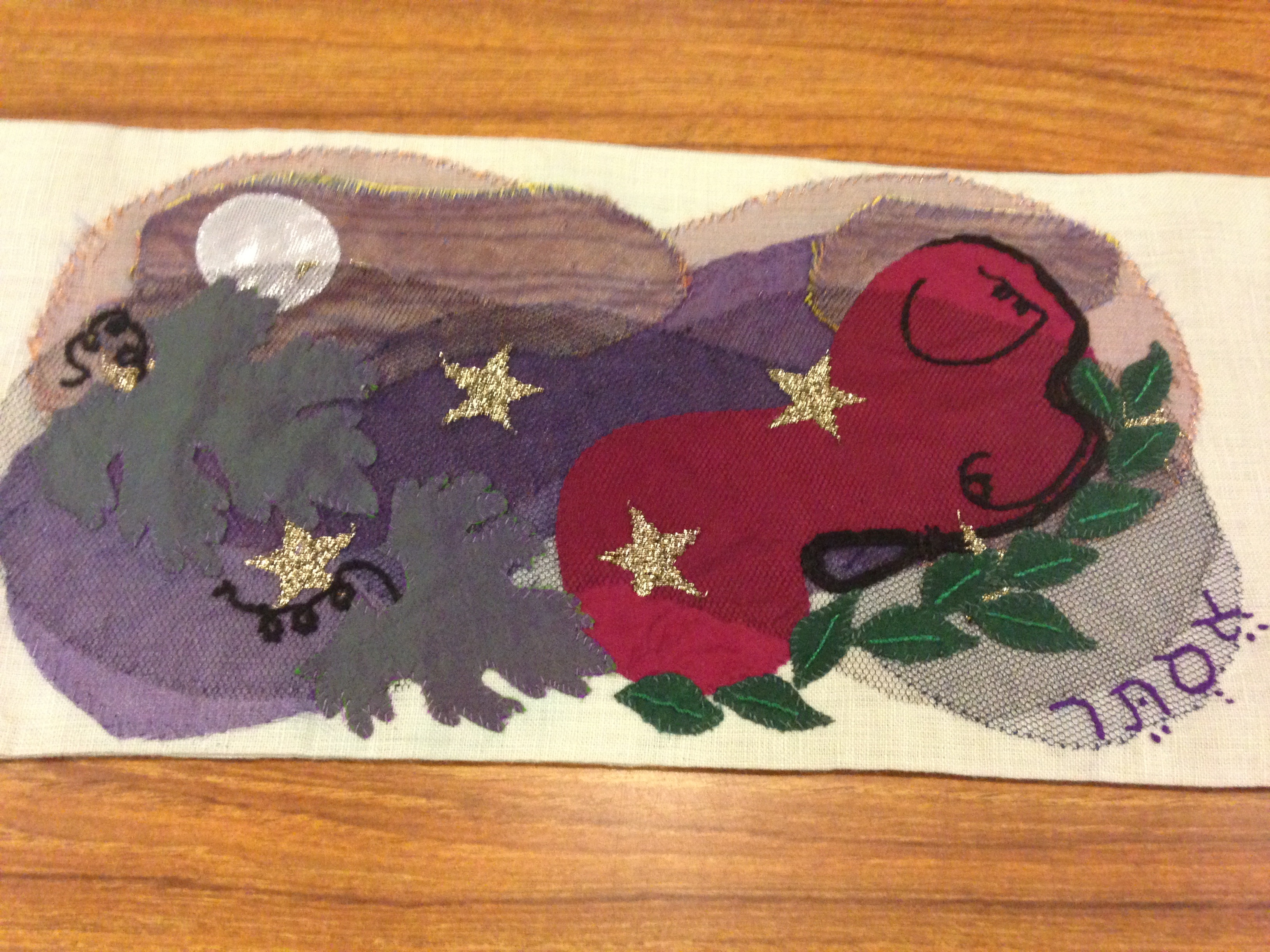
Esther on scroll binder

image: collage by Caroline and Naomi of Esther made for scroll binding

Parashat Tetzaveh: the Ner Tamid is not only a symbolic reminder, but one that tells us to tend our relationship with God

Every synagogue has within it a Ner Tamid, a constant and continuously illuminating light that burns above the Ark. There are a variety of ideas about exactly what it symbolises – it is often associated with the menorah, the seven-branched lamp stand which stood in front of the Temple in Jerusalem. Or with the continuously-burning incense altar which stood in front of the Ark. Our sages interpreted the Ner Tamid as a symbol of God’s eternal and imminent Presence in our communities and in our lives – essentially it is a symbol of the eternal nature of our Covenant with God.

In Parashat Tetzaveh, Aaron is charged with the duty of attending the Ner Tamid – Le’ha’alot Ner Tamid – a verb that doesn’t actually mean “to light” (which would, like the Shabbat candle blessing be ‘lehadlik” but instead literally means ‘to cause to rise up’ or ‘to elevate’ the eternal light.  We are told that every evening Aaron goes into the tabernacle and lights the seven lamps of the menorah (candlestick) so that they will burn and illuminate through the night,  and he ‘elevates’ the Ner Tamid too. So does this mean that the light of the Ner Tamid is like that of the menorah, not a perpetual flame but one that burns out each day?

The great medieval commentator Rashi asks about the unusual verb that is used – Le’ha’alot Ner Tamid, and says “one should deal with the flame and tend it so that it rises on its own” So Aaron would not actually have to relight the Ner Tamid, he would have to nurture it (trimming the wick or adding the oil) until the flame rose on its own. So this instruction to Aaron about the raising of the light of the Ner Tamid is nothing to do with illumination or lighting the lamp, it is about the nurturing of an existing flame, about the daily renewal of something profoundly important.

The Ner Tamid symbolises the eternal nature of our covenant with God – the real relationship that is always present – if not always acknowledged – between us and God. And just as the Ner Tamid needs regular and frequent tending, so does our relationship with God need regular and frequent attention if it is to be at its best.

In Pesikta de Rav Kahana – an Aramaic collection of midrashim, we find the story of Rabbi Aha, who says of the Ner Tamid that Israel is the olive tree and God is the lamp. When oil from the olive tree is put into the lamp, then the two together give light as one unity. So the Holy One will say to Israel “My children, since My light is your light and your light is My light, let us go together, you and I, and give light to Zion”.

The purpose of our covenant with God is to work to bring more light into the world, to make the world a better place by collaborating with the creator to bring about justice and righteousness in our world. If we see a Ner Tamid simply as a beautiful artefact hanging in a frequently empty building, then we miss the point that it is making – that each of us must make a daily effort to enlighten and improve our world.

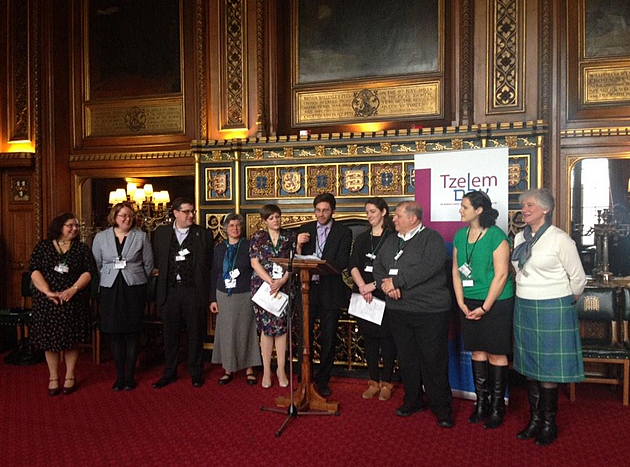
The Launch of Tzelem at the Speaker’s Rooms 28th January 2015

http://static.wixstatic.com/media/79c59a_82884f3f11aa41e2874a41b3d97566d5.png_srz_p_630_467_75_22_0.50_1.20_0.00_png_srz

In the beautiful and opulent surroundings of the State Rooms of the Speaker’s Apartment in Westminster over 60 Rabbis and Cantors from the different Jewish streams in the UK came together to launch a new organisation: Tzelem- the Rabbinic  Voice for Social and Economic Justice in the UK.

Founded on the Jewish principle that we are all created in the image of God (b’tzelem Elohim), Tzelem builds on the prophetic tradition of the Hebrew bible which speaks of the vital importance that social and economic justice is available for everyone.  Jewish tradition has long advocated the rights of the marginal and the powerless, and our teachings are rich in texts calling for us to take part in asserting those rights, and standing up in the face of the powerful in order to achieve them.

It is the purpose of Tzelem to continue this tradition by critiquing the issues at the root of our society that keep the vulnerable and powerless exposed and helpless.  We aim to take action in order to change the structures that maintain the marginality of the weakest in society, and to change the way they are viewed.

Four Rabbis spoke from their own close experience of mental illness, child poverty, homelessness and immigration. It was a sobering experience made even more poignant in the surroundings in which we heard it, to be told that one in four children in Britain do not have adequate nutrition. It was painful to hear stories of the rapidly downward cycle into homelessness that left people without hope for the future, or so ill after exposure to the elements that their whole self fragmented. It was moving to see a colleague speak of his own struggle with bipolar disorder and the depression that accompanied it made all the more difficult because of the fear of stigma, disapproval and rejection.

 Rabbis and Cantors, like other clergy, see every strata of society and this is one of our strengths and one of the reasons we must be a driving force in contributing to a fairer society. Our texts and tradition demands it of us, and so does the lived experience of our role. We see what is often hidden from other members of society – the desperation, the poverty, the lack of hope, the pain and the willingness to ignore the weak and vulnerable in the busyness of life. Tzelem has come like a ray of hope into the worlds of many colleagues. We have watched other faith traditions step forward and demand justice and economic security for all members of our society and we spoke out as individuals each in our own milieu, but the creation of this platform with rabbis and cantors from across the spectrum of observance has given us energy and hope that our voice will be amplified, that together the voice of Judaism and its demands for justice for all will be heard in all the corners of the United Kingdom.

At our launch we reminded ourselves of what our tradition demands of us, and we reminded ourselves of the poverty and the pain that exist within the communities in which we live. We cannot stand by while the pain of our fellow human beings calls out to be addressed and ameliorated. As Hillel wrote two thousand years ago “If I am not for myself, who will be for me? If I am only for myself then what am I? And if not now, when? (Avot 1:14)

For more on the texts of the launch and on Tzelem, see http://www.tzelem.uk/#!Launch-Resources/c14bu/7293522D-5710-49E6-BA0A-8E5986FA912A

Parashat Terumah: Building the space for a non incarnate God to not dwell – the elevation of giving

In parashat Terumah we are given the instructions for building a sacred place, and a very detailed directive it is. Almost an architect’s blueprint. It seems all the more strange that such a clear and comprehensive picture is drawn for the building in which a totally abstract and absolutely non incarnate God may (or may not) dwell.

The sacred place is described as “mishkan”, the place of dwelling, yet that is decidedly what it is not. It is, instead, a signal to remind the Israelites that God is among them – and God makes this clear in the instructions for the Children of Israel to build the sanctuary – “Make a mishkan so that I will dwell among them.”

The Torah makes clear that this mishkan is to be symbol and metaphor of the relationship between God and the people who are in covenant bond with God. It is to describe, in a variety of different ways, the relationship between them; it will even in some way create the relationship, it will certainly make clear some of the central requirements.

To begin with, God involves and obliges the whole people. “Daber el bnei Yisrael va’yikhu li trumah me’eyt kol ish asher yid’vennu libbo, tikhu li et trumati – Speak to the Israelite people and accept for Me gifts; you shall accept gifts for Me from every person whose heart so moves them” (Ex25:2) Because the mishkan is to serve the entire community, it must also be constructed through the involvement of the entire community. But this is not a tax on the people; instead Moses is to accept the free will offerings of the people. The Terumah is specifically something set aside by its owner and dedicated for sacred use.   In other words, the people must be in the habit of thinking of their property not as theirs alone, but as something over which they have current charge – much, I suppose, as we are encouraged to think of our children. The use of this property therefore is to do the best we can with it – it is only a loan to us, not our exclusive asset. For the people to give a portion of their property to a sacred purpose, willingly and with the intention of creating a better world, is an implicit assumption behind the building of the mishkan.

The word Terumah is an interesting one. Its root is from RAM – to lift up, to elevate. Presumably it derives from the physical act of lifting up that which is offered to God, but there are Chasidic teachings that the act of offering a gift to God elevates not so much the gift as the giver. We are told that those who collect for charitable purposes must ensure that they have pure intentions before they start, but those who give to charity don’t have to be so worthy – the act of giving purifies them ( (Levi Yitzchak of Berditchev/ Shalom of Kaminiki).

So the giving must be from everyone, it must be offered willingly with the understanding that God is the source of all, as part of the working construct that we must acknowledge God’s place in our world.

The mishkan is also the demonstrable proof that the agreement at Sinai is working. When Moses repeated to the Children of Israel all the commands of God and all the rules, at the theophany at Mt. Sinai, we are told that they replied “All that the Eternal has spoken, we will faithfully do” (Ex24:3,7etc) The phrase ‘na’aseh v’nishma’ – ‘we will do and we will understand’ – the literal response of the people, is borne out here in the building of a sacred space which is both the dwelling place and emphatically NOT the dwelling place of God. . In building the mishkan they will take the step into putting into material practise what has only now been a verbal agreement.   In building the mishkan they will learn much more about God.

When people built holy places in the ancient world, they were constructed to house the image of the deity to whom they were dedicated. This holy place was different, for there was to be no image at all. It is – if you will pardon the expression – a graphic representation of the non-representation of the Jewish God.

However there was something in the mishkan, and that something was the Ark, the first of the furniture of the mishkan to be described, and lovingly detailed. The Ark and its cover were explicated carefully, and the Torah instructed the people that the ‘Edut’ the witnessing, was to be placed in the Ark. Quite what was it that was to go into the Ark? Edut is an ancient word meaning covenant or treaty – and it seems that what went into the Ark was the physical container of that treaty – the tablets of the brit (covenant), the stones on which were written the ten commandments.

cherubimIn the ancient Near East, there would be boxes placed under the throne of the ruler, and in those boxes would be placed the laws of the land, and the treaties made with other peoples. In effect, the foundation of the throne of the monarch was a box which stored the laws.

The Ark contained the Edut, the treaty of the children of Israel with God. It is, in effect, the box at the base of the throne of the divine monarch. It would have been very clear to the people of the time that the presence of the Ark pointed up the absence of the throne above it – a clear symbol of the abstractness, yet absolute monarchy of God. Above the Ark was the kapporet, the cover made of a flat sheet of gold, from whose two ends rose two cherubim. God told Moses that he would meet Moses there “I will speak to you from above the kapporet, from between the two cherubim” (Ex 25:22). There is no description of the cherubim, though one can safely assume that they were not the chubby figures of gently winged angelic babies we see depicted in religious art. It may be that they are related in some way to the verb karov, to be near, the word which we use to denote the way of prayer (drawing near) implicit in the making of sacrifice. It may be that they are related to the Akkadian word ‘kuribu’ originally meaning ‘to pray’, but also used to describe creatures which were part human, part bird and part beast, and which would guard the entrance to pagan temples and petition the deities on behalf of the worshippers.

Whatever the cherubim were, they were clearly of significance, not the least being that they symbolised the difference of this understanding of God from any other – they could not petition a deity for there was none in the holy place to petition. Instead they highlighted the abstract nature of the Jewish God, the absence of a discernible throne, the absence of a depiction of the deity. The book of psalms (99:1) describes God as one who is yoshev ha kruvim – the one who rests upon the cherubim. The cherubim, like the Edut, represent the base of the throne of God – a throne which is not built, a throne which will remain empty.   When God speaks, it is from above the Ark, from between the cherubim, from a place outside of space.

When all the people willingly bring their offerings to create the place that represents an understanding of God they are still finding difficult (witness the golden calf episode that began this enterprise); when they elevate themselves by giving, when they demonstrate their understanding that God is the source of their wealth and their possessions, when they deliberately build a shrine that is to remain empty, a throne that does not exist, then God dwells among them. The building of the mishkan teaches us so much about Jewish values and Jewish community, and it points out to us the limit of our understanding of God.

Women’s Voices and the Public Space:Tradition and Texts that must not disappear

I am increasingly convinced that unless women know the texts of our own tradition, we will be at the mercy of the interpretations of those who wish to keep women’s voices from the public sphere. The tension that exists between those who wish to shut women up and the rights and desires of women to speak and be heard has been around for hundreds, even thousands of years. And yet the texts upon which our tradition actually stands are unaware of such tension. It is clear that women and men both had a voice that must be heard, there is no cognizance or pattern in bible of women being silenced. Indeed the voices of the matriarchs are powerful drivers of the narrative, their needs are documented, their feelings acknowledged. Indeed one of my favourite overlooked verses in bible is when Abraham is told to listen to the voice of Sarah: “And God said to Abraham: ‘Let it not be grievous in your sight because of the lad, and because of your bondwoman; in all that Sarah says to you, hearken to her voice; for in Isaac shall seed be called to you.” (Genesis 21:12)

I am well aware that in Genesis 3: 17 God punishes Adam, apparently because he listened to his wife’s voice: “And to Adam God said: ‘Because you have hearkened to the voice of your wife, and have eaten of the tree, of which I commanded you, saying: You shall not eat of it; cursed is the ground for you sake; in toil shall you eat of it all the days of your life.” But these two verses do not need to be in opposition. In the story of the eating of the fruit of the tree, the words “because you have listened to the voice of your wife” are apparently superfluous in that Adam also ate of the fruit of the tree. So what is the problem here? Chaim ibn Attar (known as the Or ha-Ḥayyim) a prominent 18th century Moroccan Rabbi suggests that the problem is that Adam listened to his wife but did not engage her in conversation and so did not understand the provenance of the fruit that she was giving him. If we extend this argument to the verse where Abraham is told to listen to Sarah, his listening (presumably a more dynamic and thoughtful listening than that of Adam) leads him to do what God wants. The point is that both voices in active conversation, with active listening to the other, are required, and not the one way control where women are instructed by the voice of men to keep their voices silent. That way lies the fate of Adam, cast out of the garden because he did not actively converse with his wife.

The classical world did not appreciate the voice of women in public space, and it seems to me that Judaism (along with other traditions and cultures) have whole heartedly adopted the mores of the Greek and Roman worlds where it comes to the voices of women. Mary Beard wrote a wonderful treatment of women’s voices in this classical world which you can access here http://www.lrb.co.uk/v36/n06/mary-beard/the-public-voice-of-women and I recommend that you do so in order to see just how much syncretism has gone on in order to suppress the sound of women’s voices. She speaks not only of the systematised disempowerment of women in the classical world but also of the thinking behind it, writing that “to become a man – and we’re talking elite man – was to claim the right to speak. Public speech was a – if not the – defining attribute of maleness. A woman speaking in public was, in most circumstances, by definition not a woman.”

But in the world of bible the genders were not so defined, though certainly the rabbinic literature is influenced by the view of women as being of lower status that threads through the law and customs from the Roman world. The rabbis might have absorbed this view, but it comes to them from a world view outside the ur-texts of our tradition.

So here is a list, not exhaustive and not definitive, of the voices of women singing and dancing and loudly celebrating in the presence of – indeed alongside – the men.

The songs (and dances) of Women

  1. Miriam dances and sings with timbrels in a victory song Exodus 15: 1-3, 20 – 23

א אָ֣ז יָֽשִׁיר־מֹשֶׁה֩ וּבְנֵ֨י יִשְׂרָאֵ֜ל אֶת־הַשִּׁירָ֤ה הַזֹּאת֙ לַֽיהֹוָ֔ה וַיֹּֽאמְר֖וּ לֵאמֹ֑ר אָשִׁ֤ירָה לַּֽיהוָֹה֙ כִּֽי־גָאֹ֣ה גָּאָ֔ה ס֥וּס וְרֹֽכְב֖וֹ רָמָ֥ה בַיָּֽם: ב עָזִּ֤י וְזִמְרָת֙ יָ֔הּ וַֽיְהִי־לִ֖י לִֽישׁוּעָ֑ה זֶ֤ה אֵלִי֙ וְאַנְוֵ֔הוּ אֱלֹהֵ֥י אָבִ֖י וַֽאֲרֹֽמְמֶֽנְהוּ: ג יְהוָֹ֖ה אִ֣ישׁ מִלְחָמָ֑ה יְהוָֹ֖ה שְׁמֽוֹ:

“Then sang Moses and the children of Israel this song unto the Eternal, and spoke, saying: I will sing unto the Eternal, for God is highly exalted; the horse and his rider God has thrown into the sea. The Eternal is my strength and song, and God is become my salvation; this is my God, and I will glorify Him; my father’s God, and I will exalt Him. The Eternal is a man of war, The Eternal is God’s name.”

כ וַתִּקַּח֩ מִרְיָ֨ם הַנְּבִיאָ֜ה אֲח֧וֹת אַֽהֲרֹ֛ן אֶת־הַתֹּ֖ף בְּיָדָ֑הּ וַתֵּצֶ֤אן ָ כָל־הַנָּשִׁים֙ אַֽחֲרֶ֔יהָ בְּתֻפִּ֖ים וּבִמְחֹלֹֽת: כא וַתַּ֥עַן לָהֶ֖ם מִרְיָ֑ם שִׁ֤ירוּ לַֽיהוָֹה֙ כִּֽי־גָאֹ֣ה גָּאָ֔ה ס֥וּס וְרֹֽכְב֖וֹ רָמָ֥ה בַיָּֽם:   ס   כב וַיַּסַּ֨ע מֹשֶׁ֤ה אֶת־יִשְׂרָאֵל֙ מִיַּם־ס֔וּף וַיֵּֽצְא֖וּ אֶל־מִדְבַּר־שׁ֑וּר וַיֵּֽלְכ֧וּ שְׁלֹֽשֶׁת־יָמִ֛ים בַּמִּדְבָּ֖ר וְלֹא־מָ֥צְאוּ מָֽיִם: כג וַיָּבֹ֣אוּ מָרָ֔תָה וְלֹ֣א יָֽכְל֗וּ לִשְׁתֹּ֥ת מַ֨יִם֙ מִמָּרָ֔ה כִּ֥י מָרִ֖ים הֵ֑ם עַל־כֵּ֥ן קָֽרָא־שְׁמָ֖הּ מָרָֽה:

“And Miriam the prophetess, the sister of Aaron, took a timbrel in her hand; and all the women went out after her with timbrels and with dances. And Miriam sang to them: Sing ye to the Eternal, for God is highly exalted: the horse and his rider God has thrown into the sea. And Moses led Israel onward from the Red Sea, and they went out into the wilderness of Shur; and they went three days in the wilderness, and found no water. And when they came to Marah, they could not drink of the waters of Marah, for they were bitter. Therefore the name of it was called Marah.”

Many scholars are of the opinion that the whole hymn in Exodus was originally led by Miriam, not just the verse above (v21) that mirrors Moses in verse 1. It was known that women would lead victory songs and dancing (see 1 Samuel 18:6-7 below)

A separate song of Miriam has survived in part in a Qumran text (4Q365 fragment 6a and 6c). The seven lines which expand the song and are preserved here indicate that Miriam was considered in the ancient Jewish text as an appropriate singer of songs, an autonomous figure with her own song of triumph which, while it repeats some of the features of the Mosaic song recorded in Exodus has other material not so recorded.

Certainly Jewish tradition contains a number of statements that refer to the song of Miriam and to the way her voice was heard at the Reed Sea. Philo of Alexandria (also known as Philo Judaeus) (20 BCE- 50 CE) suggests that the men and women sang together. Rashi, citing the Mechilta (ad loc), comments that “Moses sang the song to the men; he sang the song and they responded after him, and Miriam sang the song to the women (and they responded after her, as it is written ‘Sing’ [Shiru]).”

Malbim (Rabbi Meir Leibush Weiser, 1809-1879) also assumes that the women sang, because they could claim that the redemption from Egypt only took place because of their merit as women had saved Moses as a baby and the midwives Shipra and Puah had defied the Pharoah in order to deliver baby Jewish boys. Indeed he says that they sang separately from the men so that their voices would be heard clearly, as they had had such a share in the miracles. And other commentators suggest that the men and women sang polyphonically, with the men initiating song and the women responding by repeating it, both parts equally important.

The song of Miriam as a response to military victory with dancing and the beating of drums, is part of a strand of women’s singing that can be found as a victorious celebration by women throughout bible (see also Judges 11:4; Jer.31:3; Psalm 68:26; Judith 15:12-13)

  1. Deborah the prophetess sings her song of victory

א וַתָּ֣שַׁר דְּבוֹרָ֔ה וּבָרָ֖ק בֶּן־אֲבִינֹ֑עַם בַּיּ֥וֹם הַה֖וּא לֵאמֹֽר: ב בִּפְרֹ֤עַ פְּרָעוֹת֙ בְּיִשְׂרָאֵ֔ל בְּהִתְנַדֵּ֖ב עָ֑ם בָּרְכ֖וּ יְהֹוָֽה: ג שִׁמְע֣וּ מְלָכִ֔ים הַֽאֲזִ֖ינוּ רֹֽזְנִ֑ים אָֽנֹכִ֗י לַֽיהֹוָה֙ אָֽנֹכִ֣י אָשִׁ֔ירָה אֲזַמֵּ֕ר לַֽיהֹוָ֖ה אֱלֹהֵ֥י יִשְׂרָאֵֽל: ד יְהֹוָ֗ה בְּצֵֽאתְךָ֤ מִשֵּׂעִיר֙ בְּצַעְדְּךָ֙ מִשְּׂדֵ֣ה אֱד֔וֹם אֶ֣רֶץ רָעָ֔שָׁה גַּם־שָׁמַ֖יִם נָטָ֑פוּ גַּם־עָבִ֖ים נָ֥טְפוּ מָֽיִם: ה הָרִ֥ים נָֽזְל֖וּ מִפְּנֵ֣י יְהֹוָ֑ה זֶ֣ה סִינַ֔י מִפְּנֵ֕י יְהֹוָ֖ה אֱלֹהֵ֥י יִשְׂרָאֵֽל: ו בִּימֵ֞י שַׁמְגַּ֤ר בֶּן־עֲנָת֙ בִּימֵ֣י יָעֵ֔ל חָֽדְל֖וּ אֳרָח֑וֹת וְהֹלְכֵ֣י נְתִיב֔וֹת יֵלְכ֕וּ אֳרָח֖וֹת עֲקַלְקַלּֽוֹת: ז חָדְל֧וּ פְרָז֛וֹן בְּיִשְׂרָאֵ֖ל חָדֵ֑לּוּ עַ֤ד שַׁקַּ֨מְתִּי֙ דְּבוֹרָ֔ה שַׁקַּ֥מְתִּי אֵ֖ם בְּיִשְׂרָאֵֽל: ח יִבְחַר֙ אֱלֹהִ֣ים חֲדָשִׁ֔ים אָ֖ז לָחֶ֣ם שְׁעָרִ֑ים מָגֵ֤ן אִם־יֵֽרָאֶה֙ וָרֹ֔מַח בְּאַרְבָּעִ֥ים אֶ֖לֶף בְּיִשְׂרָאֵֽל: ט לִבִּי֙ לְחֽוֹקְקֵ֣י יִשְׂרָאֵ֔ל הַמִּֽתְנַדְּבִ֖ים בָּעָ֑ם בָּרְכ֖וּ יְהֹוָֽה: י רֹֽכְבֵי֩ אֲתֹנ֨וֹת צְחֹר֜וֹת יֹֽשְׁבֵ֧י עַל־מִדִּ֛ין וְהֹֽלְכֵ֥י עַל־דֶּ֖רֶךְ שִֽׂיחוּ: יא מִקּ֣וֹל מְחַֽצְצִ֗ים בֵּ֚ין מַשְׁאַבִּ֔ים שָׁ֤ם יְתַנּוּ֙ צִדְק֣וֹת יְהֹוָ֔ה צִדְקֹ֥ת פִּרְזֹנ֖וֹ בְּיִשְׂרָאֵ֑ל אָ֛ז יָֽרְד֥וּ לַשְּׁעָרִ֖ים עַם־יְהֹוָֽה: יב עוּרִ֤י עוּרִי֙ דְּבוֹרָ֔ה ע֥וּרִי ע֖וּרִי דַּבְּרִי־שִׁ֑יר ק֥וּם בָּרָ֛ק וּֽשֲׁבֵ֥ה שֶׁבְיְךָ֖ בֶּן־אֲבִינֹֽעַם:Judges 5

Then sang Deborah and Barak the son of Abinoam on that day, saying: When men let grow their hair in Israel, when the people offer themselves willingly, bless the Eternal. Hear, O ye kings; give ear, O ye princes; I, to the Eternal will I sing; I will sing praise to the Eternal, the God of Israel. Eternal, when You went forth out of Seir, when You did march out of the field of Edom, the earth trembled, the heavens also dropped, yea, the clouds dropped water. The mountains quaked at the presence of the Eternal, even Sinai at the presence of the Eternal, the God of Israel. In the days of Shamgar the son of Anat, in the days of Jael, the highways ceased, and the travellers walked through byways. The rulers ceased in Israel, they ceased, until you did arise, Deborah, that you did arise a mother in Israel. They chose new gods; then was war in the gates; was a shield or spear seen among forty thousand in Israel? My heart is toward the governors of Israel, that offered themselves willingly among the people. Bless ye the Eternal. Ye that ride on white asses, ye that sit on rich cloths, and ye that walk by the way, tell of it; Louder than the voice of archers, by the watering-troughs! there shall they rehearse the righteous acts of the Eternal, even the righteous acts of God’s rulers in Israel. Then the people of the Eternal went down to the gates. Awake, awake, Deborah; awake, awake, utter a song; arise, Barak, and lead your captivity captive, you son of Abinoam”.

3.Jeptha’s Daughter Judges 11:34ff meets her victorious father with timbrels and dancing

לד וַיָּבֹ֨א יִפְתָּ֣ח הַמִּצְפָּה֘ אֶל־בֵּיתוֹ֒ וְהִנֵּ֤ה בִתּוֹ֙ יֹצֵ֣את לִקְרָאת֔וֹ בְתֻפִּ֖ים וּבִמְחֹל֑וֹת וְרַק֙ הִ֣יא יְחִידָ֔ה אֵֽין־ל֥וֹ מִמֶּ֛נּוּ בֵּ֖ן אוֹ־בַֽת: לה וַיְהִי֩ כִרְאוֹת֨וֹ אוֹתָ֜הּ וַיִקְרַ֣ע אֶת־בְּגָדָ֗יו וַיֹּ֨אמֶר֙ אֲהָ֤הּ בִּתִּי֙ הַכְרֵ֣עַ הִכְרַעְתִּ֔נִי וְאַ֖תְּ הָיִ֣יתְ בְּעֹֽכְרָ֑י וְאָנֹכִ֗י פָּצִ֤יתִי־פִי֙ אֶל־יְהֹוָ֔ה וְלֹ֥א אוּכַ֖ל לָשֽׁוּב: לו וַתֹּ֣אמֶר אֵלָ֗יו אָבִי֙ פָּצִ֤יתָה אֶת־פִּ֨יךָ֙ אֶל־יְהֹוָ֔ה עֲשֵׂ֣ה לִ֔י כַּאֲשֶׁ֖ר יָצָ֣א מִפִּ֑יךָ אַחֲרֵ֡י אֲשֶׁ֣ר עָשָׂה֩ לְךָ֙ יְהֹוָ֧ה נְקָמ֛וֹת מֵאֹיְבֶ֖יךָ מִבְּנֵ֥י עַמּֽוֹן: לז וַתֹּ֨אמֶר֙ אֶל־אָבִ֔יהָ יֵעָ֥שֶׂה לִּ֖י הַדָּבָ֣ר הַזֶּ֑ה הַרְפֵּ֨ה מִמֶּ֜נִּי שְׁנַ֣יִם חֳדָשִׁ֗ים וְאֵֽלְכָה֙ וְיָרַדְתִּ֣י עַל־הֶֽהָרִ֔ים וְאֶבְכֶּה֙ עַל־בְּתוּלַ֔י אָנֹכִ֖י וְרֵעֹיתָֽי [וְרֵעוֹתָֽי]: לח וַיֹּ֣אמֶר לֵ֔כִי וַיִּשְׁלַ֥ח אוֹתָ֖הּ שְׁנֵ֣י חֳדָשִׁ֑ים וַתֵּ֤לֶךְ הִיא֙ וְרֵ֣עוֹתֶ֔יהָ וַתֵּ֥בְךְּ עַל־בְּתוּלֶ֖יהָ עַל־הֶהָרִֽים: לט וַיְהִ֞י מִקֵּ֣ץ ׀ שְׁנַ֣יִם חֳדָשִׁ֗ים וַתָּ֨שָׁב֙ אֶל־אָבִ֔יהָ וַיַּ֣עַשׂ לָ֔הּ אֶת־נִדְר֖וֹ אֲשֶׁ֣ר נָדָ֑ר וְהִיא֙ לֹא־יָדְעָ֣ה אִ֔ישׁ וַתְּהִי־חֹ֖ק בְּיִשְׂרָאֵֽל: מ מִיָּמִ֣ים ׀ יָמִ֗ימָה תֵּלַ֨כְנָה֙ בְּנ֣וֹת יִשְׂרָאֵ֔ל לְתַנּ֕וֹת לְבַת־יִפְתָּ֖ח הַגִּלְעָדִ֑י אַרְבַּ֥עַת יָמִ֖ים בַּשָּׁנָֽה:

And Jephtha came to Mizpah to his house, and, behold, his daughter came out to meet him with timbrels and with dances; and she was his only child; beside her he had neither son nor daughter. And it came to pass, when he saw her that he rent his clothes, and said: ‘Alas, my daughter! You have brought me very low, and you are become my troubler; for I have opened my mouth to the Eternal, and I cannot go back.’ And she said to him: ‘My father, you have opened your mouth to the Eternal; do to me according to that which has proceeded out of your mouth; forasmuch as the Eternal has taken vengeance for you of your enemies, even of the children of Ammon.’ And she said to her father: ‘Let this thing be done for me: let me alone two months, that I may depart and go down upon the mountains, and bewail my virginity, I and my companions.’ And he said: ‘Go.’ And he sent her away for two months; and she departed, she and her companions, and bewailed her virginity upon the mountains. And it came to pass at the end of two months, that she returned to her father, who did with her according to his vow which he had vowed; and she had not known man. And it was a custom in Israel that the daughters of Israel went yearly to lament the daughter of Jephtha the Gileadite four days in a year”

4.The women of the Cities of Israel sing their song of victory with dancing and timbrels   1 Samuel 18:6-7

     ו וַיְהִ֣י בְּבוֹאָ֗ם בְּשׁ֤וּב דָּוִד֙ מֵֽהַכּ֣וֹת אֶת־הַפְּלִשְׁתִּ֔י וַתֵּצֶ֨אנָה הַנָּשִׁ֜ים מִכָּל־עָרֵ֤י יִשְׂרָאֵל֙ לָשִׁ֣ור [לָשִׁ֣יר] וְהַמְּחֹל֔וֹת לִקְרַ֖את שָׁא֣וּל הַמֶּ֑לֶךְ בְּתֻפִּ֥ים בְּשִׂמְחָ֖ה וּבְשָׁלִשִֽׁים: ז וַתַּֽעֲנֶ֛ינָה הַנָּשִׁ֥ים הַֽמְשַֽׂחֲק֖וֹת וַתֹּאמַ֑רְן ָ הִכָּ֤ה שָׁאוּל֙ בַּֽאֲלָפָ֔ו [בַּֽאֲלָפָ֔יו] וְדָוִ֖ד בְּרִֽבְבֹתָֽיו:

“And it came to pass as they came, when David returned from the slaughter of the Philistine, that the women came out of all the cities of Israel, singing and dancing, to meet King Saul, with timbrels, with joy, and with three-stringed instruments. And the women sang one to another in their play, and said: Saul has slain his thousands, and David his tens of thousands”

5.Psalm 68 vv26-27 the women sing and dance and play timbrels

 כו קִדְּמ֣וּ שָׁ֭רִים אַחַ֣ר נֹגְנִ֑ים בְּ֖ת֥וֹךְ עֲלָמ֣וֹת תּוֹפֵפֽוֹת: כז בְּֽ֭מַקְהֵלוֹת בָּרְכ֣וּ אֱלֹהִ֑ים יְ֝הֹוָ֗ה מִמְּק֥וֹר יִשְׂרָאֵֽל:

 “The singers go before, the minstrels follow after, in the midst of damsels playing upon timbrels. ‘Bless ye God in full assemblies, even the Eternal, ye that are from the fountain of Israel.’”

  1. Judith 15: 8-13

Then Joachim the high priest, and the ancients of the children of Israel who dwelled in Jerusalem, came to behold the good things that God had showed to Israel, and to see Judith, and to salute her. And when they came to her, they blessed her with one accord, and said to her, You are the exaltation of Jerusalem, you are the great glory of Israel, you are the great rejoicing of our nation:  You have done all these things by your hand: you have done much good to Israel, and God is pleased therewith: blessed be you of the Almighty God for evermore. And all the people said, ‘So be it’.  And the people spoiled the camp the space of thirty days: and they gave to Judith Holofernes, his tent, and all his plate and beds and vessels, and all his stuff: and she took it and laid it on her mule; and made ready her carts, and laid them thereon.  Then all the women of Israel ran together to see her, and blessed her, and made a dance among them for her: and she took branches in her hand, and gave also to the women that were with her.  And they put a garland of olive upon her and her maid that was with her, and she went before all the people in the dance, leading all the women: and all the men of Israel followed in their armour with garlands, and with songs in their mouths.

Shekalim: The imperative to never diminish people by reducing them to numbers on a list

“The ETERNAL spoke to Moses, saying: ‘When you take the sum of the children of Israel, according to their number, then shall they give every man a ransom for his soul to God, when you number them; that there be no plague among them, when you numbers them. This they shall give, every one that passes among them that are numbered, half a shekel after the shekel of the sanctuary–the shekel is twenty gerahs–half a shekel for an offering to the ETERNAL. Every one that passes among them that are numbered, from twenty years old and upward, shall give the offering of the ETERNAL. The rich shall not give more, and the poor shall not give less, than the half shekel, when they give the offering of the ETERNAL, to make atonement for your souls. And you shall take the atonement money from the children of Israel, and shall appoint it for the service of the tent of meeting, that it may be a memorial for the children of Israel before the ETERNAL to make atonement for your souls.'(Ex 30 11-16)”

Shabbat Shekalim comes around the beginning of the new month of Adar, in order to give a good month’s notice of the beginning of the month of Nisan, the month in which Pesach falls at the full moon. It is also read at this time because, according to tradition, the census of which it speaks was taken on the first of Nisan, so the reading is also acting of a reminder of that census and its purpose. The passage reminds us of the census taken in the wilderness through the donation of a half shekel coin, given not apparently only for the purpose of counting people, but also as a kind of sacrifice to offer atonement for sin, and also to provide for the maintenance of the Tent of Meeting – the forerunner to Temple and Synagogue as the space which reminds the people that God is among them. On Shabbat Shekalim, we also read a haftarah portion from 2 Kings which also makes reference to the census money and the use of it for Temple maintenance.

It is a complex text raising a lot of questions. What is the atonement being offered? What plague is being avoided? What could possibly be the difficulty with a census, a direct count of the military age men? There seems to be an ancient taboo against counting people which operates still today. By tradition one never counts people – when checking that there are ten people for a minyan a verse from the psalms is read “Hoshia et amekha, u’varekh et nahalatekha, ur’em v’nas’em ad ha’olam” [Save Your nation and bless Your inheritance, tend to them and raise them up, forever – Psalm 28:9]. It has ten words, each used to check off the people until it is clear that there are ten or over.

So why don’t we count people? Rashi suggests that numbering people means we don’t see their full humanity, and in some way we diminish them. He brings to his argument the ancient text of the Hebrew bible translated by Onkelos into Aramaic – the word for census becomes ‘taking’ – in some way by numbering people we take from them something essential. So he tells us we should never do a head count, but instead take from each of them a token, and then count those tokens. If we do not, we risk a plague coming upon us, as happened when David conducted a census. The Talmud also asks and answers our question – but differently:

“Why are people not counted directly? … Rabbi Isaac says ‘It is forbidden to count Israel, even for the performance of a mitzvah.’ … “The Talmudic discussion focuses on the verse: “The number of B’nei Yisrael will be like the sands of the sea which cannot be measured or counted …” (Hosea 2:1). In other words it is a sort of denial of faith, that the promise given to Abraham that his descendants would be beyond counting would somehow be compromised by the act of counting.

I am not sure that either of these responses gives us the authoritative reason for why counting people is so viscerally wrong. But there is something very powerful in the refusal to see people in terms of numbers. And interesting too that in the act of finding out how many men of military age are available in the community – for that must be the primary purpose of this counting – other things are woven in. Each person who is eligible gives half a shekel, something we are reminded is based on a known weight of silver equal to twenty gerahs. So each person gives the equivalent of ten gerahs. This half shekel coin must have been one of the smallest – but possibly not THE smallest – coin, something that was within everyone’s reach to donate. But add to that is the instruction – both rich and poor will contribute the same amount, neither more nor less. This reminds us that both rich and poor are equally valued in the eyes of God. The contribution of each one is of equal importance. So in the act of assessing capacity for military strength, everyone is expected to give something, and relative wealth is made irrelevant – everyone contributes the same. The fact that it is coins and not people being counted for this is also a salutary lesson – on the one hand there is something that seems to be a little coldly dispassionate about counting the silver tokens rather than the human beings, but at the same time the humanity of the individuals is being preserved – only the contribution they give is being counted. And then the piece de resistance – the silver tokens that are given are to be used not for war, not in any way for aggrandizing the powerful or for claiming the territory of others – all the contributions are used to maintain the Tent of Meeting – in effect they are the synagogue subscriptions. It is no accident that many synagogues finish their financial years at this time – the Torah reading reminds everyone of the need to give, to contribute to the well-being of the community. Without such offerings no synagogue or Jewish institution would survive.

The passage we read as maftir for Shabbat Shekalim is a well known one with clear parallels in today’s practice. The need to be able to call together a force to defend the people and the land; the need for the humanity of that force to be defended too so that the soldiers do not lose their essential souls in the fighting they do is vital, and there is much to be said about how that particular lesson is not being applied well in the current situation in Israel – just look at the website of Breaking the Silence, the testimony of Israeli soldiers, to see how values and humanity can be eroded. The imperative to never diminish people by reducing them to numbers on a list is one to which our own recent history bears painful testimony. But something else struck me powerfully this year when reading the piece. The half-ness of the shekel and the fact that a half shekel is ten gerahs.

Why a half shekel? One response is that this is a coin within reach of everyone, something that is not too big a sacrifice to give but not so small as to be insignificant. That may well be true, there is no clear economic scale for us to check it against but it has a sort of inherent likelihood. But think a little more and other values emerge. A half shekel is not complete – it requires another half to complete it. What we are saying by giving this ‘half’ is that we are making a contribution, but on its own it is not powerful enough – we need to be part of a community in order to play out our values successfully.

To be part of a community, we have first to count ourselves, to give something that can itself be noted and counted. The half shekel that we give demonstrates that we need someone else in the community to fulfill us and make us whole, to partner us and complete us. Judaism teaches that life is not to be lived as an ascetic, removing ourselves from the pleasures of people – life is to be lived in community – so public prayer for example requires a minyan – hence the need to count the people to ensure ten are present. Community is an essential tool in tikkun olam, in repairing the world. It is certainly true that one person alone can make a difference, but working together with others creates a whole world of other possibilities. We all need other people to fulfill us and the offer of a half shekel not only allows ourselves into the community, it invites others to be our partner.