Noah: a cautionary tale to take us out of our comfort zone

Everyone knows the story of Noah. He was a good man, God gave him instructions to build a boat and he obeyed. He collected all the right kinds of animals, did everything God said, and so allowed a remnant of the original Creation to survive. When the flood waters finally abated, and God sent the rainbow as a sign, Noah and his family and the animals returned to dry land and got on with the business of repopulating the earth….

Well, that is the story we tell our children. And rainbows are a really beautiful image to put on our walls or use to represent diversity and natural benevolence; and anyway, it is a fairy tale isn’t it?

I have a real fondness for parashat Noah, not least because it is my own batmitzvah sidra, but that said, I also have enormous problems with it. Nobody comes out very nicely in the story of Noah. We begin with a list detailing the ten generations from Adam to Noah, and are told that in that ten generations humanity has created violence and corruption and destruction and brutality and bloodshed, so much that the whole world is awash with it. And God, who only ten generations earlier saw that the world was good, even very good, is now sickened and appalled and furious. God wants to wash the whole thing away. God wants out of the creation business. But not completely, it seems. Because there is a bit of God that is open to the understanding that wanton destruction won’t get entirely the result that God wants – God wants creation to keep going, just not like it currently appears. God is prepared to save the world.

But unfortunately, neither God nor Noah seem to have the ability to do anything rather than the obvious. The earth really is a dreadful mess and clearly something must be done to help it return to its divine purpose. According to the Midrash this world is not the first that God created, but that many worlds were created and destroyed when they did not turn out as intended – it is almost as if having made so many attempts God got tired of having to start right at the beginning yet again. But God still hadn’t quite got the hang of what else could be done when faced with a problem of this scale. And Noah, well Noah was not a great man, he is described as being “ish tzadik v’tamim b’dorotav” a man who was righteous and whole hearted in his generation”. What is the purpose of that qualifying phrase – in his generation. We know that the generation was appalling – was Noah just a bit less appalling? Compared with the others, Noah was a Tzaddik?

Noah doesn’t speak. Not ever. He doesn’t ask any questions of God, he certainly doesn’t argue with God (unlike Abraham who will come ten generations later), he doesn’t go out to the populace to warn them, he doesn’t even talk to his wife and children about it. He just gets on with the commandment – he will save himself and his family and the animals according to God’s instructions.

We are told about Noah that he walked with God. It is as if there is no space between them, they are confluent and therefore unable to see another viewpoint. Even the inhabitants of the Garden of Eden had more about them than Noah. Maybe if he had asked his wife the story would have been different!

To compare Noah once again with Abraham, Abraham did not walk WITH God, he was told by God to ‘walk before me and be wholehearted” – in other words, by the time of Abraham, ten generations after Noah, God had understood the need for Creation to be separate, to grow away and develop into who they must be. It was a lesson first given at Eden, but it took both God and humanity some time to absorb and act upon it. That God must be God and that we must be fully us. We are different. We will not always see the same way, we will not experience the world in the same way, and God will see things that we do not, and will never be able to understand. In the same way, we will see things our way, follow our instincts or our desires even knowing that our choices are not God’s choices. people have free will to be able to do things they shouldn’t. That is the deal.

But we haven’t really got there yet, here in the second weekly reading of Torah, only ten generations away from Creation. Here in this text we meet a God who has much to learn about relating to Creation, and we meet a human being who has much to learn about their own possibilities in relating to God. We have a God who responds to violence with violence. A human who seems to find it perfectly acceptable not to challenge that, who seems to have no problem with wholesale destruction, of the punishment of the innocent with the guilty. Tradition ascribes to Noah the position of toddler in the relationship with God, meaning that he is powerless in the relationship, but that certainly isn’t my experience of toddlers! – Noah simply isn’t up to the job of challenging God and putting a robust argument for the defence of the world because he, like we, is flawed. And he hasn’t had a long tradition of ethical argument to fall back upon, he has no role models of note, he is living in a dangerous world and he is afraid. Noah never really overcomes that fear. Even after the floods are gone and he is back on the cleansed earth, his first act is to sacrifice some of the animals he has saved in order to appease the divine power and to give thanks for the survival of his own family – an act which clearly exasperates God. The only other thing we are told about him is that he plants a vineyard, makes wine, and spends his declining years as a drunk, presumably because he cannot face the horror of what has happened to the world, the pain of his loss and the knowledge of his own inadequacy. He has learned an agonizing and heart-rending lesson about himself and about God. And it will be his descendants who will take the learning forward, Noah himself cannot.

God, however, can and does learn. God immediately repents of the destruction of the flood, takes responsibility, promises not to bring about such devastation by water again. And God gets involved with people, learning to relate to them, learning to see them as separate individuals with their own authenticity and validity. After catastrophe comes something quite amazing – acceptance of each others flaws, readiness to learn and to be, divine and human consideration of each other. So when humans once again become arrogant and dangerous, determining to build a tower to rival heaven, preferring the symbols of technology and empire to the humanity of each other, then God once more steps in, but this time creates diversity and difference, rather than trying to force the world into one narrow way of being, at the expense of individual emergence.

By the end of sidra Noah, both people and God have found many ways to express themselves – not always constructively nor easily, but with a healthy multiplicity of being. And so the Torah readies us for endless possibility in the pathways to become who we really are – all of us in the world are betzelem elohim, made in the image of God.

Anti Slavery Day – the trading and trafficking of people is flourishing in 2015

This coming Sunday sees Anti-Slavery Day, a reminder that slavery is alive and well, a major global business exploiting vulnerable people and causing untold misery. Whether for sexual exploitation, forced labour, or people trafficking, it’s estimated that 800,000 people are traded annually.

In the ancient world slavery was unremarkable, and Hebrew bible is concerned only to regulate fair treatment of slaves, a view further developed in the rabbinic codes and responsa. While one cannot say bible condemns slavery, it does not condone the abuse of power by one person over another, and in Exodus we read “one who steals a person and sells them… shall surely be put to death. (Exodus 21:16) Modern day slavery steals people and traffics them for profit.   Globally there are estimated to be 27 million people treated in this way. What are we doing to address the abuse of so many people?

Heschel wrote that “Judaism is forever engaged in a bitter battle against a deeply rooted belief in fatalism” and suggested that our natural human state is of inertia, rather than of actively confronting social, moral and spiritual wrongs. He taught Judaism wants us to emulate Abraham, not in terms of faith, but in terms of his not conforming when something was wrong, but instead to “keep the way of God by doing righteousness and justice” and possibly even more importantly, to instruct his household and his descendants to do the same (Genesis 18:19)

I recognise the inertia; when we see such a complex and horrible problem as modern slavery we simply cannot begin to comprehend it, relying on our politicians or various institutions to deal with it on our behalf. And I see that those to whom we have delegated responsibility are also overwhelmed, and so slavery and trafficking and exploitation of vulnerable people far from home is able to flourish. Even here, in the UK; even now in 2015.

STT_HAND_super_low_res

The biblical “people stealer” is still with us.  Why are we, the Jewish community, whose foundational texts these are, not doing more to stop people trafficking, forced labour, and the sexual exploitation of vulnerable people? We are commanded to protect the powerless. So let’s fight the inertia and act!

image from http://www.stopthetraffik.org/uk

Shabbat Bereishit: the yahrzeit of Rabbiner Regina Jonas

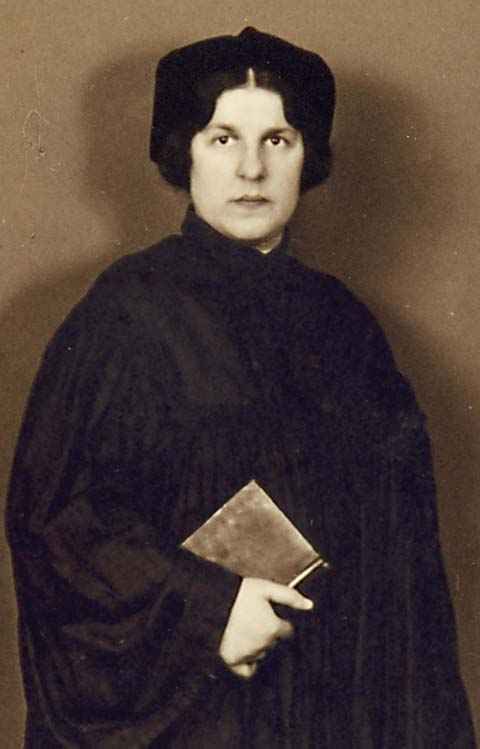
Fraulein Rabbinerin Regina Jonas, the first woman to be ordained Rabbi in modern times, was murdered in Auschwitz in 1944 and her name and story submerged until the fall of the Berlin Wall meant that some of her papers were retrieved and studied.

Jonas-Regina

Her story is a complex one. We know tantalisingly little about her; there are some basic facts about her birth and parentage. She grew up in a poor part of Berlin, and after the early death of her father when she was only eleven years old, she, her older brother and her mother became ever poorer. She lived amongst Jews from Eastern Europe, whose religious practise was orthodox (as was hers). In her teens she found the comfort of the synagogue, and never really left. The rabbi helped her to take her Jewish studies to a level where she could make a living teaching, and so she supported her widowed mother and herself as best she could, and she continued to study, and she dreamed of rabbinic ordination, writing her thesis on the subject “Can Women Serve as Rabbis?” and proving to her own satisfaction that according to Halachah the answer was ‘yes’

While her thesis was sound, academic scholarship was no match for centuries of misogyny and custom. Her teachers would not ordain her as a Rabbi. She was the victim of a collision of circumstances- her teachers did not want to cause a problem in the wider Jewish community by going outside of orthodox tradition and ordaining a woman. The conditions in Germany in 1933 were preoccupying the German Jewish world as they cast about looking for a rational response to an insane situation. More than that, she was an orthodox woman studying at a Liberal institution. She was widely perceived as being ‘strange’, a woman who did not care about her looks, an academic whose mind did not deal with frivolity, a radical and transgressive figure who yet wore the clothes of convention and tradition. She challenged many social and religious norms, demanding her right and coping with what was clearly some hostility towards her. She was said to be a good teacher, a good pastoral worker, yet even with the dwindling number of rabbis in Germany she could not find a community willing to take her. Her work took place in the old age homes and the hospitals – the traditionally gendered “caring” roles.

Regina Jonas comes across as an isolated and lonely figure, a trailblazer and pioneer who did not however achieve a following in her lifetime. Yet she did not give up. She worked wherever she could, and before deportation to Theresienstadt she ensured that her papers would be lodged in the archive from where some fifty years later they would emerge. She deposited photos of her in her rabbinical gown, her ordination certificate and some press cuttings. She held on to a hope that she would be remembered, not go nameless and forgotten into the future.

She worked in Theresienstadt for two years, teaching, giving a series of lectures, acting pastorally and rabbinically and working in the team of the famous psychoanalyst Viktor Frankel – her job was to meet the trainloads of shocked and frightened Jews transported to the ghetto and to try to comfort them. She worked hard and with great dedication for two years until she too was sent to Auschwitz where she was later murdered.

Her date of deportation was 12th October 1944. It was Shabbat Bereishit, the first Sabbath after Simchat Torah, when we finish the book of Deuteronomy with the death of Moses and the transition in leadership to Joshua and we immediately begin to read the book of Genesis with its universal story of the creation of the world.

On Shabbat Bereishit we learn that leaders die but leadership goes on. That ideas are stronger than individuals. That out of endings come new beginnings.

We don’t really know very much about Regina Jonas except what we can try to piece together from scant evidence and tiny remnants of memory. Having been officially forgotten from 1942 until the early 90’s she has re-emerged, as ambiguous and as perplexing as she seems to have been in life.

We progressive women rabbis have taken her for a standard. She has become “the first woman rabbi”. Her story reads as a cautionary tale for the rest of us – will we too disappear after working so hard to achieve, after caring so much, after labouring at the coal face of the community rabbinate?

Anger has been expressed at her ‘disappearance’ from the narrative when so many who knew her or knew of her never bothered to pass the information on to the next generation of women studying rabbinics who felt so lonely, so trailblazing, so exposed. There is the sense that if only we had known about her when studying ourselves, we would have been able to speak of her and so be comforted by her earlier initiatives. She would have stood between us and the void of women rabbis in history.

We have taken her for a standard, and now we have adopted Shabbat Bereishit for her yahrzeit, the probable date of her death. In Bereishit we read the two stories of creation – the first where women are created equal to men and at the same time as them; the second where woman is created from the side of the first man to become ezer k’negdo, a help and an opposition to him.   Regina Jonas’ life expresses so many ideas in this Torah reading, read both on Simchat Torah and the following Shabbat – it is almost as if it were bashert. The way she lived her life demands of us that we take seriously the questions she posed to the conventions and community of her time as we look at how those questions are asked and answered in our time and communities.    But maybe we should also be more honest and say that Regina Jonas is not the forerunner of women in the non-orthodox rabbinate – she is really the forerunner of women in the orthodox rabbinate. That now there are women with orthodox semicha is exciting, though there is still a long way to go for them to be much more accepted than Regina Jonas was when she finally received her semicha eighty years ago.

Eighty years – twice times 40, the signifier of “a long time”. Eighty years, the biblical length of a long life. And so much has happened since her ordination. The number 80 is signified by the letter Peh. It is an explosive sound. It means an opening or a mouth. The Torah is both written text (bich’tav) and oral (she’b’al peh). It give me some satisfaction that at 80 years since ordination there are women rabbis in every stream of Judaism. Regina Jonas’ mouth continues to open and to teach, and each of us embroiders what we hear.

After prayer, introspection, critique and teshuvah, the time for action is now

The Jewish year has a number of cycles, and one cycle has just concluded – from the seventeenth Tammuz which happens three weeks before Tisha b’Av in the early summer time, till Shemini Atzeret /Simchat Torah, the conclusion of the Yamim Noraim, more than thirteen weeks later, we have been focusing on how our behaviour impacts upon the world, how what we do really matters. The destruction of the Temple and the Exile from Israel in the year 70CE was caused, according to our tradition (and firmly based in the historical narrative) on “sinat hinam” – acts of causeless hatred, where Jews betrayed other Jew; Individuals did not value others; Greed and selfishness overtook care and compassion. With the effects of the destruction of Jerusalem resonating in our souls we go through the summer and on to the high holy days mindful of the words of Talmud Sanhedrin 37a    “Whoever destroys a soul, it is considered as if they destroyed an entire world. And whoever saves a life, it is considered as if they saved an entire world.” The text goes on to make clear that the destruction and the saving are not necessarily of the life itself, but of the quality of that life.

Simchat Torah ends this particular cycle – while of course also beginning another, that of the weekly progression of readings from the scroll. But Simchat Torah now also marks for us the greater focus on the outcomes of the Yamim Noraim – the importance of repairing the world, of righteous behaviour and of acts of compassion – the three Jewish principles of Tikkun Olam, of Tzedek and of Gemilut Hasadim.

For a quarter of the year, from the middle of Tammuz, through Av, Ellul and more than half of Tishri we have been prompted through liturgy and festivals to consider repeatedly about how we are behaving in the world, reminded again and again that there are consequences and impacts arising from our choices. We have drilled down from the sweep of Jewish history into the capacities of each individual soul to enact change both for themselves and for the world. And now, with Simchat Torah and the return to the beginning of bible, which reminds us of our universalistic beginnings, of God as Creator of the whole world, interested in every person and every action, it is time to change our focus back to the wider world in which we live. We have thought hard about our own failings and tried to make ourselves better, now it is time to try out our newer better selves, to go into the world and try to make a difference. As the new year of Torah readings begins, they nudge us to find something new and pertinent in the familiar. There is much to do close to home – be it working for our communities so that everyone feels valued and becomes connected. Be it working for more fairness in the workplace, for the safety and security of those who find themselves lost or in poverty, or homeless. And from within our own community we can also work to help those further away, the refugees currently risking their lives while fleeing terrible circumstances in their own country, the dispossessed and isolated because of war or disease. We can add our voices to those who protest where humanity is cruel or thoughtless to others, we can demand of our leaders that they behave according to the values they say they espouse.  We remind ourselves of the teaching in the Talmud Sanhedrin 37a    “Whoever destroys a soul, it is considered as if they destroyed an entire world. And whoever saves a life, it is considered as if they saved an entire world.” The text goes on to make clear that the destruction and the saving are not necessarily of the life itself, but of the quality of that life.

olive harvest rhr

The time for contemplation is over, the time for action is now

image from rabbis for human rights co-ordinating volunteers to help Palestinian farmers harvest their olives.

VOLUNTEERS NEEDED THIS WEEK FOR THE OLIVE HARVEST IN THE OCCUPIED TERRITORIES!
We need folks to sign up to join us for the harvest THIS Wednesday, Thursday and Friday. For those of you who have already signed up, now is the time for you to work with our office to specify a date. Please email info@rhr.israel.net or call 02 678 3876 to sign up. Dates are also available until Nov 6th.

2015 quiz now ready – do have a go!

this is my sister’s quiz, highly recommended fun and in a good cause

joycesquiz's avatarjoycesquiz

The quiz this year is based on eponyms – things which are named after someone.

eponyms final clues

Great fun, with cash prizes and a prize draw as well as hours of fun.  You can donate at just giving via

click here to go to just giving

or via paypal

click to go to paypal

View original post

Parashat Vayelech, Shabbat Shuvah and thoughts for the asseret y’mei teshuvah

The Mishnah tells us that “Everything is foreseen, nonetheless free will is given”. How can we come to terms with a God who knows what tragedies will happen, yet who does nothing to prevent it, and who will, in the words of this sidra, “Hide the divine countenance from us”, allowing us to be ready prey for our enemies?

And If God anticipates and even knows what the future might bring, of what significance is our own free will?

The problem arises again and again in bible, beginning in the book of Genesis with the eating of the fruit in the Garden of Eden, and mirrored here at the end of Deuteronomy with God’s disclosure to Moses about what will happen after his death.

The contradiction is addressed in traditional Judaism with the mishnah I began with, the idea that God’s omniscience includes a complete awareness of human nature and of how people will behave, yet God also allows us to make our own choices from the full spectrum of possible actions. And the mishnah takes the idea further by telling us that “Everything is in the hands of God, except the fear of God” – in other words, from the rabbis’ perspective, God has chosen to limit Godself in one important aspect so as to allow human beings to do that which makes us so special to God and makes us in God’s image – we are able to exercise choice.

The idea of limiting God – even of God choosing to limit Godself – is one which comes close to blasphemy, and yet that is the boundary with which we have to work, for it is the area in which we exist.

The mystical tradition tells us that when God decided to create the world, God first had to draw back, to create some space in which God was not, so that God could create a distinct entity that was not-God. Having created the world in this space-that-was-not-God, God then breathed something of Godself in the form of divine light, or holy sparks. These holy sparks are said to be the manifestation of God with which we work and struggle, the immanence of God in the place where God has chosen to limit Godself.

Our tradition tells us that God has chosen, for the sake of the existence of humanity, to limit God’s active presence in our world, and has given us the choice to either accept or to ignore God’s presence; to either attempt to meet God’s requirements or to turn our backs on God. God’s wish is clearly that we search for relationship, that we obey the mitzvot and in so doing partner God in completing the work of the creation of the world – but in no way will God push us into having to accept that position, nor will God intervene in history to change what we do, or to alter the consequences that will arise from how we choose to behave.

If we turn our back on God, if we choose to be alienated from God, then the consequence will be that God is hidden from us. God is limited by our human freedom to engage – or not to engage. As the writer of Deuteronomy wrote: ‘Lo bashamayim hi” – it is not in heaven that you need to say ‘who will go there for us…” And as the psalmist echoed “The heavens are the domain of God, but the earth has been given to human kind”. We have this world in which to exercise our choice, and our choice must be informed by having Torah, by being able, as Rabbi Dr Louis Jacobs once said, to think God’s thoughts after Him.

In this world of extremist teachings and of secular explanations it becomes easy to either blame God for terrible and tragic events, or else to find other places to lay blame – a government’s foreign policy maybe, the anonymised disaffection or alienation of a mass of people, capitalism. What seems to get lost is the actual and personal decisions made by individual people, the choices to act or not to act, the thoughtfulness and stage by stage process of decision making. Individual autonomy and responsibility gets submerged in the rhetoric of blame and anger, glib reasoning and political analysis tries to explain away real and personal choices.

“Everything is foreseen and yet free will is given. Everything is in the hands of heaven except the fear of heaven…” We have a God who has deliberately limited Godself in our world to allow us to express unhindered our essential humanity and our freedom to choose. Our tradition shows us again and again that God took a chance when God created human beings to be free – every narrative in bible demonstrates that God, like us, must therefore bear the consequence of our freely chosen actions. God’s knowledge of what could be and what will be remains – what Nachmanides calls ‘knowledge in potential’ – yet God’s action can only be done through human channels. The responsibility for how the world will be is ours alone, for the choices are ours alone – millions of individual and personal choices continually being made.

During these ten days of Teshuvah, of our returning to our root of Being, we have the opportunity to read and to reflect, to study, to think and to pray. We have the opportunity to put right what we can put right, to apologise for what we can no longer amend, to act choicefully to make our world a better place. We have the choice and we have the responsibility. We can begin to seek God’s presence, to confront God’s hidden face. As God said to Joshua at the beginning of his journey – hazak v’ematz… be strong and resolute, v’anochi ehyeh imach – for I will be with you.

Sermon for Rosh Hashanah at the Pinkas Synagogue in Prague

My father was the son of Walter, the son of Alice, the daughter of Leah, the daughter of Rosalie, the daughter of Abraham, the son of Gitel, the daughter of Isaac, the son of Jacob, the son of Meir the son of Shmuel, the son of Yehoshua, the son of Rabbi Pinchas Halevy Horowitz, for whom this synagogue is named and grandson of Aharon Meshulam Horowitz it’s founder: my eleventh great grandfather.

So in a strange sort of way, I feel this Rosh Hashanah that I am coming home.

pinkus synagogue pinkus synagogue4

This family link got me to thinking about the roots and connections, and about the nature of Jewish history which in bible is framed within the structure of ‘toledot’ – generations. Judaism has traditionally passed on its defining ideas and ways of being within the family home and within the extended family we call community. The teaching goes from one generation to the next, the identity formed by watching and doing as much as by any formal learning.

( That said, from earliest times the idea of Judaism being a family tradition alone doesn’t really have traction. Abraham and Sarah famously “made souls” in Haran before leaving on God’s instructions ‘Lech Lecha’ – go, leave your ancestral land and go to the land I will show you” (Genesis 12:5). These souls are understood to be people they had converted to their faith; in other words, birth is only one doorway into Judaism, and the formation of Jews happens in a wider context than family alone.)

So I was thinking about the genealogical line between me and Pinchas Halevy Horowitz, the 13 generations between us, eight of whom were rabbinic families whose history I know only sketchily, and I wondered about what this relationship might mean, how his life fed ultimately into mine. I wondered too about how Judaism had developed in the almost 400 years since his death, what had changed, what had endured. For the truth about Judaism and about families is that they are not monolithic, they do not stay the same and their natural state is of flux and of change.

So if my ur-ancestor Pinchas was sitting here today in the synagogue that bears his name, what would be familiar to him? What would be radically changed? And what would be the golden thread, the Shalshelet haKabbalah, that ties his community to us, the latest in the toledot line?

There is a famous story in the Talmud (Menachot 29b) “Rabbi Yehudah said, “Rav said, “When Moses ascended to the heavens, he found the Holy One, sitting and attaching crowns to the letters. He said to God “Sovereign of the Universe! What are you doing? God said to him, “There is one man who will exist after many generations, and Akiva the son of Yosef is his name, he will in the future expound on every crown and crown piles and piles of laws.” Moses said “Sovereign of the Universe! Show him to me.” He said to him, “Turn around.” He went and sat behind the students in Rabbi Akiva’s Beit Midrash, and he did not know what they were talking [about]. He became upset but when he heard the students ask “Our teacher, from where do you learn this?” And heard Akiva answer “It is a law [that was taught] to Moses at Sinai” he calmed down.

This very early Talmudic story sets the rabbinic principle that Judaism evolves, and that what was understood or necessary in one generation was not written in stone. Just as Moses would not understand the teachings of Akiva, so would Pinchas Halevy Horowitz not recognise much of the Judaism of the 21st century.  Yet there is a great deal he would recognise. The great themes of this service have remained the same since the Rosh Hashanah liturgy was instituted and the mussaf service in particular is explicit about the leitmotifs of the festival – Malchuyot, Zichronot and Shofarot – the Coronation of God, the time for both we and God to Remember each other, and the blowing of the Shofar. Essentially, the service we have today stays true to the ancient themes of Rosh Hashanah.

Rosh Hashanah has a number of different names: it is Yom Teruah, the day of blowing of the shofar; Yom haZikaron, the day for remembrance; Yom haDin, the day for judgement; and less well known it is also Yom haKesseh, the day of concealment. The first three are clear to us, we hear the shofar calling us to attention, and speak of standing before God (and also in our own eyes) in order to judge ourselves. We think back over our lives and our actions in order to be able to put things right where possible. But what is the concealment of which our liturgy speaks when we recite “Tiku ba’chodesh shofar, ba’kesseh l’yom chageinu. Ki chok l’yisrael hu, Mishpat lelohei Yaakov. (Psalm 81:4-5) Sound the shofar at the new moon, at the [Kesseh] concealed time for our feast day. For this is a statute for Israel, an ordinance of the God of Jacob.”

It would make sense in the poetic structure for Kesseh to be the parallel of Chodesh and mean the new moon, and so the psalmist would be speaking of blowing the shofar when the moon is so new it could barely be seen, Rosh Hashanah is the only festival to be celebrated at the beginning of a month rather than at the full moon or later. But Kesseh is an unusual word to use and so it draws our attention. And suddenly the work of this season becomes clearer, though ironically the clarity we gain shows that the work of the Yamim Noraim is to both make transparent and then to obscure some of our past behaviour.

The core meaning of the word Kesseh is to cover or to conceal; the meaning of Kapparah is also to cover over, to hide or even obliterate. We are in the season of concealment – but who is doing the hiding, what is being concealed, where does it go and to what purpose?

One of my favourite teachings of how Jews do teshuvah, the work of this penitential period is that we do not expect to wash clean all our past actions as if they never existed, and start again as if we were newly born souls. Instead we have time to reflect on our past, to face all the things we did that we wish we had not, and all the things we did not do that we wish we had done, and to own up to them, to accept our own actions. We admit to ourselves under the watchful gaze of God, and we repent – an active behaviour in Jewish law that requires us to try to make good the damage we have done, to ask for forgiveness from those we have hurt, to resolve to change how we will act in the future when faced with the choices again. And then, when we have done all we can to repair our past, we are able to let go of it – not to deny it or to disown it, but to cover it (kapparah) to conceal from view (Kesseh) all the things of which we are ashamed and of which we have repented. We know that if we do this, God too will forgive us, the page will turn on our heavenly record so that a clean sheet shows going forward, although the previous pages of the book remains written, just hidden from view and not holding us back in hopelessness. We are shaped by our past but our future is not distorted because of it.

Reading recently about transitional justice I came across an interview with Vaclav Havel and was struck by the similarities in his views. Speaking of dealing with the political past and its effects, he said “It is important to find the right balance, the right approach, one that would be humane and civilized but would not try to escape from the past. We have to try to face our own past, to name it, to draw conclusions from it, and to bring it before the bar of justice. Yet we must do this honestly and with caution, generosity and imagination. There should be a place for forgiveness wherever there is confession of guilt and repentance.” Transitional Justice: Country Studies v.2: How Emerging Democracies Reckon with Former Regimes: Country Studies…Dec 1996 by Neil J. Kritz

Jewish tradition holds that the work of this season – teshuvah – requires us to bring to mind the harsh realities of our failings, to go through a process that ends with us no longer held back by the pain or the shame or the fear of what we have done, and to move forward in our lives. We leave behind, concealed from view but not forgotten or denied, the actions and inaction that stained our souls, that had imprisoned us. This is what we are doing here today, it is what the Jews of this community were doing when this synagogue was built. While some of the language may have altered and some of the prayers been edited, Rabbi Pinchas Halevy Horowitz would recognise what we are doing were he to join us today. As would those whose names are inscribed on the walls, and all the Jews of the generations between the two. We are joined to them by the liturgy of this day, by the shared understanding of the meaning and work of this season, by the timelessness of the tradition that speaks of repentance and return to God, of forgiveness and of moving on, of not denying the past but not being held captive to its power.

The Jews who came before us are held with us in a chain of tradition, their wisdom and experience passed on through the generations and through the communities which welcome people into Judaism We in modernity will one day pass into history, leaving behind a name, some family stories, some wisdom and some love, maybe some descendants, and hopefully a physical memorial of some kind. On that memorial will no doubt be the acronym also found on the walls of this synagogue over the names of those Prague Jews taken and murdered in the camps  ת’נ’צ’ב’ה  It is taken from a verse in Samuel via the memorial prayer and which speaks of the soul being bound up in the bundle of life, an image rather like an unending piece of fabric or carpet, in which the souls of those who came before are part of the weave, necessary to anchor and to hold the structure which will go on being woven as new souls come into the mix. In this image, the lives of those who came before are an integral part of the fabric of our lives, as our lives will help shape the world of those to come. And this knowledge brings both a sense of rootedness and of responsibility to those who came before and to those who will come after.

For the fabric to be strong, the lives must be connected, and even when one thread physically ends, its existence provides the anchor for the later ones. For that anchor to be solid, there must be regular teshuvah, the reflection and balance, the bringing to mind and naming of what went wrong in order to face it, to learn and understand, to apply compassionate and proper justice, and to bring about a conclusion, an end to the pain or bitterness or anger in order to let go, to cover over and to move on with the weave. Whether that image is about each of our individual lives, or scaled up to the life of a family or of the Jewish people as a whole, the lesson and the work remains the same. We reflect and remember, we admit and repent, we try to repair, we do our best to make good, and then we let go and go out into life ready to write on a new page of our Book of Life.

Our Rosh Hashanah Liturgy quotes not only the psalmist but also Isaiah (65:16-17) who describes God as saying “So that the one who blesses in the earth shall bless by the God of truth; and the one that swears in the earth shall swear by the God of truth; because the former troubles are forgotten, and because they are hid from Mine eyes. For now I create new heavens and a new earth, and the past need not be remembered, nor ever brought to mind. Be glad and rejoice in what I can create.”

The work of remembering, of making transparent, of repenting and repairing and of letting go in order to go move on is holy work. The Kesseh or Kapparah of this season mirrors the divine work of creation. This season is the season of penitence in which we wear white; Yom Kippur a joyful fast rather than a time of misery and gloom. The sound of the shofar reminds us of the work we do alongside God, the concealment and covering of a reasonably resolved past nudges us forward to do the work God expects from us. We are tied into the past and we honour from where we came. We are tied into the future, and in order to help bring about the best one we can, we are here together. As links in the shalshelet haKabbalah, the chain of tradition, the golden thread that brings us close to all who prayed the Rosh Hashanah liturgy, it is our turn to Remember, to Repair, to Repent, and to Return. May all who came before us bless us, and may we in turn be a blessing to those who journey with us and those who come after.

Ki Tavo: Moses’ words echo today – what of us will echo in the future?

Ki Tavo includes the famously difficult passage known as the tochecha, the red lines of society’s expectations laid down mainly in the form of the cursing of the one who disobeys, but there is a great deal more in this speech which is part of the series given by an increasingly anxious Moses as he approaches his death. The whole thrust of the book of Deuteronomy is given life by Moses’ desperate wish to help the Israelite people continue on their journey with God after he is no longer around to help them. So here we have the ritual of sacrificing the first harvested fruits of the land to God carefully spelled out – the fruits should be put in a basket, taken to a specific place of worship, given to the priest of the time – and one of the earliest bits of liturgical speech is also given here – the people must say to the priest “I profess this day to the Eternal­­­­­­­­­ your God that I am come unto the land which the Eternal swore to our ancestors to give us”. The priest will take the basket and place it at the altar, and then the speech is to continue: “A wondering Aramean was my father, and he went down into Egypt, and sojourned there, few in number; and he became there a nation, great mighty and populous. And the Egyptians dealt badly with us and afflicted us and laid upon us hard bondages. And we cried to the Eternal the God of our ancestors, and God heard our voice and saw our affliction and our toil and our oppression. And the Eternal God brought us out from Egypt with a mighty hand, and with an outstretched arm, and with great terribleness and with signs and with wonders, and God brought us into this place and has given us the land, a land flowing with milk and honey. And I have brought the first of the fruit of the land which you O God have given me”.

The whole script is prescribed – and after it what shall happen – you will then worship God, you will rejoice in all the good that God has given to you, and so on.

The text is familiar to even the most distanced of Jews – it is the basis for the text of the Haggadah that we read at Pesach. Word for word Moses’ script is recited when we remember the Exodus from Egypt at the Seder each year. The actual figure of Moses may never have been allowed into the Haggadah in case people should begin to believe that it was his leadership rather than God’s that took us on our journey into peoplehood and covenant, but that becomes irrelevant when we realise that something far more important has been imported untouched by the editorial process of the book – the direct prayer of Moses is embedded in the text as if in amber. The rabbinic statement that a scholar does not ever die fully if his teachings are remembered – phrased evocatively as “his lips move in the grave when his words are recounted” – means that Moses’ teaching really has been passed down the generations and his humanity and presence really do remain among us.

As we move towards the Yamim Noraim we are prompted to remember those who taught us our religious and ethical values, and it is a custom in this period to visit the graves of those family members and teachers who have died. We are going to be facing our own ‘day of judgement’ to spend at least one day looking at our lives from the perspective of our own death as we abstain from food and drink and the normal everyday activities we do every other day of the year. We weigh up our actions in the past year and maybe further; consider who we have been, what lessons can be inferred from how we have lived our lives. So the question we have to ask of ourselves now is – how have we done? How are our actions an expression of our values? Will we have been a strong link in a chain or an irrelevant and vestigial structure appended to the community without much adding to it?

Every year our liturgical calendar gives us time to consider whether our lives are going in a direction we can be proud of, whether our lived lives are an valuable addition to the world we care about or not. So will the text of our lives be read in the generations to come or as we pass into eternity will we also be forgotten, no stories remembered with warmth and love, no wisdom or behaviour of ours held close to those still in the world? Our legacy does not have to be high profile or high achieving. But how we lived our lives should matter.

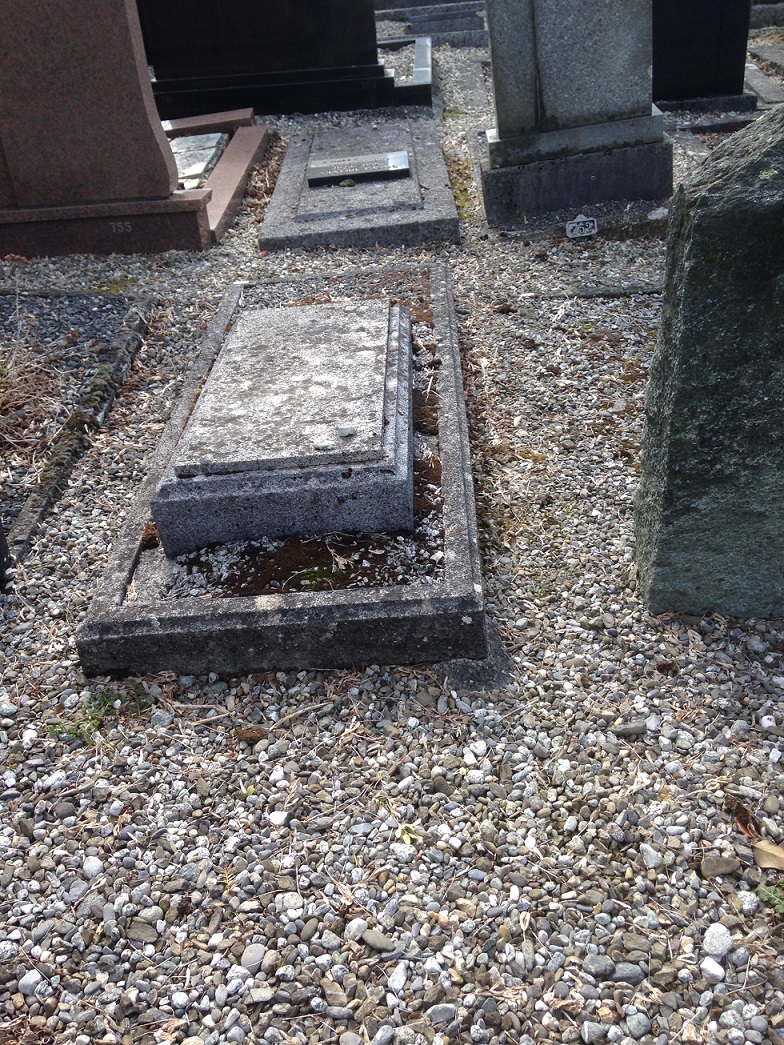
vati grave

illustration is the grave of Walter Rothschild in Jewish Cemetery Lausanne

Ki Tetzei: whether you believe in the Metzaveh or not, you are not free to walk away from proper behaviour to others

The sidra of Ki Tetzei contains, according to Maimonides, 72 of the fabled 613 commandments in the Torah – on first reading the effect is of an enormous list of apparently haphazard rules ranging from family relationships to the treatment of a judicially executed corpse. From care for animals to cultic prostitution; from financial probity to cloth made from a mixture of wool and linen.

Throughout history Jewish scholars have tried to explain the unified theory of mitzvot; rather like with the laws of physics there is the sense that somehow there is an elegant rationale that, once found, will enlighten us about the world and its meaning. The best try (in my view) is that of Rabbi Pinchas b Hama who wrote (Devarim Rabbah 6:3) that “Wherever you go and whatever you do, pious deeds will accompany you. When you build a new house, make a parapet for the roof. When you make a door write the commandments on the doorposts; when you put on new garments consider from what they are made; when you reap your harvest and forget a sheaf, leave it for the widow, orphaned and the stranger, the vulnerable in your society”

In other words, every aspect of our daily life can be made holy through following these mitzvot – the mundane can be raised to the exceptional, the quality of our lives infinitely changed in these tiny regular incremental actions.

Many years ago studying with Rabbi Hugo Gryn zl I learned about the Shema, the prayer recited morning and evening of each day, for many people the defining prayer of Judaism. It speaks in the first line of the unity of God, and of the relationship of God and Jews. But before it does it demands something else of us – Shema – listen! Pay attention! Hear what is really important!

The first command in the prayer is to love God completely – with heart, spirit and physical strength. Then we are told that God’s commandments should be with us always, spoken of repeatedly to our children, talked about when we sit in our home, when we are walking outside, when we lie down, when we get up. They are to be written upon our doorposts so that going in and out of our homes we see and are reminded of the requirements of God. And in the Shema too we are told “ukshartam l’ot al yadecha, v’hayu l’totafot beyn eynecha” you shall hold fast to them as a sign upon your hands and they will be (reminders) before your eyes. The line has been understood to be the source of the practise of placing tefillin – small leather boxes containing some prayers – on the head and hand during the weekday morning prayer as an aid to remembering, but Rabbi Gryn had a different view – he understood it to say “in everything your hand touches and everything your eye sees you must respond to the requirements of God.”

If we really fulfil the commandment of ‘Shema’, then no part of our life is exempt from the dictates of holiness. We cannot be pious in the synagogue but not at home or at work. We cannot care about the humanity of the people we like but not that of those we dislike or disagree with. We cannot do the technical bare minimum to fulfil our obligations to society and consider our job well done. As another part of this sidra says – lo tuchal le’hitalem– You are not able to/ must not remain indifferent.

In this sidra too is the commandment to wear tzitzit – the knotted threads on the edges of some garments, most usually seen today on the tallit, which are the physical reminders that we have regular and routine obligations as Jews. Our obligation to love God is played out in our world – how we relate to others, how we care for the vulnerable, how we manage risk, how we nurture good values. The traditional unified theory of mitzvot is based on an unquestioned acceptance of the Metzaveh – the One who commands – that is God. In today’s world that understanding does not work so well – there are many who find such faith impossible or even undesirable. And yet the value of the system of mitzvot remains powerful – Judaism has never asked what you believe, but demands that you behave according to its belief. Lack of faith in God is no excuse for lack of proper behaviour towards others.

From Rosh Chodesh Ellul, the pace picks up – time to brush up our souls

Yomtov never seems to arrive on time. Early or late, it catches us by surprise. And yet – the date never changes and the calendar has a number of events to remind us. The month of Elul comes as a powerful prompt to wake up and, if not smell the coffee, then at least taste the teshuvah.   Elul is the month before Rosh Hashanah, the month of preparation and repair. It is said to be the month when God is most accessible to us, hinted in the acronym forming its name “Ani le’dodi v’dodi li” I am my beloveds and my beloved is mine” – a reference to the intimacy we can create at this time. The shofar is blown in morning services, waking us from our complacency and dream-like existence. Selichot, the poems of pardon, feature in the liturgy towards the end of the month.  The haftarot of comfort are in full swing. So why are we often so surprised at the timing of the festivals? What more can persuade us to get going on our repentance, apologise for our misdemeanours and try to make good the damage in our lives and relationships? How do we guard against being caught out when the Days of Awe begin in Tishri? As a child my parents bought my new winter outfit in time for Rosh Hashanah.  Preparing to ready oneself to stand in front of God called for a new garment. As a kittel-wearing adult this particular ritual is less important to me, but the idea behind it stands.  We want to be renewed, for our souls to look less shabby, and that takes a positive act to make happen.  Elul stretches in front of us – time to make those phone calls, write those letters, give back the things we took from others, repair our corner of the world. It may be that we are so busy with our teshuvah and reparations that Yomtov sneaks up on us anyway, but with the work in progress it won’t be such a surprise.