Vayetzei: We become who we can imagine and dream we can become.

There is so much deceit in this week’s Torah reading. Deceit and dreaming. Jacob is on the run from his brother Esau, having deceived their father into giving him the blessing meant for Esau, the blessing of the firstborn. He falls in love with Rachel, the younger daughter of his uncle Laban, only to be deceived on the wedding night and given Leah her elder sister instead. In order to achieve the wages owed to him he strikes a deal with Laban which means he can selectively breed a huge flock of animals, something Laban was clearly not expecting. While Laban is away, Jacob sneaks away with Rachel and Leah and his household including a large flock of animals. Rachel steals the household gods and hides them, something she keeps from everyone. When Laban pursues them she lies about having them – a lie that will lead to her own death.  Deception follows dishonesty, it is a sorry read for those who would like to find bible reading an uplifting experience.

And yet – at the same time as all the double dealing and the cheating, something else seems to be happening. Alongside the scheming is a growing sense of God, a sense of awe; an understanding that the individual is neither alone in the world nor irrelevant to it.

The understanding begins as Jacob sleeps, when he senses the presence of God in a lonely isolated place on the road, and perceives that that presence is caring and watchful.  It grows as he learns to love selflessly – Jacob works for fourteen years in order to pay Laban so as to marry the woman he loves. Once his beloved younger wife has a son, Jacob realises it is time for him to go home, he himself is in danger of absorbing too many of the dubious values of his father in law Laban and somewhere deep inside himself he knows that needs to protect this beloved son from doing so also. It turns out that the rather unreliable and devious Jacob we met at the beginning of the sidra is in fact capable of deep love and loyalty; he is rooted in the landscape of his family, his untrustworthy personality and selfish behaviour are not the full measure of the man.

What are the mechanisms that bring about this deeper understanding? They seem to be a combination of dreams and imaginings. Whatever happens on that lonely night by the roadside on the way to Haran, Jacob begins to transform his world. As he sleeps he dreams of angels mounting a ladder to heaven and other angels descending a ladder to the earth. He hears God speak to him, renewing the covenant made between God and Abraham and God and Isaac. He believes the covenant is now also with him. And then he awakes. Torah never clarifies if this is truly a religious encounter or a product of the imagination of Jacob, something of his own that yet provides him with a new understanding and insight. Whatever it is, Jacob begins to understand that God can be present in his life.

Rashi suggests that when Jacob says “The Eternal is present in this place and I, I did not know it”, he means “had I known, I would not have slept in such a holy place. And yet, had he not slept there he would never have known it to be a holy place. So paradoxically, in order to understand the sacredness of the place, Jacob had to trust his own inner self, his own imagination, his own ability to create and transform the world. And this is what brought about a change in him, allowed him to become a better self.

As Jacob dreams, as he imagines possibilities, he begins to form them and make them real. He wakes knowing with certainty now that he is the true inheritor of the blessing, the one with whom the covenant is made. From that moment on he seems to be a different person – one with a purpose beyond his own gratification and enjoyment. While dreaming or imagining the encounter with God, he effectively created the outcome of such an encounter, he became the next possessor of the covenant.  The power of our dreams or imagination should never be dismissed. We become who we can imagine and dream we can become.

Chayei Sarah: Sarah Imeinu, a flawed and powerful matriarch

The death of Sarah so soon after the binding of Isaac by his father, is ascribed in the midrash as the result of the shock Sarah experienced when she became aware that Abraham had been prepared to sacrifice their son Isaac in order to demonstrate to God his total loyalty, and that God had been prepared to test Abraham with such an ordeal.

God had said to Abraham: take your son, your only one, whom you love…” but the truth is that Isaac was not Abraham’s only son, though he was Sarah’s, HER only one. Abraham still of course, had Ishmael.

sarah

Isaac was her miracle child, born to her after years of infertility had merged into menopause, prophesied to her by God, a boy whose name meant laughter, but whose life in the event seemed to have had very little joy in it.

Isaac was the boy who was born to fulfil the promise of huge numbers of descendants. In procuring a son, any son, for Abraham, Sarah had tried to make sure that promise was fulfilled, but in the process had given herself a life with very little laughter and a great deal of unhappiness. She had given her handmaid Hagar to Abraham, but the son born from that union had then had to leave the family as she understood that he presented a danger to Isaac and to his inheritance. Then too, the relationship between Abraham and Sarah was clearly not all it might have been.  We know that Abraham was not with Sarah when she died, and more than that, that they had separate households in separate cities. The Midrash also suggests that love had died between them before the Akedah, when it allows us read that famous command from God as “Take your son, the only one you love, take Isaac…”

Sarah lived for 127 years, and the content of her life was the launch pad for much of later Jewish history.  Her death gives us a stake in the future too, for the negotiations between Abraham and Ephron the Hittite to buy her gravesite provide us not only with an insight into such transactions, but give documentary credibility to the attachment of the Jewish people to the land.  Many is the scriptural literalist who points to this passage and declares – “see we bought this land all this time ago, it is ours.”

It seems to me horribly appropriate that it should have been for Sarah that the land was purchased and the transaction so scrupulously recorded, for it is Sarah who took matters into her own hands when she procured a son for her husband via her handmaid Hagar, and set up a chain of painful rejection and destruction that has never quite been dealt with by any of the protagonists or by their descendents.

It was Sarah who couldn’t wait; who caused the birth of Ishmael and who had him sent away to what she assumed would be his death. It was Sarah whose sad and ironic laughter prefigured the lack of any real laughter in Isaac’s life.

Sarah is a figure who comes from nowhere – her genealogy is not given (exceptional in the biblical context) except for the defensive statement by Abraham that she is his sister.  She is however included in the covenant promise  given to Abraham – it will be her child with him, not Hagar’s to whom the covenant will apply. She is beautiful enough to be wanted by Kings, yet her barrenness makes her beauty somehow irrelevant, and her beauty is seen by Abraham mainly as a threat to his own life should anyone more powerful than him desire her.

Her life is full of journeying, her relationships full of misplaced love, manipulation and pain.

Sarah’s death leaves unfinished and painful circumstances. There is a great hole in the life of her son, who does not meet her again after the terrifying experience with his father, and who later takes his own bride into his mother’s tent, (not his father’s), to be comforted for the loss of his mother. Her husband also mourns her, but having honourably buried her, swiftly remarries, fathering children who will be the ancestors of the surrounding tribes with which Israel will have to deal.  Intriguingly, Keturah, the second wife of Abraham, is equated in the Midrash with Hagar, the repudiated handmaid of Sarah, a way no doubt of dealing with the discomfort of the rabbis with the behaviour of Sarah and Abraham towards this innocent Egyptian maid, yet a resolution which essentially betrays Sarah.

Sarah’s death is too soon, despite her 127 years of full life. She bequeathed a series of family behaviours that took generations to deal with, if not to fully conclude.  Her son was left emotionally disabled by his upbringing, her grandchildren spent years unable to see past their own senses of injustice and betrayal.

Yet for all of this Sarah was a matriarch, she ordered and she sorted and she gave unquestioning loyalty to Abraham and to his perceived destiny.  She travelled with him, leaving her home and her background just as surely as Abraham had done.  She nourished and cared for him, she understood prophesy and indeed is seen as a prophet in her own right, her gifts in that field considered to be greater even than Abraham’s. She heard God’s voice and she spoke with God and she even had the confidence to laugh at God.

The rabbis say that Sarah’s death is announced in such a way (“The lives of Sarah were..and Sarah died”) to bring home the lesson that her life was fully lived and that that was the important thing about her – her death was inevitable but it was her life that counted.  As we remember the stories about her, the bold actions she took on behalf of those she loved, the meddling in history and the protecting of her own, we can begin to understand her and to some extent understand the choices she made. She was matriarch, wife, part of the chain of the covenant; she loved fiercely and maybe acted on that love unwisely. She was sometimes a problem for herself and for those around her, but her life remains a story worth telling from which we can learn. Sarah Imeinu, a brilliant and determined woman whose life was full and complex and left its mark on her descendants, and whose death has also impacted on our history up to the present time.

(image an embroidery of Sarah’s tent on Torah binder by Caroline Ingram)

Nitzavim Vayelech: Standing Up – for each other and for our common humanity.

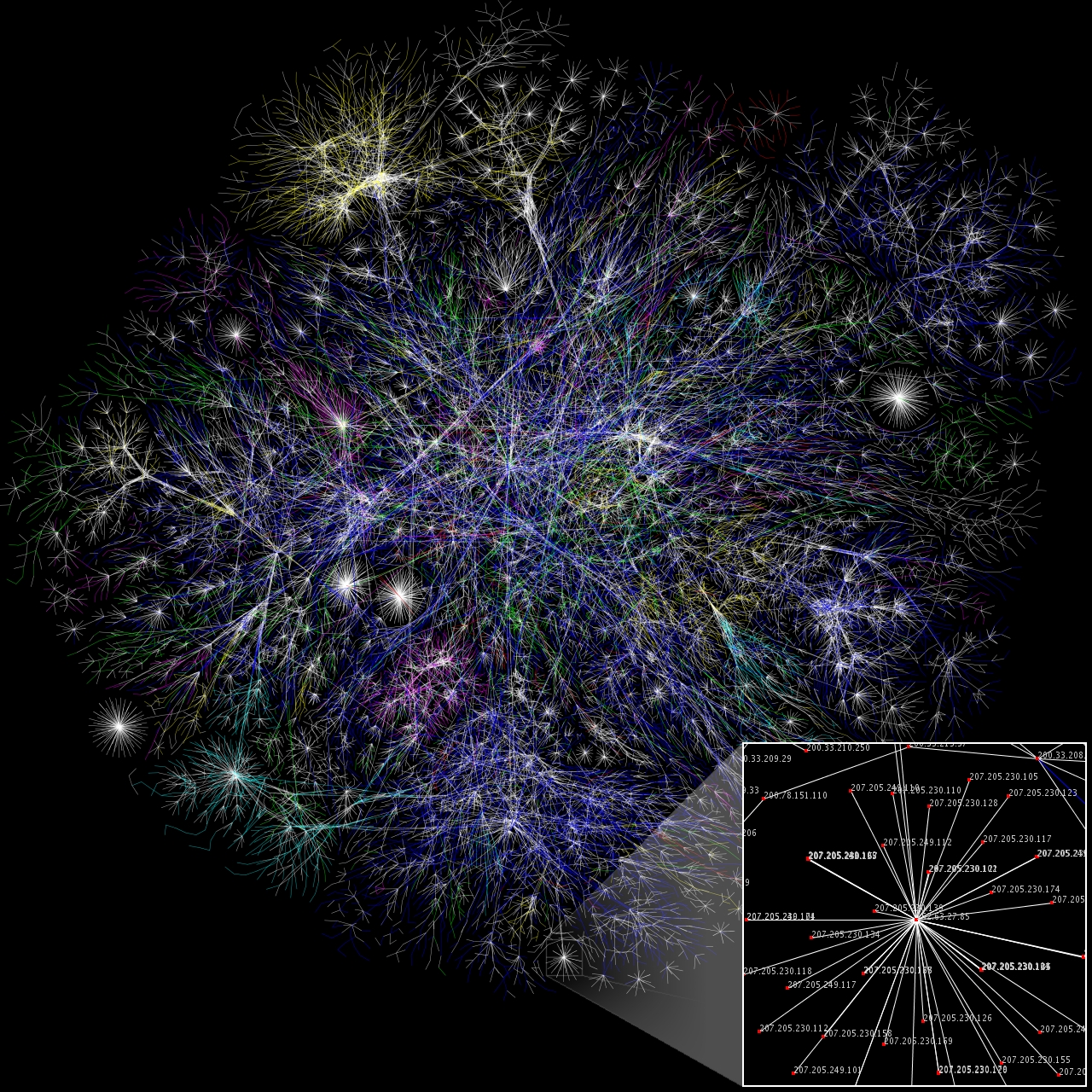
Internet_map_1024

In Nitzavim Moses warns that “The secret things belong to the Eternal our God; but those things which are revealed belong to us and to our children forever, that we may do all the words of this Torah.”  (Deuteronomy 29:28). It sounds perfectly reasonable as a sentence until one starts to look a little closer – what are the secret or hidden things being referred to here? What are the revealed? And why the need to state the distinction? It is an obscure verse and open to much conjecture.

Rashi understands this verse as one where Moses reassures the people who are standing and accepting the covenant for all time and all Jews – even those not yet born. They must be afraid that they will be held responsible for things about which they knew nothing, as part of some Jewish collective responsibility – indeed we are told in Talmud (Shevuot 39a) that” Kol Yisrael areivim zeh la zeh – all Israel are responsible, one for the other.” So in Rashi’s eyes Moses is explaining that any sins that were openly committed and that we might have been able to prevent or mitigate – these we remain responsible for. But actions done in secret, about which we can have no knowledge – these are left for God to deal with; and he goes on to explain that God will indeed punish sins that are not publicly known about, if they are not acknowledged or mitigated.

One of the great themes of the end of the book of Deuteronomy is ‘arvut’ – the mutual responsibility between Jews. As the leadership of Moses is coming to an end, he clearly foresees a splintering of the group, maybe the challenge of a number of different leadership candidates, and he does his best to prevent this by stressing the communal nature of our relationships with each other. So here we are reminded: we are part of a single people bound by a single covenant. We cannot afford to ignore what each other is doing, or to challenge what we see to be against the values of our tradition, or to excuse something as fringe or marginal or not impacting upon us.

There is a something else that adds to the oddity and opacity of this verse – in the scroll the words ‘for us and our children’ with dots over each letter. The reason for this scribal notification is not known, but it drags our attention to the verse asking for us to pay even more intense attention to it.

We read in the Talmud: Why are there dots over ‘for us and our children’ and the ayin of ‘ad’? To teach that they were not punished for the hidden things until the Jews had crossed the Jordan – the words of Rabbi Judah. Rabbi Nehemiah said to him: Is one ever punished for the hidden things? Doesn’t it say: to eternity? Rather, just as one is not punished for the hidden things, so they were not punished for the revealed things until the Jews had crossed the Jordan. (Sanhedrin 43b)

The Talmud seems to imply that the collective responsibility only comes into being once the Jews had arrived in the land, that the peoplehood only becomes absolute at the point they have a land. This idea has evolved as the Jewish people fulfilled the Abrahamic promise by being dispersed all over the world, and as the land became metaphor more than reality for so much of Jewish history to grow into a sense of collective arvut – of responsibility for more than our Jewish community but for the different communities of which we are part, and certainly our identities have become more complex and overlain with different relationships. We grow into our communities when we have shared purpose, shared values, shared space. But the dots over the phrase “for us and our children” direct us to look deeper and closer, and again Rashi comes to our aid. Rashi, (commenting on Psalm 87:6) suggests that “the hidden things are not sins, but people” – that while many Jews have left Judaism either through historical circumstance or through assimilation, and their children may never even know of their Jewish history and backgrounds, Rashi understands that their Jewish roots are never forgotten by God.

Now this may make some people uncomfortable. In Nitzavim we were entered into a covenant without either assent or consent – by our descending from Jewish parentage we are part of this covenant whether we like it or not. Jewishness is something that is given to us whether we wanted it or not. Similarly, the understanding of a verse around this covenant is that we can never escape it – even if we no longer are aware of being part of the Jewish people, by virtue of heritage all who descend from that time will find themselves brought back into it. One thing that it does do however is to bring into focus that we cannot really know anyone’s yichus, and that we should trust God’s judgement over our own. It also means that we cannot be narrow in our understanding of who is in our community, with whom we share responsibility – the obligation to care for others extends beyond the confines of family or known community, out to the whole human world – the arvut is rightly broadened out to include all the groups among whom we live.

This verse about the hidden and the revealed reminds us that we cannot know everything about the world. It reminds us that we have responsibility for what we do or should know about – and it also reminds us that one of the things we know is that we cannot know for sure where the boundaries of our community lie, only that they extend into the human race.

Danny Siegel wrote a wonderful poem which speaks to us in the same way, a poem I love to read and use to remind myself of the extensiveness of arvut:

“If you always assume/ that the person sitting next to you/ is the messiah/ just waiting for some simple human kindness/ You will soon come to weigh your words/ and watch your hands/ and attend to your responsibilities./ And/ if he so chooses/ not to reveal himself in your time/ It will not matter. (Danny Siegel, ‘A Rebbe’s Proverb (from the Yiddish)’)

Image taken from Wikipedia internet map http://upload.wikimedia.org/wikipedia/commons/d/d2/Internet_map_1024.jpg

Devarim: religious reform has a long and honourable history, even Moses did it.

deuteronomy scroll qumran2

The book of Deuteronomy is quite different in style, language and focus from the earlier books of Torah.  It is much more concerned with the practicalities of living in the land of Israel, and it focuses on opposing the idolatry of the surrounding cultures and peoples,  It has been posited that this is the book that was found in the Temple in the time of King Josiah, and which enabled him to create the major religious reforms in 622 BCE, reminding the people of the covenant they had with the one God, and emphasising the importance of a centralized Temple in Jerusalem, rather than the use of many local hilltop shrines.

 Rabbi Yehudah Shaviv calls this book “the book of second chances”. He writes :”If we seek some unique feature of this Sefer we shall discover that one of its characteristics – if not the crux of its whole message – is the concept of a “second chance”. In other words, even if one has failed and sinned, there is always an opening for repair and improvement, for change and renewal.” Thus, for Shaviv, the book of Deuteronomy is primarily a book about Teshuvah, about repentance and  about return to relationship with God, to do what God really wants us to doing.  The calendar of Readings is always arranged for this portion to be read on the Shabbat before Tisha b’Av, as if in reminder that even though cataclysm faces the Jewish people and their land, there will always be a way back to God.

I like the idea of there being a book of second chances. A mechanism to wipe away all the distracting accretions and false starts of living and get us back to the real purpose of our lives. Judaism has a whole series of such mechanisms – from the Teshuvah process that begins in a few weeks in Ellul and takes us to Yom Kippur, or the cyclical reading of Torah so we come back to the same texts every year and are able to understand them afresh. And one of the most powerful mechanisms is the way that Judaism continues to reinvent itself, so we are no longer like any of the various expressions of religion of the extended biblical period, nor that of Temple times; nor of the Mishnaic or later Talmudic period, nor Pale of Settlement. Judaism has always accepted the past but framed it into an understanding suitable for the present. Be it the Mishneh Torah of Maimonides (for which he was nearly put under a ban) or the Shulchan Aruch of Joseph Caro, Jews have clarified Judaism for their own times. This process begins right in the sidra of Devarim: in verse 5 of chapter one we are told “ho’eel Moshe bay’air et hatorah hazot – Moses began to clarify this Torah.

 The midrash (Tanchuma) says that it is “inconceivable that Moses would have allowed the Torah to remain unclear to the Israelites” and Rashi suggests that the phrase teaches that Moses translated the Torah into the seventy languages of the world in order to allow the Jewish people to always have access to it. Whatever was the intention of the text, what it gives us is a proof text that Torah is to be clarified and understood by the Jewish people in their own times. 

 This weekend (2010) we are celebrating the 200th Anniversary of the service in Seesen, Germany, which marks the beginning of Reform Judaism. It was a service deliberately created to be accessible to the Jewish community of the time, with some of the (shortened) service and the sermon in the vernacular. The Judaism of Israel Jacobson who created the Seesen Temple and this dedication service was greatly influenced by the ideas of the Enlightenment, with reason and rational scientific principles applied to both Jewish texts and their  interpretation  and understanding. The old system of believing ideas unconditionally and reading the commentators uncritically no longer worked in the face of academic freedom in other areas. Judaism could be held up to rational systems of thought and its riches presented in a modern way.

 Reform Judaism is one more punctuation in the journey of Judaism from biblical times until now. Just as in the midrash which tells the story of Moses sitting in the study house of Rabbi Akiva and finding his teaching unfamiliar and even incomprehensible, but he is reassured when Akiva speaks of the roots of his teaching in the chain of tradition that goes all the way back to Moses, so too does our understanding sometimes look distant from the context of the biblical or Talmudic world, yet it is rooted in the principles of Judaism – the principles of covenant relationship with God, our shared task with God to complete and perfect the world, in the relationship we have with the Land of Israel, and the close and binding relationship we have with Torah.

 Since Moses began to clarify Torah for the benefit of the people who would go into the land without him, the tradition of clarifying and making sense of Torah for each generation and its needs has continued. This too is part of our tradition, and we fail to follow it at our peril, creating Judaism  as a fixed and immutable thing to conserve a past that is no longer with us. In 200 years Reform Judaism has moved a long way, and it continues to change with each generation. We follow the model of Moses, never completing the journey but never letting go of what is important.

(First written 2010 on the 200th anniversary of Reform Judaism with the service in Seesen. Picture of the Deuteronomy Scroll found in Qumran)

Counting From Shavuot – There must be fifty ways to do a mitzvah; or how to meet God in the everyday after the thunderclap at Sinai

At the heart of Jewish tradition is the idea of covenant, the binding agreement between God and Israel, confirmed by our obligation to do mitzvot, commandments. This structure has never changed, and the covenant remains in force even when one side or the other appears to break its terms. What is open to interpretation though is the precise nature of these commandments, and, contrary to popular belief, the number of them. Simlai, a third century sage once sermonised that there were 613 commandments– an idea he got from adding up the numbers of the word Torah to make 611 and then adding the two direct commandments from God (“I am God” and “You shall have no other gods”).   While this story may have entered folklore as if it is real law, the truth is early biblical commentators disagreed. Abraham ibn Ezra wrote that this was not authentic rabbinic tradition: “Sages enumerate 613 mitzvot in many diverse ways but in truth there is no end to the number of mitzvot and if we were to count only the root principles the number of mitzvot would not reach 613” Nachmanides knew opinion was divided, while recognising the power of the sermon. It  turns out on closer inspection that the number of mitzvot in Bible being 613 is just Simlai’s opinion, following his own choices for explication of the mitzvot.

            So if we understand that the structure of mitzvot is neither so mechanistic nor so time bound as aggadah says, how do we fulfil the covenant? Over time a consensus grew about what are truly God’s requirements – the Ten Commandments say, or celebrating festivals. And other laws of ethical or ritual nature – supporting the poor, sanctifying the Sabbath, have also taken root. But the action of mitzvah must keep on changing and responding to our context – maybe ecological activity or giving blood could be seen as modern mitzvot.

So I have a challenge. Write for yourselves a list of 52 mitzvot you would like to do – from visiting a lonely elderly person to attending religious services, from volunteering to researching a social justice issue. And each week try to do just one of them. On Shavuot tradition tells us God marries Israel and the Torah is the wedding document, with all its derived mitzvot. So from this year to next, see if you can find, (to mangle the words of the song), “50 ways to meet your lover.”

ketubah cropped shavuot

Behukkotai: redemption requires ongoing action.

The sidra Bechukkotai ends the book of Leviticus, and concludes with the verse “These are the commandments which the Eternal commanded Moses for the children of Israel in Mt Sinai”

A book which is primarily dealing with the ritual system overseen by the hereditary priesthood, a book whose rabbinic name is Sefer Cohanim (The Book of the Priests), is seen by itself as holding a much wider remit, putting into context the sacrificial cult of priest and altar, clarifying the notion that the relationship between God and Israel is available to each and every person, and is framed into the construct of covenant.

            At the beginning of the sidra we are told of the great blessing which will be given to the people if they observe the Torah, 11 verses detailing the blessings of economic stability, peace and prosperity, and finally God’s presence among the people. This is followed by the tochecha – the admonition and curse, with 30 verses which warn of the destruction of the land, the destruction of the nation and their exile, for the sin of violating the commandments.

This set of warnings, which here are told to Moses by God in the desert, are repeated in an even more concise and forceful manner by Moses just before his death forty years hence.

When you study these two versions of the warnings, and compare then with other biblical texts warning about destruction and exile, you find a curious and certainly deliberate absence. Usually the warnings which are found in bible end with the promise of Teshuvah – that God will restore us from our captivity as soon as we return to God. The certainty of ultimate redemption is spelled out for the reader. If we actively seek God then God will redeem us. But the rebuke in this sidra, like its parallel text in Deuteronomy, does not state that redemption will surely come. Instead , at the end of chapter 26 of Leviticus (arguably the original end of the whole Torah), after the warnings of destruction and exile, we are told   “I will remember My covenant with Jacob and also My covenant with Isaac, and also My covenant with Abraham will I remember,; and I will remember the land” and God goes on to say “When they are in the land of their enemies I will not reject them, neither will I abhor them, to destroy them utterly, and to break My covenant with them; for I am the Eternal their God. But I will for their sakes remember the covenant of their ancestors, whom I brought forth out of the land of Egypt in the sight of the nations that I might be their God, I am the Eternal”(26:42,44-5)

These verses, which resonate in this text, are ones which countless generations of Jews have held close. They are a huge comfort to many generations, yet they do not talk of redemption or of return to the Land. What they tell us is that God continues to remember the covenant – but they don’t tell us what that means. The covenant is remembered by God and so we are not lost however dark our days may be. The fact that the patriarchs are named in reverse order is used as the proof text for the tradition of Zechut Avot – the merits of our ancestors which we can call upon in difficult times. If our own merits do not help us than we enlist those of Jacob. If his don’t do the trick then we enlist the merits of Isaac and finally we can call on the merits of Abraham, who, as the first person to make a covenant with God will surely come to our aid.

            The tradition of Zechut Avot – that the merits of our ancestors will be added to our own at the time of judgement, and so will enable us to survive, is debated at length in the rabbinic literature and there are those who claim it continues to operate, and those who claim that the merit has been exhausted – our own sins by now far outweigh any ancestral good deeds. But all the commentators agree that whatever the status of Zechut Avot, the covenant made with our ancestors remains in force, it is the covenant which effectively ensures our continuing existence and our continuing meaning.

            Within the bible there are two types of covenant – there is the Noachide Covenant when God promises that the natural order will not change, a promise made by God which does not require any action or even response from people. Then there is the covenant as understood by Abraham and his descendants, the covenant that is described by God who does not forget. This is a covenant of mutuality – mutual obligation, mutual understanding, mutual responsibility. “I will be your God and you shall be My people” – there is an interdependence here, a way of defining and identifying through the other party in their relationship. This covenant is still in force even at the end of the tochecha – it remains in force because God remembers it. But there is no promise of redemption because redemption is not an automatic consequence of God remembering – we need the concept of mutuality – whether the covenant can be executed will depend not only on God remembering but on US remembering. For the people to find redemption they must act properly, responsibly, within the terms and conditions of the covenant.

            In the midrash we are told that:

“Three things were given to Israel conditionally – the Land of Israel, the Temple, and the Kingship of the House of David. And two things were given unconditionally – The Torah and the hereditary priesthood”

What is not mentioned is redemption – we have no automatic right to such a state of being, no magic formula of faith in God which will ensure that we are saved. Judaism teaches us, (and it bases its teaching from within the two passages of the tochecha), that we are in a position of covenant with God, that we have all the rights and obligations and responsibilities that such a relationship entails, and that the purpose of such contract is not that we individually save our souls through our belief, but that we work to save the world through our actions which themselves are rooted in the contract/covenant relationship we have accepted with God.

That contract can never be broken, whatever we do or don’t do, wherever we are, and however we view ourselves. Because God remembers the covenant, and God remembers the land. And God waits for us too to remember, and having remembered, to act.


Counting Down the Days: Between Pesach and Shavuot

Between Pesach and Shavuot we count. Every evening we tick off the day that has just passed, and we label it – adding up the weeks and the days of the omer, building up to the moment at Sinai when the covenant between God and the Israelites was signed, the moment when Judaism might be said to be created. It was at Sinai that the group of ex slaves who had descended from Jacob first got to understand something about God, and it was at Sinai that they began to realise that God required something from them that was more than the usual obeisance and paying off. An association was formed with obligations and expectations on both sides. Each party began to understand that the other was far more complex and ambiguous than they had appreciated until now, that much was hidden and even more was yet to emerge. At Sinai the God who had spoken to the ancestors, who had battled Pharaoh with plagues and signs and wonders, who had led them in the wilderness with a pillar of cloud and a pillar of fire became something quite different – became of God of relationship and connection. And the disparate group of people with some shared stories and a collective present became united because of their experience there.

We don’t really know what happened at Sinai, some three months after the people had streamed out of Egypt into an uncertain freedom. But we know that the event shaped them and it continues to shape us – the revelation at Sinai, even while the people kept their distance from the mountain, made them the commanded people of God. We agreed to be God’s workers in the world and God agreed to be our God. Even now we struggle to make sense of that agreement, and we constantly nuance and finesse and philosophize in our struggle to seek its meaning. We take some control where we can, so we count the days from Pesach to Shavuot, waiting to get there and to experience it again – maybe this will be the year when we understand a little more.

Parashat Lech Lecha: the covenant of circumcision

This sidra contains a number of different covenants, but the covenant of circumcision is one which continues to resonate with us as a sine qua none of Jewish identity. “God further said to Abraham, As for you, you and your offspring to come throughout the ages shall keep My covenant. Such shall be the covenant between Me and you and your offspring to follow which you shall keep: every male among you shall be circumcised. You shall circumcise the flesh of your foreskin, and that shall be the sign of the covenant between Me and you.” Genesis 17:9-11  

The Brit Milah is the first of the rites of passage, and it quite literally etches into the child the central values of Judaism, connecting him to the past and future of the Jewish people.   In the midrash (Kohelet Rabbah) we find a story which makes this clear – it tells of a father of a baby who gives to the guests some good wine to drink in celebration, and says “Drink of this wine, and I trust in my God that I shall also be able to give you wine on the day may son marries”. The guests replied with a blessing that is also found in the ceremony – “Just as the child has entered the covenant, so may he also enter into Torah and into good deeds and be married under the Chuppah”. With this blessing is the clear hope that the Brit Milah is the beginning of a child entering the Jewish community, and the expectation that this will be a lifetime’s commitment. The Brit Milah does not make the child Jewish – that is acquired through birth to a Jewish mother – but it gives the child the mark of Judaism, and with it a Jewish identity.

 Brit Milah may or may not have other reasons to support (or not) its usage – some talk of hygiene, of lower levels of cervical cancer in women whose partners are circumcised, of social or psychological reasons to do it-or not. But the reason why Jews have fulfilled the obligation of Brit Milah down the generations – often at serious personal sacrifice or danger – is precisely because it is just that – an obligation, a mitzvah. It symbolises our willingness to be connected to God, it reminds us of the relationship begun between God and Abraham of which we are a part.

 Circumcision is also seen as an act of completion or perfection. The ceremony is understood traditionally to be one of ‘finishing’ the creation of the child, so that we participate with God in the act of Creation. It is also seen as a willingness to submit, to give up a part of the child for the sake of the whole. As Judah HaNasi (c200CE) wrote – “Great is circumcision, for despite all the commandments that Abraham our father carried out, he was called complete (shalem) only with his circumcision, as it is written (Gen 17) “Walk before Me and be perfect” .

 Whatever one’s view about circumcision, it has become the sign not only of the biblical covenant, but of the male Jew. It has been said that it is not so much the mark of a Jewish man, as the mark of a man whose parents have chosen for him to be Jewish, who were prepared to undergo this ceremony in order to enter him into the Covenant. It is the mark of one generation upon the next, the physical expression of what we want for our child. There is much debate as to its meaning – and the changes in its meaning – over the years. Was it simply a transformation of a pagan fertility ritual, done not to a man at puberty or marriage in order to increase sexual potency but to a child at eight days in order to increase spiritual connection? Was it a fertility rite that extended through agricultural practise to human beings – a sacrifice of a small part for a greater good? Was it a divine requirement to cleanse the people, separating the idolatrous ancestors of Abraham from his monotheistic descendants? Or a blood rite parallel to the Temple sacrifice, that found echoes in Christianity and the crucifixion, returning to express salvation through self not another?  It is all these and more, but when one considers the importance of the rite throughout Jewish history it is hard not to see it as a unifying symbol, the mitzvah which most Jews have practised and with which we pass on covenantal Judaism to this day.

Beha’alot’cha

There are some torah readings that just seem to be made for vegetarians, and Beha’alotecha is one of them.  The graphic image of the Israelites feeding upon the quail, stuffing the meat into themselves until it “came out of their nostrils” and then dying “with the meat still stuck between their teeth” is almost too repugnant to bear.  It speaks to us of overweening greed, of the desire for fleshly pleasure fulfilled to the extent of costing the life of the one who indulges too far.  It is both gross and pathetic, seedy and overwhelming. 

The people, often rather unattractive in their behaviour in the wilderness with their complaining and rebelling, their argumentative and sullen responses to Moses’ words to them, are here at their most revolting.  Their failure once again to understand what God is doing for them, their inability to comprehend ideas about freedom, communal responsibility, behavioural limits – leads them to what must be the most explicitly nauseating end in the whole of biblical narrative.

          Early on in the Exodus the newly freed slaves, terrified of what they had done in leaving the security of Egyptian society and worried about simple survival in a hostile wilderness, complained to Moses – “you saved us from slavery and brought us here to this desert to kill us all with starvation and famine?”.

God understood the narrow horizons of the people, the shrivelled imaginations and the visceral fear of a people who had forgotten how to be independent, how to have pride in themselves and the self-confidence necessary to go out and make a life. So that time God showered the Israelite refugees with quail and with the miraculous manna, the food which was said to have tasted like coriander or honey or rich cream – the food that tradition said tasted like whatever you wanted it to taste of. 

          But now, here in the book of Numbers after all the experiences of care and support by God here in the wilderness, this time the situation is different. “Who will give us meat to eat? We remember the fish we ate for free in Egypt, the cucumbers, the melons the leeks and onions and garlic. But now our soul is dried away, there is nothing at all except this manna to look at” (Num 11)

There are a number of problems in this complaint.  Are the people complaining that the diet isn’t varied enough? That manna – even tasting of different things, was still indisputably manna – and a bit boring for that? Are they desperate for something a little more solid? – they specify meat, food that tended to be eaten only on special occasions – and usually connected to the sacrificial system, when meat would be a by product of the worship of God?

Is it specifically Egypt they crave, with the system that may have been slavery but at least it was something they knew and could therefore cope with? Were they saying they didn’t want to break out into a more independent way of being?  Or is it the idea that the food in Egypt was so plentiful and all present that they could take it for free – without responsibility to its production, without obligation to others? 

The manna of course was also available to them for free, but somehow that didn’t count – there was no thought given to the deity who was providing their sustenance, no connection made in their heads between the availability of the miraculous manna and the Creator of the world who was making this every day miracle.

          Whatever the reason – and I imagine it was a combination of reasons, this time both God and Moses found the people’s complaining and self-absorption infuriating and intolerable. This time God gave them just what they said they wanted – in spades – and they died from it.

          When we first came across manna in the early part of the Exodus, we are told that God gave them it in order to test them. But what the test was is left to our imagination.  Rashi tells us the test is of obedience, that God wanted to see if the people would collect the manna in the way that God had commanded – just enough for each day, not keeping it overnight. Not going out to collect it on Shabbat but relying on what was collected before the Shabbat.  Each of these tests of course were failed – the people clearly did not trust that the manna would be there the next morning, that it could not be kept overnight in good condition, that the Shabbat would be somehow special in that no manna would be found but the manna retained would continue to be edible.  The people failed because they were frightened and because they were unimaginative – they had been in slavery too long and all they could construct was the practical concrete concepts around physical survival. 

          When Moses knew he was dying and would not continue with the people into the land he had been taking them to, he wrote a number of speeches explaining to them both the story and the meaning of their history, full of warnings and reminders. Of manna he said “Remember the path along which the eternal your God led you those forty years in the desert. God sent hardships to test you, to see what is in your heart, whether you would keep God’s commandments or not. God made life difficult for you, letting you go hungry and then feeding you manna. And manna was that which neither you nor your ancestors had ever before experienced. This was to teach you that it is not by bread alone that the human being lives, but by all that comes out of God’s mouth” (Deut 8:2-3). 

So Moses understood what the test was – it was not literally about the food, but it was about the people’s willingness to listen and to follow Gods commandments, to accept the limitations about what could and could not be done, and the food was simply the structure around which it would be seen whether or not the people were able to accept the restrictions that following God might place upon them.

 Image

Parashat Behar Behukotai “And I remember the Land”

Image


The Hebrew bible is essentially the story of how a group of diverse individuals came to be formed as a People through a covenant relationship with God, the Creator of all things, and how that relationship was supposed to help them to be a righteous People who lived out their ethics on a small land to which they gave their name – Israel.

We are used to reading the texts and narratives, deriving from them a system of laws and of ways to behave in order to create our society and ourselves. We are used to the stories that form a narrative history, albeit one that is often read more as metaphor or myth than as literal record of events.  We are comforted by the story of the relationship with God that, even though interspersed with episodes of extraordinary pain and even a feeling of temporary estrangement, is shown to be constant and caring and ever present.  

The people Israel really came to existence at Sinai, when they agreed to the covenant relationship with God, with all of its rules and obligations. As God said when they were encamped at Sinai before the formal giving of Torah  “ Now, if you will really listen to My voice, and keep My covenant, then you shall be My own treasure from among all peoples; for all the earth is Mine” (Exodus 19:5). Though of course much earlier when speaking to Moses in Egypt, God reminds him of the earlier promise of Covenant relationship and Land given to Abraham, to Isaac and to Jacob,  that “I appeared to Abraham, to Isaac, and to Jacob, as God Almighty, but by My name YHWH I did not make Myself known to them.  And I established My covenant with them, to give them the Land of Canaan, the Land of their sojourning, where they lived…..So say to the children of Israel: I am the Eternal, and I will bring you out from under the burdens of the Egyptians, and I will deliver you from their bondage;…  and I will take you to Me for a people, and I will be to you a God; and you shall know that I am the Eternal your God, …  And I will bring you in to the Land, concerning which I lifted up My hand to give it to Abraham, to Isaac, and to Jacob; and I will give it you for a heritage: I am the Eternal” (Exodus 6:3-8)

What becomes clear as we read these texts of the formation of a people was that the Land which God gives to them is a critical element of the covenant, it is a partner in the relationship, and it is not simply an object which is given as reward or gift. The Land in the biblical narrative has a personality and a power. It is not a passive backdrop to be lived upon and worked for its produce– it is an active force in the relationship, a player in the narrative and character in the events. Like the people it belongs to God. It is only ever on loan to the Jewish nation, and that loan comes with strings attached.

Here at the end of the book of Leviticus we return to the Sinaitic meeting to emphasise once again the importance of the Land in the Covenant agreement. In Sidra Behar the text presents the laws regarding the sabbatical and the jubilee years. For six years the people are to sow their fields and prune their vineyards, but in the seventh year, the Land must be allowed to lay fallow. In other words, it must be given a rest – a Sabbath for the Land.
Every fiftieth year is a jubilee year which will not only to have all the rules of a sabbatical year but also is the time that all the Israelites who had sold themselves into servitude during the previous forty-nine years would be freed. Property (especially land) is also to be returned to the original owner-families. Thus the clock is reset and the original distribution of land among the tribes of Israel is to be preserved forever.

Then Parashat Bechukotai reminds us that if the people follow God’s laws then they will be protected, but if not then God will punish them – specifically the Land will not produce, the people will live in fear of their enemies who will remove them from the Land, and they will not return to it until they had atoned for their sins, included in which is their refusal to have let the Land have rest:  “Then shall the Land be paid her sabbaths, as long as it lies desolate, and you are in your enemies’ land; even then shall the Land rest, and repay her sabbaths. As long as it lies desolate it shall have rest; even the rest which it had not in your sabbaths, when you dwelt upon it. (Lev. 26:34-35)

So if the covenant is broken and the people forget their responsibilities to each other and to God, then the Land will lie desolate without its people, the people desolate in the land of their enemies, but ultimately, says God  “ I will remember My covenant with Jacob, and also My covenant with Isaac, and also My covenant with Abraham will I remember; and I will remember the Land” (Lev 26.42) and God goes on to say: “I will not reject them, neither abhor them to destroy them utterly and to break My covenant with them; for I am the Eternal their God, and I will for their sakes remember the covenant of their ancestors whom I brought out of the land of Egypt in the sight of the nations that I might be their God, I am the Eternal (Lev 26:44,45)

The Covenant is ultimately unbreakable, however strained it may become. The Land remains connected to the people and to the Covenant, but it will not be abused. It too has its own relationship with God. It too is cared for and remembered by God, and it will not allow itself to become the setting for unrighteous behaviour.  It is not a prize for its inhabitants to use as they will, rather it is the test bed for the mitzvot that form the detail of the Covenant to be carried out – the commandment of compassion for the stranger, of thoughtful use of resources, of caring for all the poor and needy who are living amongst us, of the awareness that ultimately we do not own the Land but are allowed to lease it, so we should remember and give thanks to God who is giving us the food we need.  The Land is content to be in a mutually respectful and symbiotic relationship with us, a sibling relationship with us,  but we should never take it for granted. To impose ourselves on the Land and those who live on it, to oblige them to bend to our will, to arrogantly arrogate to ourselves the power to dictate to the Land and those who live on it, be they human, animal or plant life – this the Land will not accept, we will forfeit the benefits of the covenant and we will ultimately forfeit the Land if we do not quickly return to the ways of righteous behaviour.

Again and again Torah reminds us that our behaviour has consequences, and the ultimate consequence is displacement from our Land. Again and again the prophets rail against behaviours that place us and the Land in danger. Again and again a harsh experience results, a lesson must be learned, behaviour must change.

And yet the sidra gives us a clear instruction and it gives us hope: “If you walk in My statutes and keep My commandments and do them, then I will give you rains in their season, and the Land shall yield her produce and the trees of the field will yield their fruit. …and you shall eat your bread until you have enough and you shall dwell safely in your Land. And I will give peace in the Land, and you shall lie down and no one shall make you afraid… (Lev 26:3-6)

Peace in the Land comes at a price – the price of how we behave in the Land and to the Land. To treat her well, and to treat all those who live on her well, will bring about the “shalom ba’aretz” we all crave and which comes, ultimately, from God. Not to do so – well the warning is explicit in the sidra with the tochecha listed here. The Land will not provide any place to hide.