Tetzaveh: the flames that ascend on their own

אַתָּה תְּצַוֶּה אֶת-בְּנֵי יִשְׂרָאֵל, וְיִקְחוּ אֵלֶיךָ שֶׁמֶן זַיִת זָךְ כָּתִית–לַמָּאוֹר:  לְהַעֲלֹת נֵר תָּמִיד

And you shall command the children of Israel, that they bring to you pure olive oil beaten for the light, to cause a lamp to burn continually. (Ex 27:20)

For those of us who enjoy parsing bible, this very first verse of the sidra gives us a rich seam of learning. God is instructing Moses on what will happen inside the Mishkan, the portable tabernacle used for worship in the wilderness years. The sidra gives us elaborately detailed instructions for the clothing of the priests, and about the ceremony of ordination in which they will be dedicated to the service of God. The purpose of the clothes and the rituals are made clear – it is to make the priests holy.

The holiness of biblical times was not the abstract quality we think of it today, it was for them an important state of being for those who were to approach God. Holiness could be acquired through ritual and clothing, washing and the abstention from some actions, people and places. Holiness was a quality which was necessary for those who wished to serve God in the rituals of worship, as it would somehow protect them from what was understood to be a potentially dangerous and certainly unknowable presence of God.

So we have verse after verse of what they wore and when and how they wore it, what they washed and what they daubed in blood; what they ate and when and in what condition, what they slaughtered and what they sprinkled, what they burned and what they waved.

Reading it one can easily fall into a modern-minded trap of wondering how on earth they could believe that this ritual of sacrifice and incense brought people closer to God – but I think the clue is in the very first line I quoted – this is not for God, it was never for God, this is for the people.

אַתָּה תְּצַוֶּה אֶת-בְּנֵי יִשְׂרָאֵל, וְיִקְחוּ אֵלֶיךָ שֶׁמֶן זַיִת זָךְ כָּתִית–לַמָּאוֹר:  לְהַעֲלֹת נֵר תָּמִיד

And you shall command the children of Israel, that they bring to you pure olive oil beaten for the light, to cause a lamp to burn continually. (Ex 27:20)

Rabbinic commentators noticed two surprising words in this verse.

The first being that the oil that is being brought to light the lamps in the Mishkan – and to symbolise the eternal relationship between God and people – is brought not for (or to) God but Alecha – for you. The midrash is clear (Lev Rabbah 31:8) when it tells us that God already has the sun as a servant, there is already fire in the world so God does not need the light that we have burning in the Mishkan. God does not need it, we do. Bringing the olive oil into the Mishkan is an action only for our benefit; it is a way to come closer to God, a way to create relationship with the Eternal. The Midrash tells us that God gives us the mitzvot as a way to let us have as many opportunities as possible to come closer to relationship with God, even in the smallest and insignificant actions of our lives – such as providing olive oil for a lamp.

There is a second curiosity in this verse. The verb used to describe kindling the light is not the normal one for lighting a flame – lehadlik – but instead the bible talks of le’ha’alot Ner Tamid – to cause to ascend a light continually.

In the Talmud are two ideas about this verb and what we can learn from it. Rabbi Samuel bar Isaac in the Jerusalem Talmud (Sukkah 29b) deduced that the unusual word לְהַעֲלֹת, le’ha’alot, literally “to cause to ascend,” meant that the wick had to allow the flame to ascend by itself. And thus the Rabbis concluded that no material other than flax — as in the fine linen of the High Priest’s clothing — would allow the flame to ascend by itself. Similarly, in the Babylonian Talmud (Shabbat 21a) Rami bar Hama deduced from the use of word לְהַעֲלֹת, le’ha’alot, that the flame had to ascend by itself, and not through other means (such as adjustment by the priests).

Taking these comments and in particular the idea that the flame should ascend on its own, Rabbi Samson Raphael Hirsch, the famous nineteenth century founder of the school of “Torah im Derech Eretz” orthodoxy which negotiates the  relationship between traditionally observant Judaism and the modern world, wrote that “the description of the act of kindling a lamp by the term ‘ascending’ is peculiar to the service of the lamp in the sanctuary. It alludes to the action of the priest in applying the flame to the wick which is ready to be kindled until the flame ascends of its own”. The task of the teacher of Judaism is to make themselves superfluous to their pupils. It is not their function to keep the people – the ones who receive instruction from the teacher – continually dependent on them”

The statement is a beautiful distillation of what Jewish education – formal and informal – should be aiming for. That we want our children (and of course our adults) to be themselves ‘flames which ascend on their own’. The goal of Jewish community is that individually and collectively we gain the knowledge and the confidence and the inspiration to live active and thoughtful Jewish lives, that each of us is able to stand up and be a light in the world, living with Jewish values and ethics, striking out for righteousness.

There is an idiom in the English language – to pass the torch – and this is, to some extent what all of us in the Jewish world hope to be doing within our communities. However this sidra reminds us that we are not passing the torch on in order to relinquish our responsibilities, but rather that we nurture the flame of learning and identity of the next generation with our own learning and experience.

The image of Aaron each and every day nurturing a flame in order to have it stand upright and unaided, giving light through the darkness is an image that appeals to me and speaks to me of how we have kept our traditions and our teachings alive through the generations.

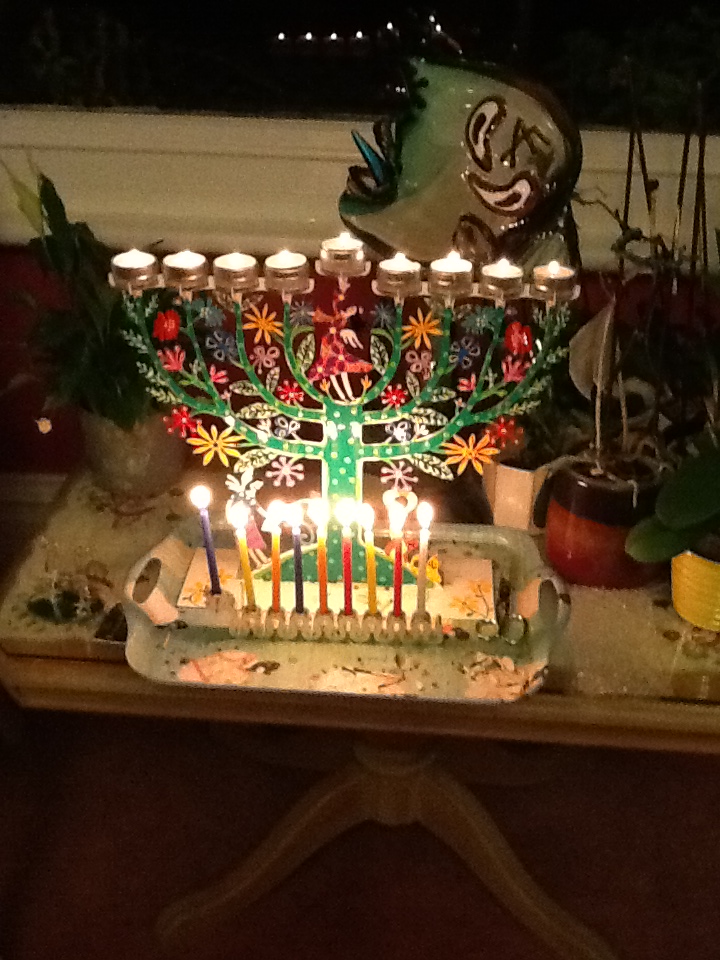
candles

Beshallach/ Shabbat Shira: the Song of Miriam

“And Miriam the prophetess, the sister of Aaron, took a timbrel in her hand; and all the women went out after her with timbrels and with dances. And Miriam sang to them: Sing ye to the Eternal for God is highly exalted: the horse and its rider God has thrown into the sea.”

Shabbat Shira, the Sabbath of Song, is named for the Song at/of the Sea (Shirat haYam) and this name takes precedence over the usual format of the first important word giving the title to the week. Shirat haYam was the song of victory sung by the Israelite slaves after they had successfully crossed the Reed Sea, and the pursuing Egyptians had drowned there following the miraculous opening and then closing of the waves to allow the Israelites safe passage but not the heavily armed Egyptians.

Along with the poem in Deuteronomy (Ha’azinu) it bookends the story of Moses and the people of Israel as they leave Egyptian slavery and journey through the wilderness to arrive at the edge of the promised land, and tradition ascribes its authorship to Moses.

But tucked into the text a little way down we are introduced for the first time by name to Miriam, described as “Miriam the prophetess, the sister of Aaron” and she takes a drum in her hand and leads the women in singing and dancing and drumming to celebrate the victory. And while apparently singing the same first line, Moses and the children of Israel sing “I will sing to the Eternal, for God is highly exalted” while Miriam sings “Sing to the Eternal, for God is highly exalted”. She uses the imperative version, whereas Moses and the Israelites use the personal pronoun.

The order of the text makes us read this as the song of Moses, but is there a clue in the wording of the text to tell us that this is the song of Miriam?

In the fragments of text found in Qumran (known as the Dead Sea Scrolls) we find a tantalising addition. Just as in the biblical text we find that “Miriam the prophetess, the sister of Aaron took a timbrel in her hand and led the women out with her with timbrels and dancing”, but then there is a break, and then the fragments of seven lines NOT found in the biblical text, followed by the narrative being picked up as the biblical verse 15:22 where Moses leads the Israelites away from the Reed Sea into the desert, and the people find no water until arriving at Marah they find undrinkably bitter (Marah) water.

Is the Qumran text a gloss on the biblical poem of Moses, answering the question of what Miriam might have sung and paralleling other songs of victory or was it the original text which took away words from Miriam and the women in order to give them to Moses and the Israelites? We know that women sang songs of victory after battles – Deborah is a prime example whose song is recorded (Judges 5), and Jephthah’s daughter (Judges 11:34) comes out with timbrel and dancing on his return home. Unnamed women come out dancing and singing with their timbrels when David returns having defeated the Philistines (1Sam 18:6-7) celebrating his success and humiliating King Saul’s record. Hannah (1Sam:2) sings when she achieves her goal of a child, and the late book Judith has her sing in the final chapter, having beheaded Holofernes…

So why not Miriam and the women singing their song? Miriam the prophetess was also Miriam the musician and song leader. Her voice and her words deserve to be heard and to be recognised.

miriams timbrel

Whatever the reason for the biblical canon to contain just the remnant of her singing with the women, apparently echoing the words of Moses and the men, so that tradition could claim her as the song leader for the women only, I think there are enough clues left for us to give her the power and place she deserves.

The first place that Moses leads the Israelites to is called by the narrator “Marah” , after the bitter and undrinkable water found there and there is much murmuring against Moses until on God’s instructions he finds a tree whose wood will sweeten the water. Moses uses this as a teaching aid to remind the people that God is their healer, and then they move on to Elim where there are twelve good water sources and seventy palm trees. Is this a veiled reference to Miriam, whose name is impossible to translate with certainty but which is often understood as coming from “Mar – yam – bitter – water/sea”? Are the people murmuring because of Miriam and her treatment by Moses that he appropriated her rightful role? And are they pacified by the oasis of plenty represented by 12 springs and seventy palm trees and so forget their indignation?

But more intriguing I think is the possibility that Miriam’s name is not derived from bitterness MRH) but comes from a rarely used root MRR to mean a flow of water, drops of water or a watercourse. In which case her name would mean the flowing of water or the directing of water – something that would come to fruition not only in the midrashic idea that wherever Miriam was there was water for the Israelites in the desert (which comes from the drought that is the first reported event after her death), but from this text about the Reed Sea, which changed direction, flowed differently and intentionally while the Israelites crossed it. The name Miriam, introduced exactly here, is I think a clue to her purpose –  we are already explicitly told that she is a prophetess, she has real and intentional meaning and understanding – it is Miriam who causes the sea to part and the miraculous redemption of the fugitive people. Her name, hiding in full view, tells us exactly that.

So the Song here attributed to Moses yet called slightly confusingly Shirat HaYam , the Song of (or at) the Sea (a name first recorded in the 2nd Century in Talmud Yerushalmi), might actually have been Shirat MirYam, the song of Miriam. And how powerfully that simple change could have affected our understanding of our foundational texts and shaped the hearing of the voices of women in our tradition.

Drop by drop as we look again at the texts, we who see Miriam as a role model, who see ourselves reflected in her life as prophetess, sister, organiser, carer for children, provider of life giving water/nourishment, song leader, drummer and dancer , as well as a hard worker behind the scenes who protested injustice done to others and the arrogating of power to the male leadership – we need to take notice of the effect that the flow of water can have – it can wear away the hardest rock. Drop by determined drop we take up her mantle and raise our voices in song and in challenge and in prophecy, and hope that this time the words will not disappear from the canon.

(Photo of Miriam’s timbrel and the reeds in Egypt/water of the Reed Sea from an embroidered Torah Wimple made by Caroline and Naomi Ingram for the author)

Sidra Vayigash:the reassurance of God’s presence in dark times

And Israel took his journey with all that he had, and came to Beersheba, and offered sacrifices to the God of his father Isaac. And God spoke to Israel in the visions of the night, and said: ‘Jacob, Jacob.’ And he said: ‘Here am I.’ And God said: ‘I am God, the God of your father; fear not to go down into Egypt; for I will there make of you a great nation. I will go down with you into Egypt; and I will also surely bring you up again; and Joseph shall put his hand upon your eyes.’ And Jacob rose up from Beersheba; and the sons of Israel carried Jacob their father, and their little ones, and their wives, in the wagons which Pharaoh had sent to carry him. And they took their cattle, and their goods, which they had got in the land of Canaan, and came into Egypt, Jacob, and all his seed with him; his sons, and his sons’ sons with him, his daughters, and his sons’ daughters, and all his seed brought he with him into EgyptGen 46:1-6

Jacob has a number of meetings with God during the night – the first was the dream on the road out to Haran when he was running away from Esau, and a ladder appeared to him that joined heavens to earth, and God delivered a reassuring message to him. The second the dream at the ford of Yabok, when he was returning home to Canaan, wealthy and secure but also anxious about the reception he would get from Esau.  And now here, at Beersheba, God appears in order it seems to reassure him that he will return from Egypt and will become a great nation. It reads to us a little strangely – for we know that Jacob will die in Egypt, and that as a nation they will only leave in over 400 years’ time, having survived a long period of slavery, yet one might read into it that the time in Egypt will be a short respite during the famine. Why? Does God think that Jacob will not cope with the reality of what his descendants will face? Is this vision one that emanates from Jacob’s need for support rather than being a real meeting with God? Is God responding more to the Jacob God first met, the frightened young man who yet was confident enough to tell God that only if God fulfilled the promises made in the dream would he finally believe, rather than to the older man whose world is shaped by the loss of his older son by his beloved wife Rachel; who has been frozen in grief since that time.

Or is the story added into the narrative later as a story to support the enslaved Israelites and ameliorate their suffering?

We have no answers, just as we have no answer for the interchangeable use of the two names Jacob and Israel, so powerful yet so cryptic in this passage. Yet as with all the encounters Jacob has with God during night time journeys, the vision is one we are able to hold on to today – providing reassurance in times of uncertainty, reminding us that we are one link in a chain that goes back into history and will go forward into a future we cannot know.

We are most definitely the children of Jacob rather than those of Abraham or Isaac. Abraham had a stern and all-encompassing faith which seemingly left no room for doubt or anxiety, Isaac lived in the shadow of that faith and his own encounters with God are clearly shaped by it. But Jacob was his own self, a mixture of self-assurance and anxiety, wanting to believe but not being too sure about it, prepared to do a deal with God when it seemed an expedient action.  It is given to few people to believe with certainty, and to fewer still to come to belief through their own experiences, rather than to have it bred into them. Doubt is a colourful strand in the Jewish character, it threads through our narratives and our prayer. Indeed we pray in an aspirational way – hoping to be able to believe rather than asserting that we hold such a conviction.  Whether God ever speaks to Jacob in the night or whether Jacob creates the experience for himself becomes an irrelevant question – what is important is that Jacob is able and willing to create such an encounter (or to believe it when it comes). It is all that is asked of us too – to be able and willing and open to the presence of God when times are at their darkest.

Miketz: the strange case of the disappearing women

Dr Ruchama Weiss points out that sidra Miketz is the first in Torah that is devoid of any stories of women : – she identifies it as the point at which bible begins to actively exclude women from the focus of the narrative. Over the fourteen years that the sidra spans in three and a half chapters of the book of Genesis, women are indeed conspicuous by their absence. The matriarchs have died, the only daughter of Jacob that we know of, the unfortunate Dina, has disappeared following her experiences with Shechem, no other daughters or indeed wives of the sons of Jacob are recorded here. They must have existed, but the biblical author does not see fit to document their presence.

There is in fact one woman who briefly makes an appearance – Asenath, the daughter of Potiphera a priest of On. Our introduction to her is laconic and almost imperceptible, she rates less than a third of the verse in which she appears, coming after the renaming of Joseph and before his status is recorded: “And Pharaoh called Joseph’s name Zaphenath-paneah; and he gave him to wife Asenath the daughter of Potiphera priest of On. And Joseph went out over the land of Egypt.—“(41:5). She reappears five verses later as mother to Joseph’s two sons: “ And to Joseph were born two sons before the year of famine came, whom Asenath the daughter of Potiphera priest of On bore unto him.” (41:50). She doesn’t get to name her sons, up till now the privilege of the mother, nor do we see her relationship with them – all we see is Joseph naming Manasseh and Ephraim in order to make statements about himself: “And Joseph called the name of the first-born Manasseh: ‘for God has made me forget all my toil, and all my father’s house. And the name of the second he called Ephraim: ‘for God has made me fruitful in the land of my affliction.’ (51,52)

Asenath

Her lonely presence in the sidra, useful only as a wife for Joseph and mother to his children, is picked up in the 6th century pseudepigraphical work “Joseph and Asenath” , though to be honest there too she is still the plaything and chattel of men. A pagan woman, she falls in love with Joseph and gives up her idolatry in a painful and protracted process in order to marry him and have his sons. Later the son of the Pharaoh tries to take her for himself but the plot is foiled, and Joseph takes the crown of Egypt. So there is not much more to her there either. She may be the daughter of a powerful priest of the Egyptian cult, the wife of the most powerful man in the country bar Pharaoh himself, the mother of the founders of the tribes of Ephraim and Menasse, but she is unknowable, mysterious and all but erased from history. Her fleeting presence in the sidra that is filled with the powerful men who control all the resources of the country only really serves to highlight the poignancy of her disappearance. And to complicate matters further, there are those who say that her presence in the sidra at all, inserted quite clumsily into the text as daughter, wife and mother, is only tolerated because she acts as a counterbalance to the physical beauty of Joseph which drives women into a sexual frenzy while he himself remains emotionally detached and essentially sexless. She is there as an answer to the questions about his sexuality, to put paid to any idea that he may not conform to the heteronormative ideal of the Hebrew bible.

This year – 2015 – is the eightieth anniversary of the private ordination of the first woman rabbi of modern times, Rabbiner Regina Jonas; and the fortieth anniversary of the ordination of the first woman to be given semicha by a European rabbinic institution (Leo Baeck College) Rabbi Dr Jackie Tabick.

One of the most shocking things about the life and times of Rabbiner Regina Jonas was how quickly she was forgotten after her death in Auschwitz in 1944. When I was studying at the Leo Baeck College in the 1980’s we knew only of rumours that there had been a woman who may or may not have been ordained Rabbi in Germany – even though some of the teachers and founders of the college had known her well. It was only with the fall of the Berlin Wall and the emergence of some of her papers and photographs from an archive that she once again became real. And now her life and name are being researched and reclaimed, yet there is so much that is lost beyond recall. She disappeared even while there were people alive to remember her. Her story is an object lesson, a cautionary tale, how quickly can the stories of people disappear if there is no interest, no will to record them and to keep them alive.

In the forty years that Rabbi Dr Jackie Tabick has been working as a rabbi the world has moved on. There is less anxiety (at least in the progressive Jewish world) about women working as rabbis, but still there are those individuals who ask for a male rabbi for a life cycle event, or synagogue search committees who worry what will happen to their community if a woman is appointed as rabbi, or as the senior rabbi.

So we should not be complacent and believe that the battle has been won. The erasing of the inconvenient from history goes on everywhere, and it is a truism history is written by the winners. If the narrator of the biblical text is not interested in the women then the stories of the women will not appear. If we don’t have a multiplicity of voices recording history as they see it, then we will have a thin and diminished version of history, seen through the narrowest of lenses. And this too has knock on effects. Because there are so few women fully described and fully voiced in our foundational texts, it is a short leap for some to believe that this must not be a function of the (lack of )interest of the narrator but a function of the divinely inspired status of women in society.

As the societal norms are impacting on Judaism, as the eightieth anniversary of the ordination of Regina Jonas and the fortieth of Jackie Tabick begin to filter into the consciousness of orthodox feminism, and as more Jewish women demand that their voice be heard, there is a corresponding kick back from some in the orthodox world. Only this week A senior haredi rabbi suggested at a conference for high school principals held in Bnei Brak that higher education for women constitutes a more severe blow to the haredi world than the Holocaust and a responsa was given to a man about letting his daughter go to university that “ to do so would be worse than stealing money since material goods may be recovered but the “spiritual damage” of permitting the young woman to achieve higher education could not be undone.”

The spiritual damage envisaged when a woman is allowed to study at a high level, to learn to think and question and understand the world around her is not to the woman herself – it is damage to the structure of a community which relies on unquestioning following of self-appointed sages. When people think for themselves, the artificial consensus breaks, and a real consensus, based on challenge and debate, logical argument and building of agreement is allowed to emerge. In sidra miketz the women are submerged in the narrative with just the flash of one woman’s presence that serves to point up all the absences. We should be warned, there is nothing new under the sun, and women are being ‘disappeared’ from public space in the Jewish world with increasing determination, just as they are in this sidra. In the book of Exodus the presence of women will reassert itself, but their silence as the book of Genesis begins to move towards its close is a telling one. And a nudge to us to take responsibility not to allow it to happen again.

Ki Tavo: Moses’ words echo today – what of us will echo in the future?

Ki Tavo includes the famously difficult passage known as the tochecha, the red lines of society’s expectations laid down mainly in the form of the cursing of the one who disobeys, but there is a great deal more in this speech which is part of the series given by an increasingly anxious Moses as he approaches his death. The whole thrust of the book of Deuteronomy is given life by Moses’ desperate wish to help the Israelite people continue on their journey with God after he is no longer around to help them. So here we have the ritual of sacrificing the first harvested fruits of the land to God carefully spelled out – the fruits should be put in a basket, taken to a specific place of worship, given to the priest of the time – and one of the earliest bits of liturgical speech is also given here – the people must say to the priest “I profess this day to the Eternal­­­­­­­­­ your God that I am come unto the land which the Eternal swore to our ancestors to give us”. The priest will take the basket and place it at the altar, and then the speech is to continue: “A wondering Aramean was my father, and he went down into Egypt, and sojourned there, few in number; and he became there a nation, great mighty and populous. And the Egyptians dealt badly with us and afflicted us and laid upon us hard bondages. And we cried to the Eternal the God of our ancestors, and God heard our voice and saw our affliction and our toil and our oppression. And the Eternal God brought us out from Egypt with a mighty hand, and with an outstretched arm, and with great terribleness and with signs and with wonders, and God brought us into this place and has given us the land, a land flowing with milk and honey. And I have brought the first of the fruit of the land which you O God have given me”.

The whole script is prescribed – and after it what shall happen – you will then worship God, you will rejoice in all the good that God has given to you, and so on.

The text is familiar to even the most distanced of Jews – it is the basis for the text of the Haggadah that we read at Pesach. Word for word Moses’ script is recited when we remember the Exodus from Egypt at the Seder each year. The actual figure of Moses may never have been allowed into the Haggadah in case people should begin to believe that it was his leadership rather than God’s that took us on our journey into peoplehood and covenant, but that becomes irrelevant when we realise that something far more important has been imported untouched by the editorial process of the book – the direct prayer of Moses is embedded in the text as if in amber. The rabbinic statement that a scholar does not ever die fully if his teachings are remembered – phrased evocatively as “his lips move in the grave when his words are recounted” – means that Moses’ teaching really has been passed down the generations and his humanity and presence really do remain among us.

As we move towards the Yamim Noraim we are prompted to remember those who taught us our religious and ethical values, and it is a custom in this period to visit the graves of those family members and teachers who have died. We are going to be facing our own ‘day of judgement’ to spend at least one day looking at our lives from the perspective of our own death as we abstain from food and drink and the normal everyday activities we do every other day of the year. We weigh up our actions in the past year and maybe further; consider who we have been, what lessons can be inferred from how we have lived our lives. So the question we have to ask of ourselves now is – how have we done? How are our actions an expression of our values? Will we have been a strong link in a chain or an irrelevant and vestigial structure appended to the community without much adding to it?

Every year our liturgical calendar gives us time to consider whether our lives are going in a direction we can be proud of, whether our lived lives are an valuable addition to the world we care about or not. So will the text of our lives be read in the generations to come or as we pass into eternity will we also be forgotten, no stories remembered with warmth and love, no wisdom or behaviour of ours held close to those still in the world? Our legacy does not have to be high profile or high achieving. But how we lived our lives should matter.

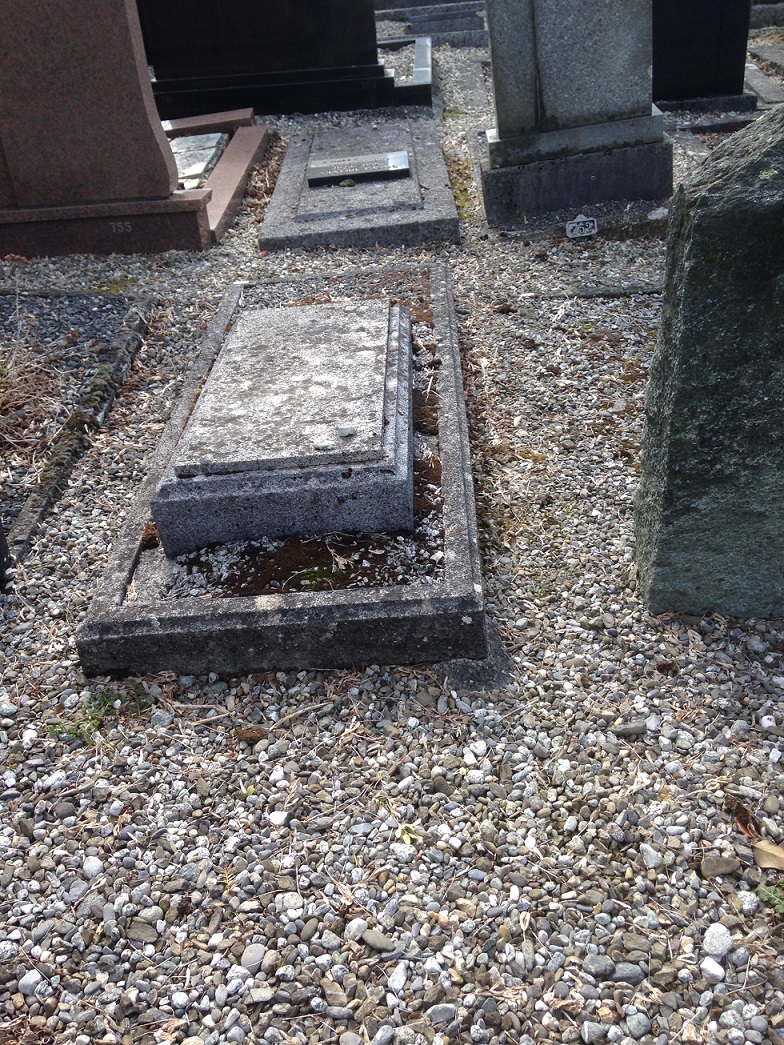
vati grave

illustration is the grave of Walter Rothschild in Jewish Cemetery Lausanne

Chukkat: how to remove the ritual impurity that is confusion so that we see the world more clearly

The sidra Chukkat is named after the instructions about the red heifer – instructions that even the learned commentators on Hebrew bible found mysterious and puzzling beyond understanding. A person made ‘tum’ah’ – unclean through contact with a corpse, was to be sprinkled with special water made with the ashes of a sacrificed perfectly red cow with absolutely no blemish upon it. The ritual is given in great detail over five verses, and is described as Chukkat Olam – a law for all time.

In the midrash Tanhuma, Rabban Yohanan ben Zakkai is described as telling the outer world that this ritual is one of exorcism, of ridding oneself of something awful – but tellingly to his own disciples he declares “the corpse does not defile, nor does the water cleanse. The truth is that the ritual of the red heifer is simply a decree of the Sovereign above all Sovereigns, and we are not permitted to transgress it…”

So our portion is named for a ritual that has no rational meaning, and that we cannot in truth really understand – something that we just do because God tells us to do it. It is a difficult concept to embrace in the twenty first century for modern progressive Jews.

But maybe we might understand it more if we don’t focus on the nature of this law as being an illogical diktat from on high, but we look instead at the nature of tum’ah that the ritual is designed to remove.

In the 19th Century, Rabbi Samson Raphael Hirsch commented on the relationship between tum’ah – described as ritual impurity, and timtum – confusion. He suggested that the connection between them was that of the intensity of physical experience, that what renders a person ‘tam’ei’(ritually impure) is the state of being emotionally overwhelmed and unable to focus on the present context. This idea builds on the Talmudic comment that the nature of tum’ah is one ‘she’metamem et halev’ – one that blocks or paralyses the heart. Essentially to be ritually impure means to lack any mindfulness of self or context, to not be able to locate oneself fully in the world.

Ritual impurity – tum’ah – then can be seen as a function of the clarity of our consciousness, or lack of it. It is something that has to be removed, unblocked, or given a new frame and lens through which to understand what is happening and so change our response to it.

Suddenly this apparently irrational ritual of the red heifer has meaning – we have to do something to change our world view, do something to clarify our perceptions and to move on.

It is no accident I think that the sidra also contains the reporting of the deaths of first Miriam and then Aaron. When Aaron dies the community mourns and sheds tears for him for thirty days, but in the case of Miriam’s death the mourning is not reported – instead we are told that the source of the water dried up and the Israelites became thirsty and frightened.

A frequently quoted Midrash on this text tells us that Miriam had been the source of water for the Israelites, so that when she died the water too went away, but Rabbi Moshe Alsheich’s comment is I think more interesting – “Because they did not shed tears over the loss of Miriam the source of their water dried up”.

Because the children of Israel did not know what to do at the sudden loss of the woman who was the source of water, the source of life, their response was one of confusion – timtum – and of anger. We know about the anger because its most potent expression was that of Moses in response to the anger of the people. Against God’s instruction simply to speak to the rock he made an emotional speech accusing the people of rebellion and then he struck the rock not once but twice in front of the community, and the water poured out of it. Moses’ anger almost burns the page as we read it. Bereaved, lost, his world turned upside down, and with a community who are simply unable to cope with what has happened, his response is to give way to his fury – a completely human reaction but unfortunately not one that was helpful to anyone. Both he and the community are trapped in a state of tum’ah – blind confusion where no possibilities of renewal can be perceived, where everything is terrible and lost and lonely, and the future a bleak and frightening place.

The anger is the first response of the timtum, but it is ultimately a very damaging one – for this anger Moses and Aaron will not enter the Promised Land. The healing response comes after the death of Aaron when we are told “All the house of Israel bewailed Aaron for thirty days”. These tears are curative, part of the necessary process of mourning. And restorative life giving water comes in response to the waters shed in the tears.

The tears bring relief from tum’ah, from the intense confusion and pain and depression caused by the loss of Miriam and Aaron. But tears alone do not bring full cleansing – the waters of the ritual are mixed with the ashes of the red heifer, the emblematically perfect animal sacrificed for this ritual.

What can we use instead of the ashes to help ourselves out of the state of tum’ah?

Some mix whiskey with their water, but it will only help the tears to flow and ultimately prolong the state of timtum.

Some sacrifice themselves, their joy in life, their interest in the world, sinking into depression and despair.

Some sacrifice their future, holding on the state of anger and confusion, in order to punish the one who put them there.

Many rabbinic traditions (BB10a) suggest that instead of ashes we use tzedakah – for as our liturgy for the Yamim Noraim tells us, tzedakah, acts of righteousness and charity, save from death (proverbs10:2) or at least will blunt the severity of the decree against us.

Tzedakah, deeds of righteousness and charity, along with our freely flowing tears and expressions of our inner pain, do seem to be the way towards cleansing ourselves from our state of tum’ah, our pain filled confusion of timtum. But it is hard to do. Maybe this is why the heifer of the bible had to be so perfect, so completely red, so unusual that few have ever been born. It is hard but not impossible. For the people did it – they learned to mourn for Aaron fully, they learned to let go of the feelings of fear and confusion and express them in a structured and ultimately contained way. Only after that did they begin to live again, and to go on to new things, symbolised by the water which once again was accessible to them, the living waters of restoration and new ways of being.

Parashat Terumah: In the making of Sacred Space, we create Sacred community

When Jacob left his home and journeyed to Haran he spent the night on the road. There he had a dream of a ladder between heaven and earth, and of God standing above him. When he woke, he said to himself:  Ma Norah HaMakom ha’zeh. Eyn zeh ki im beit Elohim, v’zeh sha’ar hashamayim.   ‘How full of awe is this place! this is none other than the house of God, and this is the gate of heaven.’ Gen 28:17

Sacred space is something that we all resonate with. And in parashat Terumah we have the beginnings of the first deliberately created sacred space.

When Jacob recognised the awesomeness of the place where he had so blithely slept, he simply set up a pillar and offered a sacrifice of oil to the God he had just encountered. He moved on to Haran the next day, keeping with him the memory and the promise God had given him. He had no need to do more than mark the space for future use, but we need more – either because we have never had an encounter with the divine, or because we know that memory fades and we need a more concrete reminder of what God can be for us – we need to inhabit sacred space.

In parashat Terumah God tells Moses to build a sacred space – a mikdash, a place that is in some way kadosh – separate, distinct and special, that embodies an idea and directs us towards it.

From earliest times the commentators have pointed out that what the mikdash does NOT do is to embody God, or in any way be a place where God actually lives. The phrase that God uses “Assu li mikdash v’shachanti BETOCHAM” – let them make for me a mikdash, a sacred and separate space, and I will dwell AMONG THEM is key.Image

The mikdash is the first building to be created for the awareness of God, it will be in the midst of the camp and will be a portable building that moves with the community, but it will be in the making of it – assu – that God dwells among us. Moses is told where and how to build the mikdash.  There are chapters and chapters of detail as to how to build it, with what materials, what colours shapes and sizes, how much everything weighs and costs, where it is to be placed. But all of that is secondary – God’s presence isn’t in the building, but in the people working to create it. The presence of God is something that occurs only when people are actually doing something to bring it about.


The synagogue I grew up in, the Bradford Synagogue was the third Reform synagogue in this country and is the second oldest building (Manchester having lost its original synagogue in Park Place). The quotation at the top of the extraordinarily decorated exterior comes from a young Jacob who had just encountered God in a very ordinary place, “Ma Norah HaMakom hazeh. Eyn zeh ki im beit Elohim, v’zeh sha’ar hashamayim.   ‘How full of awe is this place! this is none other than the house of God, and this is the gate of heaven” was one that seemed to fit the grandeur of the Moorish Architecture of this beautiful building which was built in 1880 as the Bradford Synagogue for British and Foreign Jews. It was and is an amazing building, with vaulted ceilings and a free standing domed ark with grille-work to the front standing within a huge niche which is painted a midnight blue, and golden stars shine behind it, so that as a child it was easy to imagine being in a different and exotic world. Added to that the rich scarlet of the bimah coverings and the Persian carpets covering the raised area by the ark meant that truly it was (and is) a place filled with awe.. It was an awesome place and a place where heaven and earth met because of the community which met within it, which educated its children and celebrated the festivals and fasts of Jewish time. It was a community always small enough for every single person to matter, for everyone to have to be involved if it would survive.Image

That Synagogue is proof that it isn’t really the building that creates a sense of God, however gorgeous and ornate it might be – it is the people who come to work within it, the ordinary people who in daily life might work in retail or wholesale, be dentists or doctors, teachers or journalists.  Each of them, with willing heart, brought what they had to create a community. The whole key is in that verb – assu. We have to be doing, to making, to be forming and creating the whole time, not resting on our laurels in beautiful places, not turning places into museums of sacred space. Jacob had the right idea when having acknowledged the power of the encounter with the words “Ma Norah HaMakom hazeh. Eyn zeh ki im beit Elohim, v’zeh sha’ar hashamayim.   ‘How full of awe is this place! this is none other than the house of God, and this is the gate of heaven.‘ –  he then he marked the place and moved on.

Sacred space is only sacred if we keep adding to its kedushah by being ourselves people who are kedoshim – people who follow the sacred principles and try to be more like God in our behaviour.


Chanukah: A time to reconnect to our values

photoSome years ago I was telephoned by a local radio station, wanting to interview me about Christmas coming so early this year. Somewhat confused I asked “Coming early? But isn’t it a fixed date?” This in turn confused the researcher. After a while I became clear about what she meant – that the shops were already full of Xmas gifts and glitter, even though it was early October. She wanted to know what I thought about it. I had to tell her that as a Rabbi I hadn’t given it much thought, and maybe she ought to be speaking to a cleric whose own tradition was being devalued and commercialised by this particular phenomenon, rather than me. She thanked me kindly and rang off. But it set me thinking.
When we Jews say “the festivals are early this year” we mean that they have taken us by surprise, and we aren’t ready and prepared for them. But Christmas ‘coming early’ means almost the opposite – people OVER preparing for it – at least in one aspect of its celebration. And by this particular type of preparation, the meaning and the message behind the festival becomes obfuscated and ignored.
It is always necessary to prepare for festivals if they are to mean anything more than the superficial enjoyment we can create around them. But the preparation has to be appropriate and considered. “Christmas coming early” is another way of saying that the meaning of the festival has been overtaken and overlaid by the trappings. The preparation has somehow gone askew. The traditions which deliberately build up to the important date (Advent colours, candles and liturgy) are disempowered by the gilt and glitz in the shops.
Rosh Hashanah or Pesach ‘coming early’ really means that we have run out of time to prepare for them, and that happen because we’ve become disengaged from our Jewish calendar. “Jewish time” nudges us with the regular cycle of Shabbat observance, our liturgy includes prayers before the new moon which reminds us monthly just how the year is passing; We read special haftarot before some of the festivals, and others that link us to calendar and time – from before Tisha b’Av to Rosh Hashanah and so on.
There are so many reminders that our tradition has worked into our routines, but only if we keep those routines in our lives. We under-prepare for our festivals each time we could make Shabbat Kiddush but don’t, we under-prepare for our festivals each time we book holidays without consulting the Jewish calendar, we under-prepare for our festivals by not living within Jewish time, and by forgetting to mark each new day and new week with reference to our ancient markers.
One of the things the religious world could learn from the commercial world is that forward planning and continual working towards the goal is the only way that the festival is made to be successful. I’m pretty sure that the Easter Egg planning is finalised by now in most confectionary factories and probably some are already made!
As the days draw in and the trees lose their leaves we may be thinking about latkes and doughnuts, the comfort food of Chanukah, and the bright lights of the menorah in our windows – but to really prepare for the festival we should be thinking of the meaning of having a festival dedicated to the rights of people to practise their religious beliefs and then move on into putting the values of those religious beliefs into action.

And as we celebrate Chanukah this year, our thoughts should also be travelling a little further down the line, thinking about Pesach, about Shavuot, about Rosh Hashanah and Yom Kippur; we should be thinking about how we plan to put our values into action at every festival, and during every ordinary day of the week. Who will you invite to your Seder this year? How will you be able to sit around the table and talk of freedom if you haven’t been considering it throughout the year, – and not only considering it but actively working to maintain important freedoms in our world.
Reconnecting with our calendar is the first step we take in order to reconnect with the meaning of our festivals, to not be taken by surprise each time a date comes round. Forward planning to make our festivals meaningful. As new diaries come into the shops and we write our important information into them ready for the new year, let’s put in the religious festivals, and some time set aside to prepare for them

Vayeitzei – Filled with Awe we encounter God

bradford synagogue doorwaybradfordshul outside

ark 2

bradford shul
Jacob awoke from his sleep and said “Surely God is in this place and I, I did not know”. And he was overawed and said “how full of awe is this place. This is none other than the house of God, and this is the gate of heaven”
The phrase “ma nora ha’makom ha’zeh, ein zeh ki im beit Elohim” (How full of awe is this place, this is none other than the house of God”) is part of the stonework on the exterior of the synagogue I grew up in, and as one walked in and looked up, that is the sentiment one felt – even though it is situated in what is now inner city Bradford, on a less than salubrious road.
The religious message I received as a child was bound up in this synagogue, in the community of people and in the building they worshipped in. It was a two-fold message-
Firstly that we can encounter God wherever we are, for God is always ‘in this place’ as are we, and often we do not notice how close God can be to us.
And Secondly that awe is a necessary instinct, God is, and we must respect that reality. We have to live with not being able to control God or demand from God or expect to understand God.

When we pray, what are we really doing?
Abraham Joshua Heschel (1907-1972) was a scholar, theologian and social activist. He wrote “the predicament of prayer is twofold: not only do we not know how to pray, we do not know what to pray for. We have lost the ability to be shocked.” Heschel also suggested that we have overemphasized intellectual ideas when we think about religion, and that we also overemphasise religious belief; For Heschel religion is more like a way of being in the world, a way of facing life and dealing with it.
In Judaism, believing is not the most important thing for a religious Jew, but Awe, or the ability to be shocked is the fundamental requirement. The bible talks of the religious person as one who is yirat Adonai, or yirat shamayim – in awe of God or in awe of heaven. Without a sense of awe, without the ability to be shocked or moved by what we see around us, we can never really move on to encounter God, or develop a sense of faith.
I have lost count of the number of times that I have been told that someone doesn’t really believe in God, the number of apologies that somehow come my way. I never quite know as a rabbi how to help people to believe in God if that is what they think they want, but what I am sure of is that the beginning of such a journey is Awe.
When Jacob first encounters God he notices how the place is filled with Awe, and he had not understood it. It takes time, and possibly even a certain vulnerability for us to open ourselves to noticing God.
Many of our services begin with the phrase “v’ani tefilati lecha Adonai eit ratzon” usually translated as “and as for me, let my prayer come before you God at a favourable time”, but it is more complex than that, meaning something more like and I am my prayer to you God at a favourable time”. We are in fact our own prayers – if only we would let ourselves be so. Rabbi Lionel Blue once wrote “Meeting God can be simple, but nothing can happen if we do not will it. If we seek God then God can be found. God will allow us to find God if we seek with all our will”