Nitzavim: we are our own matzevah, sign of a covenant that we cannot fully understand

Just before the famous opening words of parashat Nitzavim, we see Moses speaking “el col Yisrael” – to all Israel, reminding them that they had seen everything that God had done to Pharaoh and to the people in Egypt, had seen the great trials, signs and wonders, but that God had not given them a heart to know, eyes to see, nor ears to hear until right now.

He then goes into a strange excursus, telling them that “I led you for forty years in the wilderness, your clothes did not grow old nor did your shoes wear out, you have not eaten bread nor have you drunk wine or strong drink, that you may know that “I am the Eternal your God”.

He speaks of the two kings of the Amorites, Sihon of Heshbon and Og of Bashan, of how they battled against the Israelites but were defeated, their land given to the tribes of Reuben, Gad and Manasseh. And so he tells them to observe the words of this covenant and do them, in order that they be successful in all they will do.

So ends the sidra before, and the division is both dramatically powerful and problematically distracting.  Nitzavim begins “You (pl) are standing this day ALL OF YOU, before the Eternal your God – your heads, your tribes, your elders and your officers all, a man (sing) of Israel. Your children, your women, and your stranger who is in the midst of your camp, from the hewer of your wood to the drawer of your water. For your passing over into the covenant of the Eternal your God, and its conditions, which the eternal your God is making with you today, in order to establish you today for himself for a people, and he will be for you a God, as he said to you, and as he swore to your ancestors, to Abraham Isaac and Jacob. ”

The image of everyone being present in order to enter into a covenant with God, where all the people would become God’s people and God would have a particular relationship of covenantal obligation with them is hugely appealing. It is made the more so when we see the list of people who will become part of this unbreakable relationship of covenant –from the highest status men of office through to each individual (man), then children, women, strangers who have become part of the group in some way, and finally the most menial labourers often invisible to the rest of society. Leaving aside the androcentric society of bible for a moment, we see a real equality in the covenant – it doesn’t matter your gender or your status, whether you are Israelite or resident stranger, your position as regards the covenant with God is the same.

So lovely is this thought that it is easy to not notice other nudges in the text. The elision of Moses and God is deeply problematic to me – not only does he tell the people that this is a moment of revelation which had been hidden for the previous forty years because God had not given them the abilities to perceive what most of their lives had been about, he also doesn’t seem to be quoting God so much as claiming God’s role.  While the presence of the people, all of the people, is accentuated in this text, so that Moses tells them that not only those present that day but also those who were not present that day (understood in tradition to be both all the future descendants of the people present, and also all who would enter the covenant via conversion to Judaism), the presence of God is harder to ascertain. Moses seems to stand in for God at the introduction of this covenant. And after the fearsome predictions of what would happen in both this and future generations when the people will forsake God and in turn be forsaken, along with the land, we are told “the secret/ hidden things belong to the Eternal our God, but what is revealed belongs to us and to our children forever, that we may do all the words of this torah/teaching”

There is a play about hidden and revealed going on in this text, made explicit at the beginning and end of the chapter, and this makes all the more dangerous the signing up to a covenant which cannot be fully understood.

As if to underline this play of hiding/revealing in the context of a treaty or covenant, the text nudges us to two other biblical narratives, neither of which comforts us.

Firstly is the phrase “atem nitzavim”  coming from the Hebrew root yod tzadi beit, it is in the niphal (reflexive) form meaning not so much standing as “you are setting yourselves up” or “taking one’s stand”.  It is a curious phrase, and it causes us to think of other uses of the root – more often found as the noun form of ‘matzevah”. The first time we meet the word is after the dream of the ladder when the young Jacob realises that he has met God, he rises early in the morning, takes the stone he had put under his head the night before, sets it up as a pillar (matzevah) and pours oil over it in a religious ritual, vowing “If God will be with me, will keep me on this way that I go, will give me bread to eat and clothes to wear, so that I will be able to return to my father’s house in peace, THEN will the Eternal be my God, and this stone, that I have set up as a pillar (matzevah) will be the house of God….”(Gen 28:18-22)

Later, when Jacob is about to return to his homeland and has to negotiate his leaving with his father in law Laban, Laban tells him  “And now come, let us make a covenant, I and you; and let it be for a witness between me and you.’ So Jacob takes a stone and raises it for a matzevah (Gen 31:44,45)

The original use of the word matzevah seems to be not just an upstanding stone to mark a place, but a physical marker of a covenant that is being made.

Moses uses the word differently though – “Atem Nitzavim” may legitimately be translated as: “You are standing”, but it has echoes of more than physically being on one’s feet – it means “you are setting yourselves up as a matzevah, you are physically yourselves the sign of the covenant that is being made between yourselves and God”

The second nudge is the phrase translated as “from hewers of wood to drawers of water”.  Besides the fact that there is little difference at the very bottom of the social scale being a hewer of wood or a drawer of water it is referring to those who  are using brute strength to service the society which will barely notice their efforts (though it will most certainly notice if they stop).

The phrase is not common – apart from here it appears in the Book of Joshua (chapter 9) which recounts a covenant that is not what it seems.  Once again the Amorite Kings  Sihon of Heshbon, and  Og king of Bashan are referenced, this time their defeat has led other inhabitants (the Hivites or Gibeonites both appear in this role) to dress in worn out clothing, with worn shoes and stale bread and patched wine skins (more resonances to the passage here in Deuteronomy) and pose as being travellers from a distant land who have heard of the acts of God done in Egypt and who have come to this land in order to meet these people of God and to make a treaty so as to live together with them in peace.  The Israelites are flattered, they take the food and wine that are offered, and critically they do not “take counsel from the Eternal”. After three days of covenant making/celebrating,  Joshua and the Israelites find that the people were not who they had said they were, but were long term inhabitants of the land and were now protected from the oncoming Israelites by treaty. In response to their having lied, and to their protected status, Joshua  acknowledged that they would live, but he curses them – they are to be bondmen to the Israelites, in particular “there shall never fail to be of you bondmen, both hewers of wood and drawers of water for the house of my God.’

There are too many echoes in this tale from the Book of Joshua.  As we are told there is “no before and no after in torah” one has to read each story in the light of the other.  So when Moses alludes to the covenant being made on the edge of the land, the covenant between God and the people, he is warning them both that covenants can be made without full knowledge, that some things may only come to light later, that ultimately we take things on trust and sometimes that trust is misplaced.

Sometimes too the upshot of not knowing something can be of real disbenefit, sometimes we can live with it sometimes it is hard to live with.

But we are ourselves the matzevah, we have set ourselves up for this covenant and we are the physical signs of its existence. We are so intertwined – our lives, our very selves are part of the covenant – that we can never free ourselves of it. We are the hewers of wood and the drawers of water, the people who keep society going with tasks that are not honoured but are honourable.  We are also the people who take a leap in the dark with God, who retain trust even when there is no obvious reason to do so.

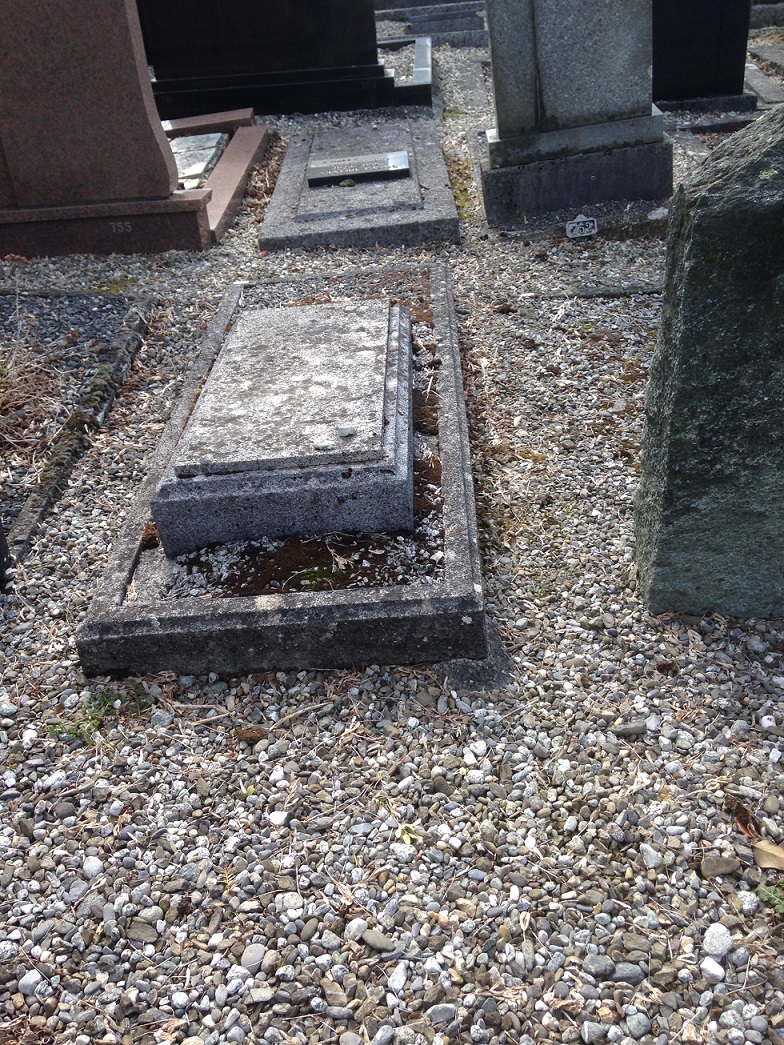
Nowadays we use the word matzevah to mean a tomb stone, the marker of a body that rests in the earth having finished its tasks in life.  It provides solidity, certainty, finality.  But I do like the idea of the matzevah that is the living human being, the one that is uncertain, ongoing, working in the dark to some extent, living in hope.  As we enter the Days of Awe, the days of risk, of trying to make ourselves our best selves, the days when we wonder what God thinks of us, being a living matzevah, a living sign of the covenant between us and God must surely be a powerful sign and reminder we have trusted God all these years, and we hope to have reason to trust as we journey into the future.

image the stone said to be Lot’s wife in Sdom from wikimedia

Va’etchanan and Nachamu:In approaching God with our desires we may yet find comfort and the chance to rebuild

The Shabbat where we read parashat Va’etchanan is named for its haftarah: it is Shabbat Nachamu, the Sabbath of consolation.

After three weeks of haftarot that speak of rebuke, that have ratcheted up the anxious anticipation of the forthcoming cataclysm that is Tisha b’Av, we now begin the seven weeks of consolation, leading us to the possibility of a new start with God at Rosh Hashanah, reminding us that whatever the catastrophe, God is still there for us.

For a period of ten weeks we are liturgically reminded that it is time to put in the work to repair our relationship with God.

Va’etchanan begins with Moses reminding the people of his asking for God’s graciousness, asking to be allowed to enter the land that his whole life has been dedicated to guiding the nascent Jewish people towards.  He says “I besought God at that time saying, Adonai Elohim; you have begun to show your servant your greatness, the strength of your hand. For which god in heaven and earth can exist who does like you do? Please let me cross over so that I will see the good land that is beyond the Jordan, that good hill country and the Lebanon.  But God was angry with me because of you (the way you behaved) and did not listen to me and said to me, ‘Enough, do not speak more of this matter’…  Go up to Pisgah and look [in all four directions] …and command Joshua and strengthen him and encourage him….”

Va’etchanan ends an era, albeit with the pain and frustration of Moses played out publicly before the people. A line has been drawn; it is time for the next leader, the next stage of the people’s history.

Nachamu begins with the repeated imperative to “Comfort yourselves”. It goes on to speak to the heart of Jerusalem to say that that her time of service is over and her guilt paid off, that she has received from God double for all her sins.  A voice is calls: Clear the route of God in the wilderness, make a highway in the desert for our God. Every valley shall be raised, every mountain and hill diminished, the rugged will be levelled, the rough places smoothed.  And the glory of God will be revealed and everyone shall see it, for the mouth of God has spoken it”

One can read the Isaiah as a counterpoint to Va’etchanan, a response to Moses’ anguish that he will not be there to guide and escort the people in the land they are ready to enter: – Isaiah stresses the point that while yes the people will stray, God will still be there for them. The pathway that has led from Egypt to Mt Sinai, and from Mt Sinai to the Promised Land in a wandering and circuitous route, will become clear and defined and will link the people and God in a pathway that is easy to see and to tread.  The repetition of the imperative “Nachamu” echoes the repetition of the angel calling to Abraham at the site of the Akedah, reminding us that when we are so involved in our own ideas and world view it takes more than one call to drag us out of our intense concentration to be able to see a bigger picture.

But I think the Isaiah speaks not only to past time, but to present and future time. The passage speaks of a change in the landscape so that all the landmarks we are used to have gone, a levelling so that the valleys and mountains are brought together to one flat plain where no one and nothing can hide. It erases the peaks and the troughs, the domains of the heavens and the earth which shall never quite meet. Instead it speaks of human mortality and the eternity of the word of God. It speaks of catastrophic worldly and political change and of the consoling continuity of our relationship with God.

Whose is the voice calling in the wilderness demanding proclamation?  Whose is the voice asking what should be proclaimed?  Like the voice of the shofar at the revelation of Mt Sinai, these voices are ownerless in the text; we can claim them or project onto them.

The voices can be ours, demanding justice, demanding fairness, demanding relationship with God. Just as we are told that “the mouth of the Eternal has spoken” we are given a voice to speak back, to have a dialogue not only with each other but with our creator.

We are in the liturgical run-up to the Days of Awe, when God is said to be more present in the world, more willing to listen to us, more focussed on repairing the gaps that have emerged between us. As Isaiah reminds us “The grass withers, the flower fades, but the word of our God will stand forever…. O you who tells good news to Jerusalem, lift up your voice with strength, lift it up and be unafraid, say to the cities of Judah “Behold your God”. Behold the Eternal God will come…even as a shepherd who feeds his flock, who gathers the lambs in his arms and carries them in his breast…”

Immediately after Tisha b’Av in the shock of the loss it commemorates, it is important to re-orient ourselves from mourning to life, to repair our own lives and to work for the greater good of our communities so that the glory of God is to be revealed, so that everyone shall join the work of repairing our world.

Beha’alotecha: the silencing of Miriam and the Cushite woman

And Miriam and Aaron spoke against Moses because of the Cushite woman whom he had married; for he had married a Cushite woman.” (12:1)


She is the ultimate object, critical to the narrative but without voice or name. She exists only in passivity – the woman that Moses had taken.  Ha’Isha HaKushite, black and female, her presence in the text is enough to irritate Miriam and Aaron, but not enough to make any statement of her own.  Only her femaleness and her blackness are remarkable, and both are cause to keep her powerless. The unseen narrator sets her up against Miriam, the powerful sister of the man to whom she is married, a woman earlier described as a prophetess – yet Miriam too is demeaned and diminished in this interaction.


Framed between the story of the false prophesying of Eldad and Medad, and the divine statement that only Moses’ prophecy is entirely trusted, this is a story about real and illusory power and the two women are ciphers, literally seen in black and white, silenced .


Miriam is described as challenging Moses “on account of the Cushite woman he has taken as wife”, even while the speech reported to us is about the equal prophetic status of the triumvirate of siblings: “Has the Eternal indeed spoken only with Moses?  Has God not spoken also with us?’    And it is noticeable that Miriam alone is punished, even though Aaron had joined her in asserting their status in relation to Moses. Why does the narrator divert our attention towards race and gender when the issue is about the leadership of Moses and the relative status of his sibling co-leaders?


We never learn more about the Cushite woman, about when Moses married her, about her story and how she came to be with the Israelites and the mixed multitude leaving Egypt. We know that ancient civilisations were racially diverse and there is a buried history of black Egyptians which only now is being recognised by scholars, but our modern categories of race are not those of the ancient world. Her description as Cushite signifies only that this is not Zipporah, Moses’ Midianite wife.


It is sometimes said that the story of Miriam and the Cushite woman proves that God has a sense of humour, that Miriam who complained about this black interloper is given her comeuppance by God when her skin is turned white as snow with the impurity of tzara’at. And her anger at her relative loss of leadership status leads to her exclusion from the community, put outside of the camp until her skin heals once more. Comical reversals of fortune.


But there is a murkier thread to this tale. For now both women are silenced, both passive recipients of the narrators attention.  Aaron, who confesses their joint sin, is not only unpunished for his part in challenging Moses’ authority but joins together with him in prayer for her healing, leading the people who are anxiously awaiting her return to camp. Both women are now out of action, their skin colour and their gender apparently rendering them unsuitable for a role in the public space. The power of the men is enhanced.


A Jewish friend of mine, married to a black woman, once told me that their fights usually ended up with her telling him he could always take off his kippah and ‘pass’ in society, but she could never take off her skin, echoing Jeremiah who asks “Can an Ethiopian/Cushite person change their skin, or a leopard their spots?” (Jer13:23) Some things about us are the first thing that people see, and sometimes those people never get past that attribute. Never notice the person inhabiting that skin.  Sometimes they dismiss the person because of the characteristic, ignoring them or silencing them, putting them ‘outside the camp’, not hearing their voice or recognising their cause.

Whatever we might wish, society is neither colour nor gender blind. But noticing characteristics should not lead to disadvantaging their bearers.


The prophet Amos had God ask “Are you not like the Children of the Ethiopians to me, O Children of Israel?”  Bible reminds us that our common humanity is recognised by God who sees beyond the outer aspects. But it also reminds us that we often fail to see that shared humanity for ourselves, that we categorise and judge by gender and by race, and those who are so judged can find themselves trapped without voice or power to change the perception.


We never find out the fate of the unnamed woman from Ethiopia, but we do have one shaft of light at the end of this story. The people wait for Miriam to be healed and brought back to the camp before they move on. She may be chastened, but Miriam is back in the public space, and one day she may yet sing with her unnamed black sister, their voices raised up – and heard and responded to by all.


First published in Jerusalem Report The People and the Book 2015

image “Miriam The Leper” by Rose Rosenthal http://imajewnation.org/the-museum/past-events/freedom-imagined-freedom-lived/part-3/


Ki Tissa: looking back and looking forward, how do we see the presence of God.

And [Moses said to God] ‘Show me, I beg you, your glory.’ And God said: ‘I will make all My goodness pass before you, and will proclaim the name of the Eternal before you; and I will be gracious to whom I will be gracious, and will show mercy on whom I will show mercy.’ And God said: ‘You cannot see My face (panai), for humans shall not see Me and live.’ And God said: ‘Behold, there is a place by Me, and you shall stand upon the rock. And it will be, while My glory passes by I will put you in a cleft of the rock, and will cover you with My hand until I have passed by. And I will take away My hand, and you shall see My back / behind Me (achorai); but My face shall not be seen.’ (Exodus 33:18-23)

It is a very famous scene. Moses asking for reassurance, God offering an experience of staggering intimacy. But the way it is often understood as an anthropomorphic event distances us from it. It takes on a filmic or even cartoonish quality and the nature of the encounter remains unknowable.

Yet until the late middle ages it was never read like this, and to quote the New Testament Scholar John Dominic Crossan it is important to remember that it “is not that ancient people told literal stories and we are smart enough to take them symbolically but that they told them symbolically and we are dumb enough to take them literally”.

So if we are to go back and take another look at what the text is telling us Moses saw on Sinai, we should divest ourselves of the idea that the text is recording Moses literally seeing the departing back of God as the closest we can get to the divine, and look at the words again, without the gloss of modern translation. And we should be prepared to read the metaphors and resonances in the text, rather than accept a superficial literalist reading.

So what did Moses see?

The root of the word panim, (face) occurs in various forms twenty-two times in 47 verses in this passage, meaning that there is a persistent calling our attention to it. And the midrash begins to fill in some synonyms for it – as well as ‘face’, ‘aspect’ or ’existence’ it can also be “divine justice”, “divine essence”, “divine revelation” “the secret mysteries of Torah”, “the reward of the righteous”.

The root meaning of the word “achorai” is ‘behind’ or ‘after’ – hence the translation “back” but this is not the usual word for the body part (which would be ‘gav’). It is more – the thing that follows, so achorai is “what is behind me” or “what follows me”

From this we can begin to see that Moses is not meeting an incarnate God, but encountering the divine insofar as it is possible for the human being to do so. Human beings cannot fully comprehend the essence of divinity, they can only see the evidence of God with hindsight, when they see what follows after God’s presence has touched their lives.

An early midrash suggests that what Moses sees is the shadow of God, playing with the name of Bezalel who is chosen to create the symbol of God’s presence among the people, the mishkan. Others suggest that the shadow that Moses could be seeing is where God is not – in the same way that we sometimes talk about the emptiness depression and sadness that can overshadow our lives.

The first century Aramaic translation of the text by Onkelos is intriguing: He writes “And God said, ‘you cannot see the face of My shechinah (dwelling/presence); for no one can see Me and survive. And God said, Look, there is a place prepared before Me, and you will stand on the rock, and it will be that when My Glory passes by, I will put you in a cavern of the rock, and My Word will overshadow you until I have passed; and I will take away the word of My Glory, and you will see that which is after Me, but what is before Me shall not be seen”

It is an intriguing translation, for it both chooses not to read the text in any way as a physical encounter where God has even a metaphorical body, but instead it opens up the possibility of reading the text in terms of time. Panai (my face) and Achorai (my back) are now understood as before me and after me, just as we might use them today – there is a time stretching ahead of us, and there is a life we have lived stretching out behind us. So what Moses is allowed to see is ‘behind God’ ie that which has already happened, but he is not allowed a glimpse into the future, what is to “the face of God”. This makes more sense to me – we can understand a great deal more about our lives as the time passes, we can see and make sense of ‘achorai’, but we can only speculate about the future, and every science fiction time travelling story is predicated on the dangers of interfering with the future….

If wes put ourselves into the text, we begin to see that, rather like the later message of the book of Job, no one can even begin to comprehend the secrets and mysteries of divinity, but we can see where God has been. Whether we choose to see that as glimpsing a shadow or hearing an echo, or whether we choose to understand it as making sense through reflecting on what is and what has been, it makes sense to me in my own relationship with God that very often it is not clear to me in the moment that God has been present, and yet when I reflect on a particular conversation or difficult encounter or a moment of relationship I suddenly see the shadow of God in it, and know that God was there all along.

Moses asked for reassurance, and was allowed to see the presence of God in what had happened already. And it was sufficient for him to go into the future with enough confidence to take the next steps. The future is hidden from us, but the shadowy presence of God will be in it as we pass through, and as time moves on we are promised that it will be possible to recognise that God was indeed with us on the journey.

Mishpatim: Torah MiSinai is only one half of the conversation

In parashat Yitro is the climactic coming together of God and the Israelite people as three months after the dramatic exodus from Egypt following signs and wonders, the people are encamped at the foot of Mt Sinai and Moses and God encounter each other once more in order to create the agreement that as long as the people will obey God’s voice and keep the covenant, then they will be God’s special treasure among all the peoples of the earth, and shall become a kingdom of priests to God, and a holy nation. (Exodus 19:5,6). A period of purification is followed by the majesty of the presence of God, and the words of God are declaimed amid black smoke, thunder and lightning, terrifying the people who declare their willingness to accept the covenant but ask for Moses to be their representative and for them to keep well away from whatever is going on.

The relationship is consummated with words, called in Hebrew the Asseret haDibrot, the Ten Statements, which function essentially as the paragraph headings that prescribe the boundaries and the requirements of the relationship.

Like any new relationship, each side views the other as pretty wonderful, there is no need immediately to get into the gritty details of the red lines and the expectations that will make living together successful or not. But soon of course those realities set in and the couple have to ‘talk tachlis’. Hence the detailed miscellany of laws in the following chapters, including a whole sidra named ‘mishpatim’: the laws and rules of the relationship.

This year, I was especially drawn to thinking about the authority of the rules – who gets to decide what they are, who gets to change them, and to ask – how does the relationship evolve?

In Exodus 24 we have insight into the beginning of the ‘tachlis period’. Moses is to come alone to God. There has been some etiquette about introducing the leaders of the people further up the Mountain, but now Moses tells the people all God’s words and the people answer in unified response “all the words which the Eternal spoke we will do”. Then Moses writes down all the words of God (it is not clear where he does this), after which he builds an altar representing the entire people and there is a sacrificial rite, followed by this information “And Moses took the book of the covenant, and read in the hearing of the people; and they said: ‘All that the Eternal has spoken will we do, and we will understand.’ (24:7)

What is this Book of the Covenant? Why does Moses follow his reading – and the people’s oddly worded response – with a ritual where he takes the blood of the previous sacrifice, sprinkles it on the people and tells them ‘Behold the blood of the covenant, which the Eternal has made with you in agreement with all these words.’ We now have a Book of the Covenant (Sefer ha brit) and Blood of the Covenant (dam ha brit) and then suddenly we are in a vision, as the 70 plus elders of Israel find themselves at a feast where they see God standing on a clear sapphire pavement.

Just as suddenly we are out. God tells Moses ‘Come up to Me into the mount and be there; and I will give you the tablets of stone, and the Torah (teaching) and the commandment (mitzvah)(, which I have written, that you may teach them.’ (v12)

What are these tablets of stone, the Torah and the Mitzvah that Moses is to teach? How do they fit into the covenant? Why then does Moses stay on the mountain after this for forty days and nights, hidden in cloud, leaving his people leaderless and frightened and alone?

The text, like the top of the mountain, is opaque. We cannot understand the encounter, only know that there was indeed such a moment that cemented the relationship between God and Israel, a relationship that might go through many rocky patches and many silences, but which will never actually break. We have a brit, a covenant, and we are tied to each other for eternity.

But what are the parameters of the covenant? What do we have to do? What will we come to understand? And while the existence of the covenant is unchanging, the conditions have clearly developed and altered.

The Talmud sets out the traditional position of the verse asking: What is the meaning of “And I will give you the tablets of stone and the law and the commandment, which I have written so that you can teach them”? “Tablets of stone”-these are the Ten Commandments, “the law” -this is the Torah, “the commandment”- this is the Mishnah,” which I have written”- these are the Prophets and the Writings, “that you may teach them”- this is the Gemara. And it teaches that they were all given to Moses on Sinai (TB Berachot 5a).

This passage is frequently cited as the proof text of Torah miSinai – that God gave to Moses everything that would become Rabbinic Judaism in later years. Either it was given at Sinai or it has no authenticity runs the argument. But surely this cannot be a literal reading of the biblical text, nor a complete reading of the Talmudic one.

The phrase Torah mi Sinai is found only once in Talmudic texts – in the introduction to the Mishnah of Pirkei Avot, where we are told “Moses received the Torah from Sinai and transmitted it Joshua. Joshua transmitted it to the Elders, the Elders to the Prophets, and the Prophets transmitted it to the Men of the Great Assembly. They [the Men of the Great Assembly] said three things: Be deliberate in judgment, raise many students, and make a protective fence for the Torah.”

It is found not at all in Bible, and indeed while the seeds of the idea of divine revelation encompassing the whole of what became Rabbinic/Halachic Judaism can be discerned, they are only in the later books of Chronicles and of Ezra and Nehemiah, books which are generally seen as being written only in the 5th/4th Century BCE. These books use the words haTorah / Torah while earlier books refer always to Torot, a plurality of teachings. The Book of Nehemiah even refers to Ezra reading In the book, in the Law of God, (BaSefer, b’torat Elohim) distinctly; and they gave the sense, and caused them to understand the reading. (8:8,18), and also” Ezra the scribe [was asked] to bring the book of the Law of Moses, which the Eternal had commanded to Israel”, and so clearly by the early Second Temple period there was a tradition of a Mosaic/divine book of Torah, which is variously described as being the Torah of God or the Torah of Moses, something unknown in earlier biblical texts.

This idea is seized upon by the Rabbis who took for themselves the right to decide not only what the texts would mean, but also used it to assert their authority and control over the people. Hence we have the midrashic text in Leviticus Rabbah (5th Century) ““everything an experienced pupil might ever say to his teacher was revealed to Moses at Sinai.”, and the more worrying Mishnah Sanhedrin (10:1) “…These have no share in the World to Come: One who says that [the belief of] resurrection of the dead is not from the Torah, [one who says that] that the Torah is not from Heaven, and one who denigrates the Torah..”

Why did they do this? Was it in order to emphasise the authenticity of their authority post Temple, against the Karaites and the Sadducees and those who wished to continue Priestly authority? This would certainly make sense as they were reinventing what it meant to be Jewish after the central worship authority had disappeared, and a multiplicity of rival claims may have spread the Jewish people too thinly to survive.

But we are in a different world, where literary criticism and scholarship that takes into account the context of a text mean that we can see that Torah miSinai cannot be a literal description of our foundational texts. Even Maimonides, who famously enshrined Torah miSinai into his thirteen principles of faith, would surely have framed those principles differently in modern times, (And one must also take into account the context of those principles that became Yigdal – he was responding to Islamic claims about the superiority of its revelatory texts).

Whatever the Torah of Moses /the Torah of God means, for which the shorthand remains “Torah miSinai”, it has become a barrier for the Jewish people rather than an enabler. People who have good academic understanding in the secular world find the notion of one book literally given at one time on a desert mountain to be improbable, which means that the world of scriptural literalists tries to keep modernity away from ‘their’ Jews, with terrible consequences often. People who seek to understand the text differently are shunned or worse, treated as if they are no longer Jews. And then there is the halachic process, which from being a dynamic and responsive practice has become solidified and deeply unhelpful often, simply because there is nothing ‘miSinai’ that pushes for change.

I love the idea of God speaking with Moses in the presence of the entire people, and that being an inspirational and creative moment that energised the ongoing relationship of God and the Jews. But I hate the idea that the route to the relationship is held in the hands of people with little understanding of modernity or the modern Jewish people and State, who try to excommunicate anyone who challenges or brings in modern ideas from the Covenant and the peoplehood.

It is time to reclaim Torah MiSinai, to go back to that moment where the whole people heard and said, we will do and we will understand, and while they may have deputed Moses to negotiate the contract on their behalf, did not abdicate their own responsibility for being part of the development of what the contract would mean over time.

_Moses_on_Mount_Sinai_Jean-Léon_Gérôme_-1895-1900

Sermon for Rosh Hashanah at the Pinkas Synagogue in Prague

My father was the son of Walter, the son of Alice, the daughter of Leah, the daughter of Rosalie, the daughter of Abraham, the son of Gitel, the daughter of Isaac, the son of Jacob, the son of Meir the son of Shmuel, the son of Yehoshua, the son of Rabbi Pinchas Halevy Horowitz, for whom this synagogue is named and grandson of Aharon Meshulam Horowitz it’s founder: my eleventh great grandfather.

So in a strange sort of way, I feel this Rosh Hashanah that I am coming home.

pinkus synagogue pinkus synagogue4

This family link got me to thinking about the roots and connections, and about the nature of Jewish history which in bible is framed within the structure of ‘toledot’ – generations. Judaism has traditionally passed on its defining ideas and ways of being within the family home and within the extended family we call community. The teaching goes from one generation to the next, the identity formed by watching and doing as much as by any formal learning.

( That said, from earliest times the idea of Judaism being a family tradition alone doesn’t really have traction. Abraham and Sarah famously “made souls” in Haran before leaving on God’s instructions ‘Lech Lecha’ – go, leave your ancestral land and go to the land I will show you” (Genesis 12:5). These souls are understood to be people they had converted to their faith; in other words, birth is only one doorway into Judaism, and the formation of Jews happens in a wider context than family alone.)

So I was thinking about the genealogical line between me and Pinchas Halevy Horowitz, the 13 generations between us, eight of whom were rabbinic families whose history I know only sketchily, and I wondered about what this relationship might mean, how his life fed ultimately into mine. I wondered too about how Judaism had developed in the almost 400 years since his death, what had changed, what had endured. For the truth about Judaism and about families is that they are not monolithic, they do not stay the same and their natural state is of flux and of change.

So if my ur-ancestor Pinchas was sitting here today in the synagogue that bears his name, what would be familiar to him? What would be radically changed? And what would be the golden thread, the Shalshelet haKabbalah, that ties his community to us, the latest in the toledot line?

There is a famous story in the Talmud (Menachot 29b) “Rabbi Yehudah said, “Rav said, “When Moses ascended to the heavens, he found the Holy One, sitting and attaching crowns to the letters. He said to God “Sovereign of the Universe! What are you doing? God said to him, “There is one man who will exist after many generations, and Akiva the son of Yosef is his name, he will in the future expound on every crown and crown piles and piles of laws.” Moses said “Sovereign of the Universe! Show him to me.” He said to him, “Turn around.” He went and sat behind the students in Rabbi Akiva’s Beit Midrash, and he did not know what they were talking [about]. He became upset but when he heard the students ask “Our teacher, from where do you learn this?” And heard Akiva answer “It is a law [that was taught] to Moses at Sinai” he calmed down.

This very early Talmudic story sets the rabbinic principle that Judaism evolves, and that what was understood or necessary in one generation was not written in stone. Just as Moses would not understand the teachings of Akiva, so would Pinchas Halevy Horowitz not recognise much of the Judaism of the 21st century.  Yet there is a great deal he would recognise. The great themes of this service have remained the same since the Rosh Hashanah liturgy was instituted and the mussaf service in particular is explicit about the leitmotifs of the festival – Malchuyot, Zichronot and Shofarot – the Coronation of God, the time for both we and God to Remember each other, and the blowing of the Shofar. Essentially, the service we have today stays true to the ancient themes of Rosh Hashanah.

Rosh Hashanah has a number of different names: it is Yom Teruah, the day of blowing of the shofar; Yom haZikaron, the day for remembrance; Yom haDin, the day for judgement; and less well known it is also Yom haKesseh, the day of concealment. The first three are clear to us, we hear the shofar calling us to attention, and speak of standing before God (and also in our own eyes) in order to judge ourselves. We think back over our lives and our actions in order to be able to put things right where possible. But what is the concealment of which our liturgy speaks when we recite “Tiku ba’chodesh shofar, ba’kesseh l’yom chageinu. Ki chok l’yisrael hu, Mishpat lelohei Yaakov. (Psalm 81:4-5) Sound the shofar at the new moon, at the [Kesseh] concealed time for our feast day. For this is a statute for Israel, an ordinance of the God of Jacob.”

It would make sense in the poetic structure for Kesseh to be the parallel of Chodesh and mean the new moon, and so the psalmist would be speaking of blowing the shofar when the moon is so new it could barely be seen, Rosh Hashanah is the only festival to be celebrated at the beginning of a month rather than at the full moon or later. But Kesseh is an unusual word to use and so it draws our attention. And suddenly the work of this season becomes clearer, though ironically the clarity we gain shows that the work of the Yamim Noraim is to both make transparent and then to obscure some of our past behaviour.

The core meaning of the word Kesseh is to cover or to conceal; the meaning of Kapparah is also to cover over, to hide or even obliterate. We are in the season of concealment – but who is doing the hiding, what is being concealed, where does it go and to what purpose?

One of my favourite teachings of how Jews do teshuvah, the work of this penitential period is that we do not expect to wash clean all our past actions as if they never existed, and start again as if we were newly born souls. Instead we have time to reflect on our past, to face all the things we did that we wish we had not, and all the things we did not do that we wish we had done, and to own up to them, to accept our own actions. We admit to ourselves under the watchful gaze of God, and we repent – an active behaviour in Jewish law that requires us to try to make good the damage we have done, to ask for forgiveness from those we have hurt, to resolve to change how we will act in the future when faced with the choices again. And then, when we have done all we can to repair our past, we are able to let go of it – not to deny it or to disown it, but to cover it (kapparah) to conceal from view (Kesseh) all the things of which we are ashamed and of which we have repented. We know that if we do this, God too will forgive us, the page will turn on our heavenly record so that a clean sheet shows going forward, although the previous pages of the book remains written, just hidden from view and not holding us back in hopelessness. We are shaped by our past but our future is not distorted because of it.

Reading recently about transitional justice I came across an interview with Vaclav Havel and was struck by the similarities in his views. Speaking of dealing with the political past and its effects, he said “It is important to find the right balance, the right approach, one that would be humane and civilized but would not try to escape from the past. We have to try to face our own past, to name it, to draw conclusions from it, and to bring it before the bar of justice. Yet we must do this honestly and with caution, generosity and imagination. There should be a place for forgiveness wherever there is confession of guilt and repentance.” Transitional Justice: Country Studies v.2: How Emerging Democracies Reckon with Former Regimes: Country Studies…Dec 1996 by Neil J. Kritz

Jewish tradition holds that the work of this season – teshuvah – requires us to bring to mind the harsh realities of our failings, to go through a process that ends with us no longer held back by the pain or the shame or the fear of what we have done, and to move forward in our lives. We leave behind, concealed from view but not forgotten or denied, the actions and inaction that stained our souls, that had imprisoned us. This is what we are doing here today, it is what the Jews of this community were doing when this synagogue was built. While some of the language may have altered and some of the prayers been edited, Rabbi Pinchas Halevy Horowitz would recognise what we are doing were he to join us today. As would those whose names are inscribed on the walls, and all the Jews of the generations between the two. We are joined to them by the liturgy of this day, by the shared understanding of the meaning and work of this season, by the timelessness of the tradition that speaks of repentance and return to God, of forgiveness and of moving on, of not denying the past but not being held captive to its power.

The Jews who came before us are held with us in a chain of tradition, their wisdom and experience passed on through the generations and through the communities which welcome people into Judaism We in modernity will one day pass into history, leaving behind a name, some family stories, some wisdom and some love, maybe some descendants, and hopefully a physical memorial of some kind. On that memorial will no doubt be the acronym also found on the walls of this synagogue over the names of those Prague Jews taken and murdered in the camps  ת’נ’צ’ב’ה  It is taken from a verse in Samuel via the memorial prayer and which speaks of the soul being bound up in the bundle of life, an image rather like an unending piece of fabric or carpet, in which the souls of those who came before are part of the weave, necessary to anchor and to hold the structure which will go on being woven as new souls come into the mix. In this image, the lives of those who came before are an integral part of the fabric of our lives, as our lives will help shape the world of those to come. And this knowledge brings both a sense of rootedness and of responsibility to those who came before and to those who will come after.

For the fabric to be strong, the lives must be connected, and even when one thread physically ends, its existence provides the anchor for the later ones. For that anchor to be solid, there must be regular teshuvah, the reflection and balance, the bringing to mind and naming of what went wrong in order to face it, to learn and understand, to apply compassionate and proper justice, and to bring about a conclusion, an end to the pain or bitterness or anger in order to let go, to cover over and to move on with the weave. Whether that image is about each of our individual lives, or scaled up to the life of a family or of the Jewish people as a whole, the lesson and the work remains the same. We reflect and remember, we admit and repent, we try to repair, we do our best to make good, and then we let go and go out into life ready to write on a new page of our Book of Life.

Our Rosh Hashanah Liturgy quotes not only the psalmist but also Isaiah (65:16-17) who describes God as saying “So that the one who blesses in the earth shall bless by the God of truth; and the one that swears in the earth shall swear by the God of truth; because the former troubles are forgotten, and because they are hid from Mine eyes. For now I create new heavens and a new earth, and the past need not be remembered, nor ever brought to mind. Be glad and rejoice in what I can create.”

The work of remembering, of making transparent, of repenting and repairing and of letting go in order to go move on is holy work. The Kesseh or Kapparah of this season mirrors the divine work of creation. This season is the season of penitence in which we wear white; Yom Kippur a joyful fast rather than a time of misery and gloom. The sound of the shofar reminds us of the work we do alongside God, the concealment and covering of a reasonably resolved past nudges us forward to do the work God expects from us. We are tied into the past and we honour from where we came. We are tied into the future, and in order to help bring about the best one we can, we are here together. As links in the shalshelet haKabbalah, the chain of tradition, the golden thread that brings us close to all who prayed the Rosh Hashanah liturgy, it is our turn to Remember, to Repair, to Repent, and to Return. May all who came before us bless us, and may we in turn be a blessing to those who journey with us and those who come after.

Ki Tavo: Moses’ words echo today – what of us will echo in the future?

Ki Tavo includes the famously difficult passage known as the tochecha, the red lines of society’s expectations laid down mainly in the form of the cursing of the one who disobeys, but there is a great deal more in this speech which is part of the series given by an increasingly anxious Moses as he approaches his death. The whole thrust of the book of Deuteronomy is given life by Moses’ desperate wish to help the Israelite people continue on their journey with God after he is no longer around to help them. So here we have the ritual of sacrificing the first harvested fruits of the land to God carefully spelled out – the fruits should be put in a basket, taken to a specific place of worship, given to the priest of the time – and one of the earliest bits of liturgical speech is also given here – the people must say to the priest “I profess this day to the Eternal­­­­­­­­­ your God that I am come unto the land which the Eternal swore to our ancestors to give us”. The priest will take the basket and place it at the altar, and then the speech is to continue: “A wondering Aramean was my father, and he went down into Egypt, and sojourned there, few in number; and he became there a nation, great mighty and populous. And the Egyptians dealt badly with us and afflicted us and laid upon us hard bondages. And we cried to the Eternal the God of our ancestors, and God heard our voice and saw our affliction and our toil and our oppression. And the Eternal God brought us out from Egypt with a mighty hand, and with an outstretched arm, and with great terribleness and with signs and with wonders, and God brought us into this place and has given us the land, a land flowing with milk and honey. And I have brought the first of the fruit of the land which you O God have given me”.

The whole script is prescribed – and after it what shall happen – you will then worship God, you will rejoice in all the good that God has given to you, and so on.

The text is familiar to even the most distanced of Jews – it is the basis for the text of the Haggadah that we read at Pesach. Word for word Moses’ script is recited when we remember the Exodus from Egypt at the Seder each year. The actual figure of Moses may never have been allowed into the Haggadah in case people should begin to believe that it was his leadership rather than God’s that took us on our journey into peoplehood and covenant, but that becomes irrelevant when we realise that something far more important has been imported untouched by the editorial process of the book – the direct prayer of Moses is embedded in the text as if in amber. The rabbinic statement that a scholar does not ever die fully if his teachings are remembered – phrased evocatively as “his lips move in the grave when his words are recounted” – means that Moses’ teaching really has been passed down the generations and his humanity and presence really do remain among us.

As we move towards the Yamim Noraim we are prompted to remember those who taught us our religious and ethical values, and it is a custom in this period to visit the graves of those family members and teachers who have died. We are going to be facing our own ‘day of judgement’ to spend at least one day looking at our lives from the perspective of our own death as we abstain from food and drink and the normal everyday activities we do every other day of the year. We weigh up our actions in the past year and maybe further; consider who we have been, what lessons can be inferred from how we have lived our lives. So the question we have to ask of ourselves now is – how have we done? How are our actions an expression of our values? Will we have been a strong link in a chain or an irrelevant and vestigial structure appended to the community without much adding to it?

Every year our liturgical calendar gives us time to consider whether our lives are going in a direction we can be proud of, whether our lived lives are an valuable addition to the world we care about or not. So will the text of our lives be read in the generations to come or as we pass into eternity will we also be forgotten, no stories remembered with warmth and love, no wisdom or behaviour of ours held close to those still in the world? Our legacy does not have to be high profile or high achieving. But how we lived our lives should matter.

vati grave

illustration is the grave of Walter Rothschild in Jewish Cemetery Lausanne

Parashat Emor: the importance of knowing our boundaries.

And the Eternal said to Moses: Speak to the priests the sons of Aaron, and say to them: None shall defile himself for the dead among his people”(Leviticus 21:1)

Judaism likes the idea of boundaries and separations, of creating different categories in order for the world to work properly. From the moment the Torah narrative begins with the chaos of primeval creation, God first creates the earth and the heavens and then begins to separate everything out – light from darkness, dry land from the sea, the firmaments from the earth, day from night.   The psalmist tells us that God gave the earth to people to live on, while the heavens belong to God. They are different and separate domains.

Biblically the Jewish people were divided into the Levitical priesthood (descendants of the tribe of Levi) and the rest of the Israelites; and the Levitical priesthood itself was divided into the Cohanim (the priests who were direct descendants of Aaron), and the Levi’im – the priests whose work was to service the Cohanim in their duties. Different and separate domains.

Creating categories and boundaries is what we do. We filter and we sort, we include and exclude, we oblige and prohibit.

In the case of the priesthood there are rules which separate them from the rest of the Jewish people. So, for example, even today someone whose family tradition is that they are Kohen will avoid going too close to a dead body – Jewish cemeteries will have rooms and paths to allow the Kohanim to approach in an halachically acceptable way. Whatever we Reform Jews may think about the division amongst the Jewish people which still puts an extra load on the families of the Levitical priesthood, (the Reform response takes into account both the reality that whatever you may believe about your family the hereditary priesthood cannot be a status you can be certain about; and also has moved away from laws specifically to enable Temple ritual, so given that there are substantial disabilities in Jewish law for people identified as Cohanim, we have decided that this category is no longer of importance to us and have effectively removed this particular boundary), we are aware of its ramifications.

 Why must a priest not come into contact with a dead body? It may be a matter of chukkat ha’goy, of copying and assimilating the traditions of the people with whom we live until we are indistinguishable from them, blurring the boundaries of our identity. Egypt we know had a cult of death, with huge tombs and sarcophagi in which the embalmed bodies of the dead were prepared for the afterlife. The rich would stay rich; the poor would stay poor even after death. Torah most certainly is reacting to some of this cult as it reacts to many of the practices of the people amongst whom the Israelites were living. Our whole imperative rejects the cult of death for the cult of life and living, with Moses reminding us in parashat Nitzavim to “Choose Life”.

It may be that the ritual impurity is less to do with the problem of being in a fit state to offer a Temple sacrifice as keeping in a fit state a very important boundary. The separation boundary between life and death is the most powerful that we experience and it must be kept as tight and impermeable as possible. The verse that ended last week’s portion Kedoshim, (Lev 20:27) reminds us “a man or a woman that divines by a ghost or a familiar spirit shall surely be put to death… their blood shall be upon them”

We must keep our focus on this life, in this world. We must pay attention to how we live here and now, rather than make assumptions about, or even try to make forays into, whatever exists outside of our own domain.

Parashat Emor reminds us of the importance of operating within our own world, and within our own time. It contains the laws around sanctifying time – the festivals are given within this sidra, Shabbat, Pesach, Shavuot, Sukkot, Rosh Hashanah and Yom Kippur. All of these not only set aside time for particular worship, they also remind us of the boundaries of nature, the limits of our behaviour, the importance of stopping the everyday and mundane and remembering the reason for our being.

We are known as an Am Kadosh – often translated as a holy people. But Kedushah is not about holiness in the sense that we are specially sacred and righteous and blessed. We are an Am Kadosh because we follow the rules of Kedushah – of separating out and making (and keeping) boundaries. The root of the word k’d’sh means to make different or separate – hence when we marry (Kiddushin) we make that relationship a different one, we separate our partner for a unique relationship. When we think about our dietary habits, eat certain foods and not eat others, separate milk and meat products and so on, we are forcing ourselves to think about what we consume, rather than mindlessly devouring anything presented to us. When we give a proportion of our income to help others as a matter of principle rather than viewing all our income as being rightfully only to be spent on ourselves; When we choose not to automatically adopt the customs of the surrounding culture but to think about our own identity and absorb the best of what we see around us BECAUSE it is the best of what we see; When we keep in place these boundaries we may find we are able to negotiate the world with more clarity. I am not suggesting that we pull down the defences in order to protect any notional purity or to keep out the modern world, but that knowing who we are and in what area we should focus our energies will give us a greater chance in partnering with God in the work of completing the creation.

Parashat Emor reminds us of the importance of knowing our boundaries. It reminds us that to be Kedoshim – the imperative of last week’s sidra – we have to clarify our context and so to understand it and be able to work within it.

Parashat Vayakhel: how do you make a community?

How do you make a community?

In classical Hebrew there are three different words for community: eidah, tzibbur and kehillah, and they each describe a different way of being a group together.

Eidah is the political body, the whole group of people with like minds and values, who have a shared sense of identity and purpose. It comes from the root to witness and in bible it is used to describe the whole Israelite people who travelling together having had, and continuing to have, a shared experience and a shared destiny.

Tzibbur, a later post biblical word for community, comes from a root that is to do with heaping up or piling up, and is generally used to describe the praying community. It is the descriptor of the organising principle of the Jewish religious community, the minyan, the group within which prayer is shared and heard. The word tzibbur implies that there are diverse individuals who are joined together for a particular purpose and time – normally understood to be communal worship activities. The laws of the tzibbur form the conceptual framework of community living; they are predicated on and sustain the spiritual life of the community.

The third word used to describe community – ‘Kehillah’ is something that contains both the meanings of Eidah and Tzibbur and more. It goes beyond being a community of shared prayer and shared mission, and looks towards caring for the health, educational, social and welfare needs of individual Jews. It is what we now think of if asked to define what a community should be, providing not just for our practical and functional needs, not just for our spiritual needs, but for our social activities, our diverse interests, our wellbeing.

The sidra vayakhel begins with Moses assembling the people, causing them to become a ‘kehillah’. From having led them out of Egypt and through the Sea of Reeds, from having caused them to be fed and given water, from having been the stern Lawgiver to the people, approaching God on their behalf, and bringing rules and judgments, Moses now does something quite different for them. He brings together the whole ‘edah’ as a ‘kehilla’ (Vayakel Moshe et col adat bnei Yisrael vayomer alei’hem: eleh hadevarim asher tziva Adonai la’sot otam” – Moses brought together as a kehillah all the eida of the bnei Yisrael and said to them, these are the things which the Eternal has commanded to do them)

He then instructs them about two things – firstly about Shabbat, a day of rest to follow six days of work, a day when no fire shall be seen in their homes. And secondly about the mishkan, telling them that col nediv libo – everyone whose heart was willing, (ie everyone who wanted to do so) should bring offerings to God, and then he lists an extraordinary number of objects and materials – gold, silver, acacia wood, rams skins, onyx stones…..

The people go and then come back laden with offerings. There is a strange phrase here – ve’ya’vo’u ha’anashim al ha’nashim – literally the men came upon the women. – and midrash tells us that this phrase tells us that the women came to make their donations first, and the men followed them, a lovely inversion of the story that the women had not wished to give their gold and jewellery for the building of the golden calf, demonstrating that they understood the importance of the mishkan and the abhorrence of the golden calf as a worship focus.

Whether this gloss on the verse is a good one is a moot point. I personally do not like it but I find hard to make any other sense of it. But what it does do is draw attention to the individuality of the givers – both men and women, each bringing what they have, what they can do, what they can make. They each use their skills and their materials to the best use of the mishkan. The focal point for the community is being made of the diverse skill sets and abilities of the entire community, freely giving above and beyond what was needed. The creation of the mishkan is a collective act, a symbol of the diverse community, a representation of its shared beliefs. Building it is an event that creates more than a powerful and beautiful edifice – it is an act that organises a people into a community.

How does one build a community? One recognises that a community is different things at different times, and it is different things to different people, and yet there is a golden thread that holds it together through time and space. Moses uses two different techniques to cause the community to come together – he creates sacred time and sacred space – or rather he brings the community to come together to create sacred time and sacred space. From being an eidah – a body of people with shared experience and destiny who may have nothing else in common, Moses used time and space to make a kehillah – an eidah that encompasses individuality and diversity and shapes it into shared and sustaining community.

Dedicating time and space to something one values is always the only way to develop it, to learn about it, to grow it. Making sacred space and making sacred time are the lynchpins of making sacred community. But doing in such a way that everyone who wants to can be involved, can give their skills, their time, their interests, their knowledge, their labour – this is the lesson we learn from the ultimate community building project of the book of Exodus, the building of the mishkan, the place where God did not dwell per se, but which reminded the people that God was among them.

Shekalim: The imperative to never diminish people by reducing them to numbers on a list

“The ETERNAL spoke to Moses, saying: ‘When you take the sum of the children of Israel, according to their number, then shall they give every man a ransom for his soul to God, when you number them; that there be no plague among them, when you numbers them. This they shall give, every one that passes among them that are numbered, half a shekel after the shekel of the sanctuary–the shekel is twenty gerahs–half a shekel for an offering to the ETERNAL. Every one that passes among them that are numbered, from twenty years old and upward, shall give the offering of the ETERNAL. The rich shall not give more, and the poor shall not give less, than the half shekel, when they give the offering of the ETERNAL, to make atonement for your souls. And you shall take the atonement money from the children of Israel, and shall appoint it for the service of the tent of meeting, that it may be a memorial for the children of Israel before the ETERNAL to make atonement for your souls.'(Ex 30 11-16)”

Shabbat Shekalim comes around the beginning of the new month of Adar, in order to give a good month’s notice of the beginning of the month of Nisan, the month in which Pesach falls at the full moon. It is also read at this time because, according to tradition, the census of which it speaks was taken on the first of Nisan, so the reading is also acting of a reminder of that census and its purpose. The passage reminds us of the census taken in the wilderness through the donation of a half shekel coin, given not apparently only for the purpose of counting people, but also as a kind of sacrifice to offer atonement for sin, and also to provide for the maintenance of the Tent of Meeting – the forerunner to Temple and Synagogue as the space which reminds the people that God is among them. On Shabbat Shekalim, we also read a haftarah portion from 2 Kings which also makes reference to the census money and the use of it for Temple maintenance.

It is a complex text raising a lot of questions. What is the atonement being offered? What plague is being avoided? What could possibly be the difficulty with a census, a direct count of the military age men? There seems to be an ancient taboo against counting people which operates still today. By tradition one never counts people – when checking that there are ten people for a minyan a verse from the psalms is read “Hoshia et amekha, u’varekh et nahalatekha, ur’em v’nas’em ad ha’olam” [Save Your nation and bless Your inheritance, tend to them and raise them up, forever – Psalm 28:9]. It has ten words, each used to check off the people until it is clear that there are ten or over.

So why don’t we count people? Rashi suggests that numbering people means we don’t see their full humanity, and in some way we diminish them. He brings to his argument the ancient text of the Hebrew bible translated by Onkelos into Aramaic – the word for census becomes ‘taking’ – in some way by numbering people we take from them something essential. So he tells us we should never do a head count, but instead take from each of them a token, and then count those tokens. If we do not, we risk a plague coming upon us, as happened when David conducted a census. The Talmud also asks and answers our question – but differently:

“Why are people not counted directly? … Rabbi Isaac says ‘It is forbidden to count Israel, even for the performance of a mitzvah.’ … “The Talmudic discussion focuses on the verse: “The number of B’nei Yisrael will be like the sands of the sea which cannot be measured or counted …” (Hosea 2:1). In other words it is a sort of denial of faith, that the promise given to Abraham that his descendants would be beyond counting would somehow be compromised by the act of counting.

I am not sure that either of these responses gives us the authoritative reason for why counting people is so viscerally wrong. But there is something very powerful in the refusal to see people in terms of numbers. And interesting too that in the act of finding out how many men of military age are available in the community – for that must be the primary purpose of this counting – other things are woven in. Each person who is eligible gives half a shekel, something we are reminded is based on a known weight of silver equal to twenty gerahs. So each person gives the equivalent of ten gerahs. This half shekel coin must have been one of the smallest – but possibly not THE smallest – coin, something that was within everyone’s reach to donate. But add to that is the instruction – both rich and poor will contribute the same amount, neither more nor less. This reminds us that both rich and poor are equally valued in the eyes of God. The contribution of each one is of equal importance. So in the act of assessing capacity for military strength, everyone is expected to give something, and relative wealth is made irrelevant – everyone contributes the same. The fact that it is coins and not people being counted for this is also a salutary lesson – on the one hand there is something that seems to be a little coldly dispassionate about counting the silver tokens rather than the human beings, but at the same time the humanity of the individuals is being preserved – only the contribution they give is being counted. And then the piece de resistance – the silver tokens that are given are to be used not for war, not in any way for aggrandizing the powerful or for claiming the territory of others – all the contributions are used to maintain the Tent of Meeting – in effect they are the synagogue subscriptions. It is no accident that many synagogues finish their financial years at this time – the Torah reading reminds everyone of the need to give, to contribute to the well-being of the community. Without such offerings no synagogue or Jewish institution would survive.

The passage we read as maftir for Shabbat Shekalim is a well known one with clear parallels in today’s practice. The need to be able to call together a force to defend the people and the land; the need for the humanity of that force to be defended too so that the soldiers do not lose their essential souls in the fighting they do is vital, and there is much to be said about how that particular lesson is not being applied well in the current situation in Israel – just look at the website of Breaking the Silence, the testimony of Israeli soldiers, to see how values and humanity can be eroded. The imperative to never diminish people by reducing them to numbers on a list is one to which our own recent history bears painful testimony. But something else struck me powerfully this year when reading the piece. The half-ness of the shekel and the fact that a half shekel is ten gerahs.

Why a half shekel? One response is that this is a coin within reach of everyone, something that is not too big a sacrifice to give but not so small as to be insignificant. That may well be true, there is no clear economic scale for us to check it against but it has a sort of inherent likelihood. But think a little more and other values emerge. A half shekel is not complete – it requires another half to complete it. What we are saying by giving this ‘half’ is that we are making a contribution, but on its own it is not powerful enough – we need to be part of a community in order to play out our values successfully.

To be part of a community, we have first to count ourselves, to give something that can itself be noted and counted. The half shekel that we give demonstrates that we need someone else in the community to fulfill us and make us whole, to partner us and complete us. Judaism teaches that life is not to be lived as an ascetic, removing ourselves from the pleasures of people – life is to be lived in community – so public prayer for example requires a minyan – hence the need to count the people to ensure ten are present. Community is an essential tool in tikkun olam, in repairing the world. It is certainly true that one person alone can make a difference, but working together with others creates a whole world of other possibilities. We all need other people to fulfill us and the offer of a half shekel not only allows ourselves into the community, it invites others to be our partner.